
10 Best Product Planning Software for Roadmaps In 2026

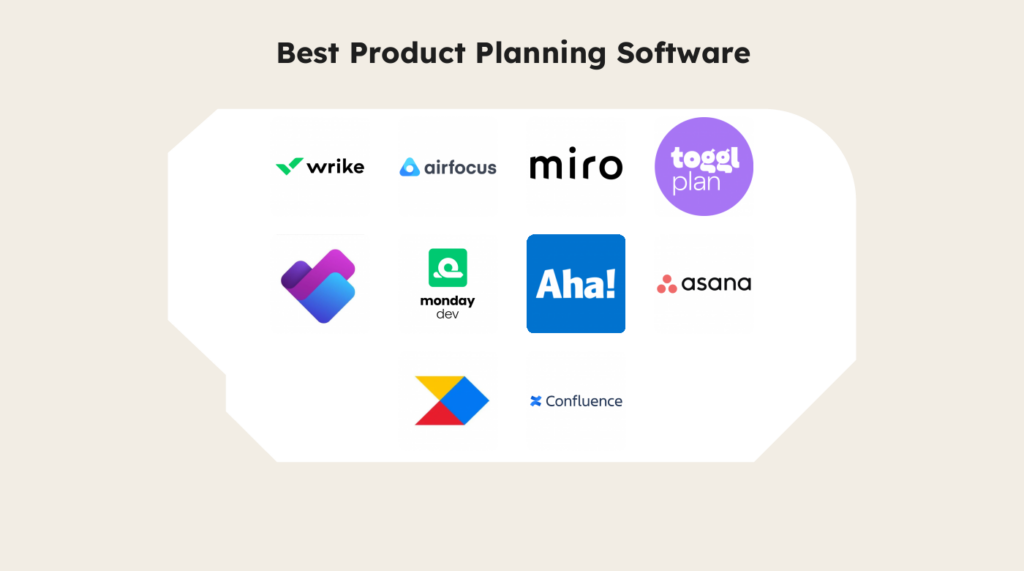
10 Best Product Planning Software Shortlist


The best product planning software should do more than manage tasks—it should make priorities unmissable, timelines clear, and team progress impossible to misread. It lets you map out launches, shift priorities in real time, and keep every sprint accountable—without needing endless check-ins or chasing status updates.
Without it, planning often breaks down across scattered docs, conflicting priorities, and unclear ownership—slowing delivery and frustrating stakeholders.
I’ve worked with dozens of product teams and reviewed 25+ tools built to support real-world planning needs. In this guide, you’ll find software that brings together roadmapping, prioritization frameworks, and team collaboration to help you build the right product, faster.
Why Trust Our Software Reviews
We’ve been testing and reviewing product management software since 2020. As product managers ourselves, we know how critical and difficult it is to make the right decision when selecting software.
We invest in deep research to help our audience make better software purchasing decisions. We’ve tested more than 2,000 tools for different product management use cases and written over 1,000 comprehensive software reviews. Learn how we stay transparent & our software review methodology.
The Best Product Planning Software Comparison Chart
This comparison chart summarizes basic details about each of the top product planning software we just covered in the overviews.
| Tool | Best For | Trial Info | Price | ||
|---|---|---|---|---|---|
| 1 | Best for pre-built product management templates | 14-day free trial + free plan available | From $10/user/month (billed annually) | Website | |
| 2 | Best product planning software for teams that value flexibility and OKR-roadmap alignment | Free demo available | Pricing upon request | Website | |
| 3 | Best product planning software for real-time visual ideation | 14-day free trial + free plan available | From $8/user/month (billed annually) | Website | |
| 4 | Best for real-time project visibility | Free plan available | From $9/user/month | Website | |
| 5 | Best for customizable templates | Free trial available | From $10/user/month (billed annually) | Website | |
| 6 | Best product planning software to create visually stunning roadmaps | 30-day free trial + free demo available | From $59/user/month | Website | |
| 7 | Best product planning software for infusing a project management flavor | Free plan available | From $10.99/user/month (billed annually) | Website | |
| 8 | Best product planning software to centralize customer feedback | 14-day free trial + free plan + free demo available | From $19/maker/month (billed annually) | Website | |
| 9 | Best product planning software for team collaboration | Free trial + free plan available | From $5.42/user/month | Website | |
| 10 | Best product planning software for outcome-focused roadmaps | 14-day free trial + free demo available | From $36/month (billed annually) | Website |

Best Product Planning Software Reviews
Here’s a brief description of each product planning software that showcases its best use case and standout features.
Wrike
Best for pre-built product management templates

For those seeking a product planning software solution that fosters collaboration and enhances workflow efficiency, Wrike stands out with its AI-powered capabilities. This platform is particularly appealing to teams in marketing, product management, and professional services, offering seamless integration with tools like Google, Microsoft, and Salesforce. Wrike addresses the challenges of task management and project visibility, providing customizable templates and real-time communication to ensure your projects are executed smoothly and on time.
Why I Picked Wrike
I picked Wrike for its standout pre-built product management templates that cater specifically to your product planning needs. With templates like Gantt charts, product roadmaps, and SWOT analysis, Wrike enables you to streamline planning and enhance team communication. These templates help maintain a secure database of information, reducing the chances of miscommunication and accelerating your product launch process. Wrike's ability to provide structure and save time makes it an invaluable tool for teams aiming to bring successful products to market efficiently.
Wrike Key Features
In addition to its pre-built product management templates, Wrike offers a suite of features that enhance your product planning experience:
- AI Automation: This feature automates routine tasks, freeing up your team to focus on more critical aspects of product development.
- Visual Collaboration Tools: With the Wrike Whiteboard, your team can collaborate visually, enhancing creativity and idea sharing.
- Advanced Analytics and Reporting: Configurable dashboards and real-time reports provide insights into performance and productivity metrics.
- Customizable Views: Wrike offers various view formats like Calendar, Board, Table, and Gantt, allowing you to visualize projects in the way that best suits your team’s needs.
Wrike Integrations
Integrations include Google Sheets, Salesforce, Microsoft Teams, Zoom, Klaxoon, QuickBooks, Power BI, Wrike Integrate, an API for custom integrations, and a smart search assistant for exploring options.
Pros and Cons
Pros:
- Customizable dashboard and workflows
- Automated assignee and status changes
- Nifty follow-up reminder feature
Cons:
- Steep learning curve
- Restricted export options
New Product Updates from Wrike

Wrike AI Agents Create Full Blueprints and Formatted Items
Wrike’s AI Agent can now create full blueprints (parent items plus subtasks) in one step and generate richer, formatted descriptions. This makes automated workflow creation more complete. For more information, visit Wrike’s official site.
 .
.
airfocus
Best product planning software for teams that value flexibility and OKR-roadmap alignment

airfocus helps product teams worldwide prioritize and manage their product roadmaps. airfocus’ unique scoring system enables teams to quickly rank features based on critical parameters like value, effort, and risk, and develop a well-defined roadmap.
Why I picked airfocus: airfocus' scoring system is a standout feature that sets it apart from other product planning tools. This feature allows teams to make data-driven decisions when prioritizing their backlog. Consequently, product teams can better focus on building features that are most valuable to their customers.
airfocus is ideal for teams looking to prioritize large feature backlogs. In addition, airfocus helps you leverage several popular prioritization frameworks, including Priority Poker, MosCoW, RICE, Kano Model, and others.
airfocus Standout Features and Integrations
Features include a prioritization-based scoring system, customizable roadmap views, goals and OKR tracking, collaboration and team communication tools, risk management features, and others.
Integrations include 10+ tools like Asana, Github, Intercom, Jira, Salesforce, Shortcut, Slack, Trello, Webhooks, Zapier, and others.
Pros and Cons
Pros:
- Effective collaboration and communication tools
- Very responsive customer support
- Robust prioritization scoring system
Cons:
- Limited customization features
- Occasional bugs with Jira synchronization
New Product Updates from airfocus

airfocus Adds Rich Text Fields, MCP Tools, and Admin Controls
airfocus adds rich text fields with bidirectional Jira sync, Check-in access for the agent and MCP server, an MCP Link Items tool, and admin-only integration management to improve product documentation, AI-assisted planning, and enterprise governance. For more information, visit airfocus’ official site.
 .
.
Miro
Best product planning software for real-time visual ideation

Miro is an online collaborative whiteboard tool that allows teams to brainstorm ideas, plan projects, and create workflows for the entire product development process.
Why I picked Miro: I picked Miro because it focuses on visual ideation in real time. For product teams, features like mind mapping and roadmaps are essential. Miro offers these capabilities as well as pre-built customizable templates to give teams a more structured start to their workflow planning. These templates can be adapted with each iteration.
I also like that Miro has real-time collaboration features. Teams can brainstorm directly on the same whiteboard simultaneously through features like sticky notes and comments.
Miro Standout Features and Integrations
Features include brainstorming tools, presentation modes, sketching tools, screen sharing, video chat integration, mind mapping, Agile workflows, flowcharts, and diagramming.
Integrations include Airtable, Notion, Azure, Webex, Jira, Microsoft Teams, Google Drive, Slack, Box, Asana, Monday.com, Confluence, Zoom, and Figma.
Pros and Cons
Pros:
- Real-time collaboration features
- Pre-built workflow templates
- Infinite whiteboard for multiple iterations
Cons:
- May take time to get used to the platform's flexibility
- Some integrations only available for higher-tier plans
New Product Updates from Miro
Miro Adds Japan Data Residency for Enterprise Customers
Miro has introduced Japan data residency for enterprise customers, offering in-region storage for production data, backups, and metadata, plus in-region compute infrastructure. For more information, visit Miro's official site.

Best for real-time project visibility

Toggl Plan is a product planning software designed to enhance project management and boost productivity. It offers a range of tools to help you organize tasks, manage timelines, and ensure your projects stay on track.
Why I Picked Toggl
I picked Toggl Plan because it provides real-time visibility into your tasks and projects, allowing you to manage your team's capacity without the guesswork. The software's different views, like Board, Calendar, and Timeline give users the flexibility to organize projects in a way that suits your workflow. This is particularly helpful for keeping everyone aligned and ensuring deadlines are met.
Another reason Toggl Plan stands out is its focus on preventing common project pitfalls like unrealistic deadlines and employee burnout. By offering a capacity view, you can manage workloads more effectively, ensuring that your team is neither overworked nor under-utilized. The software also integrates time tracking, so you can compare actual work done against planned tasks, making future planning much more accurate.
Standout Features:
Features include visual time and capacity reports, which allow you to see how tracked time compares to completed tasks. This helps you analyze data more effectively. The software also offers powerful filtering options for data analysis, making it easier to identify trends and areas for improvement. Additionally, Toggl Plan is GDPR, ISO 27001, and CCPA compliant, ensuring your data is kept secure.
Integrations
Integrations include Toggl Track, Slack, Asana, JIRA, Podio, Gitlab, Google, HubSpot, Microsoft, Reddit, RudderStack, and Spotify.
Pros and Cons
Pros:
- offline capability
- detailed reporting
- clean and intuitive user interface
Cons:
- limited customization options
- basic project management

Best for customizable templates

Microsoft Planner is a task and project management tool within Microsoft 365, designed to help you manage tasks, to-do lists, plans, and projects in one centralized platform. It's a flexible solution that allows you to view and prioritize your daily tasks, making it easier to keep everything on track.
Why I Picked Microsoft Planner
I picked Microsoft Planner because it features customizable templates that allow you to set up projects quickly, which is invaluable for product planning. With these templates, you can align your project plans with organizational objectives right from the start. Additionally, the collaborative planning feature lets you work closely with your team, ensuring everyone is on the same page and contributing to the project's success.
Another reason for choosing Microsoft Planner is its support for agile methodologies, including sprint planning and task history. These functionalities help your team stay agile and adapt to changes, which is essential in product development. The platform also offers scheduling tools that help you map out timelines and set measurable goals, keeping your projects on track and aligned with your objectives.
Standout Features
Features include automation capabilities that allow you to streamline repetitive tasks, freeing up more time for strategic planning. Users can also access real-time dashboards for resource management, offering insights into how resources are being utilized. Additionally, Microsoft prioritizes security and compliance, ensuring that your data is protected and meets rigorous standards.
Integrations
Integrations include Microsoft Teams, Microsoft Outlook, Microsoft Loop, Microsoft Project, Power Apps, Power Automate, Power BI, SharePoint, OneDrive, Google Calendar, Slack, and Trello.
Pros and Cons
Pros:
- seamless collaboration for teams
- user-friendly interface
- integrates with multiple applications
Cons:
- less suitable for larger teams needing detailed task breakdowns
- lacks advanced features

Aha!
Best product planning software to create visually stunning roadmaps

Aha! is an absolute delight for product managers seeking a comprehensive platform that covers product strategy, road mapping, and analytics. One distinct feature of Aha! is its intuitive interface that allows users to map out product strategy and features with ease, and track progress through roadmaps, timelines, and Gantt charts.
Why I Picked Aha!: Aha! lets you create and manage your product strategy and vision, which helps product managers to align product development with company goals. The tool also allows you to define initiatives, features, and releases while keeping stakeholders in the loop with automated notifications and progress updates.
Another noteworthy feature is the tool's powerful product analytics that gives product managers deep insights into their products and performance. With 50+ product management templates at your disposal, Aha! will definitely help you rock your upcoming product ideation meeting. Aha! also provides a robust idea management system that enables teams to collect, evaluate, and prioritize product ideas. As a result, the most promising ideas receive the attention they deserve.
Aha! Standout Features and Integrations
Features include product strategy, vision mapping, customizable roadmaps, timelines, Gantt charts, automated notifications, progress updates, customizable reports & analytics, idea & feedback management, and others.
Integrations include 10+ tools, like FlowDock, GitLab, Jira, Salesforce, Slack, Teams, Trello, ZenDesk, and others.
Pros and Cons
Pros:
- Excellent customer support
- Offers prototyping, product strategy, road mapping, and analytics
- Intuitive and visually-rich interface
Cons:
- Some bugs with the Jira integration
- No OKR (Objectives & Key Results) support
Asana
Best product planning software for infusing a project management flavor

Asana is a well-established project management vendor, helping companies streamline workflows and improve productivity. Asana offers flexibility and customization options that allow teams to adapt the tool to their specific needs.
Why I picked Asana: Asana's ability to automate and streamline project workflows stands out. With custom templates, dependencies, and automation, Asana allows teams to simplify their processes and focus on delivering high-quality results.
Asana helps manage projects and tasks collaboratively across teams. For product managers looking for a tool packed with project management firepower, Asana doesn’t disappoint. Asana’s product roadmapping comes with backlog management and a unique project conversation feature that allows you to convey important project updates.
Asana Standout Features and Integrations
Features include custom templates and workflows for project planning, multiple views (list, board, calendar) for flexibility, dependencies, automation rules to streamline workflows, and others.
Integrations include 10+ tools like Adobe Creative Cloud, Aureum, Figma, Looker, Okta, Salesforce, Splunk, Tableau, Vimeo, and others.
Pros and Cons
Pros:
- Generous free plan
- Efficient task management
- Collaboration focused
Cons:
- Limited assignment features
- Slightly steep learning curve

Best product planning software to centralize customer feedback

Productboard’s expertise lies in creating software for customer-driven product development. It is a great tool for businesses seeking to align their product roadmap with customer feedback. Their unique interface brings customer feedback and product development together, allowing teams to prioritize features and build customer-driven products.
Why I picked Productboard: Productboard helps collect and organize customer feedback from multiple channels and collate these data points into one common place. This feature ensures that teams build products that address customer needs.
Productboard is ideal for product managers, product owners, and development teams seeking to prioritize and align their product development efforts with customer feedback.
Productboard Standout Features and Integrations
Features include a centralized customer feedback portal, feature prioritization, roadmap creation, feature idea validation, and others.
Integrations include 10+ tools, like Amplitude, Fable, Grain, InSided, Intercom, Microsoft Teams, Slack, Zapier, and others.
Pros and Cons
Pros:
- Nifty progress tracking feature
- Great for customer-driven product development
- Easy-to-use interface
Cons:
- No native integrations with project management software
- Purely web-based tool with no desktop application

Best product planning software for team collaboration

Confluence emerges from Atlassian, a leading provider of collaboration and productivity software. It is one of the best product management tools, particularly well-suited for Agile development processes. Confluence streamlines collaboration and knowledge sharing across teams by improving communication and reducing errors.
Why I picked Confluence: Confluence is a powerful tool for managing product development processes. The main use case for Confluence is for product managers to create, organize, and share product requirements documents.
With Confluence, you can truly stay on top of things by constantly tracking key statuses and action items. Confluence oozes collaboration with messaging, comments, likes, and real-time activity feeds. Additionally, I’m particularly impressed with the remote brainstorming session feature that Confluence offers.
Confluence Standout Features and Integrations
Features include customizable templates for product requirements documents and user stories, real-time collaboration and commenting, tracking a documented history, and others.
Integrations include 10+ tools like Dropbox, Google Drive, Jira, Microsoft Teams, Slack, Trello, and others.
Pros and Cons
Pros:
- Integrations with other Atlassian tools
- Real-time collaboration and commenting
- Easy to create and search product documentation
Cons:
- Occasional bugs with ticket status synchronization
- Some glitches with the Slack integration

ProdPad
Best product planning software for outcome-focused roadmaps

ProdPad is a product management software designed to assist product managers and teams in developing and executing product strategies. It offers tools for prioritizing ideas, managing feedback, and creating product roadmaps.
Why I picked ProdPad: As a product planning software, ProdPad helps teams align their product development efforts with business objectives and customer needs through the lean product roadmap. This feature moves away from traditional timeline roadmaps and instead focuses on outcomes, objectives, and key results (OKRs). Users can publish and share strategies that are easily understood by all stakeholders.
I also like the way ProdPad allows you to collect feedback and sort ideas in its backlog based on priority. Users can take these ideas and plan out their workflows according to the best impacts on overall objectives.
ProdPad Standout Features and Integrations
Features include idea management, product portfolio management, backlog workflows, AI assistance for insights and suggestions, collaborative features, voting, and automation.
Integrations include Confluence, Team Foundation Server, Doorbell.io, Trello, Pivotal Tracker, Dropbox, GitHub, Rally, Uservoice, Slack, JIRA, Azure DevOps, Salesforce, and Intercom. It also offers more integrations through Zapier and an API.
Pros and Cons
Pros:
- Features for team collaboration and input
- Lean product roadmaps focused on outcomes
- Centralized platform for capturing the product backlog and feature requests
Cons:
- May come with a learning curve for new users
- Limited customizations
Other Product Planning Software
Here are a few more worthwhile options that didn’t make the best product planning software list:
- Portfoleon
Product planning software for portfolio management
- Roadmunk
Product planning software with boardroom-ready roadmaps
- ClickUp
For customizable project dashboards
- Dragonboat
For real-time portfolio intelligence
- Canny
For leveraging user feedback to prioritize feature roadmaps
- Craft.io
Product planning software to connect strategy with features
- Zeda.io
Product planning tool to build customer-centric roadmaps with AI insights
- PathPro
For prioritizing feature suggestions
- Trello
For Kanban-style project planning and scheduling
- ProductPlan
Product planning software for capturing critical product attributes
- Roadmap Planner
For showing future stages of a project
- YouTrack
Product planning software for agile release planning
- Productific
Product planning software for gathering roadmap feedback from real users


Related Product Planning Software Reviews
If you still haven't found what you're looking for here, check out these tools closely related to product planning software that we've tested and evaluated.
- Best Product Management Tools
- Best UX Design Tools
- Best Product Development Software
- Best Product Analytics Tools
- Best Idea Management Software
- Best Heatmap Software
How I Evaluate Product Planning Software
I look at product planning tools on two levels: the baseline—things like roadmapping, prioritization frameworks, and dev tool sync—and the differentiators that make one the right fit.
Core Functionality (Table Stakes For This List)
When I'm selecting tools for my list, I rank each one on a scale from 0 (does not offer the functionality) to 5 (excels in this area) for each core functionality listed below. Then, I calculate the tool's total score into a percentage. Each tool needs to achieve a minimum total score of 75% to be considered for inclusion.
- Roadmap Visualization: I evaluate the variety of roadmap views available—timeline, swimlane, now/next/later—and whether you can tailor separate views for engineering versus executive audiences.
- Feature Prioritization: A tool should support structured scoring models like RICE or value vs. effort, so PMs can defend priority calls in stakeholder reviews with data.
- Idea & Feedback Capture: I check whether the platform centralizes feature requests from customers and internal teams into a single backlog that links directly to roadmap items.
- Strategy-to-Execution Linking: This means connecting OKRs or strategic themes down to epics and features, with progress rolling up automatically as delivery work moves forward.
- Release & Sprint Planning: I look for release planning with dependency tracking and capacity awareness, so product owners can coordinate launches across multiple squads.
- Dev Tool Integrations: Two-way sync with tools like Jira, GitHub, or Azure DevOps matters here—planning data should flow into engineering workflows without manual re-entry.
Once I have a list of tools that meet the criteria, I consider what sets each platform apart.
Differentiating Factors (What Sets Vendors Apart)
Here's how I compare and contrast different vendors:
Standout Features
Scenario modeling is a big differentiator—I look for tools that let you duplicate a roadmap and shift priorities to see how timelines change before committing. AI-assisted planning is increasingly relevant too, especially when it helps cluster similar feedback or draft user stories from raw input. For teams managing more than one product, multi-product portfolio views matter. I evaluate whether a tool can roll up roadmaps across products so leadership sees a unified strategic picture.
Beyond Features
Pricing structure is worth close attention. Some tools charge per editor but let unlimited viewers in free, which works well when you need stakeholders to follow the roadmap without inflating costs. I also evaluate integration ecosystem depth—especially connections to CRMs and support tools like Salesforce or Zendesk, since that's how customer feedback actually reaches the planning layer. Team size fit matters too. A three-person startup and a 20-PM enterprise org have very different needs around permissions, portfolio views, and onboarding complexity.
How to Choose Product Planning Software
With so many different product planning software solutions available, it can be challenging to make decisions on what product planning software is going to be the best fit for your needs.
As you're shortlisting, trialing, and selecting product planning software consider:
- What problem are you trying to solve - Start by identifying the product planning feature gap you're trying to fill to clarify the features and functionality the product planning software needs to provide.
- Who will need to use it - To evaluate cost and requirements, consider who'll be using the software and how many licenses you'll need. You'll need to evaluate if it'll just be the product managers, or the whole organization that will require access. When that's clear, it's worth considering if you're prioritizing ease of use for all, or speed for your product planning software power users.
- What other tools it needs to work with - Clarify what tools you're replacing, what tools are staying, and the tools you'll need to integrate with, such as accounting, CRM or HR software. You'll need to decide if the tools will need to integrate together, or alternatively, if you can replace multiple tools with one consolidated product planning tool.
For example, great product planning starts with a clear vision. If you're still shaping ideas or defining the visual tone of a new initiative, moodboard creator tools can help spark alignment before you dive into roadmaps and timelines. - What outcomes are important - Consider the result that the software needs to deliver to be considered a success. Consider what capability you want to gain, or what you want to improve, and how you will be measuring success. For example, an outcome could be the ability to get greater visibility into performance. You could compare product planning software features until you’re blue in the face, but if you aren’t thinking about the outcomes you want to drive, you could be wasting a lot of valuable time.
- How it would work within your organization - Consider the software selection alongside your workflows and delivery methodology. Evaluate what's working well, and the areas that are causing issues that need to be addressed. Remember every business is different — don’t assume that because a tool is popular that it'll work in your organization.
Trends in Product Planning Software for 2025
Product planning software is continuing to evolve in 2025 in response to advancing technology, the changing needs of product managers, and the evolving expectations of consumers. These trends particularly highlight the product planning software industry's response to the key challenges faced by product management professionals and are geared towards making product planning more efficient, data-driven, and aligned with user needs and business goals.
- Integration with Artificial Intelligence and Machine Learning: AI and ML are increasingly being leveraged to provide predictive analytics, automate the prioritization of features, and offer insights into customer feedback. Tools like Roadmunk and Aha! now boast AI-driven functionalities that analyze large datasets to forecast trends and suggest product decisions, making the product planning process more data-driven and efficient.
- Enhanced Collaboration Features: As remote work becomes more prevalent, product planning software has evolved to include more robust collaboration tools. Platforms such as Asana and Jira have introduced advanced communication features, real-time updates, and integrated feedback mechanisms, allowing teams to stay aligned and make quicker, more informed decisions irrespective of their geographical locations.
- User Feedback Loops: Direct integration of user feedback into product planning tools has become a standout feature. Software like ProdPad and UserVoice have refined their feedback collection and analysis capabilities, enabling product managers to easily gather, categorize, and prioritize user feedback directly within their product roadmap planning tools. This trend underscores the growing importance of user-centric product development.
- Customizable and Dynamic Roadmapping: Flexibility in roadmapping has seen significant enhancements, with tools offering more customizable and interactive roadmaps. Trello and Monday.com, for instance, have introduced dynamic roadmapping features that allow for easy adjustments and visualization options, catering to the Agile and ever-changing nature of product development projects.
- Focus on Sustainability and Ethical Considerations: As global awareness of sustainability grows, product planning software is beginning to include features that help teams consider environmental and ethical implications in their product development processes. This includes assessment tools for evaluating the sustainability of product features or supply chains, reflecting a broader trend towards responsible product management.
- Advanced Scenario Planning and Simulation Features: Finally, there's a trend towards incorporating advanced scenario planning and simulation capabilities within product planning software. These features allow teams to model various market scenarios and product feature outcomes, providing a sandbox environment for testing different strategies before implementation. Tools like Scenario Planner are leading the way, offering product teams the ability to simulate impacts of different decisions, enhancing strategic planning with data-backed insights.
As these trends continue to evolve, product managers will hopefully become even better equipped to navigate the complexities of product development and launch, ensuring their strategies are both innovative and impactful.
What Is Product Planning Software?
Product planning software is a tool that helps teams coordinate, prioritize, and manage a product’s development from concept to launch.
It helps product managers and cross-functional teams build roadmaps, assign tasks, track progress, and align on strategy in one place. Typical users include product managers, development teams, and executives. It solves common issues like scattered planning, misaligned priorities, and lack of visibility across teams.
Features of Product Planning Software
When choosing product planning software, look for the following key features:
- Roadmap visualization: Create dynamic, interactive roadmaps with clear timelines, dependencies, and milestones. You can shift priorities on the fly and visually map out how your roadmap will unfold in real time.
- Idea management: Capture, organize, and evaluate new product ideas in a central location. Better prioritize which concepts to pursue and account for team input so ideas are validated or backlogged before the roadmap is defined.
- Collaboration tools: Enable cross-functional teamwork with shared workspaces, threaded discussions, and direct feedback channels. This ensures all stakeholders are on the same page, aligning communication and preventing bottlenecks.
- Prioritization frameworks: Use built-in scoring models or customizable ranking tools to help you objectively decide which features or improvements should come first. Allocate resources to features and initiatives likely to have the biggest impact.
- Task and milestone tracking: Break down big goals into clear tasks and track progress as you go. Automated reminders and checklists help keep launches on schedule, so you never miss a critical deadline.
- Integration capabilities: Connect the software seamlessly to popular project management, communication, and development tools. Project updates and data can flow easily between platforms with useful integrations, reducing manual input and redundancies.
- Analytics and reporting: Generate instant reports that visualize progress, measure team performance, and spotlight project risks. You get actionable insights to support your product decisions and pitch progress to stakeholders.
- Resource management: Allocate and monitor resources such as people, budget, and time across your projects. This helps you identify bottlenecks early and adjust plans before small issues become big problems.
Common Product Planning Software AI Features
Beyond the standard product planning software features listed above, many of these solutions are incorporating AI with features like:
- Automated report generation: Use AI to fetch, analyze, and summarize project data into clear, actionable reports. This gives you instant insights to share with your team or stakeholders.
- Automated prioritization: You can use AI to analyze project data, market trends, and team feedback, then generate smart suggestions for which ideas or tasks should take priority. Leveraging AI for prioritization can save you time and has the potential to reveal opportunities that might fly under the radar.
- Predictive timeline estimates: Tap into AI-driven forecasting that predicts project timelines based on historical data, team velocity, and current workload. Set realistic launch dates and communicate expectations more confidently.
- Risk detection and alerts: Rely on AI to scan for potential bottlenecks or project risks by monitoring progress patterns and resource constraints. Get proactive alerts and make necessary adjustments to keep your product plan on target.
- Intelligent resource allocation: Harness AI to analyze workload, availability, and skill sets so you can optimize how tasks are assigned. Avoid overloading team members by accurately gauging what areas of your product plan require more resources to deliver on time.
- Smart idea clustering: Let AI organize large pools of feedback or ideas into meaningful categories based on content patterns and similarities, so you can zero in on trends and make sense of big-picture themes.
Benefits of Product Planning Software
Product planning software offers a myriad of benefits, from enhancing team collaboration to ensuring strategic alignment of product goals. As such, understanding the primary benefits these tools can offer can be crucial for potential buyers evaluating these solutions. Here are five key benefits of product planning software for users and organizations:
- Streamlined Collaboration: Facilitates seamless communication and collaboration across teams. By centralizing communication and project details, product planning software ensures that all team members are aligned and informed, reducing misunderstandings and increasing efficiency in the product development process.
- Enhanced Strategic Alignment: Aligns product development efforts with business objectives. This software helps users define and track high-level goals, ensuring that every feature and update contributes to the overarching business strategy, thereby maximizing the impact of product initiatives.
- Improved Decision-Making: Offers data-driven insights for better decision-making. With features like analytics and reporting, product planning software provides valuable insights into market trends, user feedback, and product performance, enabling users to make informed decisions about product direction and priorities.
- Increased Productivity: Automates routine tasks and streamlines workflow management. By automating tasks such as scheduling, tracking, and reporting, product planning software frees up time for teams to focus on more strategic and creative aspects of product development, thereby boosting overall productivity.
- Better Roadmap Visualization: Provides clear visualizations of product roadmaps and timelines. This allows teams and stakeholders to easily understand the product’s development path, including key milestones and deliverables, facilitating better planning and communication about the product’s future.
For businesses looking to streamline their product development processes and align their efforts with their strategic goals, investing in product planning software can be a wise decision that promises significant returns.
Costs & Pricing For Product Planning Software
Time to crunch the numbers! Variances in costs and features can make comparing product planning software pricing feel a bit daunting, especially if you're not yet sure which features you can't live without.
Here's a breakdown of the common pricing plan options and respective typical features for product planning software:
Plan Comparison Table for Product Planning Software
| Plan Type | Average Price | Common Features Included |
|---|---|---|
| Basic | $10 - $20 per user/month | - Roadmapping - Task Management - Basic Collaboration Tools - Limited Integration Capabilities |
| Standard | $20 - $50 per user/month | - Advanced Roadmapping - Enhanced Collaboration Tools - Reporting and Analytics - Custom Workflows |
| Premium | $50 - $100 per user/month | - Strategic Planning Tools - Advanced Analytics - Unlimited Integrations - Priority Support |
| Enterprise | Custom Pricing | - Customizable Dashboards - Advanced Security Features - Dedicated Support - Onboarding and Training Services |
| Free Option | $0 | - Basic Roadmapping - Task Management - Limited Users - Community Support |
When exploring product planning software options, it's important to consider not just the cost but also the features and scalability of each plan. The right choice will depend on your team's size, the complexity of your projects, and the level of support you anticipate needing. Always weigh the benefits of each plan against your specific needs and budget to ensure you're getting the most value for your investment.
Product Planning Software Frequently Asked Questions
If you’re new to product planning software, you might have some questions about what it is, what it does, and how it differs from other types of software used in product development. Here are some frequently asked questions and brief answers to help you get started:
Can product planning software support both Agile and waterfall work methodologies?
Yes, most product planning software supports both Agile and waterfall methodologies. You can set up projects and timelines in sprints, kanban boards, or traditional Gantt chart views. This lets your team choose the workflow that matches how you actually plan and deliver products.
Many modern product planning solutions are designed to be methodology-agnostic, offering the flexibility to switch between Agile and Waterfall methodologies or even blend them. This is particularly useful for organizations that apply different methodologies across various teams or projects. Features like customizable workflows, integration with other tools, and varied reporting capabilities allow these tools to serve a wide range of project management needs, making them adaptable to virtually any development strategy.
Agile-specific features might include:
- Sprint planning
- Backlogs
- User stories
- Burndown charts
Meanwhile, Waterfall-specific features might include:
- Structured project timelines
- Gantt charts
- Milestone tracking
How do these tools handle customer feedback and incorporate it into product development?
Many product planning tools have built-in features for collecting and prioritizing customer feedback. You can link feature requests and bug reports directly to roadmap items, making it easy to see which ideas have the most support. Some tools integrate with customer support platforms to automate this flow.
Are there any product planning tools specifically designed for small businesses or startups?
Yes, there are product planning tools specifically designed with small businesses or startups in mind. These tools often emphasize ease of use, affordability, and the essential features needed to get a product off the ground without overwhelming users with complex functionalities.
Trello, for example, offers a highly visual and intuitive interface that’s great for simple project tracking and collaboration. Asana is another, known for its flexibility and ease of task management, making it a good fit for small teams looking to stay organized without the need for extensive training.
How do you create a simple product roadmap using product planning software?
Start by listing your major product goals and key features. Use your planning tool, or a product management tool, to map out the timeline, dependencies, and owners for each project or release. Most tools offer templates to speed up the process and drag-and-drop interfaces that help you adjust as plans change. Share your roadmap so everyone stays aligned.
What integrations should I look for in product planning software?
You should look for integrations with tools your team uses daily, like Jira, Slack, and Google Workspace. Linking with development, support, and analytics tools streamlines updates across platforms. Good integrations save time, improve accuracy, and keep everyone on the same page.
How secure is product planning software for sensitive roadmaps?
Top product planning software typically offers enterprise-grade security features, including data encryption, user permissions, and audit logs. Always check for SOC 2 compliance or similar certifications if you’re sharing sensitive product strategy or IP.
How do I migrate my existing spreadsheets or backlogs into product planning software?
Most modern tools provide CSV or Excel import features, making it fairly simple to bring in existing spreadsheet data. Look for detailed onboarding guides, and see if the vendor offers migration support or setup help for larger teams.
What’s the best way to get stakeholder buy-in for adopting new product planning software?
Start by showing how the tool solves pain points, like streamlining updates or enhancing transparency. Share quick wins and clear examples during a trial period. Involve key stakeholders early in the pilot process to gather feedback, address concerns, and build momentum for full adoption.
What's Next?
Don't forget to subscribe to our newsletter for more product management resources and guides, plus the latest podcasts, interviews, and other insights from industry leaders and experts.