
8 Best ClickUp Alternatives for Product Teams in 2026

Best ClickUp Alternatives Shortlist


Managing product development is no easy feat. Tight deadlines, shifting priorities, and the need for clear communication across your team can make it overwhelming. If you're using ClickUp, you might feel like it’s not quite built with product managers in mind. Maybe it’s missing features for product road mapping, doesn't offer seamless integration with your dev tools, or struggles to align cross-functional teams. Whatever the reason, exploring alternative product or project management software could help you streamline workflows, enhance collaboration, and bring your product vision to life.
That’s why I've put together, tested, and reviewed the top software options to help you find the best fit for your team. This article will guide you through the top alternatives, highlighting their strengths and how they can address your specific challenges plus details like pros & cons, pricing, and more. Here are my top software picks.
What Is ClickUp?
ClickUp is a product management tool designed to help teams organize tasks, projects, and workflows. It's generally used by project managers, team leaders, and professionals who need to coordinate activities across various departments. It provides value by offering a centralized platform for task management, collaboration, and communication. Features like task tracking, to-do lists, project timelines, and team collaboration support your efforts to manage projects efficiently and keep everyone on the same page. In some cases, ClickUp can be a great fit and ultimately help you and your team stay organized and productive.
Best ClickUp Alternatives Summary
Curious about ClickUp’s pricing and how it compares to other software options out there? This comparison chart summarizes pricing details for my top ClickUp alternative selections to help you find the best one for your budget and business needs.
| Tool | Best For | Trial Info | Price | ||
|---|---|---|---|---|---|
| 1 | Best for tailored workflows | 15-day free trial + free plan + free demo available | From $4/user/month (billed annually) | Website | |
| 2 | Best for automating complex workflows | 14-day free trial + free plan available | From $10/user/month (billed annually) | Website | |
| 3 | Best for integrating docs and tasks | Free plan available | From $10/user/month (billed annually) | Website | |
| 4 | Best for enterprise-grade security | Free plan available | From $10.99/user/month (billed annually) | Website | |
| 5 | Best for client-focused teams | 14-day free trial + free demo available | From $9.99/user/month (billed annually) | Website | |
| 6 | Best for resource scheduling and capacity planning | 30-day free trial | From $7/user/month | Website | |
| 7 | Best for AI-driven scheduling | Free trial available | From $19/user/month (billed annually) | Website | |
| 8 | Best for integrated CRM features | Free trial + free demo available | From $29/user/month | Website | |
| 9 | Best for visual task tracking | Free plan available | From $5/user/month (billed annually) | Website | |
| 10 | Best for marketing project management | Free demo available | From $47/user/month | Website |
Why Trust Our Software Reviews
We’ve been testing and reviewing product management software since 2020. As product managers ourselves, we know how critical and difficult it is to make the right decision when selecting software. We invest in deep research to help our audience make better software purchasing decisions.
We’ve tested more than 2,000 tools for different product management use cases and written over 1,000 comprehensive software reviews. Learn how we stay transparent & check out our software review methodology.
Best ClickUp Alternatives Reviews
Below are my detailed summaries of the best ClickUp alternatives that made it onto my shortlist. These reviews offer a detailed look at the key features, pros & cons, integrations, and ideal use cases for each tool to help you find the best one for you.

Best for tailored workflows

For those seeking a ClickUp alternative, Zoho Projects presents a compelling option by addressing the multifaceted needs of project management while prioritizing user privacy. This platform is particularly appealing to diverse industries like construction, IT, and marketing, offering tailored solutions that enhance productivity. By focusing on task automation and time management, Zoho Projects helps teams streamline their workflows and effectively manage resources.
Why I Picked Zoho Projects
I picked Zoho Projects as a noteworthy ClickUp alternative due to its robust task automation and customization capabilities. These features allow you to tailor workflows and automate routine tasks, freeing up time for more strategic activities. Additionally, its resource management tools enable you to allocate and track resources efficiently, ensuring optimal productivity. These functionalities, coupled with its extensive integration options, make Zoho Projects a versatile choice for teams looking to optimize project management processes.
Zoho Projects Key Features
In addition to its automation and customization strengths, Zoho Projects offers several other valuable features:
- Time Tracking: Enables you to monitor work hours through timers and generate timesheets for accurate billing.
- Gantt Charts: Provides a visual representation of project timelines, helping you plan and adjust schedules as needed.
- Issue Tracking: Facilitates logging, tracking, and resolving project-related issues.
- Team Collaboration: Includes tools for chat, forums, and document management to enhance team communication.
Zoho Projects Integrations
Integrations include Slack, Microsoft Teams, Google Drive, Dropbox, Zapier, GitHub, Microsoft Office 365, OneDrive, Zoho CRM, and Zoho Books.
Pros and Cons
Pros:
- Budgeting and cost tracking tools
- Strong task dependencies and automation
- Built-in time tracking and billing
Cons:
- Whiteboards and visual tools missing
- Fewer integrations than ClickUp
New Product Updates from Zoho Projects

Zoho Projects Adds Time Log Grid View for Faster Tracking
Zoho Projects adds Time Log Grid View, a unified interactive grid for logging and reviewing hours across tasks and issues, helping teams enter time faster and identify work patterns more easily. For more information, visit Zoho Projects’ official site.
 .
.
Wrike
Best for automating complex workflows

Wrike is a project management tool that helps you organize work, manage tasks, and automate project flows across teams. It’s a good fit if you want flexibility in how you manage projects, with options like Gantt charts, Kanban boards, and real-time dashboards.
Why Wrike is a good ClickUp alternative: I chose Wrike as a ClickUp alternative because of its automation and AI planning features. If you're managing multiple projects across departments, Wrike can help cut down repetitive actions with tools like custom request forms and automated workflows. It also gives you access to Datahub—a centralized space where your team can connect and act on shared insights. Wrike’s mobile apps are reliable and fully functional, so you can manage work wherever you are.
Standout features & integrations:
Features includes enterprise-grade security, 24/7 support, and built-in onboarding tools that can help teams transition smoothly from other platforms.
Integrations include Klaxoon, QuickBooks, Power BI, Google Sheets, Miro, Salesforce, Tableau, Microsoft Teams, Zoom, Adobe Creative Cloud, Slack, and GitHub.
Pros and Cons
Pros:
- Fully featured mobile app
- Real-time collaboration across teams
- Advanced workflow automation options
Cons:
- Initial setup may feel complex for new users
- Some features require higher-tier plans
New Product Updates from Wrike

Wrike AI Agents Create Full Blueprints and Formatted Items
Wrike’s AI Agent can now create full blueprints (parent items plus subtasks) in one step and generate richer, formatted descriptions. This makes automated workflow creation more complete. For more information, visit Wrike’s official site.
 .
.
Notion
Best for integrating docs and tasks
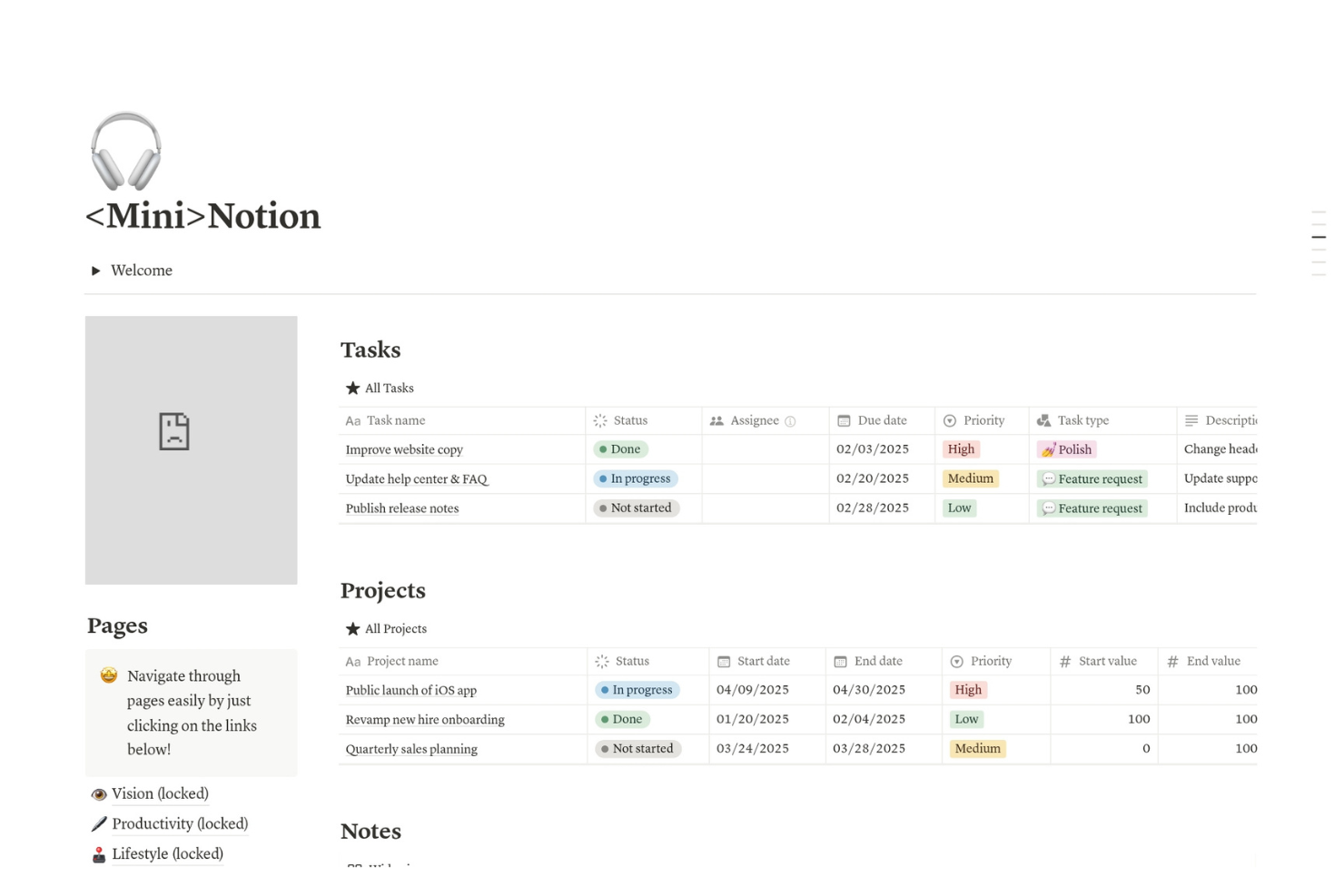
Notion combines the flexibility of a productivity workspace with structured task management, making it a favorite for teams who value customizable workflows. If you want to unite tasks, notes, databases, and wikis in one hub, Notion gives you that control.
Who Is Notion Best For?
Notion is a top choice for startups and small teams who want customizable workspaces that organize everything from project planning to internal knowledge bases.
Why Notion Is a Good ClickUp Alternative
I picked Notion because it genuinely blurs the line between documentation and task management in a way most project tools don't attempt. When my team creates a project brief, we can embed a linked database of tasks directly inside that same document—no switching tools or copy-pasting context. I also find Notion's relational databases useful for connecting related projects, team members, and deliverables across pages. For teams tired of bouncing between a wiki and a task board, that kind of integration is hard to replicate elsewhere.
Notion Key Features
- Kanban boards: Visualize and move tasks across custom stages using a drag-and-drop board view.
- Task assignments and due dates: Assign tasks to team members and set deadlines directly within any database or page.
- Templates: Access a library of pre-built workspace templates for project tracking, meeting notes, and team wikis.
- Notion AI: Use built-in AI to summarize pages, generate action items, and draft content without leaving your workspace.
Notion Integrations
Notion provides native integrations with Slack, GitHub, Google Drive, Figma, Asana, Jira, Trello, Zapier, and across the Microsoft ecosystem, including Microsoft 365. An API is available for custom integrations.
Pros and Cons
Pros:
- Easily create custom templates for team processes
- Flexible database structure for tracking projects
- Tasks can live inside meeting notes or docs
Cons:
- No built-in Gantt chart view
- Permissions management gets complex with team growth
Asana
Best for enterprise-grade security

Asana is a project management tool used by teams to organize tasks, projects, and workflows efficiently. Its main users include teams of all sizes who need to coordinate activities and ensure projects stay on track.
Why Asana is a good ClickUp alternative: Asana offers enterprise-grade security features that protect your project data. You can set permissions and access controls to ensure that only authorized team members can view or edit sensitive information. The tool also provides advanced reporting and automation capabilities to optimize workflows. These features make it ideal for organizations that prioritize security and data management.
Standout features & integrations:
Features include task automation, versatile project views including calendar views and Kanban boards, advanced reporting, and collaborative workflows. Asana allows users to create detailed reports that provide insights into project progress and team performance. Although it doesn’t cater as well to development teams, it is helpful for product managers who need real-time notifications and collaboration features, a user-friendly interface, and in-depth workflow rules and automation.
Integrations include Slack, Microsoft Teams, Google Drive, Dropbox, Jira, Salesforce, Zoom, Trello, Adobe Creative Cloud, and Zapier.
P.S., Asana works well for task tracking, but if you need a more robust solution for long-term product roadmaps—one that aligns initiatives, dependencies, and strategic goals—then a dedicated product planning tool might be a better fit. Explore our guide on the 20 Best Product Planning Software For Kick-Ass Roadmaps In 2025.
Pros and Cons
Pros:
- Automation of repetitive tasks
- Flexible workflow customization
- Strong security features
Cons:
- Requires time for setup
- Can be complex for small teams

Teamwork
Best for client-focused teams

Teamwork is a project management tool that serves teams aiming to improve task coordination and client communication. Its main user base includes project managers and client-focused teams, with a focus on enhancing productivity and collaboration.
Why Teamwork is a good ClickUp alternative: Teamwork offers specialized features for managing client projects, like time tracking and billing functionalities. It's ideal for those who need detailed task management and client collaboration, helping you deliver projects on time. The ability to handle client invoices and track profitability sets it apart from ClickUp alternatives. These features make it a top choice for teams looking to improve client interactions.
Standout features & integrations:
Features include time tracking, detailed task management, and client billing options. You can easily manage project timelines and budgets to keep everything on track. Teamwork also allows for advanced reporting, giving you insights into project performance.
Integrations include Slack, HubSpot, QuickBooks, Google Drive, Zapier, Xero, Dropbox, Microsoft Teams, Trello, and Asana.
Pros and Cons
Pros:
- Strong client billing features
- Easy time tracking
- Great for client projects
Cons:
- Not ideal for all industries
- Can be complex for new users

Float
Best for resource scheduling and capacity planning
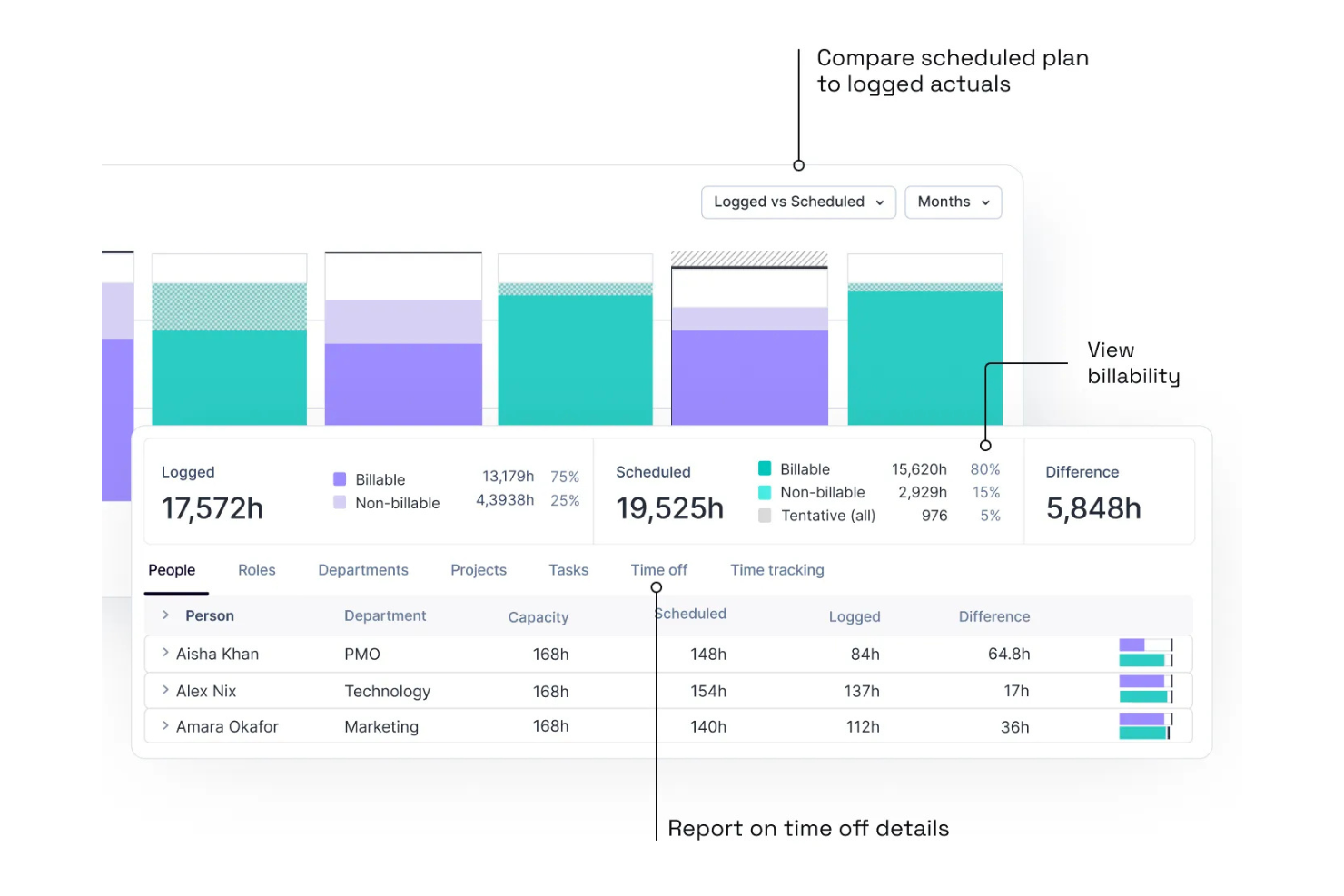
Float gives project managers and resource coordinators a real-time view of team workloads and project allocations. It’s built for businesses who want to balance capacity planning and scheduling without getting bogged down in granular task management.
Who Is Float Best For?
Resource managers and operations leads at agencies or consultancies who need to visualize and balance team workloads across multiple projects.
Why Float Is a Good ClickUp Alternative
I picked Float because its visual scheduling timeline is purpose-built for resource management in a way that ClickUp's task boards simply aren't. When I need to see which team members have capacity next week, Float's people schedule gives me a color-coded, drag-and-drop view of every assignment across every project at once. I also use Float's time tracking alongside scheduling to compare planned hours against actual hours worked. That comparison helps my team catch over-allocation before it becomes a problem.
- Capacity planning: View each team member's workload percentage to identify gaps or over-allocation before confirming assignments.
- Project estimates: Build project budgets with fee, cost, and margin tracking built into the scheduling interface.
- Reporting and insights: Generate reports on resource utilization and project financials to track delivery performance.
- Mobile app: Access team schedules and log time on the go using Float's iOS and Android apps.
Float Integrations
Float offers native integrations with Slack, Asana, Jira, Google Calendar, Outlook Calendar, Teamwork, and Xero. It connects with Zapier and provides an API for custom integrations.
Pros and Cons
Pros:
- Built-in capacity planning and forecasting tools
- Fast drag-and-drop scheduling for entire teams
- Clear visual timeline for resource allocation
Cons:
- Limited dependency tracking between projects
- No native task management or kanban boards
Motion
Best for AI-driven scheduling

Motion is an AI-powered task and schedule management tool designed for individuals and teams that need to optimize their daily workflows. Many professionals in need of better time management look to Motion to organize their tasks and timelines.
Why Motion is a good ClickUp alternative: Motion is a strong alternative to ClickUp for advanced scheduling and time management. While ClickUp offers a broad feature set, its extensive functionality can feel overwhelming, leading to a steep learning curve and potential productivity dips. Motion, on the other hand, uses AI to streamline task prioritization and automate scheduling, dynamically adjusting your calendar based on urgency and deadlines. This reduces manual input and keeps you focused on top priorities. For those seeking an intuitive, efficient time management solution without the complexity of ClickUp, Motion is a standout choice.
Standout features & integrations:
Features include task prioritization, automated scheduling, and focus sessions. You can easily organize your day by letting Motion handle your calendar adjustments. The tool also suggests optimal times for meetings and tasks based on your availability.
Integrations include Google Calendar, Microsoft Outlook, Zoom, Slack, Microsoft Teams, Asana, Trello, Evernote, Todoist, and Notion.
Pros and Cons
Pros:
- Helps minimize distractions
- Automated scheduling
- AI-driven task prioritization
Cons:
- Not ideal for complex projects
- Requires initial setup

Ravetree
Best for integrated CRM features

Ravetree is a project management and work collaboration tool aimed at businesses needing a comprehensive system to manage projects, resources, and client relationships. Its primary users are teams that focus on agency operations and require detailed client management.
Why Ravetree is a good ClickUp alternative: Ravetree provides integrated CRM features that help you manage client relationships directly within your project management platform. You can track client communications, manage accounts, and keep all client-related information in one place. The tool also supports resource management, so you can allocate tasks efficiently. This makes it a great choice for teams looking to enhance client interactions while managing projects.
Standout features & integrations:
Features include task management, time tracking, and financial tracking. You can oversee project budgets and expenses to maintain financial control. Ravetree also offers collaboration tools that help your team communicate effectively and stay aligned on project goals.
Integrations include QuickBooks, Slack, Google Drive, Dropbox, Trello, Salesforce, Asana, Microsoft Teams, Jira, and HubSpot.
Pros and Cons
Pros:
- Supports team collaboration
- Efficient resource management
- Detailed financial tracking
Cons:
- Not ideal for very small teams
- Requires initial setup time


Trello is a visual project management tool that helps teams organize tasks in a flexible, board-based format. It’s helpful for teams of all sizes who need a straightforward way to track tasks and projects.
Why Trello is a good ClickUp alternative: Trello offers a visual approach to task management with its board and card system, making it easy to see the status of tasks at a glance. You can customize boards to suit your team's workflow, adding checklists and due dates for better task management. The tool also supports collaboration by allowing team members to comment and attach files directly to cards. These features make it ideal for teams that prefer a visual and intuitive way to manage tasks.
Standout features & integrations:
Features include checklists, due dates, and card attachments. You can easily break down tasks into subtasks and track progress with checklists. Trello allows you to set deadlines to keep your team on schedule and attach relevant files to each card for better context.
Integrations include Slack, Google Drive, Dropbox, Microsoft Teams, Jira, Salesforce, Evernote, GitHub, Zoom, and Asana.
Pros and Cons
Pros:
- Great for small teams
- Easy to set up
- Highly customizable boards
Cons:
- Not ideal for complex projects
- Limited advanced features


Workamajig is a project management tool tailored for marketing and creative teams, helping them manage projects, resources, and budgets efficiently. It caters well to marketing agencies and creative departments that need to streamline their project workflows.
Why Workamajig is a good ClickUp alternative: Workamajig provides features specifically designed for marketing project management, such as campaign planning and resource allocation. Your team can track project budgets and timelines with ease, ensuring everything stays on track. The tool also supports collaboration across teams, helping you communicate effectively and achieve project goals. These features make it ideal for marketing teams looking to improve project management.
Standout features & integrations:
Features include campaign planning, budget tracking, and team collaboration tools. You can easily manage multiple projects and allocate resources efficiently. Workamajig also offers real-time reporting, providing insights into project performance.
Integrations include QuickBooks, Slack, Google Workspace, Microsoft Teams, Dropbox, Adobe Creative Cloud, Salesforce, Trello, Asana, and Jira.
Pros and Cons
Pros:
- Real-time reporting available
- Supports campaign planning
- Effective budget tracking
Cons:
- Not ideal for non-marketing projects
- Complex for first-time users

GanttPRO
Best for intuitive Gantt chart planning
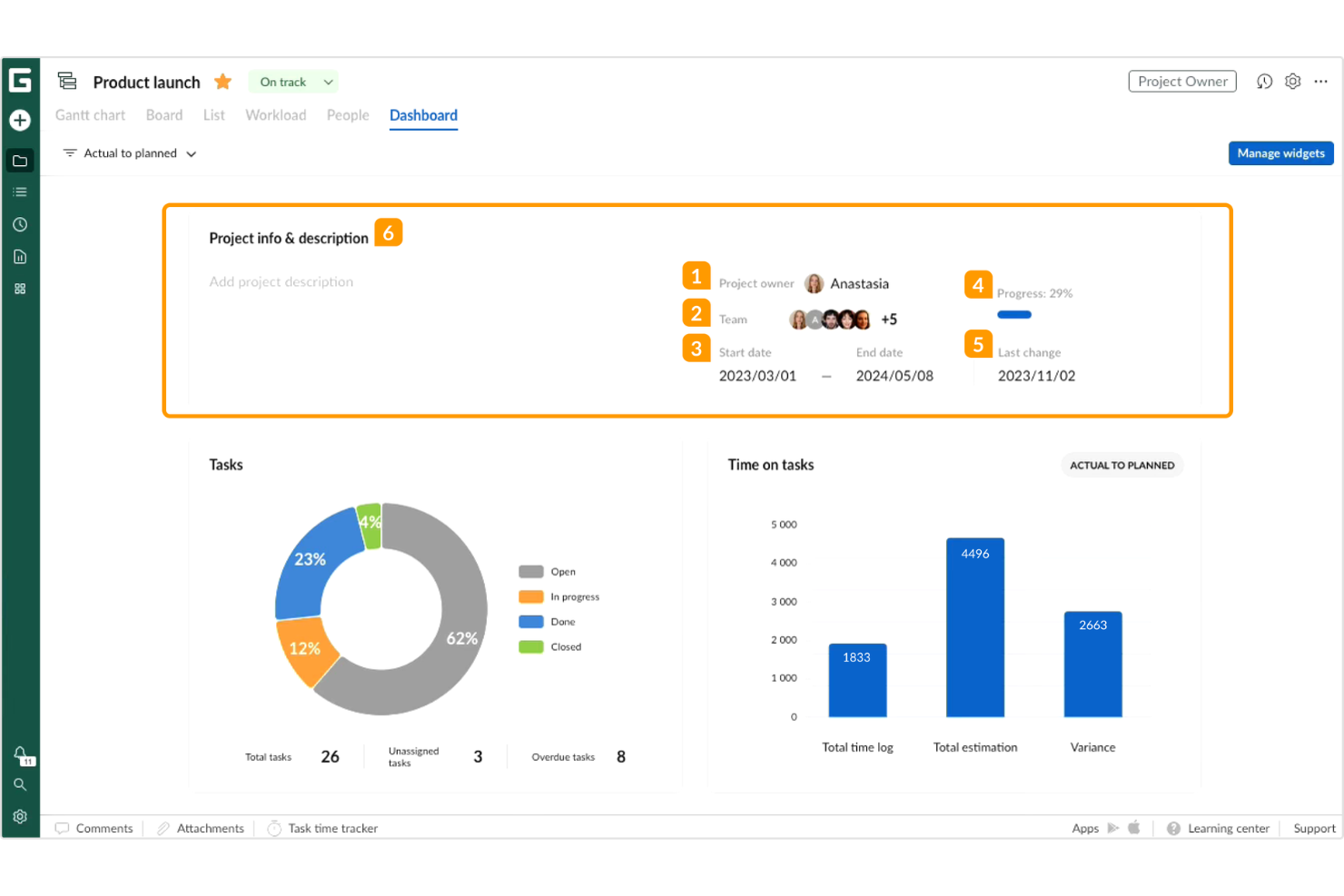
GanttPRO is designed for teams who need clear visual planning and real-time project tracking. It appeals to project managers and professionals looking for a straightforward way to coordinate tasks, set dependencies, and manage workloads with maximum clarity.
Who Is GanttPRO Best For?
Project managers and team leads who want fast, visual project planning for cross-functional collaboration.
Why GanttPRO Is a Good ClickUp Alternative
I picked GanttPRO because teams that need precise timeline control get a purpose-built tool, not a Gantt view bolted onto a general task manager. The critical path feature is what I find most useful—it automatically highlights which tasks directly threaten your delivery date, so you can focus attention where it actually matters. I also appreciate the auto-scheduling feature, which recalculates task timelines automatically when dependencies shift. For teams that regularly share project status with stakeholders, the shareable public URL with dynamic or static snapshots is a practical way to present schedules without exporting anything manually.
GanttPRO Key Features
- Workload management: View and rebalance each team member's task load directly from the project timeline.
- Baseline tracking: Save a project snapshot and compare it against current progress to measure schedule variance.
- Board view: Switch between Gantt, Kanban-style board, and list views within the same project.
- Time logs: Log hours spent on individual tasks and generate team-wide time reports filtered by user, project, or date.
GanttPRO Integrations
GanttPRO offers native integrations with Jira, Google Drive, and Slack, and provides an API for custom integrations.
Pros and Cons
Pros:
- Clear workload visualization per user or group
- Baseline tracking for schedule variance analysis
- Gantt dependencies update timelines automatically
Cons:
- No built-in document management system
- Limited custom statuses and field options

Best for customizable workflow automations
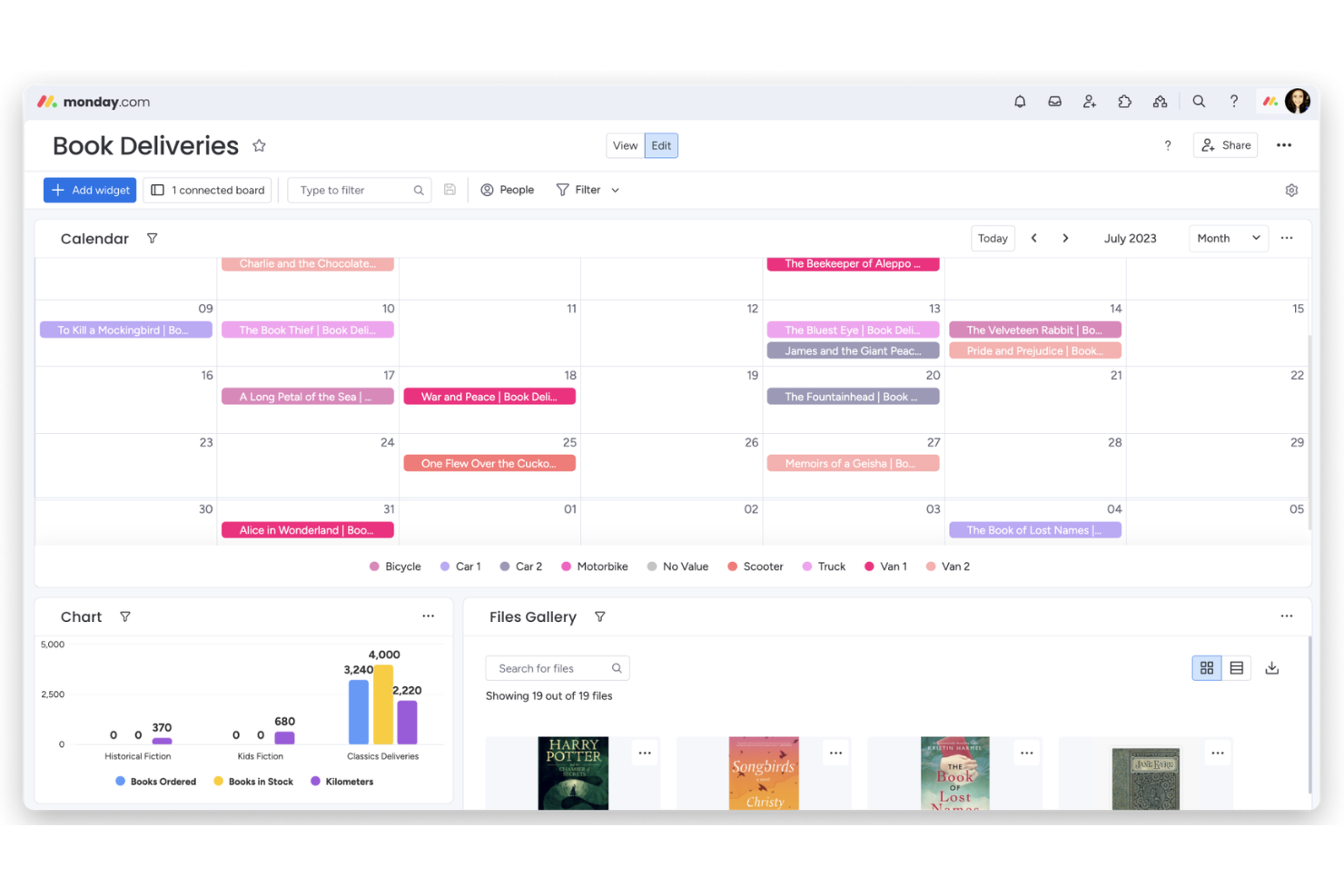
If you need a project management platform that lets you shape workflows to match how your team works, monday.com is worth a look. Its visual boards, flexible layouts, and broad integration options make it ideal for teams who want to organize projects their own way and track progress clearly.
Who Is monday.com Best For?
Teams in marketing, operations, or IT at small to mid-sized businesses looking for customizable and highly visual project tracking.
Why monday.com Is a Good ClickUp Alternative
I picked monday.com largely because of how far you can push its automation builder without needing any technical background. You can set up multi-step automations that trigger actions across boards—like automatically assigning tasks, updating statuses, and notifying teammates when a deadline shifts. I also appreciate the recipe-based automation system, where you define conditions and outcomes in plain language, which makes it easy to replicate how your team actually works. For teams that found ClickUp's automation setup too complex or rigid, monday.com gives you that same power with a much lower barrier to entry.
monday.com Key Features
- Workload view: See how tasks are distributed across your team members in a single visual layout.
- Custom dashboards: Build project dashboards using widgets that display timelines, charts, and task progress.
- Board templates: Start projects quickly using pre-built templates for sprints, launches, and more.
- Time tracking: Log time directly on tasks to monitor how long work actually takes.
monday.com Integrations
monday.com offers hundreds of integrations through its built-in integrations and marketplace, including tools like Slack, Salesforce, HubSpot, Google Workspace, Microsoft Teams, Trello, Zendesk, Dropbox, Outlook, and Zoom. It also supports Zapier and provides an API for custom integrations.
Pros and Cons
Pros:
- Templates available for specialized business processes
- Color-coded boards help with visual project tracking
- Workflow automations can be layered and complex
Cons:
- Automation limits require upgrades for larger teams
- No granular permissions at the task level

Smartsheet
Best for spreadsheet-style project tracking
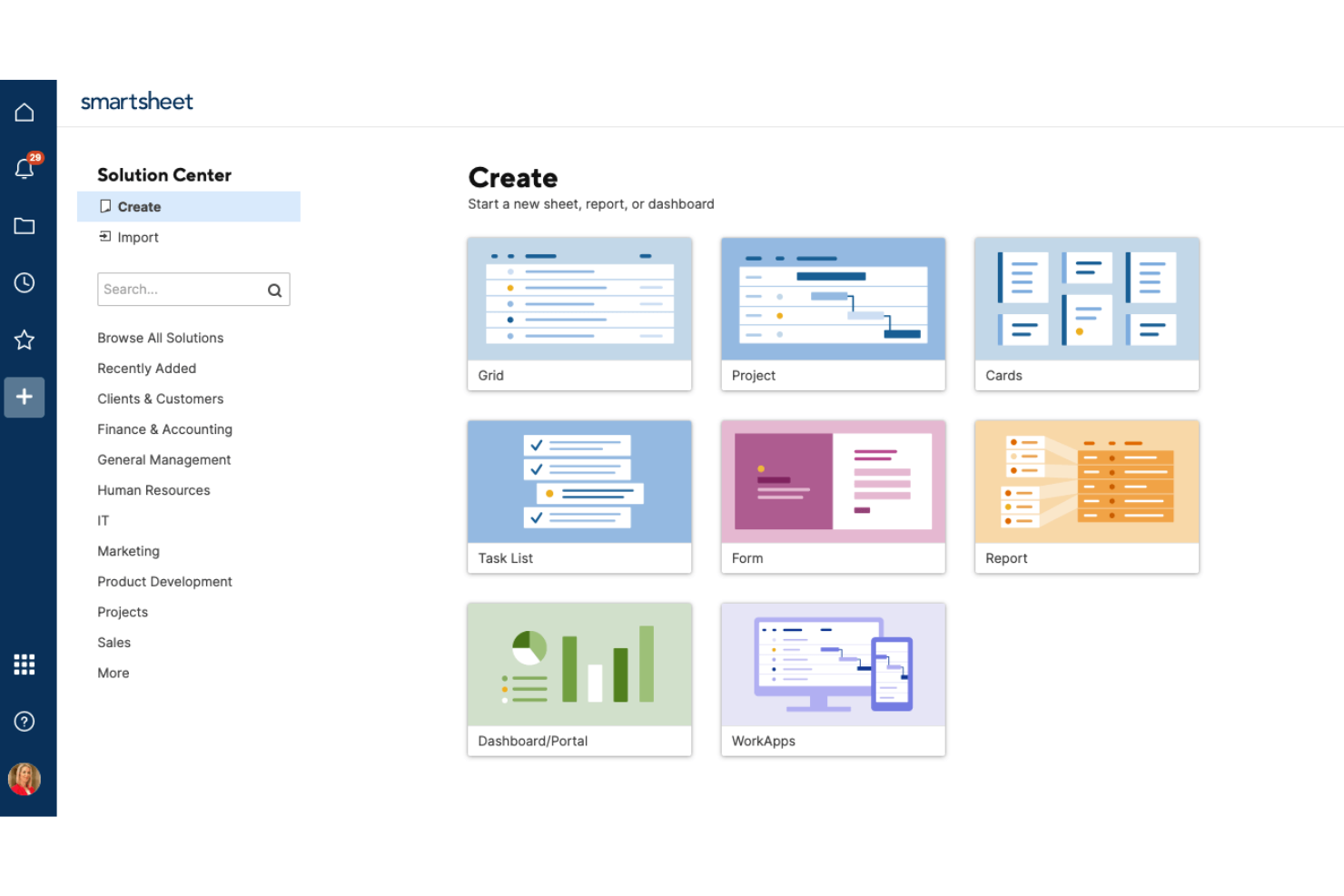
Smartsheet is a project management platform designed for teams that prefer the familiarity and flexibility of working in a spreadsheet environment. It’s a great fit for operations leaders, project managers, and analysts who need to coordinate complex projects while tracking details with precision.
Who Is Smartsheet Best For?
Project managers or operations teams in mid-sized businesses who rely on spreadsheet-like tools to track tasks, resources, and timelines.
Why Smartsheet Is a Good ClickUp Alternative
I picked Smartsheet because of how it handles complex project data in a grid format that feels instantly familiar to anyone comfortable in Excel or Google Sheets. The grid view lets you sort, filter, and group rows across massive datasets without losing sight of task relationships, which is something ClickUp's more visual layouts don't replicate as well. I also appreciate how Smartsheet's cross-sheet formulas and cell linking work—you can pull live data between sheets to build consolidated rollup views without duplicating information. For teams managing multi-phase projects or detailed tracking across departments, that level of data precision is hard to match.
Smartsheet Key Features
- Gantt charts: Visualize project timelines and dependencies across tasks in a drag-and-drop interface.
- Automated workflows: Set trigger-based alerts, approval requests, and update reminders without manual follow-up.
- Resource management: View team capacity and allocate work based on availability across active projects.
- Dashboards: Build real-time reporting views using widgets that pull live data from multiple sheets.
Smartsheet Integrations
Smartsheet offers native integrations with Google Workspace, Microsoft Teams, Salesforce, Jira, Docusign, Box, Slack, and Tableau. It also connects with Zapier and supports an API for custom integrations.
Pros and Cons
Pros:
- Sheet linking supports multi-project rollups
- Powerful cross-sheet formulas for project data
- Spreadsheet layout familiar to Excel users
Cons:
- Dashboards lack deeper customization options
- Limited task hierarchy compared to ClickUp

Hubstaff
Best for time tracking needs
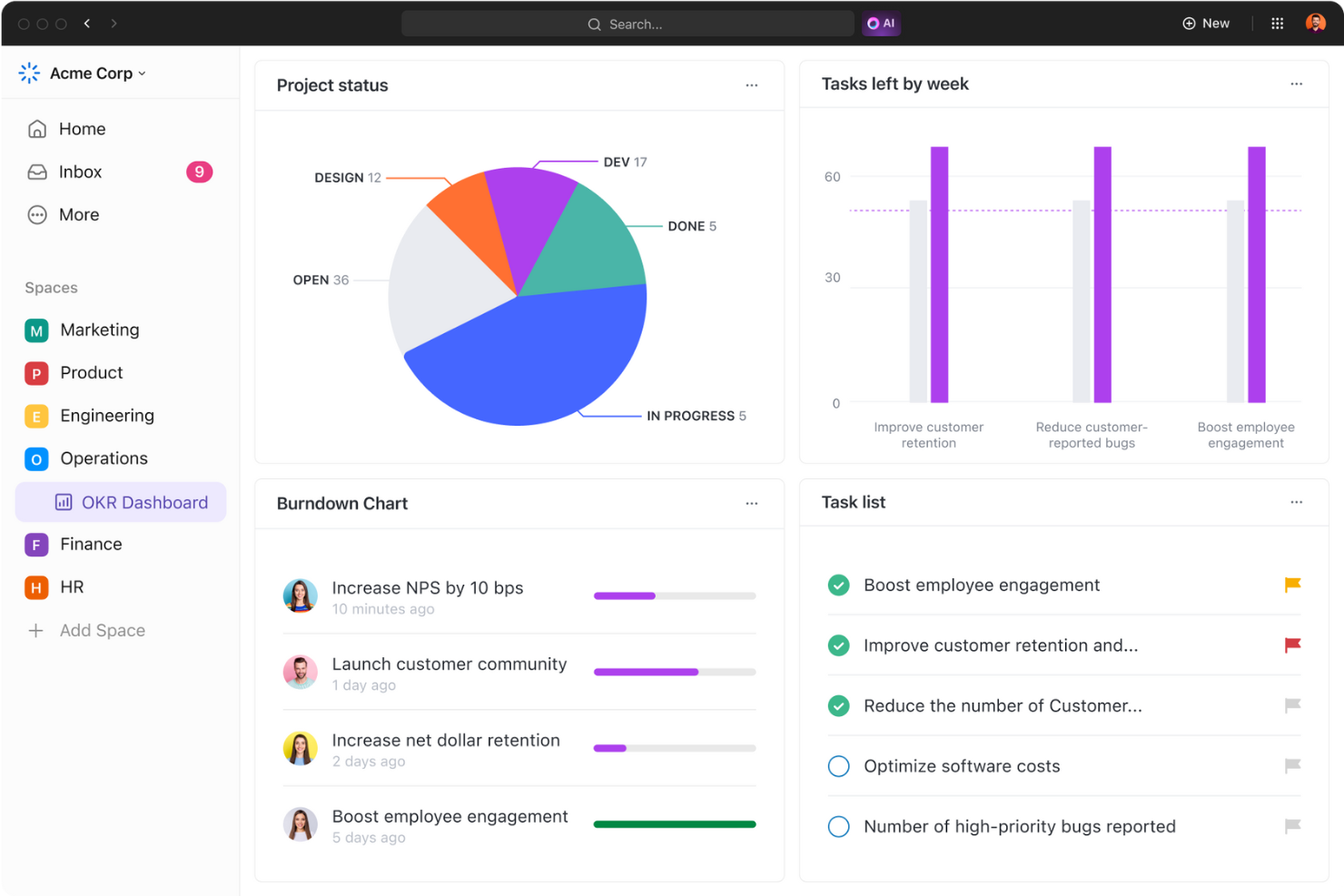
Hubstaff is a time-tracking and productivity management tool designed for teams that need precise monitoring of work hours and activities. Its main users include remote teams and businesses that require accurate time tracking and reporting.
Why Hubstaff is a good ClickUp alternative: Hubstaff offers detailed time-tracking capabilities, making it ideal for businesses focused on monitoring employee productivity. It features GPS tracking and online timesheets, which support remote work management. You can also generate detailed reports to analyze productivity trends. These tools help you keep track of your team's work hours efficiently.
Standout features & integrations:
Features include GPS tracking, online timesheets, and productivity reporting. You can easily manage remote teams with location-based tracking. Hubstaff also allows for easy payroll processing, saving you time on manual calculations.
Integrations include QuickBooks, Trello, Slack, Asana, Jira, PayPal, Xero, FreshBooks, Salesforce, and Basecamp.
Pros and Cons
Pros:
- Great for remote teams
- Easy payroll processing
- Detailed productivity reports
Cons:
- Not ideal for small teams
- Limited project management features
Hive
Best for teams seeking user-driven features
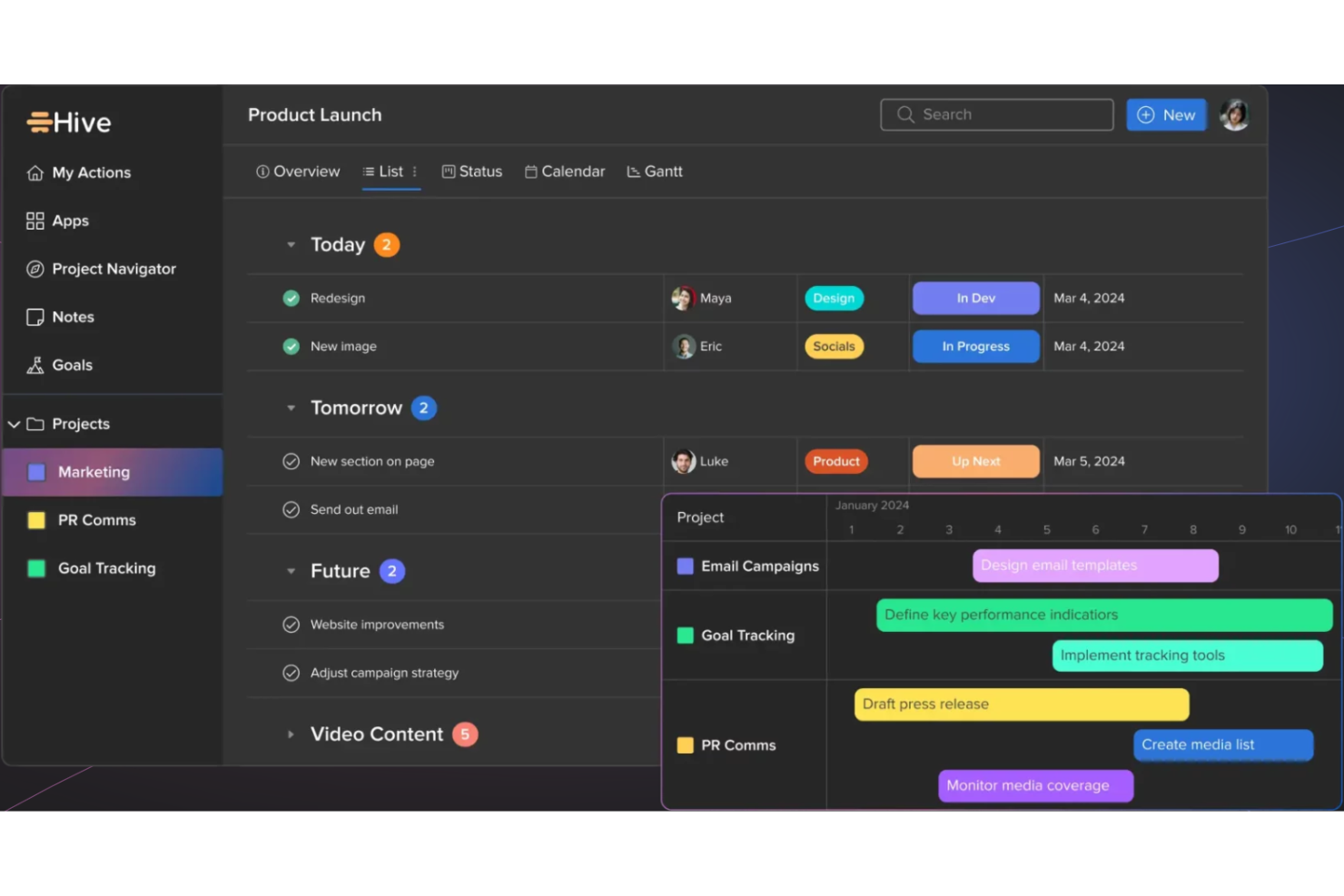

Hive is a project management tool designed to help teams plan, execute, and track projects efficiently. It serves a diverse user base, including marketing, operations, and design teams, by consolidating tasks, deadlines, and communications into one platform.
Why Hive is a good ClickUp alternative: Hive's development is driven by user feedback, ensuring the platform evolves to meet your team's specific needs. Features like customizable project layouts, real-time messaging, and automated workflows enhance collaboration and productivity. Additionally, Hive's flexible project hierarchies and integration capabilities allow your team to tailor the workspace to fit your unique processes.
Standout features & integrations:
Features include project templates that let you set up repeatable workflows, time tracking to monitor how long tasks take, and proofing and approvals to manage feedback on creative assets. These tools help your team work more efficiently and keep everyone on the same page.
Integrations include Google Drive, Slack, Zoom, Salesforce, Microsoft Teams, Jira, Dropbox, OneDrive, Box, and Asana.
Pros and Cons
Pros:
- Flexible project hierarchies
- User-driven feature development
- Customizable project layouts
Cons:
- Advanced features may require additional setup
- Slight learning curve for new users
Other ClickUp Alternatives
Here are some additional ClickUp alternatives that didn’t make it onto my shortlist, but are still worth checking out:
- Zoho Projects
For tailored workflows
- Wrike
For automating complex workflows
- Notion
For integrating docs and tasks
- Asana
For enterprise-grade security
- Teamwork
For client-focused teams
- Float
For resource scheduling and capacity planning
- Motion
For AI-driven scheduling
- Ravetree
For integrated CRM features
How I Evaluate ClickUp Alternatives
I evaluate ClickUp alternatives across two layers: the baseline—roadmapping, sprints, backlog management—each tool must clear, and the differentiators that separate the best from the rest.
Core Functionality (Table Stakes For This List)
When I'm selecting tools for my list, I rank each one on a scale from 0 (does not offer the functionality) to 5 (excels in this area) for each core functionality listed below. Then, I calculate the tool's total score into a percentage. Each tool needs to achieve a minimum total score of 65% to be considered for inclusion.
- Roadmapping & Planning: I look for timeline or Gantt views where you can map quarterly initiatives, set dependencies between milestones, and drag releases across dates.
- Task & Backlog Management: Every tool should let you create user stories, assign custom fields like priority or effort, and sort a backlog by sprint or theme.
- Agile Workflow Support: I check whether the platform supports Kanban boards alongside sprint planning, including story points, burndown charts, and velocity tracking.
- Multiple Work Views: Product teams need to shift between boards, lists, calendars, and timelines depending on the audience—standup vs. stakeholder review, for example.
- Collaboration & Docs: I evaluate whether teams can comment on tasks, mention teammates, attach files, and co-edit embedded docs or wikis without leaving the platform.
- Integrations & Automations: The tool should connect to engineering and design apps like GitHub, Jira, or Figma, and offer rule-based automations for recurring workflows.
Once I have a list of tools that meet this criteria, I consider what sets each platform apart.
Differentiating Factors (What Sets Vendors Apart)
Here's how I compare and contrast different vendors:
Standout Features
Prioritization frameworks like RICE or MoSCoW make a real difference when your backlog has dozens of competing feature requests. I look for tools that let you score and rank items directly inside the backlog view. Stakeholder-facing portals also matter—being able to share a clean, read-only roadmap with leadership or customers without exposing sprint-level details saves time and reduces noise. I also evaluate whether the tool can aggregate customer feedback and link it to specific roadmap items, so prioritization decisions are grounded in real user input.
Beyond Features
Migration support matters when you're switching from ClickUp—I check whether a platform offers import tools, pre-built product management templates, or dedicated onboarding help to shorten the transition. Pricing structure is another factor I evaluate closely, especially how tiers handle guest or viewer seats for stakeholders who only need roadmap access. I also consider how well each tool scales across multiple product lines, since teams managing a single product have very different workspace needs than orgs running a full product portfolio.
Why Look for a ClickUp Alternative?
While a ClickUp alternative is a good software choice for product management, there are several reasons why some users seek out alternative solutions. For example, you might be looking for a ClickUp alternative because of the following:
- It lacks specific industry features
- It’s too project management-focused
- It's too complex for small teams
- You need better integration options
- It's not available in your region
- You're looking for more affordable pricing
- You need stronger data security compliance
If any of these sound like you, you’ve come to the right place. My list contains several product management options that are better suited for teams facing these challenges with ClickUp and looking for alternative solutions.
ClickUp Alternative Key Features
Here are some of the key features of ClickUp alternatives, to help you contrast and compare what alternative solutions offer:
- Task management: Organize your work with task lists, due dates, and priorities to keep everything on track.
- Time tracking: Monitor how much time you and your team spend on tasks to manage productivity.
- Multiple views: Choose from lists, boards, calendar formats, and more and build customizable task overviews.
- Automation: Set up rules to automate repetitive actions and save time on routine tasks.
- Dashboards: Create custom dashboards to get a visual overview of your project's status and important metrics.
- Integrations: Connect with other tools you use to keep your workflows connected and efficient.
- Templates: Use pre-designed templates to start new projects quickly without setting up everything from scratch.
- Collaboration tools: Use features like comments, attachments, and mentions to communicate with your team in context.
- Reporting and analytics: Generate reports to analyze project performance and make informed decisions.
- Custom fields: Add additional data fields to tasks to capture all the information your team needs. It looks like your message might be incomplete. Could you please provide more details or let me know how I can assist you further?
What’s Next?
ClickUp is a versatile project management tool, but when it comes to product management, some teams need more specialized features for roadmapping, backlog management, and cross-functional collaboration.
If you're specifically looking for tools designed to help bring products to market faster, check out our roundup of the 30 Best Product Management Software For Faster Time-to-Market in 2025.
While ClickUp offers task management and goal tracking, some teams require dedicated prioritization frameworks, such as RICE or MoSCoW, to systematically evaluate features. If you need a tool designed for that purpose, check out our list of the 27 Best Product Prioritization Software To Evaluate & Rank Features In 2025."
Don't forget to subscribe to our newsletter for more product management resources and guides, plus the latest podcasts, interviews, and other insights from industry leaders and experts.