
10 Best Asana Alternatives Reviewed in 2026

Best Asana Alternatives Shortlist


Managing projects can be tough, especially when your current tools aren't cutting it. As a product manager, you face constant pressure to keep everything on track, and although it can be a great tool for specific use-cases, sometimes Asana just doesn't fit your needs.
Maybe you're dealing with complex projects, or you need better customization or collaboration features. Whatever the case, finding the right tool can make all the difference for your team.
I've tested and reviewed various options, and I'm here to share unbiased insights on the best Asana alternatives. You'll find practical solutions tailored to your unique challenges. Here are my top software recommendations.
What Is Asana?
Asana is a product management core tool designed to help teams organize, track, and manage their work. It's commonly used by project managers, team leaders, and product development professionals who need to keep projects on schedule and ensure collaboration. Task assignment, deadline tracking, and project visualization features like Calendars and Kanban boards help with managing workflows and improving team efficiency. Overall, Asana simplifies project management by providing a clear view of tasks and progress.
Why Trust Our Software Reviews
We’ve been testing and reviewing product management software since 2020. As product managers ourselves, we know how critical and difficult it is to make the right decision when selecting software.
We invest in deep research to help our audience make better software purchasing decisions. We’ve tested more than 2,000 tools for different product management use cases and written over 1,000 comprehensive software reviews. Learn how we stay transparent & our software review methodology.
Best Asana Alternatives Summary
This comparison chart summarizes pricing details for my top Asana alternative selections to help you find the best one for your budget and business needs.
| Tool | Best For | Trial Info | Price | ||
|---|---|---|---|---|---|
| 1 | Best for built-in time tracking | 15-day free trial + free plan + free demo available | From $4/user/month (billed annually) | Website | |
| 2 | Best for customizable project workflows | 14-day free trial + free plan available | From $10/user/month (billed annually) | Website | |
| 3 | Best for customizable workspaces | Free plan available | From $10/user/month (billed annually) | Website | |
| 4 | Best for no-code app building | Free plan + free demo available | From $20/user/month (billed annually) | Website | |
| 5 | Best for all-in-one project management | 14-day free trial + free demo + free plan available | From $10/user/month (billed annually) | Website | |
| 6 | Best for comprehensive free features | 14-day free trial | From $1.49/user/month (billed annually) | Website | |
| 7 | Best for centralized collaboration | 14-day free trial + free demo available | From $45/month (billed annually) | Website | |
| 8 | Best for client work management | 14-day free trial + free demo available | From $9.99/user/month (billed annually) | Website | |
| 9 | Best for product development teams | 30-day free trial + free demo available | From $9/user/month | Website | |
| 10 | Best for customizable workflows | 30-day free trial + free plan + free demo available | From $11.20/user/month (billed annually) | Website |
Best Asana Alternatives Reviews
Below are my detailed summaries of the best Asana alternatives that made it onto my shortlist. My reviews offer a detailed look at the key features, pros & cons, integrations, and ideal use cases of each tool to help you find the best one for you.

Best for built-in time tracking

Zoho Projects is designed for teams seeking a flexible project management solution that caters to diverse industries such as IT, construction, and marketing. It addresses the need for efficient task management and collaboration, offering tools like time tracking and Gantt charts to streamline workflows. By integrating with a wide range of applications, Zoho Projects ensures that your team can maintain productivity without switching platforms, making it an appealing choice for those looking to transition from Asana.
Why I Picked Zoho Projects
When considering an Asana alternative, I picked Zoho Projects for its advanced task automation capabilities. This feature allows your team to automate repetitive tasks, saving time and reducing manual effort. Additionally, Zoho Projects offers extensive customization options, enabling you to tailor workflows to your specific needs, which is crucial for teams with unique project requirements. These functionalities, combined with intuitive collaboration tools, make Zoho Projects a strong contender for those seeking an alternative to Asana.
Zoho Projects Key Features
In addition to its automation and customization capabilities, Zoho Projects offers several other features that enhance its utility as an Asana alternative.
- Time Tracking: Enables your team to monitor how much time is spent on tasks, helping improve productivity and accountability.
- Gantt Charts: Provides a visual timeline for project tasks, allowing for better planning and deadline management.
- Issue Tracking: Facilitates the identification and resolution of project-related issues, ensuring smooth project progression.
- Team Collaboration: Supports communication and collaboration among team members through forums and chat, fostering a collaborative work environment.
Zoho Projects Integrations
Integrations include Slack, Microsoft Teams, Google Drive, Dropbox, Zapier, Zoho CRM, Zoho Desk, GitHub, Jira, and Microsoft Office 365.
Pros and Cons
Pros:
- Strong Zoho ecosystem integrations
- Built-in time tracking included
- Advanced workflow automation tools
Cons:
- Interface can feel complex
- Steeper learning curve initially
New Product Updates from Zoho Projects

Zoho Projects Adds Time Log Grid View for Faster Tracking
Zoho Projects adds Time Log Grid View, a unified interactive grid for logging and reviewing hours across tasks and issues, helping teams enter time faster and identify work patterns more easily. For more information, visit Zoho Projects’ official site.
 .
.
Wrike
Best for customizable project workflows

Wrike is a project management platform built for teams managing both simple and complex projects across departments. It’s ideal for organizations looking for flexible work views, automation, and deep integrations to support collaborative project management.
Why Wrike is a good Asana alternative: I picked Wrike because it offers more flexibility for managing complex projects with multiple teams involved. While Asana is great for straightforward task management, Wrike excels with advanced tools like customizable request forms, Gantt charts, and real-time dashboards that help you stay on top of project timelines and workloads. Wrike also supports AI-driven features like risk prediction and automation to help reduce manual work, giving your team more time to focus on what matters.
Standout features & integrations:
Features include AI-powered automation tools to reduce repetitive tasks, customizable work views like Gantt charts and Kanban boards for better project visualization, and a centralized data hub to consolidate information from across your projects. Wrike also offers fully functional mobile apps so you can manage work on-the-go.
Integrations include 400+ pre-built native connections, including Microsoft, Google, Dropbox, Salesforce, and Marketo.
Pros and Cons
Pros:
- Individuals and teams can track workloads
- Easily visualize workflow performance
- In-app chat to reduce switch cost for collaboration
Cons:
- Limited to 10 workflows per space
- Not suitable for small organizations
New Product Updates from Wrike

Wrike AI Agents Create Full Blueprints and Formatted Items
Wrike’s AI Agent can now create full blueprints (parent items plus subtasks) in one step and generate richer, formatted descriptions. This makes automated workflow creation more complete. For more information, visit Wrike’s official site.
 .
.
Notion
Best for customizable workspaces

Notion is a versatile workspace tool designed for individuals and teams to organize their tasks, projects, and knowledge. It's favored by creatives, freelancers, and team managers for its ability to combine notes, tasks, databases, and wikis.
Why Notion is a good Asana alternative: Notion offers highly customizable workspaces where you can create pages and databases tailored to your team's needs. Its flexibility allows you to structure information in a way that suits your workflow, from simple to complex setups. The ability to embed various elements, like images and tables, provides a visual edge. For those seeking more customization options than Asana, Notion is a compelling choice.
Standout features & integrations:
Features include a drag-and-drop interface, making it easy to arrange content the way you want. With Notion, you can create templates for repetitive tasks, saving time and effort. The tool also supports rich media, allowing your team to embed videos and images directly into pages.
Integrations include Slack, Google Drive, Trello, Asana, GitHub, Zapier, Typeform, Figma, Jira, and Twitter.
Pros and Cons
Pros:
- Highly customizable pages
- Templates for quick setup
- Supports rich media
Cons:
- Can be slow with large databases
- May have a learning curve

Airtable
Best for no-code app building

Airtable is a cloud-based collaboration tool that combines the simplicity of spreadsheets with the power of a database. It's favored by teams in various sectors for managing projects, tracking tasks, and organizing data.
Why Airtable is a good Asana alternative: Airtable offers a unique ability to build custom applications without coding, making it ideal for teams needing tailored solutions. Its grid, Kanban, and calendar views allow you to visualize projects in multiple ways. The drag-and-drop interface simplifies task management, while the flexible database structure supports diverse workflows. For teams seeking customizable project management features beyond what Asana offers, Airtable provides a versatile and adaptable platform.
Standout features & integrations:
Features include a flexible grid view that lets your team organize information in a way that suits them. The Kanban view provides a visual workflow for managing tasks. Airtable's calendar view is perfect for tracking deadlines and schedules.
Integrations include Slack, Google Drive, Dropbox, Asana, Trello, Salesforce, Zendesk, Box, GitHub, and Mailchimp.
Pros and Cons
Pros:
- Adaptable to different workflows
- Easy to use for various teams
- Flexible data organization
Cons:
- Requires time to set up
- Can be overwhelming for beginners

Nifty
Best for all-in-one project management

Nifty is a project management tool designed to help teams collaborate and manage projects efficiently. It's suitable for businesses and teams looking for a complete solution to plan, track, and complete projects.
Why Nifty is a good Asana alternative: Nifty combines task management, time tracking, and project collaboration in one platform, providing an all-in-one solution that Asana may lack. It features a milestone-driven approach to project management, helping you keep track of progress and deadlines. The built-in discussion channels enable team communication without needing external tools. Nifty's focus on integrating multiple functionalities makes it a great choice if you're seeking a more cohesive project management experience than Asana.
Standout features & integrations:
Features include a milestone feature that helps your team track project goals and timelines. The built-in discussion channels facilitate communication directly within the platform. Nifty also offers time tracking, allowing you to monitor time spent on each task.
Integrations include Slack, Google Drive, Dropbox, Zoom, Google Calendar, Microsoft Teams, Outlook, GitHub, Asana, and Trello.
Pros and Cons
Pros:
- Suitable for various team sizes
- Milestone-driven project tracking
- Built-in communication channels
Cons:
- Can be overwhelming with features
- Limited template options

Best for comprehensive free features

Freedcamp is a project management tool that caters to businesses and individuals looking for a cost-effective solution to organize tasks and collaborate. It's popular among freelancers, small businesses, and teams that need to manage multiple projects efficiently.
Why Freedcamp is a good Asana alternative: Freedcamp offers a wide range of features in its free plan, making it appealing if you're budget-conscious. It provides tools like task lists, calendars, and time tracking to keep your projects on track. The ability to manage documents and discussions within the platform supports collaboration. These offerings make Freedcamp a worthy alternative to Asana if you're seeking extensive features without the high-end price tag.
Standout features & integrations:
Features include a user-friendly task list that helps your team organize and prioritize work. The calendar view provides a visual timeline for project tasks and deadlines. Freedcamp also offers a time-tracking tool that enables you to monitor project hours effectively.
Integrations include Google Drive, Dropbox, OneDrive, Zapier, Slack, Box, Google Calendar, Evernote, GitHub, and Trello.
Pros and Cons
Pros:
- Offers time tracking
- Supports document management
- Wide range of free features
Cons:
- Can be complex for new users
- Limited advanced features

ProofHub
Best for centralized collaboration

ProofHub is a project management and team collaboration tool designed for teams needing centralized control over their projects. It serves managers and team leaders by providing tools for task management, communication, and project planning.
Why ProofHub is a good Asana alternative: ProofHub offers a centralized platform where your team can manage tasks, discussions, and files in one place, reducing the need for multiple tools. Its built-in chat and discussion features make communication straightforward and accessible. The visual timeline helps you plan and track project progress efficiently. These features make ProofHub an attractive alternative to Asana for teams that require a more centralized and controlled environment.
Standout features & integrations:
Features include a detailed project timeline that allows you to visualize project stages. ProofHub's built-in chat feature lets your team communicate without leaving the platform. It also offers file storage, ensuring all your project documents are easily accessible.
Integrations include Google Drive, Dropbox, Box, OneDrive, Outlook, iCal, FreshBooks, QuickBooks, Zapier, and Slack.
Pros and Cons
Pros:
- Visual project timelines
- Built-in chat and discussions
- Centralized project management
Cons:
- Limited advanced reporting features
- May need additional training

Teamwork
Best for client work management
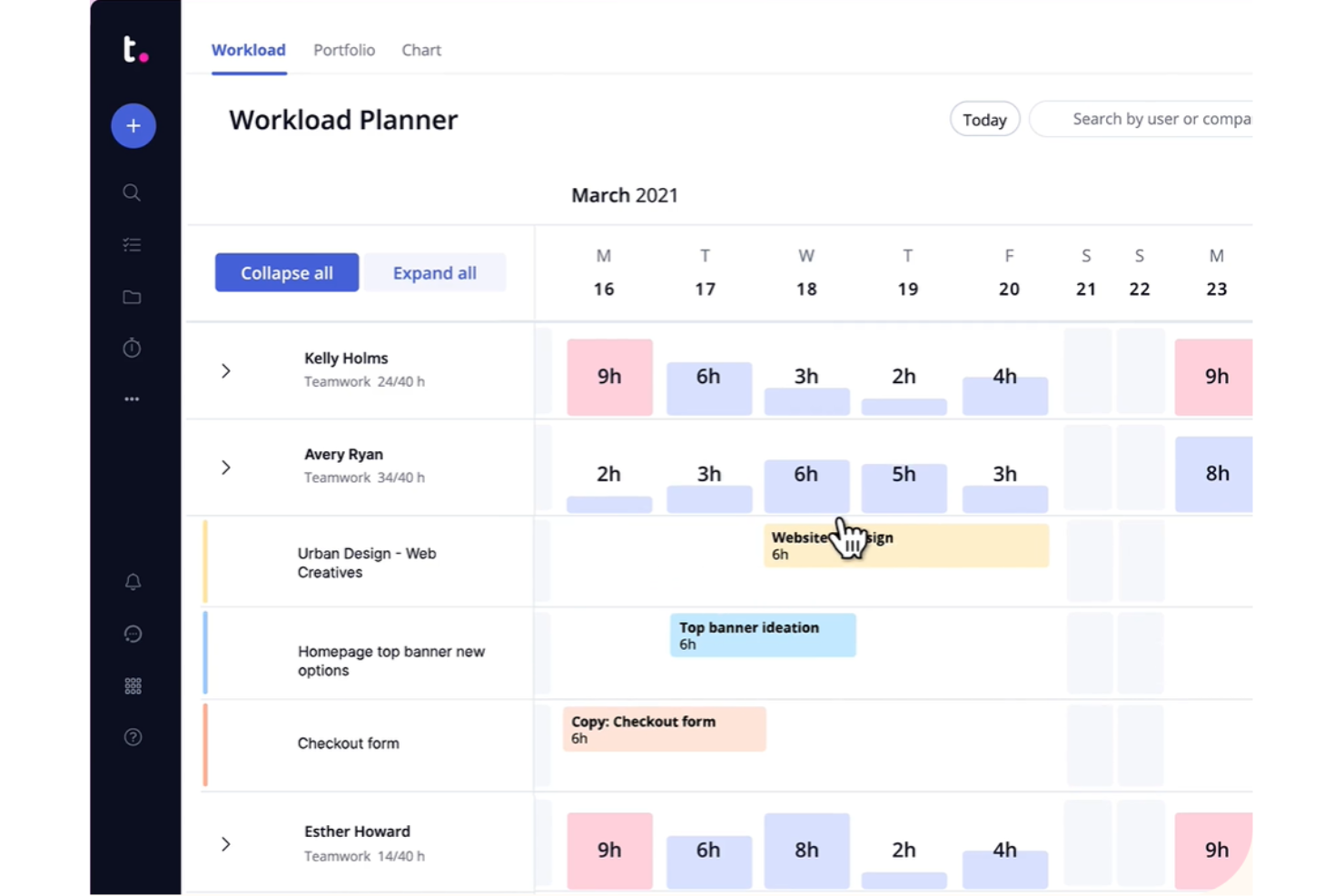
Teamwork is a project management software designed for businesses that handle client work, such as agencies and consultancies. It helps with task management, project planning, and collaboration to deliver client projects efficiently.
Why Teamwork is a good Asana alternative: Teamwork offers advanced features for managing client projects, such as time tracking and billing, which are essential for agencies. Its task dependencies and Gantt charts help you plan and execute projects effectively. The client permissions feature allows you to share project updates with your clients without compromising privacy. These capabilities make Teamwork a great choice if your team needs more robust client management than Asana provides.
Standout features & integrations:
Features include detailed time tracking, which helps your team bill clients accurately. The built-in billing feature allows you to manage invoices directly from the platform. Teamwork also offers task templates, which can save time on repetitive projects.
Integrations include Slack, Dropbox, Google Drive, HubSpot, QuickBooks, Xero, Zapier, Microsoft Teams, Harvest, and Basecamp.
Pros and Cons
Pros:
- Task dependencies available
- Includes time tracking
- Strong for client management
Cons:
- May need additional training
- Can be complex for small teams

Aha!
Best for product development teams

Aha! is a product development software designed for teams to set strategy, capture ideas, create roadmaps, and manage releases. It's primarily used by product managers and development teams to plan and execute product initiatives.
Why Aha! is a good Asana alternative: Aha! offers specialized features tailored for product development, such as visual roadmaps that link strategy to execution, idea management to capture and prioritize customer feedback, and release planning tools to coordinate cross-functional launches. These capabilities make it particularly suitable for product teams seeking complete end-to-end product management.
Standout features & integrations:
Features include a visual roadmap builder that helps you plan and communicate product strategy, idea management to gather and prioritize customer feedback, and release planning tools to coordinate cross-functional launches. These tools enable your team to align on goals and deliver products that customers love.
Integrations include Jira, GitHub, Azure DevOps Server, Pivotal Tracker, Trello, FogBugz, Jellyfish, Redmine, Zendesk, Salesforce, Google Analytics, and Slack.
Pros and Cons
Pros:
- Integrated idea management
- Visual roadmap creation
- Customizable workflows
Cons:
- Higher cost compared to some alternative paid plans
- Steep learning curve

Podio
Best for customizable workflows

Podio is a project management and collaboration platform that allows users to create custom workflows for their teams. It's used by businesses of all sizes to manage tasks, projects, and communications in a flexible environment.
Why Podio is a good Asana alternative: Podio lets your team customize workflows to suit your specific project needs, offering more flexibility than Asana. You can build your own apps within Podio to streamline processes and improve efficiency. Its task management features help keep your team organized and focused. With the ability to adapt to various project types, Podio provides a tailored management experience that might be lacking in Asana.
Standout features & integrations:
Features include customizable templates that let your team create tailored project structures. Podio's real-time collaboration tools ensure everyone stays connected and informed. The app-building capability allows you to design specific functionalities for your unique workflow needs.
Integrations include Google Drive, Dropbox, Evernote, Zendesk, Outlook, ShareFile, GoToMeeting, FreshBooks, Campaign Monitor, and Mailchimp.
Pros and Cons
Pros:
- Flexible project structures
- Real-time collaboration tools
- Highly customizable workflows
Cons:
- Limited out-of-the-box features
- May require technical setup
Other Asana Alternatives
Here are some additional Asana alternatives that didn’t make it onto my shortlist, but are still worth checking out:
- Ravetree
For client portals
- Trello
For visual task organization
- Jira
For complex project tracking
- Workzone
For marketing and creative teams
- Basecamp
For simple project management
- MeisterTask
For Kanban-style task management
- ClickUp
For task customization
- Miro
For visual collaboration
- Process Street
For workflow automation
- Hive
For productivity analytics
- Bonsai
For freelancer invoicing
- monday.com
For quick and intuitive setup
- Flow
For managing multiple teams


How I Evaluate Asana Alternatives
I look for tools across two layers: the baseline product management functionality every option must have, and the differentiators—like roadmapping depth or agile support—that define the best fit.
Core Functionality (Table Stakes For This List)
When I'm selecting tools for my list, I rank each one on a scale from 0 (does not offer the functionality) to 5 (excels in this area) for each core functionality listed below. Then, I calculate the tool's total score into a percentage. Each tool needs to achieve a minimum total score of 65% to be considered for inclusion.
- Roadmap Planning: I check whether the tool supports timeline-based roadmaps with milestones and dependencies, plus shareable views for stakeholders like leadership or customers.
- Backlog & Prioritization: Product teams need structured backlogs. I look for built-in prioritization frameworks like RICE or custom scoring to rank features beyond simple drag-and-drop.
- Agile Sprint Management: Sprint cycles, story point estimation, and iteration tracking matter here. I evaluate whether the tool supports Scrum, Kanban, or both workflows.
- Cross-Functional Task Management: Shipping a product involves design, engineering, and marketing. I look for task assignment, subtasks, and collaboration features that keep those teams in sync.
- Product Stack Integrations: Most product teams rely on tools like Jira, GitHub, Slack, and Figma daily. I evaluate native integration depth and two-way sync, not just one-directional pushes.
- Reporting & Progress Tracking: Dashboards and status views should surface sprint velocity, burndown charts, or delivery timelines so product leads can report up without building manual updates.
Once I have a list of tools that meet this criteria, I consider what sets each platform apart.
Differentiating Factors (What Sets Vendors Apart)
Here's how I compare and contrast different vendors:
Standout Features
I pay close attention to customer feedback integration—tools that let you link support tickets or survey responses directly to roadmap items save product managers from living in spreadsheets. OKR and goal alignment are other factors I evaluate, since tying sprint work to measurable business outcomes helps PMs communicate progress to leadership. Release management also matters. Tools with built-in changelogs and version tracking make coordinating launches across engineering and marketing far smoother.
Beyond Features
Onboarding and time-to-value matter a lot when you're migrating from Asana. I look for pre-built product management templates and migration support that help teams get operational fast. Scalability is another big consideration—a tool that works for a five-person startup may fall apart when you're managing multiple product lines with cross-team dependencies. I also evaluate pricing transparency, specifically whether vendors offer viewer-only seats or flexible tier structures so you're not paying full price for stakeholders who just need read access.
Why Look for an Asana Alternative?
While Asana is a good choice for product management, there are a number of reasons why some users seek out alternative solutions. You might be looking for an Asana alternative due to any of the following.
- You need more customization options
- Your team requires advanced reporting tools
- You find the user interface to be convoluted
- You find it lacks integration with specific apps
- You're seeking more affordable pricing plans
- Your team is growing and requires better scalability
- You need compliance with specific data regulations
If any of these sound like you, you’ve come to the right place. My list contains several product management core options that are better suited for teams facing these challenges with Asana and looking for alternative solutions.
Asana Key Features
Here are some of the key features of Asana, to help you contrast and compare what alternative solutions offer:
- Task management: Allows you to create, assign, and track tasks to keep your projects organized.
- Project timelines: Helps visualize project schedules and deadlines, ensuring your team stays on track.
- Boards and calendars: Provides visual tools for project planning and management, aiding your team's organization.
- Real-time updates: Keeps your team informed with instant notifications, enhancing collaboration and accountability.
- Portfolios: This lets you organize projects by account or team, useful for managing numerous projects efficiently.
- Asana Intelligence: Offers AI-driven insights and suggestions to improve project outcomes and save time.
- Collaboration tools: Facilitates communication with message boards and file attachments within tasks.
- Gantt view: Assists in building projects, setting dependencies, and visualizing timelines with a drag-and-drop interface.
- Proofing feature: Converts feedback into subtasks, helping teams manage content production efficiently.
- Custom fields: This enables you to tailor project details to fit your specific workflow needs. It looks like your message is empty. How can I assist you further? If you have any instructions or questions, feel free to let me know!
What’s Next?
Don't forget to subscribe to our newsletter for more product management resources and guides, plus the latest podcasts, interviews, and other insights from industry leaders and experts.