

monday.com Review: Pros, Cons, Features, and Pricing
monday.com stands out for its flexible workflows and intuitive design, making it ideal for teams seeking customizable product management and scalable tools that support growing organizations.

We review tools independently, and commissions help fund our testing. See our transparency policy, our methodology, or suggest a tool.
monday AI Workspace is a product management tool that combines project tracking, workflow automation, and AI assistance in a single workspace. It's worth a look if your team manages complex product work across multiple workstreams and wants AI features native to the tool rather than added on after the fact. Compared to Asana, which treats AI as a feature layer, monday AI Workspace builds AI into the core experience—letting you automate workflows, generate content, and surface insights without leaving the platform.
monday AI Workspace Evaluation Summary
4.6/5
- From $9/user/month (billed annually)
- Free plan available; 14-day free trial
Why Trust Our Software Recommendations
6,700+
Reviews
20
Industry experts
16+
Evaluation factors
14
Years
Our team has been testing and reviewing software since 2012. As product managers ourselves, we know how difficult—and important—it is to choose the right software.
For this guide, we evaluated tools using hands-on testing and independent research, scoring tools using our selection criteria.
Our reviews reflect our human editorial judgment, not a sales pitch.
Expert reviewers:
- Andrew LumbySenior TPM
- Cristiano ValimSenior UI/UX Lead


monday AI Workspace Overview
When judging monday.com as a product management tool, its visual interface, customizable boards, and broad integration options make it a top pick for teams valuing flexibility and quick onboarding. Pricing is competitive for mid-sized teams, and responsive support adds value.
While automation depth and advanced reporting may lag behind some competitors, monday.com excels in environments where ease of use and cross-team collaboration matter most—such as marketing, product, and operations teams managing complex workflows.
Pros
- Visual boards simplify tracking product development stages
- Built-in AI features assist with risk identification and automation
- Fast onboarding with templates for product roadmaps and sprints
Cons
- Complex workflows can require frequent manual board updates
- Automation options require higher-tier plans
- Limited advanced reporting for product analytics
Is monday AI Workspace Right For Your Needs?
Who Would be a Good Fit for monday AI Workspace?
monday.com is a strong choice for teams that need visual project tracking, customizable workflows, and fast onboarding. Its flexible boards, templates, and automation features make it especially useful for collaborative environments where transparency and cross-functional work are priorities.
Businesses in creative, operational, and product-focused roles often find its interface and templates well-suited to their needs, especially when managing multiple projects or stakeholders.
- Creative AgenciesVisual boards and timeline views help manage campaigns and client deliverables.
- Mid-Sized Tech StartupsCustomizable workflows and integrations support rapid product iteration.
- Marketing DepartmentsCampaign planning templates and collaboration tools fit marketing workflows.
- Operations TeamsAutomations and dashboards help track recurring processes and tasks.
- Product ManagersRoadmap templates and sprint boards support agile product development.
- Remote TeamsCentralized communication and file sharing streamline distributed collaboration.
Who Would be a Bad Fit for monday AI Workspace?
monday.com may not suit organizations that require deep analytics, highly specialized compliance, or advanced workflow automation. Teams with complex regulatory needs or those managing large-scale, data-driven projects may find its reporting and automation features limiting compared to more specialized tools.
- Enterprise IT DepartmentsLimited advanced reporting and audit trails restrict large-scale IT oversight.
- Financial ServicesLacks built-in compliance features for regulated financial workflows.
- Manufacturing OperationsDoes not support detailed inventory or supply chain management.
- Data Science TeamsInsufficient analytics and visualization tools for complex data projects.
- Large EnterprisesAutomation and user management features may not scale for thousands.
- Legal DepartmentsMissing document versioning and approval workflows needed for legal processes.
How We Test & Score Tools
We’ve spent years building, refining, and improving our software testing and scoring system. The rubric is designed to capture the nuances of software selection and what makes a tool effective, focusing on critical aspects of the decision-making process.
Below, you can see exactly how our testing and scoring works across seven criteria. It allows us to provide an unbiased evaluation of the software based on core functionality, standout features, ease of use, onboarding, customer support, integrations, customer reviews, and value for money.
Core Functionality (25% of final scoring)
The starting point of our evaluation is always the core functionality of the tool. Does it have the basic features and functions that a user would expect to see? Are any of those core features locked to higher-tiered pricing plans? At its core, we expect a tool to stand up against the baseline capabilities of its competitors.
Standout Features (25% of final scoring)
Next, we evaluate uncommon standout features that go above and beyond the core functionality typically found in tools of its kind. A high score reflects specialized or unique features that make the product faster, more efficient, or offer additional value to the user.
We also evaluate how easy it is to integrate with other tools typically found in the tech stack to expand the functionality and utility of the software. Tools offering plentiful native integrations, 3rd party connections, and API access to build custom integrations score best.
Ease of Use (10% of final scoring)
We consider how quick and easy it is to execute the tasks defined in the core functionality using the tool. High scoring software is well designed, intuitive to use, offers mobile apps, provides templates, and makes relatively complex tasks seem simple.
Onboarding (10% of final scoring)
We know how important rapid team adoption is for a new platform, so we evaluate how easy it is to learn and use a tool with minimal training. We evaluate how quickly a team member can get set up and start using the tool with no experience. High scoring solutions indicate little or no support is required.
Customer Support (10% of final scoring)
We review how quick and easy it is to get unstuck and find help by phone, live chat, or knowledge base. Tools and companies that provide real-time support score best, while chatbots score worst.
Customer Reviews (10% of final scoring)
Beyond our own testing and evaluation, we consider the net promoter score from current and past customers. We review their likelihood, given the option, to choose the tool again for the core functionality. A high scoring software reflects a high net promoter score from current or past customers.
Value for Money (10% of final scoring)
Lastly, in consideration of all the other criteria, we review the average price of entry level plans against the core features and consider the value of the other evaluation criteria. Software that delivers more, for less, will score higher.
Core Features
Visual Boards
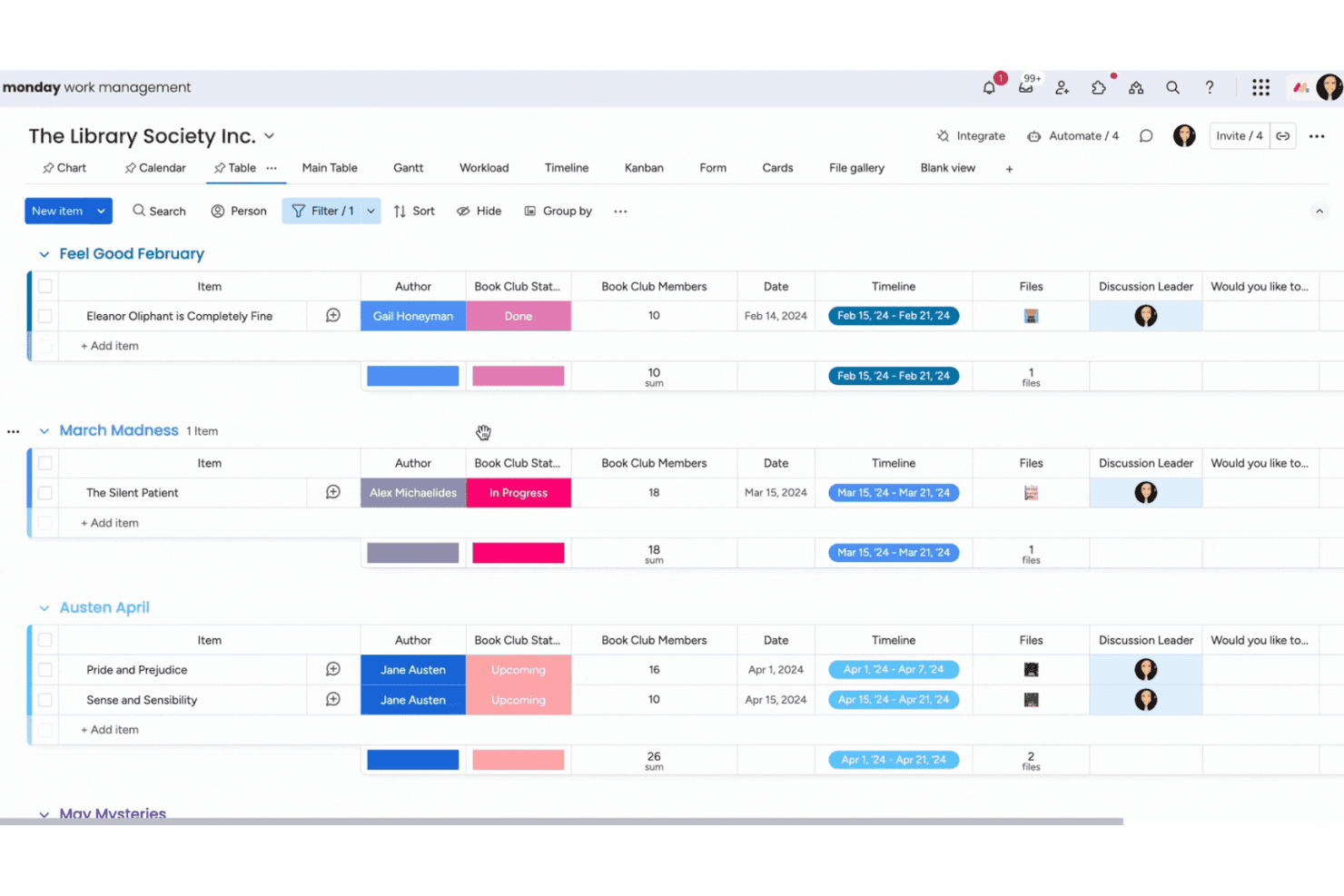
Organize projects using customizable boards with columns for status, priority, and ownership. Drag-and-drop functionality makes it easy to update tasks and track progress.
Timeline and Gantt Views
Plan and visualize project schedules with interactive timelines and Gantt charts. Adjust dates and dependencies directly on the view for real-time updates.
Automations
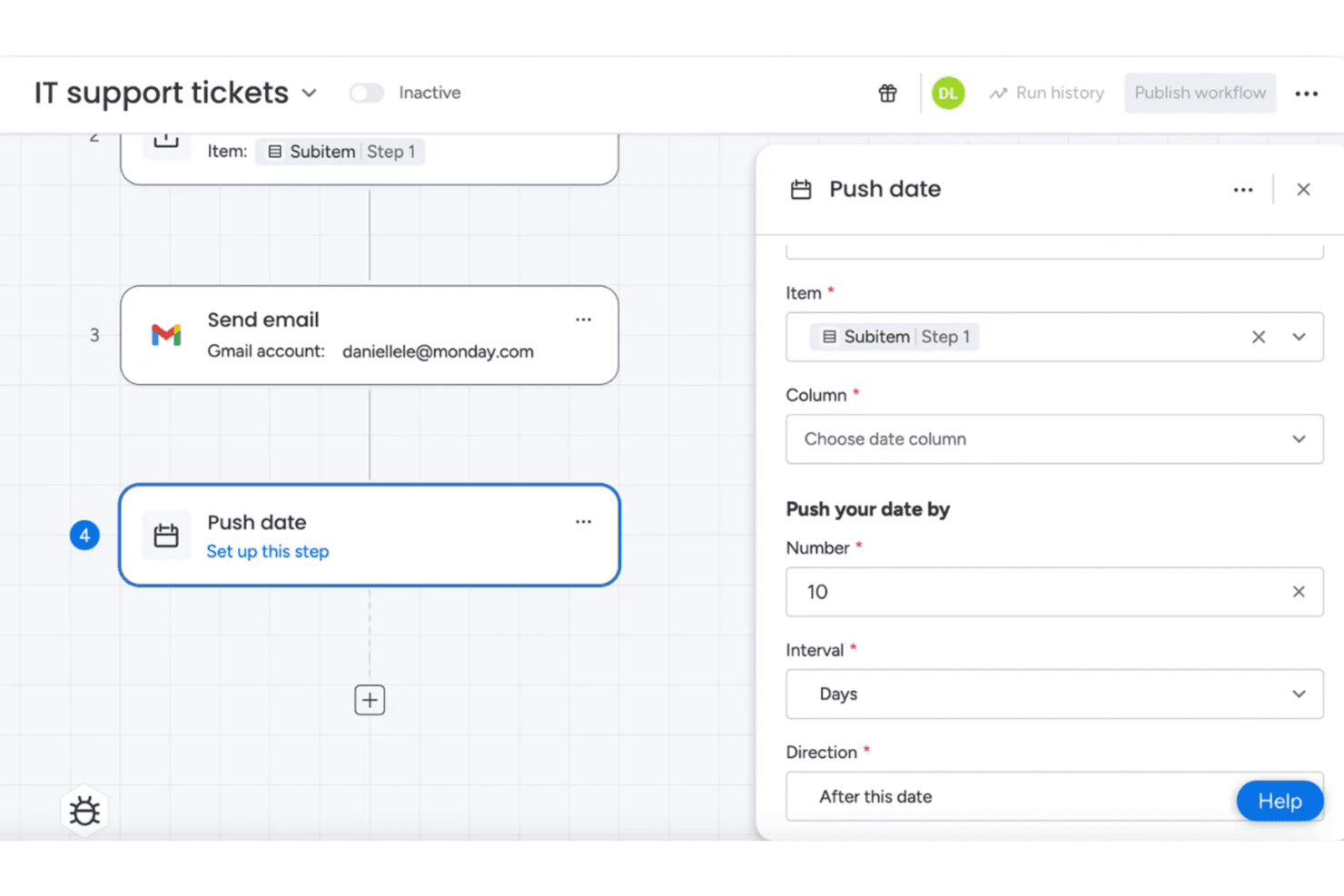
Set up rule-based automations to assign tasks, send notifications, or update statuses. Automations reduce manual work and keep workflows moving without constant oversight.
Dashboards
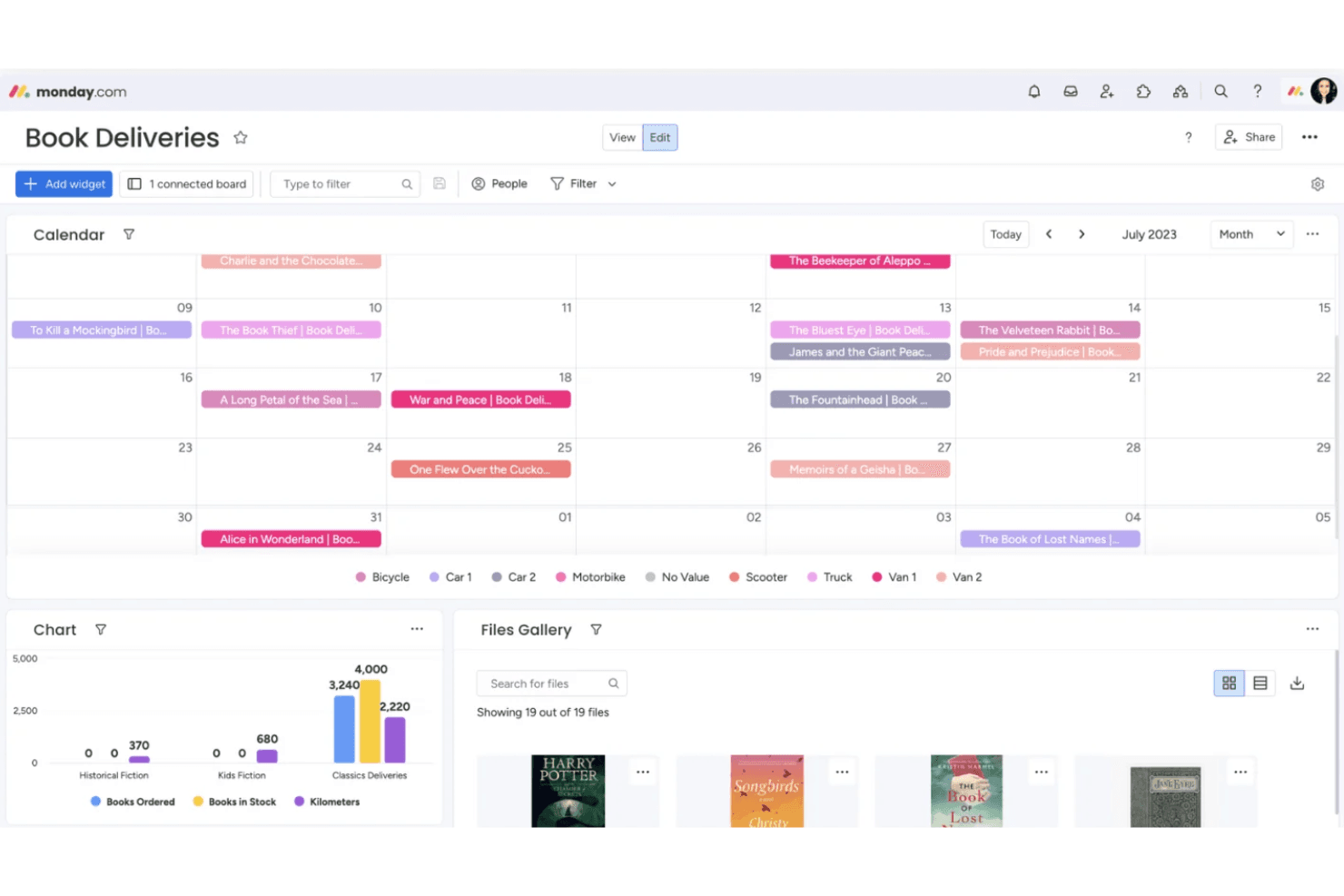
Create dashboards to monitor key metrics, deadlines, and workloads across multiple boards. Widgets let you visualize data for quick, actionable insights.
Docs and Collaboration
Collaborate in real time with monday.com Docs, attaching files, tagging teammates, and embedding boards. Keep all project documentation and discussions in one place.
Templates Library
Access a library of templates for product roadmaps, sprint planning, and feature requests. Templates help teams get started quickly with best-practice workflows.
Standout Features
AI-Powered Workflows
monday.com offers built-in AI tools that automate repetitive tasks, suggest next steps, and help identify project risks. These AI features save time and help teams proactively address bottlenecks.
WorkForms
WorkForms let you create custom forms to collect requests, feedback, or bug reports directly into boards. This feature streamlines intake processes and ensures all submissions are tracked and actionable.
Ease of Use
monday.com is widely recognized for its intuitive, visually-driven interface that helps users get started quickly, even without prior experience. Drag-and-drop boards, color-coded statuses, and pre-built templates make setup and navigation straightforward. Users often highlight how easy it is to customize workflows and onboard new team members.
However, some advanced features—like complex automations—may require extra setup time, but most teams find the platform approachable for daily product management tasks.
Onboarding
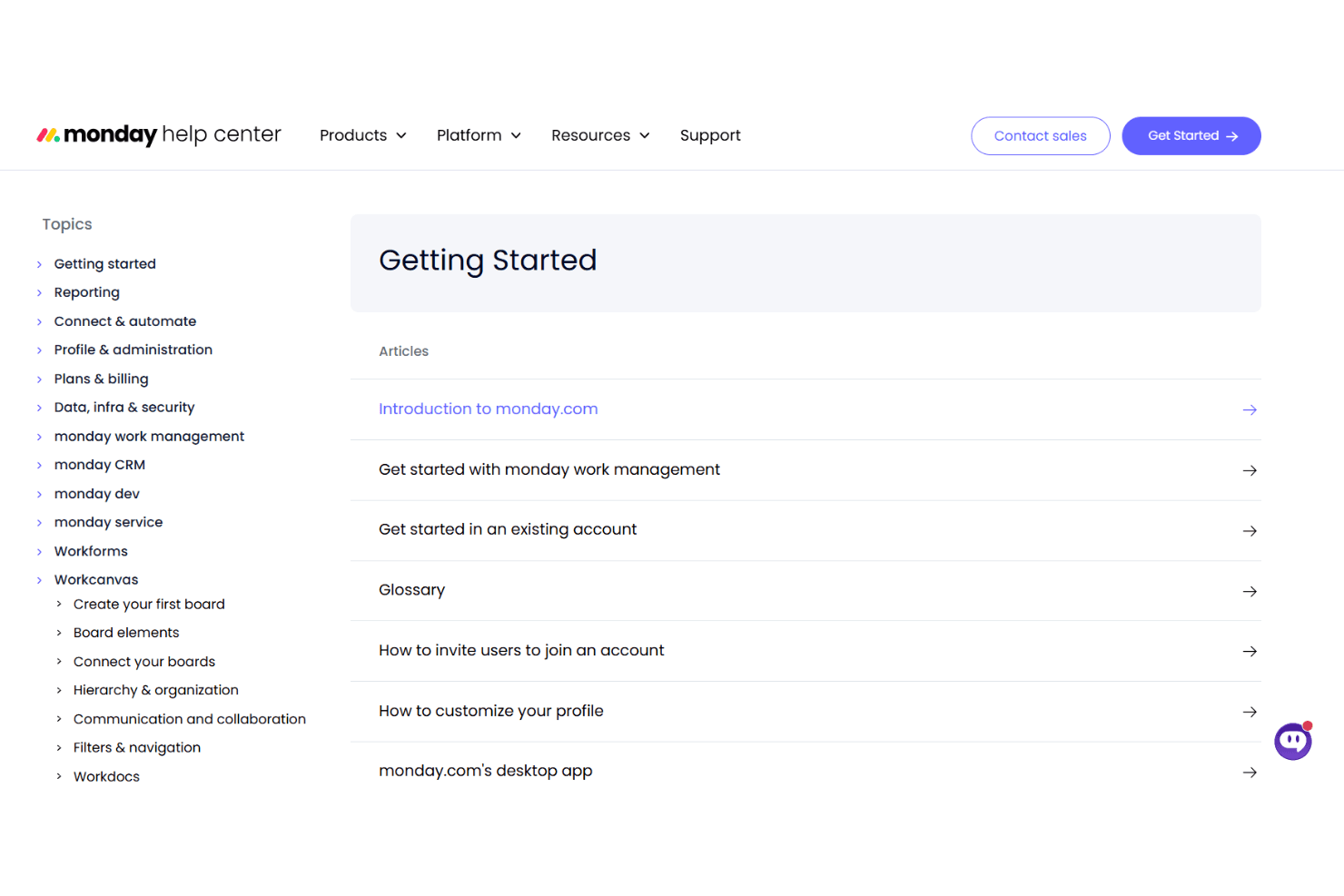
monday.com offers a fast onboarding experience with interactive tutorials, guided setup, and a wide range of templates tailored to different workflows. New users benefit from in-app tips, a searchable knowledge base, and responsive live chat support. Many reviewers note that teams can start managing projects within hours, not days.
The combination of self-serve resources and accessible support helps users reach value quickly, even if they’re new to product management tools.
Customer Support
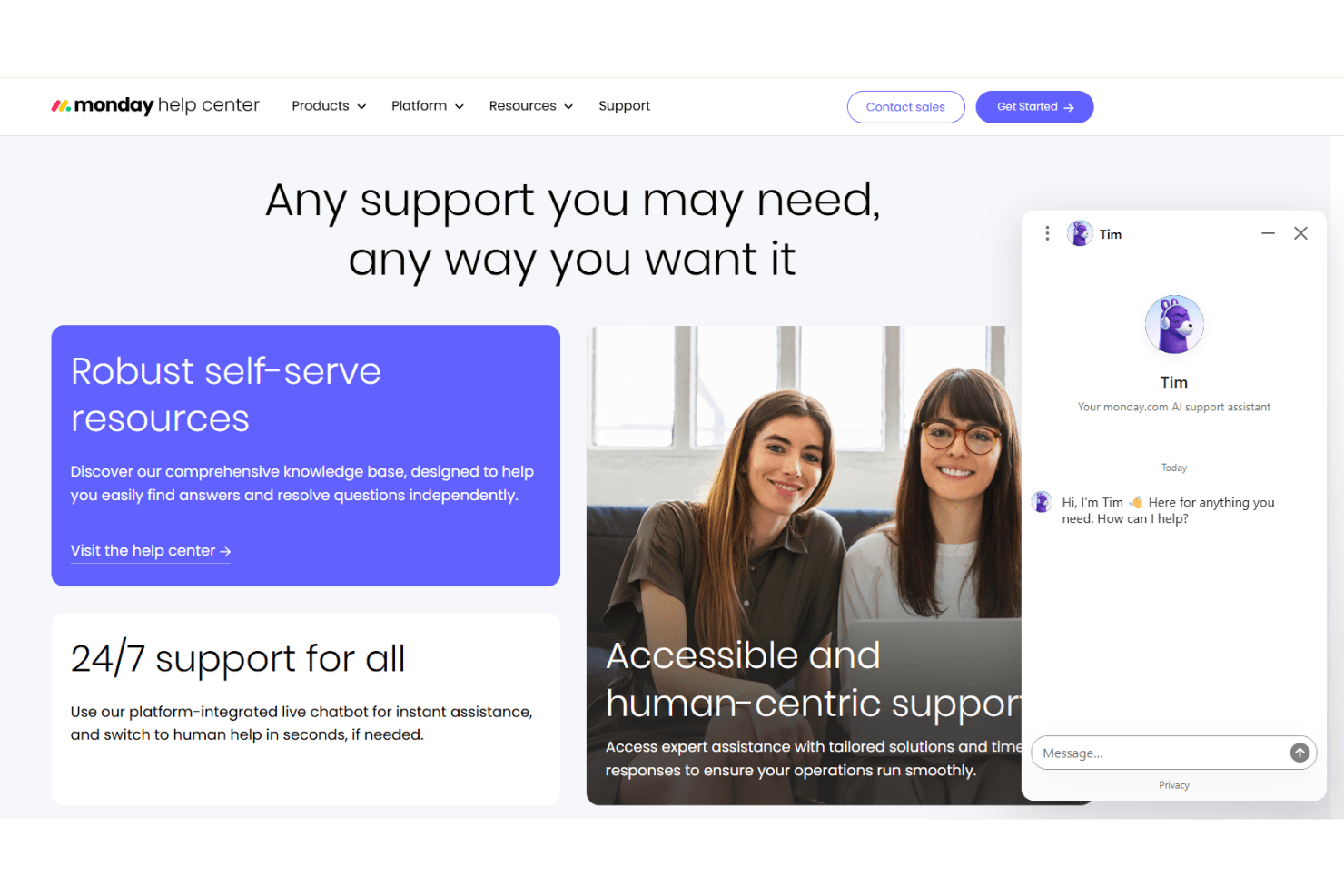
monday.com provides responsive customer support through live chat, email, and an extensive help center. Users frequently mention quick response times and knowledgeable agents who resolve issues efficiently. The platform also offers webinars, community forums, and video tutorials for ongoing learning.
Many teams appreciate the proactive outreach and follow-up from support, which helps them troubleshoot problems and optimize their workflows without long wait times or confusion.
Integrations
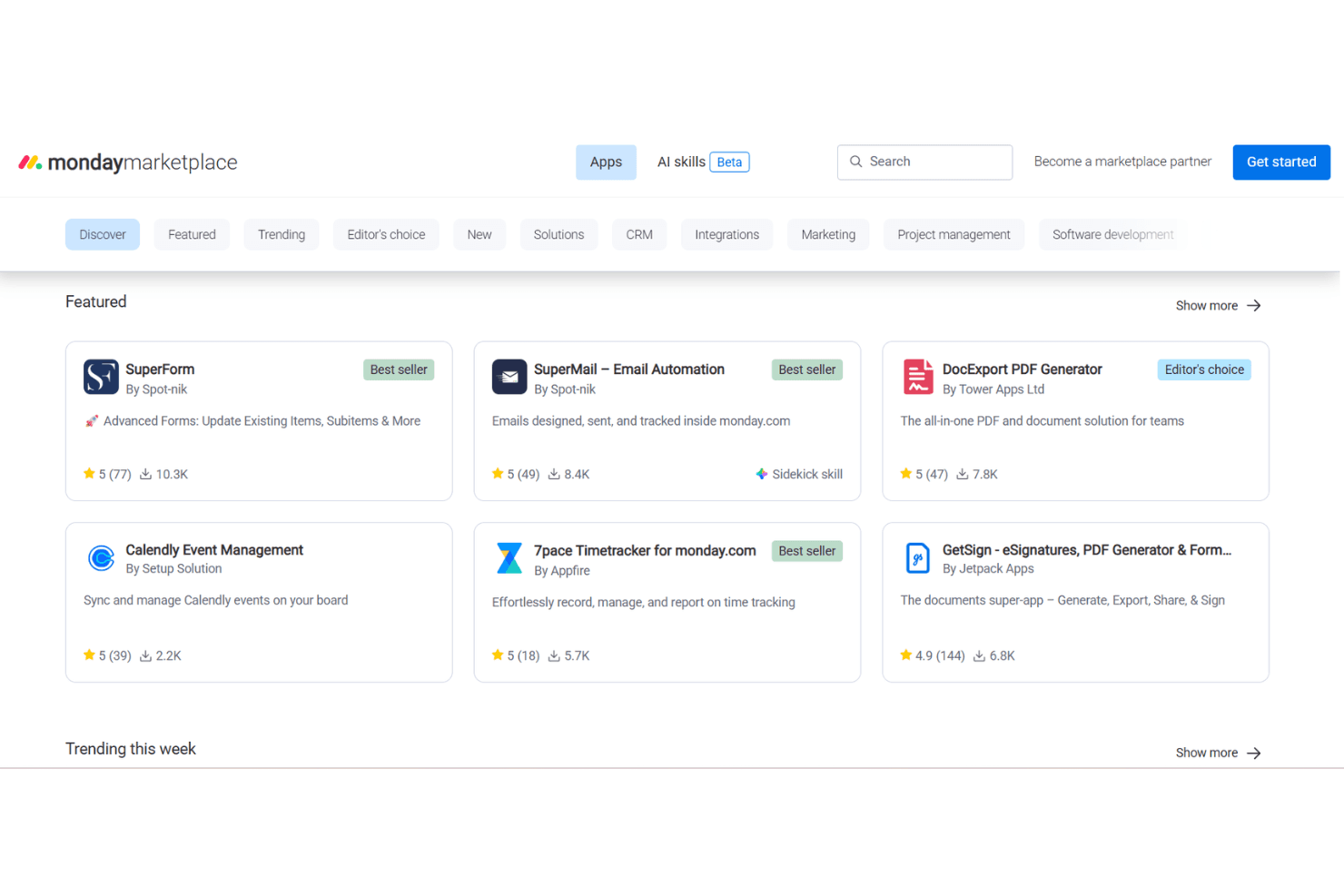
monday.com integrates with Slack, Microsoft Teams, Google Drive, Zoom, Jira, Salesforce, Outlook, Dropbox, HubSpot, and GitHub, among others.
It also offers a public API and connects with third-party integration tools like Zapier and Make.
Value for Money
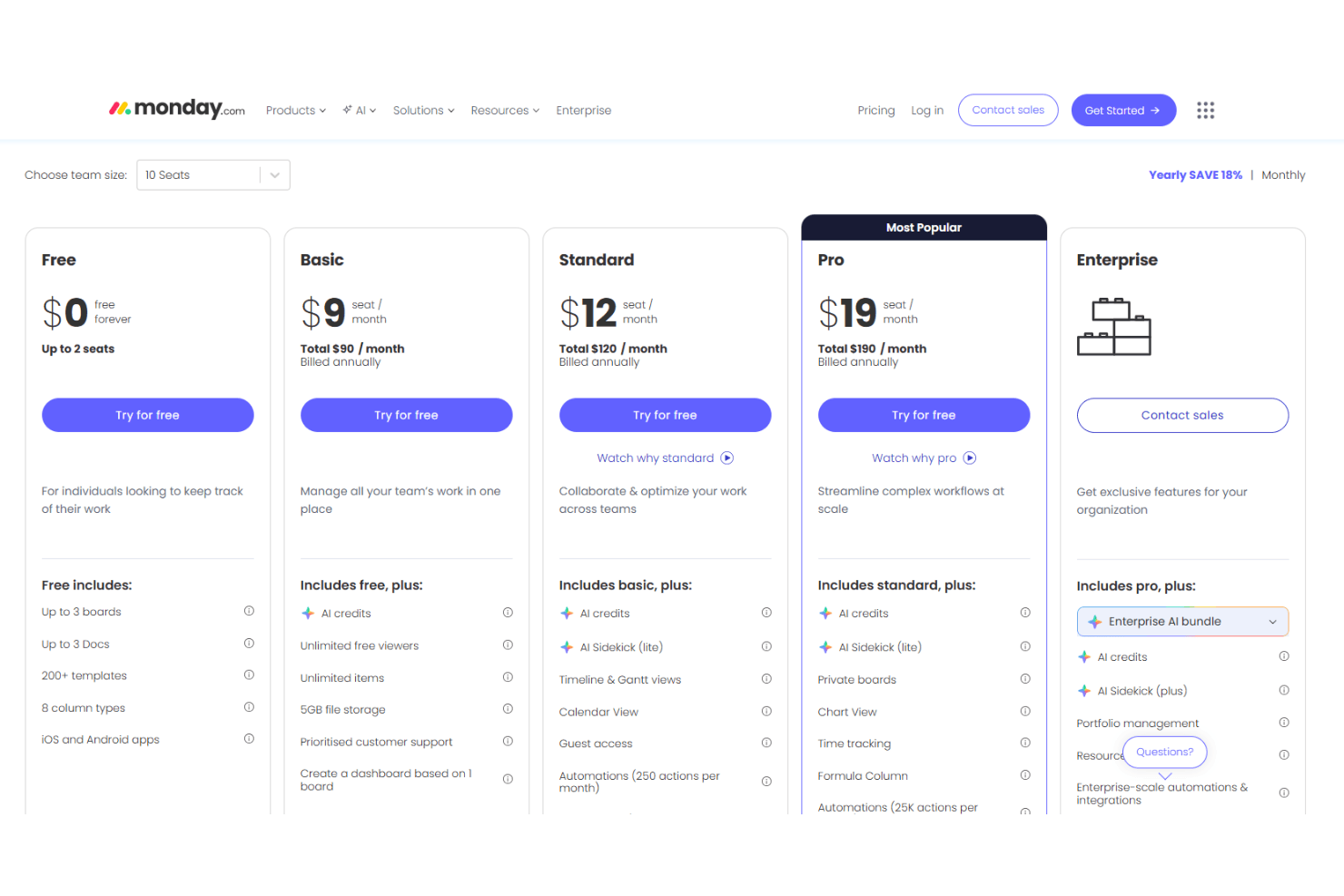
monday.com is a good value for teams that need flexibility and scalability, with pricing that matches a wide range of feature needs. Users appreciate the tiered plans, but some note that advanced automations and analytics require higher-priced tiers. Transparent pricing and a free plan help teams try the platform before committing.
- Free: A basic task and board tool for individuals with limited boards and templates.
- Basic: Adds unlimited items, AI credits, and storage — suitable for simple team tracking.
- Standard: Boosts collaboration with Gantt, calendar, automation, and integration tools.
- Pro: Expands automation limits and advanced views for complex workflows at scale.
- Enterprise: Offers full enterprise features including advanced AI, security, and governance.
New Product Updates from monday AI Workspace
monday AI Workspace Adds Human Approval Routing
monday AI Workspace adds a human-in-the-loop approval block that sends approval requests and branches AI Workflows based on the response. The update lets teams incorporate human decisions into automated workflows before determining which path the workflow should follow. Highlights include:
- Human Approval Block: Adds a human approval step directly within AI Workflows.
- Approval Requests: Sends requests to users when human input is required.
- Conditional Routing: Routes the workflow to different paths based on the approval response.
Visit monday AI Workspace’s official site for more details.
 Opens new window
monday.com Adds Managed Columns Across Boards
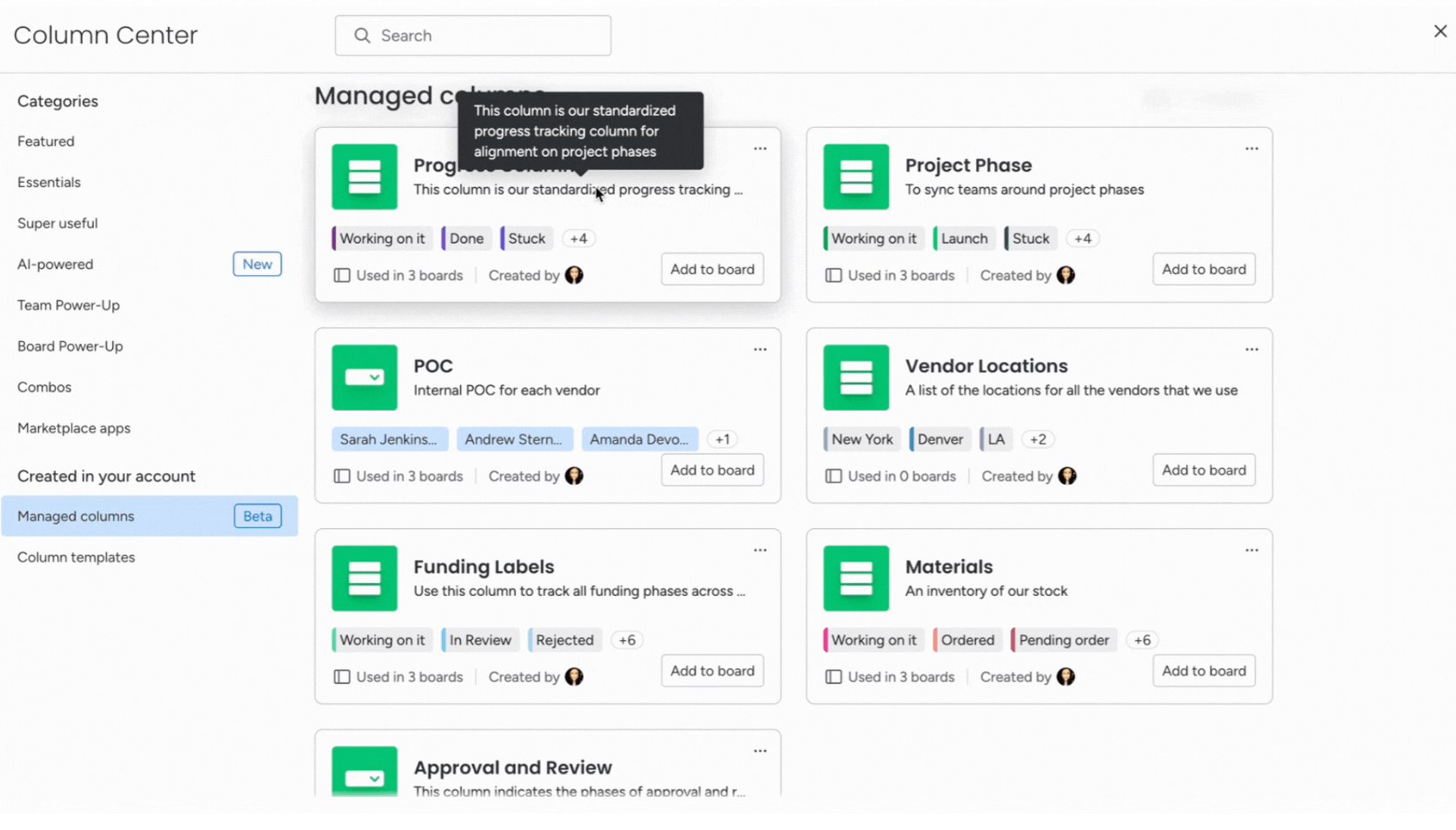
monday.com adds Managed Column to help teams create reusable status, dropdown, and label columns with predefined labels across boards. The update helps organizations standardize workflows and sync column updates automatically from one central source. Highlights include:
- Reusable Managed Columns: Teams can reuse standardized status, dropdown, priority, and label columns across multiple boards.
- Centralized Label Syncing: Updates made to Managed Columns automatically sync across connected boards for more consistent workflows.
Visit monday.com's official site for more details.
 Opens new window
monday.com Adds Clearer AI Result Feedback in Cells
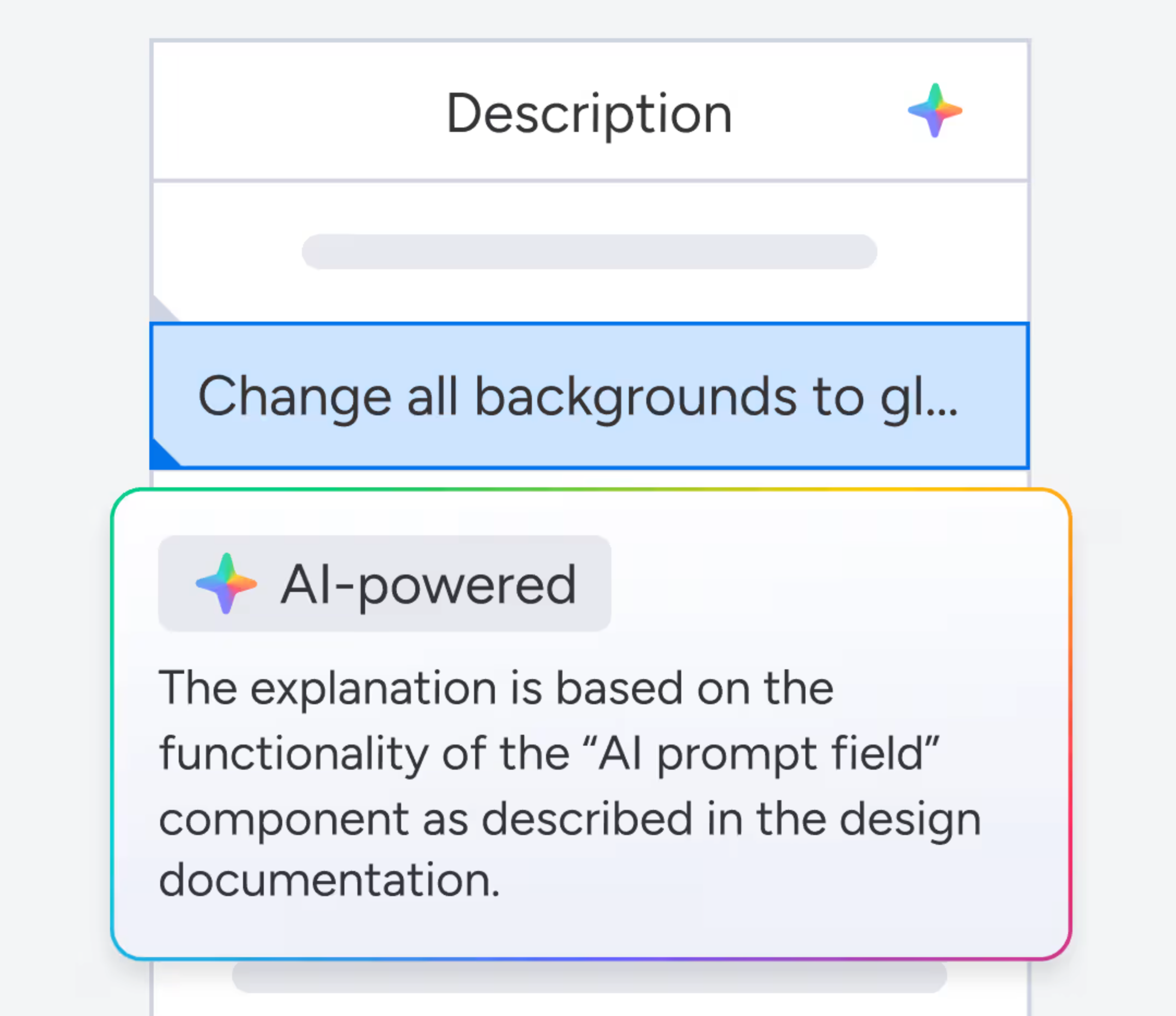
monday.com adds clearer feedback for AI-generated cell results to help users review and improve AI outputs more easily. The update helps teams adjust prompts and inputs for more accurate and useful results. Highlights include:
- Clearer AI Feedback: Users can better understand AI-generated results directly within cells.
- Prompt Refinement Support: Teams can adjust prompts and inputs more effectively to improve AI outcomes.
Visit monday.com’s official site for more details.
monday.com Enhances List View With Column Mapping
monday.com adds column mapping to List View, allowing users to include board-specific columns for better visibility. This update helps teams view and manage data across multiple boards more efficiently. Highlights include:
- Add Board-Specific Columns: Users can now add unique board-specific columns to the List View, allowing for a more personalized data organization.
- Map Columns Across Boards: This feature enables users to map columns across different boards, ensuring that all data is accurately represented and easily accessible.
- Complete Visibility: By mapping columns, users can achieve complete visibility of their workflow, enhancing decision-making and productivity.
Visit monday.com's official site for more details.
monday AI Workspace Specs
- API: Yes
- Batch Permissions & Access: Yes
- Budgeting: No
- Calendar Management: Yes
- Collaboration Support: Yes
- Contact Management: No
- Contact Sharing: No
- Customer Management: No
- Dashboard: Yes
- Dashboards: Yes
- Data Export: Yes
- Data Import: Yes
- Data Visualization: Yes
- Dependency Tracking: Yes
- Document Sharing: Yes
- Expense Tracking: No
- External Integrations: Yes
- File Sharing: Yes
- Gantt Charts: Yes
- Kanban Boards: Yes
- Multi-User: Yes
- Notifications: Yes
- Project Management: Yes
- Resource Management: Yes
- Scheduling: Yes
- Task Scheduling/Tracking: Yes
- Third-Party Plugins/Add-Ons: Yes
- Time Management: Yes
- Travel Management: No
- Workflow Management: Yes
monday AI Workspace FAQs
monday AI Workspace Company Overview & History
monday.com is a global software company headquartered in Tel Aviv, Israel, with a workforce of over 2,500+ employees. The company is best known for its flexible work operating system, which powers products like monday work management, monday CRM, monday dev, and monday service.
Over 250,000 customers worldwide—including more than 60% of the Fortune 500—use monday.com, with notable clients such as McDonald’s, Universal Music Group, Canva, and Lionsgate. In 2025, monday.com reported annual revenue of $1.23 billion and is publicly traded on the NASDAQ under the ticker MNDY.
monday.com Major Milestones
- 2012: Company founded in Tel Aviv, Israel.
- 2014: Product officially launched.
- 2019: Raised $150 million in funding at a $1.9 billion valuation.
- 2021: Completed IPO and began trading on NASDAQ as MNDY.
- 2025: Surpassed $1.23 billion in annual revenue and reached over 250,000 customers globally.