

Justinmind Review: Pros, Cons, Features, and Pricing
Justinmind stands out for its robust prototyping features and flexibility, making it ideal for complex, interactive designs, though it may be less intuitive for absolute beginners.

We review tools independently, and commissions help fund our testing. See our transparency policy, our methodology, or suggest a tool.
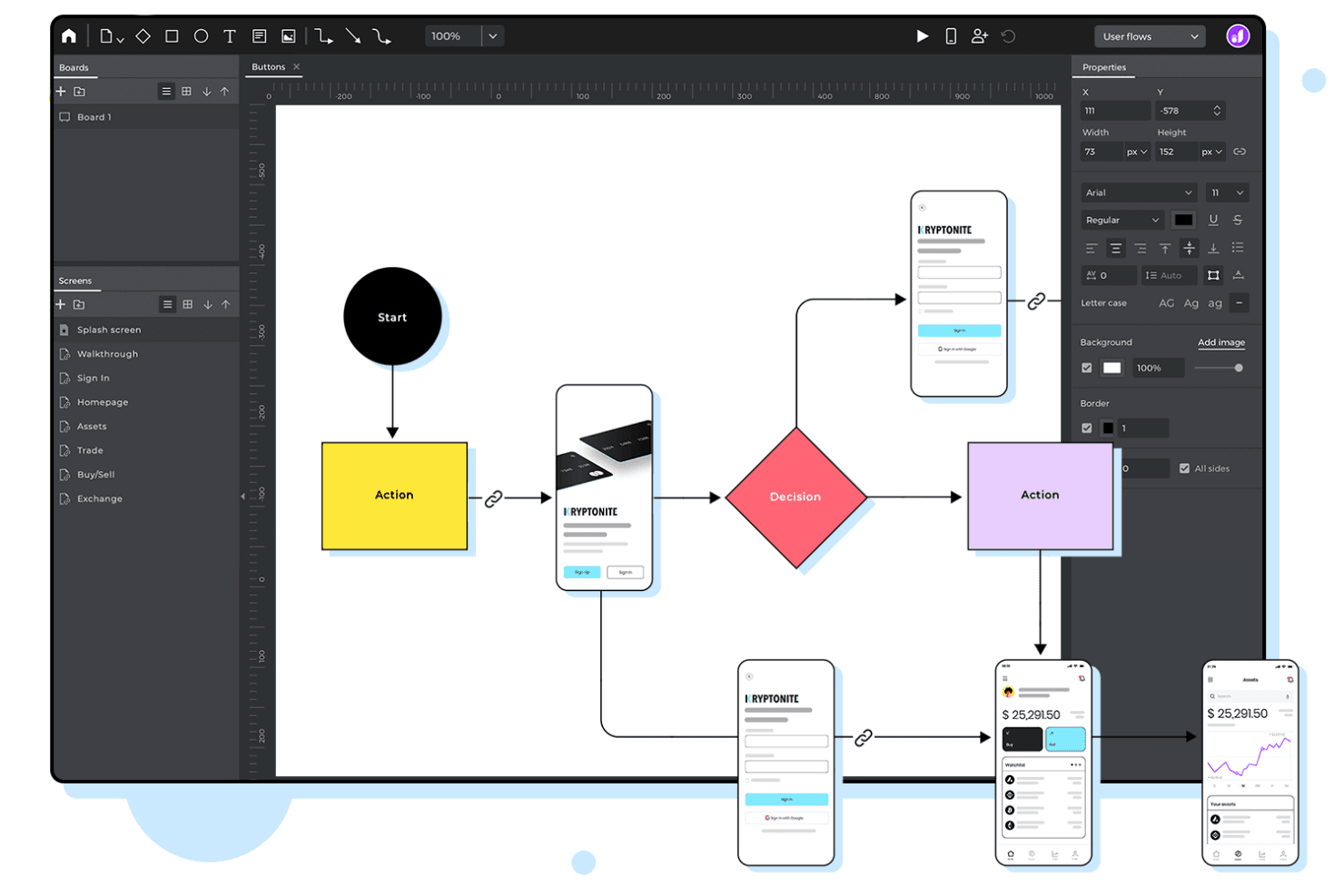
Justinmind is a prototyping tool for product teams that need to build interactive, high-fidelity prototypes for web and mobile apps without writing code. I'd consider it if you want more advanced interaction design than Figma's native prototyping features can handle, but without the steep learning curve that comes with Axure RP. It's a strong middle ground for teams that need complex, clickable simulations and want to get there faster.
Justinmind Evaluation Summary
4.2/5
- From $19/user/month
- Free plan available
Why Trust Our Software Recommendations
6,700+
Reviews
20
Industry experts
16+
Evaluation factors
14
Years
Our team has been testing and reviewing software since 2012. As product managers ourselves, we know how difficult—and important—it is to choose the right software.
For this guide, we evaluated tools using hands-on testing and independent research, scoring tools using our selection criteria.
Our reviews reflect our human editorial judgment, not a sales pitch.
Expert reviewers:
- Andrew LumbySenior TPM
- Cristiano ValimSenior UI/UX Lead


Justinmind Overview
When judging prototyping tools, Justinmind stands out for its advanced interaction design, reusable UI components, and detailed specification exports, making it a strong choice for teams building complex, interactive prototypes. Its pricing is competitive for the feature set, though the interface can feel dense for new users, and onboarding may take longer than with simpler tools.
Support resources and integration options are solid, but not as extensive as some competitors. Justinmind is best suited for product teams and UX professionals who need precision, customization, and detailed developer handoff in their prototyping workflow.
Pros
- Pre-built UI kits speed up wireframing and prototyping.
- Specification export generates detailed developer documentation.
- Advanced interaction design supports complex user flows.
Cons
- Fewer third-party plugins compared to leading alternatives.
- Performance slows with large or complex prototypes.
- Interface can feel cluttered with many advanced options.
Is Justinmind Right For Your Needs?
Who Would be a Good Fit for Justinmind?
Justinmind is a strong choice for teams that need to create interactive, high-fidelity prototypes with detailed specifications and advanced user flows. Its feature set is valuable for organizations that require precise developer handoff, reusable UI components, and support for complex interactions.
Teams working on enterprise applications, regulated industries, or projects with multiple stakeholders will find its documentation and collaboration tools particularly useful.
- Government ProjectsSpecification exports and audit trails help meet strict documentation requirements.
- Mobile App DevelopmentJustinmind’s mobile UI kits and device simulation aid mobile-first teams.
- Financial ServicesComplex interaction design supports secure, multi-step workflows.
- Healthcare TechnologyDetailed documentation and compliance-friendly exports suit regulated environments.
- UX AgenciesReusable UI kits and interactive features help agencies deliver polished client prototypes.
- Enterprise Product TeamsJustinmind’s specification exports and advanced prototyping support large-scale, multi-stakeholder projects.
Who Would be a Bad Fit for Justinmind?
Justinmind may not be the best choice for teams that need quick, low-fidelity mockups, have limited technical resources, or require extensive plugin ecosystems. Its advanced features can be excessive for simple projects, and the interface may slow down teams looking for rapid ideation or basic wireframing.
- E-Commerce TeamsLack of specialized e-commerce templates limits quick store prototyping.
- Small NonprofitsBudget constraints and limited technical needs make lighter tools preferable.
- Education SettingsThe interface and advanced options can overwhelm student users.
- Freelance DesignersPricing and feature set may be excessive for solo projects.
- Marketing DepartmentsBasic wireframing needs are better met with simpler tools.
- Early-Stage StartupsThe tool’s complexity can slow down rapid prototyping cycles.
How We Test & Score Tools
We’ve spent years building, refining, and improving our software testing and scoring system. The rubric is designed to capture the nuances of software selection and what makes a tool effective, focusing on critical aspects of the decision-making process.
Below, you can see exactly how our testing and scoring works across seven criteria. It allows us to provide an unbiased evaluation of the software based on core functionality, standout features, ease of use, onboarding, customer support, integrations, customer reviews, and value for money.
Core Functionality (25% of final scoring)
The starting point of our evaluation is always the core functionality of the tool. Does it have the basic features and functions that a user would expect to see? Are any of those core features locked to higher-tiered pricing plans? At its core, we expect a tool to stand up against the baseline capabilities of its competitors.
Standout Features (25% of final scoring)
Next, we evaluate uncommon standout features that go above and beyond the core functionality typically found in tools of its kind. A high score reflects specialized or unique features that make the product faster, more efficient, or offer additional value to the user.
We also evaluate how easy it is to integrate with other tools typically found in the tech stack to expand the functionality and utility of the software. Tools offering plentiful native integrations, 3rd party connections, and API access to build custom integrations score best.
Ease of Use (10% of final scoring)
We consider how quick and easy it is to execute the tasks defined in the core functionality using the tool. High scoring software is well designed, intuitive to use, offers mobile apps, provides templates, and makes relatively complex tasks seem simple.
Onboarding (10% of final scoring)
We know how important rapid team adoption is for a new platform, so we evaluate how easy it is to learn and use a tool with minimal training. We evaluate how quickly a team member can get set up and start using the tool with no experience. High scoring solutions indicate little or no support is required.
Customer Support (10% of final scoring)
We review how quick and easy it is to get unstuck and find help by phone, live chat, or knowledge base. Tools and companies that provide real-time support score best, while chatbots score worst.
Customer Reviews (10% of final scoring)
Beyond our own testing and evaluation, we consider the net promoter score from current and past customers. We review their likelihood, given the option, to choose the tool again for the core functionality. A high scoring software reflects a high net promoter score from current or past customers.
Value for Money (10% of final scoring)
Lastly, in consideration of all the other criteria, we review the average price of entry level plans against the core features and consider the value of the other evaluation criteria. Software that delivers more, for less, will score higher.
Core Features
Advanced Interaction Design
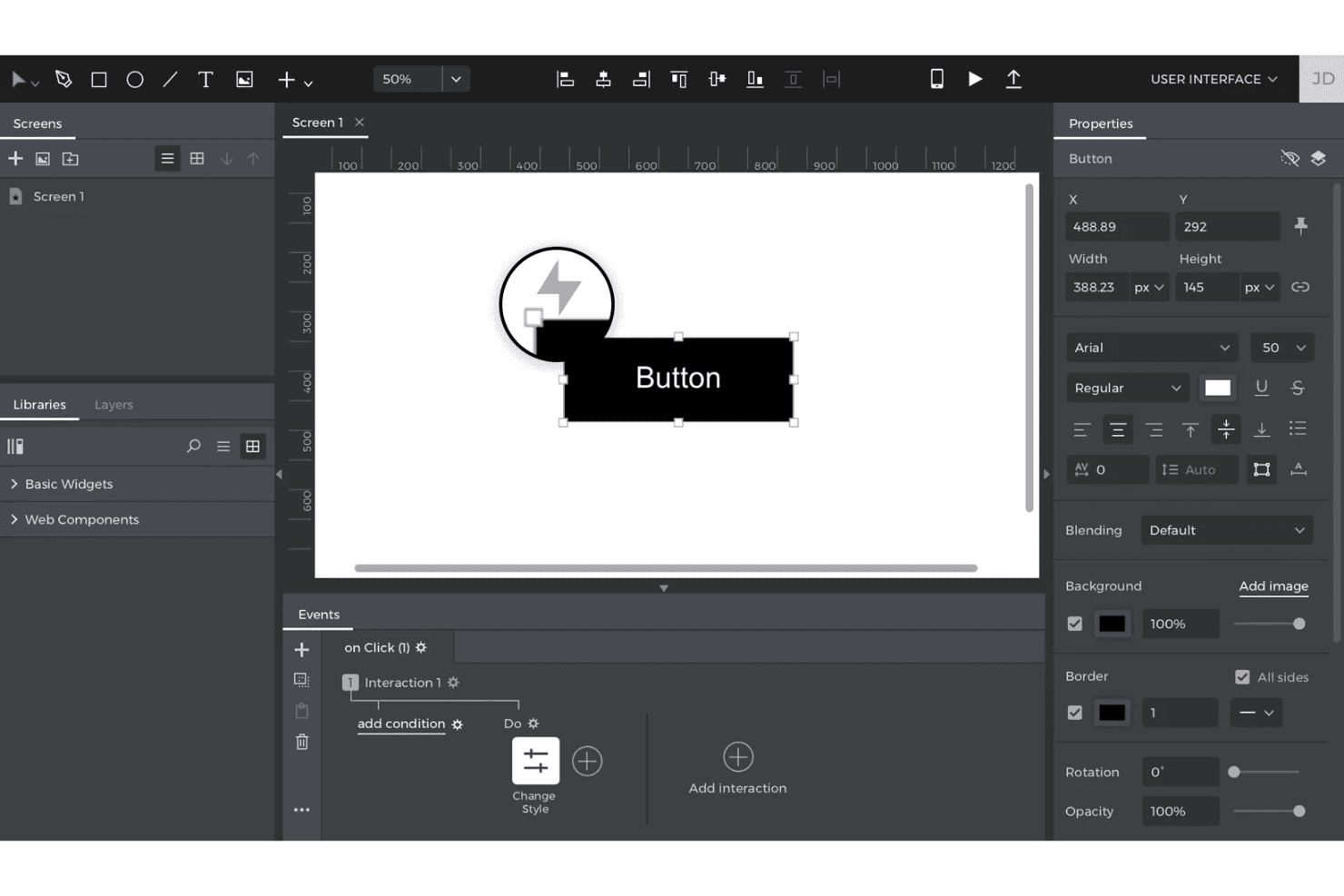
Create complex user flows with triggers, conditions, and variables for realistic prototypes. This allows teams to simulate real app behavior and test logic before development.
Reusable UI Components
Build and maintain custom libraries of buttons, forms, and menus for consistency across projects. Update a component once and see changes reflected everywhere it’s used.
Specification Export
Generate detailed documentation for developers, including interaction maps and requirements. Export specs as pdf or Word files to support handoff and compliance.
Responsive Prototyping
Design prototypes that adapt to different screen sizes and devices. Preview and test layouts for web, tablet, and mobile in one project.
Pre-Built UI Kits
Access libraries of ready-made elements for web, iOS, and Android interfaces. Drag and drop components to speed up wireframing and prototyping.
User Testing Simulation
Simulate user interactions and gather feedback with built-in testing tools. Share prototypes via link for stakeholder review and usability testing.
Ease of Use
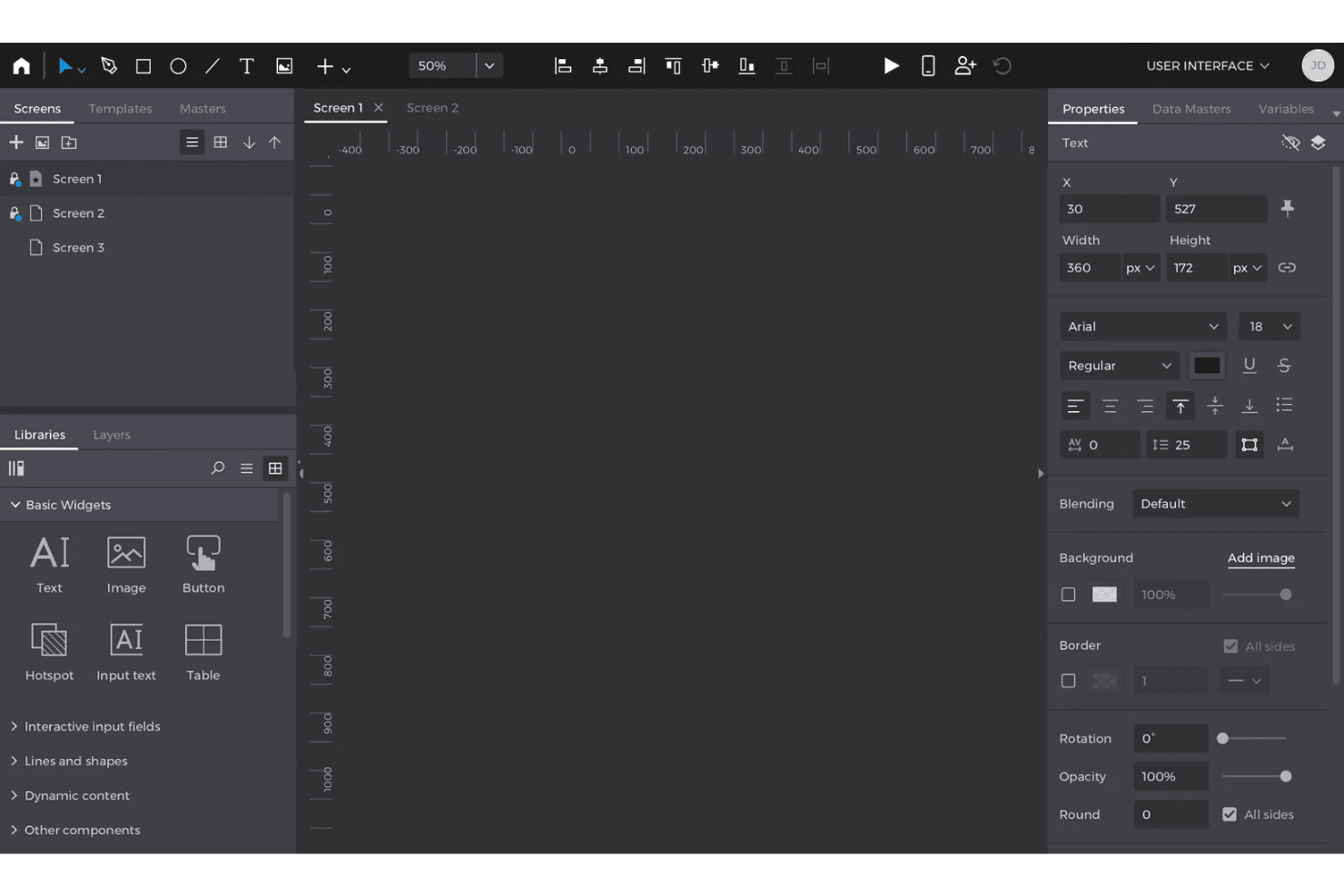
Justinmind offers a wide range of advanced features, but its interface can feel dense and overwhelming, especially for new users or those seeking quick mockups. Many users appreciate the depth of customization and interaction options, yet mention that mastering the tool takes time. The learning curve is balanced by thorough documentation and tutorials, making it a better fit for teams committed to building complex, interactive prototypes rather than simple wireframes.
Integrations
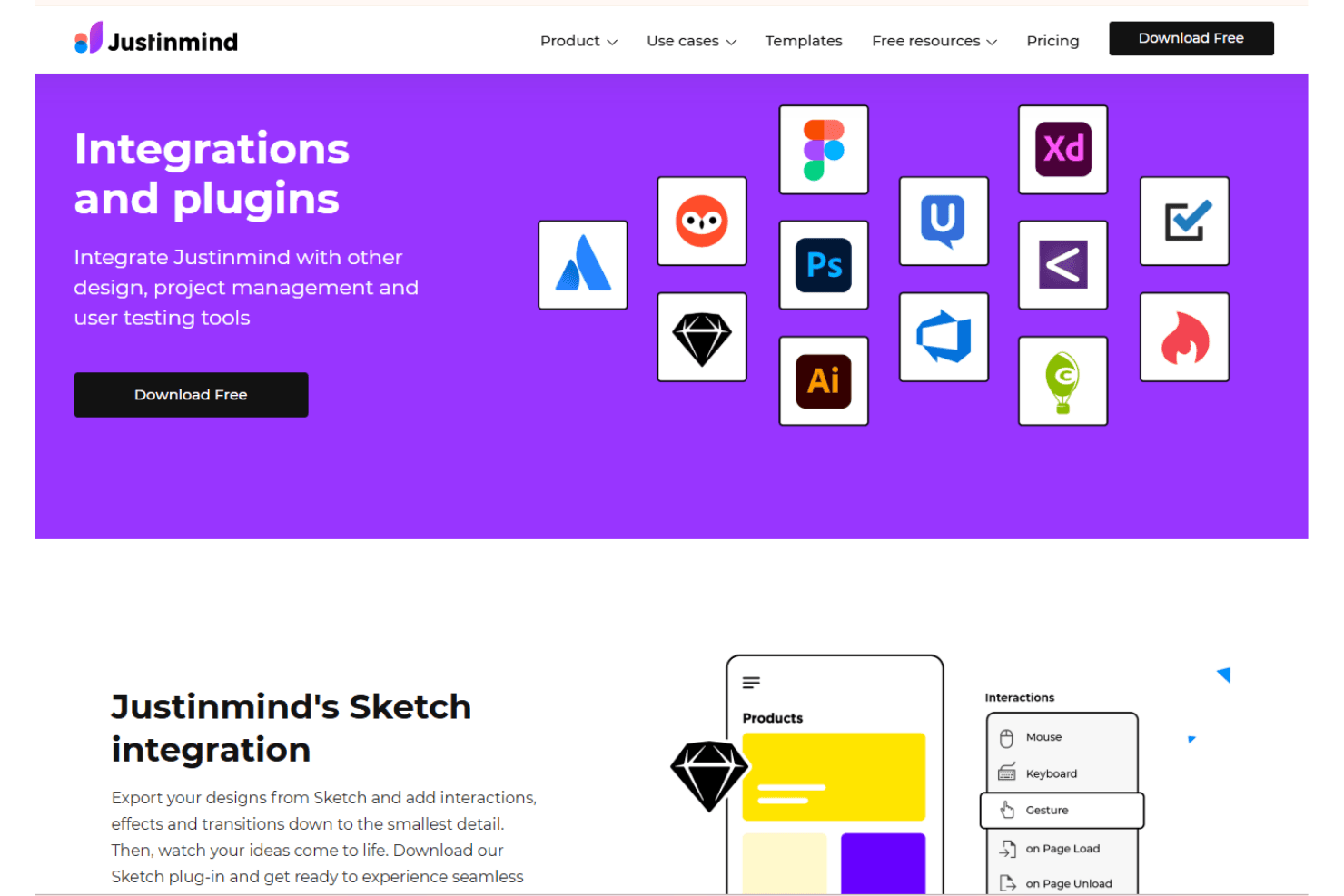
Justinmind integrates with Jira, Sketch, Adobe XD, Figma, UserTesting, Azure DevOps, Atlassian Confluence, Zeplin, Slack, and Google Drive, among others.
Justinmind also offers an API and supports connections with third-party integration tools.
Justinmind Specs
- API: Yes
- Approval Workflows: No
- Bug Tracking: No
- Collaboration Support: Yes
- Custom Reports: No
- Design Templates: Yes
- Document Management: No
- External Integrations: Yes
- History/Version Control: Yes
- Multi-Source Feedback: No
- Multi-User: Yes
- Review Monitoring: Yes
- Template Designer: Yes
- Third-Party Plugins/Add-Ons: Yes
- Workflow Management: No


