

Product lead and co-CEO shares why building AI products is a whole different animal
Discover how a product-led CEO uses AI to accelerate prioritization, prototyping, and execution while keeping strategy, trust, and customer understanding human-led.

Andrei Rebrov
Lifelong Product Builder and Co-CEO of Finsi

AI Integration: Andrei Rebrov discusses integrating AI into Finsi's product strategy to enhance decision-making and user experience.
Product Prioritization: AI reshapes product prioritization by processing more signals and speeding up development cycles.
Strategy Foundation: AI enhances scale and speed but can't correct a flawed product strategy, emphasizing foundational importance.
Prototyping: Cursor accelerates product prototyping, allowing rapid validation and feedback before production coding.
Human Judgment: Humans retain roles needing judgment and empathy, while AI handles analytical and repeatable tasks.
Andrei Rebrov is a lifelong product builder and co-CEO of Finsi, where he's integrating AI into every layer of its product strategy — both for the team and their customers.
We asked Andrei how AI is shifting both product management and product strategy. Here's what he told us.
Integrating AI into product strategy
I'm Andrei Rebrov, co-CEO of Finsi. Throughout my journey in product leadership, I've focused deeply on building financial technology that truly serves people.

At Finsi, I lead the product organization behind an AI-powered growth platform built for e-commerce brands. The product is a B2B SaaS solution that serves DTC and subscription e-commerce operators — from emerging brands under $5M in revenue up to larger SMBs. Our platform connects with 50+ tools, including Shopify, Klaviyo, Meta Ads, Google Ads, and Recharge, unifying data across the entire e-commerce stack. And it uses five AI agents that cover revenue intelligence, ad automation, retention and email, SEO, and customer research.
The delivery model is fully web-based SaaS, and our core value proposition is closing the loop between analytics and execution: We don't just surface insights; we build and deploy the campaigns, flows, and segments for our users.
In my work at Finsi, I've been at the forefront of integrating AI into our product strategy — exploring how AI can streamline financial services, improve user experiences, and drive smarter decision-making at scale.
This moment of AI transformation in product leadership feels both exciting and pivotal. I'm eager to share the lessons and perspectives I've gained along the way.
How AI reshapes product prioritization processes
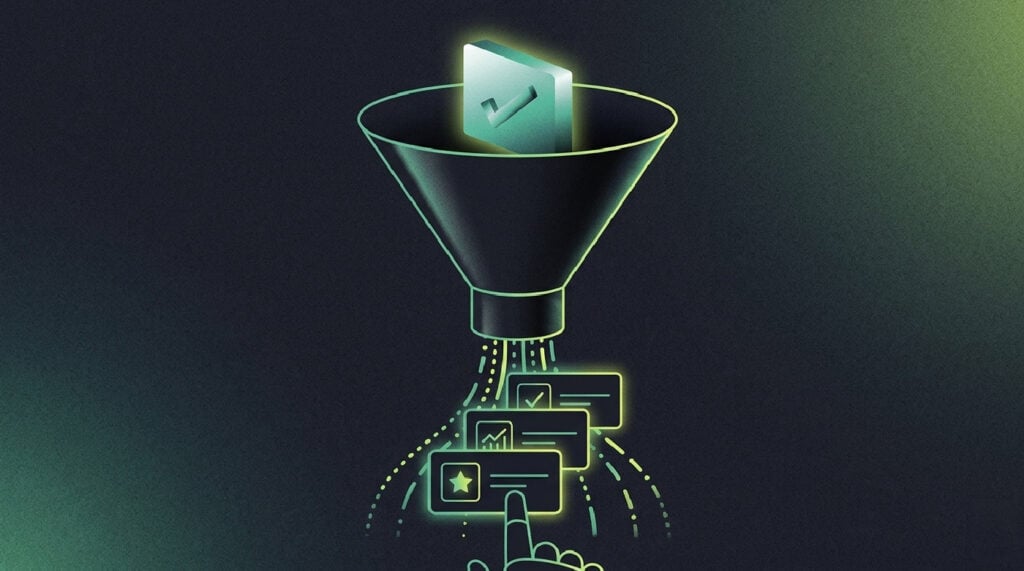
Product leaders need to redesign their product prioritization process. Almost every team I know still prioritizes through spreadsheets, subjective scoring frameworks, and quarterly planning rituals designed for slow, expensive development cycles.
AI changes both sides of the equation: It makes building faster (so you can validate more bets), and it can process far more signals than any human — usage data, support feedback, churn patterns, competitive signals, customer interviews — to inform what matters.
We redesigned our prioritization process around a continuous AI-signal layer. We automate task extraction from Granola transcripts so we don't forget what we owe. And instead of a quarterly roadmap exercise, we maintain a live backlog where every item is tagged with data from multiple sources — customer feedback frequency, revenue impact estimate, competitive urgency, and engagement patterns. Our AI surfaces a ranked view of this backlog weekly, updating as signals change.
Our product leaders still make the final calls, but they're working from a much richer, more dynamic picture than before.
The result: We've cut the time between identifying an opportunity and shipping a solution by roughly half, and we've built far fewer solutions no one uses.
Why AI needs a solid product-strategy foundation
It's important to note that AI can't fix a broken product strategy — it just amplifies whatever strategy you already have.
If you're solving the right problem for the right users, AI will help you do that faster and at greater scale. But if your core product hypothesis is flawed, AI will accelerate your path to the wrong destination.
I've seen this play out firsthand. Early in building Finsi, we considered adding AI features because they were impressive and technically feasible — recommending actions, predicting churn, and generating content. But none of it would have mattered if we hadn't first understood clearly the fundamental insight: e-commerce operators don't have an analytics problem, they have an execution gap. Only once we validated that did AI become the right lever.
When working with AI, you need the same discipline as any good product work — rigorous problem definition, deep user empathy, and honest prioritization. AI raises the stakes on all of these because the speed of development means you can build and ship the wrong thing far faster than ever before.
AI can’t fix a broken product strategy — it just amplifies whatever strategy you already have.

How a Claude Code skill honed product focus
A critical change for us was implementing a Claude Code skill called "Merchant Advocate" for our coding agents.
I provided Claude with context about Finsi's mission and product focus, as well as a summary of transcripts from Granola. Now, when we have a new requirement, we run it through that skill, and it helps us stay true to our core mission: shipping software that reduces work for merchants.
We removed many potential features from our roadmap because of this simple step in our workflows.
Why Cursor is crucial for rapid product prototyping
Cursor transformed how our engineering team ships — not just by writing code faster, but by collapsing the distance between product thinking and implementation.
When I can describe a feature in natural language and see a working prototype in minutes, it fundamentally changes how we validate ideas. It makes the entire product development loop faster and more experimental.
Here's an example. We wanted to test a "weekly intelligence briefing" UI for one of our product's agents. Instead of speccing it out in Figma and waiting for a sprint, we described the layout and data structure to Cursor in plain language and had a functional prototype connected to our staging data within a few hours. We then ran it past three customers the same day and got feedback that reshaped the final design before we wrote a single line of production code.
Why humans own the consequential and relational
We've deliberately defined the role of AI and humans in our product processes.
AI powers our data synthesis, pattern detection, anomaly identification, and execution — things like automatically detecting churn signals, reallocating ad budgets, generating email copy in a brand's voice, and deploying Klaviyo flows. These are high-frequency, data-intensive tasks where AI consistently outperforms human speed and scale.
AI also informs our prioritization by identifying recommendations that drive the most revenue impact across our customer base, helping us understand where to focus product development.
However, humans explicitly make decisions requiring judgment, ethics, and strategic context.
That means product vision and roadmap direction remain human — we must understand not just what the data says, but also the kind of company we want to build and our customers' deeper aspirations. UX decisions remain human-led because empathy and intuition regarding user feelings cannot yet be reliably automated. And any decision risking a customer's business — like a major ad spend reallocation — requires human approval before execution.
Our operating principle is: AI handles the repeatable and analytical; humans own the consequential and relational.
Why AI struggles with deep customer understanding
AI has most clearly fallen short of our expectations in deep customer understanding. We initially believed AI could reliably synthesize qualitative signals — support tickets, reviews, survey responses — and translate them into actionable product insights with minimal human involvement. In practice, AI excels at categorizing and clustering feedback at scale, but it consistently misses the nuance of customers' feelings, particularly for niche e-commerce verticals with specific cultural or operational contexts. AI often surfaces real patterns, but interpreting them still requires a human who deeply understands the customer's world.
We've also found that AI-generated creative — ad copy, email subject lines — while fast and useful as a starting point, rarely match the performance of copy crafted by someone who truly knows the brand voice and its audience. It accelerates production, but doesn't yet replace genuine creative judgment.
Finally, we expected AI to meaningfully improve our internal product discovery process, but it hasn't shortened the time to identify truly novel customer needs — it helps us process existing information, but the most valuable insights still come from direct, unstructured conversations with customers that no AI tool has yet replicated or replaced.
How data quality impacts AI product development
When I was getting started with AI, I didn't realize how much data quality matters or how long it takes to get it right.
When we built Finsi's AI agents, we assumed connecting to Shopify, Klaviyo, and ad platforms would provide clean, reliable data. The reality was far messier. Different brands structure their data differently, track different events, use different naming conventions, and have gaps and inconsistencies across their historical records. We spent far more time than anticipated on data normalization, deduplication, and validation pipelines before the AI produced trustworthy recommendations.
If I'd known this upfront, I would have invested earlier and more heavily in data infrastructure, rather than racing to build the AI layer on top of an unstable foundation.
Why user trust must be considered with AI products
If I were starting over with our product's AI agents, I would approach user trust differently.
We initially designed our AI agents to be fairly autonomous — surfacing recommendations and making them easy to approve and execute in one click. Users hesitated, even when recommendations were good. They needed to understand the "why" behind each suggestion before they felt comfortable acting. As a result, we retrofitted explainability into the product after launch, but designing for transparency from day one would have been far better.
Trust isn't a feature you can add later — it has to be woven into the core experience.
Trust isn’t a feature you can add later — it has to be woven into the core experience.
Why AI makes choice and configurability less important to users
AI also forced me to abandon the assumption that a good product means giving users control and configurability.
For years, conventional wisdom in B2B SaaS was that power users want flexibility — more settings, more dashboards, more ways to customize their experience. We built early versions of Finsi based on that assumption, allowing operators to configure their own dashboards, set their own KPI thresholds, and customize which metrics they tracked. But once we started layering in AI, we found the opposite: Our most successful users spent less time configuring and more time acting on the AI's recommendations.
Operators who wanted to tweak every setting often got the least value because they optimized the tool, rather than their business. AI revealed that our users needed less cognitive load and more confidence in what to do next. This forced us to significantly simplify the product, strip out much of the configurability we had built, and lean harder into opinionated, AI-driven defaults.
It was a counterintuitive lesson: Sometimes the best product decision is to take choices away from users instead of adding more.
Why true AI transformation requires rethinking a product's value chain
Most "AI-powered" products aren't AI products — they're feature wrappers with an LLM bolted on, and the market will eventually see through them.
Real AI product transformation requires rethinking the entire value chain, not inserting a GPT call into an existing workflow. The companies that will win aren't the ones that added AI fastest; they're the ones that used AI to question every assumption about how their product category works.
Why product leaders must pick a small number of high-leverage bets
Resist two equally dangerous impulses:
- The urge to adopt AI everywhere at once
- The urge to wait until things feel more certain
Product leaders who will thrive pick a small number of high-leverage bets, go deep, and build genuine organizational literacy — not just tool familiarity — around AI. Start with the problems costing you the most: time lost to manual work, decisions made without enough data, and features that take too long to ship or validate. Use AI to solve those, specifically.
And be honest with your teams about what AI changes for them. Leaders who pretend AI won't reshape roles and responsibilities will lose trust; those who have open, thoughtful conversations about how AI augments human judgment will build cultures that can adapt.
Finally, don't optimize for looking AI-native — optimize for outcomes. The best AI product strategy creates measurable value for users, not the most impressive demo. Stay grounded in the problem, and the right use of AI will follow.
Follow along
You can connect with Andrei Rebrov on LinkedIn. And check out Finsi.
More expert interviews to come on The CPO Club!