
10 migliori software per i requisiti di prodotto del 2026

10 Elenco dei migliori software per i requisiti di prodotto
- 4. codebeamer


Esistono così tanti strumenti diversi per i requisiti di prodotto che scegliere quello più adatto a te può essere difficile. Vuoi definire, organizzare e gestire le specifiche e le funzionalità che un prodotto dovrebbe avere, mantenendo al contempo un insieme chiaro e organizzato di requisiti per tutto il ciclo di vita del prodotto, ma ti serve lo strumento giusto per farlo. Sono qui per aiutarti! In questo articolo, analizzo i migliori software per i requisiti di prodotto e utilizzo la mia esperienza personale nella gestione di centinaia di prodotti e nell'utilizzo di numerose piattaforme per i requisiti con team di grandi dimensioni.
Perché fidarsi dei nostri consigli sui software
Il nostro team testa e recensisce software dal 2012. In quanto product manager noi stessi, sappiamo quanto sia difficile — e importante — scegliere il software giusto.
Per questa guida, abbiamo valutato gli strumenti attraverso test pratici e ricerche indipendenti, assegnando un punteggio agli strumenti in base ai nostri criteri di selezione.
Le nostre recensioni riflettono il nostro giudizio editoriale umano, non un discorso di vendita.
Riepilogo dei migliori software per i requisiti di prodotto
Questa tabella comparativa riassume i dettagli sui prezzi delle mie migliori selezioni di software per i requisiti di prodotto, per aiutarti a trovare quello più adatto al tuo budget e alle esigenze della tua azienda.
| Tool | Best For | Trial Info | Price | ||
|---|---|---|---|---|---|
| 1 | Ideale per associare le normative ai requisiti di test | È disponibile una prova gratuita di 30 giorni | Prezzi su richiesta | Website | |
| 2 | Ideale per un controllo intuitivo delle modifiche | Demo gratuita disponibile | Prezzi su richiesta | Website | |
| 3 | Ideale per integrazione ECAD con sincronizzazione dei progetti in tempo reale | Piano gratuito disponibile | Da $1.990/anno | Website | |
| 4 | Prova gratuita di 30 giorni + demo gratuita disponibile | Prezzi su richiesta | Website | ||
| 5 | Ideale per la tracciabilità ALM end-to-end | Disponibile una prova gratuita di 30 giorni | A partire da $41.20/utente/mese (con fatturazione annuale) | Website | |
| 6 | Ideale per specifiche redatte dall'IA e collegate alle attività | Piano gratuito disponibile | Da $7/utente/mese (fatturato annualmente) | Website | |
| 7 | Gestisci i requisiti direttamente in Jira | Prova gratuita di 30 giorni | Da $10/10 utenti/anno | Website | |
| 8 | Ideale per l'approvazione dei requisiti all'interno di Azure DevOps | Prova gratuita di 30 giorni + demo gratuita disponibile | Prezzi su richiesta | Website | |
| 9 | Ideale per i requisiti nei settori con requisiti critici per la sicurezza | Prova gratuita di 30 giorni | Prezzi disponibili su richiesta | Website | |
| 10 | Ideale per documenti tracciabili nei flussi di lavoro DevOps | Prova gratuita di 30 giorni disponibile | Prezzo su richiesta | Website |
Recensioni dei migliori software per i requisiti di prodotto
Di seguito trovi i miei riepiloghi dettagliati dei migliori software per i requisiti di prodotto inclusi nel mio elenco. Le mie recensioni offrono una panoramica dettagliata delle funzionalità principali, dei vantaggi & degli svantaggi, delle integrazioni e dei casi d’uso ideali di ogni strumento, per aiutarti a trovare quello più adatto a te.

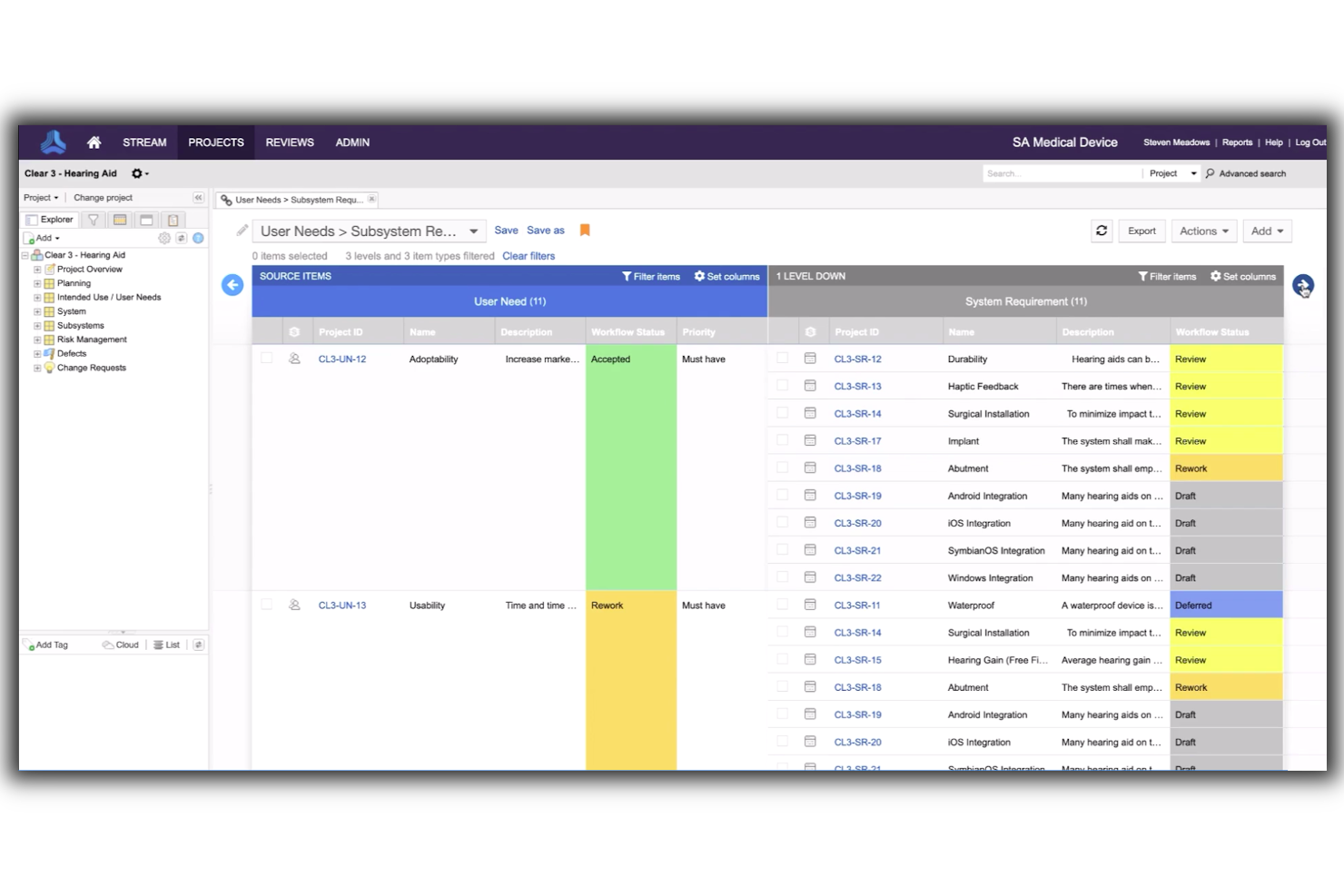
Jama Connect è una piattaforma per la gestione dei requisiti progettata per i settori regolamentati, che offre la redazione strutturata dei requisiti, la tracciabilità end-to-end, il controllo delle versioni, controlli di qualità basati sull'intelligenza artificiale e la collaborazione interfunzionale nei flussi di lavoro di ingegneria, conformità e test.
Per chi è più indicato Jama Software?
Jama Connect è particolarmente adatto ai team di ingegneria e di prodotto nei settori regolamentati, come quello dei dispositivi medici, aerospaziale o automobilistico, dove la tracciabilità tra requisiti, test e standard di conformità è indispensabile.
Perché ho scelto Jama Software
Jama Connect è entrato nella mia selezione perché è l'unico strumento che ho visto mappare visivamente i collegamenti tra normative, requisiti e test in un unico diagramma. Apprezzo molto il fatto che, quando cambia una normativa, l'analisi dell'impatto di Jama mostri immediatamente quali requisiti e casi di test a valle sono interessati. Il suo Jama Connect Advisor basato sull'intelligenza artificiale verifica inoltre i requisiti rispetto agli standard di redazione INCOSE ed EARS mentre si lavora, risultando davvero utile per i team che scrivono specifiche critiche per la sicurezza.
Funzionalità principali di Jama Software
- Visualizzazione documento: Scrivi, modifica e revisiona i requisiti in un'unica schermata che combina la gestione basata sugli elementi con un layout documentale familiare.
- Libreria per il riutilizzo dei requisiti: Cataloga e recupera i requisiti preapprovati da una libreria condivisa per ridurre le duplicazioni tra i progetti.
- Baseline e ramificazioni: Acquisisci lo stato esatto dei requisiti in qualsiasi fase o versione e crea ramificazioni separate per varianti del prodotto o nuove versioni.
- Generazione dei casi di test: Genera casi di test tracciabili direttamente dai requisiti utilizzando l'intelligenza artificiale, quindi crea piani di test e registra i difetti all'interno della stessa piattaforma.
Integrazioni di Jama Software
Jama Connect offre integrazioni documentate tramite Jama Connect Interchange per Jira, Excel, ReqIF, Datatap, MCP e webhook, oltre alla connettività con Azure DevOps. Fornisce anche un'API REST per le integrazioni personalizzate.
Pros and Cons
Pros:
- La tracciabilità visiva collega requisiti, test e normative
- Le baseline e le ramificazioni conservano la cronologia dei requisiti specifica di ogni versione
- L'intelligenza artificiale verifica la qualità dei requisiti rispetto agli standard INCOSE
Cons:
- Le esportazioni dei documenti possono essere macchinose durante le revisioni
- I flussi di lavoro PRD risultano pesanti per i team piccoli

Ideale per un controllo intuitivo delle modifiche
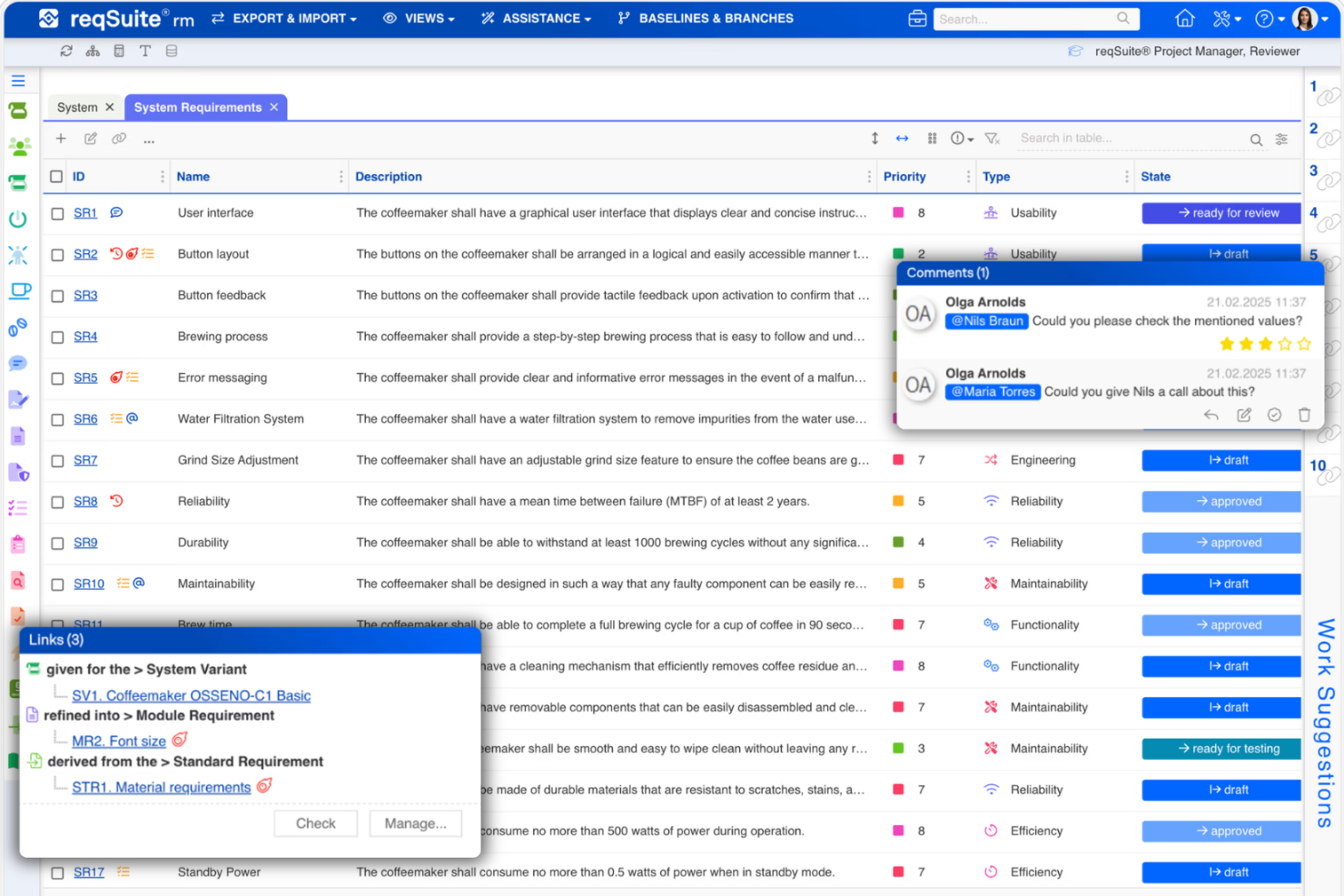
reqSuite® rm è uno strumento di gestione dei requisiti che struttura e versiona i requisiti lungo l'intero ciclo di vita del prodotto, con tracciabilità integrata, integrazione con Jira e documenti di progetto generati automaticamente.
Per chi è più adatto reqSuite® rm?
reqSuite® rm è particolarmente adatto alle squadre di progettazione e prodotto operanti in settori regolamentati come quello automobilistico, delle tecnologie mediche e aerospaziale, che necessitano di una tracciabilità strutturata lungo l'intero ciclo di sviluppo.
Perché ho scelto reqSuite® rm
reqSuite® rm si è guadagnato un posto nella mia rosa ristretta perché il suo controllo delle modifiche non è soltanto un registro: è un flusso di lavoro strutturato che collega ogni modifica ai requisiti al relativo impatto a valle su casi di prova, rischi e concetti di soluzione. Apprezzo in particolare il modo in cui la gerarchia a livelli da parte interessata a requisito semplifica la tracciabilità esatta di cosa è cambiato, quando e perché lungo l'intero ciclo di vita. Per le squadre che lavorano secondo ISO 26262 o DO-178C, questo tipo di tracciabilità controllata non è facoltativo e reqSuite® rm la gestisce bene.
Funzionalità principali di reqSuite® rm
- Gerarchia dei requisiti a livelli: struttura i requisiti secondo una gerarchia parte interessata → esigenza → argomento → requisito, così ogni elemento ha un contesto e una responsabilità chiari.
- Documenti di progetto generati automaticamente: produce proposte, concetti tecnici e rapporti secondo l'impostazione grafica aziendale direttamente dai dati dei requisiti.
- Assistenza basata sull'AI per i requisiti: guida gli utenti nella redazione dei requisiti per individuare dettagli ambigui o mancanti prima che causino problemi nelle fasi successive.
- Licenze gratuite di sola lettura: consente a revisori e parti interessate di accedere ai requisiti in visualizzazione senza incidere sulla quota di licenze nominate o flottanti.
Integrazioni di reqSuite® rm
reqSuite® rm si integra con Jira tramite sincronizzazione bidirezionale o esportazione unidirezionale, includendo tipi di requisito, campi, assegnatari, attività e stati associati. Jira è la sua unica integrazione documentata pubblicamente.
Pros and Cons
Pros:
- La chiara gerarchia da parte interessata a requisito supporta la tracciabilità
- Le squadre operanti in settori regolamentati possono collegare i requisiti alle prove
- I modelli personalizzati si adattano a diversi flussi di lavoro per la documentazione
Cons:
- La configurazione avanzata richiede tempo per essere padroneggiata
- I rapporti esportati possono risultare macchinosi e datati

Ideale per integrazione ECAD con sincronizzazione dei progetti in tempo reale
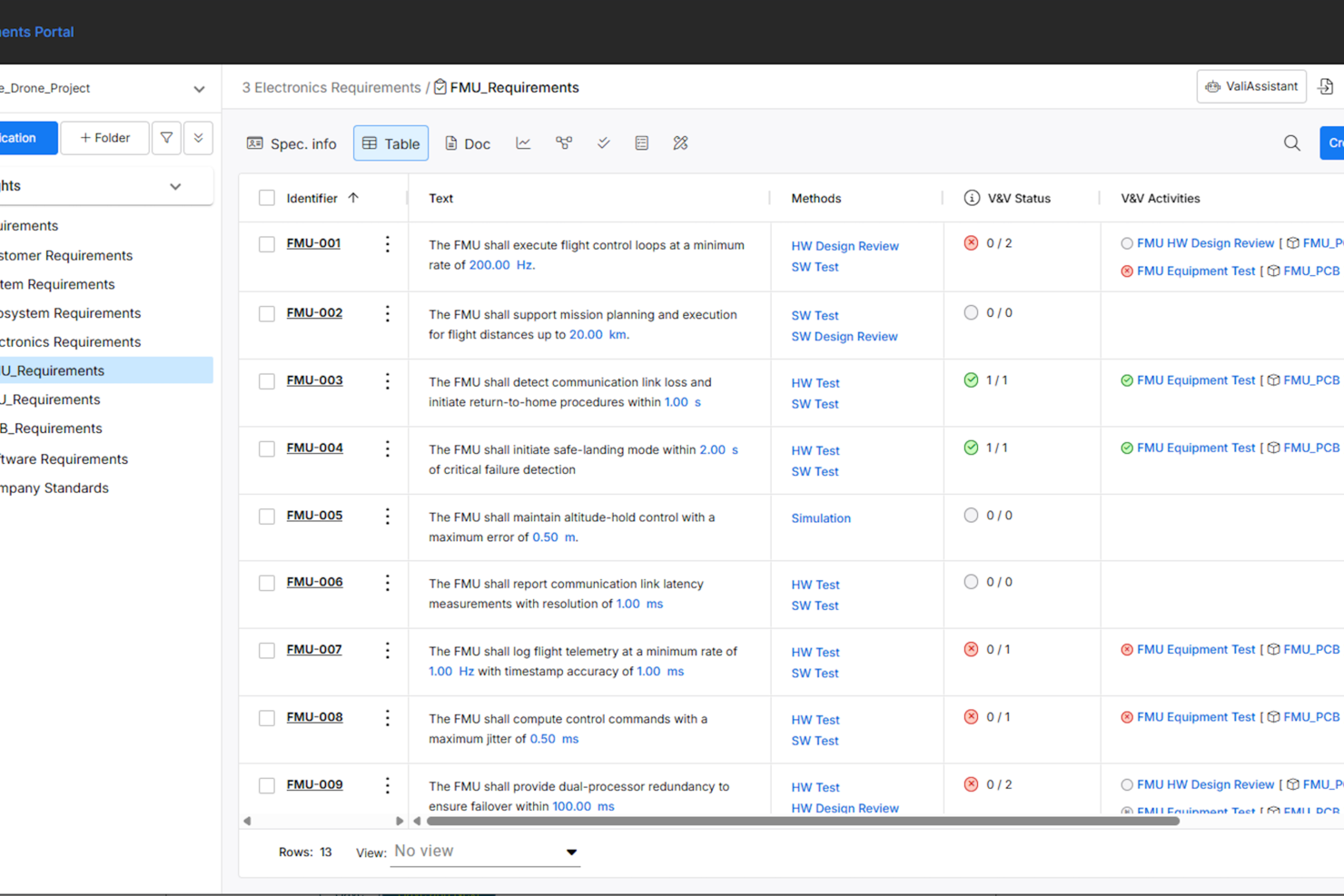
Requirements Portal è una piattaforma di gestione dei requisiti progettata per i team di ingegneria e di prodotto che necessitano di collaborazione strutturata, tracciabilità e integrazione con strumenti di progettazione per gestire flussi di lavoro complessi nello sviluppo di prodotti.
Per chi è più adatto Requirements Portal?
Team di ingegneria e di prodotto nei settori dell'elettronica o della produzione che necessitano di una gestione strutturata dei requisiti e dell'integrazione con i flussi di lavoro di progettazione.
Perché ho scelto Requirements Portal
Requirements Portal si guadagna un posto tra i migliori della mia lista perché il mio team può sincronizzare i requisiti direttamente con i nostri progetti ECAD in tempo reale. Apprezzo come le modifiche ai requisiti si riflettano istantaneamente nell'ambiente di progettazione, mantenendo tutti allineati. Il mio team è in grado di collegare i requisiti a elementi specifici dello schema e monitorare l'avanzamento dell'implementazione senza aggiornamenti manuali.
Funzionalità principali di Requirements Portal
- Tracciabilità dei requisiti: Traccia ogni requisito dalla cattura iniziale fino all'implementazione e al collaudo.
- Controllo delle versioni: Mantieni una cronologia completa delle modifiche ai requisiti con la possibilità di ripristinare o confrontare versioni.
- Automazione del flusso di lavoro personalizzabile: Configura processi di approvazione e transizioni di stato per adattarsi ai processi di requisiti del tuo team.
- Audit trail: Registra automaticamente tutte le modifiche e le azioni degli utenti per garantire conformità e responsabilità.
Integrazioni di Requirements Portal
Le integrazioni includono Altium Designer, Altium 365, Altium Develop, Altium Agile Teams e Altium Agile Enterprise. Le integrazioni native sono principalmente all'interno dell'ecosistema Altium ed è disponibile un'API per integrazioni personalizzate.
Pros and Cons
Pros:
- Scomposizione e mappatura dei requisiti basata su AI
- Integrazione profonda con Altium Designer e Altium 365
- Matrice di tracciabilità dei requisiti integrata
Cons:
- Il piano gratuito è disponibile solo come prova di 30 giorni
- Le funzionalità avanzate richiedono un abbonamento Altium

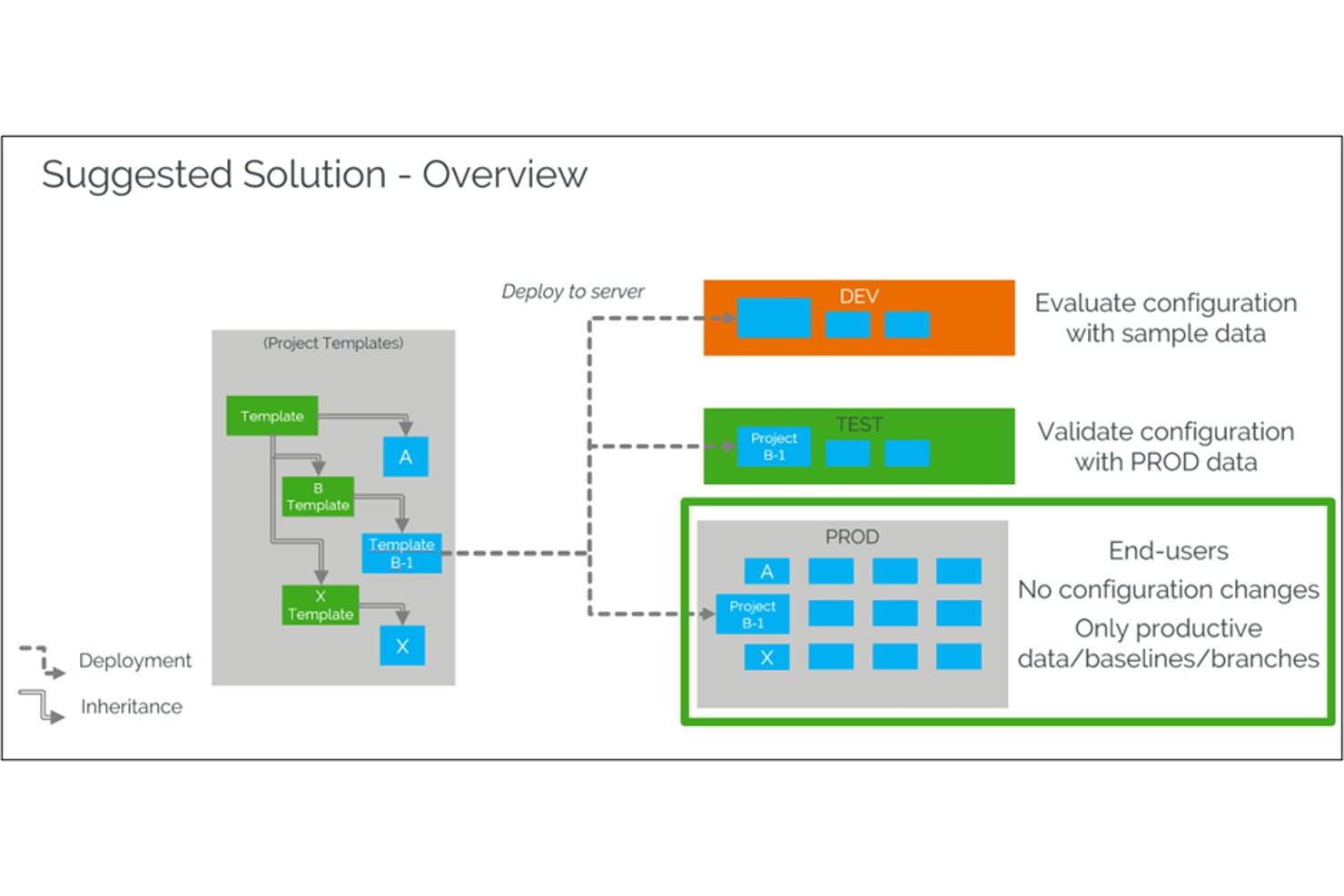
codebeamer è una piattaforma di gestione del ciclo di vita delle applicazioni che combina la gestione dei requisiti, la tracciabilità end-to-end, la gestione dei test e la pianificazione agile con il supporto integrato per le varianti di prodotto e il riutilizzo dei moduli.
Per chi è più indicato codebeamer?
codebeamer è particolarmente adatto ai team guidati dall'ingegneria in settori regolamentati come quello automobilistico, aerospaziale e dei dispositivi medici, che devono gestire varianti di prodotto complesse e riutilizzare i requisiti in più linee di prodotto.
Perché ho scelto codebeamer
Ho incluso codebeamer tra le mie scelte principali perché è l'unico strumento di questo elenco progettato specificamente per le varianti di prodotto e il riutilizzo dei moduli. Se il tuo team gestisce più linee di prodotto, come le varianti di centraline elettroniche per il settore automobilistico o le configurazioni di dispositivi medici, l'ingegneria della linea di prodotti consente di definire una sola volta i moduli di requisiti condivisi e di riutilizzarli tra le varianti senza duplicare il lavoro. In combinazione con la tracciabilità end-to-end che comprende requisiti, codice e test, mantiene automaticamente intatto il percorso di conformità di ogni variante.
Funzionalità principali di codebeamer
- Redazione dei requisiti con IA: Un componente aggiuntivo a pagamento che utilizza l'intelligenza artificiale generativa per redigere e perfezionare i requisiti, segnalare formulazioni vaghe e mettere in evidenza informazioni sulla tracciabilità.
- Modelli allineati alla conformità: Modelli pronti all'uso e completamente personalizzabili, realizzati in conformità con standard di settore come ISO 26262, DO-178C e FDA 21 CFR Part 820.
- Baseline immutabili: Una volta impostate, le baseline non possono essere modificate, creando una traccia di audit bloccata che supporta le revisioni nei settori regolamentati.
- Strumenti di pianificazione agile: Le bacheche kanban integrate, la gestione del backlog e la pianificazione delle release sono disponibili insieme ai requisiti nella stessa piattaforma.
Integrazioni di codebeamer
codebeamer offre sei integrazioni native documentate, tra cui Windchill, Jira, Git, IBM Rhapsody, Jenkins e Azure Pipeline. Queste connessioni collegano i requisiti ai flussi di lavoro PLM, di sviluppo e CI/CD.
Pros and Cons
Pros:
- La tracciabilità end-to-end supporta lo sviluppo di prodotti regolamentati
- I moduli riutilizzabili riducono la duplicazione dei requisiti delle varianti
- Le baseline immutabili migliorano la preparazione agli audit
Cons:
- La configurazione complessa può rallentare l'adozione da parte del team
- La collaborazione non dispone di strumenti di co-creazione in tempo reale confermati

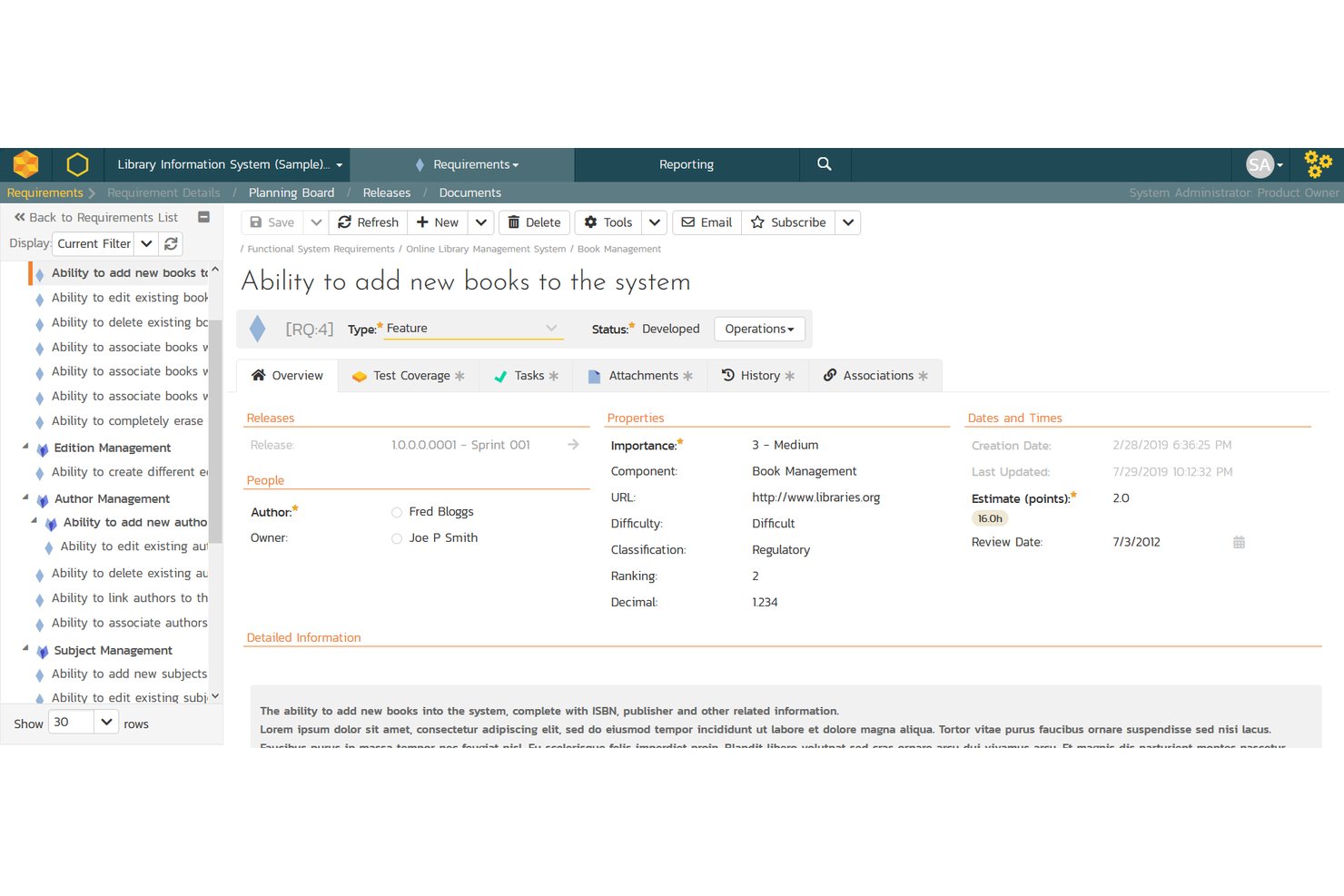
SpiraTeam è una piattaforma di gestione del ciclo di vita delle applicazioni (ALM) che combina la documentazione dei requisiti, la gestione dei casi di test, il monitoraggio dei difetti e la tracciabilità end-to-end tra attività, codice e rilasci.
Per chi è più adatto SpiraTeam?
SpiraTeam è particolarmente adatto ai team operanti in settori regolamentati, come quello sanitario, aeronautico o finanziario, dove i percorsi di audit, le firme elettroniche e la tracciabilità end-to-end non sono facoltativi.
Perché ho scelto SpiraTeam
SpiraTeam è entrato nella mia rosa di candidati perché nessun altro strumento di questo elenco traccia un requisito dalla sua acquisizione iniziale fino all'esecuzione dei test, alla registrazione dei difetti e ai commit del codice sorgente in un unico ambiente. Apprezzo particolarmente la matrice di tracciabilità bidirezionale, che consente di vedere esattamente quali casi di test coprono un determinato requisito e quali difetti sono collegati a esso. Quando un test non ha esito positivo, SpiraTeam evidenzia immediatamente i requisiti interessati, così non è mai necessario indovinare dove si trova una lacuna.
Funzionalità principali di SpiraTeam
- Visualizzazione del documento dei requisiti: Scorre tutti i dettagli dei requisiti — ID, nome, descrizione, stato, priorità, tabelle incorporate e flussi di processo — in un'unica visualizzazione consolidata.
- Visualizzazione a mappa mentale: Mostra le gerarchie dei requisiti, le associazioni e le frecce delle dipendenze codificate a colori in base alla priorità, consentendo di visualizzare l'ambito a colpo d'occhio.
- Generazione di artefatti basata sull'intelligenza artificiale: Inflectra.ai genera direttamente dai requisiti storie utente, epiche, funzionalità, casi di test, attività, rischi e scenari BDD.
- Campi personalizzati per tipo di requisito: Ogni requisito supporta fino a 99 campi personalizzati, inclusi tipi testuali, a elenco, data, utente e numerici, definiti a livello di modello e riutilizzati tra i progetti.
Integrazioni di SpiraTeam
Le integrazioni di SpiraTeam includono Jira, Azure DevOps, GitHub, GitLab, Jenkins, Visual Studio ed Eclipse. La connettività con Jira e Azure DevOps utilizza plug-in o il componente aggiuntivo DataSync, mentre le integrazioni con il codice e la CI supportano la tracciabilità dei requisiti.
Pros and Cons
Pros:
- La tracciabilità dei requisiti si estende a test, difetti e codice
- I percorsi di audit supportano i flussi di lavoro dei requisiti regolamentati
- Le mappe mentali chiariscono l'ambito gerarchico del prodotto
Cons:
- I modelli specifici per PRD ricevono un supporto limitato
- La modifica collaborativa in tempo reale non è disponibile

ClickUp
Ideale per specifiche redatte dall'IA e collegate alle attività
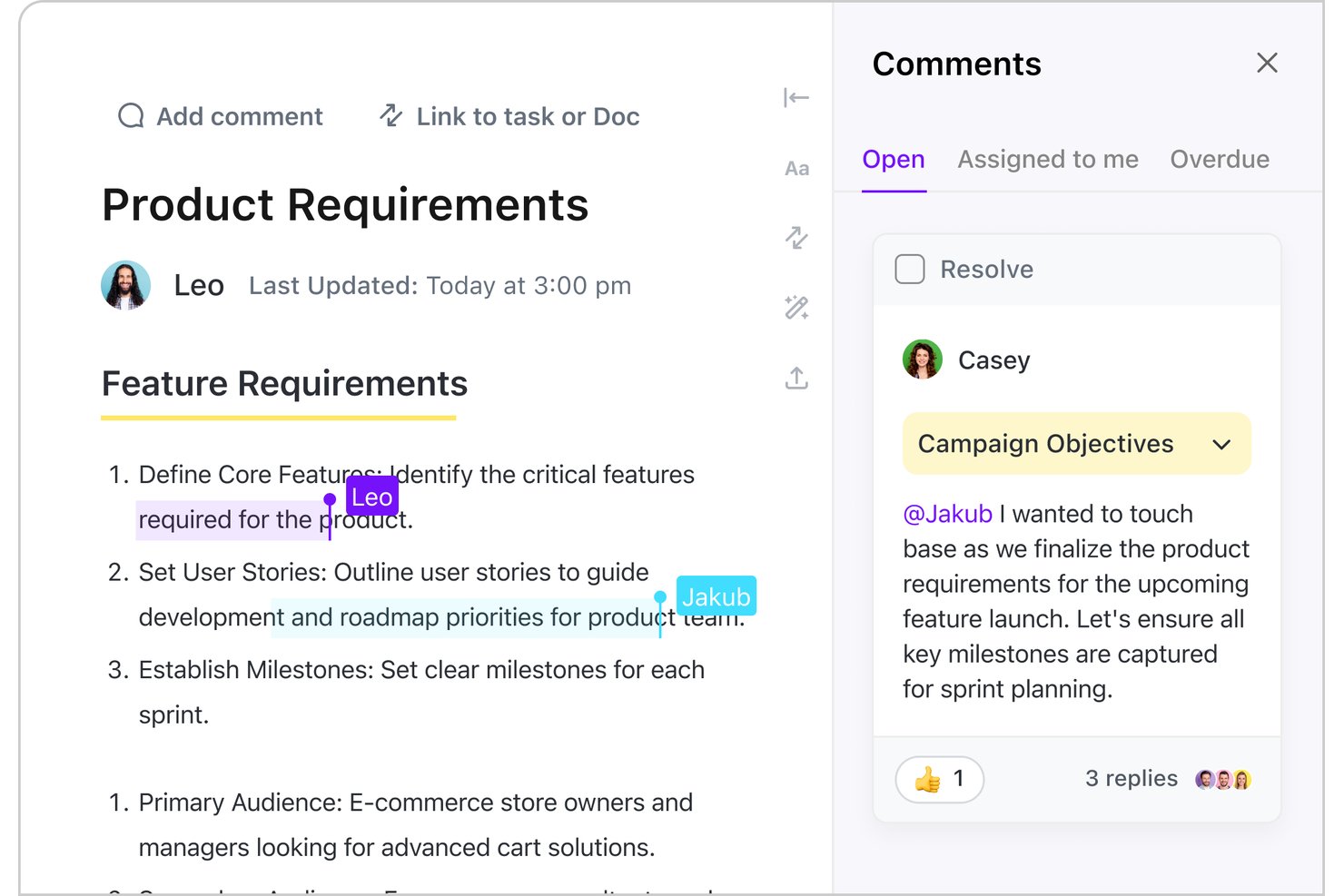
ClickUp è una piattaforma completa per la gestione del lavoro che combina documentazione assistita dall'IA, Documenti collaborativi, collegamento delle attività, pianificazione degli sprint e definizione dei piani di sviluppo per supportare i flussi di lavoro relativi ai requisiti di prodotto.
Per chi è più adatto ClickUp?
ClickUp è adatto ai responsabili di prodotto e ai proprietari di prodotto che desiderano scrivere, collegare e gestire i requisiti nello stesso spazio di lavoro in cui si trovano sprint e piani di sviluppo.
Perché ho scelto ClickUp
Ho incluso ClickUp tra le mie scelte migliori perché ClickUp Brain può redigere una specifica di prodotto completa direttamente all'interno di un Documento, per poi collegare quel Documento alle attività dello sprint che ne realizzano i contenuti, il tutto senza lasciare lo spazio di lavoro. Mi piace il fatto che sia possibile trasformare con un solo clic un commento in linea su un requisito in un'attività concreta, mantenendo così efficienti i cicli di riscontro durante le revisioni delle specifiche. I 'Super Agenti' IA di ClickUp aggiornano inoltre automaticamente i Documenti al termine delle riunioni e alla chiusura delle attività, mantenendo aggiornati i requisiti senza interventi manuali.
Funzionalità principali di ClickUp
- Modifica collaborativa in tempo reale: Più membri del team possono modificare contemporaneamente lo stesso Documento, con cursori in tempo reale e commenti in linea strutturati in thread visibili a tutti i collaboratori.
- Conversione da commento ad attività: Qualsiasi commento in linea su un Documento può essere convertito con un solo clic in un'attività collegata, mantenendo il riscontro della revisione direttamente associato al lavoro di consegna.
- Modelli specifici per il prodotto: ClickUp include modelli pronti all'uso per piani di sviluppo del prodotto, documenti di sintesi del prodotto, note di rilascio e gestione Scrum agile, offrendo alle specifiche una struttura coerente.
- Cronologia delle versioni e ripristino: Ogni Documento conserva una cronologia completa delle versioni, consentendo di ripristinare qualsiasi stato precedente di un requisito senza perdere il lavoro corrente.
Integrazioni di ClickUp
ClickUp offre oltre 200 integrazioni native, tra cui GitHub, Bitbucket, Figma, Slack, Microsoft Teams, Google Sheets, Sentry e Zendesk. I webhook sono disponibili nel piano Business, mentre il piano Enterprise offre accesso alle API e limiti di integrazione più elevati.
Pros and Cons
Pros:
- L'IA redige le specifiche di prodotto all'interno dei Documenti
- I commenti vengono convertiti direttamente in attività di consegna
- I requisiti si collegano a piani di sviluppo e sprint
Cons:
- Manca una matrice dedicata alla tracciabilità dei requisiti
- I flussi di lavoro per l'approvazione formale non sono inclusi

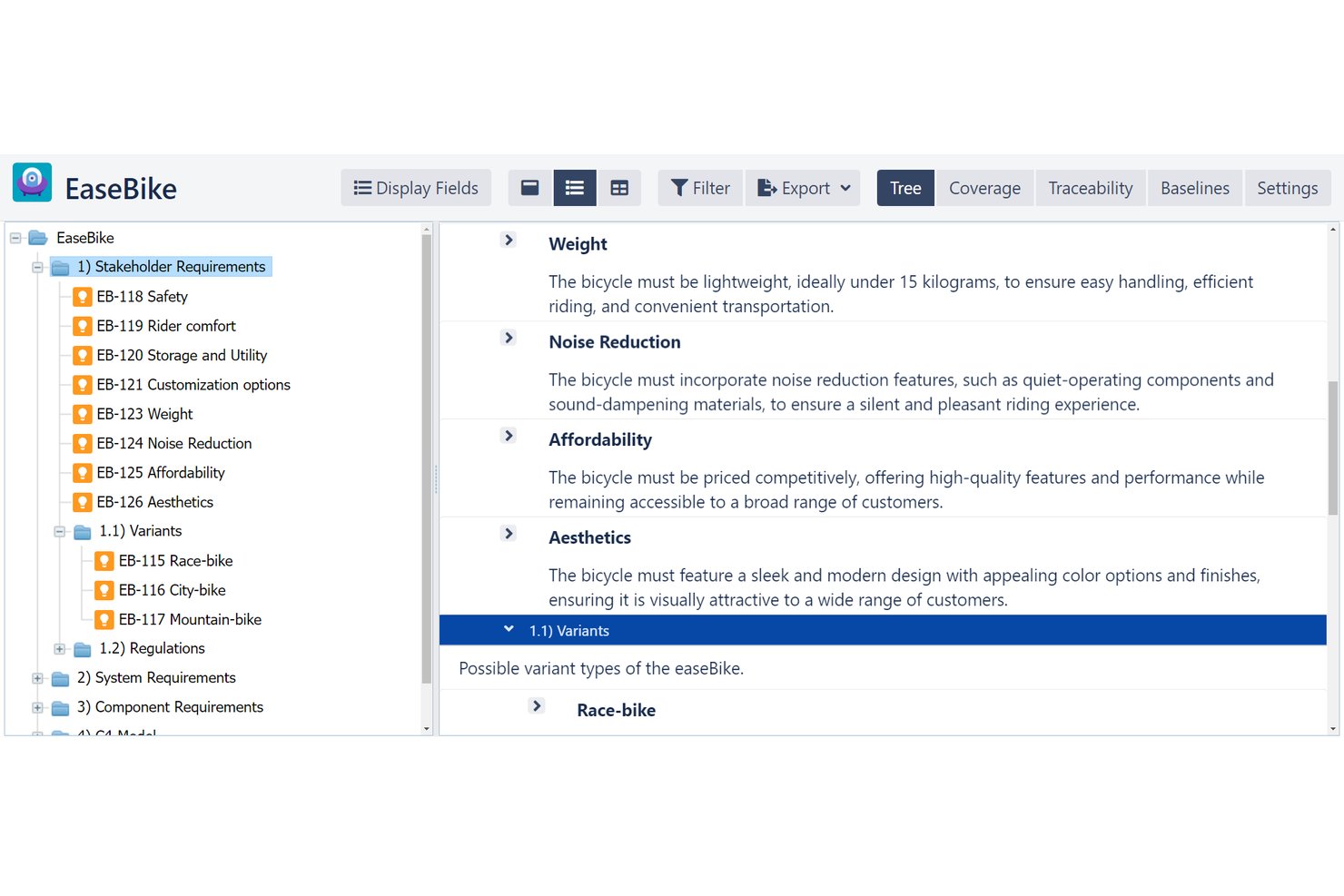
R4J è un componente aggiuntivo nativo per la gestione dei requisiti che puoi utilizzare in Jira. La soluzione consente al tuo staff di collaborare e comunicare durante tutto il ciclo di vita dello sviluppo del prodotto. Questo software è facile da usare e gli amministratori di Jira possono configurarlo a loro piacimento.
Con R4J, puoi creare una struttura gerarchica per la tua documentazione, tracciare l'evoluzione dei tuoi requisiti e garantire la tracciabilità.
R4J può aiutarti a ridurre il time to market consentendoti di riutilizzare i requisiti da altri progetti. È possibile importare ed esportare i requisiti in diversi formati e il software si integra con Microsoft Excel, così il tuo team può modificare i file .csv.
I prezzi di R4J partono da $10/10 utenti/anno. La soluzione offre una prova gratuita di 30 giorni.

Ideale per l'approvazione dei requisiti all'interno di Azure DevOps
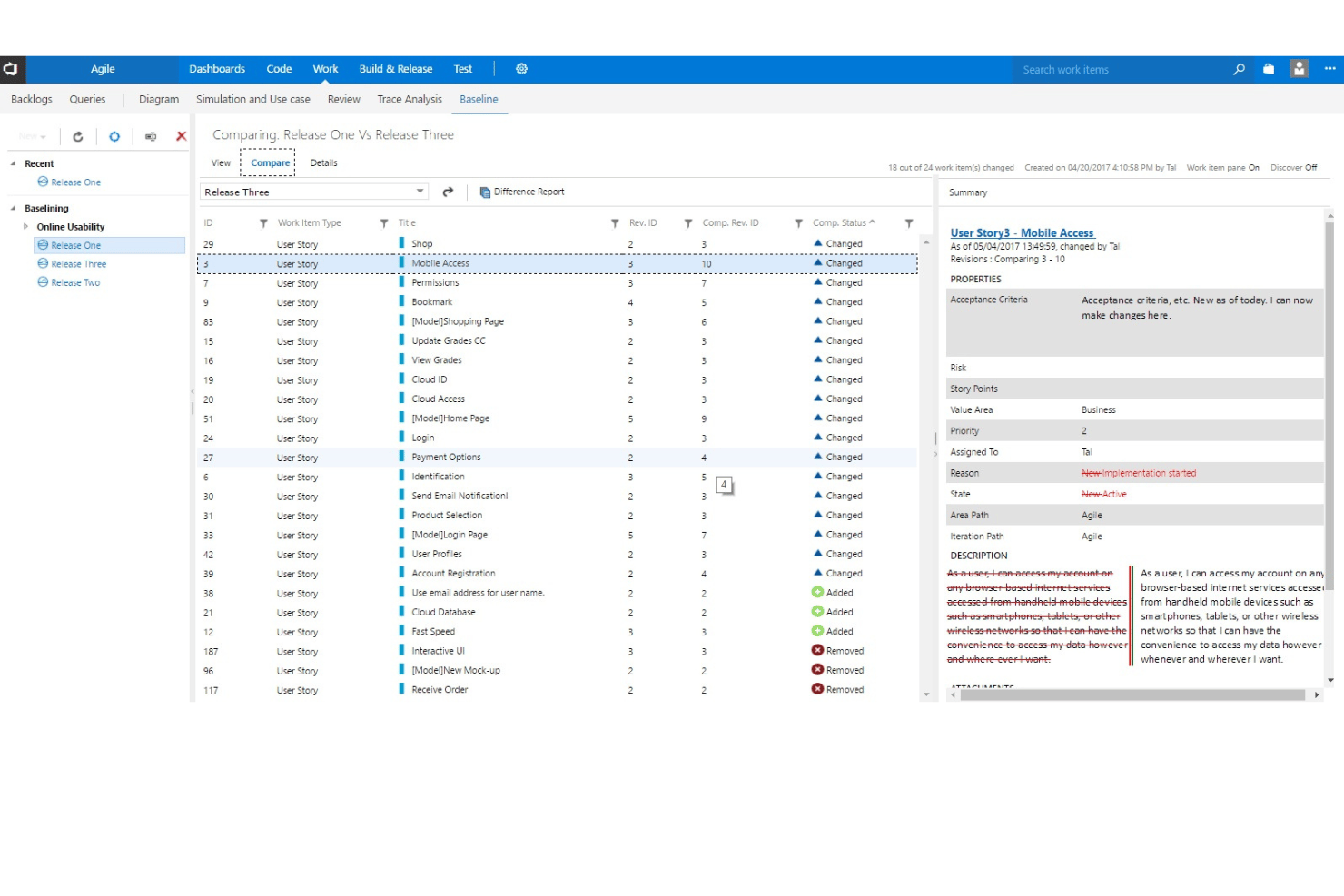
Modern Requirements4DevOps è un componente aggiuntivo per la gestione dei requisiti che risiede nativamente in Azure DevOps e offre documentazione strutturata, tracciabilità bidirezionale, flussi di lavoro formali per la revisione e l'approvazione, controllo delle versioni e creazione assistita dei requisiti tramite IA.
Per chi è più adatto Modern Requirements4DevOps?
Modern Requirements4DevOps è particolarmente adatto agli analisti aziendali e ai responsabili tecnici di settori regolamentati che necessitano di flussi di lavoro formali per l'approvazione dei requisiti all'interno di Azure DevOps.
Perché ho scelto Modern Requirements4DevOps
Ho incluso Modern Requirements4DevOps tra le mie migliori scelte perché è l'unico strumento per la gestione dei requisiti che risiede interamente in Azure DevOps, rendendo l'approvazione formale una parte naturale del flusso di lavoro esistente. Apprezzo in particolare il suo modulo di gestione delle revisioni, che assegna ruoli distinti di Revisore e Approvatore, impone firme elettroniche con riautenticazione e chiude automaticamente le revisioni pianificate con una traccia di audit completa. Le sue linee di base immutabili bloccano quindi i requisiti approvati in corrispondenza di una versione specifica, fornendo ai team regolamentati una documentazione di conformità difendibile senza uscire da ADO.
Funzionalità principali di Modern Requirements4DevOps
- Documenti intelligenti: Un editor in stile documento basato sugli elementi di lavoro di ADO, che supporta gerarchie, colonne configurabili, modelli riutilizzabili con marchio e confronto tra documenti.
- Mappa di calore della tracciabilità: Una matrice visiva che evidenzia le lacune di copertura tra requisiti collegati, casi di test ed elementi di lavoro per una rapida analisi dell'impatto.
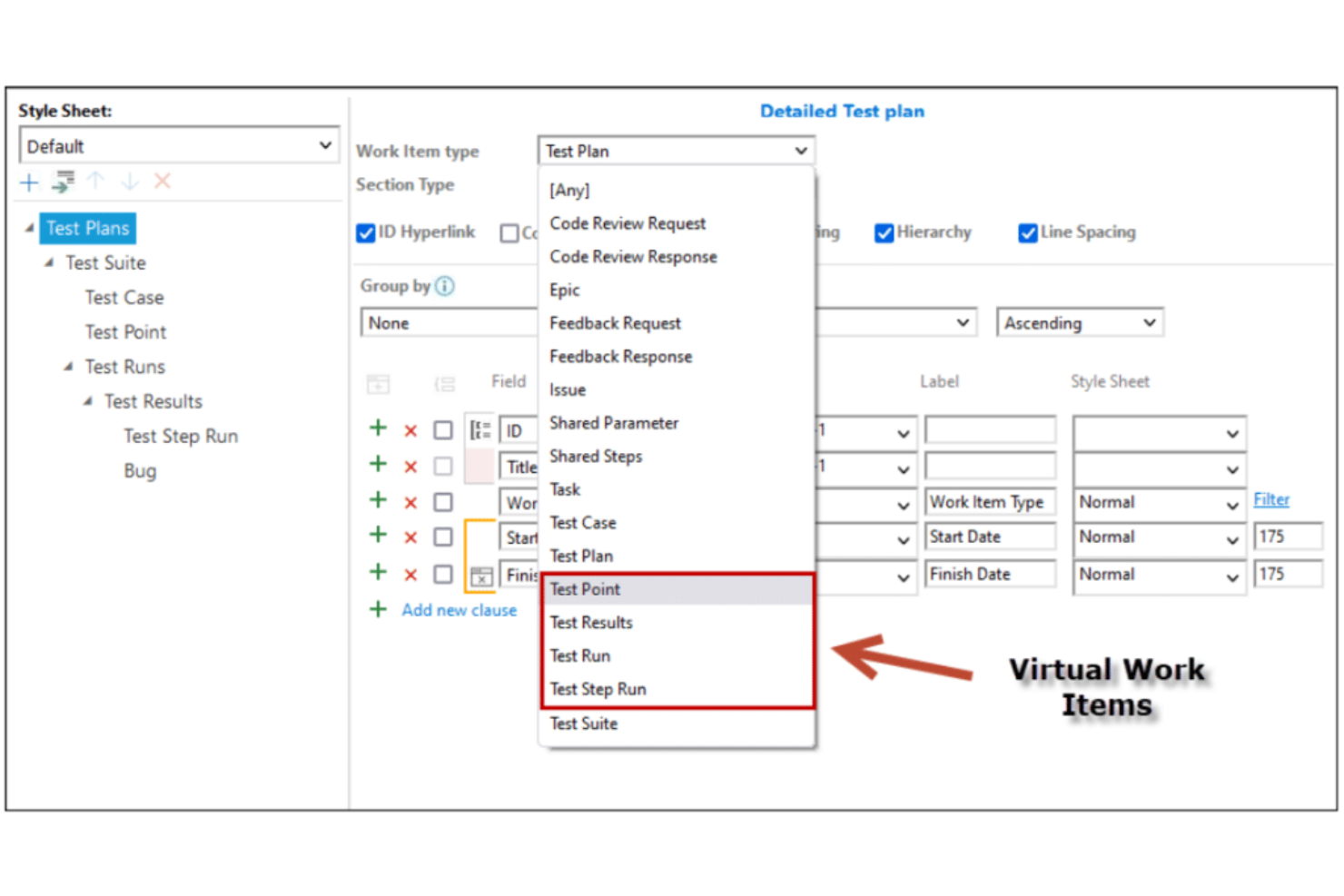
- Elementi di lavoro virtuali: Estende ADO Test Plans con punti di test, esecuzioni di test e risultati dei test per tracciare i requisiti fino ai test eseguiti.
- Modifica tramite IA: Un editor in linea accessibile con il clic destro che riscrive, amplia o analizza il testo degli elementi di lavoro usando l'IA, con supporto per richieste personalizzate.
Integrazioni di Modern Requirements4DevOps
Modern Requirements4DevOps offre un'integrazione nativa con Azure DevOps, inclusi elementi di lavoro, Azure Test Plans, iterazioni e versioni. Non sono documentate chiaramente altre integrazioni native, pertanto lo strumento è più adatto ai team incentrati su Azure DevOps.
Pros and Cons
Pros:
- Le approvazioni formali preservano le tracce di audit della conformità
- La tracciabilità arriva fino ai risultati dei test eseguiti
- I revisori apprezzano il monitoraggio organizzato delle modifiche
Cons:
- I moduli avanzati richiedono un'ulteriore esplorazione
- I registri della cronologia delle modifiche diventano difficili da gestire

Ideale per i requisiti nei settori con requisiti critici per la sicurezza
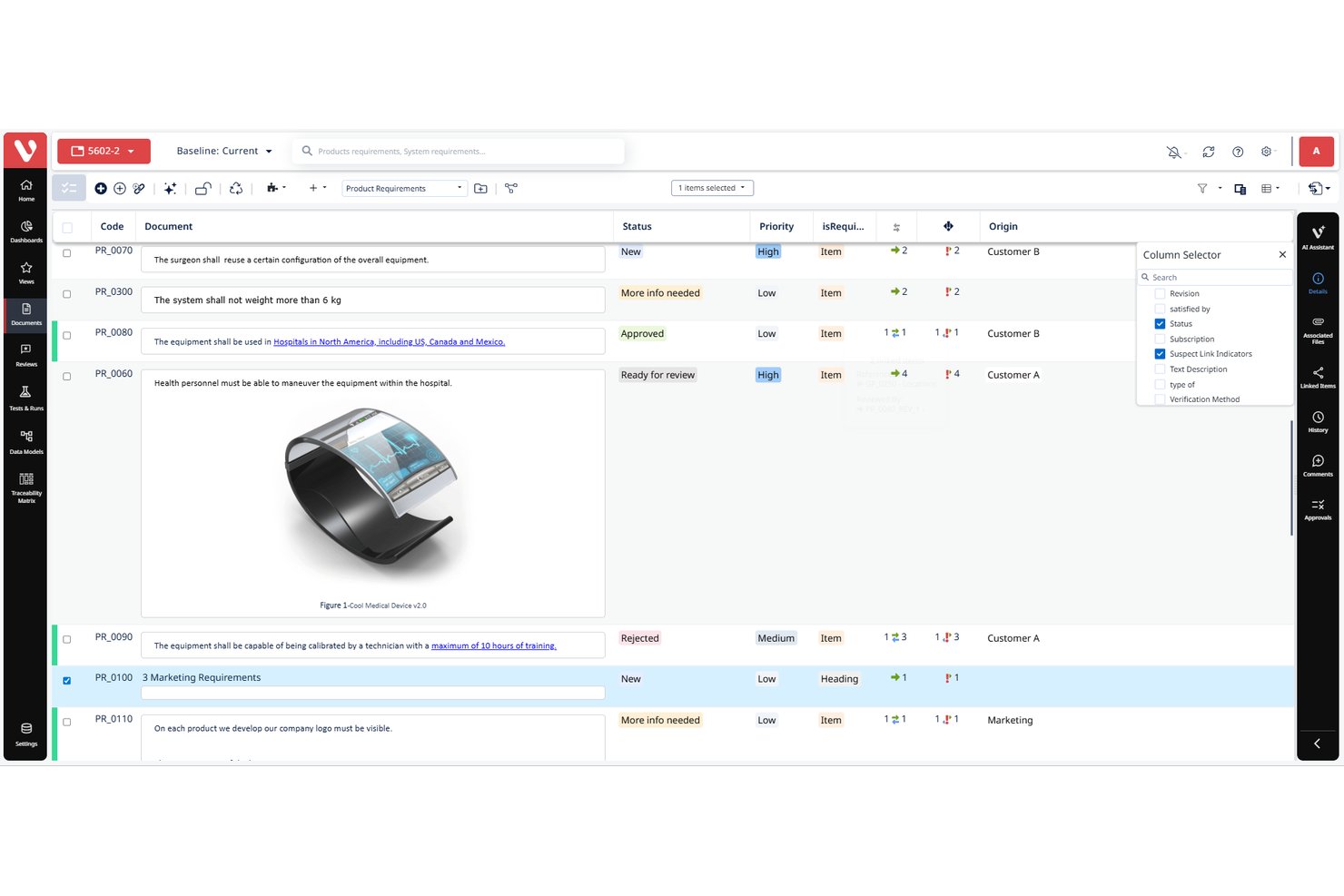
Visure Requirements è una piattaforma di gestione dei requisiti e ALM basata sull'intelligenza artificiale, progettata per i settori regolamentati, che offre tracciabilità end-to-end, gestione delle baseline, analisi dell'impatto e integrazioni con strumenti come Jira, IBM DOORS e Azure DevOps.
Per chi è più adatto Visure Requirements?
Visure Requirements è progettato per i team di ingegneria dei settori regolamentati, come quello aerospaziale, medico e automobilistico, che necessitano di tracciabilità end-to-end dei requisiti e supporto alla conformità.
Perché ho scelto Visure Requirements
Ho incluso Visure Requirements tra le mie scelte principali perché è progettato specificamente per i team che lavorano secondo rigorosi standard di conformità come DO-178C o ISO 26262, in cui la tracciabilità non è facoltativa. La sua matrice di tracciabilità end-to-end collega rischi, requisiti e test tra i progetti, mentre l'assistente AI VIVIA può generare casi di test o segnalare requisiti ambigui, con un passaggio di approvazione umana prima di qualsiasi aggiornamento della baseline.
Funzionalità principali di Visure Requirements
- Gestione delle baseline: Crea istantanee versionate del set di requisiti e confrontale tra le diverse fasi del progetto per monitorare esattamente cosa è cambiato e quando.
- Libreria di riutilizzo: Archivia i requisiti approvati in un catalogo condiviso, così i team possono integrare contenuti convalidati nei nuovi progetti senza partire da zero.
- Analisi della qualità dei requisiti: Esegue automaticamente la scansione dei requisiti e segnala gli elementi ambigui, incompleti o incoerenti prima che causino problemi a valle.
- Modelli di dati configurabili: Definisci attributi, gerarchie e relazioni personalizzati per adattarli alla struttura specifica della documentazione e della conformità del tuo team.
Integrazioni di Visure Requirements
Visure Requirements offre oltre 30 integrazioni, tra cui la sincronizzazione bidirezionale nativa con Jira, IBM DOORS, GitLab, GitHub e Azure DevOps, oltre a Microsoft Word, Excel, ReqIF e Confluence. La sua API REST supporta integrazioni personalizzate.
Pros and Cons
Pros:
- La tracciabilità approfondita supporta lo sviluppo di prodotti regolamentati
- Le baseline chiariscono le modifiche e la cronologia dei requisiti
- L'IA segnala le ambiguità e redige casi di test
Cons:
- La configurazione può richiedere tempi di impostazione considerevoli
- L'esportazione dei documenti può essere complessa

Ideale per documenti tracciabili nei flussi di lavoro DevOps
Modern Requirements4DevOps è una suite per la gestione dei requisiti che funziona nativamente all'interno di Azure DevOps, offrendo Documenti intelligenti, matrici di tracciabilità, gestione delle versioni delle baseline, flussi di revisione e generazione assistita dall'intelligenza artificiale dei requisiti.
Per chi è più adatto Modern Requirements?
Modern Requirements4DevOps è particolarmente adatto ai team aziendali di prodotto e ingegneria che lavorano già all'interno di Azure DevOps e necessitano di una tracciabilità formale, documentazione pronta per la conformità e flussi di revisione strutturati.
Perché ho scelto Modern Requirements
Ho scelto Modern Requirements come una delle soluzioni migliori perché è progettato per funzionare all'interno di Azure DevOps, il che significa che requisiti, test ed elementi di lavoro condividono un'unica fonte di verità fin dal primo giorno. Apprezzo in particolare l'analisi bidirezionale della tracciabilità, che crea matrici di tracciabilità dei requisiti in pochi minuti e si collega direttamente ad Azure Test Plans tramite i report dell'hub di test. Le baseline immutabili consentono di bloccare i requisiti in qualsiasi fase e di eseguire report delle differenze in Word tra di esse, esattamente ciò di cui hanno bisogno i programmi orientati alla conformità.
Caratteristiche principali di Modern Requirements
- Documenti intelligenti: Uno strumento di modifica simile a Word che crea documenti dei requisiti dinamici direttamente dagli elementi di lavoro di Azure DevOps, aggiornandosi automaticamente quando i requisiti cambiano.
- Revisioni online: Le parti interessate possono partecipare a flussi di approvazione formali e fornire riscontri sui requisiti senza dover disporre di una licenza a pagamento.
- Importazione da Word: Converte i documenti Word esistenti in elementi di lavoro ADO strutturati, supportando i team che stanno abbandonando i processi PRD basati sui documenti.
- Report intelligenti: Genera report dei requisiti in formato Word, PDF o HTML utilizzando dati ADO aggiornati, con un impegno manuale minimo.
Integrazioni di Modern Requirements
Modern Requirements offre integrazioni native con Azure DevOps e Azure Test Plans. Si collega inoltre a Microsoft Word tramite flussi di importazione dei documenti, esportazione dei report e confronto.
Pros and Cons
Pros:
- Le matrici di tracciabilità evidenziano le lacune nella copertura dei requisiti
- I documenti dinamici sostituiscono i file PRD statici
- I revisori possono partecipare senza licenze a pagamento
Cons:
- La profondità dell'interfaccia può disorientare i nuovi utenti
- L'analisi avanzata richiede piani di livello superiore
Altri software per i requisiti di prodotto
Ecco alcune ulteriori opzioni di software per i requisiti di prodotto che non sono state incluse nel mio elenco, ma che vale comunque la pena prendere in considerazione:
- Productboard
Ideale per specifiche e piani di sviluppo collegati ai feedback
- Aha!
Ideale per requisiti di prodotto collegati alla strategia
- Linear
Ideale per specifiche e PRD collegati allo sviluppo
- ReqView
Ideale per la tracciabilità dei requisiti nei settori regolamentati
- SpiraTest
Ideale per la tracciabilità dei requisiti collegati al controllo qualità


Come Valuto i Software per la Gestione dei Requisiti di Prodotto
Penso a questi strumenti su due livelli: le funzionalità di base che qualificano un fornitore—come la redazione di PRD, la tracciabilità e la sincronizzazione con Jira—e i fattori distintivi che determinano la scelta migliore.
Funzionalità Core (Requisiti Minimi per Questa Lista)
Quando seleziono gli strumenti per la mia lista, valuto ciascuno su una scala da 0 (non offre la funzionalità) a 5 (eccelle in quest'area) per ogni funzionalità core elencata di seguito. Poi calcolo il punteggio totale dello strumento in percentuale. Ogni strumento deve raggiungere un punteggio totale minimo del 65% per essere considerato per l'inclusione.
- Documentazione dei Requisiti: Cerco editor PRD strutturati con template, formattazione avanzata e media incorporati—non semplici campi di testo vuoti dove le specifiche vanno perse.
- Collaborazione tra Stakeholder: La co-modifica in tempo reale, i commenti in thread e i workflow di revisione sono importanti qui, soprattutto per i passaggi tra PM, ingegneria e design.
- Tracciabilità dei Requisiti: Valuto quanto bene uno strumento collega i requisiti a epic, story e release così che le squadre possano rintracciare una funzionalità dall'idea alla consegna.
- Framework di Prioritizzazione: Modelli di punteggio integrati come RICE o MoSCoW mi mostrano se lo strumento supporta decisioni strutturate oltre al semplice ordinamento drag-and-drop.
- Integrazioni con Strumenti di Sviluppo: Verifico la sincronizzazione bidirezionale con strumenti come Jira, Azure DevOps o Linear, poiché le esportazioni unidirezionali creano discrepanze tra specifiche e ticket.
- Storico delle Versioni e Audit Trail: Guardo se lo strumento traccia chi ha modificato cosa e quando, con viste delle differenze e opzioni di ripristino per requisiti che evolvono durante gli sprint.
Dopo aver ottenuto una lista di strumenti che soddisfano questi criteri, considero ciò che distingue ciascuna piattaforma.
Fattori Distintivi (Cosa Distingue i Fornitori)
Ecco come confronto e metto a confronto i diversi fornitori:
Funzionalità Distintive
La redazione assistita dall’IA è un grande elemento distintivo. Valuto se uno strumento può generare user story o criteri di accettazione da un semplice prompt, facendo risparmiare ore di scrittura delle specifiche ai PM. Anche l’integrazione del feedback dei clienti è importante—gli strumenti che importano ticket di supporto o note di interviste aiutano le squadre a validare i requisiti rispetto alla reale domanda degli utenti. La visualizzazione della roadmap completa il quadro, poiché collegare i requisiti prioritari alle tempistiche di rilascio e ai temi strategici in un unico posto elimina la necessità di mantenere uno strumento di pianificazione separato.
Oltre le Funzionalità
La flessibilità dei prezzi è qualcosa che valuto attentamente, in particolare se il fornitore offre posti solo per la visualizzazione, utili per gli stakeholder che devono solo rivedere i requisiti ma non scriverli. Anche le certificazioni di sicurezza come SOC 2 Type II e il supporto SSO/SAML sono fattori di grande peso, soprattutto per i team in settori regolamentati. Valuto anche la velocità di implementazione. Gli strumenti con template PRD preimpostati e onboarding guidato permettono ai team di essere produttivi più velocemente rispetto alle piattaforme che richiedono settimane di configurazione personalizzata prima di poter scrivere la prima specifica.
Come scegliere il software per i requisiti di prodotto
È facile perdersi in lunghi elenchi di funzionalità e strutture di prezzo complesse. Per aiutarti a rimanere concentrato mentre affronti il tuo processo di selezione del software, unico per le tue esigenze, ecco una lista di controllo dei fattori da tenere a mente:
| Fattore | Cosa considerare |
|---|---|
| Scalabilità | Considera se il software può crescere insieme al tuo gruppo. Sarà in grado di gestire più utenti o progetti più grandi? Cerca piani tariffari flessibili e la possibilità di aggiungere funzionalità secondo necessità. |
| Integrazioni | Verifica se il software si integra con gli strumenti che il tuo gruppo utilizza già. Tra le integrazioni più comuni ci sono Jira, Slack e Microsoft Office. Il trasferimento continuo dei dati può far risparmiare tempo e ridurre gli errori. |
| Personalizzazione | Assicurati di poter adattare il software ai tuoi flussi di lavoro. Puoi personalizzare campi, flussi di lavoro o pannelli di controllo? Evita i sistemi rigidi che non si adattano ai tuoi processi. |
| Facilità d'uso | Valuta l'interfaccia utente e la navigazione. Sono intuitive e facili da imparare? Uno strumento complesso può rallentarne l'adozione e causare frustrazione agli utenti. |
| Implementazione e avviamento | Valuta le risorse necessarie per la configurazione. Sono disponibili materiali di formazione, tutorial o assistenza? Un processo di avviamento fluido può portare a ottenere più rapidamente i vantaggi del prodotto. |
| Costo | Confronta i modelli tariffari e il costo totale di proprietà. Considera i costi nascosti, come le tariffe per gli utenti, la formazione o l'assistenza. Cerca un equilibrio tra il prezzo e le funzionalità di cui hai bisogno. |
| Misure di sicurezza | Esamina le misure di sicurezza adottate. Il software è conforme a standard come il GDPR o SOC 2? Assicurati che i tuoi dati siano protetti da violazioni e accessi non autorizzati. |
| Disponibilità dell'assistenza | Considera il livello di assistenza offerto. È disponibile un supporto 24 ore su 24, 7 giorni su 7, una chat dal vivo o un responsabile del cliente dedicato? Un'assistenza affidabile può essere fondamentale durante le fasi critiche del progetto. |
Che cos'è un software per i requisiti di prodotto?
Un software per i requisiti di prodotto è uno strumento che consente di documentare, organizzare e gestire ciò che un prodotto deve fare. I responsabili di prodotto, i progettisti e gli ingegneri lo utilizzano per tenere traccia dei requisiti in un unico luogo, collegare i documenti correlati e aggiornare tutti in tempo reale. In questo modo il gruppo rimane concentrato, si evitano dettagli trascurati e diventa più semplice per tutti concordare ciò che viene effettivamente realizzato.
Funzionalità
Quando scegli un software per i requisiti di prodotto, presta attenzione alle seguenti funzionalità chiave:
- Tracciabilità: Tiene traccia della relazione tra i requisiti e gli altri elementi del progetto, assicurandosi che nulla venga trascurato.
- Collaborazione: Consente ai membri del gruppo di lavorare insieme in tempo reale, migliorando la comunicazione e l'allineamento.
- Reportistica: Genera report dettagliati per fornire informazioni sull'avanzamento del progetto e sullo stato dei requisiti.
- Personalizzazione: Permette agli utenti di adattare campi e flussi di lavoro alle proprie esigenze e ai propri processi specifici.
- Integrazione: Si collega ad altri strumenti, come Jira e Slack, per ottimizzare i flussi di lavoro e la condivisione dei dati.
- Controllo delle versioni: Gestisce le modifiche ai documenti dei requisiti, consentendo di tenere traccia delle revisioni e mantenere la coerenza.
- Gestione della conformità: Aiuta ad assicurarsi che i requisiti soddisfino gli standard e le normative del settore.
- Raccolta dei riscontri: Raccoglie i contributi delle parti interessate e degli utenti per perfezionare e convalidare i requisiti.
- Strumenti di prioritizzazione: Aiuta a classificare i requisiti per concentrarsi su ciò che è più importante per il successo del progetto.
- Misure di sicurezza: Protegge i dati sensibili con misure come la crittografia e i controlli degli accessi.
Vantaggi
L'implementazione di un software per i requisiti di prodotto offre diversi vantaggi al tuo gruppo e alla tua azienda. Eccone alcuni:
- Maggiore chiarezza: Assicura che tutti comprendano gli obiettivi del progetto grazie a una documentazione chiara e alla tracciabilità.
- Collaborazione migliorata: Favorisce il lavoro di squadra consentendo la comunicazione in tempo reale e l'accesso condiviso ai requisiti.
- Maggiore efficienza: Fa risparmiare tempo grazie alla reportistica automatizzata e al facile accesso alle informazioni, riducendo le attività manuali.
- Migliori decisioni: Aiuta a stabilire la priorità delle attività utilizzando la raccolta dei riscontri e gli strumenti di prioritizzazione, concentrando gli sforzi dove sono più importanti.
- Riduzione dei rischi: Riduce al minimo gli errori e le omissioni grazie alle funzionalità di controllo delle versioni e gestione della conformità.
- Scalabilità: Cresce insieme al gruppo e ai progetti, adattandosi alle esigenze in continua evoluzione con opzioni personalizzabili.
- Sicurezza dei dati: Protegge le informazioni sensibili con solide misure di sicurezza, assicurando la conformità agli standard del settore.
Costi & prezzi
La scelta di un software per i requisiti di prodotto richiede la comprensione dei diversi modelli e piani tariffari disponibili. I costi variano in base alle funzionalità, alle dimensioni del gruppo, ai componenti aggiuntivi e ad altri fattori. La tabella seguente riassume i piani più comuni, i relativi prezzi medi e le funzionalità generalmente incluse nelle soluzioni software per i requisiti di prodotto:
Tabella comparativa dei piani per il software dei requisiti di prodotto
| Tipo di piano | Prezzo medio | Funzionalità comuni |
|---|---|---|
| Piano gratuito | $0 | Strumenti di collaborazione di base, spazio di archiviazione limitato e supporto della community. |
| Piano personale | $5-$25/utente/mese | Documentazione dei requisiti, reportistica di base e integrazioni limitate. |
| Piano aziendale | $30-$60/utente/mese | Tracciabilità avanzata, flussi di lavoro personalizzabili e integrazione con altri strumenti. |
| Piano aziendale avanzato | $70-$120/utente/mese | Gestione completa della conformità, ampie opzioni di personalizzazione e assistenza clienti dedicata. |
Domande frequenti sul software dei requisiti di prodotto
Ecco alcune risposte alle domande più comuni sul software dei requisiti di prodotto:
Il software dei requisiti di prodotto è adatto ai piccoli team?
Sì, il software dei requisiti di prodotto è adatto ai piccoli team. Molti strumenti offrono prezzi e funzionalità scalabili che si adattano a team di dimensioni diverse. I piccoli team traggono vantaggio da una collaborazione migliore e da una documentazione chiara. Cerca soluzioni con piani tariffari e funzionalità adeguati alle dimensioni e al budget del tuo team.
Il software dei requisiti di prodotto può aiutare con il lavoro da remoto?
Sì, il software dei requisiti di prodotto può aiutare con il lavoro da remoto. Fornisce una piattaforma centralizzata in cui i membri del team possono accedere ai requisiti e aggiornarli in tempo reale. Funzionalità come gli strumenti di collaborazione e l’archiviazione cloud garantiscono che tutti rimangano connessi e informati, indipendentemente dalla loro posizione. Assicurati che il software supporti l’accesso remoto e la sicurezza dei dati.
Cosa succede se il software dei requisiti di prodotto non supporta gli audit o il monitoraggio delle modifiche?
Se il tuo strumento non dispone della cronologia degli audit o della funzionalità di monitoraggio delle modifiche, tu e il tuo team potreste avere difficoltà a dimostrare chi ha modificato cosa e quando. Questo può generare confusione, rallentare le approvazioni o far perdere il contesto. Sarà più difficile recuperare versioni precedenti o capire come si sono evoluti i requisiti nel tempo. Per i progetti regolamentati o con molti stakeholder, ciò può causare ritardi e lavoro aggiuntivo.
Quando più progetti e prodotti condividono i requisiti, come dovrebbe gestire il software il riutilizzo o il controllo delle versioni?
È utile poter duplicare o creare rami dei requisiti, in modo che un progetto non debba reinventare la ruota mentre un altro si discosta in modo improprio. Se il software non consente di gestire le versioni o riutilizzare i componenti dei requisiti tra i prodotti del portafoglio, finirai per avere incoerenze, lavoro aggiuntivo e rischi di disallineamento. Assicurati che lo strumento supporti il riutilizzo modulare e tenga traccia delle divergenze quando copi o adatti i requisiti.
Cosa succede ora:
Se stai cercando un software per i requisiti di prodotto, contatta gratuitamente un consulente SoftwareSelect per ricevere consigli personalizzati.
Compili un modulo e fai una breve conversazione durante la quale vengono analizzate nel dettaglio le tue esigenze. In seguito riceverai una lista ristretta di software da valutare. Ti supporteranno anche durante l'intero processo di acquisto, comprese le trattative sul prezzo.