

Gli strumenti di test A/B basati sull'IA utilizzano l'intelligenza artificiale per automatizzare la progettazione degli esperimenti, analizzare i risultati e ottimizzare le esperienze digitali più rapidamente rispetto ai metodi manuali. Se stai cercando modi per migliorare i tassi di conversione, ridurre le ipotesi e prendere decisioni più intelligenti per il tuo sito web o prodotto, questi strumenti possono aiutare il tuo team a eseguire più esperimenti con meno sforzo. In questo elenco troverai piattaforme affidabili per i test A/B basati sull'IA che affrontano problemi comuni come risorse limitate, analisi lente e necessità di ottenere informazioni utili e attuabili, così potrai scegliere la soluzione giusta per gli obiettivi della tua azienda.
Perché fidarsi dei nostri consigli sui software
6,700+
Reviews
20
Industry experts
16+
Evaluation factors
14
Years
Il nostro team testa e recensisce software dal 2012. In quanto product manager noi stessi, sappiamo quanto sia difficile — e importante — scegliere il software giusto.
Per questa guida, abbiamo valutato gli strumenti attraverso test pratici e ricerche indipendenti, assegnando un punteggio agli strumenti in base ai nostri criteri di selezione.
Le nostre recensioni riflettono il nostro giudizio editoriale umano, non un discorso di vendita.
Revisori esperti:
- Andrew LumbySenior TPM
- Cristiano ValimSenior UI/UX Lead


Tabella comparativa degli strumenti di test A/B basati sull'IA
Questa tabella comparativa riassume i dettagli dei prezzi delle mie principali selezioni di strumenti di test A/B basati sull’IA:
| Tool | Best For | Trial Info | Price | ||
|---|---|---|---|---|---|
| 1 | Ideale con il targeting comportamentale in tempo reale | Prova gratuita di 30 giorni | A partire da $495/mese | Website | |
| 2 | Ideale per la collaborazione tra team di marketing | Demo gratuita disponibile | Prezzi su richiesta | Website | |
| 3 | Il migliore per la sperimentazione con i flag delle funzionalità | Piano gratuito + prova gratuita di 14 giorni + demo gratuita disponibile | A partire da $10/mese (con fatturazione annuale) | Website | |
| 4 | Ideale per i controlli di governance degli esperimenti aziendali | Demo gratuita disponibile | Prezzi su richiesta | Website | |
| 5 | Ideale per flussi di lavoro sperimentali guidati dagli sviluppatori | Piano gratuito disponibile | A partire da 250 $/mese | Website | |
| 6 | Ideale per la personalizzazione omnicanale | Demo gratuita disponibile | Prezzo su richiesta | Website | |
| 7 | Ideale per analizzare rapidamente i rilasci delle funzionalità | Piano gratuito disponibile | A partire da $150/mese | Website | |
| 8 | Ideale per test open source nativi per il data warehouse | Piano gratuito + demo gratuita disponibile | A partire da $40/utente/mese | Website | |
| 9 | Ideale per la personalizzazione bayesiana su scala aziendale | Demo gratuita disponibile | Prezzi su richiesta | Website | |
| 10 | Gratis abonnement beschikbaar | Prijs op aanvraag | Website |


Recensioni degli strumenti di test A/B basati sull'IA
Di seguito sono riportati i miei riepiloghi dettagliati dei migliori strumenti di test A/B basati sull’IA inclusi nel mio elenco. Le mie recensioni offrono un’analisi approfondita delle funzionalità, dei casi d’uso migliori e delle integrazioni di ciascuna piattaforma, per aiutarti a trovare quella più adatta a te.
 Ideale con il targeting comportamentale in tempo reale
- Prova gratuita di 30 giorni
- A partire da $495/mese
Visit WebsiteCustomer Rating:4.7/5This rating combines scores from multiple user review sites to reflect overall customer sentiment about the product.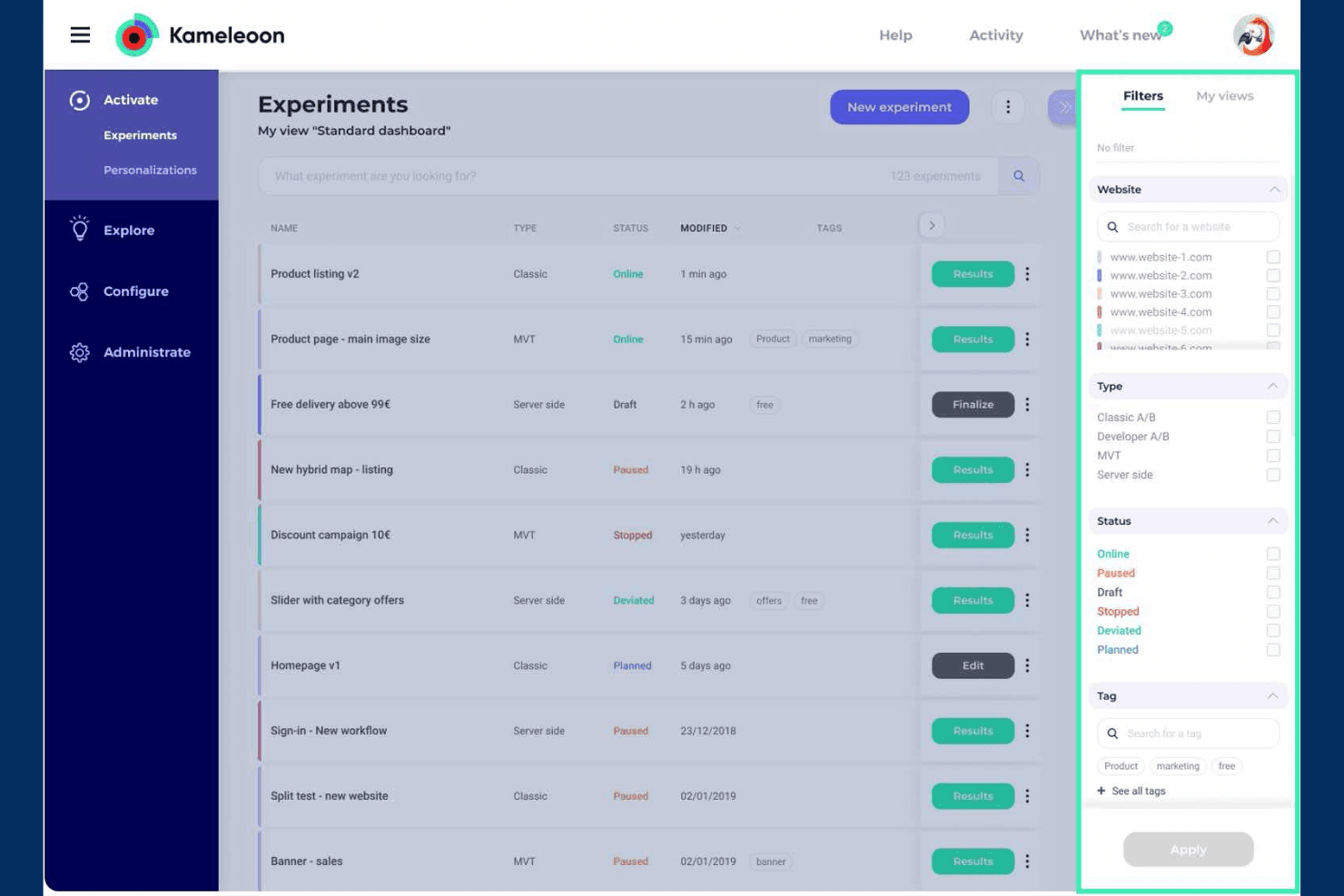
Kameleoon aiuta i team a eseguire test A/B e a personalizzare le esperienze digitali. Kameleoon è una piattaforma di test A/B e sperimentazione basata sull'IA che supporta test web, mobile, lato server e con flag delle funzionalità, oltre al targeting comportamentale in tempo reale, alla personalizzazione e alla creazione di varianti tramite prompt.
Per chi è più adatto Kameleoon?
Kameleoon è particolarmente adatto agli specialisti CRO e ai team di prodotto di aziende di medie e grandi dimensioni che necessitano di un targeting comportamentale avanzato insieme a una piattaforma completa per la sperimentazione.
Perché ho scelto Kameleoon
Kameleoon è entrato nella mia lista di strumenti preferiti grazie al modo in cui il suo modello di targeting basato sull'IA gestisce i dati comportamentali in tempo reale. Assegna a ogni visitatore un punteggio in base alla probabilità di conversione, aggiornato ogni 10 minuti, raggruppando le sessioni attive in segmenti dinamici invece di affidarsi a regole statiche. Apprezzo anche il rilevamento delle opportunità tramite IA, che individua i sottosegmenti ad alta affidabilità quando il risultato di un test non è conclusivo, così non si torna a mani vuote da un esperimento senza risultati.
Funzionalità principali di Kameleoon
- Creazione di esperimenti tramite prompt: Descrivi una modifica in linguaggio naturale e l'IA di Kameleoon crea la variante direttamente sul tuo sito attivo, su desktop, tablet e dispositivi mobili.
- Supporto SDK multipiattaforma: Implementa esperimenti su web, iOS, Android, Flutter, React Native, ambienti lato server e ambienti edge da un'unica piattaforma condivisa.
- Sperimentazione con flag delle funzionalità: Esegui rilasci progressivi con ripristino automatico basato sui KPI, flussi di approvazione, registri di controllo e ambienti illimitati.
- Riduzione della varianza con CUPED: Applica CUPED insieme ai metodi statistici frequentisti e bayesiani, ai test sequenziali e al rilevamento SRM per ottenere risultati più affidabili più rapidamente.
Integrazioni di Kameleoon
Kameleoon elenca oltre 100 integrazioni, tra cui Google Analytics, Adobe Analytics, Amplitude, Contentsquare, Snowflake, Segment, Datadog, Jira e Figma. Offre inoltre API JavaScript, Data e Automation per integrazioni personalizzate, oltre a Zapier.
Pros and Cons
Pros:
- Il targeting comportamentale in tempo reale si adatta all'intento dei visitatori
- PBX genera e crea variazioni di test
- CUPED aumenta l'affidabilità dei risultati degli esperimenti
Cons:
- Gli sviluppatori restano necessari per le implementazioni avanzate
- Il targeting basato sull'IA richiede un volume di traffico e uno storico significativi
Learn more about Kameleoon: Ideale per la collaborazione tra team di marketing
- Demo gratuita disponibile
- Prezzi su richiesta
Visit WebsiteCustomer Rating:4.5/5This rating combines scores from multiple user review sites to reflect overall customer sentiment about the product.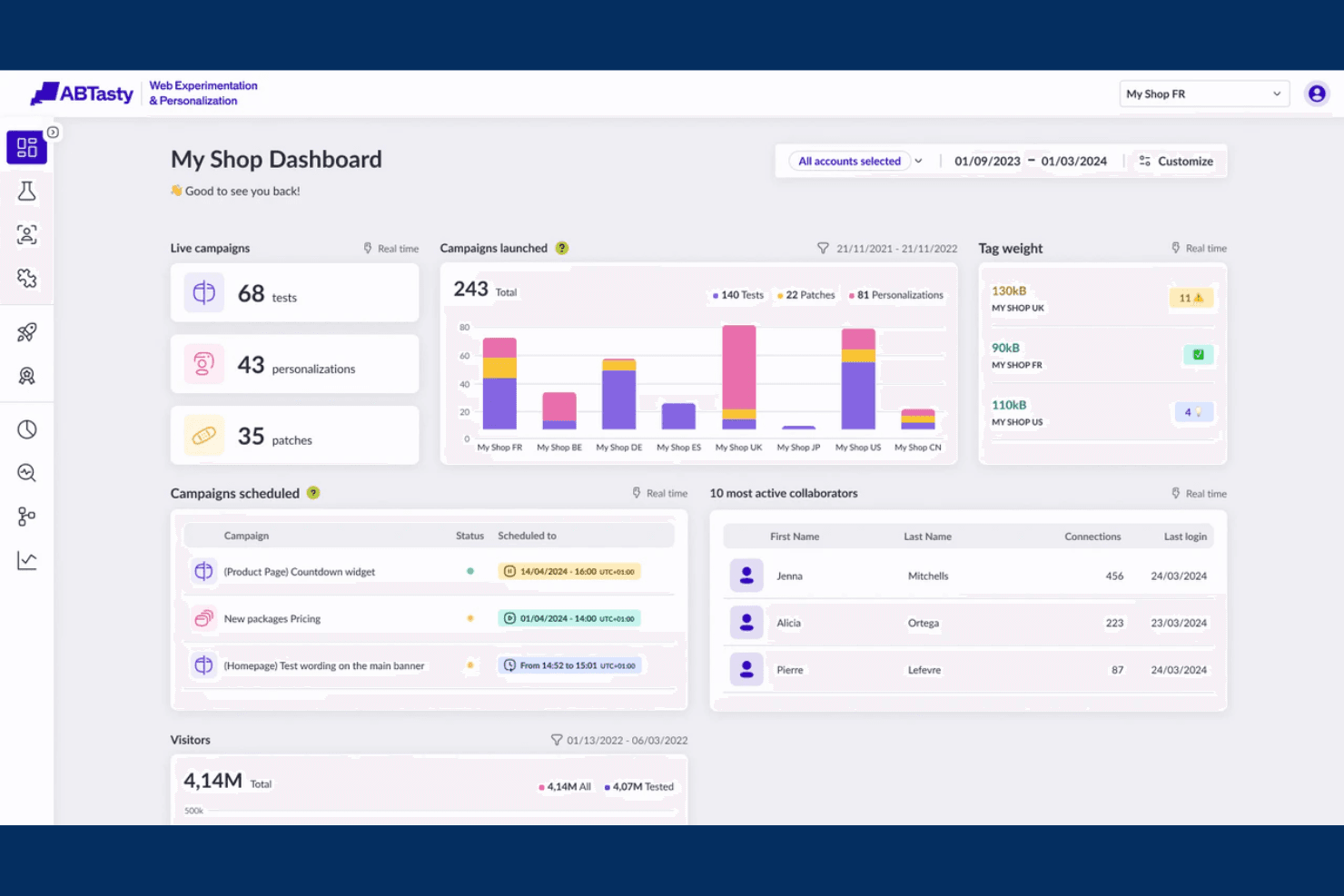
AB Tasty aiuta i team a eseguire test A/B e a personalizzare le esperienze digitali. AB Tasty è una piattaforma di sperimentazione basata sull'intelligenza artificiale che supporta test A/B, multivariati e di URL divisi, oltre alla gestione dei flag delle funzionalità, alla generazione assistita dall'intelligenza artificiale di ipotesi e testi e alla segmentazione comportamentale del pubblico.
Per chi è più indicato AB Tasty?
AB Tasty è particolarmente adatto ai team di marketing che desiderano eseguire test A/B, campagne di personalizzazione e sperimentazioni senza dover dipendere dal reparto tecnico per ogni modifica.
Perché ho scelto AB Tasty
Ho incluso AB Tasty tra le mie scelte principali perché è una delle poche piattaforme di sperimentazione progettate tenendo realmente conto della collaborazione tra i team di marketing. Il flusso di approvazione consente ai team di esaminare e approvare le sperimentazioni prima della loro pubblicazione, mentre gli spazi di lavoro mantengono organizzate più campagne senza sovrapposizioni. Mi piace anche la suite Evi, che consente ai professionisti del marketing di generare ipotesi, scrivere testi per le varianti e interpretare i risultati senza coinvolgere un analista dei dati per ogni test.
Funzionalità principali di AB Tasty
- Idee Evi: genera idee per test CRO a partire da screenshot o GIF, basandosi sulle migliori pratiche UX e sui principi dei bias cognitivi per suggerire cosa testare successivamente.
- Segmentazione EmotionsAI: raggruppa i visitatori in profili basati sui bisogni emotivi e sul comportamento sul sito, consentendo di indirizzare le sperimentazioni a segmenti specifici del pubblico.
- Allocazione multi-armed bandit: sposta automaticamente il traffico del test verso la variante con le migliori prestazioni, risultando utile per test brevi o pagine con sei o più varianti.
- Gestione dei flag delle funzionalità: supporta rilasci progressivi, pubblicazioni pianificate e interruttori automatici di emergenza che ripristinano una funzionalità quando le metriche principali diminuiscono.
Integrazioni di AB Tasty
AB Tasty offre integrazioni native con Adobe Analytics, Amplitude, Google Analytics 4, Contentsquare, FullStory, Heap, Matomo, Salesforce Marketing Cloud, Microsoft Clarity e Tealium. La sua API supporta integrazioni personalizzate, con accesso che dipende dal piano.
Pros and Cons
Pros:
- I team di marketing possono lanciare test visivi
- Evi supporta ipotesi, testi e analisi
- La segmentazione comportamentale migliora la personalizzazione
Cons:
- I test avanzati richiedono competenze tecniche
- La distribuzione lato client può introdurre uno sfarfallio
Learn more about AB Tasty: Il migliore per la sperimentazione con i flag delle funzionalità
- Piano gratuito + prova gratuita di 14 giorni + demo gratuita disponibile
- A partire da $10/mese (con fatturazione annuale)
Visit WebsiteCustomer Rating:4.5/5This rating combines scores from multiple user review sites to reflect overall customer sentiment about the product.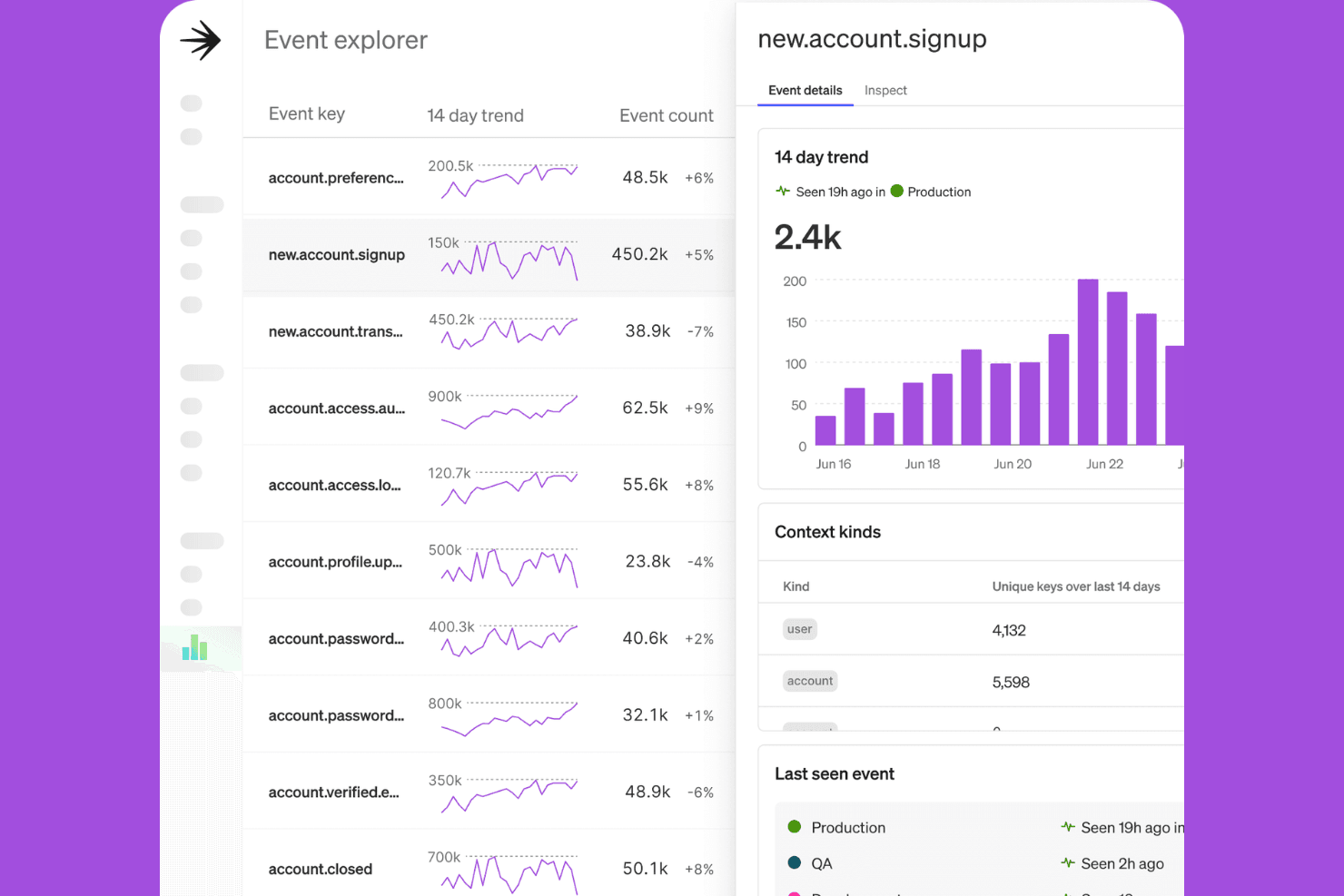
LaunchDarkly aiuta i team a testare e gestire i rilasci delle funzionalità con controllo. LaunchDarkly è una piattaforma per i flag delle funzionalità e la sperimentazione che consente ai team di ingegneria di eseguire test A/B/n, algoritmi a braccio multiplo, esperimenti di controllo ed esperimenti sul funnel in ambienti web, mobili, back-end e periferici da un'unica interfaccia.
Per chi è più adatto LaunchDarkly?
LaunchDarkly è progettato per i team di ingegneria che vogliono eseguire esperimenti direttamente all'interno del proprio flusso di lavoro con i flag delle funzionalità, senza dover cambiare strumento.
Perché ho scelto LaunchDarkly
LaunchDarkly si è guadagnato un posto nella mia lista ristretta perché è l'unico strumento in cui i test A/B vivono nativamente all'interno del flusso di lavoro con i flag delle funzionalità. Mi piace il fatto che si possano eseguire test A/B/n, algoritmi a braccio multiplo ed esperimenti di controllo direttamente sui flag, per poi distribuire la variante vincente con un solo clic e senza una nuova distribuzione. La piattaforma supporta anche esperimenti di configurazione dell'IA, consentendo di testare istruzioni e modelli durante l'esecuzione e di indirizzare automaticamente il traffico verso la soluzione con le prestazioni migliori.
Funzionalità principali di LaunchDarkly
- Analisi degli esperimenti nativa per il magazzino dati: Esegui l'analisi degli esperimenti direttamente su Snowflake, Redshift, Databricks o BigQuery utilizzando metriche SQL personalizzate e i tuoi dati.
- Esperimenti reciprocamente esclusivi e multilivello: Esegui più esperimenti simultaneamente senza contaminazione del traffico, utilizzando i controlli di isolamento degli esperimenti.
- Test sequenziali con riduzione della varianza mediante CUPED: Riduci le dimensioni del campione necessarie e monitora continuamente i risultati senza aumentare i tassi di falsi positivi.
- Allocazione del traffico tramite algoritmo a braccio multiplo: Sposta automaticamente il traffico verso le varianti vincenti durante un esperimento in corso, senza attendere la conclusione di un test con durata fissa.
Integrazioni di LaunchDarkly
LaunchDarkly offre oltre 70 integrazioni native, tra cui Snowflake, BigQuery, Redshift, Databricks, Amplitude, Segment e FullStory. Supporta inoltre un server MCP, provider di OpenFeature e un'API per le integrazioni personalizzate.
Pros and Cons
Pros:
- Gli esperimenti con i flag delle funzionalità coprono ogni piattaforma
- I test statistici includono CUPED e gli algoritmi a braccio multiplo
- Gli agenti IA possono gestire i flussi di lavoro degli esperimenti
Cons:
- Gli ingegneri devono creare le varianti nel codice
- L'IA non genera testi o design
Learn more about LaunchDarkly: Ideale per i controlli di governance degli esperimenti aziendali
- Demo gratuita disponibile
- Prezzi su richiesta
Visit WebsiteCustomer Rating:4.2/5This rating combines scores from multiple user review sites to reflect overall customer sentiment about the product.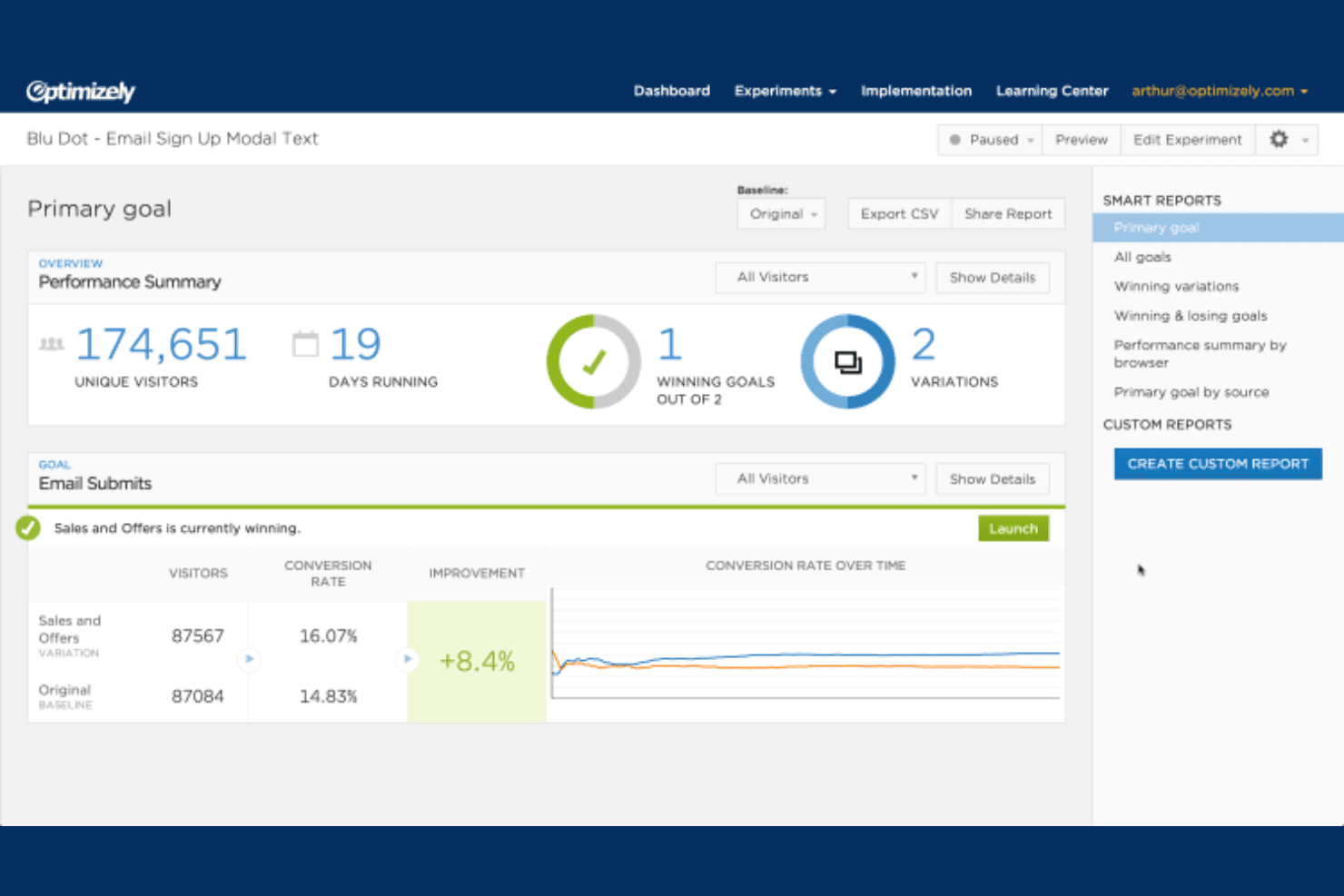
Optimizely aiuta le aziende a eseguire esperimenti digitali e a ottimizzare i percorsi degli utenti. Optimizely è una piattaforma aziendale per la sperimentazione che supporta test A/B, multivariati, con flag delle funzionalità e lato server, oltre a un livello di agenti IA che copre l'ideazione degli esperimenti, la creazione delle varianti, l'analisi statistica e l'ottimizzazione automatizzata del traffico.
Per chi è più adatto Optimizely?
Optimizely è adatto ai team aziendali di prodotto e ingegneria che devono eseguire esperimenti su larga scala, con flussi di approvazione formali, autorizzazioni basate sui team e requisiti di conformità integrati.
Perché ho scelto Optimizely
Optimizely si è guadagnato un posto nella mia lista ristretta soprattutto per la serietà con cui gestisce la governance degli esperimenti su larga scala. Mi ha particolarmente colpito il suo sistema di approvazione delle modifiche, che inoltra le modifiche ai flag, gli aggiornamenti all'allocazione del traffico e le modifiche al pubblico agli approvatori designati prima che qualsiasi intervento raggiunga l'ambiente di produzione. Insieme alle autorizzazioni basate sui team e ai campi Ipotesi e Piano di test integrati direttamente nelle regole A/B, offre il tipo di struttura di cui hanno realmente bisogno i team aziendali che eseguono esperimenti su più marchi o unità aziendali.
Funzionalità principali di Optimizely
- Test con bandito contestuale a più bracci: Utilizza l'IA per spostare automaticamente il traffico verso la variante con le migliori prestazioni, in base agli attributi individuali dei visitatori e in tempo reale.
- Analisi nativa del data warehouse: Si connette direttamente a Snowflake, BigQuery, Databricks e Redshift per eseguire l'analisi degli esperimenti sui dati esistenti senza scrivere codice SQL.
- Generatore di idee Opal: Analizza l'URL di una pagina, le mappe di calore e i dati dei test precedenti per generare idee di esperimenti strutturate con un'ipotesi, una descrizione del problema e fonti di supporto.
- Implementazione dell'SDK multipiattaforma: Esegue esperimenti su ambienti web, mobili, lato server e periferici, con valutazione locale delle decisioni in meno di un millisecondo e SDK a codice sorgente aperto.
Integrazioni di Optimizely
Optimizely si integra con Google Analytics 4, Adobe Analytics, Amplitude, Segment, Snowflake, BigQuery, Databricks, Redshift, Salesforce e Figma. Supporta inoltre MCP, webhook, SDK a codice sorgente aperto e API per integrazioni personalizzate.
Pros and Cons
Pros:
- Flussi di approvazione degli esperimenti di livello aziendale
- L'IA supporta il processo dall'ideazione ai riepiloghi dei risultati
- I test multipiattaforma includono web, dispositivi mobili e ambienti periferici
Cons:
- Le implementazioni avanzate richiedono competenze tecniche
- I metodi bayesiani e frequentisti sono ancora in versione beta
Learn more about Optimizely: Ideale per flussi di lavoro sperimentali guidati dagli sviluppatori
- Piano gratuito disponibile
- A partire da 250 $/mese
Visit WebsiteCustomer Rating:4.5/5This rating combines scores from multiple user review sites to reflect overall customer sentiment about the product.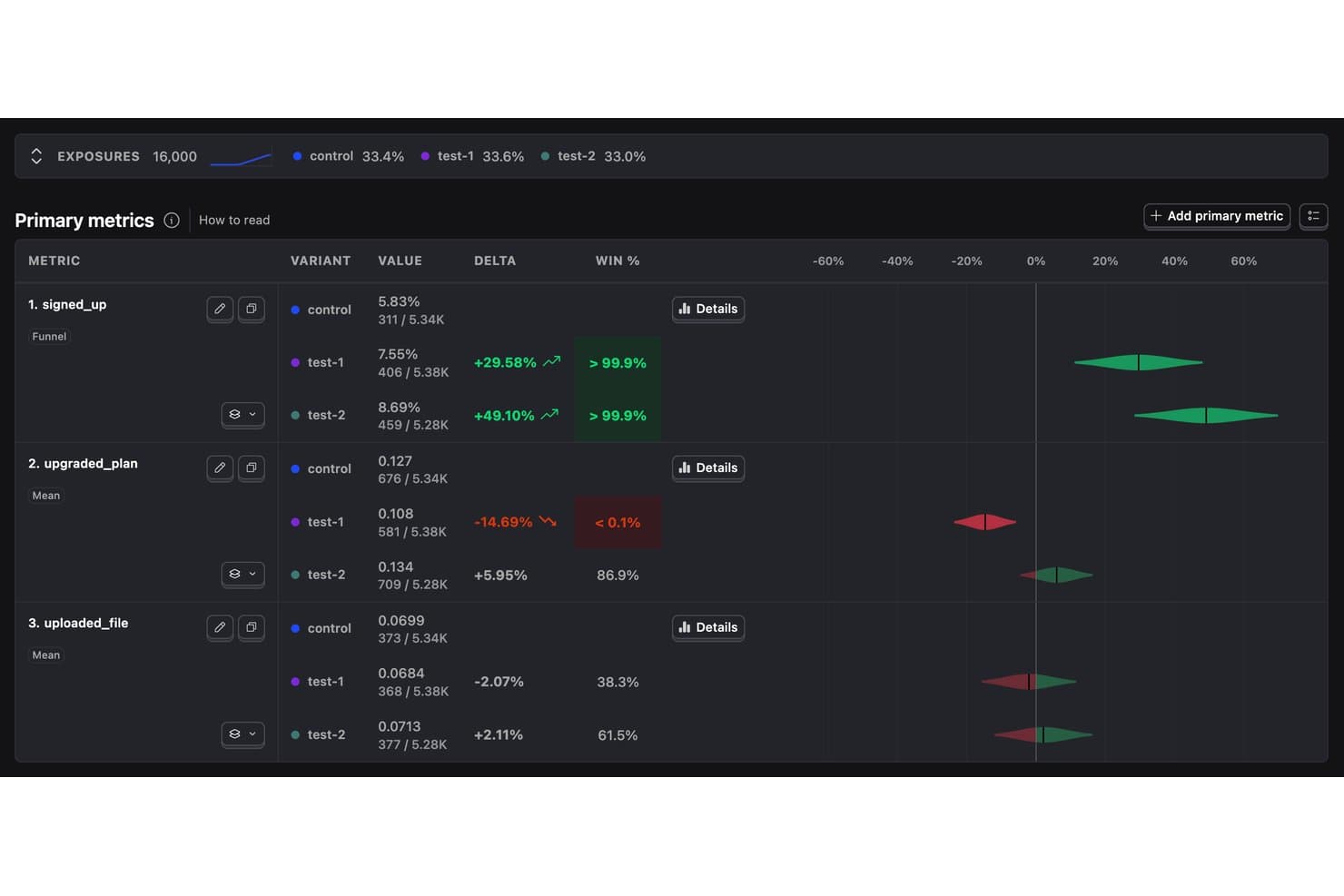
PostHog monitora le prestazioni delle varianti dei test A/B tra le metriche di registrazione e conversione. PostHog è una piattaforma di analisi dei prodotti e sperimentazione che combina test A/B, multivariati, con gruppo di controllo escluso e di URL divisi, con la gestione dei flag delle funzionalità, la riproduzione delle sessioni e un livello di intelligenza artificiale che genera la configurazione degli esperimenti e il codice delle varianti a partire da richieste in linguaggio naturale.
A chi è più adatto PostHog?
PostHog è adatto ai team di prodotto guidati dagli sviluppatori che vogliono eseguire esperimenti direttamente dal proprio editor di codice senza passare da uno strumento all'altro.
Perché ho scelto PostHog
Ho incluso PostHog tra le mie scelte principali perché è progettato attorno a un flusso di lavoro per gli esperimenti guidato dagli sviluppatori, in un modo che pochi strumenti offrono. Ogni esperimento viene eseguito tramite un flag delle funzionalità, quindi distribuire una variante vincente significa semplicemente attivare un'opzione nel codice. L'integrazione del server MCP consente di creare, lanciare e leggere i risultati degli esperimenti direttamente in Cursor o Claude Code, senza dover aprire l'interfaccia di PostHog.
Funzionalità principali di PostHog
- Test con gruppo di controllo escluso: Riserva una percentuale di utenti da tutti gli esperimenti per misurare l'impatto a lungo termine senza esporli alle varianti.
- Riproduzione delle sessioni per variante: Guarda le sessioni utente registrate filtrate per variante dell'esperimento per comprendere il comportamento alla base dei risultati.
- Statistiche bayesiane e frequentiste: Scegli il motore statistico che preferisci per ogni esperimento, con soglie di confidenza configurabili e la riduzione opzionale del rumore tramite CUPED.
- Metriche del magazzino dati: Recupera le metriche degli obiettivi dell'esperimento direttamente dalle tabelle collegate del magazzino dati, come i dati degli ordini di Stripe o Shopify.
Integrazioni di PostHog
PostHog si collega a oltre 50 destinazioni tramite il suo CDP, tra cui Braze, Customer.io, Salesforce, HubSpot e Slack. Supporta inoltre le fonti dati Stripe, Shopify, Snowflake e BigQuery, oltre a un'API REST e alle integrazioni MCP per Cursor e Claude Code.
Pros and Cons
Pros:
- L'intelligenza artificiale genera la configurazione dell'esperimento a partire da richieste
- I flag delle funzionalità semplificano la distribuzione della variante vincente
- Le riproduzioni delle sessioni spiegano le prestazioni delle varianti
Cons:
- Nessuno spostamento automatico del traffico tra le varianti
- L'editor visivo presenta difficoltà con le applicazioni a pagina singola
Learn more about PostHog: Ideale per la personalizzazione omnicanale
- Demo gratuita disponibile
- Prezzo su richiesta
Adobe Target offre test e personalizzazione basati sull'intelligenza artificiale. Adobe Target è una piattaforma di sperimentazione e personalizzazione che supporta test A/B/n, test multivariati, esperimenti con bandito a braccio multiplo e test dei flag delle funzionalità in ambienti web, mobili e lato server.
Per chi è più adatto Adobe Target?
Adobe Target è particolarmente adatto ai team aziendali che utilizzano già Adobe Experience Cloud e desiderano collegare direttamente la sperimentazione alla personalizzazione e all'analisi.
Perché ho scelto Adobe Target
Ho scelto Adobe Target come una delle soluzioni migliori perché è la sede naturale per i team di sperimentazione che utilizzano già Adobe Experience Cloud. Se le tue analisi risiedono in Adobe Analytics, puoi generare report sui risultati dei test A/B direttamente tramite Analytics for Target (A4T), senza dover unire dati o cambiare contesto. Mi piace anche il fatto che Auto-Target e Automated Personalization consentano di passare da un esperimento vincente alla personalizzazione basata sull'apprendimento automatico senza uscire dalla piattaforma.
Funzionalità principali di Adobe Target
- Test multivariati fattoriali completi: Testa simultaneamente ogni combinazione possibile degli elementi della pagina per individuare la configurazione che produce i risultati migliori.
- Riassegnazione del traffico con Auto-Allocate: Sposta automaticamente una quantità maggiore di traffico verso le esperienze con prestazioni migliori durante un test in corso, utilizzando un approccio basato sul bandito a braccio multiplo.
- Analytics for Target (A4T): Consente di generare report sui risultati dei test A/B direttamente all'interno di Adobe Analytics, utilizzando le metriche e i segmenti esistenti senza dover unire dati.
- Decisioni sul dispositivo: Valuta localmente sul dispositivo i flag delle funzionalità e gli esperimenti A/B per ottenere una latenza quasi nulla, utilizzando SDK lato server per Node.js e Java.
Integrazioni di Adobe Target
Adobe Target offre integrazioni native con Adobe Analytics tramite A4T, Customer Journey Analytics, Real-Time CDP, Audience Manager, Adobe Experience Manager, Adobe Journey Optimizer e Workfront Fusion. Supporta inoltre integrazioni tramite API lato server e Adobe Experience Platform Web SDK.
Pros and Cons
Pros:
- Supporta test A/B/n, MVT e con bandito
- Personalizza le esperienze vincenti in base agli attributi dei visitatori
- Le decisioni sul dispositivo riducono la latenza dei test delle funzionalità
Cons:
- La progettazione generativa degli esperimenti è ancora in gran parte in versione beta
- Le esportazioni CSV non elaborate richiedono un'analisi offline
Learn more about Adobe Target : Ideale per analizzare rapidamente i rilasci delle funzionalità
- Piano gratuito disponibile
- A partire da $150/mese
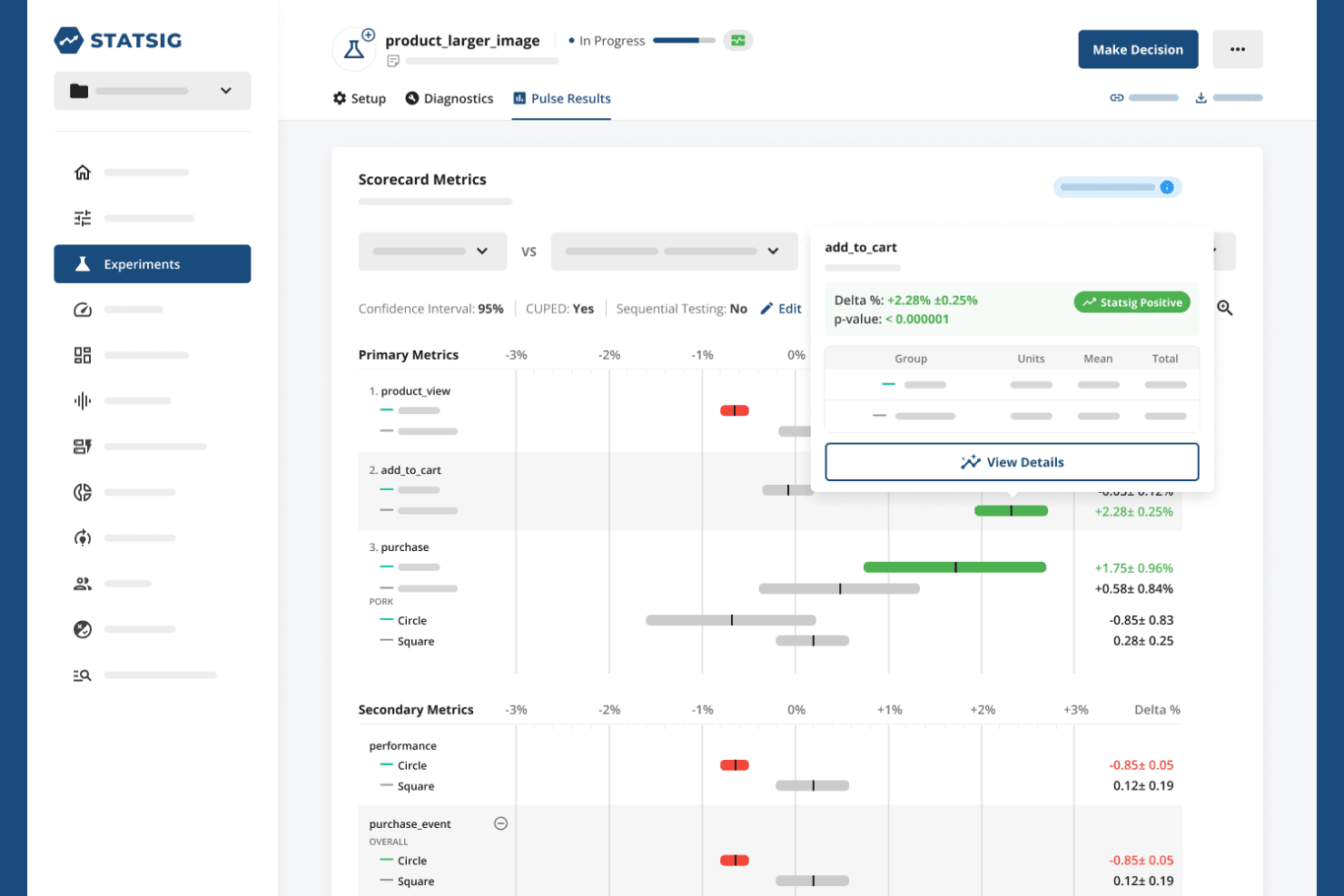
Statsig aiuta i team a eseguire esperimenti e ad analizzare l'impatto delle funzionalità. Statsig è una piattaforma per la sperimentazione e i flag di funzionalità che combina test A/B/n, test multivariati, analisi statistica e riepiloghi degli esperimenti generati dall'IA con un'architettura basata sui flag per eseguire e analizzare esperimenti in ambienti web, mobili e server.
Per chi è più adatto Statsig?
Statsig è adatto ai team di prodotto guidati dall'ingegneria che eseguono esperimenti tramite flag di funzionalità e necessitano di un'analisi statistica rigorosa integrata nello stesso flusso di lavoro.
Perché ho scelto Statsig
Statsig si è guadagnato un posto nella mia rosa ristretta perché è l'unica piattaforma in cui flag di funzionalità ed esperimenti condividono un unico modello di dati; ciò significa che posso avviare il rilascio graduale di un flag e trasformarlo in un esperimento misurato senza ricostruire nulla. Apprezzo in particolare il sistema dei livelli, che impedisce agli esperimenti sovrapposti di contaminare i risultati degli altri, un aspetto fondamentale quando si eseguono centinaia di test contemporaneamente. I riepiloghi degli esperimenti generati dall'IA vanno oltre la semplice visualizzazione dell'incremento: producono una raccomandazione di rilascio con le metriche principali evidenziate, così il mio team prende decisioni più rapide su cosa distribuire successivamente.
Funzionalità principali di Statsig
- Riepiloghi degli esperimenti generati dall'IA: producono automaticamente un riepilogo di ogni esperimento completato, inclusi una raccomandazione di rilascio e gli elementi salienti delle metriche principali, esportabile come PDF.
- Autotune a più bracci: sposta automaticamente il traffico verso la variante vincente nel tempo, ottimizzando una singola metrica obiettivo senza intervento manuale.
- Riduzione della varianza CUPED: applica un aggiustamento delle covariate precedente all'esperimento per ridurre il rumore e aumentare la sensibilità statistica dei risultati dell'esperimento.
- Oltre 30 SDK a codice aperto: coprono gli ambienti client, server ed edge, inclusi React, Swift, Android, Python, Go e Rust, con una valutazione dei flag in meno di un millisecondo dopo l'inizializzazione.
Integrazioni di Statsig
Statsig offre integrazioni documentate con Snowflake, Databricks, BigQuery, Redshift, Athena, Microsoft Fabric, Segment, mParticle, RudderStack e Census. Fornisce inoltre API per integrazioni personalizzate e per la distribuzione nativa nel data warehouse.
Pros and Cons
Pros:
- I flag di funzionalità collegano i rilasci agli esperimenti
- I riepiloghi generati dall'IA consigliano le decisioni di rilascio
- Autotune sposta il traffico verso le varianti vincenti
Cons:
- Hypothesis AI non crea varianti
- La configurazione orientata agli ingegneri rallenta i team non tecnici
Learn more about Statsig: Ideale per test open source nativi per il data warehouse
- Piano gratuito + demo gratuita disponibile
- A partire da $40/utente/mese
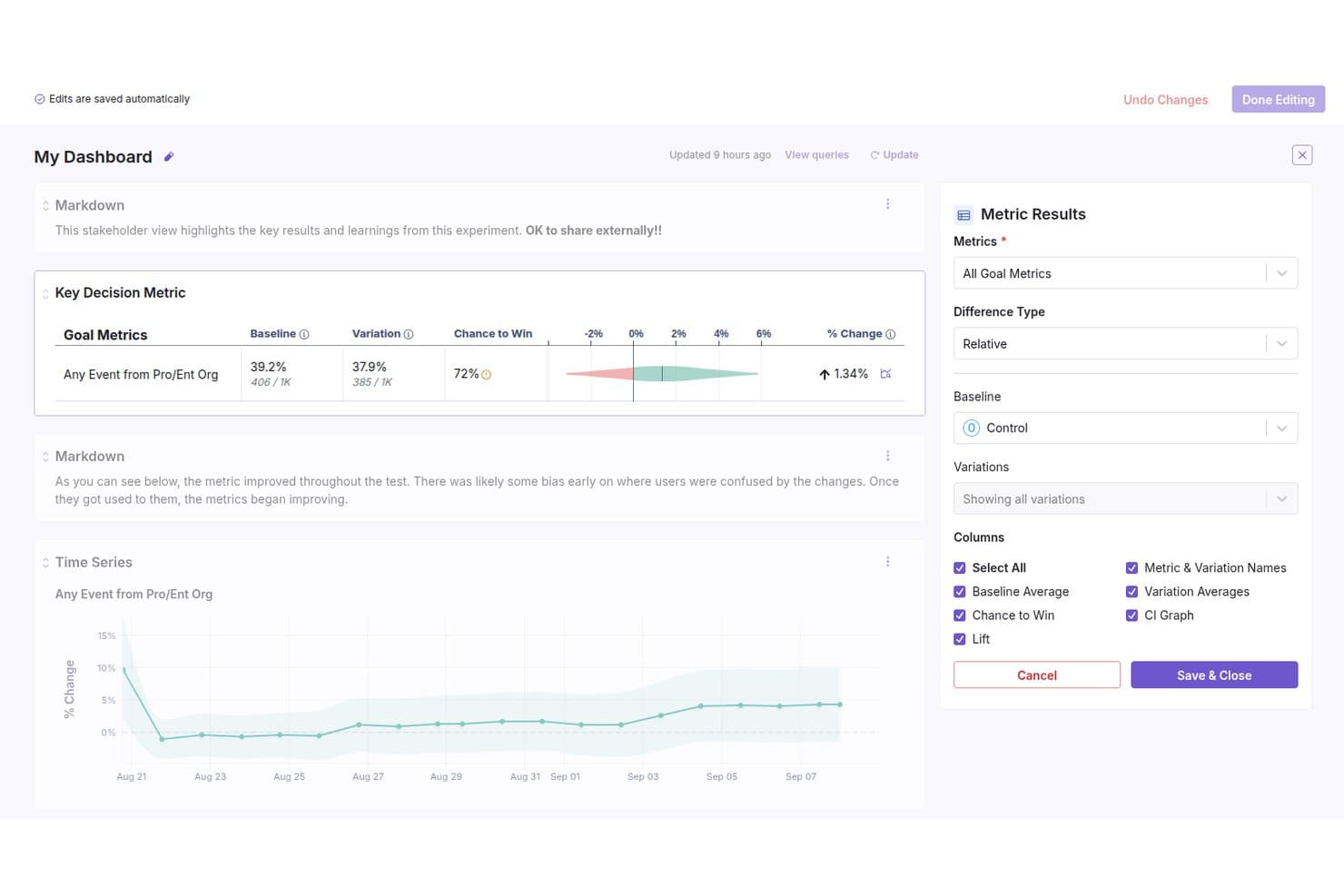
GrowthBook consente agli utenti di creare dashboard condivisibili per i test A/B con i risultati delle metriche. GrowthBook è una piattaforma open source per i test A/B e la gestione dei flag delle funzionalità, che supporta la creazione di esperimenti, la realizzazione di varianti assistita dall'IA, l'analisi delle metriche nativa per il data warehouse e i test con banditi a braccio multiplo in ambienti web, mobile e server.
Per chi è più adatto GrowthBook?
GrowthBook è particolarmente indicato per product manager e sviluppatori di team tecnicamente maturi che desiderano il pieno controllo sui dati degli esperimenti senza abbandonare il data warehouse esistente.
Perché ho scelto GrowthBook
GrowthBook si è guadagnato un posto nella mia lista ristretta perché è progettato attorno al data warehouse esistente, anziché utilizzare un proprio livello dati proprietario. Apprezzo molto il fatto che le metriche degli esperimenti vengano calcolate direttamente da Snowflake, BigQuery o Redshift usando SQL che si può effettivamente leggere e verificare. Abbinando questo aspetto ai motori bayesiani e frequentisti, alla riduzione della varianza CUPED e ai test sequenziali, si ottiene un livello statistico che compete realmente con le infrastrutture per la sperimentazione sviluppate internamente, a una frazione del costo di realizzazione.
Funzionalità principali di GrowthBook
- Editor visivo IA: un'estensione di Chrome che consente di descrivere le modifiche in linguaggio naturale e visualizzare in anteprima le varianti di pagina generate dall'IA prima di avviare un test.
- Banditi a braccio multiplo e contestuali: spostano automaticamente il traffico verso le varianti vincenti utilizzando il campionamento di Thompson, mentre i banditi contestuali adattano le varianti agli attributi dei singoli utenti.
- Oltre 24 SDK per web, mobile, server ed edge: distribuisci gli esperimenti ovunque venga eseguito il tuo prodotto, con flag valutati localmente e senza chiamate di rete.
- Checklist per gli esperimenti prima del lancio: esegui controlli automatici e manuali prima che qualsiasi esperimento venga attivato, con accesso API per i team che desiderano integrare i controlli nei propri flussi di lavoro.
Integrazioni di GrowthBook
GrowthBook si connette a Snowflake, BigQuery, Databricks, Redshift, ClickHouse, Segment, RudderStack, Slack, GitHub e Datadog. Offre inoltre un'API REST, webhook, provider OpenFeature e un server MCP per Claude, Cursor e VS Code.
Pros and Cons
Pros:
- Le metriche native per il data warehouse mantengono l'SQL verificabile
- I banditi spostano il traffico verso le varianti più efficaci
- Gli SDK supportano web, mobile, server ed edge
Cons:
- Le varianti IA richiedono la configurazione delle chiavi del provider
- L'editor visivo non supporta le app mobile native
Learn more about GrowthBook: Ideale per la personalizzazione bayesiana su scala aziendale
- Demo gratuita disponibile
- Prezzi su richiesta
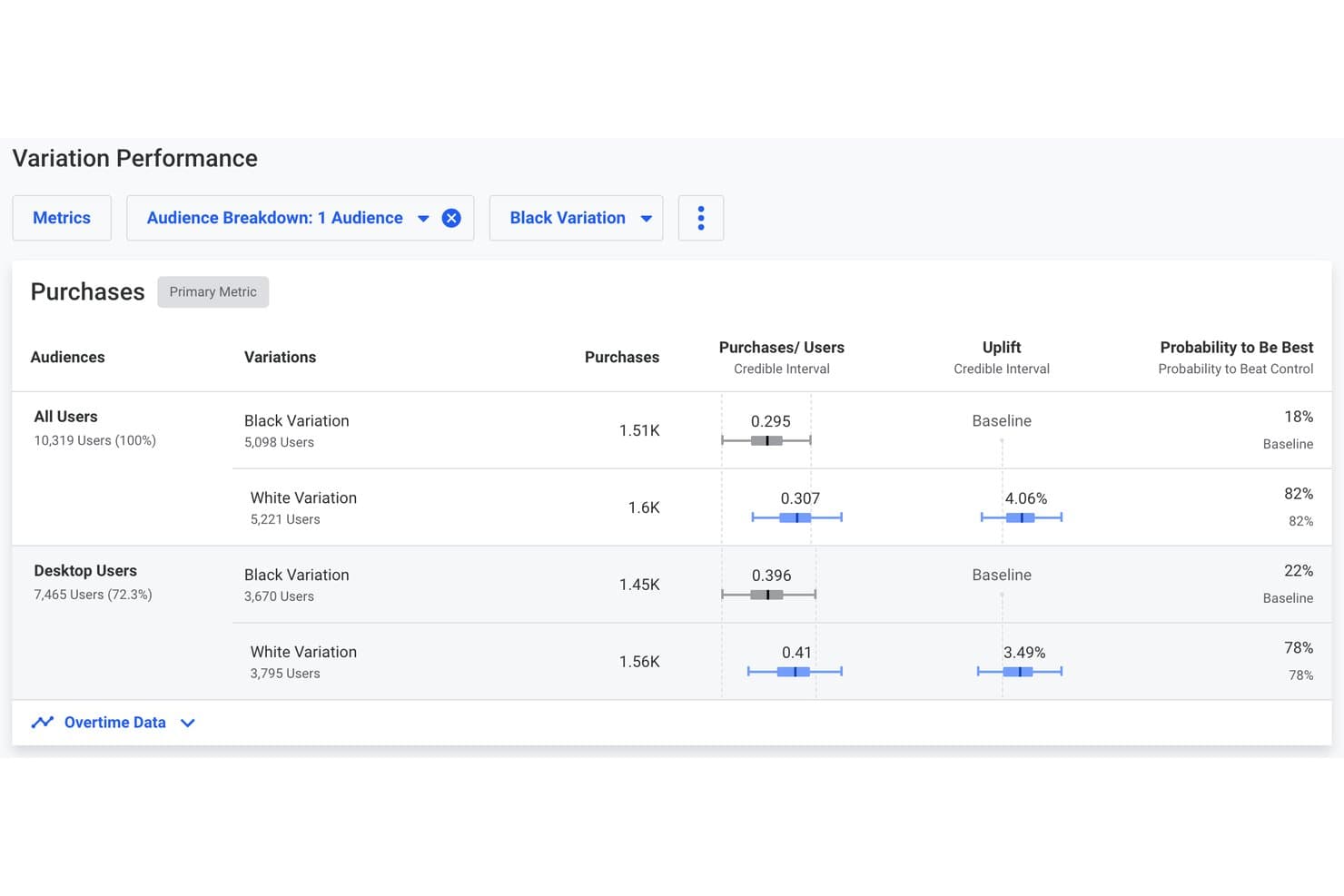
Dynamic Yield confronta le prestazioni delle varianti A/B con incremento e metriche degli acquisti. Dynamic Yield è una piattaforma di personalizzazione e sperimentazione basata sull'IA che supporta test A/B, multivariati, con algoritmo multi-braccio e lato server, oltre alla segmentazione del pubblico, alla creazione di varianti assistita dall'IA e alla distribuzione su più canali, tra cui web, app, email e ricerca.
Per chi è più indicato Dynamic Yield?
Dynamic Yield è particolarmente adatto ai team di marketing e CRO aziendali nei settori dell'e-commerce, della vendita al dettaglio o dei servizi finanziari che necessitano di sperimentazione bayesiana e personalizzazione avanzata in un'unica piattaforma.
Perché ho scelto Dynamic Yield
Dynamic Yield si è guadagnato un posto nella mia rosa di candidati perché il suo motore bayesiano va oltre un semplice verdetto vincitore/perdente, riportando contemporaneamente la probabilità di essere il migliore, gli intervalli credibili e le metriche secondarie, così posso individuare gli effetti collaterali prima di dichiarare un risultato. Mi affido anche alla sua Allocazione per affinità, che indirizza ogni utente verso la variante corrispondente al suo profilo comportamentale invece di suddividere il traffico alla cieca. L'agente Analista monitora poi i risultati ogni notte e segnala le anomalie rispetto a una base di riferimento di 28 giorni, mantenendo affidabili gli esperimenti anche su scala aziendale.
Caratteristiche principali di Dynamic Yield
- Test delle campagne su più punti di contatto: Esegui esperimenti su più pagine o fasi del funnel, con un massimo di 20 punti di contatto per variante testata rispetto a un gruppo di controllo.
- Allocazione dinamica del traffico: Un algoritmo multi-braccio che sposta automaticamente il traffico verso la variante con le migliori prestazioni man mano che arrivano i risultati.
- Flag delle funzionalità per il rilascio: Avvolgi il codice in flag delle funzionalità, rilascia a una percentuale di utenti, mantieni un gruppo di controllo e, se necessario, esegui immediatamente il rollback.
- Riepiloghi dei risultati generati dall'IA: L'agente Analista riassume gli esiti dei test, inclusi incremento, significatività e impatto aziendale previsto, e produce report sui programmi di test a livello dirigenziale.
Integrazioni di Dynamic Yield
Dynamic Yield dispone di integrazioni native con Google Analytics 4, Contentsquare, mParticle, Shopify e Stability.AI. Le API per le esperienze e gli SDK mobili per Kotlin, Swift e React Native supportano connessioni personalizzate.
Pros and Cons
Pros:
- I report bayesiani rivelano gli effetti collaterali sulle metriche secondarie
- L'Allocazione per affinità personalizza l'esposizione alle varianti
- Gli agenti IA generano varianti di campagne approvate
Cons:
- La personalizzazione avanzata richiede un notevole coinvolgimento degli sviluppatori
- I design generati dagli agenti attualmente supportano un numero limitato di campagne
Learn more about Dynamic Yield:
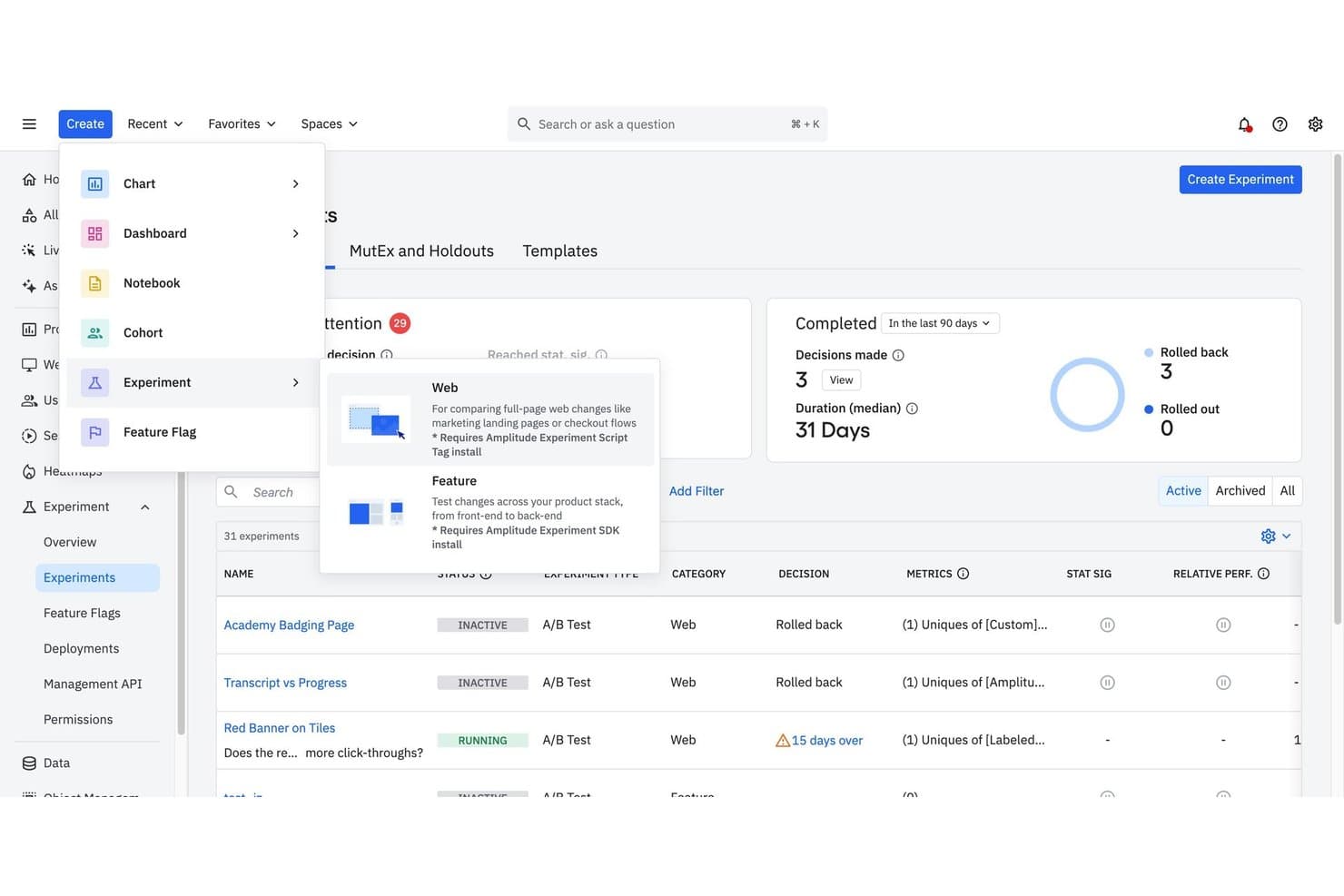
Met Amplitude Feature Experimentation kunnen gebruikers web- of functietests met A/B-vergelijkingen maken. Amplitude Feature Experimentation is een platform voor A/B-tests en functievlaggen dat A/B-, A/B/n- en multivariate experimenten ondersteunt in web-, mobiele en server-side omgevingen via een visuele editor zonder code en SDK's in 11 talen.
Voor wie is Amplitude Feature Experimentation het meest geschikt?
Productteams die al met Amplitude Analytics werken, halen het meeste uit deze tool, omdat experimenten, cohorten en dashboards allemaal hetzelfde datamodel delen.
Waarom ik Amplitude Feature Experimentation heb gekozen
Ik heb Amplitude Feature Experimentation gekozen omdat experimenten, cohorten en gedragsstatistieken hetzelfde datamodel gebruiken als Amplitude Analytics. Daardoor kun je een test rechtstreeks vanuit een dashboard of sessieherhaling starten zonder je doelgroep of statistieken helemaal opnieuw op te bouwen. Vooral de engine voor sequentiële tests spreekt me aan: deze combineert CUPED-variantiereductie met SRM-diagnostiek en rapportage van betrouwbaarheidsintervallen, zodat je slechte verdelingen detecteert en tegelijkertijd ruis vermindert. De Duurschatter, die op je eigen historische gegevens is gebaseerd, maakt het bovendien veel realistischer om de omvang van tests te bepalen dan wanneer je alleen maar hoeft te gokken.
Belangrijkste functies van Amplitude Feature Experimentation
- Adaptief testen met meerdere varianten: Verdeelt het verkeer elk uur, elke dag of elke week automatisch opnieuw met behulp van Thompson-steekproeftrekking, zodat gebruikers naar de best presterende variant worden verschoven.
- Conversieagent voor websites: Een AI-agent die je pagina's analyseert, experimenteerstrategieën met betrouwbaarheidsniveaus voorstelt en conceptvarianten genereert die klaar zijn voor beoordeling en lancering.
- SDK-ondersteuning voor meerdere platforms: Voer experimenten uit in web-, mobiele en server-side omgevingen met SDK's in 11 talen, met opties voor zowel lokale als externe evaluatie.
- Targeting van groepscohorten: Segmenteer en target experimenten op account- of bedrijfsniveau, zodat B2B-achtige tests kunnen worden gegroepeerd op basis van groeps-ID's zoals een bedrijfs-ID.
Integraties van Amplitude Feature Experimentation
Amplitude vermeldt 159 integraties, waaronder Segment, Snowflake, BigQuery, Braze, LaunchDarkly en Optimizely. API's voor batchverwerking, HTTP, profielen en gebeurtenisstreams ondersteunen aangepaste verbindingen en CI/CD-workflows.
Pros and Cons
Pros:
- Cohorten uit Analytics verfijnen de testtargeting
- CUPED- en SRM-diagnostiek verbeteren de betrouwbaarheid
- Elf SDK's ondersteunen experimenten in productcode
Cons:
- De conversieagent voor websites bevindt zich nog in vroege toegang
- AI-stilering mist ingesloten widgets
Learn more about Amplitude Feature Experimentation:
Altri strumenti di test A/B basati sull'IA
Ecco alcune opzioni aggiuntive di strumenti di test A/B basati sull’IA che non sono state incluse nel mio elenco, ma che vale comunque la pena valutare:
- 11UnbounceIdeale per la creazione di varianti drag-and-drop
- 12OmniconvertIdeale per la creazione di varianti da prompt a codice
- 13Convert ExperiencesLa soluzione migliore per la sperimentazione web su larga scala con la privacy al primo posto
- 14Split by HarnessIdeale per l'analisi degli esperimenti basati su flag per team guidati dagli ingegneri
- 15IntelligemsIdeale per contenuti orientati al profitto e test dei prezzi su Shopify
- 16
Come valuto gli strumenti di test A/B basati sull’intelligenza artificiale
Per creare questo elenco, l’intelligenza artificiale di uno strumento deve essere in grado di gestire attività reali di sperimentazione, come generare varianti o consigliare i vincitori. Valuto quindi tre aspetti. La funzionalità principale ha il peso maggiore, ad esempio l’esecuzione di test A/B e la comunicazione della significatività statistica. Considero anche le funzionalità distintive, come un editor visivo senza codice, e i fattori che vanno oltre le funzionalità, come il tempo necessario per ottenere informazioni affidabili.
Funzionalità principali (Requisiti fondamentali per questo elenco)
Quando seleziono gli strumenti per il mio elenco, assegno a ciascuno un punteggio su una scala da 0 (non offre la funzionalità) a 5 (eccelle in quest’area) per ogni funzionalità principale elencata di seguito. Converto quindi il totale in una percentuale per aiutare a valutare l’idoneità complessiva di ogni strumento, attribuendo un peso aggiuntivo alle funzionalità che ho ritenuto essenziali.
- Creazione e test degli esperimenti (Essenziale): Cerco test A/B e multivariati flessibili, gestione delle varianti e configurazioni pratiche per siti web, app o pagine di destinazione.
- Progettazione degli esperimenti assistita dall’intelligenza artificiale (Essenziale): Valuto se l’intelligenza artificiale crea ipotesi, testi o varianti di design pertinenti, che richiedano modifiche minime prima del lancio.
- Analisi statistica e reportistica: I risultati devono mostrare la significatività, il livello di confidenza, i vincitori chiari e i vincoli di sicurezza per decisioni come la pubblicazione di una variante del processo di pagamento.
- Targeting e segmentazione del pubblico: Verifico il supporto per segmenti comportamentali, relativi al dispositivo, demografici e personalizzati durante il test di esperienze per gruppi di utenti distinti.
- Distribuzione multipiattaforma: Valuto la gestione coerente degli esperimenti su siti web, app mobili, flag delle funzionalità ed esperienze lato server.
- Ottimizzazione e consigli basati sull’intelligenza artificiale: Cerco consigli che diano priorità alle varianti vincenti o modifichino il traffico in base alle prestazioni dell’esperimento e ai dati storici.
Dopo aver creato un elenco di strumenti che soddisfano i criteri, considero ciò che distingue ogni piattaforma.
Fattori distintivi (Ciò che differenzia i fornitori)
Ecco come confronto e distinguo i diversi fornitori:
Funzionalità distintive
Cerco un assistente di copywriting basato sull’intelligenza artificiale che generi varianti di titoli e CTA degne di essere testate, non semplice testo riempitivo. Uno strumento di questo tipo riduce di ore la configurazione quando servono cinque opzioni di testo per un pulsante in un processo di pagamento. Valuto anche la sperimentazione tramite flag delle funzionalità, che consente ai team di collegare direttamente i test ai rilasci del backend e di misurare l’impatto prima di un rilascio completo. Il monitoraggio dei gruppi di controllo e dei vincoli di sicurezza è altrettanto importante: verifico se lo strumento segnala automaticamente le regressioni nelle metriche, in modo che una variante vincente non danneggi silenziosamente la fidelizzazione o i ricavi altrove.
Oltre le funzionalità
Valuto la rapidità con cui uno strumento porta il team dall’ipotesi a un risultato statisticamente valido, poiché un’intelligenza artificiale che riduce i cicli di configurazione e analisi può raddoppiare il numero di test eseguiti ogni trimestre. Anche l’approccio alla privacy dei dati è altrettanto importante: verifico la conformità a SOC 2 e GDPR, oltre a come i modelli di intelligenza artificiale gestiscono i dati comportamentali utilizzati per generare segmenti o ipotesi. Considero inoltre l’integrazione con l’ecosistema, ad esempio le integrazioni native con le piattaforme di analisi e le CDP già presenti nel vostro stack, affinché i dati della sperimentazione non rimangano isolati in un silo.
Come scegliere gli strumenti di test A/B basati sull'IA
È facile perdersi in lunghi elenchi di funzionalità e strutture tariffarie complesse. Per aiutarti a rimanere concentrato mentre affronti il tuo specifico processo di selezione del software, ecco un elenco dei fattori da tenere a mente:
| Fattore | Cosa considerare |
|---|---|
| FattoreScalabilità | Cosa considerareLo strumento sarà in grado di gestire il volume attuale e previsto dei tuoi esperimenti, il traffico e le dimensioni del team? |
| FattoreIntegrazioni | Cosa considerareSi collega nativamente alle tue piattaforme di analisi, commercio elettronico o marketing senza richiedere lavoro aggiuntivo? |
| FattorePersonalizzazione | Cosa considerarePuoi adattare i parametri degli esperimenti, i report e i flussi di lavoro in base ai processi aziendali? |
| FattoreFacilità d'uso | Cosa considerareIl tuo team sarà in grado di avviare e interpretare i test senza una formazione approfondita o assistenza tecnica? |
| FattoreImplementazione e onboarding | Cosa considerareQuanto tempo occorrerà per iniziare a utilizzare lo strumento e quali risorse o forme di assistenza vengono fornite? |
| FattoreCosto | Cosa considerareI livelli tariffari sono chiari e sono in linea con le tue modalità di utilizzo e i vincoli di budget? |
| FattoreMisure di sicurezza | Cosa considerareLo strumento soddisfa i requisiti di privacy dei dati, controllo degli accessi e conformità? |
| FattoreDisponibilità dell'assistenza | Cosa considerareÈ disponibile un'assistenza rapida nel tuo fuso orario e attraverso i tuoi canali preferiti? |
Cosa sono gli strumenti di test A/B basati sull'IA?
Gli strumenti di test A/B basati sull'IA sono piattaforme software che utilizzano l'intelligenza artificiale per automatizzare, ottimizzare e analizzare esperimenti digitali che confrontano due o più varianti. Questi strumenti aiutano i team a progettare i test, identificare risultati statisticamente significativi e individuare più rapidamente i modelli di comportamento degli utenti rispetto ai metodi manuali. Sfruttando l'IA, possono suggerire nuovi esperimenti, interpretare dati complessi e ridurre il tempo e le competenze necessarie per realizzare campagne di ottimizzazione efficaci.
Funzionalità
Quando selezioni gli strumenti di test A/B basati sull'IA, presta attenzione alle seguenti funzionalità fondamentali:
- Suggerimenti per esperimenti basati sull'IA: Utilizza l'apprendimento automatico per analizzare i dati degli utenti e consigliare nuove idee per i test, aiutando i team a identificare opportunità ad alto impatto che altrimenti potrebbero non notare.
- Analisi statistica automatizzata: Calcola la significatività statistica e i livelli di confidenza dei risultati dei test, riducendo i calcoli manuali e il rischio di interpretare erroneamente i dati.
- Editor visuale degli esperimenti: Consente agli utenti di creare e modificare le varianti dei test utilizzando un'interfaccia trascina e rilascia, rendendo la configurazione dei test accessibile ai membri non tecnici del team.
- Segmentazione degli utenti: Permette di indirizzare esperimenti a gruppi specifici di utenti o a comportamenti specifici, consentendo di testare ipotesi su pubblici pertinenti.
- Dashboard di reportistica in tempo reale: Fornisce metriche e visualizzazioni aggiornate sulle prestazioni degli esperimenti, permettendo ai team di monitorare i risultati e prendere decisioni tempestive.
- Registrazioni integrate delle sessioni: Registra e riproduce le sessioni degli utenti per ogni variante del test, offrendo ai team informazioni qualitative sul comportamento degli utenti e sui punti di attrito.
- Mappe di calore: Visualizzano dove gli utenti fanno clic, scorrono e interagiscono nelle pagine sottoposte a test, aiutando i team a comprendere i modelli di coinvolgimento e a ottimizzare i layout.
- Supporto ai test multivariati: Consente di testare più variabili contemporaneamente, permettendo di analizzare l'impatto combinato di diverse modifiche in un unico esperimento.
- Pianificazione degli esperimenti e controlli del rilascio: Offre opzioni per pianificare i test, controllare l'allocazione del traffico e mettere in pausa o terminare gli esperimenti in base a criteri predefiniti.
- Reportistica ed esportazioni personalizzabili: Consente agli utenti di adattare i report ed esportare i dati in vari formati per ulteriori analisi o per condividerli con le parti interessate.
Vantaggi
L'implementazione di strumenti di test A/B basati sull'IA offre diversi vantaggi al tuo team e alla tua azienda. Ecco alcuni dei vantaggi che puoi aspettarti:
- Cicli di sperimentazione più rapidi: I suggerimenti basati sull'IA e l'analisi automatizzata aiutano i team ad avviare, monitorare e interpretare i test più rapidamente rispetto ai metodi manuali.
- Maggiore accuratezza delle decisioni: I calcoli statistici automatizzati e le dashboard in tempo reale riducono l'errore umano e supportano decisioni basate sui dati.
- Informazioni più approfondite sugli utenti: Le registrazioni integrate delle sessioni e le mappe di calore mostrano come gli utenti interagiscono con le varianti dei test, rivelando punti di attrito e opportunità.
- Efficienza delle risorse: Gli editor visuali e i flussi di lavoro automatizzati consentono ai membri non tecnici del team di eseguire esperimenti, liberando tempo per sviluppatori e analisti.
- Ottimizzazione personalizzata: Le funzionalità di segmentazione degli utenti consentono di realizzare esperimenti mirati, così puoi adattare le esperienze a pubblici specifici e massimizzare l'impatto.
- Test scalabili: Il supporto per esperimenti multivariati e ad alto traffico garantisce che la piattaforma possa crescere insieme alle esigenze della tua azienda.
- Reportistica orientata all'azione: I report personalizzabili e le opzioni di esportazione facilitano la condivisione dei risultati con le parti interessate e contribuiscono a definire strategie di ottimizzazione più ampie.
Costi e prezzi
La scelta degli strumenti di test A/B basati sull'IA richiede la comprensione dei vari modelli di prezzo e dei piani disponibili. I costi variano in base alle funzionalità, alle dimensioni del team, ai componenti aggiuntivi e ad altri fattori. La tabella seguente riassume i piani più comuni, i relativi prezzi medi e le funzionalità tipicamente incluse nelle soluzioni di strumenti di test A/B basati sull'IA:
Tabella comparativa dei piani per gli strumenti di test A/B basati sull'IA
| Tipo di piano | Prezzo medio | Funzionalità comuni |
|---|---|---|
| Tipo di pianoPiano gratuito | Prezzo medio$0 | Funzionalità comuniTest A/B di base, esperimenti limitati, numero limitato di utenti e reportistica di base. |
| Tipo di pianoPiano personale | Prezzo medio$19-$99/mese | Funzionalità comuniEsperimenti illimitati, editor visuale, segmentazione di base, supporto via e-mail e analisi standard. |
| Tipo di pianoPiano aziendale | Prezzo medio$139-$250/mese | Funzionalità comuniSegmentazione avanzata, test multivariati, integrazioni, dashboard in tempo reale e supporto prioritario. |
| Tipo di pianoPiano per grandi aziende | Prezzo medio$400+/mese | Funzionalità comuniIntegrazioni personalizzate, responsabile dedicato, sicurezza avanzata, assistenza all'attivazione e garanzie SLA. |
Domande frequenti sugli strumenti di test A/B basati sull'IA
Ecco alcune risposte alle domande comuni sugli strumenti di test A/B basati sull’IA:
In che modo l'IA migliora i tradizionali test A/B?
L’IA migliora i tradizionali test A/B automatizzando la progettazione degli esperimenti, analizzando più rapidamente i risultati e suggerendo nuove idee per i test sulla base dei dati degli utenti. Ciò riduce il lavoro manuale e aiuta i team a individuare più rapidamente le varianti vincenti e le opportunità di ottimizzazione.
Gli strumenti di test A/B basati sull'IA sono in grado di gestire esperimenti multivariati?
Sì, la maggior parte degli strumenti di test A/B basati sull’IA supporta gli esperimenti multivariati. Ciò consente di testare più variabili contemporaneamente e di comprendere il modo in cui le diverse modifiche interagiscono, risultando utile per ottimizzare esperienze utente complesse.
Quali aspetti della privacy dei dati devo tenere presenti?
È necessario assicurarsi che lo strumento sia conforme alle normative pertinenti sulla privacy dei dati, come il GDPR o il CCPA. Verifica la presenza di funzionalità come l’anonimizzazione dei dati, l’archiviazione sicura dei dati e meccanismi chiari per il consenso degli utenti, così da proteggere le loro informazioni.
Per configurare gli esperimenti sono necessarie competenze di programmazione?
No, molti strumenti di test A/B basati sull’IA offrono editor visuali e flussi di lavoro guidati che consentono agli utenti non tecnici di configurare e avviare gli esperimenti. Tuttavia, per le personalizzazioni avanzate o le integrazioni potrebbe essere ancora necessaria una certa conoscenza della programmazione.
Come faccio a sapere se i risultati del mio test sono statisticamente significativi?
Gli strumenti di test A/B basati sull’IA includono generalmente un’analisi statistica automatizzata che calcola per te il livello di significatività e gli intervalli di confidenza. Prima di prendere decisioni basate sui risultati del test, esamina sempre queste metriche nel pannello di reportistica dello strumento.