

10 Mejores Alternativas a Asana Analizadas en 2026

Resumen de las mejores alternativas a Asana


Gestionar proyectos puede ser difícil, especialmente cuando tus herramientas actuales no están a la altura. Como gerente de producto, te enfrentas a una presión constante para mantener todo bajo control y, aunque Asana puede ser una excelente herramienta para casos de uso específicos, a veces simplemente no se adapta a tus necesidades.
Quizá trabajas con proyectos complejos o necesitas mejores funciones de personalización o colaboración. Sea cual sea el caso, encontrar la herramienta adecuada puede marcar una gran diferencia para tu equipo.
He probado y analizado varias opciones, y estoy aquí para compartir información imparcial sobre las mejores alternativas a Asana. Encontrarás soluciones prácticas adaptadas a tus desafíos únicos. Estas son mis principales recomendaciones de software.
¿Qué es Asana?
Asana es una herramienta central de gestión de productos diseñada para ayudar a los equipos a organizar, supervisar y gestionar su trabajo. La utilizan habitualmente gerentes de proyectos, líderes de equipo y profesionales del desarrollo de productos que necesitan mantener los proyectos dentro del plazo previsto y garantizar la colaboración. La asignación de tareas, el seguimiento de plazos y las funciones de visualización de proyectos, como los calendarios y los tableros Kanban, ayudan a gestionar los flujos de trabajo y mejorar la eficiencia del equipo. En general, Asana simplifica la gestión de proyectos al proporcionar una visión clara de las tareas y el progreso.
Por Qué Confiar en Nuestras Reseñas de Software
Llevamos revisando y probando software de gestión de productos desde 2020. Como product managers, sabemos lo crucial y complicado que es tomar la decisión correcta al seleccionar software. Invertimos en investigación profunda para ayudar a nuestra audiencia a tomar mejores decisiones de compra de software. Hemos probado más de 2,000 herramientas para distintos casos de uso y escrito más de 1,000 reseñas exhaustivas. Conozca cómo mantenemos la transparencia & nuestra metodología de reseñas de software.
Resumen de las mejores alternativas a Asana
Este cuadro comparativo resume los detalles de precios de mis principales alternativas a Asana para ayudarte a encontrar la mejor opción para tu presupuesto y las necesidades de tu empresa.
| Tool | Best For | Trial Info | Price | ||
|---|---|---|---|---|---|
| 1 | Ideal para seguimiento de tiempo integrado | Prueba gratuita de 15 días + plan gratuito + demo gratis disponible | Desde $4/usuario/mes (facturado anualmente) | Website | |
| 2 | Mejor para flujos de trabajo de proyectos personalizables | Prueba gratuita de 14 días + plan gratuito disponible | Desde $10/usuario/mes (facturado anualmente) | Website | |
| 3 | Ideal para espacios de trabajo personalizables | Plan gratuito disponible | Desde $10/usuario/mes (facturado anualmente) | Website | |
| 4 | Mejor opción para crear aplicaciones sin código | Plan gratuito + demo gratis disponible | Desde $20/usuario/mes (facturado anualmente) | Website | |
| 5 | Ideal para la gestión de proyectos todo en uno | Plan gratuito disponible | Desde $39/mes (facturado anualmente) | Website | |
| 6 | Ideal para funciones gratuitas muy completas | Prueba gratuita de 14 días | Desde $1.49/usuario/mes (facturado anualmente) + plan gratuito disponible | Website | |
| 7 | Ideal para una colaboración centralizada | Prueba gratuita de 14 días + demostración gratuita disponible | Desde $45/mes (facturado anualmente) | Website | |
| 8 | Mejor para la gestión del trabajo con clientes | Prueba gratuita de 14 días + demo gratuita disponible | Desde $9.99/usuario/mes (facturado anualmente) | Website | |
| 9 | Mejor para equipos de desarrollo de productos | Prueba gratuita de 30 días + demo gratis disponible | Desde $9/usuario/mes | Website | |
| 10 | Ideal para flujos de trabajo personalizables | Prueba gratuita de 30 días + plan gratuito + demo gratis disponible | Desde $11.20/usuario/mes (facturado anualmente) | Website |
Análisis de las mejores alternativas a Asana
A continuación se muestran mis resúmenes detallados de las mejores alternativas a Asana que incluí en mi lista. Mis análisis ofrecen una visión detallada de las funciones clave, ventajas y desventajas, integraciones y casos de uso ideales de cada herramienta para ayudarte a encontrar la mejor opción para ti.

Ideal para seguimiento de tiempo integrado

Zoho Projects está diseñado para equipos que buscan una solución flexible de gestión de proyectos que se adapte a industrias diversas como TI, construcción y marketing. Responde a la necesidad de una gestión eficiente de tareas y colaboración, ofreciendo herramientas como seguimiento de tiempo y diagramas de Gantt para optimizar los flujos de trabajo. Al integrarse con una amplia gama de aplicaciones, Zoho Projects garantiza que tu equipo pueda mantener la productividad sin cambiar de plataforma, lo que lo convierte en una opción atractiva para quienes desean pasar de Asana.
Por qué elegí Zoho Projects
Al considerar una alternativa a Asana, elegí Zoho Projects por sus capacidades avanzadas de automatización de tareas. Esta función permite a tu equipo automatizar tareas repetitivas, ahorrando tiempo y reduciendo el esfuerzo manual. Además, Zoho Projects ofrece amplias opciones de personalización, permitiéndote adaptar los flujos de trabajo a tus necesidades específicas, algo crucial para equipos con requisitos únicos de proyecto. Estas funcionalidades, combinadas con herramientas de colaboración intuitivas, hacen de Zoho Projects un fuerte competidor para quienes buscan una alternativa a Asana.
Características clave de Zoho Projects
Además de sus capacidades de automatización y personalización, Zoho Projects ofrece varias otras características que potencian su utilidad como alternativa a Asana.
- Seguimiento de tiempo: Permite a tu equipo monitorizar cuánto tiempo se dedica a las tareas, ayudando a mejorar la productividad y responsabilidad.
- Diagramas de Gantt: Proporciona una línea de tiempo visual para las tareas del proyecto, permitiendo una mejor planificación y gestión de plazos.
- Seguimiento de incidencias: Facilita la identificación y resolución de problemas relacionados con el proyecto, asegurando un desarrollo fluido del mismo.
- Colaboración en equipo: Favorece la comunicación y colaboración entre los miembros del equipo a través de foros y chat, fomentando un entorno de trabajo colaborativo.
Integraciones de Zoho Projects
Las integraciones incluyen Slack, Microsoft Teams, Google Drive, Dropbox, Zapier, Zoho CRM, Zoho Desk, GitHub, Jira y Microsoft Office 365.
Pros and Cons
Pros:
- Herramientas avanzadas de automatización de flujos de trabajo
- Seguimiento de tiempo integrado incluido
- Fuertes integraciones con el ecosistema Zoho
Cons:
- Curva de aprendizaje más pronunciada al principio
- La interfaz puede parecer compleja
New Product Updates from Zoho Projects

Zoho Projects Adds Time Log Grid View for Faster Tracking
Zoho Projects adds Time Log Grid View, a unified interactive grid for logging and reviewing hours across tasks and issues, helping teams enter time faster and identify work patterns more easily. For more information, visit Zoho Projects’ official site.
 .
.
Wrike
Mejor para flujos de trabajo de proyectos personalizables

Wrike es una plataforma de gestión de proyectos diseñada para equipos que gestionan tanto proyectos simples como complejos en diferentes departamentos. Es ideal para organizaciones que buscan vistas de trabajo flexibles, automatización e integraciones profundas para apoyar la gestión colaborativa de proyectos.
Por qué Wrike es una buena alternativa a Asana: Elegí Wrike porque ofrece más flexibilidad para gestionar proyectos complejos que involucran a varios equipos. Mientras que Asana es excelente para la gestión sencilla de tareas, Wrike destaca con herramientas avanzadas como formularios de solicitud personalizables, diagramas de Gantt y paneles en tiempo real que te ayudan a mantenerte al tanto de los plazos y la carga de trabajo del proyecto. Wrike también incorpora funciones impulsadas por IA, como la predicción de riesgos y la automatización, para ayudar a reducir el trabajo manual, permitiendo que tu equipo dedique más tiempo a lo que realmente importa.
Funciones y integraciones destacadas:
Funciones incluyen herramientas de automatización basadas en IA para reducir tareas repetitivas, vistas de trabajo personalizables como diagramas de Gantt y tableros Kanban para una mejor visualización de proyectos, y un centro de datos centralizado para consolidar la información de todos tus proyectos. Wrike también ofrece aplicaciones móviles totalmente funcionales para que puedas gestionar el trabajo estés donde estés.
Integraciones incluyen más de 400 conexiones nativas predefinidas, incluyendo Microsoft, Google, Dropbox, Salesforce y Marketo.
Pros and Cons
Pros:
- Chat integrado en la aplicación para reducir el cambio de contexto en la colaboración
- Visualización sencilla del rendimiento del flujo de trabajo
- Tanto los individuos como los equipos pueden hacer seguimiento de la carga de trabajo
Cons:
- No es adecuado para organizaciones pequeñas
- Limitado a 10 flujos de trabajo por espacio
New Product Updates from Wrike

Wrike AI Agents Create Full Blueprints and Formatted Items
Wrike’s AI Agent can now create full blueprints (parent items plus subtasks) in one step and generate richer, formatted descriptions. This makes automated workflow creation more complete. For more information, visit Wrike’s official site.
 .
.
Notion
Ideal para espacios de trabajo personalizables
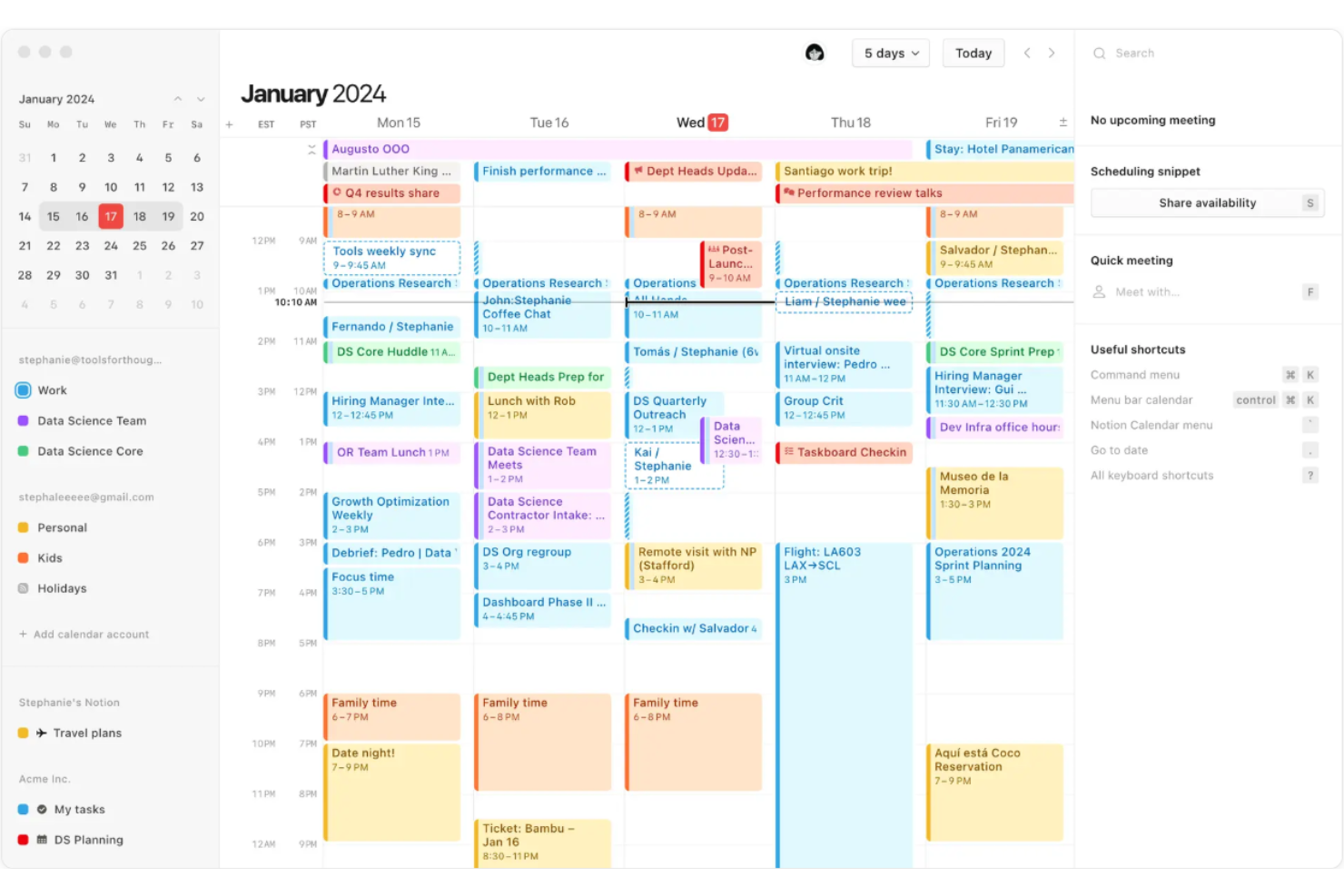
Notion es una herramienta de espacio de trabajo versátil diseñada para que individuos y equipos organicen sus tareas, proyectos y conocimientos. Es preferida por creativos, freelancers y gestores de equipos por su capacidad de combinar notas, tareas, bases de datos y wikis.
Por qué Notion es una buena alternativa a Asana: Notion ofrece espacios de trabajo altamente personalizables donde puedes crear páginas y bases de datos adaptadas a las necesidades de tu equipo. Su flexibilidad permite estructurar la información de la manera que mejor se adapte a tu flujo de trabajo, desde configuraciones simples hasta complejas. La capacidad de insertar diversos elementos, como imágenes y tablas, proporciona una ventaja visual. Para quienes buscan más opciones de personalización que Asana, Notion es una opción muy atractiva.
Funciones destacadas e integraciones:
Funciones incluyen una interfaz de arrastrar y soltar, lo que facilita organizar el contenido como prefieras. Con Notion, puedes crear plantillas para tareas repetitivas, ahorrando tiempo y esfuerzo. La herramienta también permite el uso de contenidos multimedia enriquecidos, lo que facilita a tu equipo insertar vídeos e imágenes directamente en las páginas.
Integraciones incluyen Slack, Google Drive, Trello, Asana, GitHub, Zapier, Typeform, Figma, Jira y Twitter.
Pros and Cons
Pros:
- Admite contenidos multimedia
- Plantillas para una configuración rápida
- Páginas altamente personalizables
Cons:
- Puede tener una curva de aprendizaje
- Puede ser lento con bases de datos grandes

Airtable
Mejor opción para crear aplicaciones sin código

Airtable es una herramienta de colaboración basada en la nube que combina la simplicidad de las hojas de cálculo con el poder de una base de datos. Es preferida por equipos en diversos sectores para gestionar proyectos, hacer seguimiento de tareas y organizar datos.
Por qué Airtable es una buena alternativa a Asana: Airtable ofrece una capacidad única para crear aplicaciones personalizadas sin necesidad de programar, lo que la hace ideal para equipos que necesitan soluciones a medida. Sus vistas de cuadrícula, Kanban y calendario permiten visualizar los proyectos de múltiples maneras. La interfaz de arrastrar y soltar simplifica la gestión de tareas, mientras que la estructura flexible de base de datos soporta flujos de trabajo diversos. Para los equipos que buscan funciones personalizables de gestión de proyectos más allá de lo que ofrece Asana, Airtable proporciona una plataforma versátil y adaptable.
Características destacadas e integraciones:
Las características incluyen una vista de cuadrícula flexible que permite a tu equipo organizar la información de la forma que mejor les convenga. La vista Kanban proporciona un flujo de trabajo visual para gestionar tareas. La vista de calendario de Airtable es perfecta para el seguimiento de fechas límite y cronogramas.
Las integraciones incluyen Slack, Google Drive, Dropbox, Asana, Trello, Salesforce, Zendesk, Box, GitHub y Mailchimp.
Pros and Cons
Pros:
- Organización de datos flexible
- Fácil de usar para distintos equipos
- Se adapta a diferentes flujos de trabajo
Cons:
- Puede ser abrumador para principiantes
- Requiere tiempo para configurar

Nifty
Ideal para la gestión de proyectos todo en uno
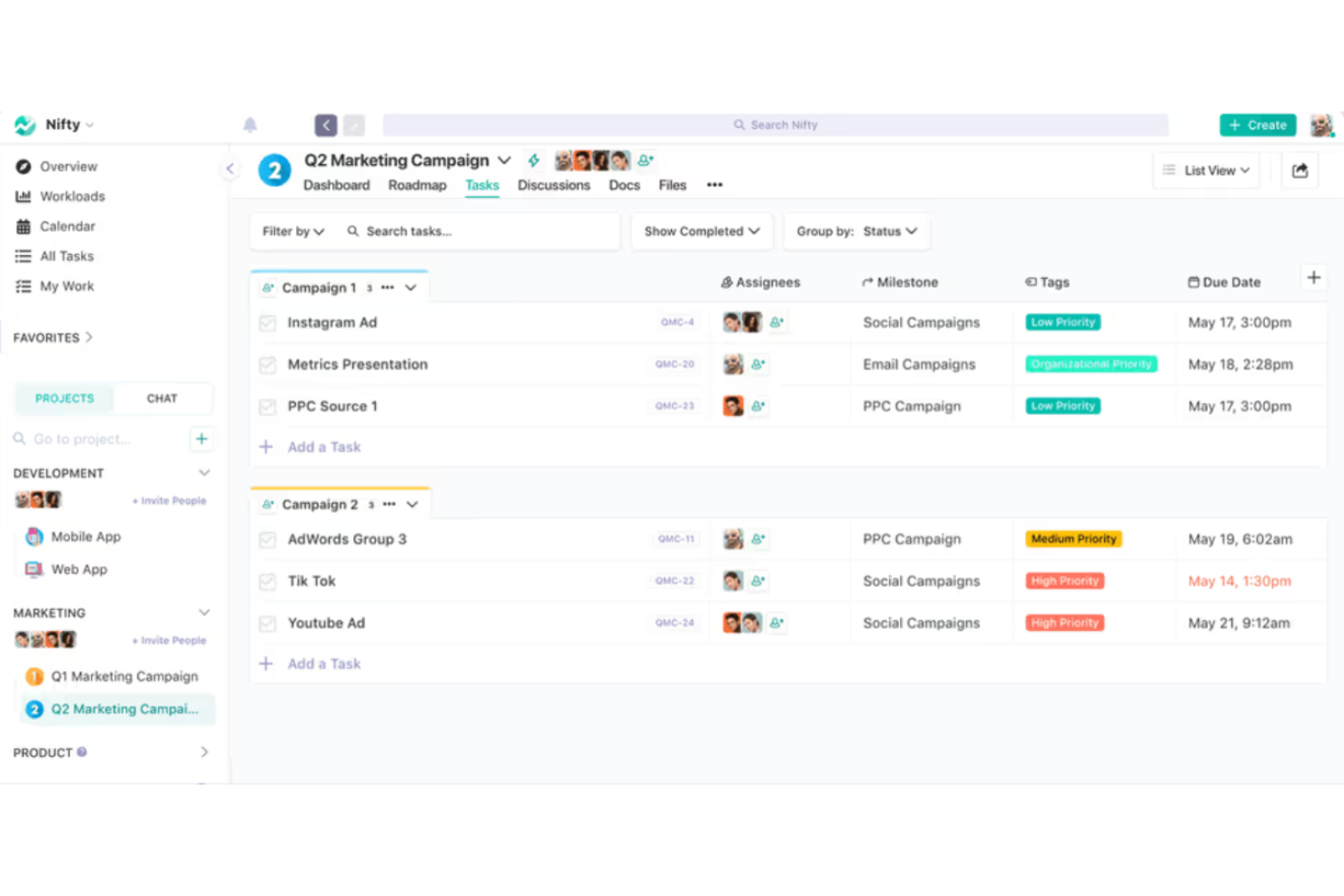
Nifty es una herramienta de gestión de proyectos diseñada para ayudar a los equipos a colaborar y gestionar proyectos de manera eficiente. Es adecuada para empresas y equipos que buscan una solución completa para planificar, hacer seguimiento y completar proyectos.
Por qué Nifty es una buena alternativa a Asana: Nifty combina la gestión de tareas, el seguimiento de tiempo y la colaboración en proyectos en una sola plataforma, proporcionando una solución todo en uno que Asana puede no tener. Cuenta con un enfoque de gestión de proyectos basado en hitos, lo que te ayuda a mantener el seguimiento del progreso y los plazos. Los canales de discusión integrados permiten la comunicación del equipo sin necesidad de herramientas externas. El enfoque de Nifty en integrar múltiples funcionalidades la convierte en una gran opción si buscas una experiencia de gestión de proyectos más cohesionada que la de Asana.
Características e integraciones destacadas:
Características incluyen una función de hitos que ayuda a tu equipo a seguir los objetivos y cronogramas del proyecto. Los canales de discusión integrados facilitan la comunicación directamente en la plataforma. Nifty también ofrece seguimiento de tiempo, lo que te permite monitorear el tiempo invertido en cada tarea.
Integraciones incluyen Slack, Google Drive, Dropbox, Zoom, Google Calendar, Microsoft Teams, Outlook, GitHub, Asana y Trello.
Pros and Cons
Pros:
- Canales de comunicación integrados
- Seguimiento de proyectos basado en hitos
- Adecuado para varios tamaños de equipo
Cons:
- Opciones de plantillas limitadas
- Puede ser abrumador por la cantidad de funciones

Ideal para funciones gratuitas muy completas

Freedcamp es una herramienta de gestión de proyectos dirigida a empresas e individuos que buscan una solución rentable para organizar tareas y colaborar. Es popular entre freelancers, pequeñas empresas y equipos que necesitan gestionar múltiples proyectos de manera eficiente.
Por qué Freedcamp es una buena alternativa a Asana: Freedcamp ofrece una amplia gama de funciones en su plan gratuito, lo que lo hace atractivo si tienes un presupuesto ajustado. Proporciona herramientas como listas de tareas, calendarios y seguimiento de tiempo para mantener tus proyectos en marcha. La capacidad de gestionar documentos y discusiones dentro de la plataforma fomenta la colaboración. Estas características hacen que Freedcamp sea una alternativa valiosa a Asana si buscas funcionalidades amplias sin un precio elevado.
Funciones y integraciones destacadas:
Las funciones incluyen una lista de tareas fácil de usar que ayuda a tu equipo a organizar y priorizar el trabajo. La vista de calendario ofrece una línea de tiempo visual para las tareas y los plazos del proyecto. Freedcamp también cuenta con una herramienta de control de tiempo que permite monitorizar de forma eficaz las horas del proyecto.
Las integraciones incluyen Google Drive, Dropbox, OneDrive, Zapier, Slack, Box, Google Calendar, Evernote, GitHub y Trello.
Pros and Cons
Pros:
- Amplia variedad de funciones gratuitas
- Permite la gestión de documentos
- Ofrece seguimiento de tiempo
Cons:
- Funciones avanzadas limitadas
- Puede ser complejo para usuarios nuevos

ProofHub
Ideal para una colaboración centralizada
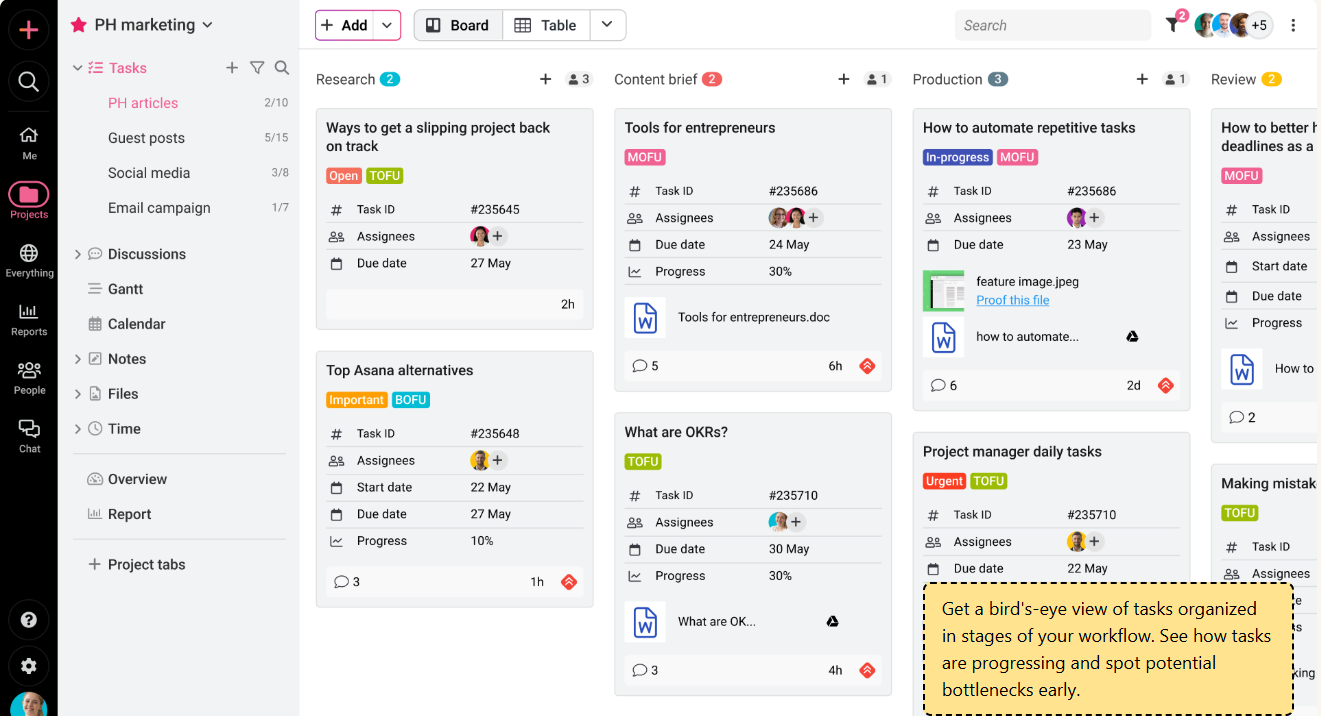
ProofHub es una herramienta de gestión de proyectos y colaboración en equipo diseñada para equipos que necesitan un control centralizado sobre sus proyectos. Está dirigida a gerentes y líderes de equipo, proporcionándoles herramientas para la gestión de tareas, comunicación y planificación de proyectos.
Por qué ProofHub es una buena alternativa a Asana: ProofHub ofrece una plataforma centralizada donde tu equipo puede gestionar tareas, discusiones y archivos en un solo lugar, reduciendo la necesidad de múltiples herramientas. Sus funciones integradas de chat y discusión hacen que la comunicación sea sencilla y accesible. La línea de tiempo visual te ayuda a planificar y hacer seguimiento al progreso del proyecto de manera eficiente. Estas características hacen que ProofHub sea una opción atractiva frente a Asana para equipos que requieren un entorno más centralizado y controlado.
Funciones e integraciones destacadas:
Funciones incluyen una línea de tiempo de proyecto detallada que permite visualizar las etapas del proyecto. La función de chat integrada de ProofHub permite que tu equipo se comunique sin salir de la plataforma. También ofrece almacenamiento de archivos, asegurando que todos los documentos del proyecto sean fácilmente accesibles.
Las integraciones incluyen Google Drive, Dropbox, Box, OneDrive, Outlook, iCal, FreshBooks, QuickBooks, Zapier y Slack.
Pros and Cons
Pros:
- Gestión de proyectos centralizada
- Chat y discusiones integrados
- Cronogramas visuales de proyectos
Cons:
- Puede requerir capacitación adicional
- Funciones de informes avanzados limitadas

Teamwork
Mejor para la gestión del trabajo con clientes

Teamwork es un software de gestión de proyectos diseñado para empresas que trabajan con clientes, como agencias y consultoras. Ayuda con la gestión de tareas, la planificación de proyectos y la colaboración para entregar proyectos a los clientes de manera eficiente.
Por qué Teamwork es una buena alternativa a Asana: Teamwork ofrece funciones avanzadas para gestionar proyectos de clientes, como seguimiento de tiempo y facturación, que son esenciales para las agencias. Sus dependencias de tareas y diagramas de Gantt te ayudan a planificar y ejecutar proyectos de manera eficaz. La función de permisos para clientes te permite compartir actualizaciones de proyectos con ellos sin comprometer la privacidad. Estas capacidades hacen que Teamwork sea una excelente opción si tu equipo necesita una gestión de clientes más sólida que la que ofrece Asana.
Funciones e integraciones destacadas:
Las funciones incluyen un seguimiento del tiempo detallado, que ayuda a tu equipo a facturar correctamente a los clientes. La función de facturación integrada te permite gestionar facturas directamente desde la plataforma. Teamwork también ofrece plantillas de tareas, lo que puede ahorrar tiempo en proyectos repetitivos.
Las integraciones incluyen Slack, Dropbox, Google Drive, HubSpot, QuickBooks, Xero, Zapier, Microsoft Teams, Harvest y Basecamp.
Pros and Cons
Pros:
- Muy bueno para la gestión de clientes
- Incluye seguimiento del tiempo
- Dependencias de tareas disponibles
Cons:
- Puede ser complejo para equipos pequeños
- Puede requerir formación adicional

Aha!
Mejor para equipos de desarrollo de productos
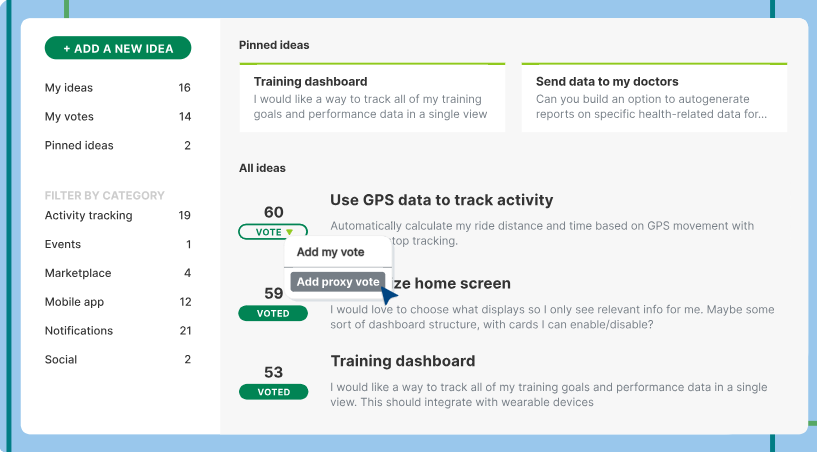
Aha! es un software de desarrollo de productos diseñado para que los equipos establezcan una estrategia, capturen ideas, creen hojas de ruta y gestionen lanzamientos. Se utiliza principalmente por gestores de producto y equipos de desarrollo para planificar y ejecutar iniciativas de producto.
Por qué Aha! es una buena alternativa a Asana: Aha! ofrece funciones especializadas adaptadas al desarrollo de productos, como hojas de ruta visuales que vinculan la estrategia con la ejecución, gestión de ideas para recopilar y priorizar comentarios de los clientes, y herramientas de planificación de lanzamientos para coordinar lanzamientos interfuncionales. Estas capacidades lo hacen especialmente adecuado para equipos de producto que buscan una gestión integral de principio a fin.
Características destacadas e integraciones:
Las características incluyen un generador de hojas de ruta visual que te ayuda a planificar y comunicar la estrategia de producto, gestión de ideas para recopilar y priorizar comentarios de los clientes, y herramientas de planificación de lanzamientos para coordinar lanzamientos interfuncionales. Estas herramientas permiten que tu equipo se alinee en los objetivos y entregue productos que los clientes adoran.
Las integraciones incluyen Jira, GitHub, Azure DevOps Server, Pivotal Tracker, Trello, FogBugz, Jellyfish, Redmine, Zendesk, Salesforce, Google Analytics y Slack.
Pros and Cons
Pros:
- Flujos de trabajo personalizables
- Creación de hojas de ruta visuales
- Gestión de ideas integrada
Cons:
- Curva de aprendizaje alta
- Coste superior comparado con algunos planes de pago alternativos

Podio
Ideal para flujos de trabajo personalizables
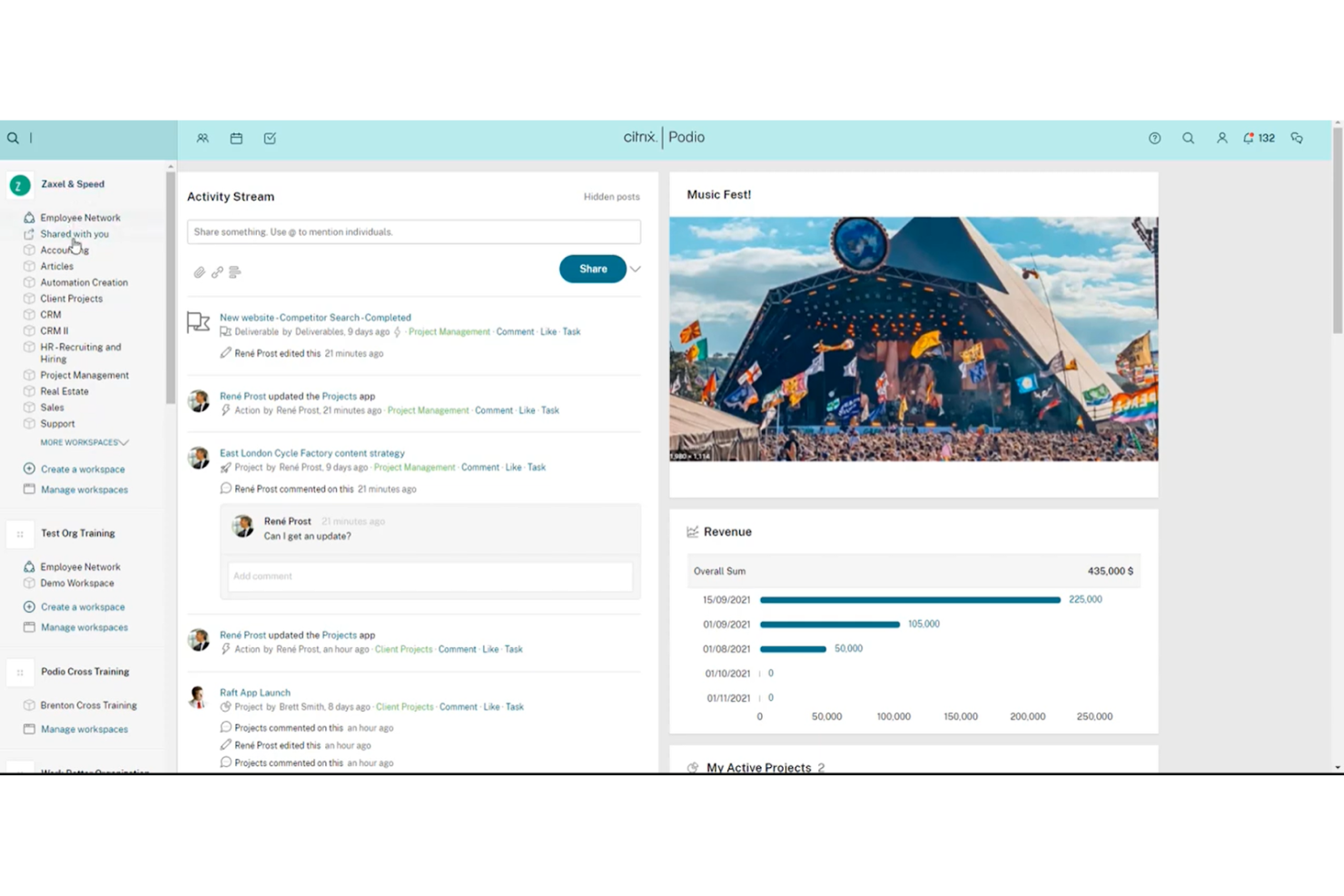
Podio es una plataforma de gestión de proyectos y colaboración que permite a los usuarios crear flujos de trabajo personalizados para sus equipos. Es utilizada por empresas de todos los tamaños para gestionar tareas, proyectos y comunicaciones en un entorno flexible.
Por qué Podio es una buena alternativa a Asana: Podio permite que tu equipo personalice los flujos de trabajo para adaptarse a las necesidades específicas de tus proyectos, ofreciendo más flexibilidad que Asana. Puedes crear tus propias aplicaciones dentro de Podio para optimizar procesos y mejorar la eficiencia. Sus características de gestión de tareas ayudan a mantener a tu equipo organizado y enfocado. Con la capacidad de adaptarse a varios tipos de proyectos, Podio proporciona una experiencia de gestión a medida que puede faltar en Asana.
Características e integraciones destacadas:
Las características incluyen plantillas personalizables que permiten a tu equipo crear estructuras de proyecto adaptadas. Las herramientas de colaboración en tiempo real de Podio garantizan que todos estén conectados e informados. La capacidad de crear aplicaciones te permite diseñar funcionalidades específicas según las necesidades de tus flujos de trabajo.
Las integraciones incluyen Google Drive, Dropbox, Evernote, Zendesk, Outlook, ShareFile, GoToMeeting, FreshBooks, Campaign Monitor y Mailchimp.
Pros and Cons
Pros:
- Flujos de trabajo altamente personalizables
- Herramientas de colaboración en tiempo real
- Estructuras de proyecto flexibles
Cons:
- Puede requerir configuración técnica
- Funciones limitadas predeterminadas
Otras alternativas a Asana
Estas son algunas alternativas adicionales a Asana que no incluí en mi lista, pero que vale la pena considerar:


Cómo evalúo alternativas a Asana
Busco herramientas en dos capas: la funcionalidad básica de gestión de productos que toda opción debe tener y los diferenciadores—como la profundidad en la planificación de hojas de ruta o el soporte para metodologías ágiles—que definen el mejor ajuste.
Funcionalidad principal (Requisitos básicos para esta lista)
Cuando selecciono herramientas para mi lista, califico cada una en una escala de 0 (no ofrece la funcionalidad) a 5 (destaca en esta área) para cada funcionalidad principal que se enumera a continuación. Luego, calculo la puntuación total de la herramienta en porcentaje. Cada herramienta necesita alcanzar una puntuación mínima total del 65% para ser considerada para su inclusión.
- Planificación de hoja de ruta: Reviso si la herramienta permite planificar hojas de ruta basadas en cronogramas con hitos y dependencias, además de vistas compartibles para interesados como directivos o clientes.
- Backlog y priorización: Los equipos de producto necesitan backlogs estructurados. Busco marcos de priorización integrados como RICE o sistemas de puntuación personalizados para clasificar funciones más allá del simple arrastrar y soltar.
- Gestión de sprints ágiles: Los ciclos de sprint, la estimación por puntos de historia y el seguimiento de iteraciones son importantes aquí. Evalúo si la herramienta soporta Scrum, Kanban o ambos flujos de trabajo.
- Gestión de tareas cross-funcional: Lanzar un producto involucra diseño, ingeniería y marketing. Busco asignación de tareas, subtareas y funciones de colaboración que mantengan a estos equipos alineados.
- Integraciones para el ecosistema de producto: La mayoría de los equipos de producto dependen diariamente de herramientas como Jira, GitHub, Slack y Figma. Evalúo la profundidad de las integraciones nativas y la sincronización bidireccional, no solo los envíos unidireccionales.
- Informes y seguimiento de progreso: Los paneles de control y vistas de estado deben mostrar la velocidad del sprint, gráficos de quemado o cronogramas de entrega para que los líderes de producto puedan informar sin tener que crear actualizaciones manualmente.
Una vez que tengo una lista de herramientas que cumplen con estos criterios, considero qué distingue a cada plataforma.
Factores diferenciadores (Lo que distingue a los proveedores)
Así es como comparo y contrasto los diferentes proveedores:
Funciones destacadas
Pongo especial atención en la integración de comentarios de clientes—las herramientas que permiten vincular tickets de soporte o respuestas de encuestas directamente a los elementos de la hoja de ruta evitan que los gestores de producto tengan que trabajar en hojas de cálculo. La alineación de OKR y objetivos es otro factor que evalúo, ya que vincular el trabajo del sprint a resultados de negocio medibles ayuda a los PM a comunicar el avance a los directivos. La gestión de versiones también es importante. Las herramientas con registros de cambios integrados y seguimiento de versiones facilitan mucho la coordinación de lanzamientos entre ingeniería y marketing.
Más allá de las funciones
La incorporación y el tiempo hasta obtener valor importan mucho cuando se migra desde Asana. Busco plantillas de gestión de productos preconfiguradas y soporte para migración que ayuden a los equipos a operar rápidamente. La escalabilidad es otra consideración importante—una herramienta que funciona para una startup de cinco personas puede fallar al gestionar varias líneas de producto con dependencias entre equipos. También evalúo la transparencia en precios, en particular si los proveedores ofrecen asientos solo de visualización u opciones de niveles flexibles para que no pagues el precio completo por interesados que solo necesitan acceso de lectura.
¿Por qué buscar una alternativa a Asana?
Aunque Asana es una buena opción para la gestión de productos, hay varios motivos por los que algunos usuarios buscan soluciones alternativas. Es posible que estés buscando una alternativa a Asana por cualquiera de las siguientes razones.
- Necesitas más opciones de personalización
- Tu equipo necesita herramientas avanzadas de generación de informes
- La interfaz de usuario te parece complicada
- Consideras que carece de integración con aplicaciones específicas
- Buscas planes de precios más asequibles
- Tu equipo está creciendo y necesita una mejor escalabilidad
- Necesitas cumplir normativas de datos específicas
Si alguna de estas situaciones te resulta familiar, has llegado al lugar indicado. Mi lista incluye varias opciones centrales de gestión de productos más adecuadas para equipos que enfrentan estos desafíos con Asana y buscan soluciones alternativas.
Funciones principales de Asana
Estas son algunas de las características clave de Asana, que te ayudarán a contrastar y comparar lo que ofrecen las soluciones alternativas:
- Gestión de tareas: Te permite crear, asignar y realizar un seguimiento de las tareas para mantener tus proyectos organizados.
- Líneas de tiempo de proyectos: Ayuda a visualizar los calendarios y las fechas límite de los proyectos, garantizando que tu equipo mantenga el rumbo.
- Tableros y calendarios: Proporciona herramientas visuales para la planificación y gestión de proyectos, lo que facilita la organización de tu equipo.
- Actualizaciones en tiempo real: Mantiene informado a tu equipo mediante notificaciones instantáneas, lo que mejora la colaboración y la responsabilidad.
- Portafolios: Te permite organizar los proyectos por cuenta o equipo, lo que resulta útil para gestionar numerosos proyectos de forma eficiente.
- Asana Intelligence: Ofrece información y sugerencias basadas en inteligencia artificial para mejorar los resultados de los proyectos y ahorrar tiempo.
- Herramientas de colaboración: Facilita la comunicación mediante tableros de mensajes y archivos adjuntos dentro de las tareas.
- Vista de Gantt: Ayuda a crear proyectos, establecer dependencias y visualizar líneas de tiempo mediante una interfaz de arrastrar y soltar.
- Función de revisión: Convierte los comentarios en subtareas, ayudando a los equipos a gestionar eficazmente la producción de contenido.
- Campos personalizados: Te permite adaptar los detalles del proyecto para ajustarlos a las necesidades específicas de tu flujo de trabajo.
¿Qué sigue?
No olvides suscribirte a nuestro boletín para recibir más recursos y guías sobre gestión de productos, además de los últimos pódcast, entrevistas y otras perspectivas de líderes y expertos del sector.