

API ağ geçidi yazılımı, hizmetleriniz ve kullanıcılarınız arasındaki API trafiğini yönetir, güvenliğini sağlar ve yönlendirir. En iyi API ağ geçidi yazılımını arıyorsanız API yönetimini basitleştirmek, güvenlik politikalarını uygulamak ve mikro hizmetleri ya da hibrit bulut ortamlarını desteklemek istiyor olabilirsiniz. Doğru çözümü seçmek, ekibinizin artan API karmaşıklığını yönetmesine, uyumluluğu sürdürmesine ve entegrasyonların sorunsuz çalışmasını sağlamasına yardımcı olabilir.
Bu kılavuzda, 2026 yılının öne çıkan API ağ geçidi araçlarından özenle derlenmiş bir liste bulacaksınız —her biri özellikleri karşılaştırmanıza ve işletmeniz için bilinçli bir karar vermenize yardımcı olmak üzere seçildi.
Why Trust Our Software Recommendations
6,700+
Reviews
20
Industry experts
16+
Evaluation factors
14
Years
Our team has been testing and reviewing software since 2012. As product managers ourselves, we know how difficult—and important—it is to choose the right software.
For this guide, we evaluated tools using hands-on testing and independent research, scoring tools using our selection criteria.
Our reviews reflect our human editorial judgment, not a sales pitch.
Expert reviewers:
- Andrew LumbySenior TPM
- Cristiano ValimSenior UI/UX Lead


API Ağ Geçidi Yazılımı Karşılaştırma Tablosu
Bu karşılaştırma tablosu, en iyi API ağ geçidi yazılımı seçeneklerim için fiyatlandırma ayrıntılarını özetlemektedir:
Score legend (out of 5)
- Excellent4.5–5
- Good4–4.4
- Average3–3.9
- Below average2–2.9
- Poor1–1.9
Sorted by: Default
| Tool | Starting Price | Website | |||||||
|---|---|---|---|---|---|---|---|---|---|
Best for full API lifecycle governance | 4.2 out of 5 | 4 | 4 | 4 | 5 | 4 | 4 | Pricing upon request 30-day free trial + free demo available | Website |
Best for API monetization and usage billing | 4.0 out of 5 | 3 | 4 | 4 | 4 | 4 | 5 | $25/month 30-day free trial | Website |
Best for API monetization and product packaging | 4.0 out of 5 | 4 | 4 | 3 | 5 | 4 | 4 | $20/1M API calls 60-day free trial available | Website |
Best for event-driven API support | 4.5 out of 5 | 4 | 4 | 5 | 5 | 4 | 5 | $2,500/month Free demo available | Website |
Best for managing APIs in the Microsoft Azure ecosystem | 4.2 out of 5 | 4 | 4 | 5 | 4 | 4 | 4 | $48.04/month Free trial available | Website |
Best for hybrid and multi-cloud API deployments | 4.0 out of 5 | 4 | 3 | 4 | 4 | 4 | 5 | Pricing upon request 30-day free trial available | Website |
Best for end-to-end API lifecycle governance | 3.8 out of 5 | 4 | 4 | 3 | 5 | 4 | 3 | Pricing upon request 30-day free trial + free demo available | Website |
Best for connecting diverse enterprise systems | 4.5 out of 5 | 4 | 4 | 5 | 5 | 4 | 5 | Pricing upon request Free trial + free demo available | Website |
Best for API monetization and billing integration | 4.5 out of 5 | 4 | 5 | 5 | 4 | 4 | 5 | Pricing upon request 30-day free trial + free demo available | Website |
Best for API monetization and usage-based billing | 4.0 out of 5 | 5 | 4 | 3 | 4 | 4 | 4 | Usage-based pricing Free trial available | Website |


API Ağ Geçidi Yazılımı İncelemeleri
Aşağıda kısa listeme giren API ağ geçidi yazılımlarının ayrıntılı özetlerini bulabilirsiniz. İncelemelerim, size en uygun seçeneği bulmanıza yardımcı olmak için her platformun özelliklerini, en iyi kullanım alanlarını ve entegrasyonlarını ayrıntılı biçimde ele almaktadır.
 Best for full API lifecycle governance
- 30-day free trial + free demo available
- Pricing upon request
Visit WebsiteCustomer Rating:4.5/5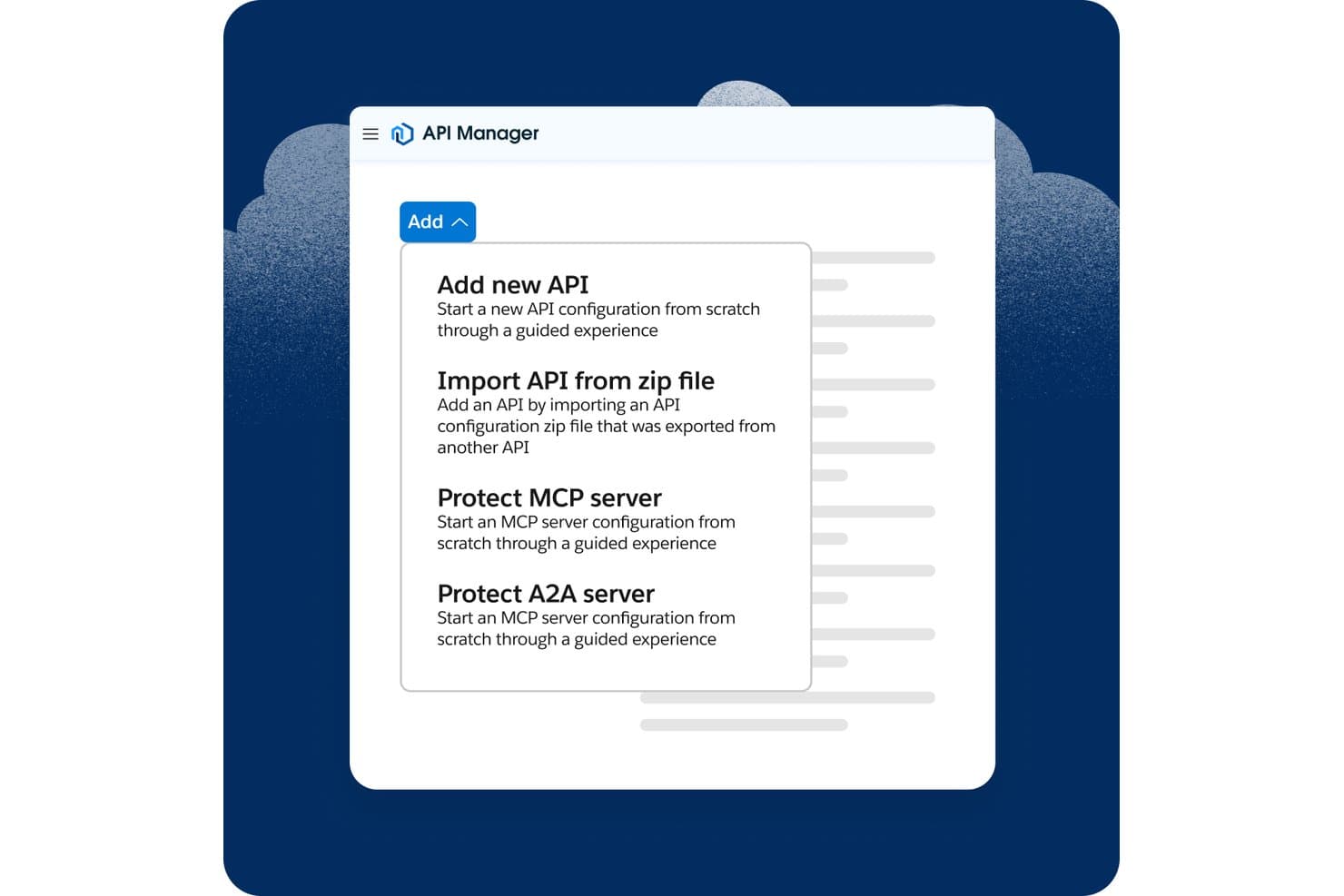
MuleSoft Anypoint API Manager menu for adding, importing and protecting APIs MuleSoft Anypoint Platform is an API gateway and integration platform that covers API design, traffic management, security policy enforcement, protocol translation, and developer portal publishing across hybrid, multi-cloud, and self-managed environments.
Who Is MuleSoft Anypoint Best For?
MuleSoft Anypoint Platform is a strong fit for enterprise architects and platform teams managing APIs across hybrid, multi-cloud, and federated gateway environments.
Why I Picked MuleSoft Anypoint
MuleSoft Anypoint earns its spot on my shortlist because it covers the full API lifecycle from a single control plane, which is rare at this scale. I particularly like Omni Gateway's federated governance: it enforces policies across Kong, Apigee, AWS, and Azure gateways without migrating any of them. API Manager adds SLA-tiered access controls and a built-in policy library spanning JWT, mTLS, OAuth 2.0, and Cedar-based GraphQL rules, all applied without downtime.
MuleSoft Anypoint Key Features
- Anypoint Monitoring: Real-time and historical dashboards track response time, error rate, throughput, and availability across your APIs and integrations.
- DataWeave transformation: A built-in transformation language that converts and maps data between formats across REST, SOAP, gRPC, and GraphQL without separate middleware.
- Anypoint Exchange: A searchable catalog of APIs, connectors, templates, and policies where teams can discover, test, and reuse assets across projects.
- LLM token rate limiting: Policy-level controls that enforce rate limits based on token counts for OpenAI-format, A2A, and Model Proxy APIs.
MuleSoft Anypoint Integrations
MuleSoft Anypoint integrates with Kong, Apigee, AWS API Gateway, Azure API Management, Okta, PingFederate, Datadog, Splunk, and New Relic. It also supports custom integrations through APIs and CI/CD workflows via Anypoint CLI, Helm charts, Docker, and Kubernetes.
Pros and Cons
Pros:
- Covers REST, SOAP, gRPC, and GraphQL
- Supports extensive authentication and authorization policies
- Governs APIs across multiple gateway vendors
Cons:
- Portal customization depends on Salesforce infrastructure
- Requires specialized DataWeave expertise
Learn more about MuleSoft Anypoint: Best for API monetization and usage billing
- 30-day free trial
- From $25/month
Visit WebsiteCustomer Rating:4.4/5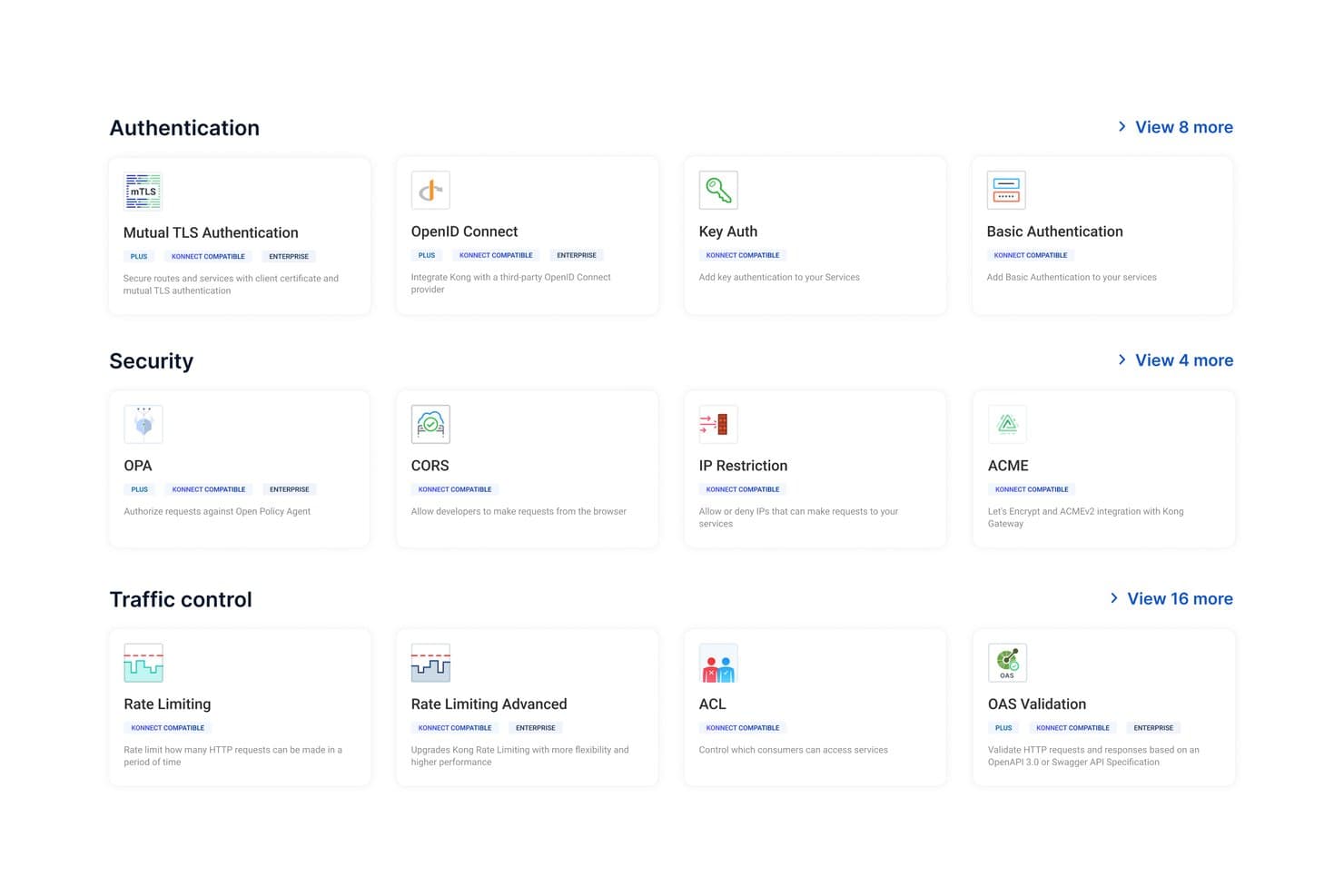
Kong Gateway plugin catalog covering authentication, security and traffic control Kong Gateway is an API gateway platform that handles request routing, traffic management, authentication, rate limiting, protocol translation, and developer portal management across hybrid, multi-cloud, and Kubernetes environments.
Who Is Kong Gateway Best For?
Kong Gateway is a strong fit for platform and API product teams that need to monetize API consumption with usage-based billing, metering, and invoicing built directly into the gateway.
Why I Picked Kong Gateway
I picked Kong Gateway as one of the best because it's the only API gateway on this list with a native monetization engine built directly into the control plane. Through Konnect Metering & Billing, built on OpenMeter, you can meter API consumption in real time, configure usage-based pricing tiers and prepaid credits, and push invoices through Stripe without a separate billing system. The Consumer Groups feature lets you enforce different rate-limit policies per pricing tier automatically.
Kong Gateway Key Features
- Expression-based routing engine: Configure request routing rules using a flexible expression syntax that matches on methods, hosts, paths, headers, and SNI simultaneously.
- Consumer Groups: Segment API consumers into tiers and apply distinct policies—such as rate limits or access controls—to each group from a single configuration.
- Active Tracing: Follow individual API transactions through every policy execution step and upstream interaction to pinpoint where latency or failures occur.
- decK declarative config CLI: Manage your entire gateway configuration as code, enabling version control and automated deployments through CI/CD pipelines.
Kong Gateway Integrations
Kong Gateway offers native integrations with OpenTelemetry, Prometheus, Datadog, HashiCorp Vault, AWS Secrets Manager, GCP Secrets Manager, Kafka, Confluent, Solace, and Stripe. Its Admin API, decK, and Terraform provider support custom integrations and CI/CD workflows.
Pros and Cons
Pros:
- Broad authentication supports secure API exposure
- Hybrid deployments support complex enterprise environments
- Native API monetization and usage billing
Cons:
- OSS and Enterprise capabilities diverge considerably
- Configuration can overwhelm smaller platform teams
Learn more about Kong Gateway: Best for API monetization and product packaging
- 60-day free trial available
- From $20/1M API calls
Visit WebsiteCustomer Rating:4.3/5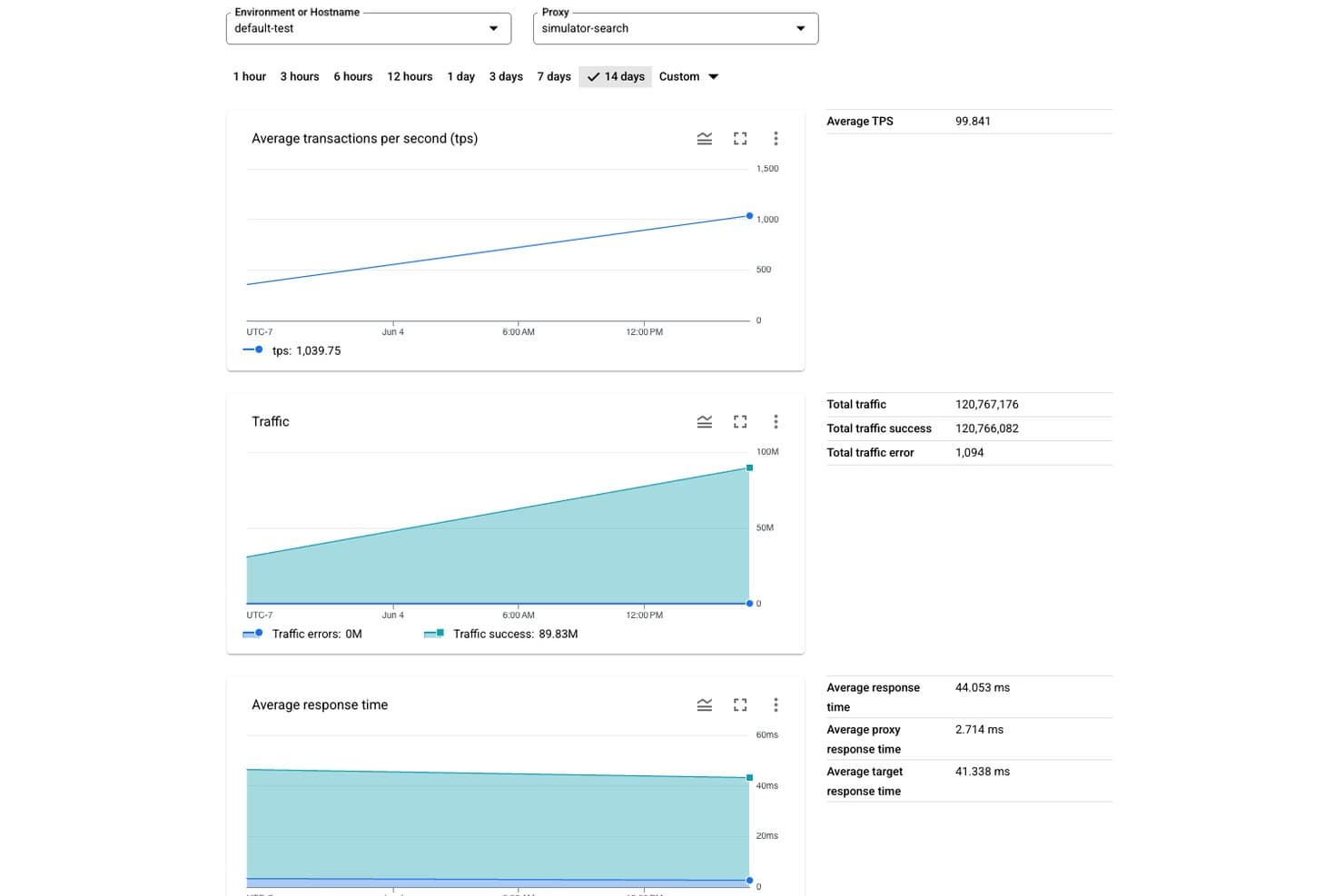
Apigee API Proxy Performance dashboard with traffic, throughput and response time Apigee is Google Cloud's API management platform that works as a proxy layer between clients and backend services, handling security enforcement, traffic management, rate limiting, protocol mediation, analytics, and built-in API monetization.
Who Is Apigee Best For?
Apigee is a strong fit for enterprise teams that need to expose, govern, and monetize APIs at scale—especially those already invested in Google Cloud infrastructure.
Why I Picked Apigee
I've included Apigee in my top picks because it's one of the few API gateways that treats monetization as a first-class feature, not an afterthought. You can define rate plans with setup fees, usage-based tiers, and revenue sharing, then enforce them automatically through the MonetizationLimitsCheck policy. I also like that API products let you bundle specific endpoints into discrete, subscribable packages, which makes it straightforward to offer differentiated tiers to different developer audiences.
Apigee Key Features
- Advanced API Security add-on: Uses machine learning to detect API abuse and bad bots, identify undocumented shadow APIs, and surface proxy configuration risks with fix recommendations.
- Apigee hybrid deployment: Runs the API runtime on your own Kubernetes cluster—on-premises or on any public cloud—while Google manages the control plane, keeping the runtime functional even when disconnected.
- 50+ built-in policies: Covers security, traffic management, mediation, and transformation, with support for custom logic in JavaScript, Python, Java, or XSLT.
- Model Context Protocol (MCP) endpoints: Exposes existing APIs as MCP tools with OAuth 2.1/OIDC authentication and per-tool analytics, enabling AI agents to consume your APIs directly.
Apigee Integrations
Apigee integrates with Google Cloud Load Balancing, Cloud Armor, Cloud IAM, Cloud Logging, Cloud Monitoring, Cloud Build, Pub/Sub, Dialogflow, Gemini, Envoy, and Istio. Its REST API, Maven plugin, and apigeecli support custom integrations and CI/CD workflows.
Pros and Cons
Pros:
- Hybrid runtime supports multi-cloud deployment
- Advanced security detects abuse and shadow APIs
- Built-in API monetization supports tiered product packaging
Cons:
- XML-based policies increase implementation complexity
- GraphQL lacks federation and gRPC remains limited
Learn more about Apigee: Best for event-driven API support
- Free demo available
- From $2,500/month
Visit WebsiteCustomer Rating:4.5/5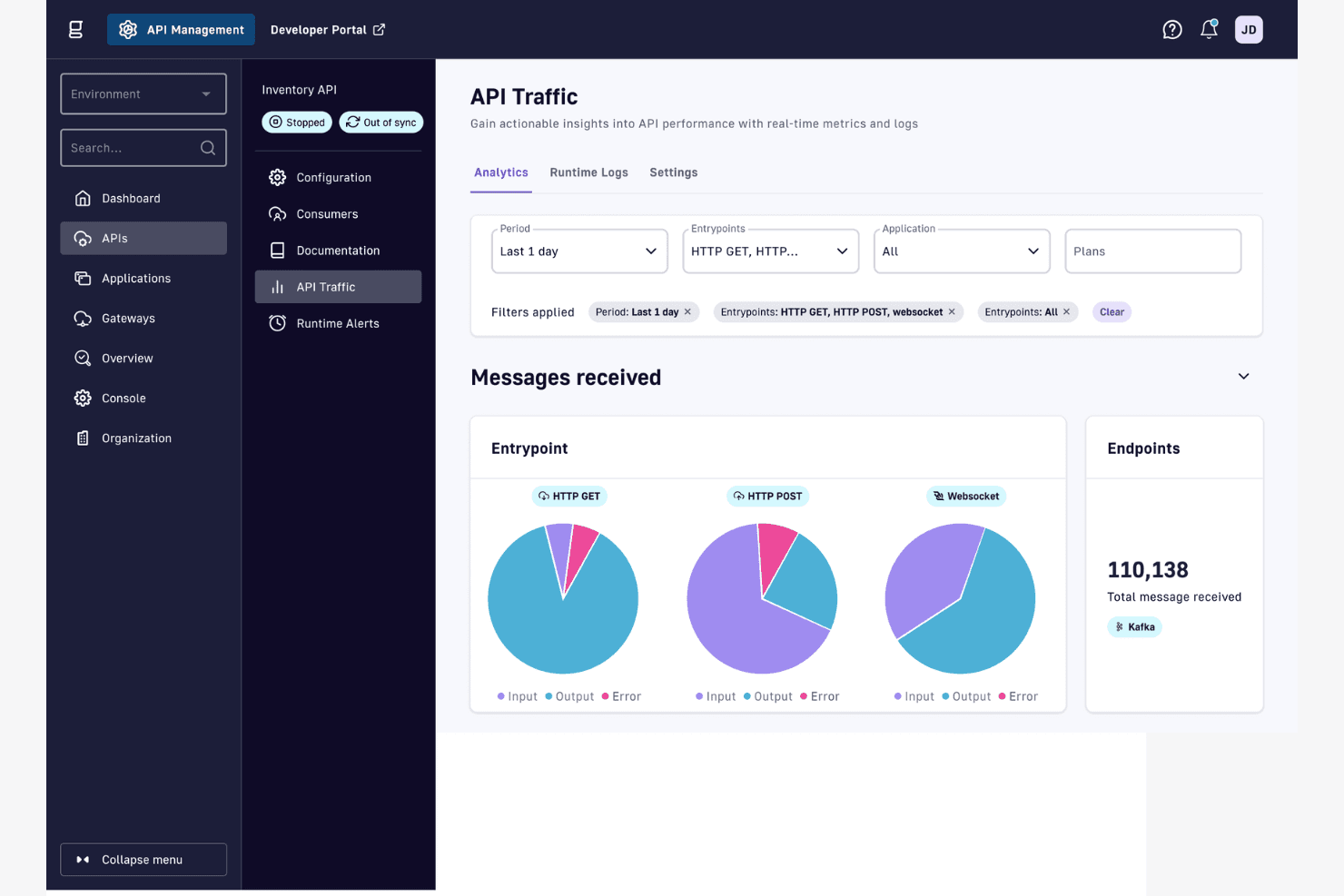
Gravitee provides real-time API traffic analytics and request distribution insights. Gravitee is an API gateway and management platform that handles REST, GraphQL, gRPC, WebSocket, and event-driven protocols like Kafka, MQTT, and RabbitMQ under a single policy and control layer.
Who Is Gravitee Best For?
Gravitee is a strong fit for backend engineers and platform teams that need to manage event-driven APIs alongside traditional REST traffic under a single control layer.
Why I Picked Gravitee
I picked Gravitee as one of the best because no other gateway on my list handles event-driven protocols with the same depth. Its native Kafka gateway lets you apply per-message policies like rate limiting, filtering, and key transformation directly on Kafka topics, then expose those streams as REST, WebSocket, or Webhook APIs without any sidecars. I also love the multi-cluster Kafka governance features, where Virtual Clusters and Kafka Mesh let teams manage several broker clusters behind a single endpoint.
Gravitee Key Features
- Policy Studio: A drag-and-drop interface for building and applying API policies without writing code, covering authentication, rate limiting, and transformation.
- Multi-gateway federation: Discovers and centralizes APIs from third-party gateways like AWS API Gateway, Azure APIM, Apigee, IBM, and Tyk into a single catalog and developer portal.
- Distributed rate limiting: Enforces per-consumer and per-plan rate limits across distributed environments using Redis or Hazelcast, with token-bucket burst support.
- OpenTelemetry export: Sends API metrics, traces, and logs to external observability tools like Datadog, Grafana, and Splunk with full-payload tracing and sensitive data redaction.
Gravitee Integrations
Gravitee offers native integrations with Kafka, MQTT, RabbitMQ, Azure Service Bus, Solace, Datadog, Grafana, Splunk, and Prometheus. It also federates AWS API Gateway, Azure APIM, Apigee, IBM, and Tyk, with an Automation API for custom workflows.
Pros and Cons
Pros:
- Drag-and-drop policy configuration
- Message-level Kafka policy control
- Deep event-driven API governance
Cons:
- Advanced policies require expression language
- UI navigation can feel difficult
Learn more about Gravitee: Best for managing APIs in the Microsoft Azure ecosystem
- Free trial available
- From $48.04/month
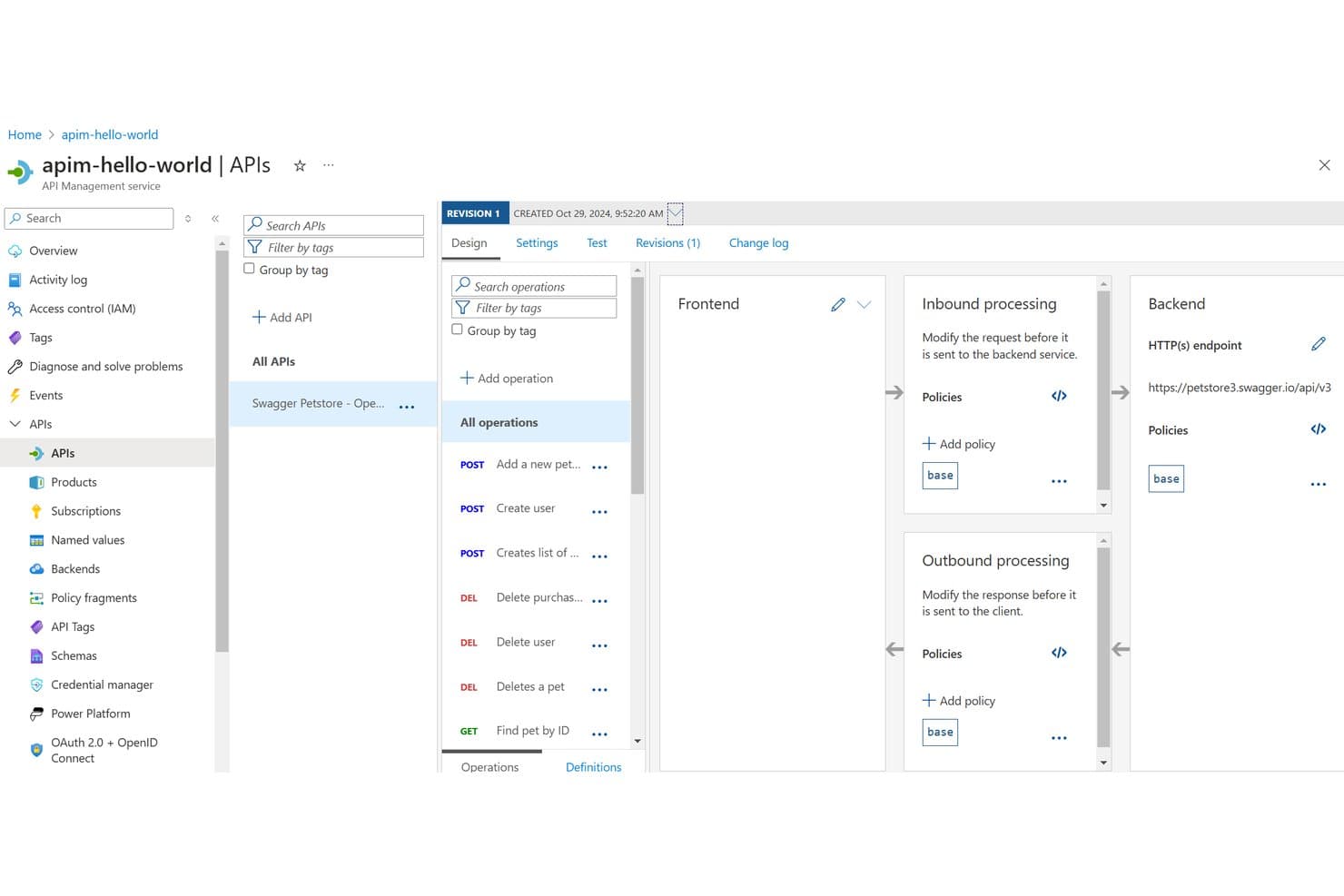
Azure API Management portal showing a published API with its operations and policies Azure API Management is a full-lifecycle API gateway platform from Microsoft that handles request routing, traffic management, authentication, rate limiting, protocol translation across REST, SOAP, GraphQL, gRPC, and OData, and developer portal publishing.
Who Is Azure API Management Best For?
Azure API Management is a strong fit for enterprise teams already running workloads on Azure who need centralized governance across traditional, AI, and agent-based APIs.
Why I Picked Azure API Management
Azure API Management earns its spot on my shortlist because it's the most natural fit when your infrastructure is already rooted in Azure. I love how it handles protocol translation across REST, SOAP, GraphQL, gRPC, and OData under one control plane, so you're not stitching together separate tools for different API types. Its workspace-based federated governance also lets separate teams publish and manage their own APIs while a central team enforces policy.
Azure API Management Key Features
- AI token limits and quotas: Set per-consumer token limits and usage quotas on AI model endpoints, including support for cost attribution across teams.
- Self-hosted gateway: Deploy a Linux Docker container on any Kubernetes, Docker, or Azure Arc environment to route API traffic from on-premises or non-Azure infrastructure.
- Workspace-based access control: Scope Azure RBAC permissions to individual workspaces so separate teams manage their own APIs independently.
- OWASP API Top 10 protection: Apply built-in security policies that guard against common API vulnerabilities, with optional Microsoft Defender for APIs for threat detection.
Azure API Management Integrations
Azure API Management offers native integrations across the Microsoft ecosystem, including Azure Monitor, Application Insights, Event Hubs, Microsoft Entra ID, Key Vault, API Center, Azure OpenAI, Microsoft Foundry, and Copilot Studio. Its REST API, CLI, SDKs, ARM, Bicep, and Terraform support custom integrations and CI/CD workflows.
Pros and Cons
Pros:
- Supports federated workspace-based API management
- Governs AI tokens and MCP traffic
- Handles REST, SOAP, GraphQL, and gRPC
Cons:
- Policy configuration requires substantial administrative expertise
- Tier differences restrict important gateway capabilities
Learn more about Azure API Management: Best for hybrid and multi-cloud API deployments
- 30-day free trial available
- Pricing upon request
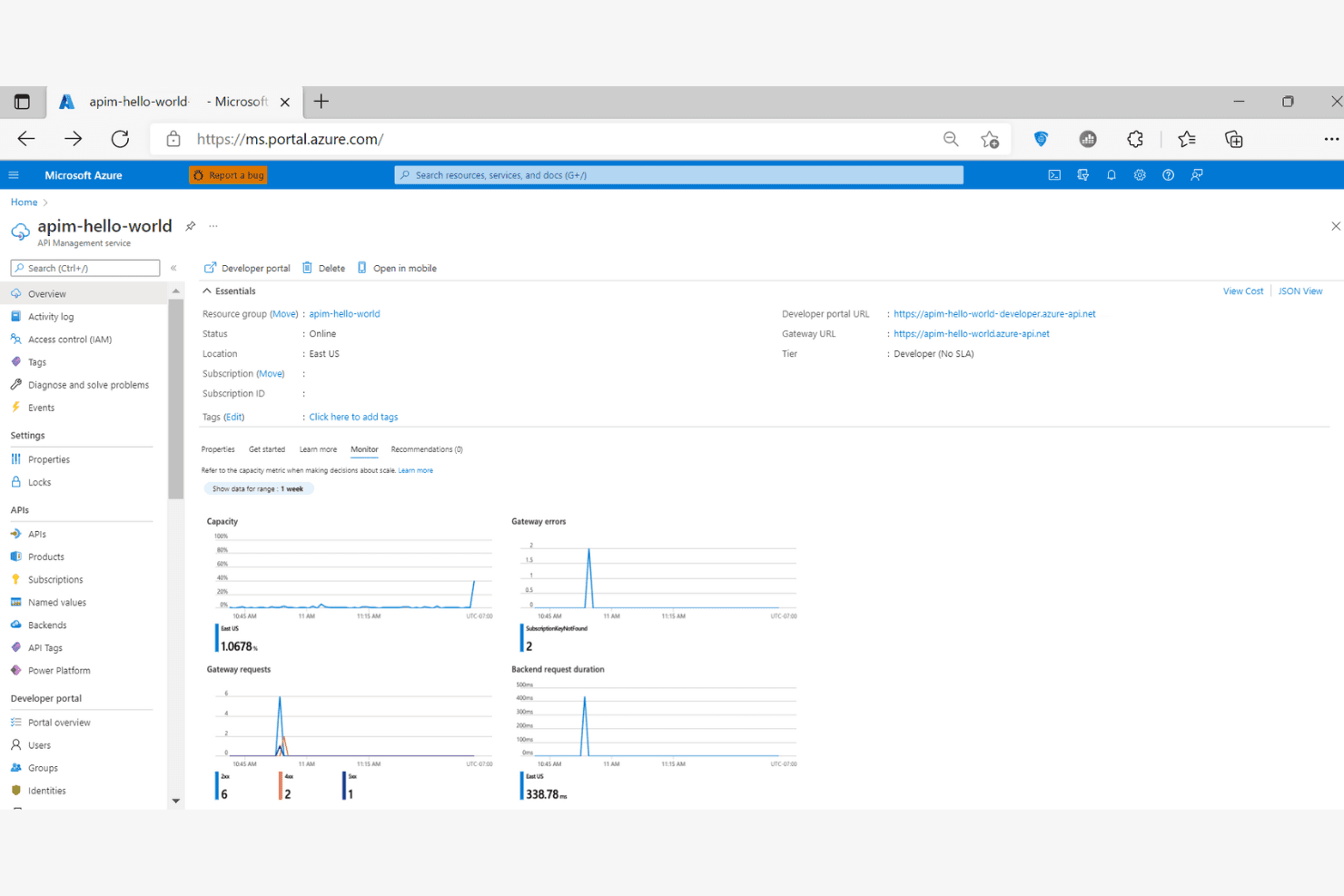
Azure API Management monitors API traffic, performance, errors, and gateway capacity. Microsoft Azure API Management is an Azure-native API gateway platform that handles REST, SOAP, GraphQL, WebSocket, and gRPC APIs, with a policy engine for traffic routing, authentication, rate limiting, and protocol transformation across managed and self-hosted gateway deployments.
Who Is Microsoft Azure API Management Best For?
Microsoft Azure API Management is a strong fit for enterprise teams already invested in the Azure ecosystem who need to manage APIs across on-premises infrastructure, Azure, and other clouds from a single control plane.
Why I Picked Microsoft Azure API Management
I've included Microsoft Azure API Management in my top picks because its self-hosted gateway is the most practical solution I've seen for teams managing APIs across on-premises infrastructure and multiple clouds from one control plane. You deploy a containerized gateway on Kubernetes or Docker, and it stays connected to Azure's central management plane over port 443, running on cached configuration even if the connection drops. The backend pool load balancing, with round-robin, weighted, and priority-based failover modes, extends that same traffic management logic across every environment you're running.
Microsoft Azure API Management Key Features
- Policy engine: A flexible XML-based policy layer lets you apply JWT validation, header checks, IP filtering, and body transformation at the gateway level across any API type.
- Developer portal: A customizable self-service portal with an interactive try-it console lets API consumers discover, test, and provision their own subscription keys without involving your team.
- Workspace-based federated management: Workspaces give individual teams isolated API administration with their own RBAC permissions, while a central team retains global policy and observability control.
- AI gateway support: Built-in token tracking, semantic caching, and load balancing across AI models let you manage LLM APIs alongside your standard REST and GraphQL endpoints.
Microsoft Azure API Management Integrations
Microsoft Azure API Management offers native integrations across the Microsoft ecosystem, including Azure Functions, Logic Apps, App Service, AKS, Azure OpenAI, Microsoft Entra ID, Key Vault, Azure Monitor, Application Insights, and Event Hubs. It also supports custom integrations through its REST API, ARM, Bicep, Terraform, and PowerShell.
Pros and Cons
Pros:
- Self-service portal supports API discovery
- Policy engine handles complex traffic rules
- Hybrid gateway spans on-premises and clouds
Cons:
- Key capabilities vary sharply by tier
- Self-hosted gateways have limited centralized logging
Learn more about Microsoft Azure API Management: Best for end-to-end API lifecycle governance
- 30-day free trial + free demo available
- Pricing upon request
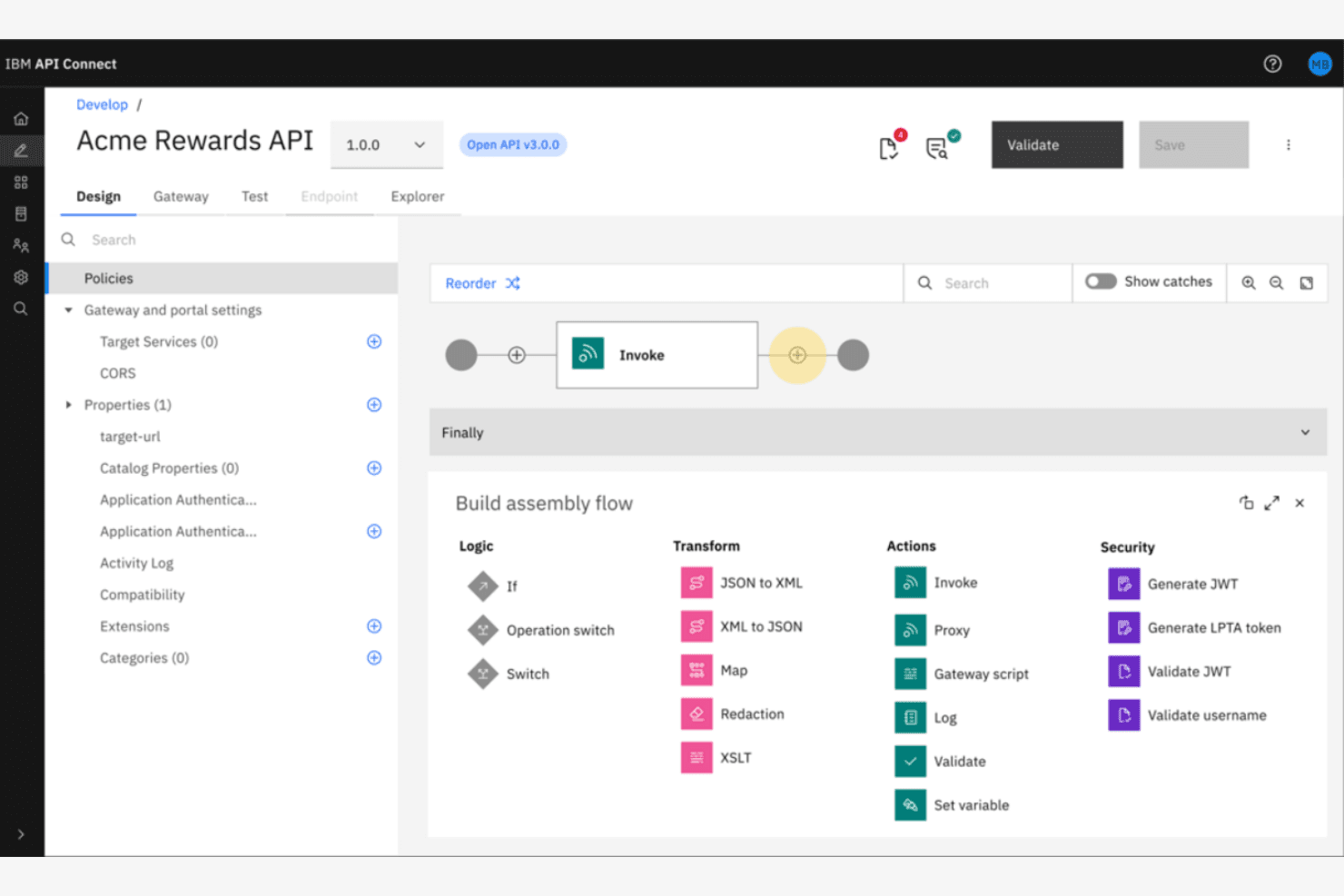
IBM API Connect provides a visual builder to design and configure API flows. IBM API Connect is an AI-powered API management platform that covers the full API lifecycle—from design and security to deployment and monetization—across hybrid, multicloud, and on-premises environments.
Who Is IBM API Connect Best For?
IBM API Connect is a strong fit for enterprise teams in regulated industries—like banking, insurance, and financial services—that need centralized governance across the full API lifecycle.
Why I Picked IBM API Connect
IBM API Connect earns its spot on my shortlist because no other tool I've reviewed covers the full API lifecycle with this level of governance depth. I'm particularly impressed by how it handles policy enforcement at every stage, from design through retirement, using DataPower's security layer for OAuth 2.0, JWT, and OIDC across hybrid and multicloud environments. The AI-powered API Studio, backed by watsonx.ai, even automates policy generation and validation before an API ships.
IBM API Connect Key Features
- Federated gateway management: Govern APIs running on third-party runtimes—including Kong and Apigee—from a single control plane.
- Plan-based rate limiting: Set hard and soft rate limits at the plan, API, or assembly level to give different consumer tiers different quotas.
- Stripe monetization integration: Sell API product plans directly to developers through a built-in Stripe Subscription Billing integration.
- DataPower Nano Gateway: Deploy a lightweight, zero-trust gateway alongside microservices with under 20 MB of RAM usage and sub-second startup.
IBM API Connect Integrations
Documented integrations include Kong Gateway, Apigee SaaS, Stripe Subscription Billing, Azure Key Vault, HashiCorp Vault, AWS Secrets Manager, OpenSearch, Elasticsearch, Apache Kafka, and syslog. API Studio also supports CI/CD workflows through CLI commands.
Pros and Cons
Pros:
- Flexible hybrid and multicloud deployment
- Strong OAuth and JWT enforcement
- End-to-end lifecycle governance
Cons:
- Self-managed upgrades can be labor-intensive
- Complex setup requires specialist expertise
Learn more about IBM API Connect: Best for connecting diverse enterprise systems
- Free trial + free demo available
- Pricing upon request
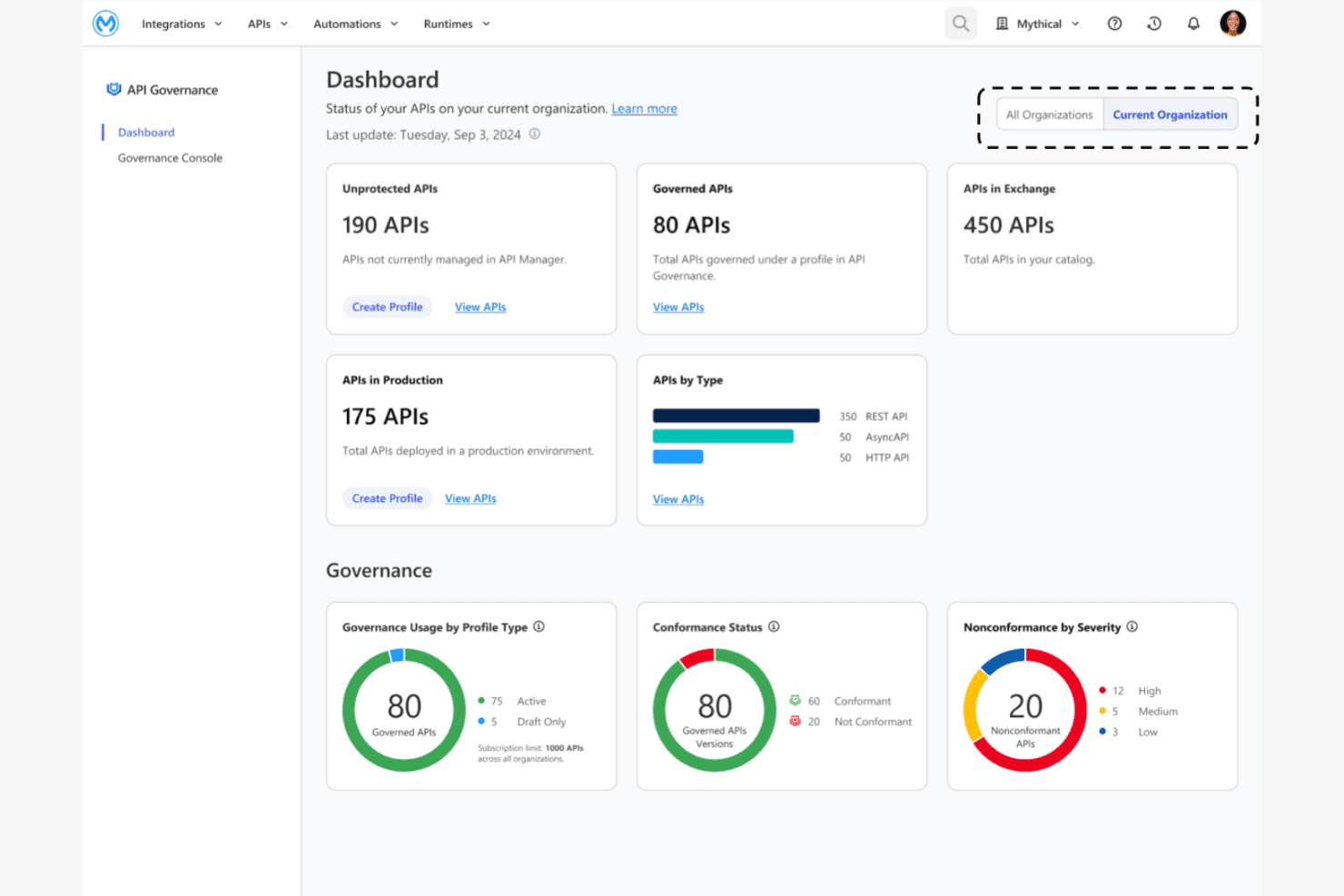
MuleSoft API Governance monitors API compliance, security, and governance metrics. MuleSoft Anypoint Platform is an API gateway and integration platform that combines API management, traffic control, protocol translation, developer portal publishing, and multi-gateway federation in a single environment.
Who Is MuleSoft Best For?
MuleSoft is a strong fit for enterprise IT and architecture teams managing complex integration landscapes with a mix of legacy systems, modern APIs, and SaaS platforms.
Why I Picked MuleSoft
I picked MuleSoft as one of the best because no other gateway on this list handles protocol mediation across as many system types. When your architecture spans SOAP-based ERPs, modern REST microservices, and gRPC backends, DataWeave handles the transformation layer so each system speaks the same language without custom code. I also like that Omni Gateway can govern existing AWS, Azure, Apigee, and Kong gateways through a single control plane, which means you're not forced to migrate legacy infrastructure to get centralized policy enforcement.
MuleSoft Key Features
- SLA-tiered rate limiting: Sets per-client request limits tied to SLA tiers and contracts in API Manager, using client ID and secret to identify consumers.
- Anypoint Monitoring: Provides real-time dashboards, distributed tracing, and OpenTelemetry export to tools like Datadog, Splunk, and New Relic.
- Automated policy enforcement: Applies a consistent baseline set of security and governance policies across every API instance in an environment automatically.
- Anypoint Exchange catalog: A central repository where teams publish, discover, and reuse APIs, connectors, templates, and MCP servers across the organization.
MuleSoft Integrations
MuleSoft offers native integrations with AWS API Gateway, Azure API Management, Apigee, Kong, Okta, PingFederate, Datadog, Splunk, and New Relic. It also supports Istio, Envoy, and API-based custom integrations.
Pros and Cons
Pros:
- Connects API policies to SLA contracts
- Governs multiple gateways without migration
- Mediates SOAP, REST, and gRPC traffic
Cons:
- Self-managed deployments shift operations onto customers
- DataWeave and Anypoint Studio demand specialized expertise
Learn more about MuleSoft: 9Best for API monetization and billing integration
Kong
- 30-day free trial + free demo available
- Pricing upon request
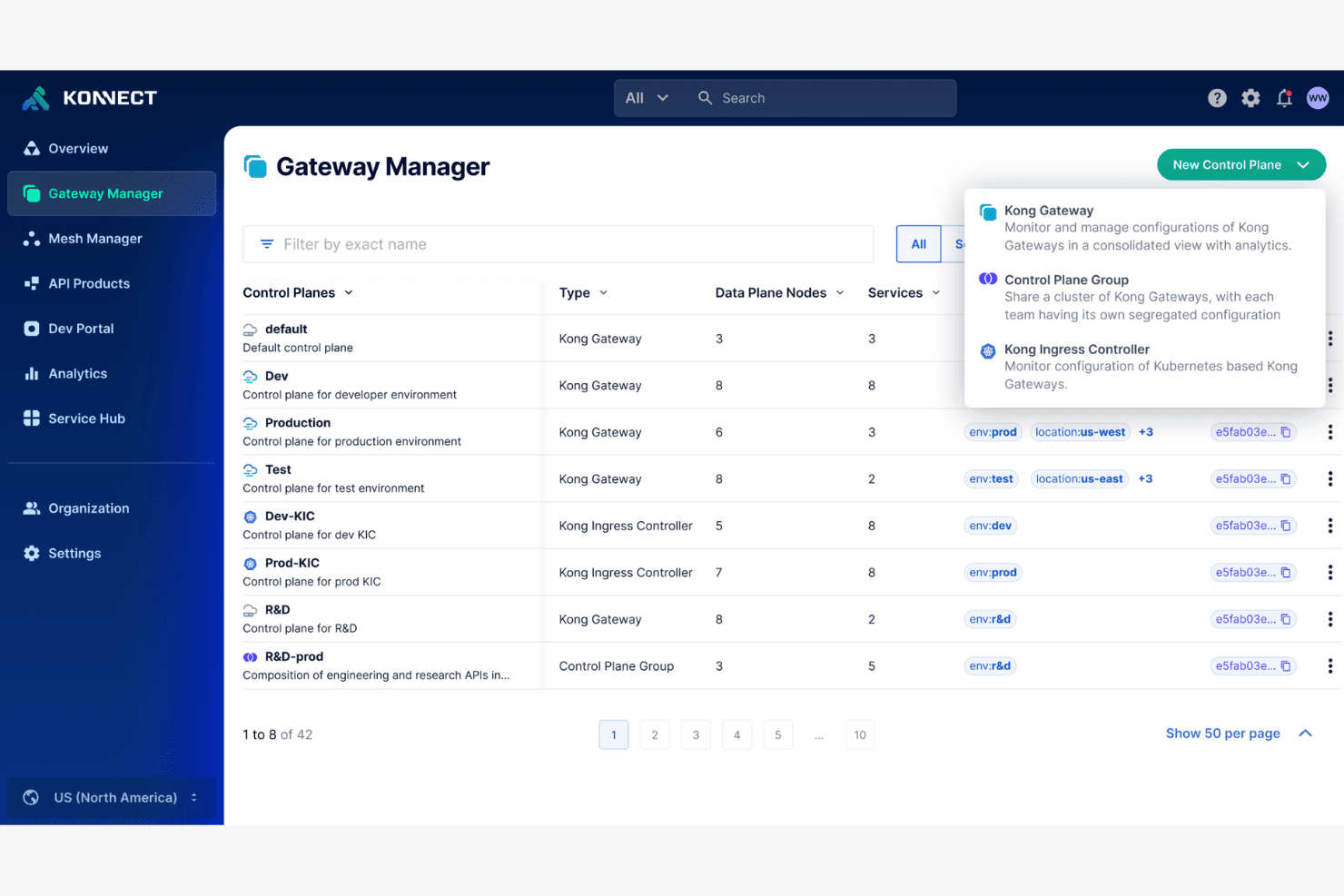
Kong Gateway Manager provides a dashboard to manage API gateways. Kong is an API gateway platform that handles request routing, traffic management, rate limiting, protocol translation, and developer portal publishing across cloud, hybrid, and Kubernetes environments.
Who Is Kong Best For?
Kong is a strong fit for platform and backend engineering teams at mid-size to enterprise companies that need to expose APIs externally and charge for usage.
Why I Picked Kong
I've included Kong in my top picks because its acquisition of OpenMeter gives it a native metering and billing layer that most API gateways simply don't have. I can set up usage-based or tiered pricing plans, track real-time consumption, and connect directly to Stripe or Salesforce without stitching together separate tools. The Entitlement Enforcement plugin then automatically blocks requests the moment a consumer's plan limit is reached, which makes monetization feel like a first-class gateway capability rather than an afterthought.
Kong Key Features
- Rate Limiting Advanced plugin: Sets multiple concurrent rate limits using sliding windows, with Redis-backed counters and per-consumer-group tiers for usage differentiation.
- Multi-protocol support: Routes and translates traffic across REST, gRPC, GraphQL, WebSockets, SOAP, and Kafka from a single gateway.
- Konnect Developer Portal: Publishes branded API catalogs with interactive OpenAPI and AsyncAPI docs, self-service sign-up, and built-in usage analytics.
- decK CLI and Terraform provider: Manages gateway configuration declaratively through GitOps and CI/CD pipelines for repeatable, version-controlled deployments.
Kong Integrations
Kong has native integrations with Stripe, Salesforce, HubSpot, PayPal, Adyen, OpenTelemetry, Prometheus, and Datadog. It supports custom connectivity through its Admin API, decK CLI, Terraform provider, Kubernetes operator, and plugin development kit.
Pros and Cons
Pros:
- Enforces usage entitlements at the gateway
- Supports REST, gRPC, GraphQL, and Kafka
- Handles high-volume traffic with low overhead
Cons:
- Routes, services, and plugins require careful setup
- Enterprise features split capabilities across tiers
Learn more about Kong: Best for API monetization and usage-based billing
- Free trial available
- Usage-based pricing
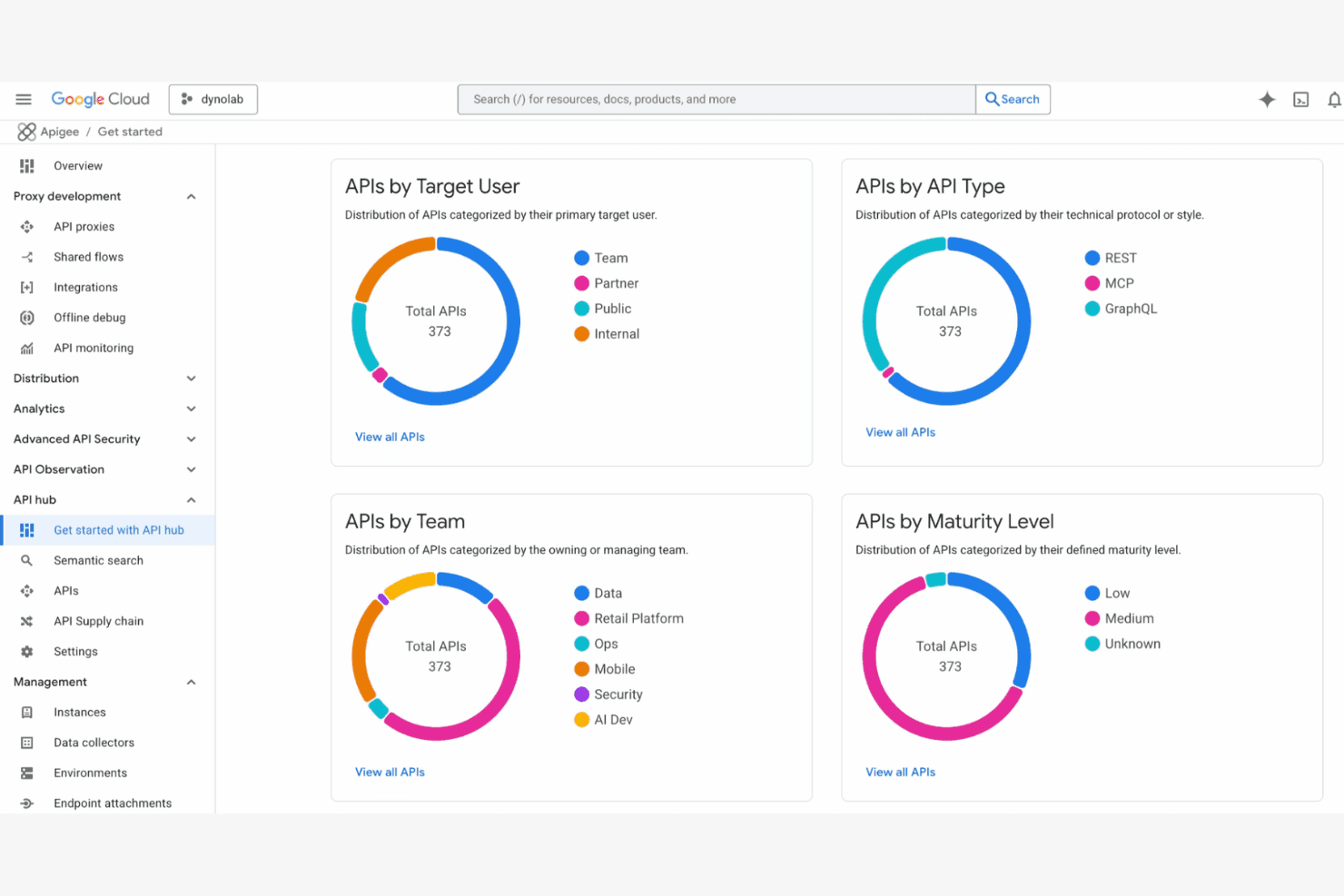
Apigee tracks and analyzes API usage, ownership, and maturity metrics. Google Apigee API Management is an enterprise API gateway that combines proxy-based traffic management, a 50+ policy security library, analytics, developer portals, and built-in API monetization tools.
Who Is Google Apigee API Management Best For?
Apigee is a strong fit for enterprise platform and API product teams that need to package APIs as revenue-generating products with tiered rate plans, usage-based billing, and developer portals.
Why I Picked Google Apigee API Management
I picked Google Apigee API Management as one of the best because it's the only gateway on this list with monetization built directly into the runtime. You can define tiered rate plans with setup fees, recurring charges, and usage-based billing, then enforce them at the proxy layer using the MonetizationLimitsCheck policy—no external billing workaround needed. I also like how API products let you package endpoints into free and paid tiers, each with its own quota, tied to a developer's API key.
Google Apigee API Management Key Features
- 50+ security policies: Apigee includes a library of pre-built policies covering OAuth 2.0, JWT, SAML, IP access control, and threat protection that you can apply directly to any proxy.
- SpikeArrest and quota controls: SpikeArrest smooths sudden traffic spikes, while Quota policies cap usage per consumer or API product at configurable thresholds.
- 14-month analytics retention: built-in dashboards track latency, error rates, and transaction data for up to 14 months, with export options to BigQuery and Cloud Storage.
- Hybrid and multi-cloud deployment: Apigee hybrid lets you run the runtime on your own Kubernetes cluster while Google manages the control plane, keeping API traffic on your network.
Google Apigee API Management Integrations
Google Apigee API Management offers native integrations with Cloud IAM, Cloud Logging, Cloud Monitoring, BigQuery, Cloud Storage, Pub/Sub, Dialogflow, Kubernetes, Envoy, and Istio. Its management and Analytics APIs support custom integrations and automation.
Pros and Cons
Pros:
- Hybrid deployment keeps runtime traffic on your network
- Analytics retains detailed usage data for 14 months
- Built-in API monetization supports tiered rate plans
Cons:
- GraphQL lacks federation across multiple schemas
- gRPC support is limited to pass-through
Learn more about Google Apigee API Management:
Diğer API Ağ Geçidi Yazılımları
Aşağıda kısa listeme giremeyen ancak yine de göz atmaya değer bazı ek API ağ geçidi yazılımı seçenekleri yer almaktadır:
- 11WSO2 API ManagerBest for open-source API management
- 12TykBest for deploying self-hosted gateways in minutes
- 13ZuploBest for monetizing APIs with built-in billing
- 14Axway Amplify API ManagementBest for governing APIs across multiple vendors
- 15Solo.io Gloo GatewayBest for Kubernetes-native service mesh environments
- 16Axway API GatewayBest for APIs in regulated industries
- 17WSO2 API PlatformBest for API monetization and multi-gateway control
- 18Traefik Hub API GatewayBest for GitOps-driven API access control
How I Evaluate API Gateway Software
I split my evaluation into three parts, weighting core functionality most: route requests across backends and authenticate consumers with clear access policies. Next, I look for differentiators such as API monetization or multi-cloud deployment. Finally, I consider support, onboarding, deployment options, and pricing value.
Core Functionality (Table Stakes For This List)
When I'm selecting tools for my list, I score each one on a scale from 0 (does not offer the functionality) to 5 (excels in this area) for each core functionality listed below. I then convert the total into a percentage to help assess each tool's overall fit, with extra weight on any functionalities I’ve deemed essential.
- Request Routing (Essential): I look for rule-based routing, load balancing, and failover, such as shifting traffic to a healthy backend during a deployment.
- Authentication & Access (Essential): I assess support for OAuth, JWT, and API keys, plus policies that distinguish partner apps from internal services.
- Rate Limiting: Per-consumer and per-plan limits matter when a public API's traffic must be capped without blocking internal workloads.
- Monitoring & Analytics: I check whether teams can inspect latency, errors, and usage trends, then trace spikes to an endpoint or consumer.
- Protocol Translation: For mixed estates, I look for configurable mediation between formats such as REST and SOAP, not just request forwarding.
- Developer Portal: I evaluate whether developers can find API specs, try requests, and self-serve credentials before integrating an API.
Once I have a list of tools that meet the criteria, I consider what sets each platform apart.
Differentiating Factors (What Sets Vendors Apart)
Here's how I compare and contrast different vendors:
Standout Features
API monetization is a big one. I check whether a platform lets you meter usage, attach billing, and package APIs into tiered plans without bolting on a third-party payment system. Multi-cloud and edge deployment matters just as much—I evaluate whether a gateway runs consistently across providers and edge nodes, which is key for teams serving latency-sensitive consumers across regions. I also look at GraphQL federation support, since teams stitching multiple schemas behind one endpoint need a gateway that handles composition natively rather than through workarounds.
Beyond Features
Deployment flexibility matters a lot. I check whether a gateway supports Kubernetes-native, on-premise, and air-gapped setups, since teams in regulated industries often can't run everything in a public cloud. Ecosystem integrations are just as telling—I look for native connectors to CI/CD pipelines, observability tools like Prometheus or Datadog, and identity providers such as Okta or Azure AD. I also evaluate how well a platform packages APIs into versioned, tiered product offerings with usage reporting tied to business KPIs.
API Ağ Geçidi Yazılımı Nasıl Seçilir?
Uzun özellik listeleri ve karmaşık fiyatlandırma yapıları içinde kaybolmak kolaydır. Kendinize özgü yazılım seçim sürecinizde ilerlerken odağınızı korumanıza yardımcı olmak için göz önünde bulundurmanız gereken faktörleri içeren bir kontrol listesi hazırladık:
| Faktör | Dikkat Edilmesi Gerekenler |
|---|---|
| FaktörÖlçeklenebilirlik | Dikkat Edilmesi GerekenlerÇözüm, büyük ölçüde yeniden yapılandırma veya maliyet artışları gerektirmeden mevcut ve öngörülen API trafiği hacimlerinizi karşılayabilir mi? Gelecekteki büyümeyi ve en yoğun kullanım senaryolarını göz önünde bulundurun. |
| FaktörEntegrasyonlar | Dikkat Edilmesi GerekenlerAraç; kimlik sağlayıcıları, izleme araçları veya arka uç hizmetleri gibi mevcut sistemlerinize yerel olarak bağlanabiliyor mu? Teknoloji yığınınızla uyumluluğunu kontrol edin. |
| FaktörÖzelleştirilebilirlik | Dikkat Edilmesi GerekenlerPolitikalar, iş akışları ve uzantılar üzerinde ne kadar kontrol sahibi olmanız gerekiyor? Benzersiz iş gereksinimlerinize uyacak şekilde platformu değiştirip genişletebileceğinizi değerlendirin. |
| FaktörKullanım kolaylığı | Dikkat Edilmesi GerekenlerEkibiniz kapsamlı bir eğitim almadan API'leri yapılandırabilecek, dağıtabilecek ve yönetebilecek mi? Ekibinizin becerileriyle örtüşen anlaşılır arayüzler ve mantıklı iş akışları arayın. |
| FaktörUygulama ve kullanıma alma | Dikkat Edilmesi GerekenlerSistemi çalışır duruma getirmek ne kadar sürecek? Geçiş desteğini, belgelerin kalitesini ve kullanıma alma kaynaklarının veya profesyonel hizmetlerin bulunabilirliğini göz önünde bulundurun. |
| FaktörMaliyet | Dikkat Edilmesi GerekenlerKullanımınız arttıkça fiyatlandırma kademeleri şeffaf ve öngörülebilir mi? Trafik, kullanıcılar veya gelişmiş özelliklerle ilgili gizli ücretlere dikkat edin. Toplam sahip olma maliyetini karşılaştırın. |
| FaktörGüvenlik önlemleri | Dikkat Edilmesi GerekenlerPlatform, gerekli kimlik doğrulama, yetkilendirme ve şifreleme standartlarınızı destekliyor mu? Hassas verileri ve uyumluluk gereksinimlerini nasıl ele aldığını değerlendirin. |
| FaktörDestek hizmetlerinin kullanılabilirliği | Dikkat Edilmesi GerekenlerHangi destek kanalları sunuluyor ve bunlar çalışma saatlerinizde kullanılabilir mi? Sağlayıcının yanıt verme hızını ve yardım kaynaklarının kalitesini göz önünde bulundurun. |
API Ağ Geçidi Yazılımı Nedir?
API ağ geçidi yazılımı, istemciler ile arka uç hizmetleri arasındaki API trafiğini yöneten, yönlendiren ve güvenliğini sağlayan bir araçtır. API istekleri için tek bir giriş noktası görevi görür; kimlik doğrulama, hız sınırlama, izleme ve protokol dönüştürme işlemlerini gerçekleştirir.
Ekipler, API yönetimini merkezileştirmek, güvenlik politikalarını uygulamak ve çeşitli arka uç sistemleriyle entegrasyonu kolaylaştırmak için API ağ geçidi yazılımı kullanır. Bu da API'lere dayalı olarak uygulamaları ve hizmetleri birbirine bağlayan kuruluşlar için bu yazılımı vazgeçilmez kılar.
Özellikler
API ağ geçidi yazılımı seçerken aşağıdaki temel özelliklere dikkat edin:
- İstek yönlendirme: Gelen API isteklerini, tanımlanan kurallara göre doğru arka uç hizmetine yönlendirerek verilerin verimli ve doğru şekilde iletilmesini sağlar.
- Kimlik doğrulama ve yetkilendirme: Kullanıcı kimliklerini doğrular ve erişim denetimlerini uygular; API'leri yetkisiz kullanıma ve veri ihlallerine karşı korur.
- Hız sınırlama ve kısıtlama: Bir istemcinin belirli bir zaman diliminde gönderebileceği istek sayısını denetleyerek kötüye kullanımı önler ve hizmetin kararlılığını korur.
- API trafiği izleme: API kullanımını, performansını ve hata oranlarını takip edip günlüğe kaydederek ekiplerin sistem durumunu ve kullanıcı davranışlarını görmesini sağlar.
- Protokol dönüştürme: Farklı istemci ve arka uç gereksinimlerini desteklemek için istekleri ve yanıtları REST, SOAP veya gRPC gibi farklı protokoller arasında dönüştürür.
- Yük dengeleme: Gelen API trafiğini birden fazla arka uç sunucusuna dağıtarak güvenilirliği artırır ve sunucuların aşırı yüklenmesi riskini azaltır.
- API sürüm yönetimi: API'lerin birden fazla sürümünü aynı anda destekleyerek ekiplerin mevcut tüketicileri kesintiye uğratmadan uç noktaları güncellemesine veya kullanımdan kaldırmasına olanak tanır.
- Geliştirici portalı: Geliştiricilerin API belgelerine erişmesi, uç noktaları test etmesi ve erişim talebinde bulunması için self servis bir arayüz sunarak işe alıştırma ve iş birliği süreçlerini kolaylaştırır.
- Güvenlik politikalarının uygulanması: API'leri yaygın güvenlik açıklarına karşı korumak için IP filtreleme, veri şifreleme ve tehdit algılama gibi güvenlik önlemlerini uygular.
- Analiz ve raporlama: API performansı, kullanım eğilimleri ve güvenlik olayları hakkında panolar ve raporlar sunarak ekiplerin bilinçli kararlar almasına ve API stratejilerini iyileştirmesine yardımcı olur.
Avantajlar
API ağ geçidi yazılımını uygulamak, ekibiniz ve işletmeniz için çeşitli avantajlar sağlar. Yararlanabileceğiniz avantajlardan bazıları şunlardır:
- Merkezi API yönetimi: Tüm API'leriniz için kimlik doğrulama, yönlendirme ve izlemeyi tek bir denetim noktasından yöneterek yönetim yükünü azaltın.
- Geliştirilmiş güvenlik: Hassas verileri korumak ve yetkisiz erişimi önlemek için kimlik doğrulama ve hız sınırlama gibi tutarlı güvenlik politikalarını uygulayın.
- Sadeleştirilmiş entegrasyon: Birleşik istek yönlendirme ve protokol dönüştürme özellikleri aracılığıyla farklı arka uç sistemlerini ve protokollerini birbirine bağlayın.
- Geliştirilmiş ölçeklenebilirlik: API trafiğini dağıtın ve yükleri birden fazla sunucu arasında dengeleyerek işletmenin büyümesini ve yoğun trafik senaryolarını destekleyin.
- Daha hızlı geliştirici işe alıştırma: Geliştiricilere self servis portallar ve anlaşılır belgeler sunarak API'lerinize erişmelerini ve bunları kullanmalarını kolaylaştırın.
- Tutarlı sürüm denetimi: Birden fazla API sürümünü aynı anda yöneterek sorunsuz güncellemelere ve geriye dönük uyumluluğa olanak tanıyın.
- Uygulanabilir içgörüler: Analiz ve izleme araçları aracılığıyla API kullanımı ve performansı hakkında görünürlük elde ederek API stratejinizi iyileştirmenize yardımcı olun.
Maliyetler ve Fiyatlandırma
API ağ geçidi yazılımı seçmek, mevcut çeşitli fiyatlandırma modellerini ve planları anlamayı gerektirir. Maliyetler özelliklere, ekip büyüklüğüne, eklentilere ve diğer unsurlara göre değişir. Aşağıdaki tabloda API ağ geçidi yazılımı çözümlerinde yaygın planlar, bunların ortalama fiyatları ve genellikle sundukları özellikler özetlenmiştir:
API Ağ Geçidi Yazılımı İçin Plan Karşılaştırma Tablosu
| Plan Türü | Ortalama Fiyat | Yaygın Özellikler |
|---|---|---|
| Plan TürüÜcretsiz Plan | Ortalama Fiyat$0 | Yaygın ÖzelliklerTemel istek yönlendirme, sınırlı API çağrıları, topluluk desteği ve temel izleme. |
| Plan TürüKişisel Plan | Ortalama Fiyat$10-$50/ay | Yaygın ÖzelliklerTek kullanıcı erişimi, kimlik doğrulama ve yetkilendirme, temel analiz ve sınırlı entegrasyonlar. |
| Plan Türüİşletme Planı | Ortalama Fiyat$100-$500/ay | Yaygın ÖzelliklerÇok kullanıcılı destek, gelişmiş güvenlik politikaları, hız sınırlama, API sürüm yönetimi ve e-posta desteği. |
| Plan TürüKurumsal Plan | Ortalama Fiyat$1,000-$5,000/ay | Yaygın ÖzelliklerÖzel SLA'ler, özel hesap yönetimi, gelişmiş analiz, çok kiracılı yapı ve öncelikli destek. |
API Ağ Geçidi Yazılımı SSS
API ağ geçidi yazılımı hakkında sık sorulan soruların bazı yanıtları şunlardır:
API ağ geçidi yazılımı, API yönetim platformundan nasıl farklıdır?
API ağ geçidi yazılımı, trafiği yönlendirme, güvenliğini sağlama ve izleme gibi teknik temel unsurlara odaklanır. Buna karşılık API yönetim platformları; geliştirici portalları, para kazanma ve tam yaşam döngüsü yönetimi gibi daha kapsamlı özellikler sunar. Yüksek büyüme gösteren bir girişimden büyük kurumsal şirketlere kadar pek çok kuruluş, eksiksiz denetim sağlamak için ikisini birlikte kullanır.
API ağ geçidi yazılımı hem dahili hem de harici API'leri yönetebilir mi?
Evet, çoğu API ağ geçidi yazılımı hem dahili hem de harici API’leri yönetebilir. Dahili trafik için, hizmetler arası iletişimi yönetmek üzere ağ geçidiyle birlikte genellikle bir hizmet ağı kullanılır; ağ geçidi ise kümeye giren harici istekler için giriş denetleyicisini yönetir.
API ağ geçidi kullanmazsam başlıca güvenlik riskleri nelerdir?
Bir ağ geçidi olmadığında API’ler doğrudan dışa açılır ve bu da yetkisiz erişim ile DDoS saldırıları riskini artırır. Ağ geçidi yazılımı, JWT (JSON Web Tokens) gibi protokolleri ve hız sınırlamasını zorunlu kılarak kimlik doğrulama ile yetkilendirmeyi merkezileştirir; böylece verilerinize yalnızca doğrulanmış kullanıcıların veya yapay zekâ aracıların erişebilmesini sağlar.
Ekibimin API ağ geçidi yazılımına ihtiyacı olup olmadığını nasıl anlarım?
Ekibiniz birden fazla API yönetiyorsa, tutarlı güvenlik politikaları uygulaması gerekiyorsa veya hizmetler arasındaki entegrasyonu basitleştirmek istiyorsa API ağ geçidi yazılımı yardımcı olabilir. Trafik düzenleriniz hakkında ayrıntılı gözlemlenebilirlik sağlar ve önbelleğe alma yoluyla performansı artırır; bu da arka uç hizmetleriniz üzerindeki yükü azaltır.
Mevcut API'leri bir API ağ geçidine taşımak zor mudur?
Hayır, çoğu API ağ geçidi yazılımı ekiplerin mevcut API’leri sisteme dahil etmesine yardımcı olmak için geçiş araçları, belgeler ve destek sunar. Özellikle yüksek trafikli veya görev açısından kritik hizmetlerde sorunsuz geçişler sağlamak için planlama ve test önemlidir.