

Se está a explorar opções para além do Aha!, é provável que esteja a enfrentar desafios na gestão eficaz dos seus mapas de produto. Precisa de uma ferramenta que se adapte às necessidades específicas da sua equipa, quer isso signifique uma melhor colaboração, interfaces mais intuitivas ou funcionalidades alinhadas com o seu setor.
Com base na minha experiência, encontrar o software certo pode ser avassalador, dada a quantidade de opções disponíveis. O meu objetivo é filtrar o ruído através de informações cuidadosamente pesquisadas sobre as melhores alternativas ao Aha!.
Neste artigo, vou guiá-lo pelas principais opções que poderão adaptar-se melhor à sua empresa. Encontrará análises imparciais centradas em responder aos desafios específicos da sua equipa e em ajudá-lo a tomar uma decisão informada.
O que é o Aha!?
O Aha! é um software de mapas de produto concebido para ajudar as equipas a planear e executar eficazmente as suas estratégias de produto. É normalmente utilizado por gestores de produto, programadores e profissionais de marketing que precisam de uma visão clara e de alinhamento relativamente aos objetivos do produto. Funcionalidades como a definição de objetivos, o planeamento de cronogramas e a elaboração de relatórios apoiam os esforços da sua equipa na organização e priorização de tarefas. De um modo geral, o Aha! proporciona uma abordagem estruturada à gestão de mapas de produto, garantindo que todos estão alinhados.
Why Trust Our Software Recommendations
6,700+
Reviews
20
Industry experts
16+
Evaluation factors
14
Years
Our team has been testing and reviewing software since 2012. As product managers ourselves, we know how difficult—and important—it is to choose the right software.
For this guide, we evaluated tools using hands-on testing and independent research, scoring tools using our selection criteria.
Our reviews reflect our human editorial judgment, not a sales pitch.
Expert reviewers:
- Andrew LumbySenior TPM
- Cristiano ValimSenior UI/UX Lead


Tabela de comparação das alternativas ao Aha!
Esta tabela de comparação apresenta os detalhes de preços das minhas principais alternativas ao Aha!.
| Tool | Best For | Trial Info | Price | ||
|---|---|---|---|---|---|
| 1 | Best for publishing Jira roadmaps and updates | Free plan + 30-day trial + demo available | From $1.10/user/month | Website | |
| 2 | Best for no-code app building | Free plan + free demo available | From $20/user/month (billed annually) | Website | |
| 3 | Best for feedback-powered roadmaps | Free plan available | From $7/per maker/month | Website | |
| 4 | Best for customer feedback integration | Free plan + free demo available | From $19/user/month (billed annually) | Website | |
| 5 | Best for strategic roadmapping | Free demo available | Pricing upon request | Website | |
| 6 | Best for Agile portfolio management | Free trial available | Pricing upon request | Website | |
| 7 | Best for idea management | 7-day free trial + free demo available | From $24/user/month (billed annually) | Website | |
| 8 | Best for manufacturing roadmaps | Free demo available | From $99/user/month | Website | |
| 9 | Best for product strategy alignment | Free demo available | Pricing upon request | Website | |
| 10 | Best for prioritization tools | Free demo available | Pricing upon request | Website |


Análises das melhores alternativas ao Aha!
Apresentamos abaixo os meus resumos detalhados das melhores alternativas ao Aha! que entraram na minha lista. As minhas análises oferecem uma visão detalhada das principais funcionalidades, vantagens & desvantagens, integrações e casos de utilização ideais de cada ferramenta, para o ajudar a encontrar a melhor opção para si.
 Best for publishing Jira roadmaps and updates
- Free plan + 30-day trial + demo available
- From $1.10/user/month
Visit WebsiteCustomer Rating:5/5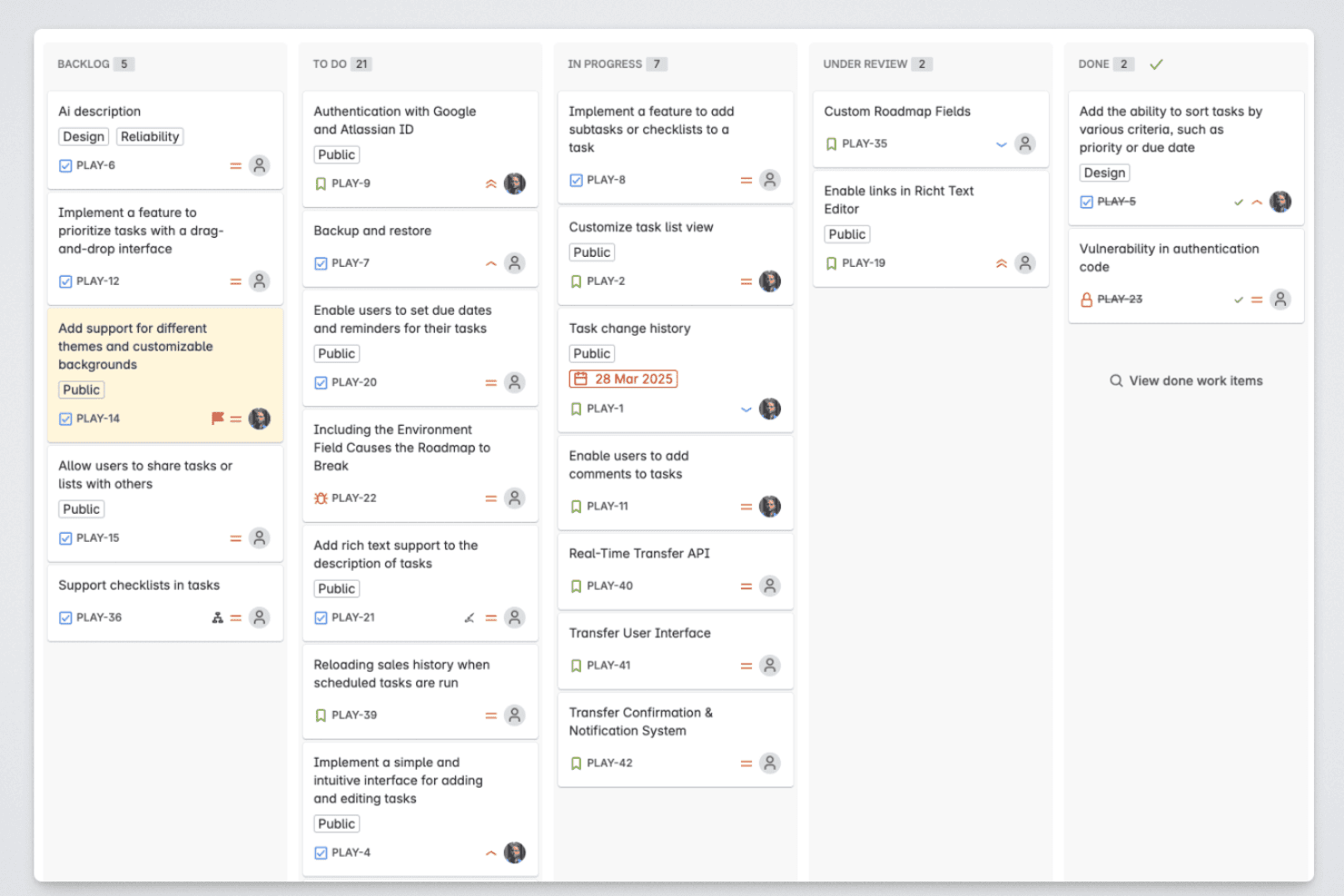
Released lets product managers organize roadmap items across backlog, in-progress, review, and completed stages. Released is a product management platform for Jira-centered teams that need lightweight roadmapping, customer feedback, and stakeholder communication without the complexity of a heavyweight Aha! alternative.
Who Is Released Best For?
Released suits product managers and product operations teams that collect customer feedback and share roadmap context with Jira stakeholders.
Why Released Is a Good Best Aha! Alternatives
I picked Released because I can publish Jira roadmaps and updates without moving teams into a separate planning system. I use its roadmap views to give stakeholders clear delivery context, then share progress updates alongside customer feedback. That keeps Jira work connected to the product story stakeholders need to follow.
Released Key Features
- AI release notes: Generate release notes from Jira tickets.
- Public pages: Publish product content on your website.
- No-login access: Let external viewers access shared content without Jira accounts.
- Atlassian Forge: Run the app on Atlassian’s cloud platform.
Released Integrations
Released is built as a Jira app, with native integration for Jira issues and projects. No additional native integrations or API for custom integrations are clearly documented.
Pros and Cons
Pros:
- No-login pages simplify stakeholder access
- AI reduces manual release-note drafting
- Roadmaps stay tied to delivery work
Cons:
- Some requested workflow features remain unavailable
- Limited depth for strategic portfolio planning
Learn more about Released: Best for no-code app building
- Free plan + free demo available
- From $20/user/month (billed annually)
Visit WebsiteCustomer Rating:4.6/5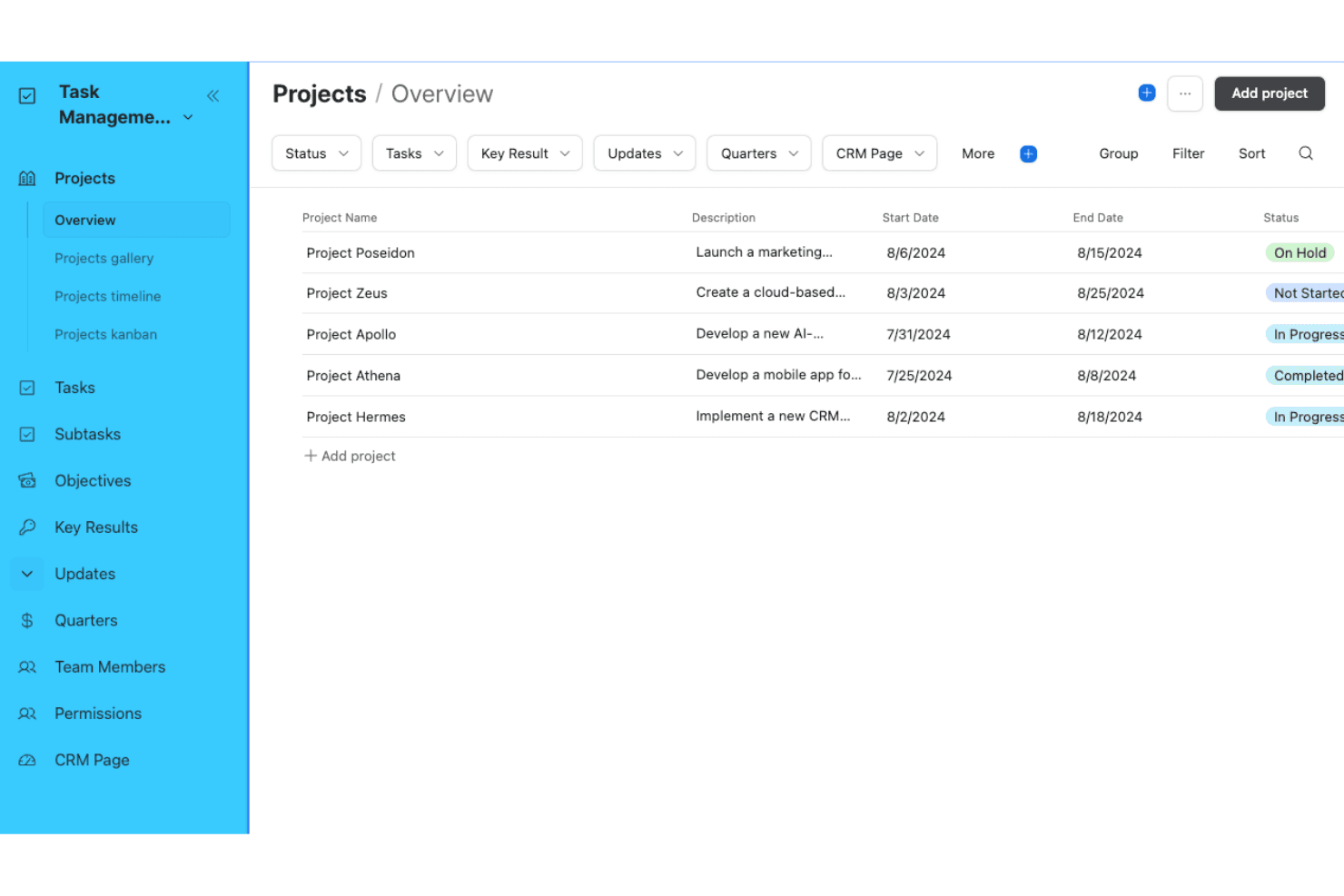
Airtable is a flexible, spreadsheet-like tool that lets teams build workflows and manage projects without writing code. Airtable is a flexible work management platform for product teams that need to organize product data, coordinate workflows, and build tailored tools without relying on engineering resources.
Who Is Airtable Best For?
Product managers and operations teams can use Airtable to build tailored internal apps without depending on engineering for every workflow change.
Why Airtable Is a Good Best Aha! Alternatives
I picked Airtable because its no-code app building helps product teams turn product data into tailored internal tools. I use linked records, custom Interfaces, and automations to create launch trackers, intake portals, and prioritization workflows without waiting for engineering support.
Airtable Key Features
- Custom views: Display records in grid, calendar, gallery, kanban, or timeline formats.
- Form builder: Create branded forms that capture structured submissions directly into a base.
- Record-level permissions: Control who can view, edit, or comment on specific records.
- Revision history: Review previous record values and restore earlier versions when needed.
Airtable Integrations
Airtable offers native integrations with Box and Google Drive, plus partner extensions for Formstack, Loom, Miro, Pexels, and Typeform. It also supports Make and Workato, connects with Zapier, and provides a Web API for custom integrations.
Pros and Cons
Pros:
- Forms simplify structured customer feedback collection
- Custom interfaces support tailored product workflows
- Flexible relational structure for product data
Cons:
- Complex bases require careful schema design
- Lacks dedicated product roadmapping capabilities
Learn more about Airtable: Best for feedback-powered roadmaps
- Free plan available
- From $7/per maker/month
Visit WebsiteCustomer Rating:4.9/5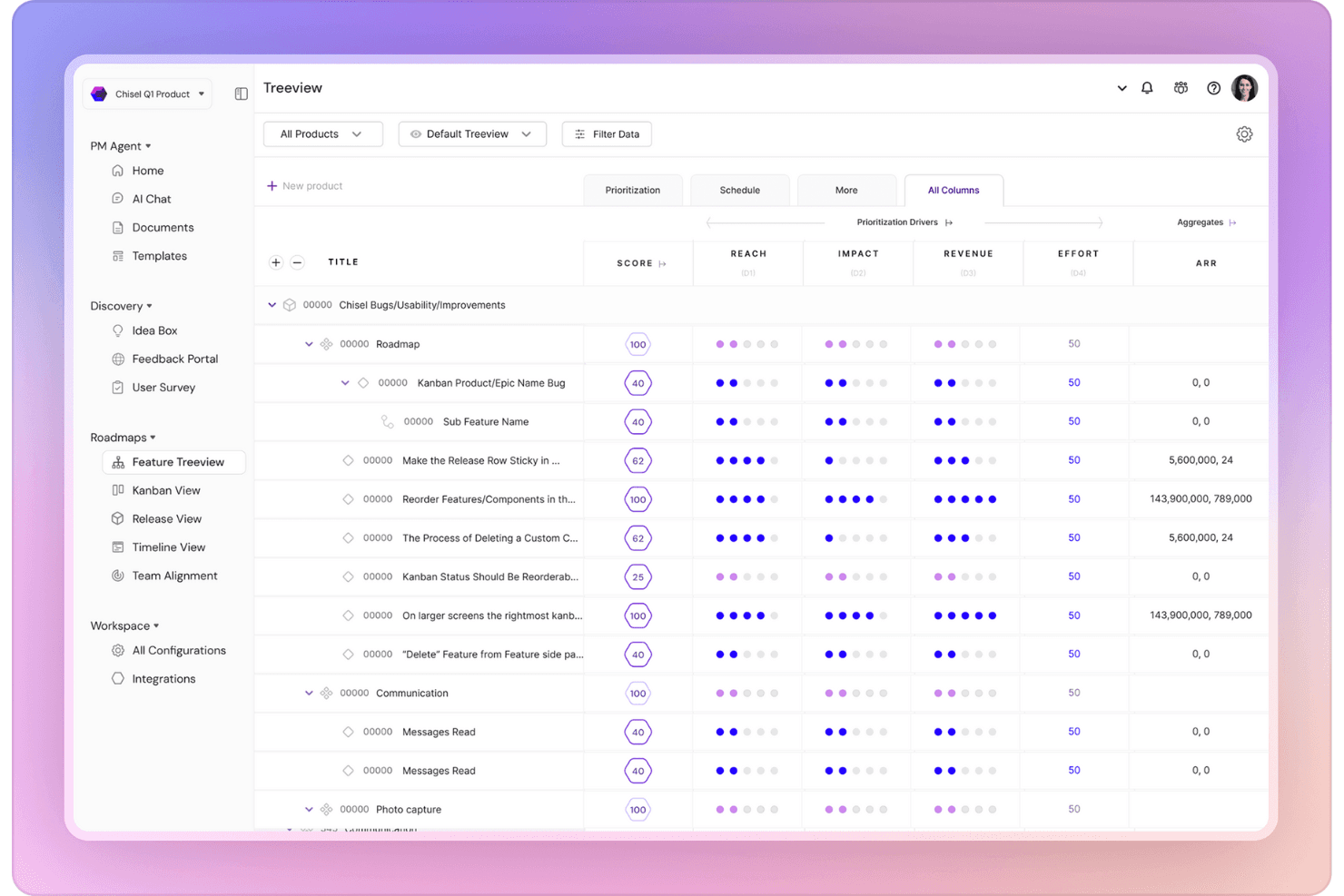
Chisel offers a Treeview feature for organizing product components. For product teams seeking an Aha! alternative, Chisel combines product planning, customer insights, prioritization, and agile delivery tools to connect strategy with execution.
Who Is Chisel Best For?
Product teams that need to collect customer feedback, connect it to product ideas, and prioritize roadmap decisions in one workspace.
Why Chisel Is a Good Best Aha! Alternatives
I picked Chisel because its feedback-powered roadmaps connect customer requests with product ideas and prioritization decisions. I like how my team can collect feedback, score opportunities, and turn validated ideas into roadmap items. That keeps customer evidence visible when we decide what moves into agile delivery.
Chisel Key Features
- Timeline view: Arrange initiatives and releases against dates.
- Kanban view: Move work items across customizable workflow columns.
- Sprint planning: Assign work to sprints and track delivery status.
- Jira integration: Link Chisel work items with Jira issues.
Chisel Integrations
Chisel integrates with Jira, allowing teams to link Chisel work items with Jira issues. Native integrations beyond Jira and API support are not clearly documented.
Pros and Cons
Pros:
- Offers timeline, Kanban, and sprint planning views
- Supports structured prioritization with scoring frameworks
- Connects customer feedback to roadmap decisions
Cons:
- Roadmap presentation feels less polished than Aha!
- Feedback workflows require careful initial configuration
Learn more about Chisel: Best for customer feedback integration
- Free plan + free demo available
- From $19/user/month (billed annually)
Visit WebsiteCustomer Rating:4.5/5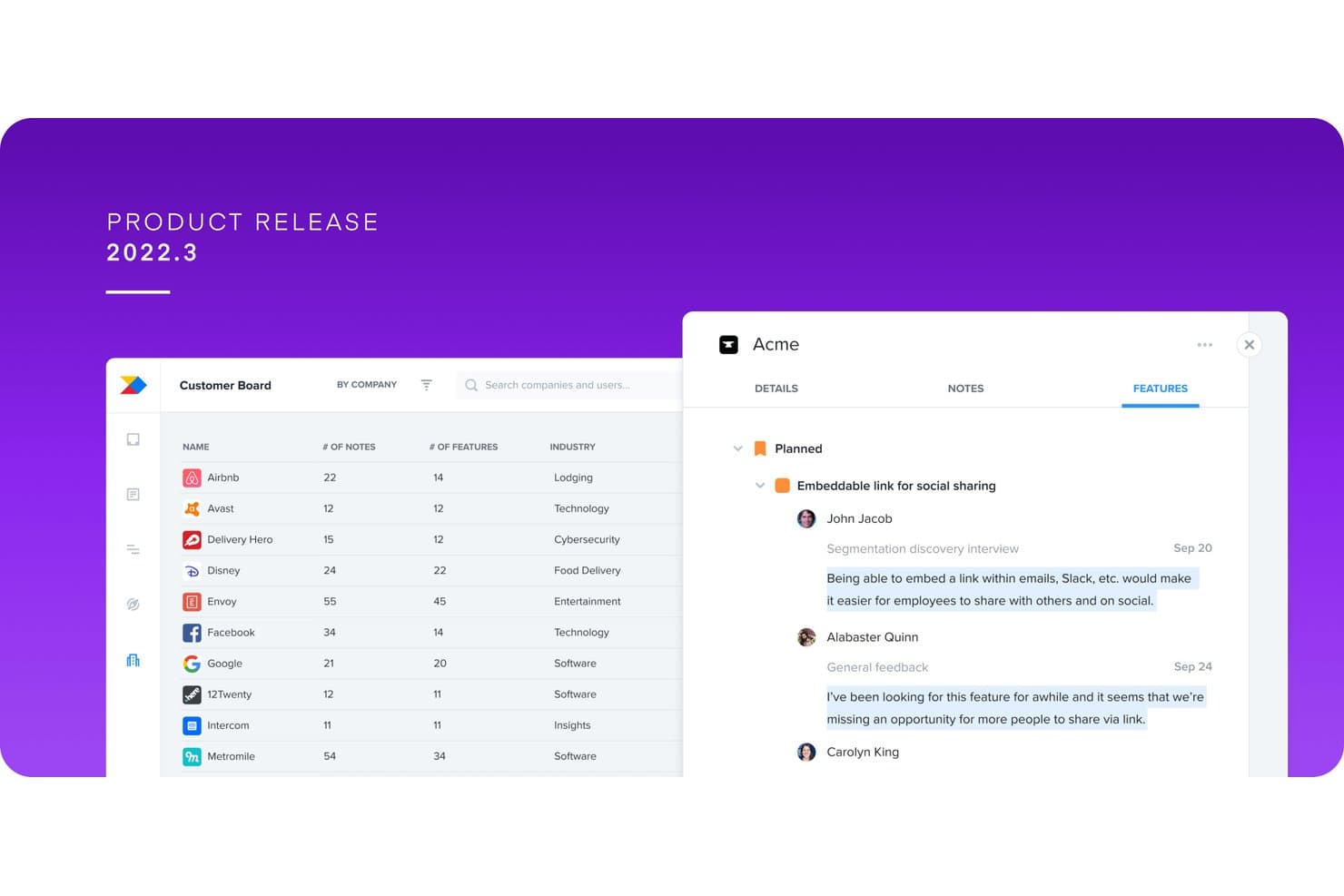
Productboard centralizes customer feedback linked to product features. Productboard is a product management platform for teams that need to connect customer needs, product strategy, and delivery priorities in one workspace.
Who Is Productboard Best For?
Productboard suits product managers and product teams that need to connect customer feedback with product strategy and priorities.
Why Productboard Is a Good Best Aha! Alternatives
I picked Productboard because its customer feedback integration connects feedback from multiple sources to product insights and feature ideas. I use those insights to identify recurring requests, assess customer impact, and tie evidence directly to roadmap priorities. That helps replace scattered feedback with traceable product decisions.
Productboard Key Features
- Product hierarchy: Organize products, components, features, and subfeatures.
- Prioritization frameworks: Score initiatives with custom criteria and formulas.
- Roadmap views: Create timeline, column, and swimlane roadmap views.
- Product objectives: Connect initiatives to measurable goals and outcomes.
Productboard Integrations
Productboard offers 25+ native integrations, including Zendesk, Slack, Intercom, Jira, Azure DevOps, Trello, GitHub, Salesforce, Amplitude, and Mixpanel. It also connects with Zapier and provides an API for custom integrations.
Pros and Cons
Pros:
- Supports structured scoring across product initiatives
- Connects customer impact to roadmap priorities
- Consolidates feedback into actionable product insights
Cons:
- Roadmap views offer less presentation flexibility
- Feedback triage can create duplicate insights
Learn more about Productboard: Best for strategic roadmapping
- Free demo available
- Pricing upon request
Visit WebsiteCustomer Rating:4.4/5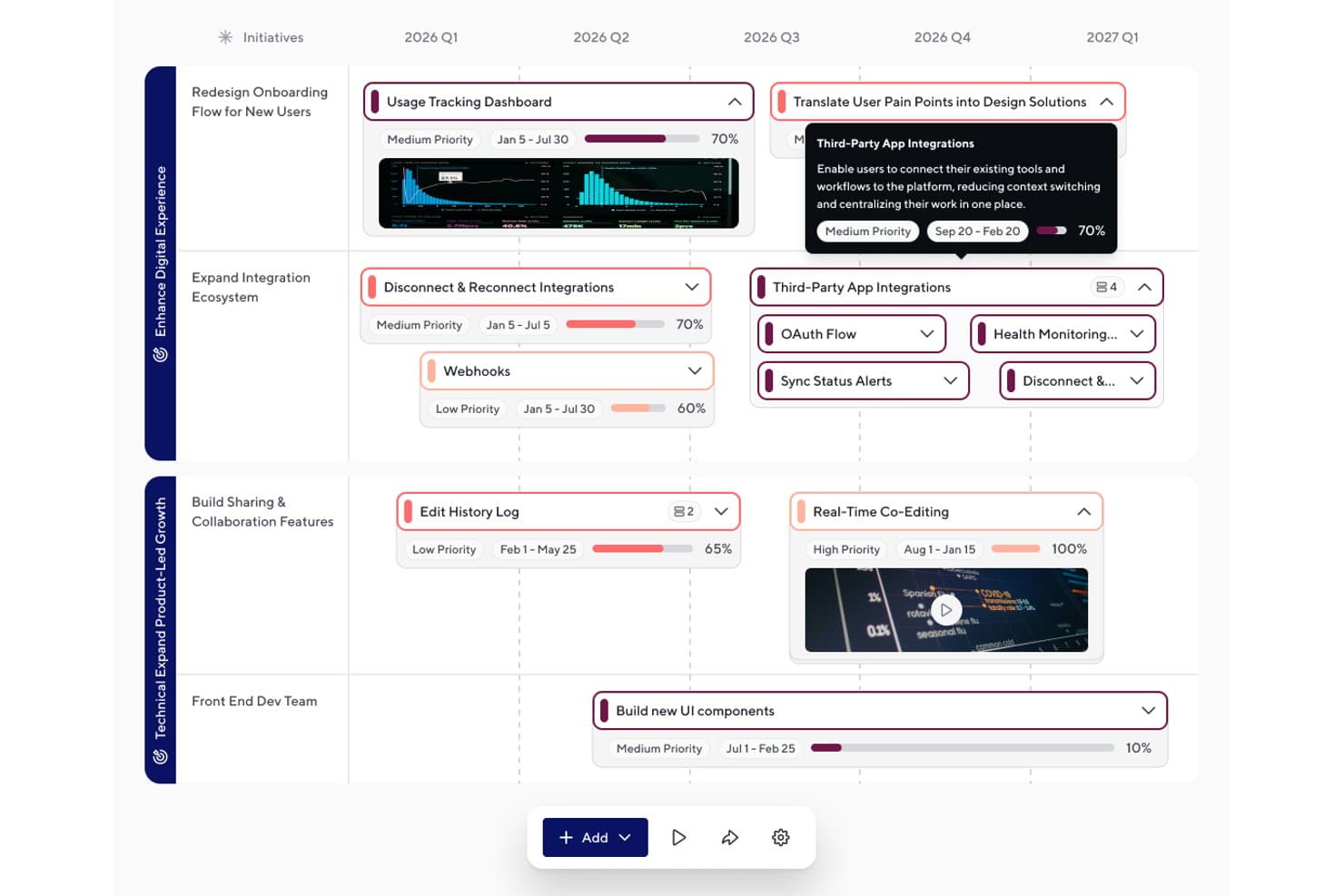
ProductPlan organizes initiatives and features on a timeline roadmap. ProductPlan is product management software for teams that need to turn strategy into clear, shareable roadmaps and align stakeholders around priorities, timelines, and product decisions.
Who Is ProductPlan Best For?
Product leaders and cross-functional teams can use ProductPlan to align stakeholders around product strategy, priorities, and roadmap decisions.
Why ProductPlan Is a Good Best Aha! Alternatives
I picked ProductPlan because its strategic roadmapping tools help my team connect product goals with delivery plans. We use timeline and swimlane views to show priorities, milestones, and dependencies across products. Shareable roadmaps also give executives and delivery teams one clear view of strategy without exposing every backlog detail.
ProductPlan Key Features
- Roadmap templates: Start planning with pre-built layouts.
- Jira integration: Import delivery data from Jira.
- Custom fields: Add structured details to roadmap items.
- Sharing controls: Set viewer and editor permissions.
ProductPlan Integrations
ProductPlan offers a native Jira integration that imports delivery data into roadmaps.
Pros and Cons
Pros:
- Timeline and swimlane planning support
- Executive-friendly sharing and presentation controls
- Clear strategy-to-delivery roadmap views
Cons:
- Roadmap updates can require manual upkeep
- Limited backlog depth for delivery management
Learn more about ProductPlan: Best for Agile portfolio management
- Free trial available
- Pricing upon request
Visit WebsiteCustomer Rating:4.4/5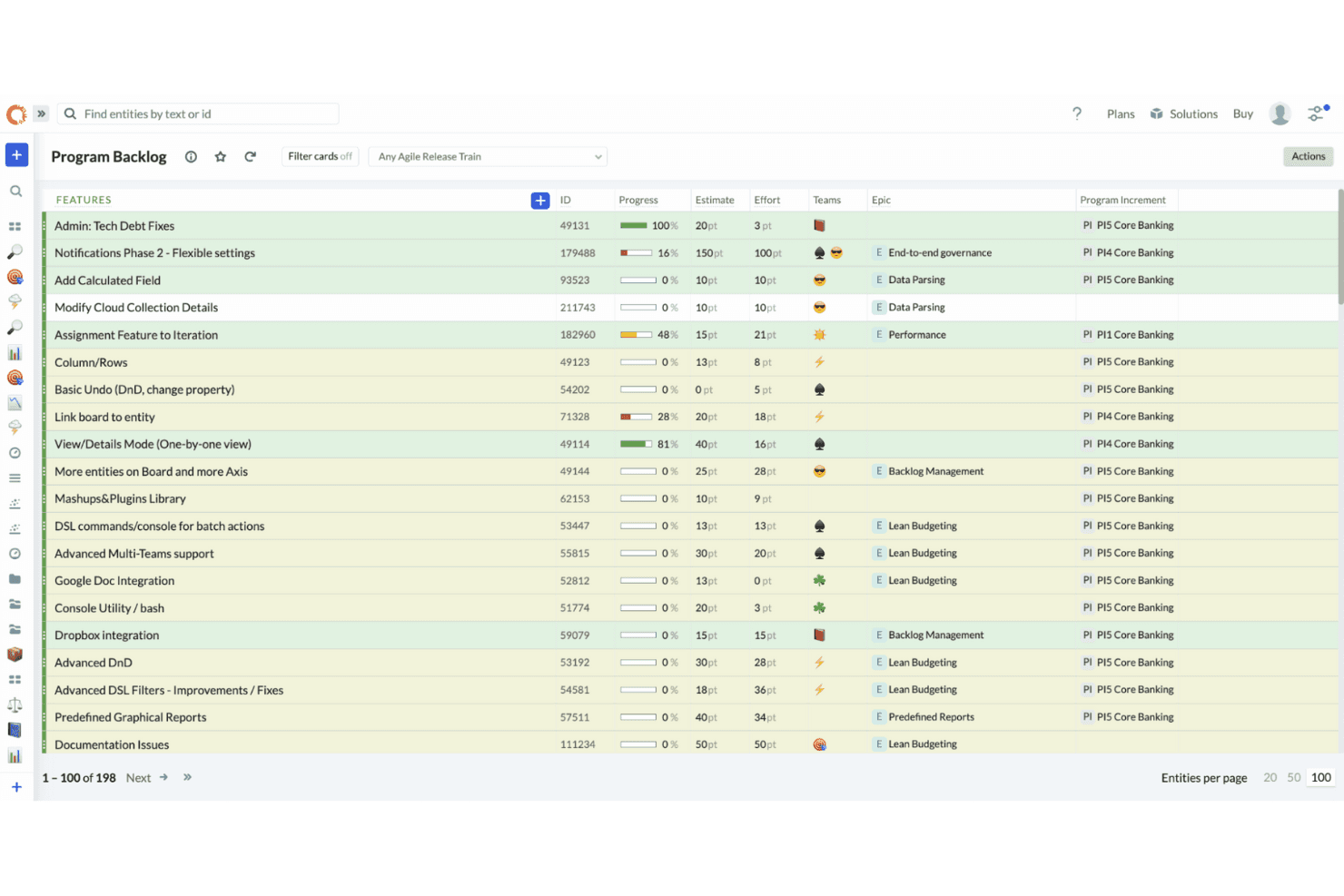
Targetprocess helps Agile teams plan, track, and align work with portfolio goals visually. Targetprocess is a product roadmapping platform for agile product teams that connects strategy, roadmaps, and delivery, helping organizations coordinate priorities and manage complex portfolios.
Who Is Targetprocess Best For?
Targetprocess suits product operations and portfolio leaders coordinating agile teams, dependencies, and priorities across complex product portfolios.
Why Targetprocess Is a Good Best Aha! Alternatives
I picked Targetprocess as one of the best because its agile portfolio management connects product strategy with delivery. I use portfolio hierarchies, dependency views, and capacity planning to coordinate initiatives across teams. That helps me evaluate tradeoffs before committing roadmap work.
Targetprocess Key Features
- Custom views: Configure boards, lists, timelines, and other layouts for different workflows.
- Workflow customization: Define statuses, rules, fields, and transitions for product processes.
- Reporting dashboards: Build dashboards with charts, metrics, and configurable reports.
- Tool integrations: Connect Targetprocess with development, collaboration, and communication tools.
Targetprocess Integrations
Targetprocess offers a native Jira integration and documented integrations with GitHub, GitLab, Azure DevOps, Bitbucket, Slack, Miro, and Zapier. It also provides a REST API for custom integrations, plus CSV import and export.
Pros and Cons
Pros:
- Custom workflows support varied agile processes
- Dependency views expose cross-team delivery risks
- Portfolio hierarchies connect strategy with delivery
Cons:
- Dense views can slow everyday navigation
- Complex configuration requires dedicated administration
Learn more about Targetprocess: Best for idea management
- 7-day free trial + free demo available
- From $24/user/month (billed annually)
Visit WebsiteCustomer Rating:4.2/5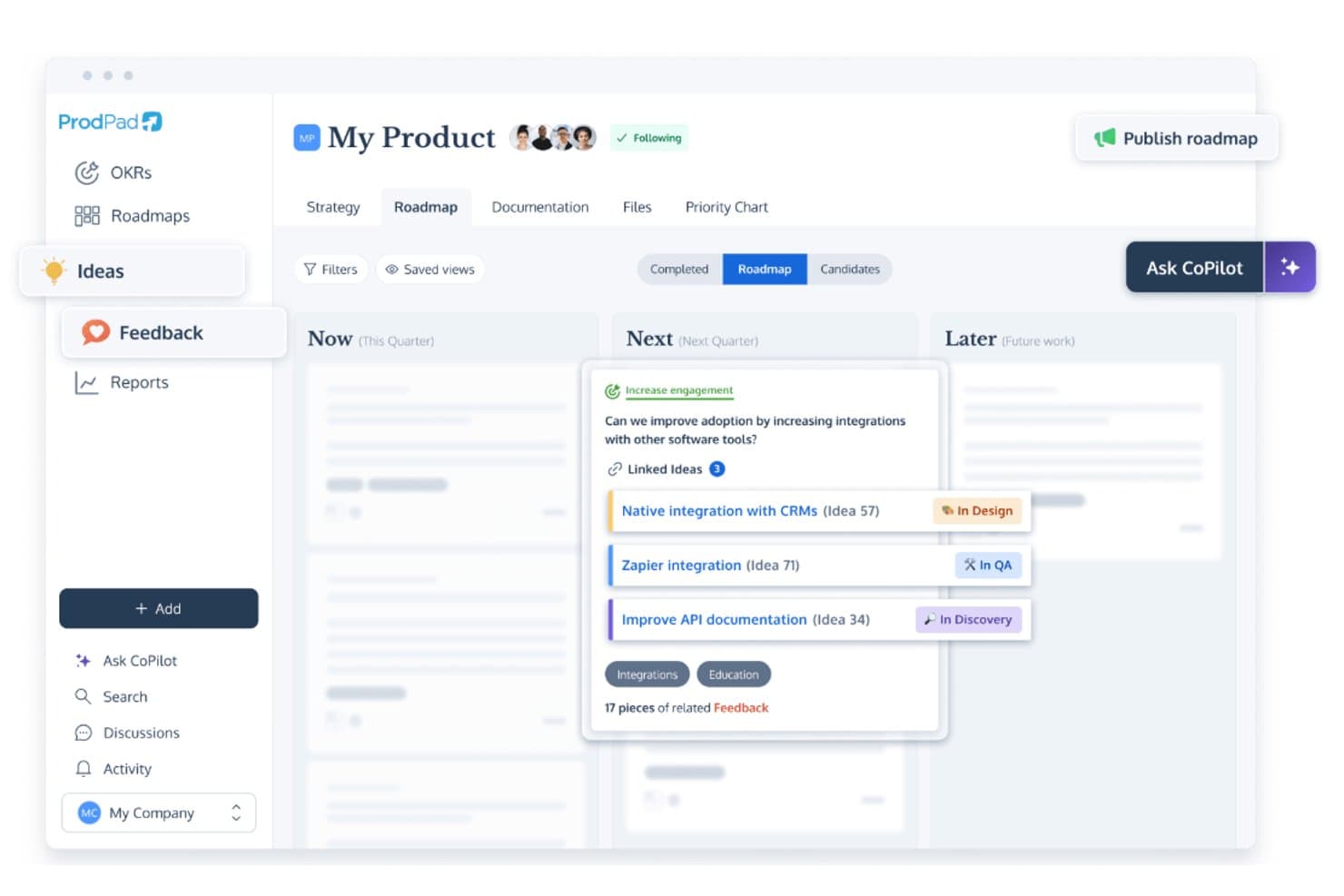
ProdPad links roadmap ideas to feedback and tracks development status. ProdPad is product roadmap software for product managers who need to capture customer ideas, connect them to strategy, and align cross-functional teams around priorities.
Who Is ProdPad Best For?
ProdPad suits product managers and teams that need to collect customer ideas, connect them to strategy, and guide discovery priorities.
Why ProdPad Is a Good Best Aha! Alternatives
I picked ProdPad as a Best Aha! alternative because it’s built for idea management. I use its idea capture and strategy-linking features to connect customer feedback with product goals, then guide discovery priorities. That gives my team a clearer path from scattered requests to a focused roadmap.
ProdPad Key Features
- Roadmap views: Display initiatives across timelines, teams, or product areas.
- Prioritization scoring: Rank opportunities using customizable scoring criteria.
- Product specifications: Document requirements, assumptions, and acceptance criteria.
- Release planning: Group planned work into releases with target dates.
ProdPad Integrations
ProdPad offers native integrations with Jira, Azure DevOps, GitHub, Linear, Trello, Slack, Microsoft Teams, Salesforce, Intercom, and Confluence. It also connects with Zapier and provides an API and custom webhooks for additional integrations.
Pros and Cons
Pros:
- Supports clear Now-Next-Later roadmaps
- Organizes ideas throughout the product lifecycle
- Connects feedback to product strategy
Cons:
- Customization falls short for complex requirements
- Visual overviews clutter with many stories
Learn more about ProdPad: Best for manufacturing roadmaps
- Free demo available
- From $99/user/month
Visit WebsiteCustomer Rating:4.2/5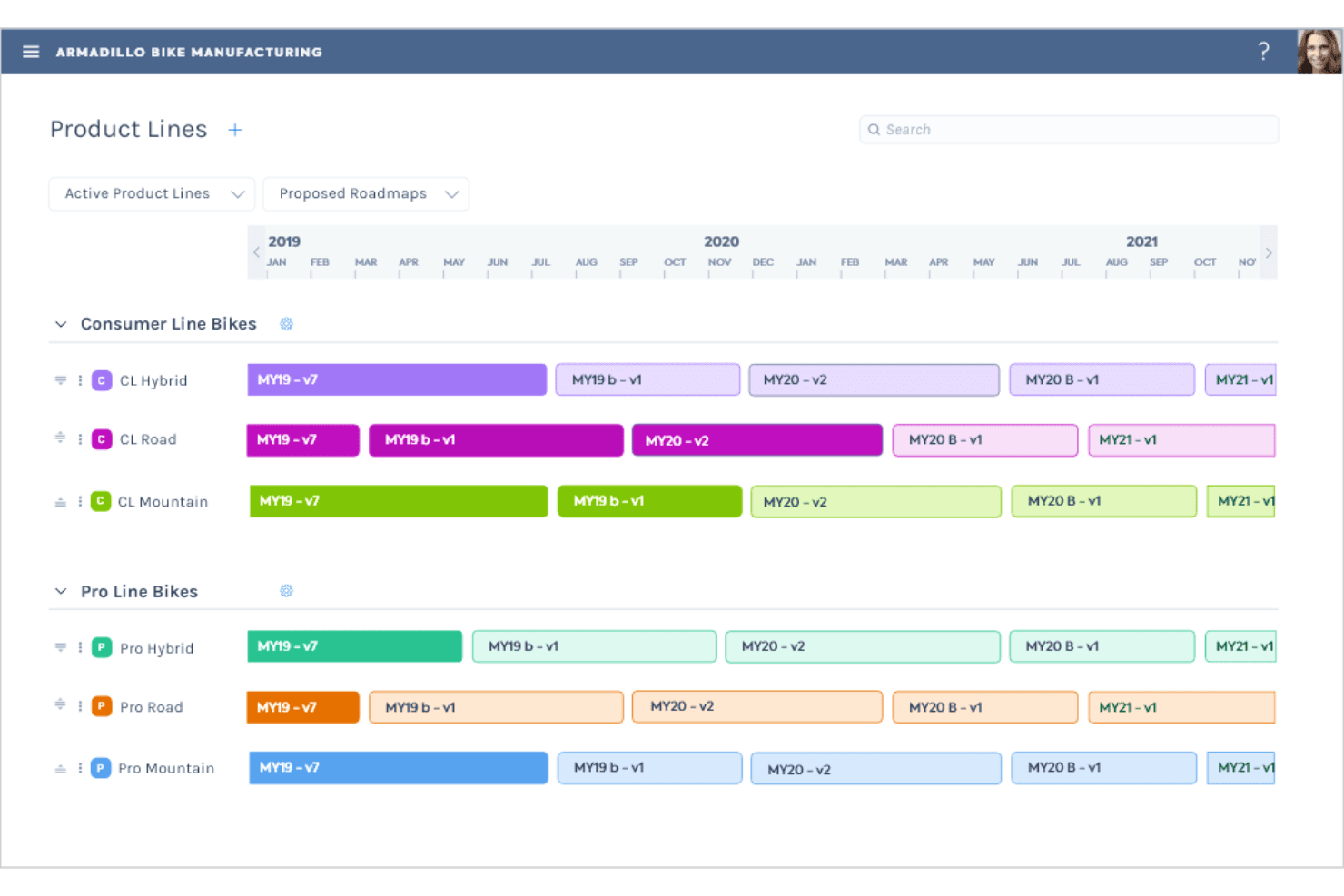
Gocious helps manufacturing teams plan and align product development with business goals. Gocious is a product management and portfolio planning platform for manufacturers that connects product strategy, market needs, and engineering capacity to help teams make clearer investment decisions and coordinate complex product portfolios.
Who Is Gocious Best For?
Gocious suits product teams at manufacturers that need to align product roadmaps with market demand, engineering capacity, and portfolio strategy.
Why Gocious Is a Good Best Aha! Alternatives
I picked Gocious because it connects manufacturing roadmaps with market demand and engineering capacity. I use its portfolio planning tools to compare product investments, map dependencies, and test what-if scenarios before committing resources. That makes it useful when a roadmap must reflect production constraints, customer needs, and broader portfolio strategy.
Gocious Key Features
- Product structure management: Organize products and modules in hierarchical views.
- Feature lifecycle tracking: Monitor feature status from introduction through retirement.
- Real-time dashboards: Display live roadmap and portfolio data in dashboard views.
- Task management: Create and manage tasks within Plans and Capabilities.
Gocious Integrations
Gocious offers an out-of-the-box Jira Cloud integration, plus API connections, batch or file transfers, and bespoke connectors for other systems. Its Open API supports custom connections with systems such as Salesforce, Oracle, and Tableau, and Gocious supports Zapier.
Pros and Cons
Pros:
- Compares roadmap scenarios before investment decisions
- Replaces scattered spreadsheets with shared portfolio data
- Connects products, modules, and lifecycle dependencies
Cons:
- Requires substantial data migration from spreadsheets
- Limited project delivery status tracking
Learn more about Gocious: Best for product strategy alignment
- Free demo available
- Pricing upon request
Visit WebsiteCustomer Rating:4.8/5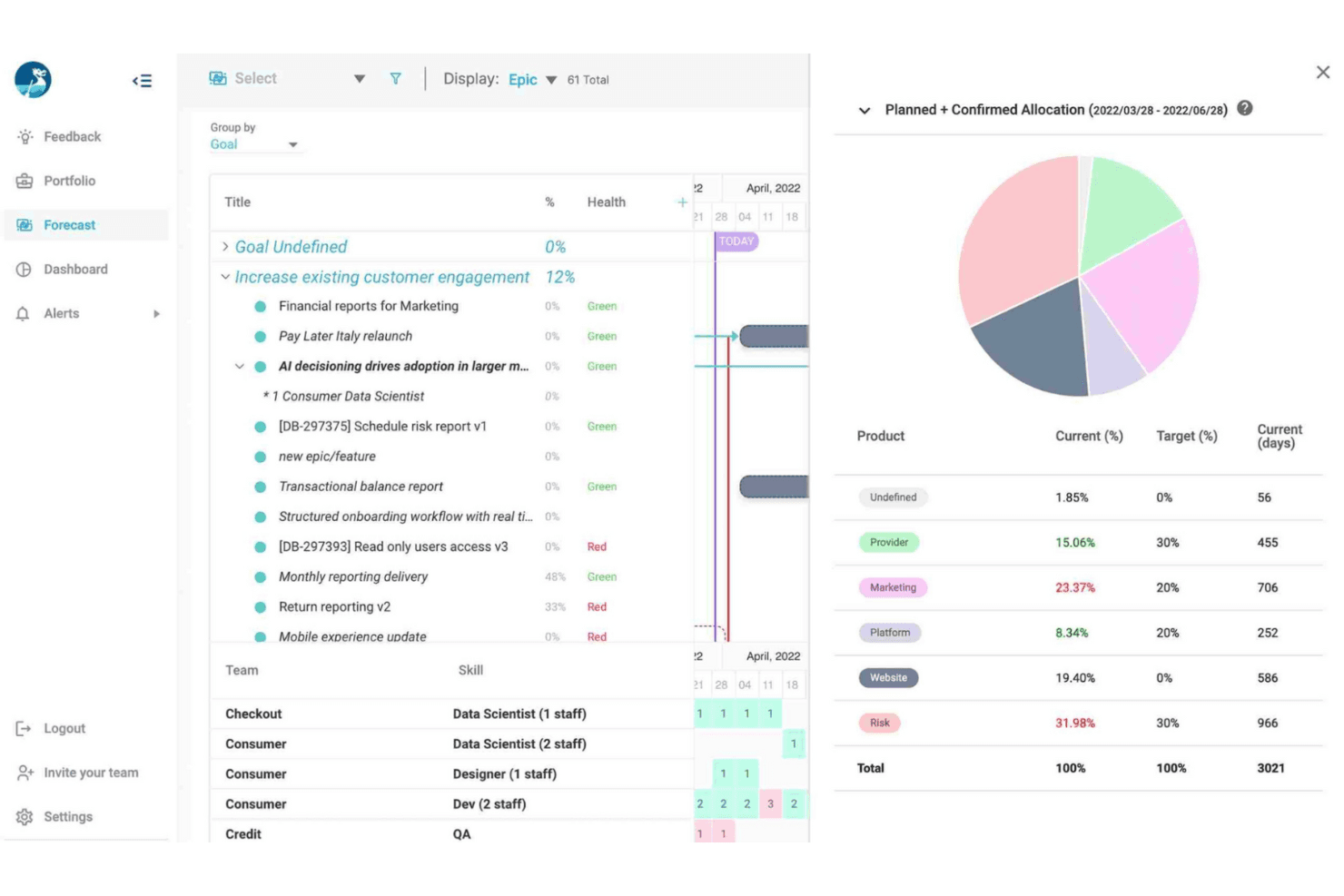
Dragonboat helps product teams align strategy with goals by planning, prioritizing, and tracking initiatives. Dragonboat is a product portfolio and roadmapping platform for product managers who need to connect customer needs, business goals, and delivery plans while prioritizing work across teams.
Who Is Dragonboat Best For?
Dragonboat suits product leaders who need to connect strategy, customer needs, and portfolio priorities across multiple teams.
Why Dragonboat Is a Good Best Aha! Alternatives
I picked Dragonboat as one of the best because it’s best for product strategy alignment. I use portfolio roadmaps, prioritization frameworks, and capacity planning to connect business goals with customer needs and delivery work. That helps my team compare initiatives, test tradeoffs, and explain why priorities change.
Dragonboat Key Features
- Jira integration: Sync initiatives and delivery items with Jira.
- Azure DevOps integration: Connect roadmap items with Azure DevOps work.
- Dependency mapping: Link related work items and identify dependencies.
- Custom roadmap views: Filter and display roadmap data by chosen fields.
Dragonboat Integrations
Dragonboat integrates with Jira and Azure DevOps, connecting roadmap initiatives with delivery work in each platform.
Pros and Cons
Pros:
- Flexible roadmap views support stakeholder conversations
- Supports portfolio-level prioritization and capacity planning
- Connects strategy, outcomes, and delivery plans
Cons:
- Delivery tracking feels less detailed than dedicated tools
- Initial configuration requires substantial planning
Learn more about Dragonboat: 10Best for prioritization tools
airfocus
- Free demo available
- Pricing upon request
Visit WebsiteCustomer Rating:4.4/5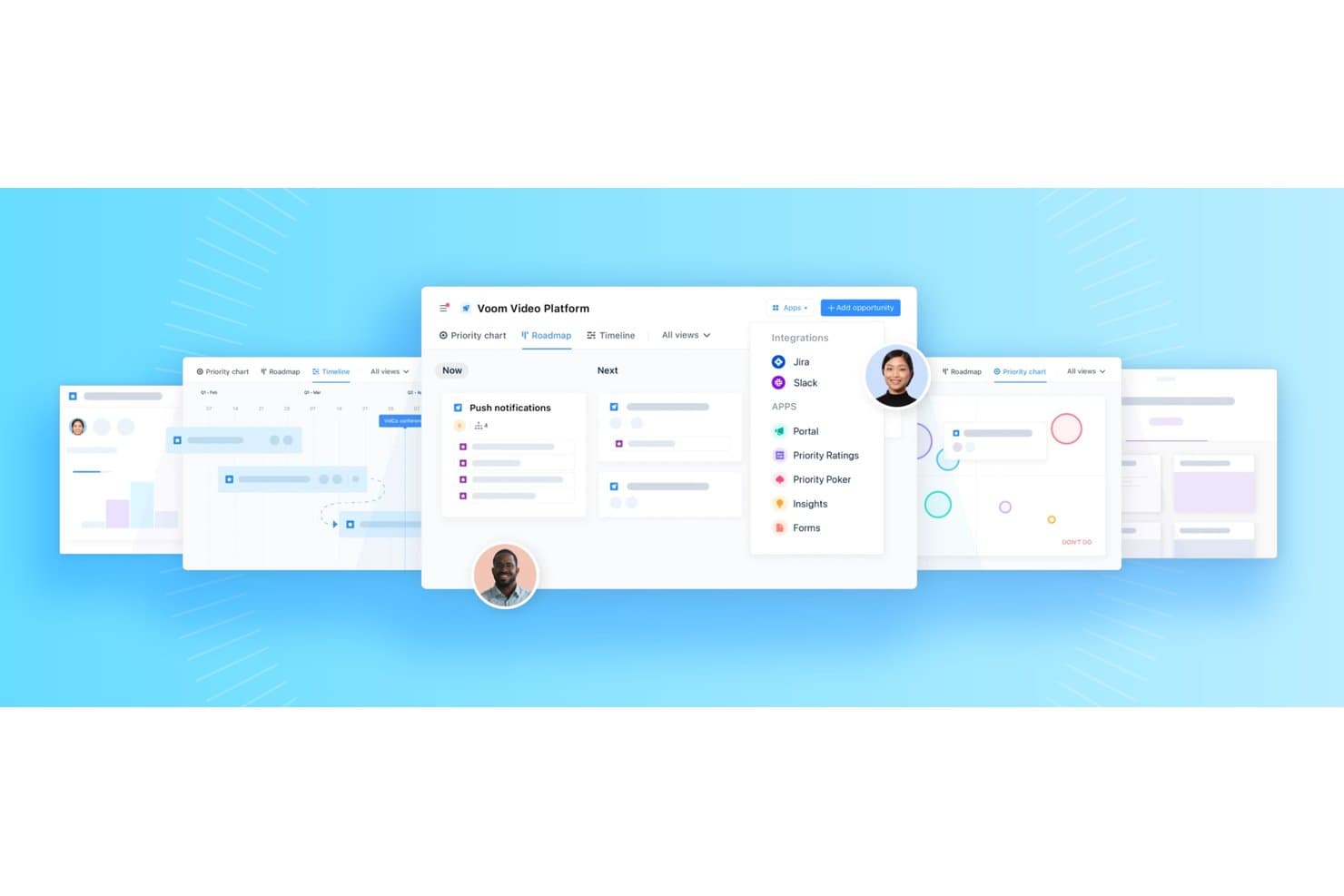
airfocus supports roadmap, timeline, and priority chart views with app integrations. airfocus is a product management platform for teams that need to connect customer feedback, product strategy, roadmaps, and delivery priorities in one workspace.
Who Is airfocus Best For?
Product managers and product operations teams that need a shared workspace for prioritizing roadmaps, customer feedback, and strategic initiatives.
Why airfocus Is a Good Best Aha! Alternatives
I picked airfocus because its prioritization tools help my team score initiatives against customer feedback, strategic goals, and business impact. We use prioritization views to compare competing requests, then connect decisions to roadmaps and delivery plans. That gives us a clear record of why one initiative moves ahead of another.
airfocus Key Features
- Objectives and OKRs: Create and track product objectives with built-in OKRs.
- Dependency tracking: Map dependencies across teams, products, and work items.
- AI-assisted authoring: Co-author product requirements documents and specifications.
- Branded portal: Share a branded portal for user engagement.
airfocus Integrations
airfocus offers native integrations with Jira, Trello, Asana, Azure DevOps, Shortcut, GitHub, Linear, Intercom, and Slack, and connects with Zapier. It also supports webhooks and APIs for custom integrations.
Pros and Cons
Pros:
- Modular workspaces support tailored product workflows
- Customer feedback connects directly to roadmaps
- Custom scoring aligns priorities with strategy
Cons:
- Initial workspace configuration requires careful planning
- Delivery task tracking remains relatively limited
Outras alternativas ao Aha!
Eis algumas alternativas adicionais ao Aha! que não entraram na minha lista, mas que vale a pena considerar:
- 11Craft.ioBest for product lifecycle management
- 12PlanviewBest for hybrid work and resource modeling
- 13JiraBest for project tracking
- 14monday AI WorkspaceBest for team collaboration
How I Evaluate Aha! Alternatives
I split my evaluation into three parts, weighting most heavily whether a tool can build visual roadmaps and rank features using configurable scoring. Next, I look for features like customer-facing idea portals or AI-powered prioritization. Finally, I consider pricing transparency and onboarding speed.
Core Functionality (Table Stakes For This List)
When I'm selecting tools for my list, I score each one on a scale from 0 (does not offer the functionality) to 5 (excels in this area) for each core functionality listed below. I then convert the total into a percentage to help assess each tool's overall fit, with extra weight on any functionalities I’ve deemed essential.
- Roadmapping & Visualization (Essential): I look for customizable timeline, swimlane, and board views that help teams share plans across initiatives and timeframes.
- Prioritization Frameworks (Essential): I assess whether configurable scoring helps teams compare feature requests against criteria such as customer value and strategic fit.
- Idea & Feedback Management: I check how teams capture, categorize, and connect customer requests to roadmap decisions, such as prioritizing a recurring usability issue.
- Strategic Planning: I look for goals or OKRs linked to roadmap items, with progress views that help teams track work against product outcomes.
- Release & Sprint Planning: I evaluate how teams connect roadmap items to release dates or sprints and make dependencies visible during delivery planning.
- Cross-Functional Collaboration: I consider whether engineering, sales, and leadership can view, comment on, or contribute to plans with suitable access controls.
Once I have a list of tools that meet the criteria, I consider what sets each platform apart.
Differentiating Factors (What Sets Vendors Apart)
Here's how I compare and contrast different vendors:
Standout Features
I check whether a tool offers customer-facing idea portals where users submit and vote on requests. Tools like Productboard and Aha! include these, and the difference between a basic submission form and a branded, voteable portal shapes how much signal your team actually gets. I also evaluate AI-powered prioritization, where machine learning suggests scores based on historical patterns rather than manual weighting alone. Finally, I look at viewer-based pricing tiers, since teams with many read-only stakeholders can cut costs dramatically when a platform charges less for non-editing seats.
Beyond Features
I check whether pricing scales predictably as you add read-only stakeholders—tools like Productboard and Airfocus handle viewer seats differently, and the gap adds up fast across a large org. Onboarding speed matters too; I look for pre-built roadmap and scorecard templates that let a team ship its first shared plan in days, not weeks. Finally, I evaluate data portability through CSV exports and open APIs, because switching costs shouldn't lock you into a platform that stops fitting your workflow.
Por que procurar uma alternativa ao Aha!?
O Aha! é um nome conhecido no software de gestão de produtos, mas não responde às necessidades de todas as equipas. Poderá estar a considerar alternativas se:
- O preço do Aha! não estiver de acordo com o seu orçamento.
- A sua equipa depender de integrações específicas que o Aha! não suporta.
- Procurar uma interface de utilizador mais simples para a utilização diária.
- Quiser uma personalização mais aprofundada dos seus fluxos de trabalho ou painéis.
- Trabalhar num setor especializado com requisitos únicos.
- Precisar de ferramentas que suportem vários idiomas ou equipas distribuídas.
Se algum destes desafios lhe parece familiar, não está sozinho. Muitas equipas de produto procuram alternativas ao Aha! que se adaptem melhor ao seu orçamento, à sua infraestrutura tecnológica e aos seus processos de recolha de feedback.
Principais funcionalidades do Aha!
Eis uma visão geral rápida das principais capacidades do Aha!, para que possa comparar o que as outras ferramentas oferecem:
- Planeamento de produto: Crie roteiros visuais de produto para alinhar iniciativas e acompanhar objetivos de longo prazo.
- Gestão de ideias e opiniões: Recolha e gira pedidos de funcionalidades e contributos de clientes ou partes interessadas.
- Definição de objetivos: Defina os objetivos do produto e acompanhe o progresso em todas as fases.
- Planeamento de lançamentos: Organize os próximos lançamentos para apoiar o seu processo de desenvolvimento.
- Personalização do fluxo de trabalho: Adapte os fluxos de tarefas e os estados para corresponderem às operações da sua equipa.
- Análise e elaboração de relatórios: Acompanhe as principais métricas para fundamentar a definição de prioridades e simplificar as decisões de entrega.
- Ferramentas de colaboração: Ligue os membros da equipa num espaço de trabalho partilhado com atualizações em tempo real.
- Estruturas de definição de prioridades: Avalie iniciativas e itens da carteira de trabalho utilizando modelos de pontuação personalizados.
- Painéis personalizados: Crie vistas e miniaplicações adaptadas às necessidades do seu produto, da engenharia ou da liderança.
- Integração de opiniões: Ligue diretamente as opiniões sobre o produto e a recolha de opiniões ao seu roteiro através de um painel ou portal de opiniões.
Quer esteja concentrado em criar produtos melhores ou precise simplesmente de uma ferramenta que se adapte melhor ao seu processo, explorar alternativas económicas ao Aha! pode ajudá-lo a encontrar uma solução adequada à sua equipa.