


Aha! Testbericht 2026: Vorteile, Nachteile, Hauptfunktionen und Preise


Aha! is a product development software for product teams that need to connect business strategy directly to their roadmap. It links goals, initiatives, and features in a structured hierarchy, so you can always show why you're building what you're building. I'd consider it over Productboard if your team needs more than a feedback-to-prioritization workflow—Aha! adds a full strategy, capacity planning, and release management layer that goes well beyond what Productboard covers.
Aha! Evaluation Summary

- From $59/user/month
- 30-day free trial + free demo available
Warum Sie unseren Software-Bewertungen vertrauen können
Seit 2020 testen und bewerten wir Software für Produktmanager. Als Produktmanager wissen wir selbst, wie kritisch und schwierig es ist, beim Softwarekauf die richtige Entscheidung zu treffen. Wir investieren in intensive Recherchen, um unserer Zielgruppe bessere Entscheidungen zu ermöglichen. Wir haben über 2.000 Tools für verschiedene Produktmanagement-Anwendungsfälle getestet und mehr als 1.000 umfassende Softwarebewertungen geschrieben.Erfahren Sie, wie wir Transparenz gewährleisten & unsere Software-Bewertungsmethodik.
Aha! Overview
When judging Aha! as a product development software, its advanced roadmapping, idea management, and deep customization set it apart for teams needing strategic alignment. The interface is detailed but can feel overwhelming during onboarding, especially for smaller teams. Pricing is on the higher end, but the breadth of features and responsive support justify the investment for organizations managing complex portfolios.
Aha! is best suited for product leaders and cross-functional teams who prioritize structured planning and want to connect strategy with execution in a single platform.
pros
-
Customizable workflows fit complex product organizations.
-
Idea management portal centralizes customer feedback.
-
Advanced roadmapping links strategy to execution.
cons
-
Interface can overwhelm teams with simple requirements.
-
Pricing is higher than many alternatives.
-
Reporting options require manual setup for advanced needs.
-

Zoho Sprints
Visit WebsiteThis rating combines scores from multiple user review sites to reflect overall customer sentiment about the product.4.2 -
Wrike
Visit WebsiteThis rating combines scores from multiple user review sites to reflect overall customer sentiment about the product.4.3 -
monday AI Workspace
Visit WebsiteThis rating combines scores from multiple user review sites to reflect overall customer sentiment about the product.4.6



Wie wir Tools testen & bewerten
Wir haben jahrelang unser System für Softwaretests und -bewertungen aufgebaut, verfeinert und verbessert. Unser Bewertungsraster wurde entwickelt, um die Feinheiten bei der Auswahl von Software und die Effektivität eines Tools einzufangen, wobei der Fokus auf den entscheidenden Aspekten des Entscheidungsprozesses liegt. Nachfolgend sehen Sie genau, wie unser Test- und Bewertungssystem anhand von sieben Kriterien funktioniert. Dadurch können wir eine objektive Bewertung der Software auf Basis von Kernfunktionen, herausragenden Merkmalen, Benutzerfreundlichkeit, Onboarding, Kundensupport, Integrationen, Kundenbewertungen und Preis-Leistungs-Verhältnis bieten.
Kernfunktionalität (25% der Endbewertung)
Der Ausgangspunkt unserer Bewertung ist stets die Kernfunktionalität des Tools. Verfügt das Tool über die grundlegenden Funktionen, die ein Benutzer erwarten würde? Sind einige dieser Kernfunktionen nur in höheren Tarifen verfügbar? Im Kern erwarten wir, dass ein Tool den grundlegenden Fähigkeiten seiner Wettbewerber standhält.
Herausragende Merkmale (25% der Endbewertung)
Als nächstes bewerten wir seltene Alleinstellungsmerkmale, die über die übliche Kernfunktionalität solcher Tools hinausgehen. Eine hohe Bewertung spiegelt spezialisierte oder einzigartige Funktionen wider, die das Produkt schneller, effizienter oder für den Nutzer wertvoller machen. Wir prüfen außerdem, wie einfach sich das Tool mit anderen, typischen Werkzeugen im Technologie-Stack integrieren lässt, um seine Funktionalität und seinen Nutzen zu erweitern. Tools mit vielen nativen Integrationen, Drittanbieter-Anbindungen und API-Zugang für Individualisierungen erzielen die besten Ergebnisse.
Benutzerfreundlichkeit (10% der Endbewertung)
Wir berücksichtigen, wie schnell und einfach sich Aufgaben der Kernfunktionalität mit dem Tool umsetzen lassen. Software mit hoher Punktzahl ist gut gestaltet, intuitiv zu bedienen, bietet mobile Apps, Vorlagen und macht vergleichsweise komplexe Aufgaben einfach.
Onboarding (10% der Endbewertung)
Wir wissen, wie wichtig eine schnelle Akzeptanz durch Teams für eine neue Plattform ist. Deshalb bewerten wir, wie leicht sich das Tool mit minimaler Schulung erlernen und nutzen lässt. Wir prüfen, wie schnell ein Teammitglied ohne Vorerfahrung eingerichtet ist und starten kann. Lösungen mit guter Bewertung setzen nur wenig oder keine Unterstützung voraus.
Kundensupport (10% der Endbewertung)
Wir prüfen, wie schnell und einfach Hilfe per Telefon, Live-Chat oder Wissensdatenbank verfügbar ist. Tools und Unternehmen mit Echtzeit-Support schneiden am besten ab, während Chatbots am schlechtesten bewertet werden.
Kundenbewertungen (10% der Endbewertung)
Zusätzlich zu unseren eigenen Tests und Bewertungen betrachten wir den Net Promoter Score aktueller und ehemaliger Kunden. Wir prüfen deren Wahrscheinlichkeit, sich erneut für das Tool zu entscheiden. Eine hohe Bewertung spiegelt einen hohen Net Promoter Score wider.
Preis-Leistungs-Verhältnis (10% der Endbewertung)
Abschließend vergleichen wir alle anderen Kriterien mit dem durchschnittlichen Einstiegspreis und den Kernfunktionen und bewerten das Gesamtergebnis. Software, die mehr für weniger bietet, erhält eine höhere Bewertung.
Core Features
Roadmapping
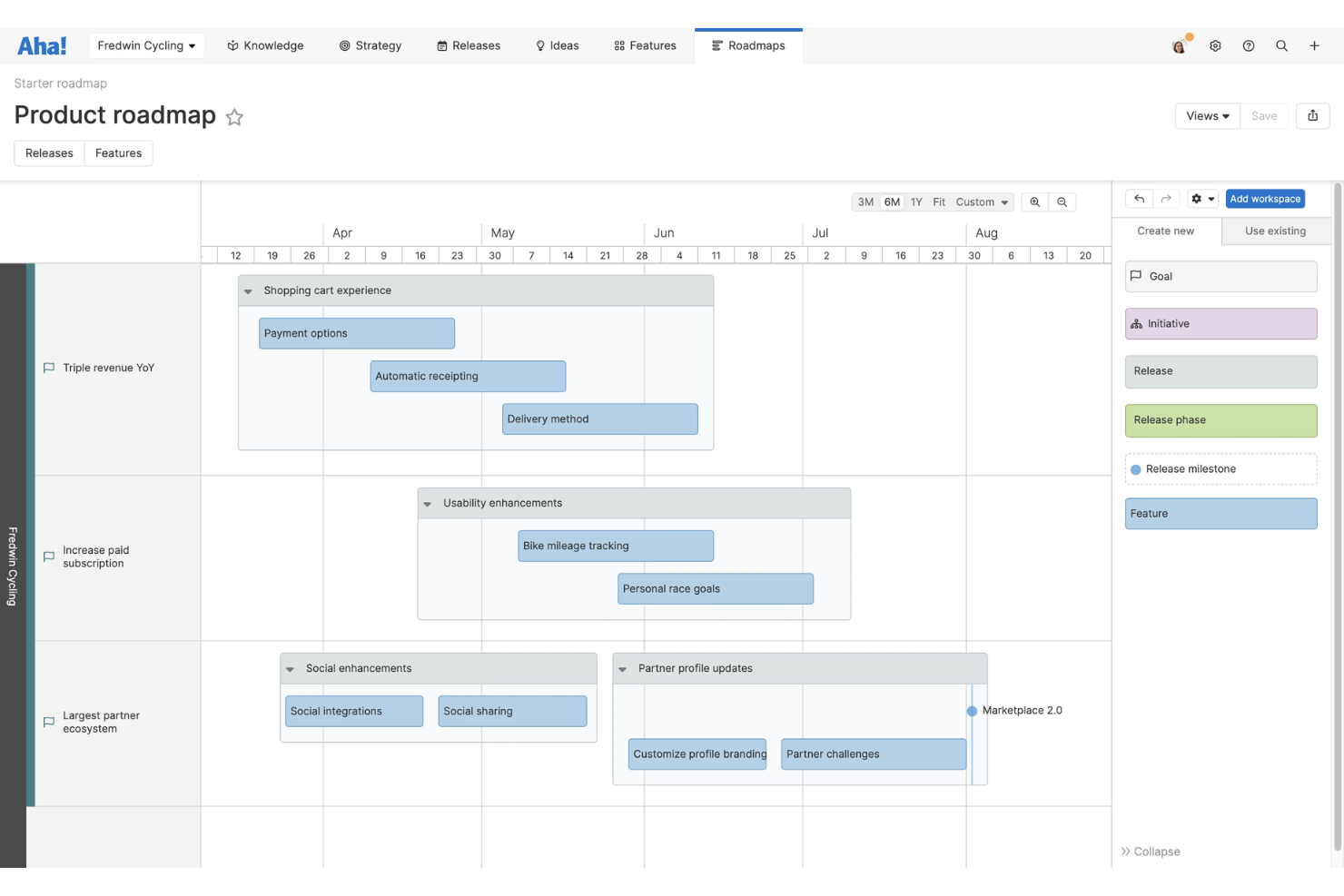
Build visual product roadmaps that connect goals, initiatives, and releases. Drag-and-drop timelines make it easy to adjust plans as priorities shift.
Idea Management
Collect, organize, and prioritize customer and team feedback in a central portal. Score ideas based on value and effort to guide decision-making.
Release Planning
Define releases, set milestones, and track dependencies across teams. Visualize progress and adjust schedules to keep launches on track.
Custom Workflows
Design workflows tailored to your team’s process, including custom statuses and approvals. Automate task assignments to streamline collaboration.
Goals and Initiatives Tracking
Set strategic goals and link them to features, releases, and tasks. Monitor progress with dashboards that show alignment between strategy and execution.
Reporting and Analytics
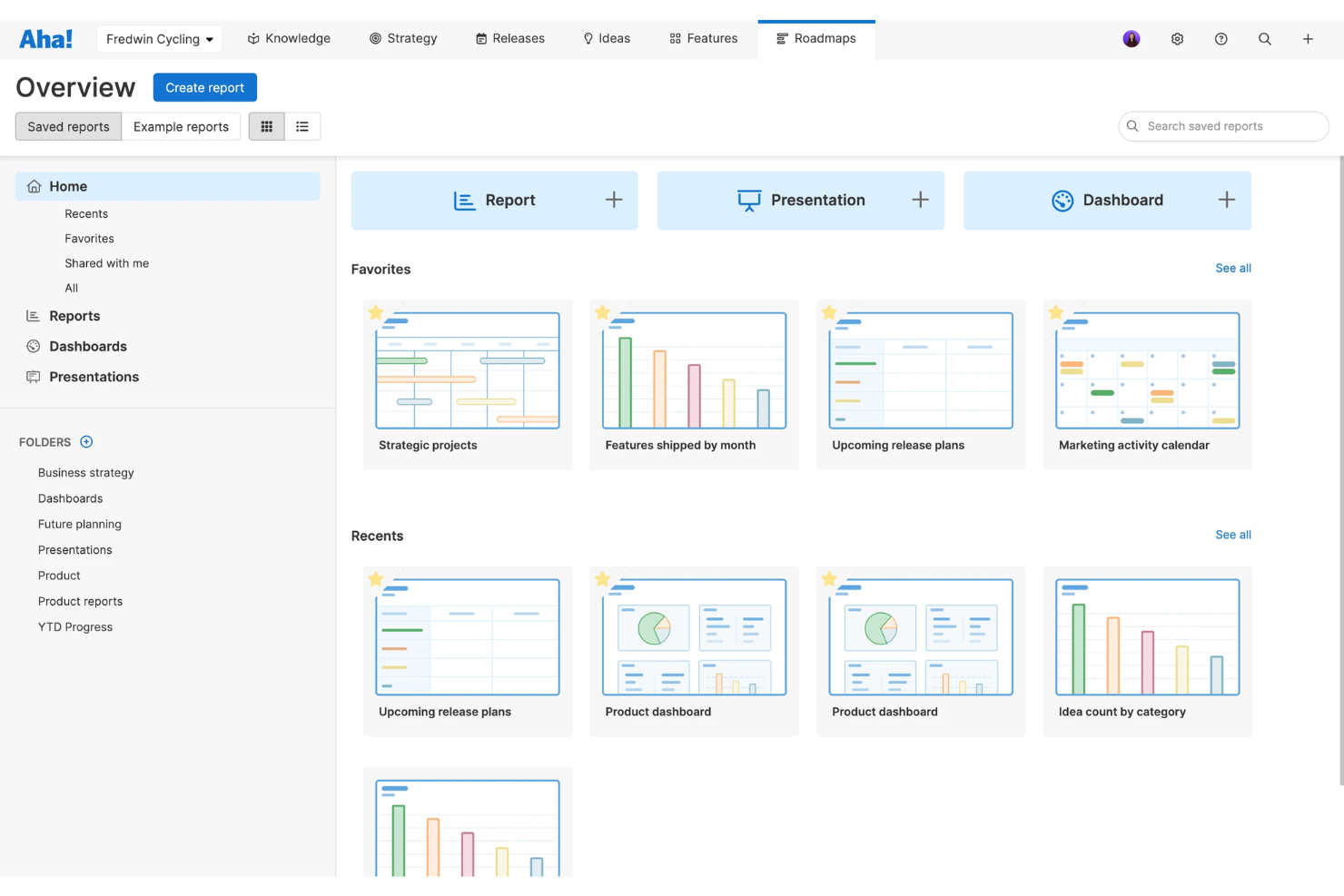
Create custom reports and dashboards to analyze product performance and team activity. Export data for stakeholder presentations or deeper analysis.
Ease of Use
Aha! offers a detailed, feature-rich interface that prioritizes flexibility over simplicity, which can be daunting for new users or smaller teams. While its navigation and customization options are extensive, users often mention the initial setup and learning curve as challenging.
However, once configured, the platform’s dashboards, visual roadmaps, and workflow tools provide clear structure and control, making it well-suited for teams that value process rigor and strategic alignment.
Integrations
Aha! integrates with Jira, Azure DevOps, Slack, Salesforce, GitHub, Trello, Asana, Google Workspace, Microsoft Teams, and Zendesk, among others.
Aha! also offers a robust API and connects with third-party integration tools for custom workflows.

Aha! Specs
- A/B Testing
- API
- Collaboration Support
- Custom Data Forms
- Dashboard
- Dashboards
- Data Export
- Data Import
- Developer Tools
- External Integrations
- Feedback Management
- Gantt Charts
- Google Apps Integration
- Multi-User
- Notifications
- Prioritization
- Product Catalog
- Release Management
- Reports
- Resource Management
- Review Monitoring
- Roadmapping
- Scheduling
- Task Scheduling/Tracking