

As ferramentas de testes A/B com IA utilizam inteligência artificial para automatizar a conceção de experiências, analisar resultados e otimizar experiências digitais mais rapidamente do que os métodos manuais. Se procura formas de melhorar as taxas de conversão, reduzir a incerteza e tomar decisões mais inteligentes relativamente ao seu website ou produto, estas ferramentas podem ajudar a sua equipa a realizar mais experiências com menos esforço. Nesta lista, encontrará plataformas de testes A/B com IA de confiança que respondem a desafios comuns, como recursos limitados, análises demoradas e a necessidade de obter informações práticas — para que possa escolher a solução certa para os objetivos da sua empresa.
Why Trust Our Software Recommendations
6,700+
Reviews
20
Industry experts
16+
Evaluation factors
14
Years
Our team has been testing and reviewing software since 2012. As product managers ourselves, we know how difficult—and important—it is to choose the right software.
For this guide, we evaluated tools using hands-on testing and independent research, scoring tools using our selection criteria.
Our reviews reflect our human editorial judgment, not a sales pitch.
Expert reviewers:
- Andrew LumbySenior TPM
- Cristiano ValimSenior UI/UX Lead


Tabela de comparação de ferramentas de testes A/B com IA
Esta tabela de comparação resume os detalhes de preços das minhas principais seleções de ferramentas de testes A/B com IA:
| Tool | Best For | Trial Info | Price | ||
|---|---|---|---|---|---|
| 1 | Best with real-time behavioral targeting | 30-day free trial + free demo available | From $495/month | Website | |
| 2 | Best for marketing team collaboration | 30-day free trial + demo available | Pricing upon request | Website | |
| 3 | Best with feature flag experimentation | Free plan + Free trial + Free demo available | Pricing upon request | Website | |
| 4 | Best with enterprise experiment governance controls | Free demo available | Pricing upon request | Website | |
| 5 | Best for developer-led experiment workflows | Free plan available | Pricing upon request | Website | |
| 6 | Best for Adobe Experience Cloud experimenters | Free demo available | Pricing upon request | Website | |
| 7 | Best for flag-based feature experiment analysis | Free plan available | From $150/month | Website | |
| 8 | Best for open-source warehouse-native testing | Free plan + free demo available | From $40/user/month | Website | |
| 9 | Best for Bayesian personalization at enterprise scale | Free demo available | Pricing upon request | Website | |
| 10 | Best for warehouse-native experiment governance | Free demo available | Pricing upon request | Website |


Avaliações de ferramentas de testes A/B com IA
Seguem-se os meus resumos detalhados das melhores ferramentas de testes A/B com IA que entraram na minha lista. As minhas avaliações apresentam uma análise detalhada das funcionalidades, dos melhores casos de utilização e das integrações de cada plataforma, para ajudar a encontrar a melhor opção para si.
 Best with real-time behavioral targeting
- 30-day free trial + free demo available
- From $495/month
Visit WebsiteCustomer Rating:4.7/5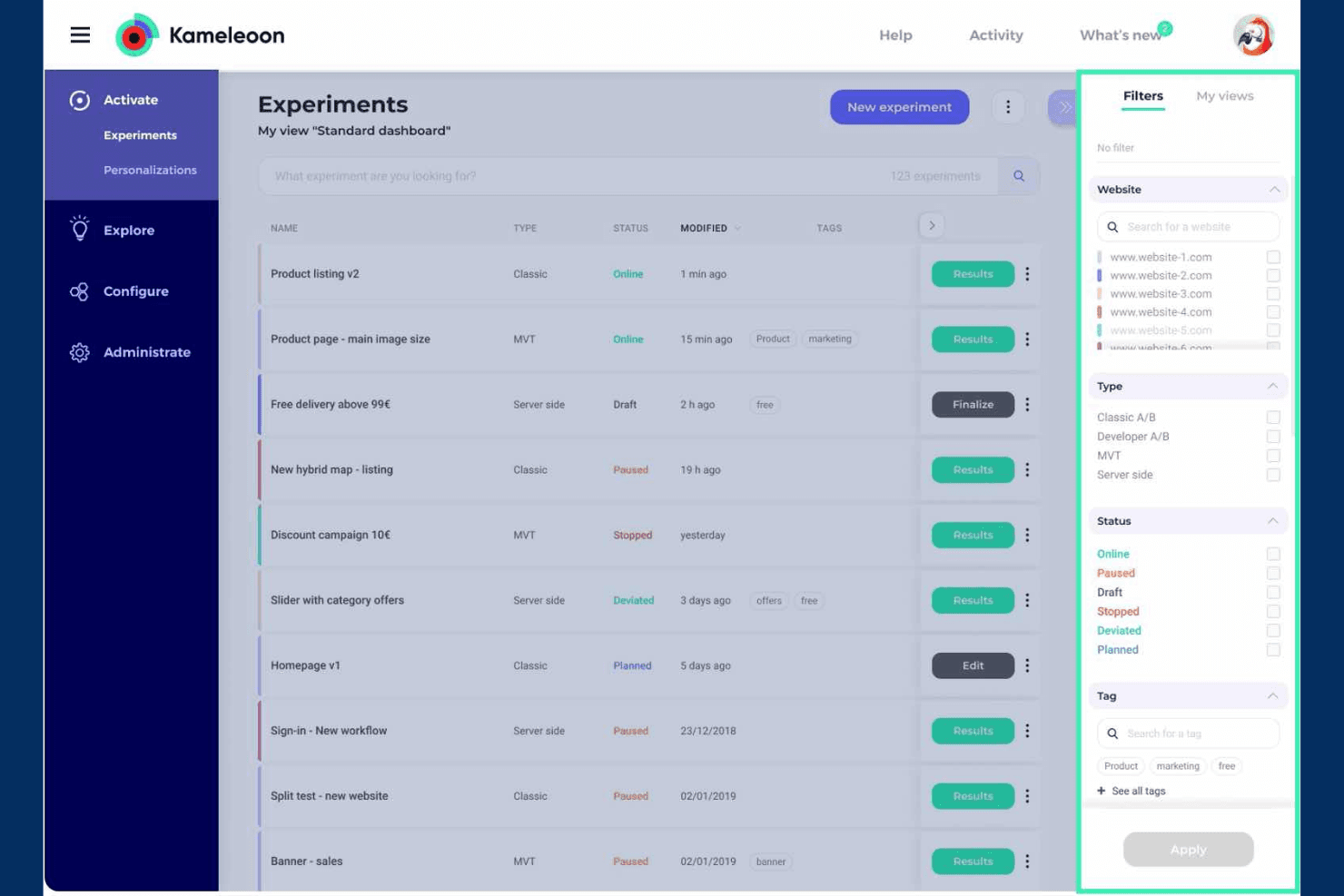
Kameleoon helps teams run A/B tests and personalize digital experiences. Kameleoon is an AI-driven A/B testing and experimentation platform that supports web, mobile, server-side, and feature-flag testing alongside real-time behavioral targeting, personalization, and prompt-based variant creation.
Who Is Kameleoon Best For?
Kameleoon is a strong fit for CRO specialists and product teams at mid-size to enterprise companies who need advanced behavioral targeting alongside a full experimentation stack.
Why I Picked Kameleoon
Kameleoon earns its spot on my shortlist because of how its AI Targeting model handles real-time behavioral data. It scores every visitor against a likelihood-to-convert metric that retrains every 10 minutes, grouping live sessions into dynamic buckets rather than relying on static rules. I also like AI Opportunity Detection, which surfaces high-confidence subsegments when a test result is inconclusive, so you're not walking away empty-handed from a flat experiment.
Kameleoon Key Features
- Prompt-based experiment builder: Describe a change in plain language and Kameleoon's AI builds the variant directly on your live site, across desktop, tablet, and mobile.
- Cross-platform SDK support: Deploy experiments across web, iOS, Android, Flutter, React Native, server-side, and edge environments from a single shared platform.
- Feature flag experimentation: Run progressive rollouts with automatic KPI-based rollback, approval workflows, audit logs, and unlimited environments.
- CUPED variance reduction: Apply CUPED alongside frequentist and Bayesian statistical methods, sequential testing, and SRM detection to get more reliable results faster.
Kameleoon Integrations
Kameleoon lists 100+ integrations, including Google Analytics, Adobe Analytics, Amplitude, Contentsquare, Snowflake, Segment, Datadog, Jira, and Figma. It also offers JavaScript, Data, and Automation APIs for custom integrations, plus Zapier.
Pros and Cons
Pros:
- CUPED improves confidence in experiment results
- PBX generates and builds test variations
- Real-time behavioral targeting adapts to visitor intent
Cons:
- AI targeting requires substantial traffic and history
- Developers remain necessary for advanced implementations
Learn more about Kameleoon: Best for marketing team collaboration
- 30-day free trial + demo available
- Pricing upon request
Visit WebsiteCustomer Rating:4.5/5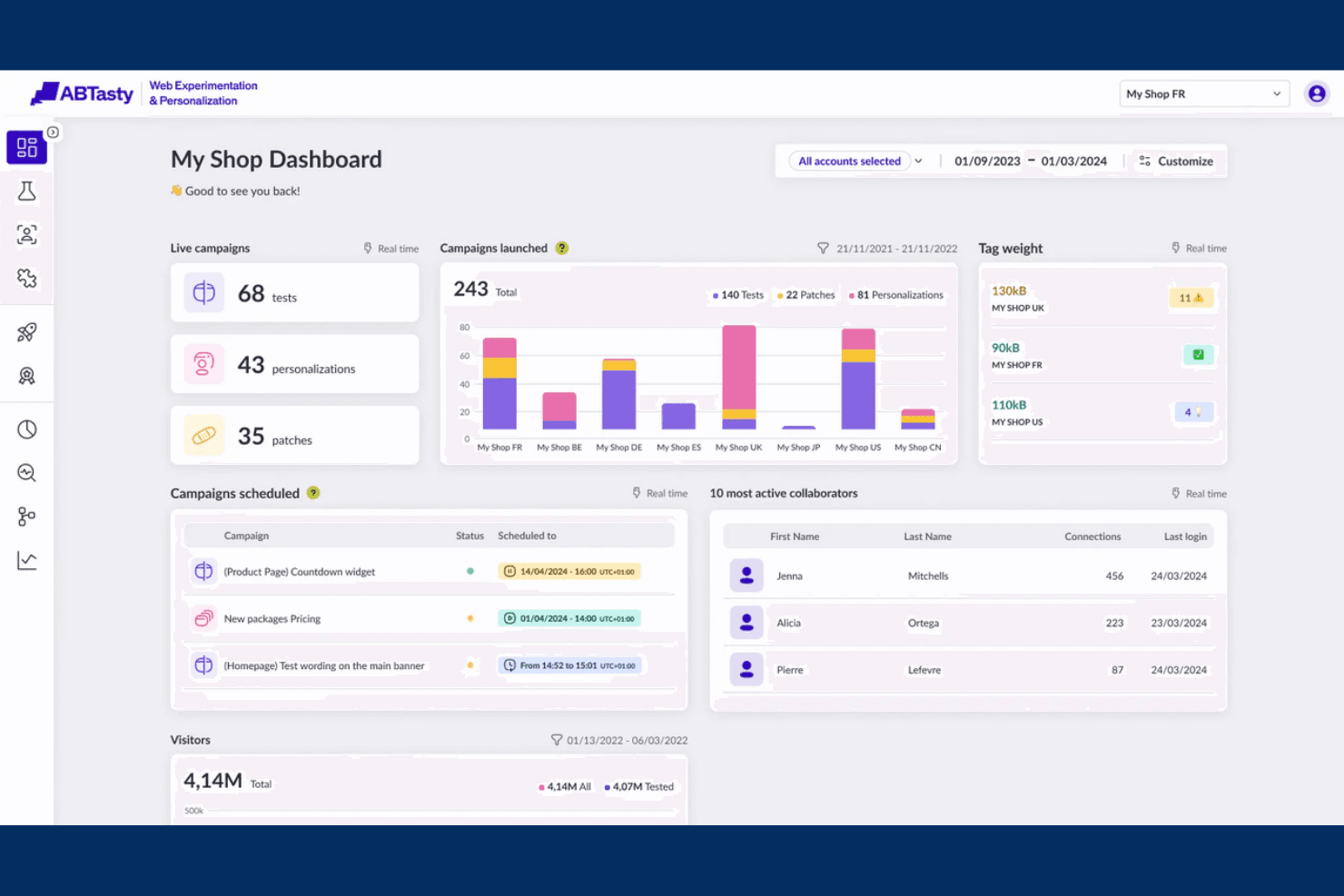
AB Tasty helps teams run A/B tests and personalize digital experiences. AB Tasty is an AI-powered experimentation platform that supports A/B, multivariate, and split URL testing alongside feature flag management, AI-assisted hypothesis and copy generation, and behavioral audience segmentation.
Who Is AB Tasty Best For?
AB Tasty is a strong fit for marketing teams that want to run A/B tests, personalization campaigns, and experiments without relying on engineering for every change.
Why I Picked AB Tasty
I've included AB Tasty in my top picks because it's one of the few experimentation platforms built with marketing team collaboration genuinely in mind. The approval workflow lets teams review and sign off on experiments before they go live, and workspaces keep multiple campaigns organized without overlap. I also like the Evi suite, where marketers can generate hypotheses, write variation copy, and interpret results without pulling in a data analyst for every test.
AB Tasty Key Features
- Evi Ideas: Generates CRO test ideas from screenshots or GIFs, drawing on UX best practices and cognitive bias principles to suggest what to test next.
- EmotionsAI segmentation: Groups visitors into emotional needs profiles based on on-site behavior, letting you target experiments to specific audience segments.
- Multi-armed bandit allocation: Automatically shifts test traffic toward the best-performing variation, making it useful for short tests or pages with six or more variations.
- Feature flag management: Supports progressive rollouts, scheduled releases, and automated kill switches that roll back a feature when key metrics drop.
AB Tasty Integrations
AB Tasty offers native integrations with Adobe Analytics, Amplitude, Google Analytics 4, Contentsquare, FullStory, Heap, Matomo, Salesforce Marketing Cloud, Microsoft Clarity, and Tealium. Its API supports custom integrations, with access depending on the plan.
Pros and Cons
Pros:
- Behavioral segmentation sharpens personalization
- Evi supports hypotheses, copy, and analysis
- Marketing teams can launch visual tests
Cons:
- Client-side delivery can introduce flicker
- Advanced tests require technical expertise
Learn more about AB Tasty: Best with feature flag experimentation
- Free plan + Free trial + Free demo available
- Pricing upon request
Visit WebsiteCustomer Rating:4.5/5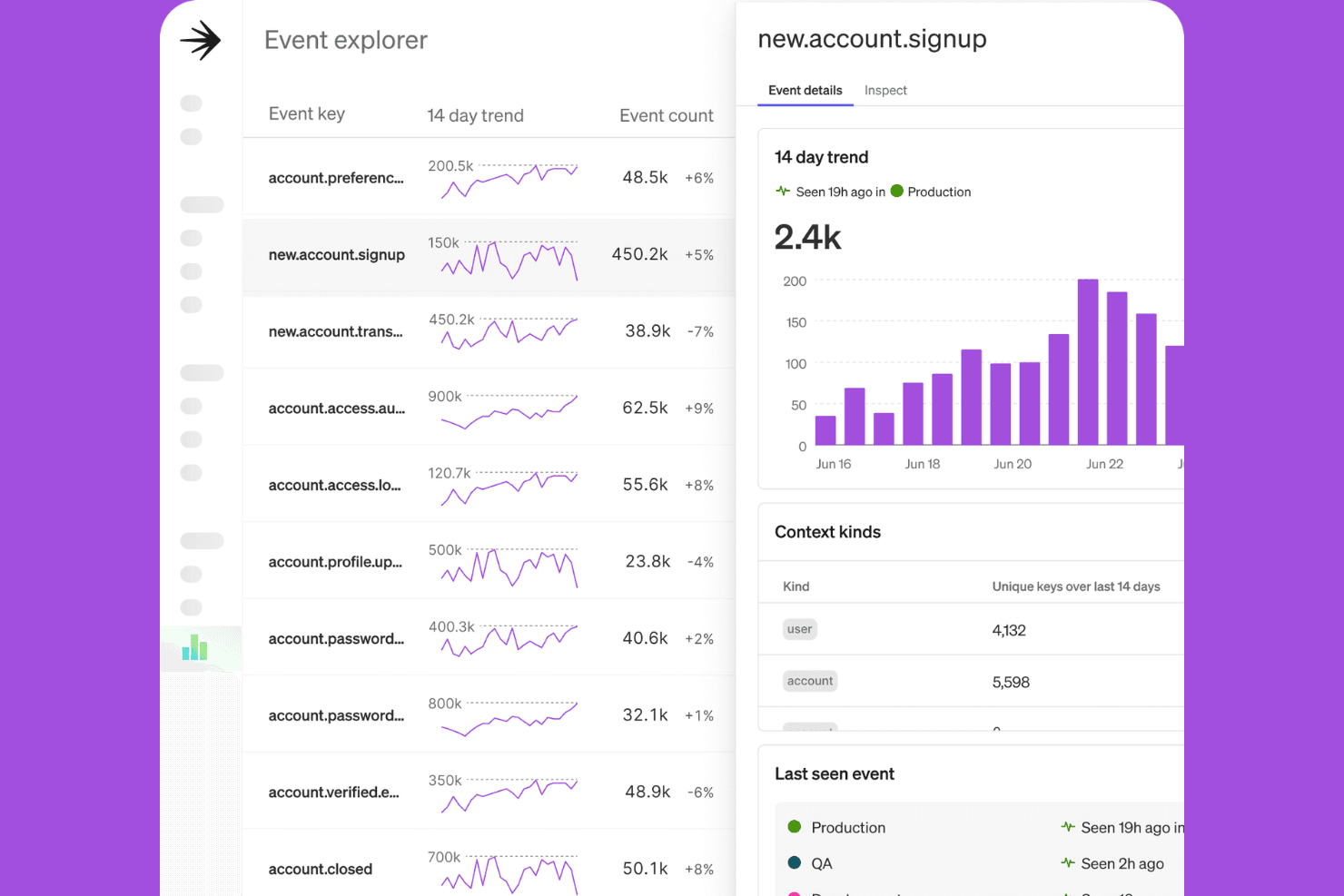
LaunchDarkly helps teams test and manage feature releases with control. LaunchDarkly is a feature flag and experimentation platform that lets engineering teams run A/B/n tests, multi-armed bandits, holdouts, and funnel experiments across web, mobile, backend, and edge environments from a single interface.
Who Is LaunchDarkly Best For?
LaunchDarkly is built for engineering teams that want to run experiments directly within their feature flag workflow, without switching tools.
Why I Picked LaunchDarkly
LaunchDarkly earns its spot on my shortlist because it's the only tool where A/B testing lives natively inside your feature flag workflow. I love that you can run A/B/n tests, multi-armed bandits, and holdout experiments directly on flags, then ship the winning variant with one click and no redeployment. The platform also supports AI config experiments, letting you test prompts and models at runtime and route traffic to the best performer automatically.
LaunchDarkly Key Features
- Warehouse-native experiment analysis: Run experiment analysis directly against Snowflake, Redshift, Databricks, or BigQuery using custom SQL metrics and your own data.
- Mutually exclusive and layered experiments: Run multiple experiments simultaneously without traffic contamination using experiment isolation controls.
- Sequential testing with CUPED variance reduction: Reduce required sample sizes and monitor results continuously without inflating false positive rates.
- Multi-armed bandit traffic allocation: Automatically shift traffic toward winning variants during a live experiment without waiting for a fixed test to conclude.
LaunchDarkly Integrations
LaunchDarkly offers 70+ native integrations, including Snowflake, BigQuery, Redshift, Databricks, Amplitude, Segment, and FullStory. It also supports an MCP server, OpenFeature providers, and an API for custom integrations.
Pros and Cons
Pros:
- AI agents can manage experiment workflows
- Statistical testing includes CUPED and bandits
- Feature flag experiments span every platform
Cons:
- AI doesn’t generate copy or designs
- Engineers must build variations in code
Learn more about LaunchDarkly: Best with enterprise experiment governance controls
- Free demo available
- Pricing upon request
Visit WebsiteCustomer Rating:4.2/5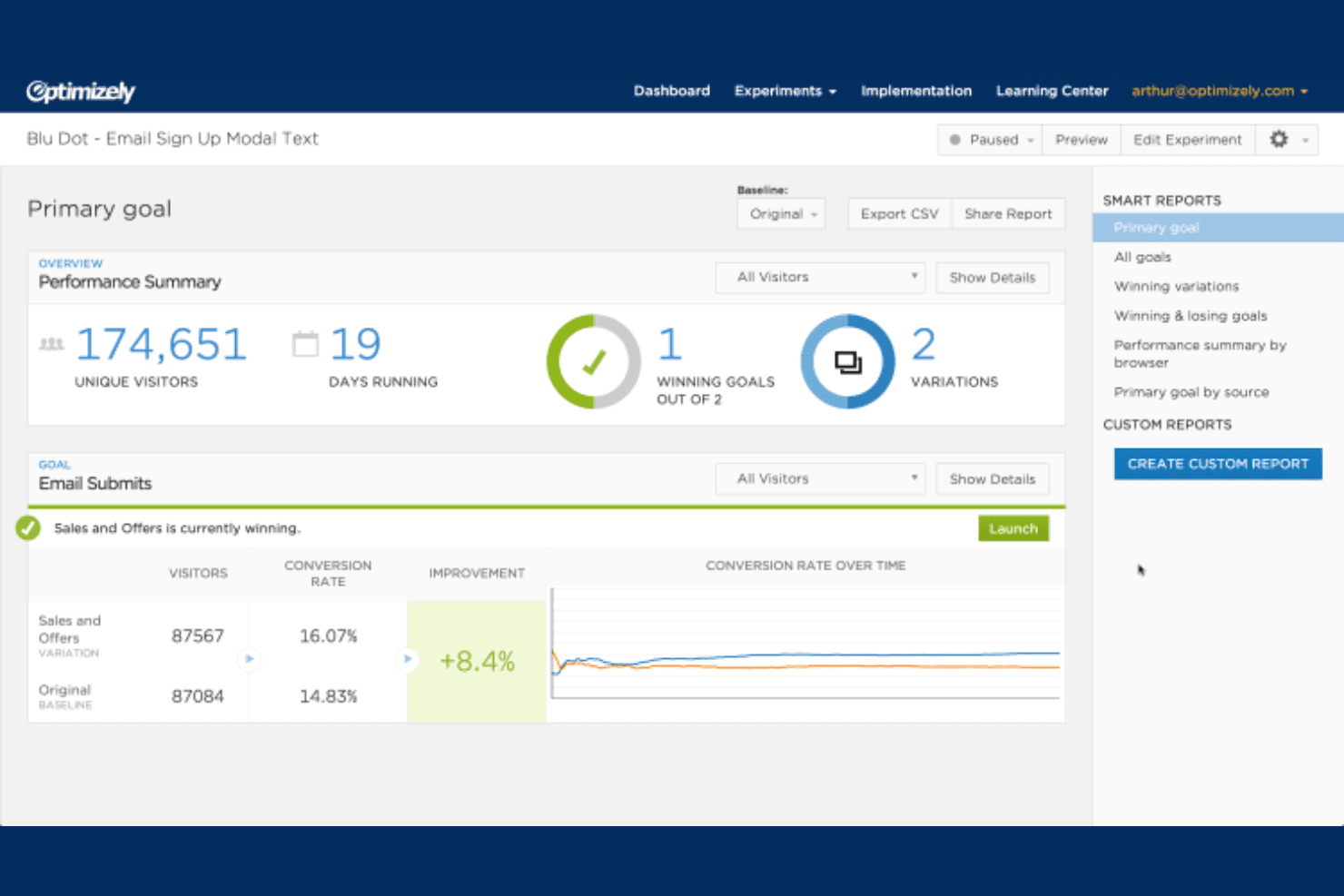
Optimizely helps enterprises run digital experiments and optimize user journeys. Optimizely is an enterprise experimentation platform that supports A/B, multivariate, feature flag, and server-side testing alongside an AI agent layer that covers experiment ideation, variation building, statistical analysis, and automated traffic optimization.
Who Is Optimizely Best For?
Optimizely fits enterprise product and engineering teams that need to run experiments at scale with formal approval workflows, team-based permissions, and compliance requirements baked in.
Why I Picked Optimizely
Optimizely earns its spot on my shortlist because of how seriously it takes experiment governance at scale. I'm particularly impressed by its change approval system, which routes flag changes, traffic allocation updates, and audience edits to designated approvers before anything reaches production. Paired with team-based permissions and Hypothesis and Test Plan fields built directly into A/B rules, it's the kind of structure that enterprise teams running experiments across multiple brands or business units genuinely need.
Optimizely Key Features
- Contextual multi-armed bandit testing: Uses AI to automatically shift traffic toward the best-performing variation based on individual visitor attributes in real time.
- Warehouse-native analytics: Connects directly to Snowflake, BigQuery, Databricks, and Redshift to run experiment analysis on your existing data without writing SQL.
- Opal Idea Builder: Analyzes a page URL, heatmaps, and past test data to generate structured experiment ideas with a hypothesis, problem statement, and supporting sources.
- Cross-platform SDK deployment: Runs experiments across web, mobile, server-side, and edge environments with sub-millisecond local decision evaluation and open-source SDKs.
Optimizely Integrations
Optimizely integrates with Google Analytics 4, Adobe Analytics, Amplitude, Segment, Snowflake, BigQuery, Databricks, Redshift, Salesforce, and Figma. It also supports MCP, webhooks, open-source SDKs, and APIs for custom integrations.
Pros and Cons
Pros:
- Cross-platform testing spans web, mobile, edge
- AI supports ideation through result summaries
- Enterprise-grade approval workflows for experiments
Cons:
- Bayesian and frequentist methods remain beta
- Advanced implementations require technical expertise
Learn more about Optimizely: Best for developer-led experiment workflows
- Free plan available
- Pricing upon request
Visit WebsiteCustomer Rating:4.5/5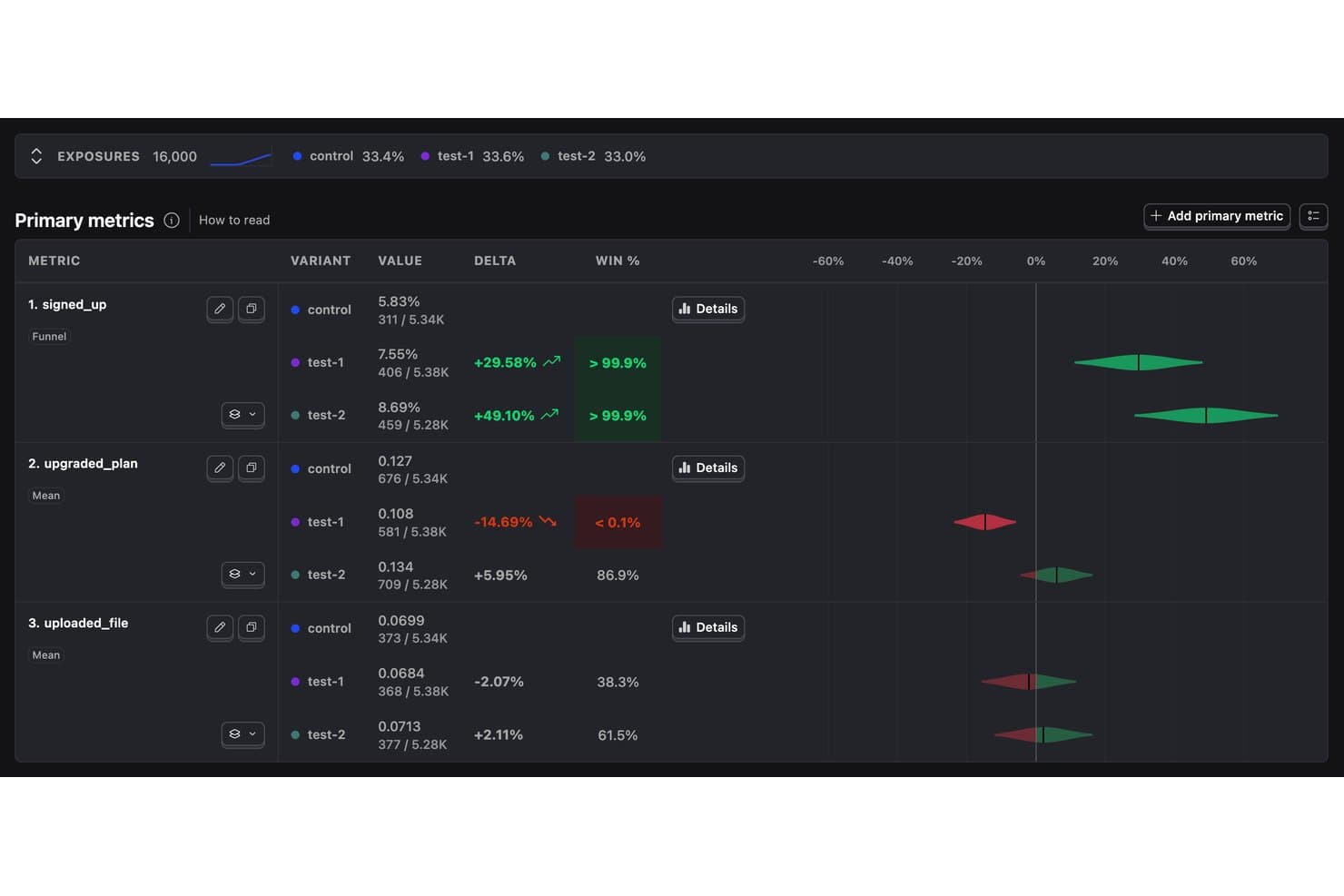
PostHog tracks A/B test variant performance across signup and conversion metrics. PostHog is a product analytics and experimentation platform that combines A/B, multivariate, holdout, and split URL testing with feature flag management, session replay, and an AI layer that generates experiment setup and variant code from plain-English prompts.
Who Is PostHog Best For?
PostHog fits engineering-led product teams that want to run experiments directly from their code editor without switching between tools.
Why I Picked PostHog
I've included PostHog in my top picks because it's built around a developer-led experiment workflow in a way few tools are. Every experiment runs on a feature flag, so shipping a winning variant is just flipping a switch in your codebase. The MCP server integration means you can create, launch, and read results from experiments directly in Cursor or Claude Code, without opening the PostHog UI at all.
PostHog Key Features
- Holdout testing: Reserve a percentage of users from all experiments to measure long-term impact without variant exposure.
- Session replay per variant: Watch recorded user sessions filtered by experiment variant to understand the behavior behind your results.
- Bayesian and frequentist statistics: Choose your preferred statistical engine per experiment, with configurable confidence thresholds and optional CUPED noise reduction.
- Data warehouse metrics: Pull experiment goal metrics directly from connected warehouse tables, such as Stripe or Shopify order data.
PostHog Integrations
PostHog connects to 50+ destinations through its CDP, including Braze, Customer.io, Salesforce, HubSpot, and Slack. It also supports Stripe, Shopify, Snowflake, and BigQuery data sources, plus a REST API and MCP integrations for Cursor and Claude Code.
Pros and Cons
Pros:
- Session replays explain variant performance
- Feature flags simplify winning-variant deployment
- AI generates experiment setup from prompts
Cons:
- Visual editor struggles with single-page apps
- No automated traffic shifting between variants
Learn more about PostHog: Best for Adobe Experience Cloud experimenters
- Free demo available
- Pricing upon request
Adobe Target delivers AI-driven testing and personalization. Adobe Target is an experimentation and personalization platform that supports A/B/n testing, multivariate testing, multi-armed bandit experiments, and feature-flag testing across web, mobile, and server-side environments.
Who Is Adobe Target Best For?
Adobe Target is a strong fit for enterprise teams already running on Adobe Experience Cloud who want to connect experimentation directly to personalization and analytics.
Why I Picked Adobe Target
I picked Adobe Target as one of the best because it's the natural home for experimentation teams already running on Adobe Experience Cloud. If your analytics live in Adobe Analytics, you can report A/B test results directly through Analytics for Target (A4T), which means no data stitching or context switching. I also like that Auto-Target and Automated Personalization let you move from a winning experiment to ML-driven personalization without leaving the platform.
Adobe Target Key Features
- Full-factorial multivariate testing: Tests every possible combination of page elements simultaneously to identify which arrangement drives the best results.
- Auto-Allocate traffic reallocation: Automatically shifts more traffic toward better-performing experiences during a live test, using a multi-armed bandit approach.
- Analytics for Target (A4T): Lets you report A/B test results directly inside Adobe Analytics, using your existing metrics and segments without any data stitching.
- On-device decisioning: Evaluates feature-flag and A/B experiments locally on the device for near-zero latency, using server-side SDKs for Node.js and Java.
Adobe Target Integrations
Adobe Target has native integrations with Adobe Analytics through A4T, Customer Journey Analytics, Real-Time CDP, Audience Manager, Adobe Experience Manager, Adobe Journey Optimizer, and Workfront Fusion. It also supports server-side API integrations and Adobe Experience Platform Web SDK.
Pros and Cons
Pros:
- On-device decisions reduce feature-test latency
- Personalizes winning experiences by visitor attributes
- Supports A/B/n, MVT, and bandit testing
Cons:
- Raw CSV exports require offline analysis
- Generative experiment design remains largely beta
Learn more about Adobe Target : Best for flag-based feature experiment analysis
- Free plan available
- From $150/month
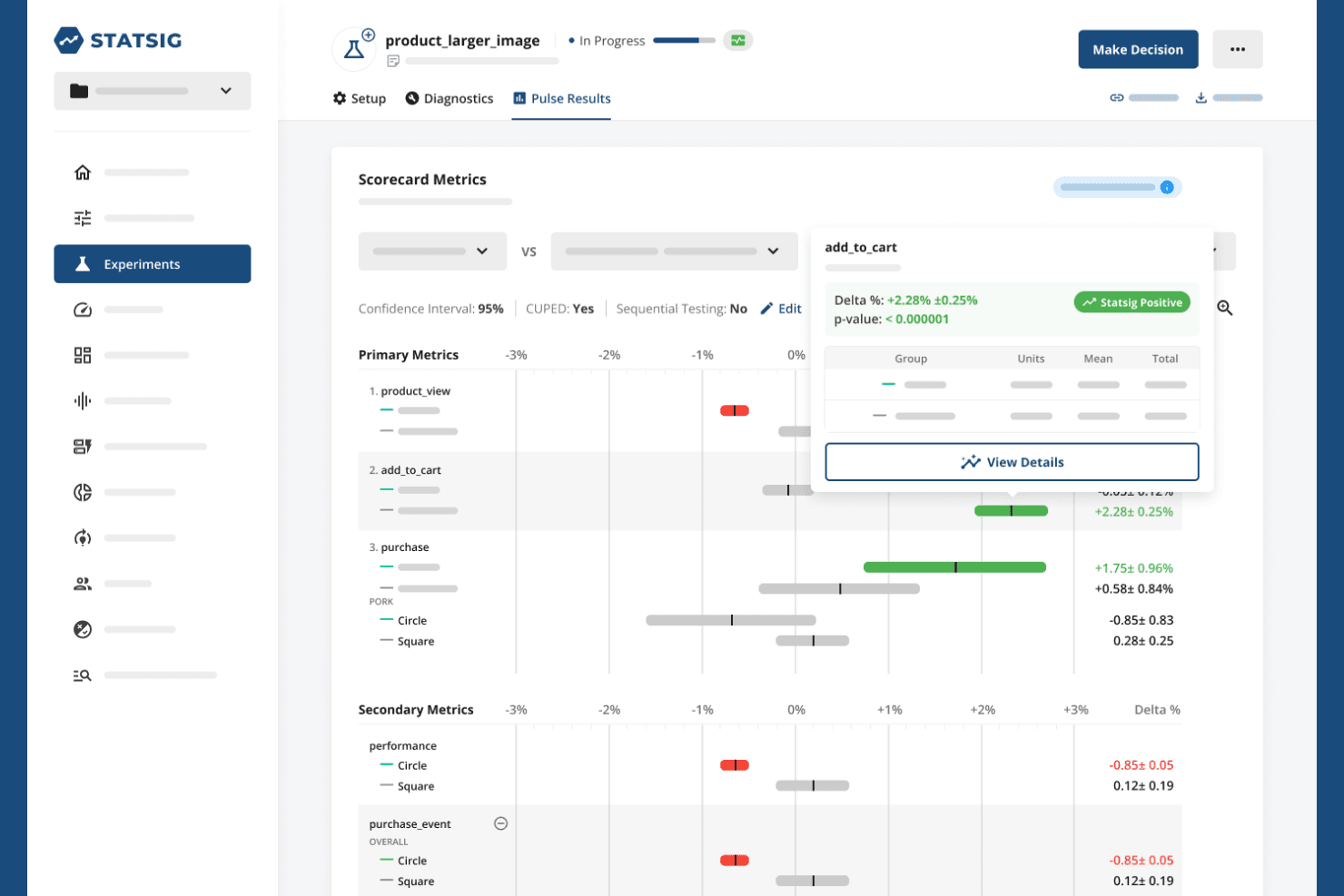
Statsig helps teams run experiments and analyze feature impact. Statsig is an experimentation and feature flag platform that combines A/B/n testing, multivariate tests, statistical analysis, and AI-generated experiment summaries with a flag-based architecture for running and analyzing experiments across web, mobile, and server environments.
Who Is Statsig Best For?
Statsig fits engineering-led product teams that run experiments through feature flags and need rigorous statistical analysis baked into the same workflow.
Why I Picked Statsig
Statsig earns its spot on my shortlist because it's the only platform where feature flags and experiments share a single data model, meaning I can launch a flag rollout and flip it into a measured experiment without rebuilding anything. I particularly like the Layers system, which prevents overlapping experiments from contaminating each other's results—critical when you're running hundreds of tests simultaneously. The AI-generated experiment summaries go beyond just showing lift; they produce a ship recommendation with key metrics highlighted, so my team makes faster decisions on what to roll out next.
Statsig Key Features
- AI-generated experiment summaries: Automatically produces a summary of each completed experiment, including a ship recommendation and key metric highlights, exportable as a PDF.
- Autotune multi-armed bandit: Shifts traffic toward the winning variant automatically over time, optimizing for a single target metric without manual intervention.
- CUPED variance reduction: Applies pre-experiment covariate adjustment to reduce noise and increase the statistical sensitivity of your experiment results.
- 30+ open-source SDKs: Covers client, server, and edge environments—including React, Swift, Android, Python, Go, and Rust—with sub-millisecond flag evaluation after initialization.
Statsig Integrations
Statsig offers documented integrations with Snowflake, Databricks, BigQuery, Redshift, Athena, Microsoft Fabric, Segment, mParticle, RudderStack, and Census. It also provides APIs for custom integrations and warehouse-native deployment.
Pros and Cons
Pros:
- Autotune shifts traffic toward winning variants
- AI summaries recommend shipping decisions
- Feature flags connect rollout and experiments
Cons:
- Engineer-oriented setup slows nontechnical teams
- Hypothesis AI doesn’t create variants
Learn more about Statsig: Best for open-source warehouse-native testing
- Free plan + free demo available
- From $40/user/month
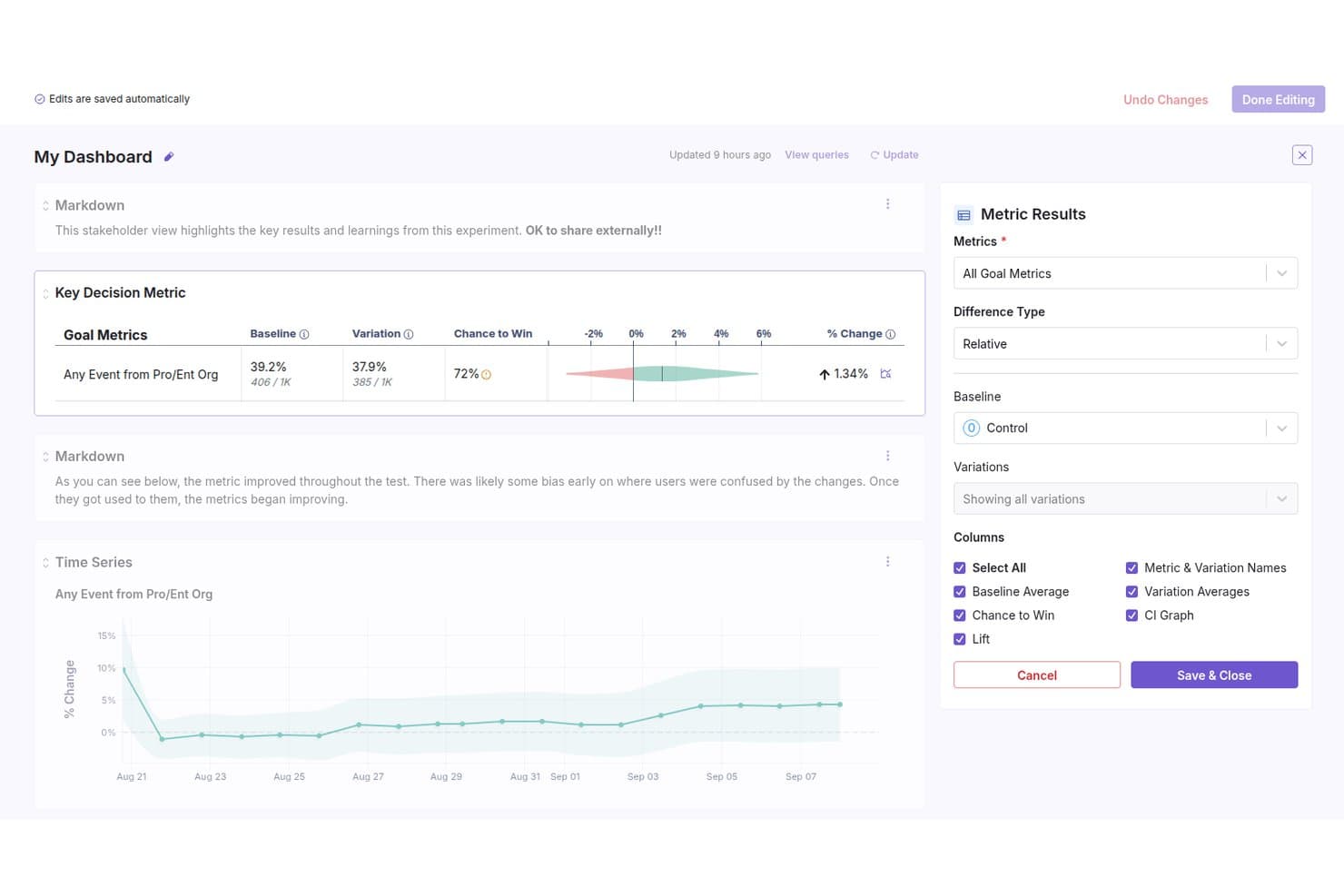
GrowthBook lets users build shareable A/B test dashboards with metric results. GrowthBook is an open-source A/B testing and feature flagging platform that supports experiment creation, AI-assisted variation building, warehouse-native metric analysis, and multi-armed bandit testing across web, mobile, and server environments.
Who Is GrowthBook Best For?
GrowthBook is a strong fit for product managers and developers at technically mature teams who want full control over their experimentation data without leaving their existing data warehouse.
Why I Picked GrowthBook
GrowthBook earns its spot on my shortlist because it's built around your existing data warehouse rather than its own proprietary data layer. I love that experiment metrics are calculated directly from Snowflake, BigQuery, or Redshift using SQL you can actually read and verify. Pair that with Bayesian and frequentist engines, CUPED variance reduction, and sequential testing, and you get a statistics layer that genuinely competes with in-house experimentation infrastructure at a fraction of the build cost.
GrowthBook Key Features
- AI Visual Editor: A Chrome extension that lets you describe changes in plain language and preview AI-generated page variations before launching a test.
- Multi-armed and contextual bandits: Automatically shift traffic toward winning variants using Thompson Sampling, with contextual bandits tailoring variants to individual user attributes.
- 24+ SDKs across web, mobile, server, and edge: Deploy experiments anywhere your product runs, with flags evaluated locally and no network calls required.
- Pre-launch experiment checklist: Run automated and manual checks before any experiment goes live, with API access for teams that want to integrate checks into their own workflows.
GrowthBook Integrations
GrowthBook connects to Snowflake, BigQuery, Databricks, Redshift, ClickHouse, Segment, RudderStack, Slack, GitHub, and Datadog. It also offers a REST API, webhooks, OpenFeature providers, and an MCP server for Claude, Cursor, and VS Code.
Pros and Cons
Pros:
- SDKs support web, mobile, server, and edge
- Bandits shift traffic toward stronger variants
- Warehouse-native metrics keep SQL auditable
Cons:
- Visual editor excludes native mobile apps
- AI variations require provider-key configuration
Learn more about GrowthBook: Best for Bayesian personalization at enterprise scale
- Free demo available
- Pricing upon request
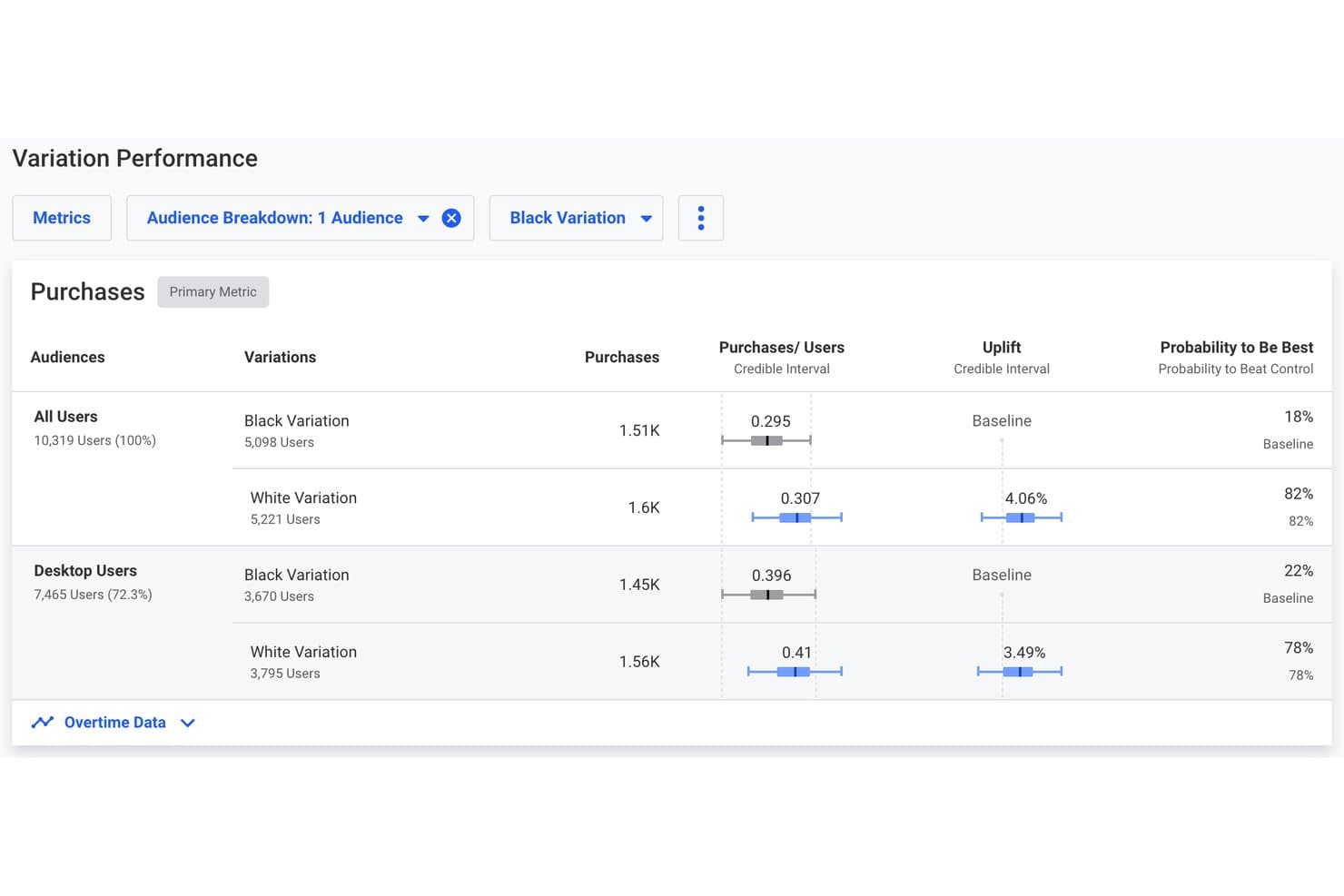
Dynamic Yield compares A/B variation performance with uplift and purchase metrics. Dynamic Yield is an AI-powered personalization and experimentation platform that supports A/B, multivariate, bandit, and server-side testing alongside audience segmentation, AI-assisted variation creation, and cross-channel deployment across web, app, email, and search.
Who Is Dynamic Yield Best For?
Dynamic Yield is a strong fit for enterprise marketing and CRO teams in ecommerce, retail, or financial services who need Bayesian experimentation and deep personalization in a single platform.
Why I Picked Dynamic Yield
Dynamic Yield earns its spot on my shortlist because its Bayesian engine goes beyond a simple winner/loser verdict, reporting Probability to Be Best, credible intervals, and secondary metrics simultaneously, so I can catch side effects before declaring a result. I also rely on its Affinity Allocation, which routes each user to the variation that matches their behavioral profile rather than splitting traffic blindly. The Analyst agent then monitors results nightly and flags anomalies against a 28-day baseline, which keeps experiments honest at enterprise scale.
Dynamic Yield Key Features
- Multi-touch campaign testing: Run experiments across multiple pages or funnel steps, with up to 20 touchpoints per variation tested against a control group.
- Dynamic Traffic Allocation: A multi-armed bandit that automatically shifts traffic toward the best-performing variation as results come in.
- Rollout feature flags: Wrap code in feature flags, release to a percentage of users, maintain a control group, and roll back instantly if needed.
- AI-generated result summaries: The Analyst agent summarizes test outcomes—including uplift, significance, and projected business impact—and produces executive-level testing program reports.
Dynamic Yield Integrations
Dynamic Yield has native integrations with Google Analytics 4, Contentsquare, mParticle, Shopify, and Stability.AI. Experience APIs and mobile SDKs for Kotlin, Swift, and React Native support custom connections.
Pros and Cons
Pros:
- AI agents generate approved campaign variations
- Affinity Allocation personalizes variation exposure
- Bayesian reporting reveals secondary metric side effects
Cons:
- Agent-generated designs currently support limited campaigns
- Advanced customization requires substantial developer involvement
Learn more about Dynamic Yield:
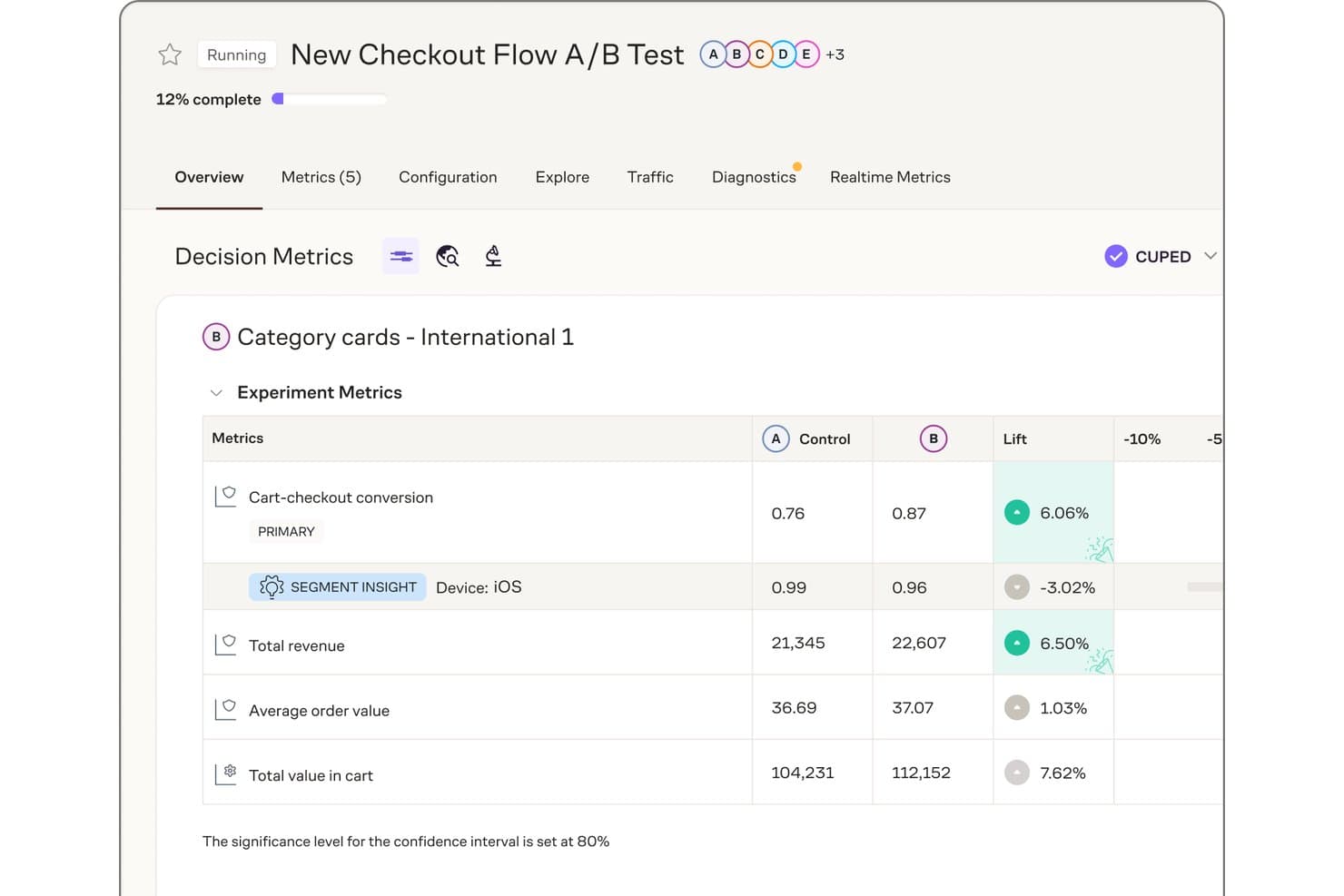
Eppo surfaces segment insights and lift metrics across A/B test variants. Eppo is a warehouse-native A/B testing and experimentation platform that supports feature-flag-driven A/B/n and multivariate testing, contextual bandits for AI-driven personalization, and advanced statistical analysis across web, mobile, and backend environments.
Who Is Eppo Best For?
Eppo is a strong fit for engineering-supported product and data teams running high-volume experiments on top of an existing cloud data warehouse.
Why I Picked Eppo
Eppo earns its spot on my shortlist because it's built from the ground up around warehouse-native experiment governance, which is rare in this category. I love that every metric definition and result is backed by visible SQL, so my team can audit exactly how an experiment was computed without leaving the warehouse. Protocols let us codify statistical guardrails, primary metrics, and decision rules into reusable templates, which cuts the guesswork out of calling a winner.
Eppo Key Features
- Contextual bandits: Automatically shifts traffic between variants in real time, picking per-user actions based on context to personalize experiences without manual intervention.
- Cross-platform SDKs: Deploys experiments across web, mobile, and backend environments using client and server SDKs in over a dozen languages, with local flag evaluation in roughly 1 ms.
- Statistical method selection: Lets you choose between frequentist, sequential, and Bayesian analysis methods, with CUPED++ variance reduction to tighten confidence intervals.
- Lifecycle experiment analysis: Connects to Braze and Iterable so you can analyze CRM and email experiments in Eppo alongside your product experiments.
Eppo Integrations
Eppo offers documented integrations with Snowflake, Databricks, BigQuery, Redshift, Segment, RudderStack, mParticle, Snowplow, Contentful, Braze, and Iterable. Datadog Experiments also connects with Datadog Feature Flags, Product Analytics, Real User Monitoring, Session Replay, and APM.
Pros and Cons
Pros:
- CUPED++ and Bayesian methods sharpen result decisions
- Contextual bandits personalize traffic by user context
- Warehouse-native governance keeps experiment SQL visible
Cons:
- Engineering setup limits self-serve experimentation
- No generative AI for hypotheses or variations
Learn more about Eppo:
Outras ferramentas de testes A/B com IA
Eis algumas opções adicionais de ferramentas de testes A/B com IA que não entraram na minha lista, mas que vale a pena conhecer:
- 11Wingify (formerly VWO and AB Tasty)Best for full-funnel AI from insight to rollout
- 12Amplitude Feature ExperimentationBest for analytics-native experiment workflows
- 13UnbounceBest for drag-and-drop variant creation
- 14OmniconvertBest for prompt-to-code variant building
- 15Convert ExperiencesBest for privacy-first web experimentation at scale
- 16Split by HarnessBest for engineering-led flag experiment analysis
How I Evaluate AI A/B Testing Tools
To make this list, a tool’s AI needs to handle real experimentation work, like generating test hypotheses and suggesting variations for an onboarding flow. From there, I evaluate three things. Core functionality carries the most weight, like running A/B tests and measuring statistical significance. Then I look at standout features, like feature-flag experiments, and what a tool offers beyond its feature set, like how well it scales across teams and traffic levels.
Core Functionality (Table Stakes For This List)
When I'm selecting tools for my list, I score each one on a scale from 0 (does not offer the functionality) to 5 (excels in this area) for each core functionality listed below. I then convert the total into a percentage to help assess each tool's overall fit, with extra weight on any functionalities I’ve deemed essential.
- Experiment Testing (Essential): I look for A/B and multivariate tests with practical variation controls, such as comparing two onboarding flows or checkout layouts.
- AI-Assisted Design (Essential): I assess whether AI can suggest relevant hypotheses, copy, or design variations that teams can adapt for a specific experiment.
- Results Analysis: I check how clearly a tool reports significance, confidence, and guardrail metrics so teams can judge a lift without overlooking tradeoffs.
- Audience Targeting: For a test aimed at new users or a behavioral segment, I evaluate how precisely teams can define and apply audience criteria.
- Cross-Platform Delivery: I consider whether teams can run experiments across web, mobile, or server-side environments relevant to their product.
- AI Optimization: I look for actionable AI recommendations or traffic allocation based on results, while checking how teams retain control over changes.
Once I have a list of tools that meet the criteria, I consider what sets each platform apart.
Differentiating Factors (What Sets Vendors Apart)
Here's how I compare and contrast different vendors:
Standout Features
Feature flag experimentation is a big differentiator. I look for platforms that tie tests directly to flag-based rollouts, so your team can validate a backend change on a small cohort before a full release. Holdout and guardrail monitoring matters just as much—I check whether a tool automatically flags drops in core metrics like retention or revenue while a test runs, rather than surfacing harm only after the fact. I also evaluate AI copywriting assistants that generate CTA or headline variants, since they cut hours from test setup when you need multiple copy options fast.
Beyond Features
I evaluate how quickly a platform moves teams from hypothesis to valid result, since a tool that cuts setup and analysis time means more experiments per quarter. Ecosystem fit matters just as much—I check for native integrations with analytics platforms and CDPs already in your stack, plus API maturity for custom instrumentation. I also look at vendor support, like access to experimentation strategists or statistical consulting, which helps teams that are still building their testing culture.
Como escolher ferramentas de testes A/B com IA
É fácil ficar preso a listas extensas de funcionalidades e estruturas de preços complexas. Para o ajudar a manter o foco enquanto percorre o seu processo específico de seleção de software, eis uma lista de fatores a ter em conta:
| Fator | O que considerar |
|---|---|
| FatorEscalabilidade | O que considerarA ferramenta conseguirá lidar com o volume atual e previsto de experiências, tráfego e dimensão da equipa? |
| FatorIntegrações | O que considerarEstabelece ligação nativa às suas plataformas de análise, comércio eletrónico ou marketing sem trabalho adicional? |
| FatorPersonalização | O que considerarPode adaptar os parâmetros das experiências, os relatórios e os fluxos de trabalho aos processos da sua empresa? |
| FatorFacilidade de utilização | O que considerarA sua equipa conseguirá lançar e interpretar testes sem formação extensiva ou assistência técnica? |
| FatorImplementação e integração inicial | O que considerarQuanto tempo demorará a começar a utilizar a ferramenta e que recursos ou apoio são disponibilizados? |
| FatorCusto | O que considerarOs níveis de preços são claros e estão alinhados com os seus padrões de utilização e limitações orçamentais? |
| FatorMedidas de segurança | O que considerarA ferramenta cumpre os seus requisitos de privacidade de dados, controlo de acesso e conformidade? |
| FatorDisponibilidade do apoio | O que considerarEstá disponível um apoio rápido no seu fuso horário e através dos seus canais preferenciais? |
O que são ferramentas de testes A/B com IA?
As ferramentas de testes A/B com IA são plataformas de software que utilizam inteligência artificial para automatizar, otimizar e analisar experiências digitais que comparam duas ou mais variantes. Estas ferramentas ajudam as equipas a conceber testes, identificar resultados estatisticamente significativos e descobrir padrões de comportamento dos utilizadores mais rapidamente do que os métodos manuais. Ao tirar partido da IA, podem sugerir novas experiências, interpretar dados complexos e reduzir o tempo e os conhecimentos necessários para executar campanhas de otimização eficazes.
Funcionalidades
Ao selecionar ferramentas de testes A/B com IA, esteja atento às seguintes funcionalidades essenciais:
- Sugestões de experiências baseadas em IA: Utiliza aprendizagem automática para analisar os dados dos utilizadores e recomendar novas ideias de testes, ajudando as equipas a identificar oportunidades de grande impacto que, de outra forma, poderiam não detetar.
- Análise estatística automatizada: Calcula a significância estatística e os níveis de confiança dos resultados dos testes, reduzindo os cálculos manuais e o risco de interpretar incorretamente os dados.
- Editor visual de experiências: Permite aos utilizadores criar e modificar variantes de testes através de uma interface de arrastar e largar, tornando a configuração dos testes acessível aos membros não técnicos da equipa.
- Segmentação de utilizadores: Permite direcionar experiências para grupos de utilizadores ou comportamentos específicos, para que possa testar hipóteses junto de públicos relevantes.
- Painéis de relatórios em tempo real: Fornece métricas e visualizações atualizadas sobre o desempenho das experiências, permitindo às equipas acompanhar os resultados e tomar decisões atempadas.
- Gravações de sessões integradas: Capta e reproduz sessões de utilizadores para cada variante de teste, fornecendo às equipas informações qualitativas sobre o comportamento dos utilizadores e os pontos de fricção.
- Mapas de calor: Apresenta visualmente os locais onde os utilizadores clicam, deslocam-se e interagem nas páginas de teste, ajudando as equipas a compreender os padrões de interação e a otimizar os esquemas.
- Suporte para testes multivariados: Permite testar várias variáveis em simultâneo, para que possa analisar o impacto combinado de várias alterações numa única experiência.
- Agendamento de experiências e controlos de implementação: Disponibiliza opções para agendar testes, controlar a distribuição do tráfego e colocar em pausa ou terminar experiências com base em critérios predefinidos.
- Relatórios e exportações personalizáveis: Permite aos utilizadores adaptar os relatórios e exportar dados em vários formatos para análise posterior ou partilha com as partes interessadas.
Vantagens
A implementação de ferramentas de testes A/B com IA proporciona várias vantagens para a sua equipa e para a sua empresa. Eis algumas que pode esperar:
- Ciclos de experiências mais rápidos: As sugestões baseadas em IA e a análise automatizada ajudam as equipas a lançar, acompanhar e interpretar testes mais rapidamente do que através de métodos manuais.
- Maior precisão nas decisões: Os cálculos estatísticos automatizados e os painéis em tempo real reduzem o erro humano e apoiam decisões baseadas em dados.
- Informações mais aprofundadas sobre os utilizadores: As gravações de sessões integradas e os mapas de calor revelam a forma como os utilizadores interagem com as variantes de teste, identificando pontos de fricção e oportunidades.
- Eficiência dos recursos: Os editores visuais e os fluxos de trabalho automatizados permitem aos membros não técnicos da equipa realizar experiências, libertando tempo dos programadores e analistas.
- Otimização personalizada: As funcionalidades de segmentação de utilizadores permitem realizar experiências direcionadas, para que possa adaptar as experiências a públicos específicos e maximizar o impacto.
- Testes escaláveis: O suporte para experiências multivariadas e com elevado tráfego garante que a plataforma pode acompanhar o crescimento das necessidades da sua empresa.
- Relatórios acionáveis: Os relatórios personalizáveis e as opções de exportação facilitam a partilha das conclusões com as partes interessadas e a definição de estratégias de otimização mais abrangentes.
Custos e preços
A seleção de ferramentas de testes A/B com IA exige uma compreensão dos vários modelos de preços e planos disponíveis. Os custos variam consoante as funcionalidades, a dimensão da equipa, os complementos e outros fatores. A tabela abaixo resume os planos comuns, os respetivos preços médios e as funcionalidades normalmente incluídas nas soluções de ferramentas de testes A/B com IA:
Tabela de comparação de planos para ferramentas de testes A/B com IA
| Tipo de plano | Preço médio | Funcionalidades comuns |
|---|---|---|
| Tipo de planoPlano gratuito | Preço médio$0 | Funcionalidades comunsTestes A/B básicos, experiências limitadas, lugares de utilizador restritos e relatórios básicos. |
| Tipo de planoPlano pessoal | Preço médio$19-$99/mês | Funcionalidades comunsExperiências ilimitadas, editor visual, segmentação básica, suporte por e-mail e análises padrão. |
| Tipo de planoPlano empresarial | Preço médio$139-$250/mês | Funcionalidades comunsSegmentação avançada, testes multivariados, integrações, painéis em tempo real e suporte prioritário. |
| Tipo de planoPlano empresarial avançado | Preço médio$400+/mês | Funcionalidades comunsIntegrações personalizadas, gestor de conta dedicado, segurança avançada, assistência na integração e garantias de SLA. |
Perguntas frequentes sobre ferramentas de testes A/B com IA
Eis algumas respostas a perguntas frequentes sobre ferramentas de testes A/B com IA:
Como é que a IA melhora os testes A/B tradicionais?
A IA melhora os testes A/B tradicionais ao automatizar a conceção de experiências, analisar os resultados mais rapidamente e sugerir novas ideias de testes com base nos dados dos utilizadores. Isto reduz o esforço manual e ajuda as equipas a identificar mais rapidamente as variantes vencedoras e as oportunidades de otimização.
As ferramentas de testes A/B com IA conseguem lidar com experiências multivariadas?
Sim, a maioria das ferramentas de testes A/B com IA suporta experiências multivariadas. Isto permite testar várias variáveis em simultâneo e compreender de que forma as diferentes alterações interagem, o que é útil para otimizar experiências de utilizador complexas.
Que aspetos de privacidade dos dados devo ter em conta?
Deve garantir que a ferramenta cumpre os regulamentos relevantes de privacidade dos dados, como o GDPR ou o CCPA. Verifique se dispõe de funcionalidades como anonimização de dados, armazenamento seguro de dados e mecanismos claros de obtenção do consentimento dos utilizadores para proteger as informações dos utilizadores.
Estas ferramentas exigem conhecimentos de programação para configurar experiências?
Não, muitas ferramentas de testes A/B com IA disponibilizam editores visuais e fluxos de trabalho orientados que permitem aos utilizadores sem conhecimentos técnicos configurar e lançar experiências. No entanto, as personalizações avançadas ou as integrações podem exigir alguns conhecimentos de programação.
Como posso saber se os resultados do meu teste são estatisticamente significativos?
As ferramentas de testes A/B com IA incluem normalmente análises estatísticas automatizadas que calculam a significância e os níveis de confiança por si. Reveja sempre estas métricas no painel de relatórios da ferramenta antes de tomar decisões com base nos resultados dos testes.