

Enquanto gestor de produto, enfrenta desafios únicos diariamente. Equilibrar as exigências das partes interessadas, manter a sua equipa alinhada e garantir que os projetos se mantêm no caminho certo pode parecer avassalador. Poderá estar a considerar alternativas ao Productboard para encontrar soluções melhores e mais adequadas às necessidades da sua equipa.
Trabalho há anos na área da gestão de produtos, testando e analisando software de forma independente. Sei como é crucial ter ferramentas que apoiem verdadeiramente o seu fluxo de trabalho. Na minha experiência, encontrar o software certo pode fazer toda a diferença.
Neste artigo, partilharei as minhas principais escolhas de alternativas ao Productboard. Encontrará uma análise imparcial e bem fundamentada de cada opção, centrada na forma como podem ajudá-lo a superar os seus desafios empresariais específicos. Vamos encontrar juntos a opção mais adequada para a sua equipa.
O que é o Productboard?
O Productboard é uma plataforma central de gestão de produtos que ajuda as equipas a definir prioridades, planear e criar produtos de forma eficaz. Quer seja uma start-up à procura de software para roteiros de produto ou uma empresa estabelecida a aperfeiçoar a sua plataforma de gestão de produtos, as ferramentas do Productboard, incluindo a sua ferramenta para recolher feedback sobre produtos, podem ajudar as equipas a manterem-se ligadas às necessidades dos clientes. Funcionalidades como estruturas de priorização e criação de roteiros ajudam-no a acompanhar as necessidades dos utilizadores, decidir o que criar a seguir e comunicar estratégias de forma eficiente às partes interessadas. De um modo geral, o Productboard oferece uma abordagem estruturada à gestão do ciclo de vida do seu produto, garantindo que a sua equipa se mantém focada e alinhada com os objetivos da empresa.
Why Trust Our Software Recommendations
6,700+
Reviews
20
Industry experts
16+
Evaluation factors
14
Years
Our team has been testing and reviewing software since 2012. As product managers ourselves, we know how difficult—and important—it is to choose the right software.
For this guide, we evaluated tools using hands-on testing and independent research, scoring tools using our selection criteria.
Our reviews reflect our human editorial judgment, not a sales pitch.
Expert reviewers:
- Andrew LumbySenior TPM
- Cristiano ValimSenior UI/UX Lead


Tabela de comparação das alternativas ao Productboard
Utilize esta tabela de comparação para comparar os detalhes de preços das minhas principais alternativas ao Productboard.
| Tool | Best For | Trial Info | Price | ||
|---|---|---|---|---|---|
| 1 | Best for AI-driven customer feedback analysis | Free demo available | Pricing upon request | Website | |
| 2 | Best for Jira-based public roadmaps | Free plan + 30-day trial + demo available | From $1.10/user/month | Website | |
| 3 | Best for revenue-weighted feedback prioritization | 30-day free trial + free demo available | Pricing upon request | Website | |
| 4 | Best for strategy-to-roadmap OKR alignment | 30-day free trial + free demo available | From $59/user/month (billed annually) | Website | |
| 5 | Best for product backlog management | 7-day free trial + free demo available | From $24/user/month (billed annually) | Website | |
| 6 | Best for AI-driven portfolio roadmapping | Free demo available | Pricing upon request | Website | |
| 7 | Best for customizable prioritization frameworks | Free demo available | Pricing upon request | Website | |
| 8 | Best for product discovery-driven roadmaps | 14-day free trial + free demo available | From $24/user/month | Website | |
| 9 | Best for customer feedback collection via AI | Free plan + free trial + free demo available | From $79/month (billed annually) | Website | |
| 10 | Best for closing the feedback loop with customers | Free plan + 10-day trial + demo available | From $29/user/month (billed annually) | Website |


Testamos e analisamos software de gestão de produtos desde 2020. Enquanto gestores de produto, sabemos como é fundamental e difícil tomar a decisão certa ao selecionar software. Investimos numa investigação aprofundada para ajudar o nosso público a tomar melhores decisões de compra de software.
Testámos mais de 2.000 ferramentas para diferentes casos de utilização na gestão de produtos e escrevemos mais de 1.000 análises de software abrangentes. Saiba como mantemos a transparência & consulte a nossa metodologia de análise de software.
Análises das melhores alternativas ao Productboard
Seguem-se os meus resumos detalhados das melhores alternativas ao Productboard que entraram na minha lista. As minhas análises apresentam uma visão detalhada das principais funcionalidades, vantagens & desvantagens, integrações e casos de utilização ideais de cada ferramenta, para o ajudar a encontrar a melhor opção para si.
 Best for AI-driven customer feedback analysis
- Free demo available
- Pricing upon request
Visit WebsiteCustomer Rating:4.8/5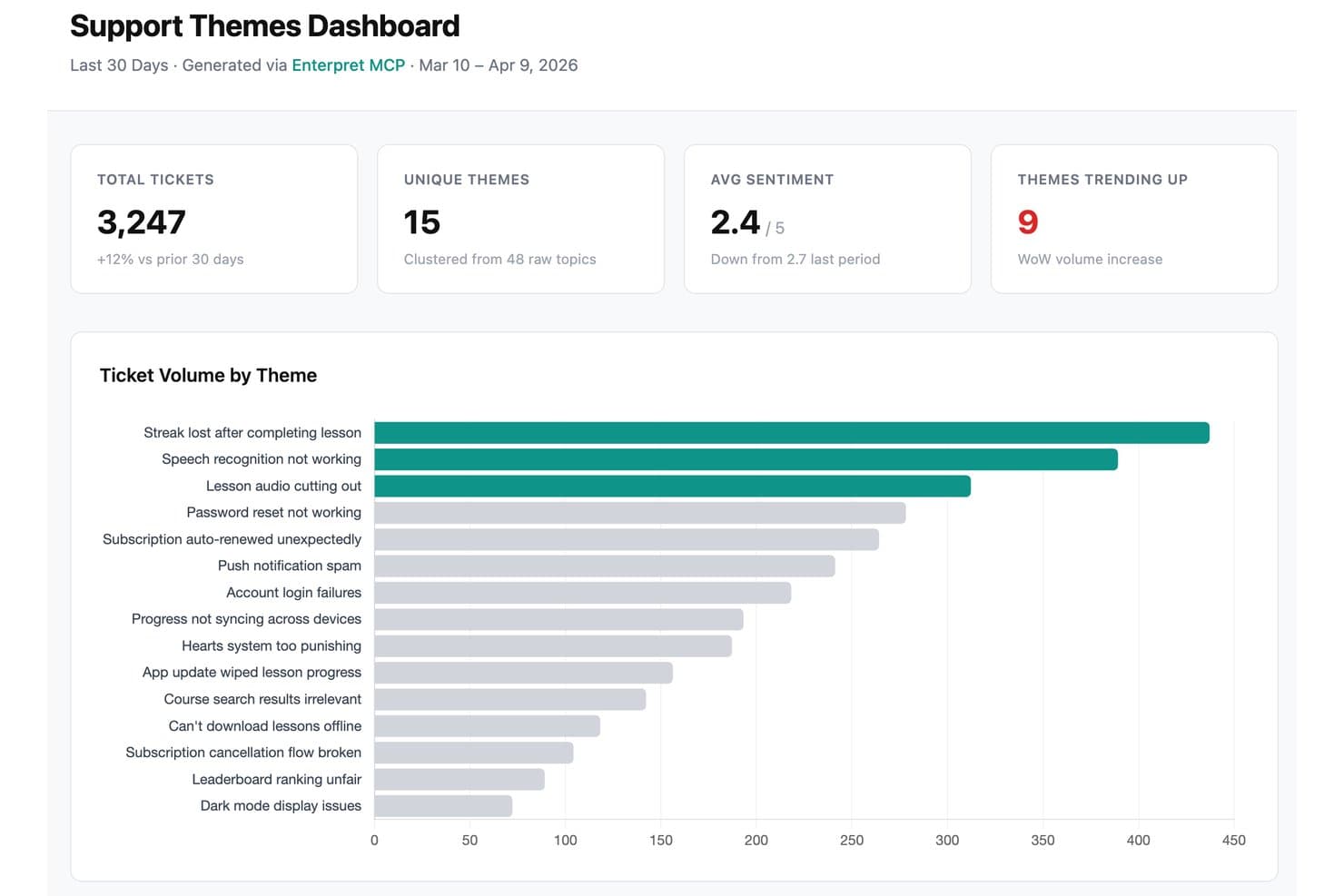
Enterpret offers a Support Themes Dashboard that clusters raw support tickets into themes, displaying ticket volume, sentiment trends, and trending issues. Enterpret is a customer intelligence platform that pulls feedback from 50+ sources and uses AI to automatically theme, analyze, and surface insights—making it a strong fit for product teams that need to make sense of high-volume feedback without manual tagging.
Who Is Enterpret Best For?
Enterpret is a strong fit for mid-market and enterprise product teams managing high volumes of customer feedback across many channels who need AI to do the heavy lifting on analysis.
Why I Picked Enterpret
I picked Enterpret as one of the best because its AI does the analysis work that most feedback tools leave to you. Its Adaptive Taxonomy automatically sorts incoming feedback into a three-level theme hierarchy, so there's no manual tagging backlog to manage. I especially like the Wisdom AI assistant, which lets you ask plain-English questions and get cited answers pulled directly from source feedback, making it easy to put real numbers behind product decisions in planning meetings.
Enterpret Key Features
- Customer Context Graph: Links feedback records to accounts, users, and opportunities so you can rank issues by revenue impact, churn risk, or NPS rather than mention count.
- Close the Loop workflows: Monitors Jira and Linear for resolved tickets, drafts personalized follow-up messages for affected users, and tracks sentiment changes after outreach.
- AI agents: Automated agents flag volume spikes, escalate high-risk feedback from strategic accounts, and deliver personalized trend digests to relevant team members.
- 50+ source integrations: Pulls feedback from support tools, call recordings, surveys, reviews, social platforms, CRMs, and data warehouses into a single unified view.
Enterpret Integrations
Enterpret offers native integrations across 50+ sources, including Jira Software Cloud, Linear, Salesforce Sales Cloud, HubSpot, Zendesk, Intercom, Slack, and Snowflake. It also supports APIs, webhooks, CSV uploads, and Zapier for custom connectivity.
Pros and Cons
Pros:
- Ranks customer issues by business impact
- Wisdom answers include citations to source feedback
- Automates feedback themes without manual tagging
Cons:
- No customer-facing portal for request voting
- No visual roadmap for planning work
Learn more about Enterpret: Best for Jira-based public roadmaps
- Free plan + 30-day trial + demo available
- From $1.10/user/month
Visit WebsiteCustomer Rating:5/5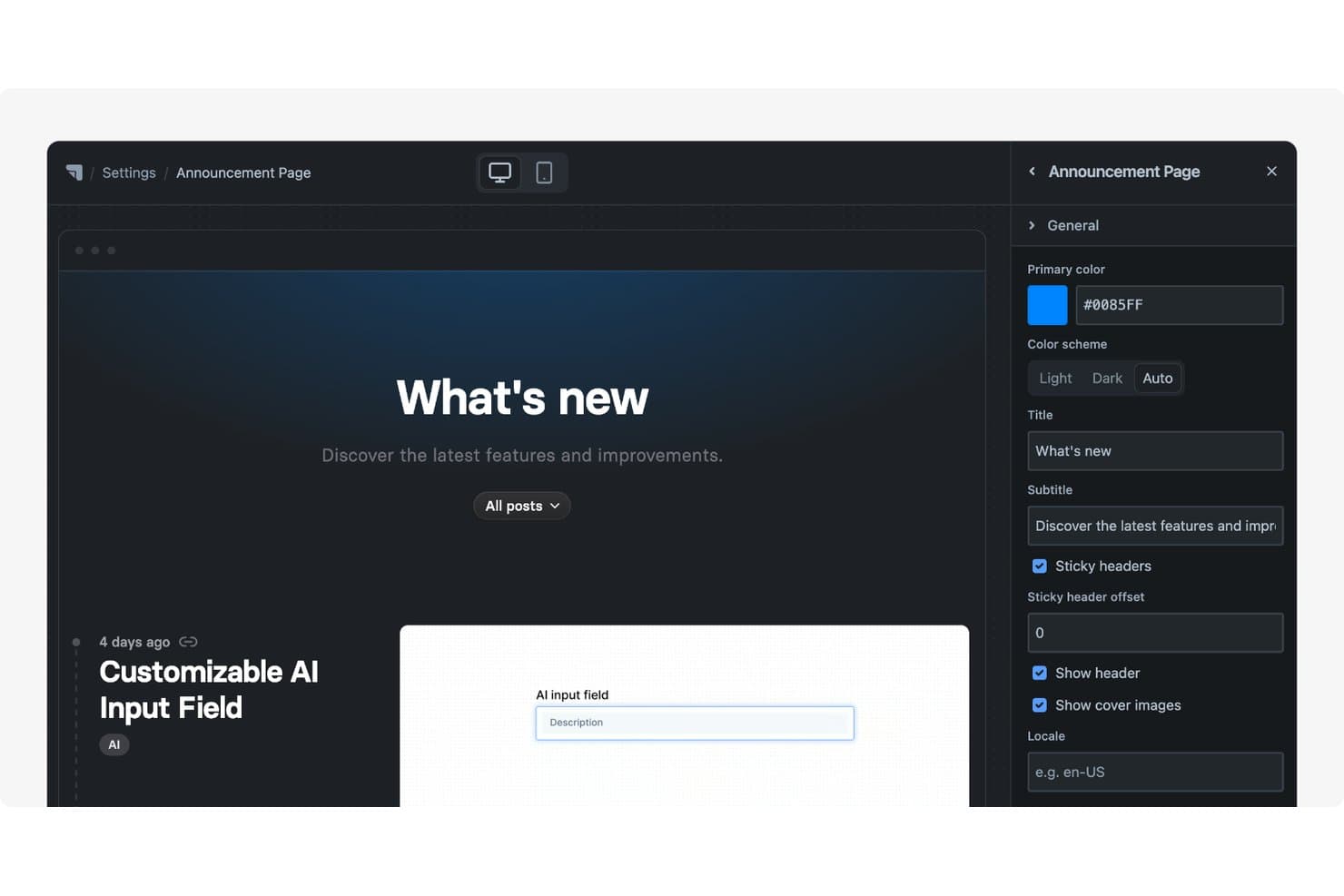
Released offers a customizable Announcement Page with editable title, subtitle, color scheme, and header settings via a side panel. Released Hub is a Jira-native product management app that lets teams publish customer-facing roadmaps, collect feedback, and generate AI-written release notes—all without leaving the Atlassian ecosystem or maintaining a separate database.
Who Is Released Best For?
Released is a great fit for product teams already running on Jira Cloud who want to publish customer-facing roadmaps and release notes without adopting a separate tool.
Why I Picked Released
I picked Released as one of the best because it's the only tool I've found that publishes Jira data directly as a customer-facing roadmap, with no second database to maintain. I love that you can create audience-specific portals, so your customers see a "Now / Next / Later" board while leadership gets a timeline view, all from the same Jira source. The feedback inbox ties it together, letting customers submit requests and receive replies without ever needing a Jira license.
Released Key Features
- AI release notes generator: Drafts release notes from filtered Jira work using custom writing instructions and reusable templates, then publishes them to a branded changelog.
- Feedback inbox: Centralizes customer submissions from your portal, forms, and Slack into one triage view with statuses, internal notes, and threaded replies.
- Embeddable feedback forms: Lets you collect structured feedback directly from your website or product without requiring customers to have a Jira license.
- JPD Insights integration: Automatically converts portal feedback into Jira Product Discovery Insights, linking customer input directly to discovery items in your existing workflow.
Released Integrations
Released Hub has seven documented integrations, including Jira Software, Jira Product Discovery, Confluence, Slack, Webflow, Framer, and Refined. It has no API or webhooks, limiting custom integrations.
Pros and Cons
Pros:
- Customer feedback supports replies and wishlists
- Audience-specific board and timeline views
- Jira-native roadmaps avoid duplicate data entry
Cons:
- No portfolio roadmaps or OKR alignment
- No built-in prioritization frameworks
Learn more about Released: Best for revenue-weighted feedback prioritization
- 30-day free trial + free demo available
- Pricing upon request
Visit WebsiteCustomer Rating:4.3/5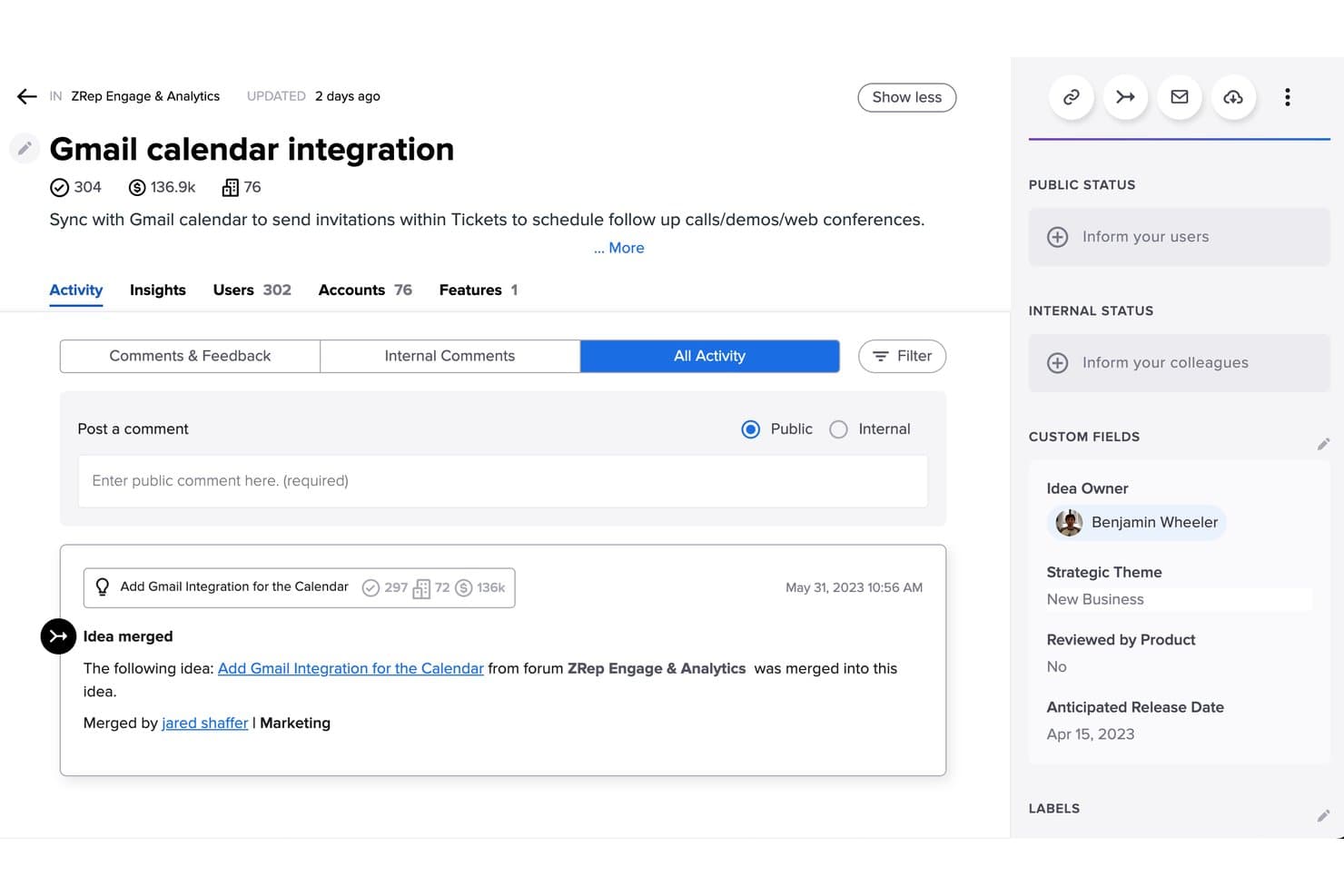
Uservoice merges duplicate ideas to consolidate user feedback efficiently. UserVoice is a customer intelligence platform built for product teams that need to centralize feedback from multiple channels, tie it to real customer and revenue data, and turn it into prioritized product decisions.
Who Is UserVoice Best For?
UserVoice fits product teams at mid-market to enterprise companies that need to tie customer feedback directly to revenue data before making prioritization calls.
Why I Picked UserVoice
I picked UserVoice as one of the best because it's the only tool here that ties feedback directly to revenue data before you make a prioritization call. When an idea comes in, UserVoice attaches ARR exposure, open opportunities, and account-level context to it, so you're scoring against actual business impact, not just vote counts. The Impact Insights grid rolls all of that up per idea, letting you see which requests represent the most revenue at risk.
UserVoice Key Features
- AI-powered label suggestions: An AI beta reviews incoming feedback and recommends labels based on your existing taxonomy, flagging patterns you haven't grouped yet.
- Customer-facing feedback portal: A branded portal lets customers submit ideas, vote, comment, and subscribe to status updates directly on your domain.
- Multi-channel feedback capture: You can collect feedback via a Chrome extension, Slack, CSV import, and in-app widgets, with source and account context attached to every record.
- Automatic supporter notifications: When a feature's status changes, UserVoice notifies every customer who supported a linked idea and logs who was contacted in an audit trail.
UserVoice Integrations
UserVoice offers native integrations with Salesforce, Zendesk, Jira, Azure DevOps, Slack, Microsoft Teams, Gainsight, FullStory, Dragonboat, and Skyvia, plus an Admin API for custom integrations. Jira integration is available on Premium and has limited status syncing.
Pros and Cons
Pros:
- AI groups themes across customer feedback
- Portal closes the loop with supporter updates
- Revenue-weighted feedback beats vote counts
Cons:
- No native OKR alignment or Productboard importer
- Roadmaps lack timeline and Gantt views
Learn more about Uservoice: 4Best for strategy-to-roadmap OKR alignment
Aha!
- 30-day free trial + free demo available
- From $59/user/month (billed annually)
Visit WebsiteCustomer Rating:4.4/5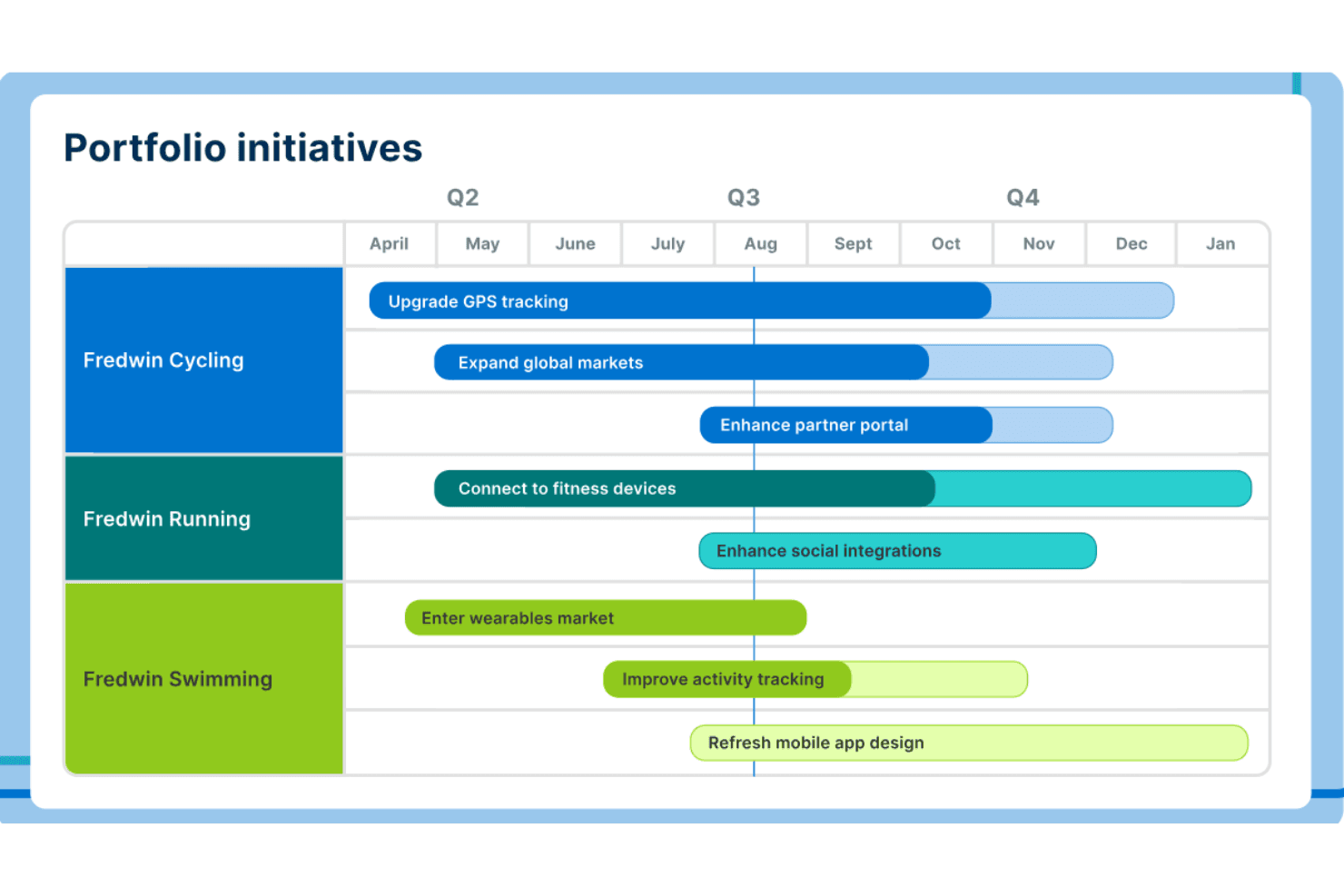
Aha! lets users visualize portfolio initiatives across products on a timeline. Aha! is a product management suite built for product managers and heads of product who need to connect strategy, roadmaps, and customer feedback in one place—without jumping between disconnected tools.
Who Is Aha! Best For?
Aha! is a strong fit for product teams managing multiple product lines who need a clear, traceable link between company strategy and what actually ships.
Why I Picked Aha!
I've included Aha! in my top picks because no other tool on this list traces strategy to delivery as tightly. Goals and initiatives connect directly to epics and features, and the portfolio roadmap rolls all of that up across every product line in one view. What seals it for me is the two-way Jira field mapping: when engineering updates a status in Jira, Aha! reflects it instantly, so the roadmap never drifts from what's actually being built.
Aha! Key Features
- Ideas portal: Run unlimited branded portals where customers can submit, vote on, and comment on ideas, with automatic status updates when work ships.
- Product Value Scorecard: Score features and epics using a customizable formula that factors in population, need, strategy, effort, and confidence.
- AI idea exploration: Automatically group submitted ideas into suggested themes on a visual chart, analyzing up to 1,000 ideas per run.
- Workspace hierarchy: Organize multiple products under workspace lines, with portfolio-level rollups that give leadership a single view across every product.
Aha! Integrations
Aha! lists 65+ integrations across its suite, including Jira, Azure DevOps, GitHub, Slack, Salesforce, HubSpot, Zendesk, Figma, Confluence, and Microsoft Teams. Salesforce, HubSpot, and Zendesk require Ideas Advanced; a REST API and Zapier support custom connectivity.
Pros and Cons
Pros:
- Rolls multiple product lines into portfolio roadmaps
- Syncs shipped features back to idea portals
- Links strategy directly to roadmap delivery
Cons:
- Productboard migration relies on manual CSV imports
- Complex setup can burden smaller teams
Learn more about Aha!: Best for product backlog management
- 7-day free trial + free demo available
- From $24/user/month (billed annually)
Visit WebsiteCustomer Rating:4.2/5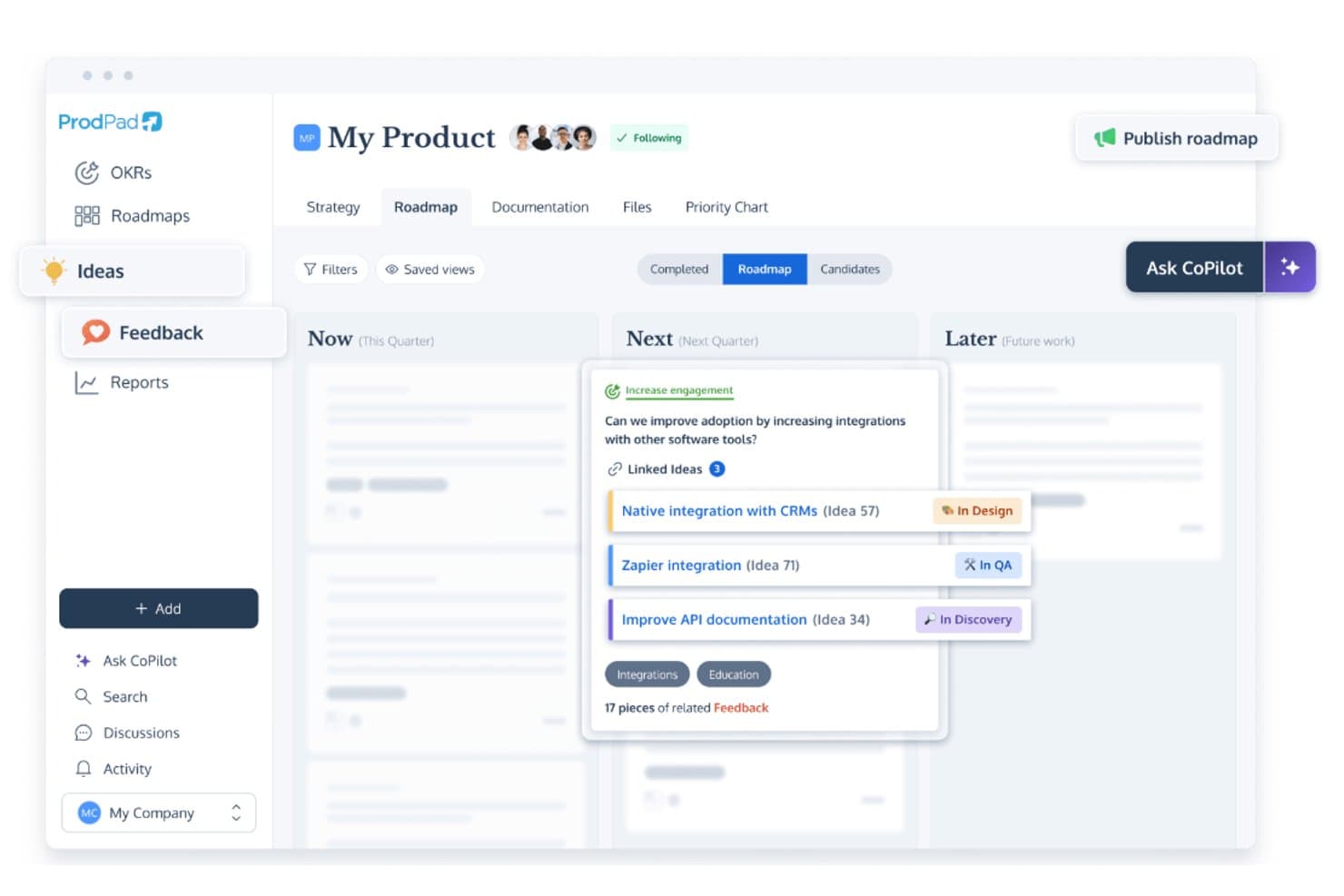
ProdPad links roadmap ideas to feedback and tracks development status. ProdPad is a product management platform built around discovery and strategy, connecting customer feedback, ideas, and roadmaps in one place for product managers who want to make prioritization decisions grounded in real evidence.
Who Is ProdPad Best For?
ProdPad is a strong fit for product managers who want a structured, methodology-driven workspace that connects strategy, discovery, and backlog in one place.
Why I Picked ProdPad
I picked ProdPad as one of the best because its backlog management isn't just a list, it's a structured discovery layer where every idea links directly to the customer feedback that inspired it. I love how the Idea Canvas turns a raw request into a spec with built-in prompts, and how AI automatically surfaces related feedback and flags duplicates so your backlog stays clean. When an idea progresses through a workflow stage, automations notify the right people and close the loop with customers, without any manual follow-up.
ProdPad Key Features
- Now-Next-Later roadmap sharing: Create unlimited custom roadmap views with shareable links so stakeholders can see the right version without needing a login.
- OKR tracking with key results: Link initiatives directly to objectives, track baselines and targets against actual results, and use AI to generate key results from an objective.
- Two-way Jira sync: Map custom fields between ProdPad and Jira, push initiatives and ideas to epics and stories, and sync statuses back without needing Jira admin rights.
- Customer feedback portal: Host a branded portal on your own domain where customers can react to ideas and submit feedback directly into your ProdPad workspace.
ProdPad Integrations
ProdPad offers native integrations with Jira, Azure DevOps, Salesforce, Intercom, Slack, Microsoft Teams, Linear, GitHub, and UserVoice. It also supports API and webhook connections, MCP Server, and Zapier.
Pros and Cons
Pros:
- OKRs connect initiatives to measurable outcomes
- Ideas retain customer evidence through prioritization
- AI links feedback and flags duplicate ideas
Cons:
- Portfolio visuals can become muddy at scale
- Roadmaps lack timeline and Gantt views
Learn more about ProdPad: Best for AI-driven portfolio roadmapping
- Free demo available
- Pricing upon request
Visit WebsiteCustomer Rating:4.8/5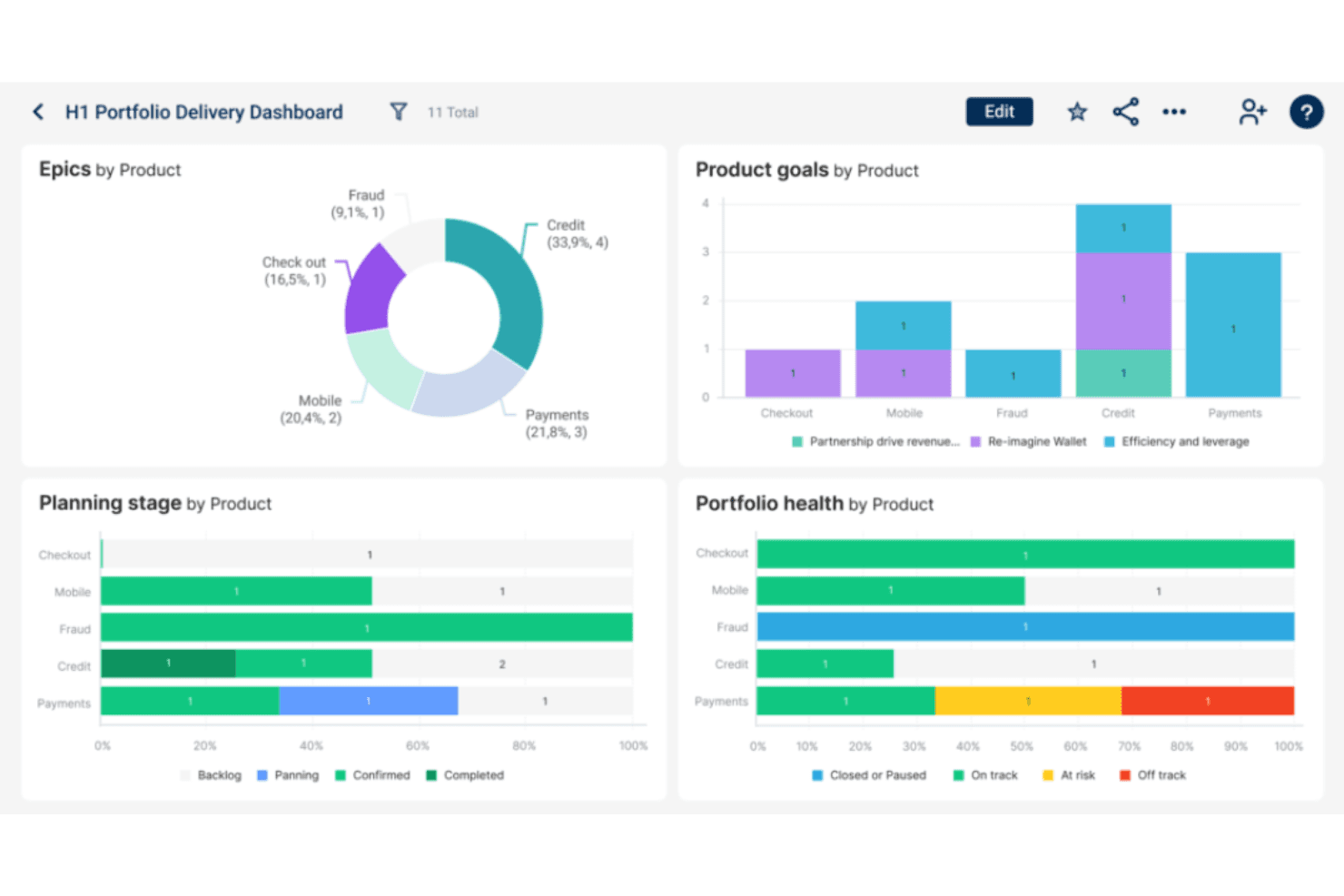
Dragonboat visualizes portfolio health and epic progress by product. Dragonboat is an AI-powered product portfolio platform that connects strategy, customer feedback, and roadmapping in one place—making it a strong fit for product leaders and operations teams managing complex, multi-team environments.
Who Is Dragonboat Best For?
Dragonboat is a strong fit for product operations leads and heads of product managing multi-team portfolios who need strategy, prioritization, and delivery connected in one platform.
Why I Picked Dragonboat
I picked Dragonboat as one of the best because it's the only tool on my list that treats AI-driven portfolio roadmapping as a core function rather than a bolt-on. I especially like its Thematic Insight Analyzer, which surfaces patterns across feedback from Salesforce, Zendesk, and Slack and connects them directly to roadmap items. Its AI Scenario Planner then lets you model trade-offs across your full portfolio before committing to a plan.
Dragonboat Key Features
- OKR alignment: The Strategy app connects multi-level OKRs directly to roadmap items, so you can track targets versus actuals across your full portfolio.
- Two-way Jira and ADO sync: Dragonboat maps custom fields and hierarchy levels across multiple Jira and Azure DevOps instances without requiring engineering changes.
- Allocate-and-prioritize method: Teams set target resource allocations, rank items within each group, and compare planned allocation against actual to surface trade-offs.
- Free requestor and read-only seats: Up to 100 stakeholder users can submit requests, vote, comment, and view roadmap updates at no extra cost on the Essential plan.
Dragonboat Integrations
Dragonboat offers 200+ integrations, including two-way Jira and Azure DevOps, Slack, Microsoft Teams, Zendesk, Salesforce, UserVoice, Pendo Listen, ServiceNow, and Aha! Ideas. REST APIs and an MCP server support custom connections.
Pros and Cons
Pros:
- Multiple scoring models support explicit trade-offs
- Portfolio-wide OKRs tie strategy to delivery
- AI connects feedback themes to portfolio decisions
Cons:
- Public customer voting portal remains unconfirmed
- Setup can feel heavy for smaller teams
Learn more about Dragonboat: Best for customizable prioritization frameworks
- Free demo available
- Pricing upon request
Visit WebsiteCustomer Rating:4.4/5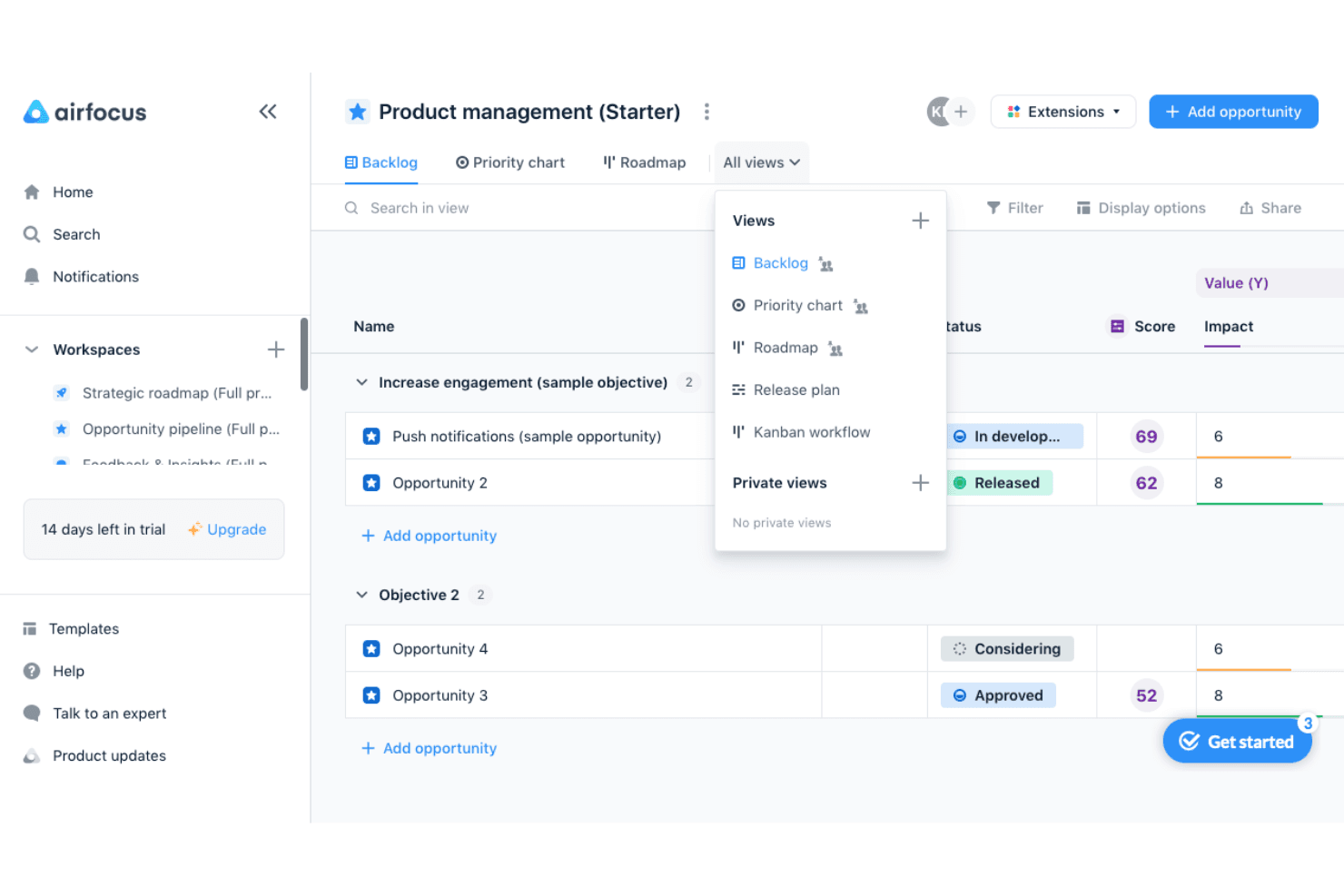
airfocus helps product teams prioritize opportunities and switch between backlog, priority chart, roadmap, release plan, and Kanban views. airfocus is a product management platform built for product teams that need structured, flexible ways to decide what to build next—combining roadmapping, feedback aggregation, and deeply configurable prioritization in one place.
Who Is airfocus Best For?
airfocus is a strong fit for product teams with 5 or more PMs who need to run structured prioritization across multiple workstreams without constant debate.
Why I Picked airfocus
airfocus earns its spot on my shortlist because no other tool I've tested gives you this level of control over how you score and rank work. I love that you can run RICE, ICE, WSJF, or a fully custom weighted formula, then pressure-test those scores in Priority Poker, where each stakeholder scores items independently before the group discusses. The Priority Matrix then plots everything visually, so trade-offs between strategic bets and quick wins are impossible to ignore.
airfocus Key Features
- Feedback inbox with AI Autofill: Incoming feedback is automatically triaged, matched to the right opportunity, and tagged with suggested fields, labels, and owners to reduce manual work.
- Branded customer portal: Share your roadmap externally, collect idea submissions, enable voting, and notify customers when their requested features ship.
- Two-way Jira and Azure DevOps sync: Field-level sync lets you control the direction of each mapped field individually, with support for custom fields, JQL filtering, and parent-child hierarchy.
- Strategic drift detection: Automatically compares roadmap items against your objectives and flags any work that's drifted out of alignment.
airfocus Integrations
airfocus offers native integrations with Jira, Azure DevOps, Linear, GitHub, Intercom, Zendesk, Slack, Microsoft Teams, and Salesforce. It also supports webhooks, open APIs, a Chrome extension, and Zapier.
Pros and Cons
Pros:
- Roadmaps adapt to different audiences
- Priority Poker surfaces stakeholder disagreement
- Custom scoring makes trade-offs explicit
Cons:
- Bulk item setup can feel tedious
- Deep customization can make setup confusing
 Best for product discovery-driven roadmaps
- 14-day free trial + free demo available
- From $24/user/month
Visit WebsiteCustomer Rating:4.4/5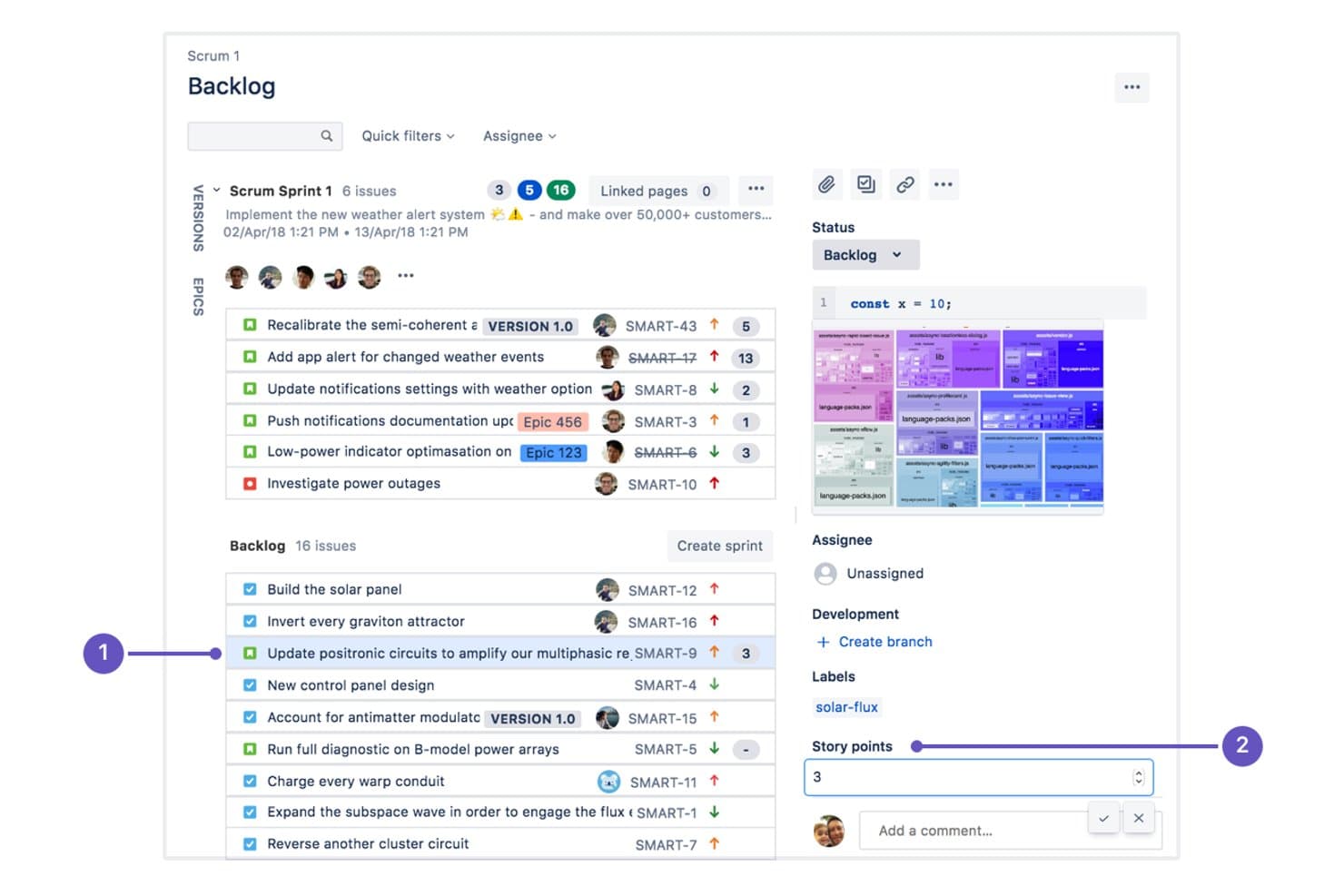
Craft.io integrates with Jira to manage sprint backlogs and story points. Craft.io is a full-lifecycle product management platform that covers strategy, feedback, prioritization, and roadmapping in one place, making it a strong fit for product managers and heads of product who need a single system of record across their entire product operation.
Who Is Craft.io Best For?
Craft.io is a strong fit for product managers and heads of product who need to connect customer feedback, OKRs, and roadmaps in a single platform.
Why I Picked Craft.io
I picked Craft.io as one of the best because it ties product discovery directly into roadmapping in a way that keeps feedback, prioritization, and planning in one flow. I love how Guru AI summarizes all feedback linked to a specific epic, so I can walk into a prioritization session already knowing what customers are actually asking for. Layered on top of that, frameworks like RICE, Kano, and WSJF let me score and rank those insights before they ever hit the roadmap.
Craft.io Key Features
- OKR alignment: Link company-level OKRs to initiatives, epics, and features so your roadmap always connects back to strategic goals.
- Portfolio roadmapping: Manage dependencies and priorities across multiple product lines from a single portfolio view, available on Enterprise.
- LiveShare and Presentation mode: Share live, interactive roadmap views with stakeholders without requiring them to have a paid seat.
- Two-way Jira and Azure DevOps sync: Map fields bidirectionally between Craft.io and your development tools, including story points, sprints, labels, and custom fields.
Craft.io Integrations
Craft.io offers integrations with Jira, Azure DevOps, GitHub, GitLab, Linear, Figma, Slack, Microsoft Teams, Miro, and Google Sheets. Enterprise includes a public API for custom integrations, and Zapier is also supported.
Pros and Cons
Pros:
- Reviewers praise responsive support during onboarding
- Scores priorities with RICE, Kano, and WSJF
- Links customer feedback directly to roadmap decisions
Cons:
- No dedicated Productboard migration path
- Guru AI summarizes only feedback already linked
Learn more about Craft.io: Best for customer feedback collection via AI
- Free plan + free trial + free demo available
- From $79/month (billed annually)
Visit WebsiteCustomer Rating:4.6/5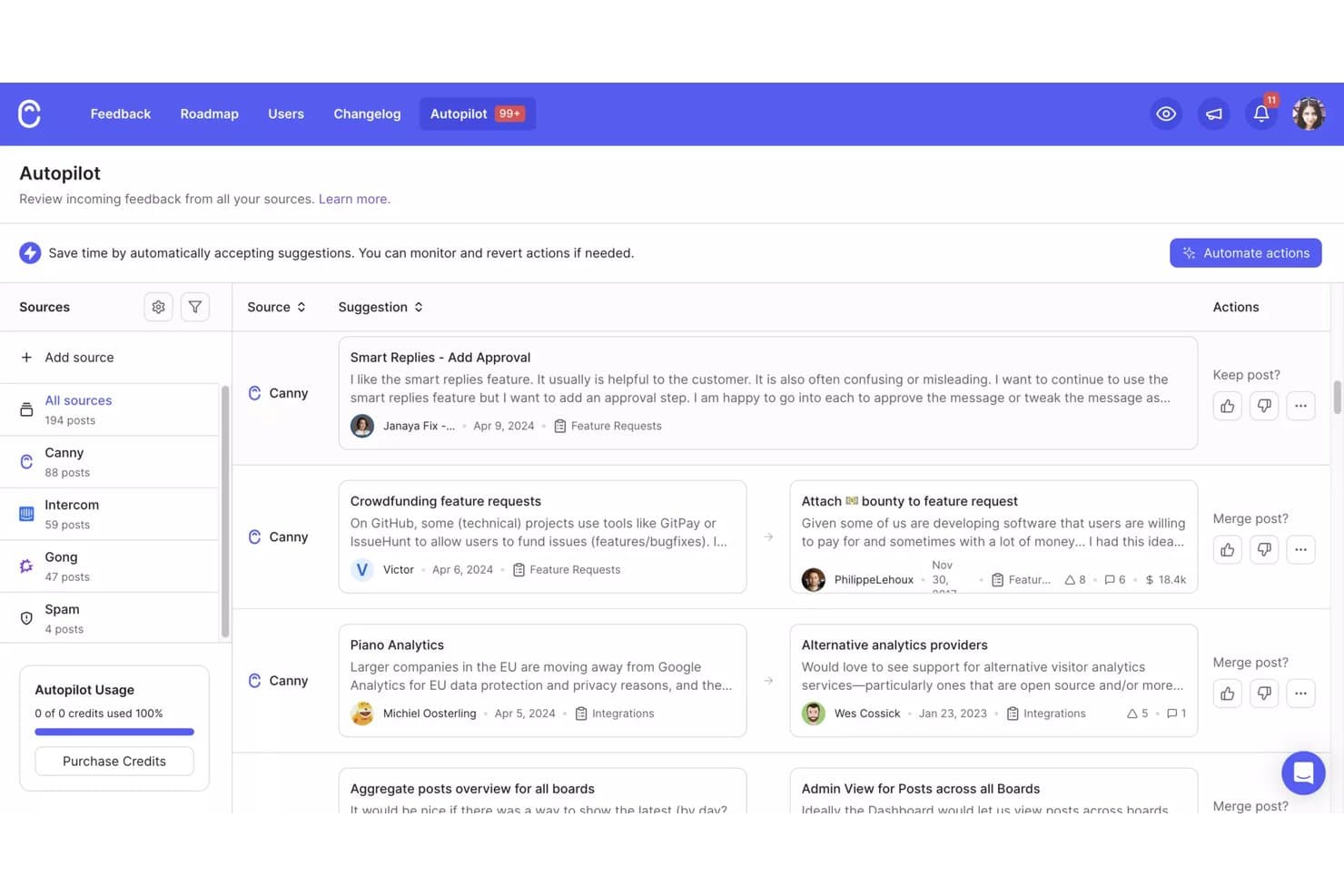
Canny's Autopilot consolidates feedback from multiple sources in one view. Canny is a feedback management platform that helps product teams collect, organize, and act on customer input—making it a practical pick if you want AI-driven feedback capture and a built-in customer portal without the complexity of a heavier product management suite.
Who Is Canny Best For?
Canny is a strong fit for product managers who want AI to handle the heavy lifting of capturing and organizing customer feedback across support, sales, and review channels.
Why I Picked Canny
I picked Canny as one of the best because its Autopilot feature does something I genuinely find impressive: it reads Intercom, Zendesk, Gong, and Zoom conversations automatically, pulls out feature requests, and routes them to the right product area without any manual tagging. In one audited case, it caught 30% more requests than a team doing the same work by hand. I also like that votes tie directly to ARR data from Salesforce or HubSpot, so prioritization reflects real revenue impact.
Canny Key Features
- Public voting portal: Customers submit and upvote feature requests on a branded portal with a custom domain, giving your team a direct, visible channel for external input.
- Changelog: Announce shipped features to the customers who requested them, with email delivery to subscribers on Pro and above.
- Unlimited contributor seats: Every plan includes unlimited contributor seats, so sales, customer success, and other stakeholders can follow relevant features without taking up a manager seat.
- Custom scoring fields: Build a weighted priority score using any numeric input—including ARR, opportunity value, or CRM data—to rank ideas by formula rather than gut feel.
Canny Integrations
Canny offers native integrations with Jira Cloud, Linear, GitHub, ClickUp, Asana, Azure DevOps, Salesforce, HubSpot, Intercom, and Zendesk. It also provides an API, webhooks, and Zapier connectivity for custom workflows.
Pros and Cons
Pros:
- Customer voting closes the feedback loop
- Revenue-linked scoring sharpens prioritization
- Autopilot captures requests across channels
Cons:
- No OKR layer for strategic alignment
- No confirmed timeline or Gantt roadmaps
Learn more about Canny: Best for closing the feedback loop with customers
- Free plan + 10-day trial + demo available
- From $29/user/month (billed annually)
Visit WebsiteCustomer Rating:4.7/5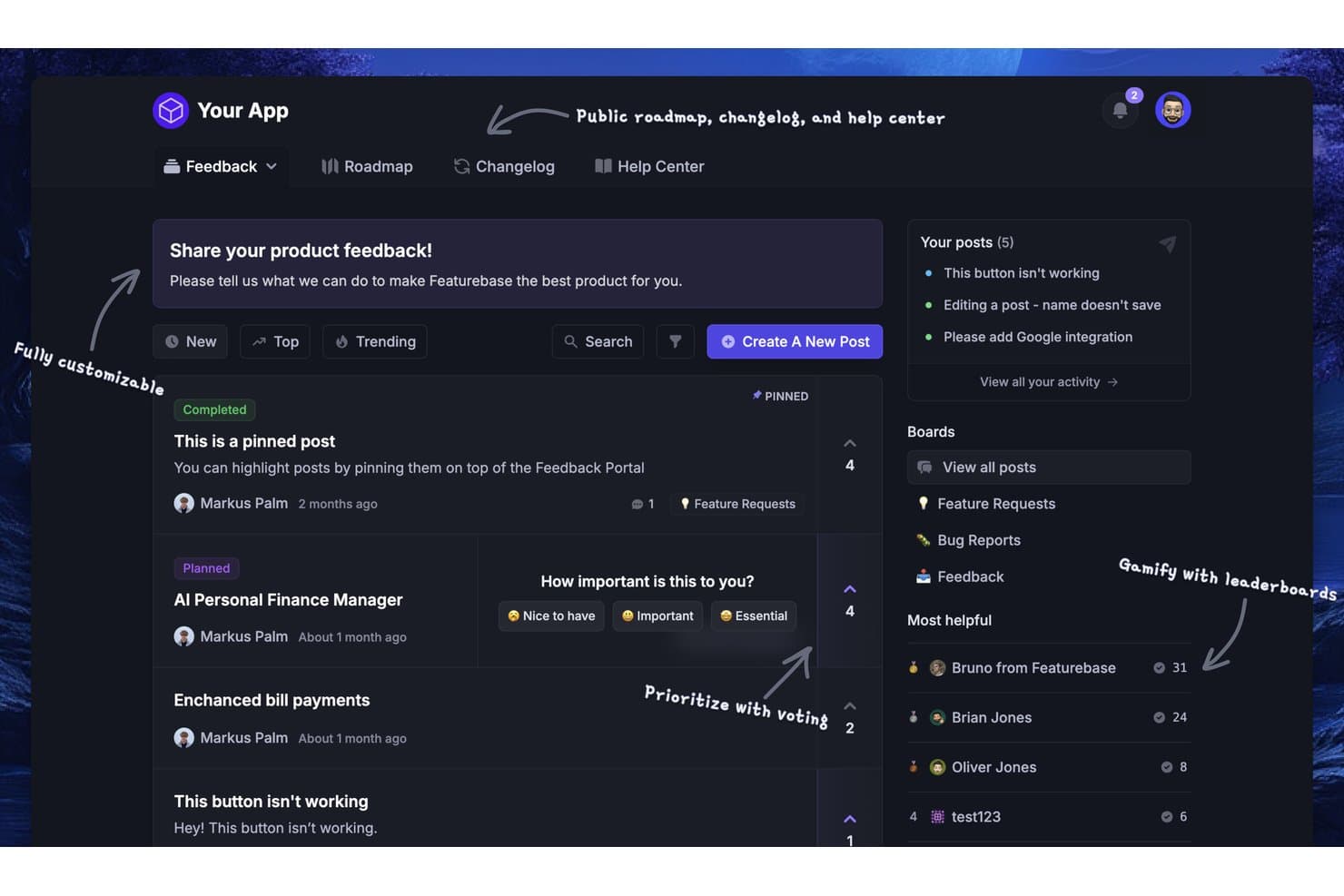
Featurebase lets users collect, vote on, and prioritize product feedback. Featurebase is a feedback and product operations platform that appeals to product managers and product ops leads who want to centralize customer requests, automate triage, and keep customers informed as features ship.
Who Is Featurebase Best For?
Featurebase is a strong fit for product ops leads and product managers who want to consolidate feedback, automate triage, and keep customers informed without managing multiple tools.
Why I Picked Featurebase
Featurebase earns its spot on my shortlist because it closes the feedback loop in a way most tools don't. When a request moves to "shipped," Featurebase automatically notifies every voter by email or in the portal, and it can push that update directly into the original support conversation where the feedback came from. I also love the AI Autopilot, which deduplicates incoming feedback and links it to existing requests so your team isn't manually sorting through repeat submissions before they can act.
Featurebase Key Features
- Customer-facing feedback portal: A branded, public-facing portal where users can submit ideas, vote on requests, and subscribe to status updates—all without needing a Featurebase seat.
- Value and effort prioritization matrix: A 2×2 visual matrix that plots requests by value against effort, with configurable scoring scales including Fibonacci, linear, and exponential options.
- Changelog with linked requests: Publish product updates as changelog entries that connect directly back to the original feature requests that drove them.
- Free Lite seats for internal stakeholders: Professional and Enterprise plans include up to 20–50 free Lite seats so teammates in sales, engineering, and design can view and collaborate without a paid seat.
Featurebase Integrations
Featurebase offers native integrations with Linear, Jira, GitHub, ClickUp, Azure DevOps, Slack, Zendesk, HubSpot, Salesforce, Intercom, Segment, Discord, and Zapier. Its API, MCP, and webhooks support custom connections.
Pros and Cons
Pros:
- Customer feedback connects directly to prioritization scores
- Shipped updates reach voters and source conversations
- AI deduplicates requests before roadmap triage
Cons:
- Productboard imports omit comments and individual voters
- No OKR alignment or executive portfolio rollups
Learn more about Featurebase:
Outras alternativas ao Productboard
Ainda à procura? Eis algumas alternativas adicionais ao Productboard. Embora não tenham entrado nas 10 principais, continuam a ser valiosas e merecem uma investigação mais aprofundada.
- 11Jira Product DiscoveryBest for Jira-connected delivery tracking
- 12MiroBest for canvas-based roadmap collaboration
- 13monday AI WorkspaceBest for cross-functional roadmaps at scale
- 14ProductPlanBest for multi-audience roadmap presentations
- 15Tempo Roadmapping SoftwareBest for timeline roadmaps with Jira sync
- 16PendoBest for in-app analytics tied to feedback
- 17LaunchNotesBest for real-time product visibility
- 18SleekplanBest for flat-rate AI feedback management
- 19IBM TargetprocessBest for SAFe portfolio roadmapping
How I Evaluate a Productboard Alternative
I split my evaluation into three parts. First—and this carries the most weight—I check whether a tool can pull customer feedback from multiple channels into one place and build shareable visual roadmaps. Second, I look for standout capabilities like AI-powered insight extraction or OKR alignment. Third, I consider pricing transparency and onboarding support.
Core Functionality (Table Stakes For This List)
When I'm selecting tools for my list, I score each one on a scale from 0 (does not offer the functionality) to 5 (excels in this area) for each core functionality listed below. I then convert the total into a percentage to help assess each tool's overall fit, with extra weight on any functionalities I’ve deemed essential.
- Feedback Collection (Essential): I look for ways to gather, tag, search, and organize requests from sources such as support conversations, interviews, and sales notes.
- Roadmap Visualization (Essential): I assess whether teams can create and share clear visual roadmaps, with views that suit planning discussions and stakeholder updates.
- Prioritization Scoring: I check for scoring frameworks that help teams compare customer value, effort, and strategic fit when deciding what to build.
- Feedback Links: I look for traceable links between customer requests and roadmap items, so teams can see demand behind planned work.
- Stakeholder Collaboration: I consider whether internal teams and external stakeholders can comment or vote on specific ideas and priorities.
- Integrations: I evaluate how the tool connects with support, CRM, and communication systems to bring feedback in and share updates.
Once I have a list of tools that meet the criteria, I consider what sets each platform apart.
Differentiating Factors (What Sets Vendors Apart)
Here's how I compare and contrast different vendors:
Standout Features
I check whether a tool can tie roadmap items directly to OKRs, so leadership sees business impact rather than a list of shipping dates. AI-powered insight extraction matters too—tools like Productboard and Chisel handle theme detection differently, and I evaluate how well each surfaces recurring patterns without heavy manual tagging. I also look at portfolio roadmapping, especially for teams managing multiple product lines that need a single executive-level view.
Beyond Features
I check whether a vendor offers free or low-cost viewer seats, since product managers rarely work alone—sales, support, and executives all need roadmap visibility without inflating per-seat costs. Migration support matters just as much. Moving years of tagged feedback and prioritized features out of Productboard can break link structures, so I look for dedicated onboarding help and import tools that preserve hierarchy. I also evaluate SOC 2 Type II or ISO 27001 certification, especially for teams handling sensitive customer data in regulated industries.
Por que procurar uma alternativa ao Productboard?
Embora o Productboard seja uma boa opção para software de gestão de produtos, existem vários motivos pelos quais alguns utilizadores procuram soluções alternativas. Por exemplo, poderá estar à procura de uma alternativa ao Productboard por qualquer um dos seguintes motivos:
- Não se enquadra no seu orçamento
- A sua equipa precisa de mais possibilidades de personalização
- Procura uma melhor integração com outras ferramentas
- Precisa de acesso offline
- Procura uma interface de utilizador mais simples
- A sua equipa está a crescer para além da escalabilidade do Productboard
Se algum destes pontos lhe parece familiar, veio ao lugar certo. A minha lista inclui várias opções essenciais de gestão de produtos mais adequadas para equipas que enfrentam estes desafios com o Productboard e procuram soluções alternativas.
Principais funcionalidades a procurar numa alternativa ao Productboard
Ao escolher uma alternativa ao Productboard, ou qualquer software de gestão de produtos, esteja atento às seguintes funcionalidades principais:
- Portal de feedback dos utilizadores: Centralize o feedback sobre o produto proveniente de várias fontes, incluindo contributos diretos dos utilizadores. Uma ferramenta de gestão de feedback pode ajudar a criar um painel de feedback completo, com informações úteis para a tomada de decisões.
- Matriz de priorização de funcionalidades: Avalie pedidos de funcionalidades e atribua recursos às iniciativas com maior impacto, garantindo que a sua equipa se concentra no que é mais importante para proporcionar melhores experiências aos utilizadores.
- Planeamento de roteiros: Tire partido de software interativo de roteiros para visualizar a estratégia da sua plataforma de gestão de produtos. Crie cronogramas claros para novas funcionalidades, alinhados com os objetivos da sua equipa.
- Ferramentas de colaboração em equipa: Promova um trabalho de equipa mais fluido com ferramentas concebidas para partilhar ideias, trocar feedback e gerir tarefas, mantendo a sua equipa alinhada relativamente às atualizações na aplicação e aos marcos.
- Análise e relatórios: Tome decisões sobre o produto baseadas em dados, utilizando métricas e informações detalhadas. Compreenda o que funciona, identifique lacunas e acompanhe o sucesso das novas funcionalidades.
- Gestão de tarefas e fluxos de trabalho: Organize e gira os fluxos de trabalho de desenvolvimento do produto. Acompanhe o progresso e simplifique os processos para garantir a entrega atempada de registos de alterações e atualizações.
- Gestão de ideias: Recolha, categorize e reveja ideias num repositório estruturado. Esta funcionalidade permite à sua equipa inovar, respondendo simultaneamente às necessidades dos clientes.
P.S. Se ainda se encontra nas primeiras fases da descoberta do produto, as ferramentas de criação de painéis de inspiração podem ajudar a alinhar a orientação estética e visual antes de priorizar as funcionalidades. - Segmentação de utilizadores: Adapte o seu produto a vários públicos segmentando os utilizadores com base nas suas preferências. Crie produtos melhores, capazes de responder às necessidades específicas do mercado.
- Notificações e alertas: Mantenha-se na vanguarda com notificações em tempo real. Mantenha a sua equipa informada sobre alterações críticas, feedback e marcos, sem deixar escapar nada.
- Integração com ferramentas de terceiros: Amplie a funcionalidade do Productboard com integrações como o Intercom, o UserVoice e muitas outras. Minimize as interrupções e sincronize os seus fluxos de trabalho com outras ferramentas da sua estrutura de software como serviço.