
AI-native CPO says continuous, AI-assisted verification layers are a necessity when building AI products
Rewin Koul
CPO at Smart Bricks
Rewin Koul explains why AI product teams need continuous verification, automated QA, and human oversight to catch errors, build trust, and improve decisions.
Key Takeaways
Verification: AI products need continuous, AI-assisted verification to catch confident errors that manual review cannot reliably detect.
Trust: Explainable recommendations, guardrails, and human checkpoints increase adoption when AI influences financially significant user decisions.
QA Redesign: AI-native teams should test stable question sets daily, using automated scoring to expose data and model failures.
Human Accountability: Keep humans accountable for roadmap tradeoffs, conflict-resolution rules, and decisions where mistakes carry irreversible financial consequences.
Speed Costs: AI compresses product development, but leaders must reinvest saved time into verification rather than simply shipping more features.
Rewin Koul is CPO at Smart Bricks, an AI-native proptech platform in the UAE real estate market.
We sat down with him to learn how QA and review layers must change when building AI products. Here's what he told us.
Arriving at AI
I'm Rewin Koul, CPO at Smart Bricks, an a16z Speedrun-backed, AI-native proptech startup based in Dubai.
I started at Mu Sigma as a data scientist, which forced me to think with evidence and statistical rigor before I touched a product roadmap. From there, I moved into Accenture Digital, then McKinsey as an Engagement Manager, where I led product and data delivery for global platforms, scaled internal tools into flagship offerings, and worked directly with capital-intensive, multi-system client environments. That consulting stretch taught me how to translate ambiguous business problems into structured, measurable interventions.
I then moved client-side, first as a founding member of Airtel's digital transformation team, scaling a product and data organization from the ground up to serve a 100M+ user base, then to Amazon UAE and KSA, where I owned P&L and drove double-digit GMV growth across a multi-sided marketplace. Both roles sharpened the same instinct: product decisions are only as good as the data infrastructure and experimentation discipline behind them.
That instinct pulled me into AI-native product building. At Smart Bricks, I was the first product hire, and I've spent the last year building an agentic AI advisor from zero, standing up the cross-functional discipline around it: evaluation benchmarks, golden datasets, human-in-the-loop checkpoints, guardrails, and closed-loop ROI measurement. It's the same rigor I learned at Mu Sigma, applied to a product category that didn't exist when I started my career.
I didn't pivot into AI; I arrived at it because every prior role was training for exactly this moment.

Rewin Shares
I didn’t pivot into AI; I arrived at it because every prior role was training for exactly this moment.
More Articles
- VP of Product Design says product, design, and engineering must have shared AI scaffolding to collaborate effectively
- Paramount’s VP of Product says the biggest AI wins in product management come from feedback synthesis
- Product lead and co-CEO shares why building AI products is a whole different animal
Enterprise-grade complexity
Smart Bricks is an AI-native proptech platform in the UAE real estate market. As the first product hire, I built the function from the ground up: a cross-functional team spanning product, data, engineering, and deployment, covering everything from portfolio intelligence and rent optimization to an agentic AI advisor serving landlords and property professionals directly.
The platform leverages real transaction and market data (Dubai Land Department infrastructure, RERA, Ejari), and the product spans multiple workstreams: portfolio analytics, off-plan property intelligence, monetization and freemium architecture, and AI-driven advisory.
Our delivery model is lean and iterative: small pods ship fast against a prioritized effort-impact roadmap. We govern production AI with evaluation benchmarks, golden datasets, human-in-the-loop checkpoints, and closed-loop ROI measurement, rather than shipping and forgetting it.
It's a startup-scale org by headcount, but the product footprint has enterprise-grade complexity: real estate data at market scale, AI systems that must be trustworthy for financial decisions, and a small team covering the full stack from data pipeline to end-user experience.
How AI is reshaping product development processes

I moved our AI feature development away from a traditional "ship and monitor" PM workflow so that the formal evaluation layer is a first-class part of the build process, not an afterthought. Before any agentic feature ships, it undergoes golden dataset creation, scored evaluation benchmarks, human-in-the-loop checkpoints at defined decision points, and guardrails defining what the system can and cannot recommend autonomously.
I also built closed-loop ROI measurement directly into the feature spec. This means that instead of just tracking usage, we track whether the AI's output actually improved the user's decision.
This stemmed from a specific problem: Our Rent Optimization Engine needed to generate pricing and portfolio recommendations that landlords would act on with real money. A single bad or overconfident output would burn trust immediately. Redesigning the scoring logic as a weighted, multi-signal composite — rather than a single model output — with explicit conflict-resolution rules and templated, explainable insight strings allows users to see why the system is making a recommendation.
As a result of these changes to our PM processes, PRDs for AI features now have the same rigor as a data science methodology doc. Data and engineering teams now make product decisions on AI features jointly and more formally than they would for a standard feature, because the cost of an ungoverned AI output can be asymmetric compared to the cost of a normal UI bug. And while initial shipping velocity on AI features has slowed down, user trust and adoption have meaningfully increased. It is now the standing template for every new AI capability we build.
How to redesign QA for AI-augmented products
So, redesign your QA and review layer. Free-form AI output can't be manually tested at scale, and it doesn't look wrong the way a rough draft does. The process for catching AI mistakes must also become AI-assisted, or there's no real coverage.
For example, my team built a daily automation (Playwright-driven, running on Google Cloud) that simulates real user sessions against our AI Advisor, asks a baseline of 100 questions across categories like market outlook and rental yields, and a second AI model scores each response, including graphs and tables, for accuracy and completeness.
Scores post daily to Slack; we've moved from roughly 6.7 to 8.3 out of 9.
A low score on furnished vs. unfurnished rental income revealed a real gap in our contracts data, not a model failure, giving developers a precise fix instead of a guess. A failed Downtown Dubai vs. Marina comparison flagged a data-matching issue. On the portfolio feature, the same system caught the AI stating 79 days when the underlying data said 90, an error a human reviewer likely wouldn't have caught systematically.
We're managing real limits: token cost forced us to pause one test track, and we're deliberately keeping a fixed question baseline (rather than full randomization or live user queries yet) so we can track improvement against a stable benchmark first.
Everyone’s racing to build what AI can generate. Fewer teams are building the continuous, AI-assisted verification layer underneath it. That gap turns into either a great product or an expensive surprise.
Everyone's racing to build what AI can generate. Fewer teams are building the continuous, AI-assisted verification layer underneath it. That gap turns into either a great product or an expensive surprise.
Why humans must remain accountable for expensive decisions
I also use AI-assisted analysis for first-pass analytics work: channel classification, onboarding funnel diagnosis, retention cohorts. Work that used to take days now surfaces patterns in hours, which I then interrogate rather than accept outright. And AI assists with the first draft or structure pass for PRDs and strategy docs, so my time goes into judgment calls, not scaffolding.
But some things must be handled by humans:
- Roadmap prioritization and sequencing
- Tradeoffs between workstreams involve fundraising timelines, team capacity, and competitive context that isn't in any dataset
- Design and review of the conflict-resolution logic in our scoring model
- Strategic, fundraising, and stakeholder-facing decisions
- Anything touching real financial decisions for our users
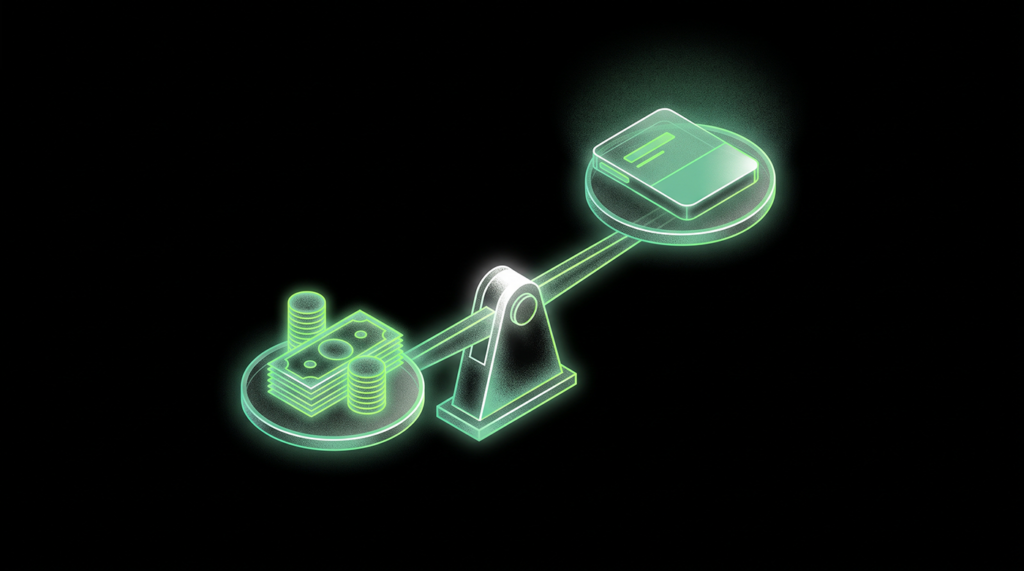
The dividing line isn't which task is hard; it's the cost of being wrong and who's accountable for it. AI earns the seat where errors are cheap and recoverable. Humans stay where they aren't.
How some of AI's gains are offset by verification
Idea-to-build velocity has fundamentally compressed. What used to be a multi-week cycle — thinking through a problem, structuring a PRD, mocking up flows, aligning stakeholders — now happens in days. I use AI to get from a rough idea to a structured PRD, a first-pass design direction, and a working prototype far faster than a traditional handoff-heavy process allows. And AI lets me stress-test a concept, generate alternative framings, and surface edge cases before I commit engineering time to it. The net effect is that more ideas reach proper evaluation instead of dying at the "needs to be written up" stage. It has shifted my involvement earlier in the process and made my role more strategic, requiring less time drafting and more time deciding.
But QA must become materially stronger, not remain the same. Speed at the front end shifts risk to the back end. AI-assisted output looks polished and confident even when it's wrong, with hallucinated data points, invented metrics, and plausible-sounding but unverified assumptions baked into a PRD or design rationale.
The failure mode is subtle. A bad idea used to look unfinished and get caught early; now it looks finished and can slip through if review lacks rigor. This means I had to build explicit verification steps into the process itself, fact-checking claims, tracing assumptions back to actual data sources, and treating AI-generated specs as a first draft requiring the same scrutiny as an intern's work.
So, the overall cycle is faster, but the time saved on ideation must be partially reinvested into verification, or speed becomes a liability instead of an advantage.
Rewin Shares
The failure mode is subtle. A bad idea used to look unfinished and get caught early; now it looks finished and can slip through if review lacks rigor.
AI tools that compress the time from idea to feature
As far as tooling, I use Claude for the thinking-to-spec stage: structuring the problem, stress-testing the scoring logic, and drafting the PRD and guardrail metrics (accuracy thresholds, breach actions). I then go through every line myself before I finalize it.
I dictate a lot of this with Wispr Flow; talking through a problem out loud is faster than typing, and it keeps the thinking closer to how I'd explain it to a person.
For prototyping, I use Lovable to quickly turn a spec into a clickable interface, so stakeholders react to something real, not just a deck. For anything closer to production, I use Claude Code to build and iterate on working prototypes rather than static mockups.
For the data side, I use PostHog for funnel, retention, and event-level analysis, and first-pass pattern detection, which I then interrogate rather than trust outright.
Ask yourself if what you’re building compounds into something real, not just how fast you got it out the door. Everyone can go fast now. The job now is making sure fast doesn’t mean fast and wrong.
Why product leaders must focus on explainability and anti-gaming
I wish I'd known that the hardest part wouldn't be the model, but making its outputs resistant to gaming. If I'd known adversarial resistance was the real design problem from day one, I would have built challenge design and evaluation criteria around "can this be gamed" from the start, instead of treating it as a patch I added after seeing gaming happen.
I also wish I'd known that explainability isn't a nice-to-have you add later; it earns the right to keep the feature live. On the Rent Optimization Engine, I built the "why" reasoning into the recommendation from day one because I'd already been burned by treating explainability as v2 elsewhere. Anywhere I didn't apply that lesson early, winning back trust after the fact was harder than building it in from the start. If I could tell myself one thing before that first launch: ship the reasoning with the recommendation, not after it.
Retrofitting explainability and anti-gaming design onto something already live costs more in engineering time and user confidence than building it in from the start.
Why CPOs should not focus on efficiency gains with AI

Speed isn't the flex it used to be. Every product leader now has tools that can spit out a PRD or a mockup in minutes. That's just table stakes at this point. What separates people is whether they use that extra time to ship more stuff, or to ship the right stuff.
My advice: Don't bank the time that AI saves you. Spend it on double-checking things, thinking harder about framing, making better calls. A fast PRD that's wrong is worse than a slow one that's right; it just fails later, after more people have trusted it.
Stop counting drafts and start counting good decisions. It's easy to feel productive because you produced five versions of something in an afternoon. But if none of them are the right thing to build, that's not progress; it's just motion. I've had to catch myself here too, celebrating speed instead of asking whether what got built moved anything.
The guardrails aren't overhead; they're the point. Building in checks, human review, ways to catch AI being confidently wrong — all of that slows you down upfront. But it's the difference between a feature people trust and one that burns that trust the first time it's wrong.
Ask yourself if what you're building compounds into something real, not just how fast you got it out the door. Everyone can go fast now. The job now is making sure fast doesn't mean fast and wrong.
Follow Along
You can follow along with Rewin Koul's work on LinkedIn.
More expert interviews to come on The CPO Club!