

Paramount’s VP of Product says the biggest AI wins in product management come from feedback synthesis
Paramount's VP of Product Joshua Karp has found his biggest AI win in feedback synthesis — but warns that turning that feedback into product direction still requires human judgment. Here's how he's using AI to accelerate discovery without letting it drive the ship.
Joshua Karp

Joshua Karp has 20+ years in product leadership — he even did product work at MySpace in its early days. Today, he is VP of Product at Paramount, where he oversees the BET+ streaming service.
We caught up with Joshua to learn how AI is changing how he leads product teams. He said using AI in feedback synthesis has been his biggest win.
Product leaders will overreact to AI
I’m a consumer product leader with 20+ years of experience building digital products across streaming, media, social, commerce, and subscription businesses.

At the center of my career has been a pretty simple question: What makes people try a product, come back to it, and eventually make it part of their routine?
I’ve worked on products at very different stages and scales, from early product work at MySpace during a period of rapid consumer growth, to product leadership at WWE, to leading product strategy for BET+ at Paramount across acquisition, engagement, retention, monetization, personalization, experimentation, and cross-platform experiences.
That is part of why I’m so excited about this AI moment. The technology is not perfect, and I think the industry will overreact to it in some ways, like we often do with major platform shifts. But it is a real change, and product leaders have to engage with it, learn from it, and understand where it creates meaningful customer and business value.
Leading product at BET+
BET+ is a premium subscription streaming service launched in partnership with Paramount and Tyler Perry Studios. We built the service around a passionate audience, a strong slate of original programming, and a growing cross-platform streaming experience.
I was part of BET+ from its initial launch and have led product for the business for the last 4.5 years. During that time, the service expanded across more than a dozen platforms, including web, mobile, connected TV, and partner platforms.
The product organization spans monetization, content discovery, video engagement, experimentation, personalization, compliance, and content strategy. The delivery model is both direct-to-consumer and partner-distributed, serving customers across owned and partner platforms.
How AI lets PMs focus on product judgment
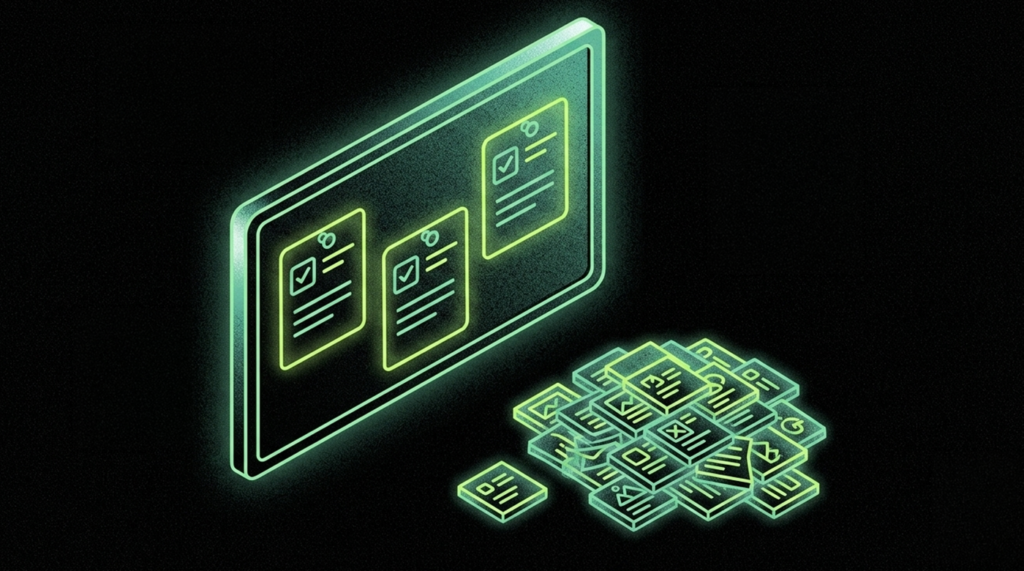
For a long time, product work involved extensive upfront planning, brainstorming, and analysis before a team could react to an idea. While that work is still valuable, I no longer think it always has to happen that way.
AI speeds up the earlier parts of the product process — discovery, synthesis, analysis, prototyping, and preparation — so teams can focus on the real problem sooner and move toward the right solution faster.
AI speeds up the earlier parts of the product process — discovery, synthesis, analysis, prototyping, and preparation — so teams can focus on the real problem sooner and move toward the right solution faster.

For example, AI can help product teams analyze both quantitative and qualitative data, synthesize customer feedback, identify themes, and pressure-test early hypotheses. It can also help generate starting points for prototypes, messaging, product concepts, or customer conversations. The ability to synthesize feedback, in particular, has been a game-changer for me.
This is valuable because it helps teams move faster and eliminates the blank-page problem at the outset. It also creates a more compelling discussion because people react to something tangible instead of debating an abstract idea.
But this is still the starting line, not the finish line.
Humans must still understand customers, set business strategy and goals, make tradeoffs, sequence the roadmap, and decide what is worth building and how much to build. AI can help inform that work, but human product judgment remains imperative for prioritization, strategy, customer empathy, and accountability for final decisions.
I still believe deeply in the value of great product design, strong engineering, and teams that understand the full context of what they are building. AI does not replace that. But AI has changed how quickly I can create something tangible. This lets me spend more energy evaluating, refining, and deciding what is worth moving forward. And that is huge.
How AI enhances cross-functional product planning
AI also offers product leaders an opportunity to rethink cross-functional product planning.
Too often, teams plan in silos. Product and design may shape an experience before considering engineering constraints. Product and engineering may move forward before considering design systems or user experience implications. Or teams may plan a feature without accounting for marketing needs, operational workflows, customer service impact, or how to support the feature once it is live.
AI creates an opportunity to integrate these signals earlier in the process. It can help synthesize feedback and constraints from product, design, engineering, marketing, operations, customer service, data, and other stakeholders, giving the team a more holistic view of what they are building and why.
AI creates an opportunity to integrate these [customer] signals earlier in the process
Over time, AI can also preserve and reuse that context. As it understands how teams work together, where dependencies exist, what constraints usually matter, and what caused past friction, it can bring that knowledge back into future planning. This helps teams avoid repeat missteps and make better decisions earlier.
How AI's biggest benefit in product management is also a risk
The biggest positive result of AI is that teams get to the starting line faster.
That can mean making sense of complicated data, synthesizing a large amount of qualitative customer feedback, analyzing sentiment more deeply, or better preparing product requirements.
While that is incredibly useful, it also presents a real risk. Product managers must still maintain discipline and judgment.
Product requirements are a good example. AI can be very helpful in creating a first draft or helping you think through structure, but relying on it too heavily is dangerous. AI rarely gets everything right on its own, and it often misses critical edge cases, business context, customer nuance, and technical constraints that shape the requirements.
So, the good result is speed and momentum. The bad result, if you aren't careful, is that teams can confuse AI-generated requirements with a finished product answer.
AI cannot yet turn feedback into direction
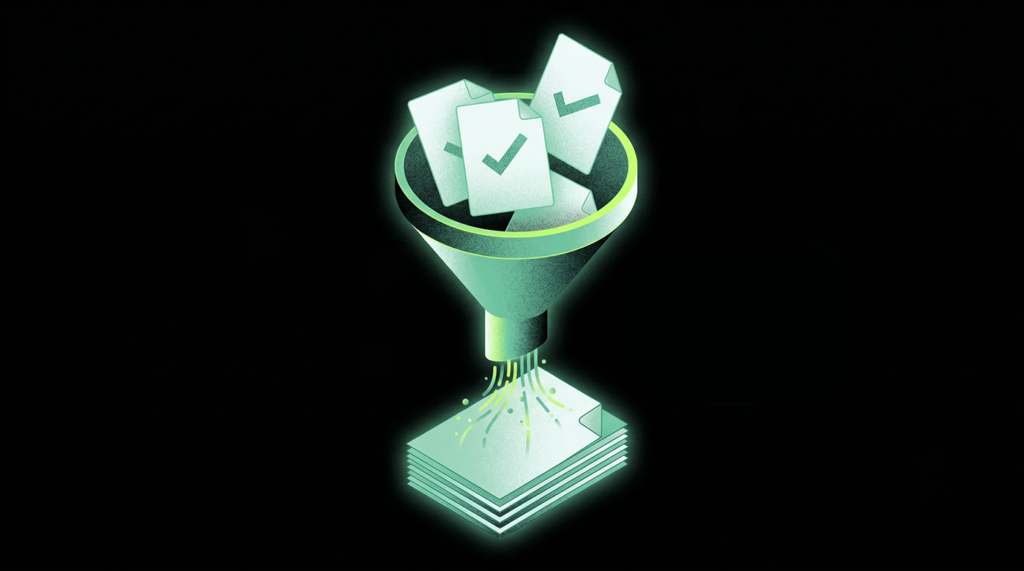
I mentioned earlier that synthesizing customer feedback with AI has been a game-changer. But turning that feedback into product direction is one area that AI has not yet delivered.
AI is very helpful for synthesis. It can analyze vast amounts of customer feedback, identify recurring themes, summarize sentiment, and surface patterns. However, caution is still necessary for directional guidance.
Without discipline, AI can make a small signal seem larger than it is. I've seen AI overreact to a cluster of customer feedback and suggest a product direction change unsupported by the broader context.
Without discipline, AI can make a small signal seem larger than it is. I’ve seen AI overreact to a cluster of customer feedback and suggest a product direction change unsupported by the broader context.
This is why human judgment matters. Customer feedback is incredibly valuable, but not all feedback carries equal weight. You must still understand who provides the feedback, its representativeness, its alignment with the larger strategy, and its associated tradeoffs.
Treat AI as another valuable signal, not a decision-maker.
A real-world feedback-synthesis workflow
Here's an AI workflow I use on a side project.
It starts by bringing together raw customer feedback, product usage data, and analytics dashboards. AI then synthesizes that information into clear themes, customer pain points, and product opportunities.
For example, AI identifies common themes across customer feedback, surfaces sentiment, and connects those themes to key data points. This highlights where customer behavior and product performance may point to the same issue. We use ChatGPT and Claude for this.
I then narrow in on the two or three most important product challenges or opportunities and apply judgment. I assess whether the themes are meaningful, whether the data supports the feedback, whether the opportunity aligns with the product strategy, and whether it is worth testing.
This workflow usually produces a clear product hypothesis, a sharp problem statement, or solution ideas that can be turned into lightweight prototypes, requirements, or experiments.
Why AI-powered products and features need feedback fast
With AI-powered experiences, it's important to get in front of users as early as possible. User feedback always matters, but with AI, it matters even more because you often won't anticipate user reactions, edge cases, or unexpected use cases during planning.
The biggest mistake to avoid is building too long in a vacuum. Instead, put AI features in front of users as early as possible, even if they are still prototypes or concepts. Watch how those users interpret and interact with the experience.
The biggest mistake is building too long in a vaccum.
You will often learn something that makes a huge difference and leads to a more polished final product or feature.
Why product leaders should experiment with AI at home
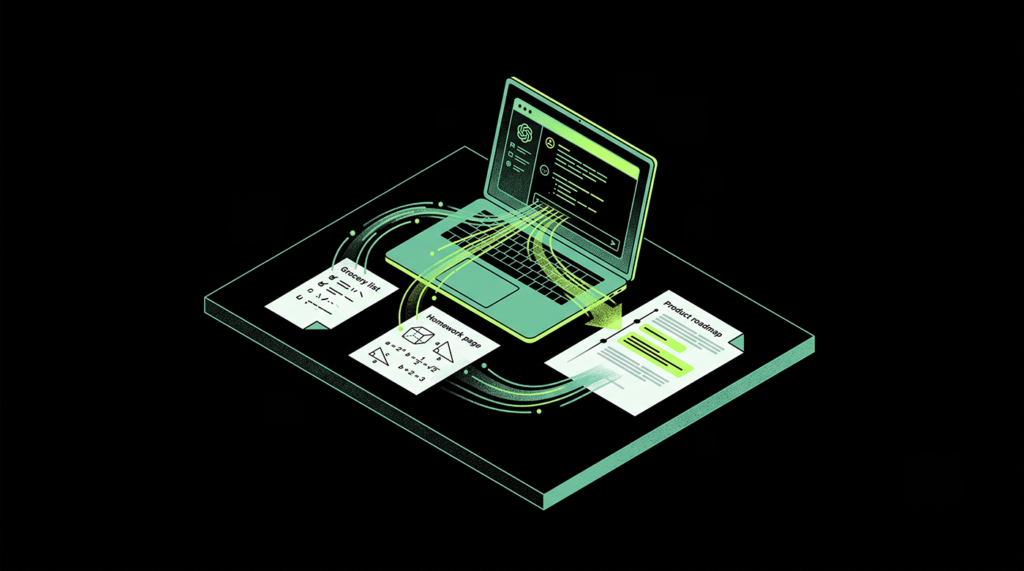
My advice is to put on your product hat, stay curious, and get hands-on with AI.
The only way to understand what AI is capable of, where it falls short, and how it might help your organization is to use it.
I don't just mean using it professionally. I recommend using AI for personal things as well. Create agents, test workflows, and use AI to plan, research, prototype, and think through problems. Sometimes, something you try personally can open your eyes to a use case or product opportunity professionally.
Product leaders also need to encourage their teams and organizations not to be afraid of it. They should create an environment where people are open to experimenting with AI, learning what works, being honest about what does not, and sharing those learnings with each other on a regular basis.
But at the same time, AI should be a tool in the toolbox. It should not be the thing driving the product. Product leaders still have to steer the ship.
AI is here, and it is unwise to ignore it. Understand what it can do, what it cannot do, and what it may be able to do over time, so your product mindset can evolve with it.
Follow along
You can follow along with Joshua Karp's work on LinkedIn.
More expert interviews to come on The CPO Club!