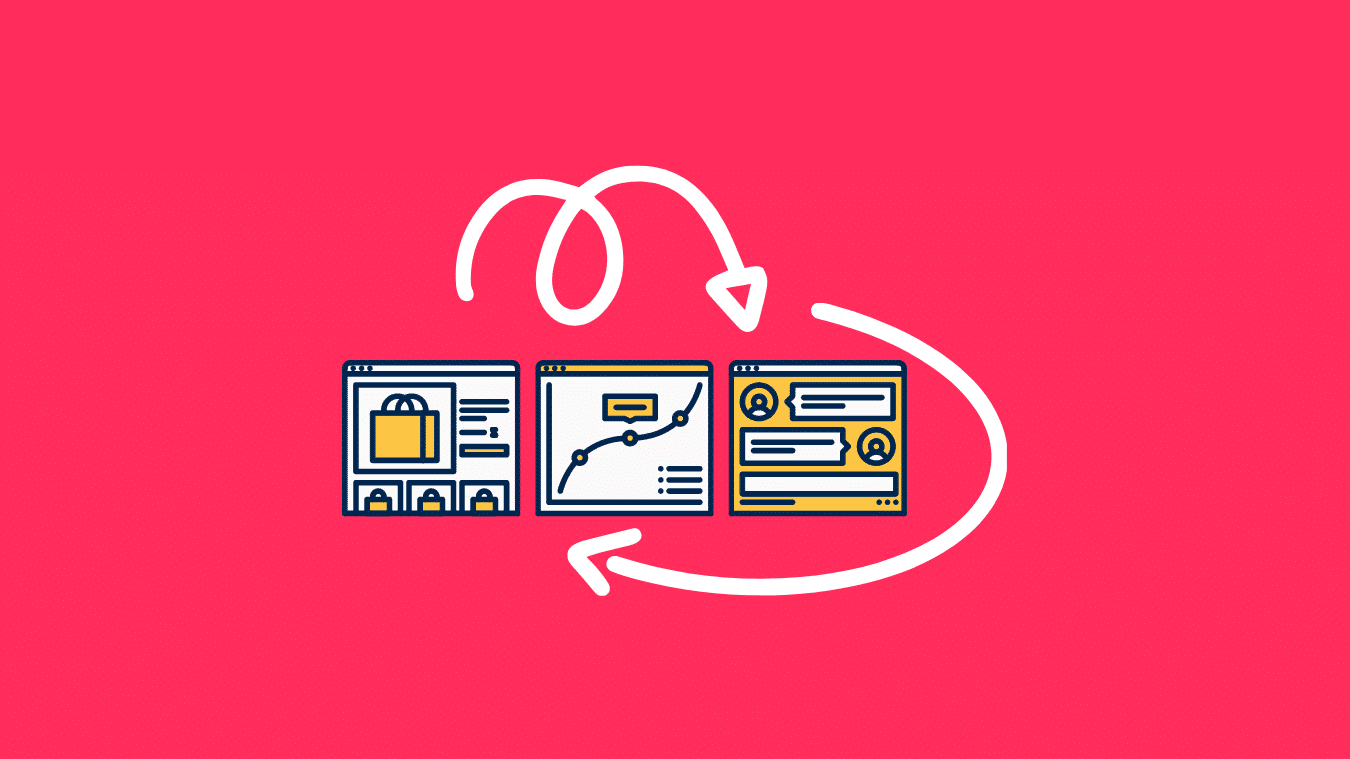

Senior VP of Product Management discusses the shift from linear processes to parallel iteration
Suman Chittimuri
Senior VP of Product Management at Kore.ai
Senior VP of Product Management at Kore.ai, Suman Chittimuri, explains why AI is pushing product teams from linear workflows toward faster iteration, stronger validation, and better decision-making.
Key Takeaways
AI Transformation: AI shifts product development from linear processes to continuous, parallel iteration, fundamentally changing workflows.
Product Workflow: AI serves as a core execution layer, impacting team operations and accelerating product development speed.
Human Judgment: AI informs product decisions, but human involvement remains crucial for context-heavy and judgment-based areas.
Workflow Redesign: Product leaders must rethink workflows with AI as a core component to achieve transformative improvements.
Validation Importance: Evaluation-driven development and strong judgment are vital to mitigate AI's potential for false confidence.
Suman Chittimuri is the Senior VP of Product Management at Kore.ai, where he leads AI-powered products serving millions of users across enterprise workflows like HR, IT, Procurement, and Customer Experience.
We spoke with Suman to understand how AI is reshaping product development as a discipline. He argued that instead of improving existing workflows, AI forces teams to rethink them entirely — shifting from linear processes to continuous, parallel iteration.
Applying AI across enterprise workflows
I'm the Senior VP of Product Management at Kore.ai, where I lead product initiatives applying AI across enterprise workflows — spanning HR,IT, Procurement, and Customer experience.
We design our products for large enterprises, serving both employees and end customers at scale across industries like banking, healthcare, and retail, supporting millions of interactions. And we use a platform-led delivery model, where we build core AI capabilities as reusable components and deploy them across multiple workflows — allowing us to scale use cases faster while maintaining consistency and control.
Over the past year, AI has moved from an assistive layer to a core execution layer. That shift impacts not just features, but also how we design products, how teams operate, and how quickly we move from idea to impact.
That shift in how we think about products shaped my journey into AI-led product transformation.
More Articles
How AI accelerates product development workflows

Because of AI, we shifted from a linear product development model to a more continuous, AI-assisted workflow.
In the past, discovery, PRD creation, design, and prototyping were sequential. AI breaks that model. It supports each of these steps in parallel, generating research inputs, drafting specs, and creating early prototypes almost simultaneously.
What changed as a result was speed and iteration. What used to take days now happens in hours, allowing teams to explore more options and refine faster. This means teams can — and should — explore more options before committing.
All of this requires some shifts:
- From sequential handoffs to continuous iteration
- From producing artifacts to refining outputs
- From limited exploration to rapid experimentation
The bottleneck is no longer building—it’s deciding what to build and effectively validating it. We’ve had to strengthen validation layers and more deliberately apply human judgment.
Why AI informs product decisions — but humans finalize
We rely on AI heavily to inform and accelerate upstream and execution-heavy activities:
- Discovery support (secondary research, competitor analysis)
- Problem framing and initial solution exploration
- PRD drafting and roadmap inputs
- UX concepts and early prototyping
- Experiment design and technical tradeoff exploration
These are areas where speed, breadth, and iteration matter. AI performs well here.
AI is strong at generating options and patterns, but weaker in judgment, context, and accountability…AI accelerates the “how” and “what’s possible,” while humans own the “what matters” and “what we commit to.”

Human involvement remains explicit in decision-making and context-heavy areas:
- Primary research and deep customer understanding
- Final prioritization and roadmap commitments
- UX refinement and design consistency
- Interpreting experiment outcomes
- Making tradeoff decisions across business, tech, and stakeholders
The reason is simple: AI is strong at generating options and patterns, but weaker in judgment, context, and accountability.
In my experience, AI accelerates the “how” and “what’s possible,” while my team and I own the “what matters” and “what we commit to.”
How AI boosts product speed but challenges quality
Overall, I’ve seen clear improvements in speed and throughput across product activities:
- PRD creation reduced from ~1 day to ~2–3 hours
- Early prototyping reduced from ~2 days to ~4–6 hours
- Competitor and market research reduced from ~5–6 hours to ~1–2 hours
- Data analysis cycles shortened by ~60–70%
This allows teams to explore more options and iterate faster within the same timelines.
On the downside, quality and consistency are uneven:
- AI outputs often require significant validation and rework.
- Teams tend to over-trust initial outputs, leading to shallow thinking.
- UX consistency suffers when AI generates prototypes without strong design oversight.
- In some domains, accuracy plateaus (e.g., 80–85% in structured extraction), limiting use in high-stakes decisions.
AI significantly improves efficiency, but outcomes still depend heavily on how rigorously teams review and refine what it produces.

Suman Shares
AI doesn’t just improve workflows — it forces you to rethink them…AI significantly improves efficiency, but outcomes still depend on how rigorously teams review and refine what it produces.
Why AI requires rethinking product workflows
Here's something product leaders need to know: AI doesn’t just improve workflows — it forces you to rethink them.
Most teams start by layering AI onto existing processes, adding copilots, assistants, or automation into predefined steps. That usually leads to incremental gains in speed or efficiency, but the core system remains unchanged.
The real opportunity comes when you redesign workflows, assuming AI is a core component from the start.
When you do that, a few things shift:
- Work becomes less linear and more parallel—discovery, prototyping, and validation can happen simultaneously.
- The cost of creating and testing ideas drops significantly, enabling more iteration.
- The role of teams moves from generating outputs to reviewing, refining, and making decisions.
- Bottlenecks shift from execution to judgment, validation, and alignment.
But doing this requires rethinking not just processes, but also roles, ownership, and how you measure quality.
If you don’t change the system, you’ll limit the outcome. You’ll get faster versions of the same workflows — not fundamentally better ones.
How AI streamlined discovery and prototyping workflows

Let's talk about our product discovery to prototyping workflow.
We start with AI-assisted discovery, where AI synthesizes market signals, competitor moves, and internal data to create an initial view of the problem space. Human-led primary research — customer conversations and stakeholder inputs — complements this.
Next, AI assists with problem structuring and solution exploration, generating multiple approaches, trade-offs, and initial hypotheses.
Then, we move into PRD creation, where AI drafts the first version of requirements, user flows, and edge cases. Product managers refine this with business context, constraints, and priorities.
In parallel, AI supports UX concepting and early prototyping, generating wireframes or flows for quick review and iteration.
Finally, before building, we run a validation loop:
- PM, design, and engineering review outputs.
- We identify gaps, inconsistencies, and risks.
- We use AI again to refine based on feedback.
What used to be a sequential process now happens in a tight loop, often compressing multiple days of work into hours.
Why end-to-end AI product workflows remain unfulfilled
With all that said, AI is not yet capable of a truly reliable end-to-end autonomous product workflow.
We see strong progress in individual steps, but a system that consistently moves from problem → solution → shipped with minimal human intervention is still not there.
Gaps appear in:
- Maintaining context across steps
- Handling edge cases and ambiguity
- Ensuring consistent quality and alignment with business goals
The promise is compelling, but today, AI can only accelerate the workflow. It cannot own it end-to-end with reliability
AI is not yet capable of a truly reliable end-to-end autonomous product workflow…We see strong progress in individual steps, but a system that consistently moves from problem → solution → shipped with minimal human intervention is still not there.
How AI reshapes product team roles and skills
As far as product teams, a few changes stand out:
- PMs are becoming “builders”, meaning that they’re expected to work closely with AI, iterate quickly, and understand how to implement things, not just what to build.
- Design and engineering roles are shifting earlier in the cycle, collaborating from the start rather than joining after requirements are defined.
- Quality ownership is more distributed. Everyone is responsible for validating AI outputs, not just their functional area.
We’re also seeing the need for new capabilities:
- Stronger evaluation and testing mindset
- Ability to work with ambiguity and non-deterministic systems
- Comfort with rapid iteration and experimentation
Why leaders must be wary of AI's false confidence
Leaders underestimate a major risk: False confidence in AI outputs.
AI often produces fluent, well-structured responses that feel correct — even if incomplete or wrong. Teams tend to trust outputs without sufficient validation.
At a small scale, this results in minor errors. At scale, it can lead to systematic mistakes propagating across workflows — in product decisions, customer interactions, or operational processes.
Suman Shares
Leaders underestimate a major risk: False confidence in AI outputs…Teams tend to trust outputs without sufficient validation.
Why Claude is the most valuable tool in product management
If I had to keep just one AI tool, it would be a general-purpose AI workspace - Claude and Claude Work.
Not because it’s perfect, but because it’s the most versatile across the product lifecycle — discovery, problem framing, PRD drafting, prototyping inputs, and even technical exploration.
The value is not just in the tool itself, but in how easily it fits into different workflows without requiring heavy setup or integration.
Specialized tools are useful, but they tend to solve for specific steps. A general-purpose AI workspace acts as a thinking and execution layer that applies across multiple stages.
Why evaluation and judgment are what matter for product leaders
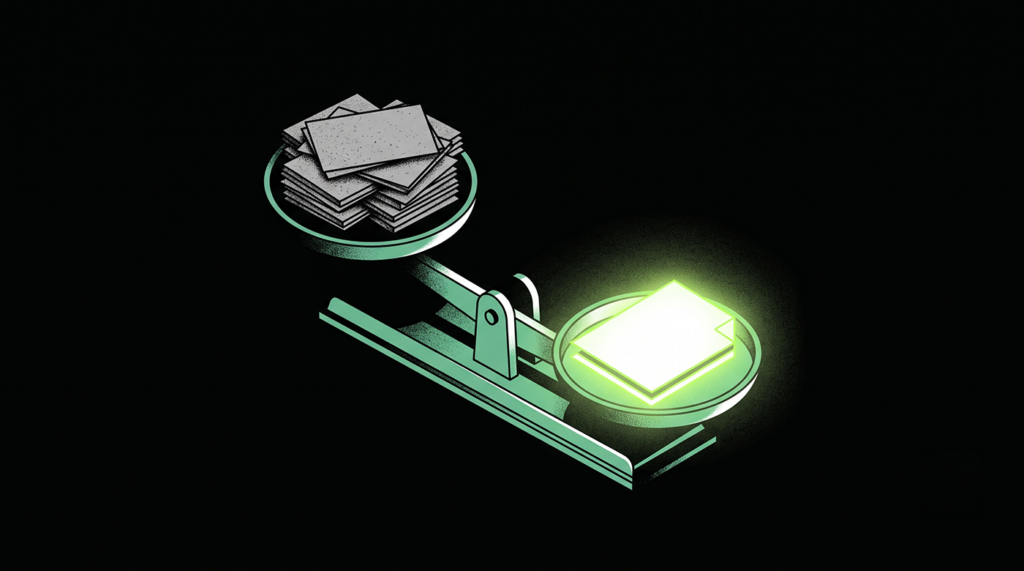
Here's what I wished I'd known before starting with AI:
- Evaluation-driven development is critical: You need clear ways to measure early output quality. Without this, trusting or scaling AI systems is difficult.
- Experimentation is not optional: AI systems are non-deterministic. You don't achieve a good outcome in one pass; you iterate through multiple versions.
So that's my advice. Start with strong evaluation frameworks. If I'd done that, we would have avoided rework and false confidence in early outputs.
Also, understand this: Strong product thinking is no longer primarily driven by deep domain knowledge.
In the past, PMs built and relied on deep expertise over time. AI now makes a large part of that baseline knowledge — market context, competitor insights, even first-level analysis — easily accessible.
What matters more now is not just what you know, but how you question, synthesize, and apply judgment. Depth still matters, but it’s no longer the only differentiator.
Understand this: Strong product thinking is no longer primarily driven by deep domain knowledge. What matters more now is not just what you know, but how you question, synthesize, and apply judgment. Depth still matters, but it’s no longer the only differentiator.
Follow along
You can subscribe to Suman Chittimuri's AI Fluency newsletter on LinkedIn and his product newsletter on Substack. And follow him on LinkedIn.
More expert interviews to come on The CPO Club!