

Recensione di Aha!: Vantaggi, Svantaggi, Funzionalità Chiave e Prezzi
Aha! si distingue per la sua solida gestione delle roadmap e delle idee, rendendolo ideale per i team di prodotto strategici, ma la sua complessità potrebbe risultare impegnativa per team più piccoli o utenti alle prime armi.

Recensiamo gli strumenti in modo indipendente e le commissioni aiutano a finanziare i nostri test. Consulta la nostra politica sulla trasparenza, la nostra metodologia oppure suggerisci uno strumento.
Aha! is a product development software for product teams that need to connect business strategy directly to their roadmap. It links goals, initiatives, and features in a structured hierarchy, so you can always show why you're building what you're building. I'd consider it over Productboard if your team needs more than a feedback-to-prioritization workflow—Aha! adds a full strategy, capacity planning, and release management layer that goes well beyond what Productboard covers.
Aha! Evaluation Summary

4.6/5
- From $9/user/month
- 30-day free trial + free demo available
Perché fidarsi dei nostri consigli sui software
6,700+
Reviews
20
Industry experts
16+
Evaluation factors
14
Years
Il nostro team testa e recensisce software dal 2012. In quanto product manager noi stessi, sappiamo quanto sia difficile — e importante — scegliere il software giusto.
Per questa guida, abbiamo valutato gli strumenti attraverso test pratici e ricerche indipendenti, assegnando un punteggio agli strumenti in base ai nostri criteri di selezione.
Le nostre recensioni riflettono il nostro giudizio editoriale umano, non un discorso di vendita.
Revisori esperti:
- Andrew LumbySenior TPM
- Cristiano ValimSenior UI/UX Lead


Aha! Overview
When judging Aha! as a product development software, its advanced roadmapping, idea management, and deep customization set it apart for teams needing strategic alignment. The interface is detailed but can feel overwhelming during onboarding, especially for smaller teams. Pricing is on the higher end, but the breadth of features and responsive support justify the investment for organizations managing complex portfolios.
Aha! is best suited for product leaders and cross-functional teams who prioritize structured planning and want to connect strategy with execution in a single platform.
Pros
- Customizable workflows fit complex product organizations.
- Idea management portal centralizes customer feedback.
- Advanced roadmapping links strategy to execution.
Cons
- Interface can overwhelm teams with simple requirements.
- Pricing is higher than many alternatives.
- Reporting options require manual setup for advanced needs.
Is Aha! Right For Your Needs?
Who Would be a Good Fit for Aha!?
Aha! is best suited for organizations that need structured product planning, cross-functional collaboration, and advanced roadmapping. Teams with complex product portfolios, multiple stakeholders, or a need for centralized idea management will find its features especially valuable.
Its customization options and strategic alignment tools make it a strong choice for industries and roles where product development is core to business success.
- Project Management OfficesPortfolio-level visibility and resource planning aid in managing multiple initiatives.
- Product OperationsAdvanced reporting and workflow automation streamline cross-team coordination.
- Healthcare TechnologyCompliance tracking and workflow customization support regulated environments.
- Hardware ManufacturersDetailed release planning and dependency tracking fit hardware launch cycles.
- SaaS CompaniesCentralized idea portals and feedback loops help prioritize customer-driven features.
- Enterprise ProductTeams Aha! supports large-scale roadmaps and portfolio management across multiple products.
Who Would be a Bad Fit for Aha!?
Aha! may not be the best choice for teams with simple needs, limited budgets, or those seeking lightweight tools. Its depth and complexity can be excessive for smaller organizations or roles that don’t require advanced product management capabilities. Teams focused on rapid, informal collaboration or those with minimal product planning needs may find it cumbersome.
- AgenciesProject-based work and client variety don’t align with Aha!’s product-centric design.
- Customer Support TeamsLacks ticketing and support workflow features found in help desk tools.
- Nonprofit OrganizationsBudget constraints and simpler project needs make Aha! less practical.
- FreelancersComplexity and cost are not justified for solo practitioners.
- Marketing DepartmentsFeature set is focused on product, not campaign or content planning.
- Small StartupsAha!’s pricing and feature set exceed most early-stage needs.
Come Testiamo e Valutiamo gli Strumenti
Abbiamo passato anni a costruire, perfezionare e migliorare il nostro sistema di test e valutazione del software. Il nostro metodo è stato progettato per cogliere le sfumature della selezione del software e ciò che rende efficace uno strumento, concentrandosi sugli aspetti critici del processo decisionale. Qui sotto puoi vedere esattamente come funzionano i nostri test e la nostra valutazione suddivisa in sette criteri. Questo ci consente di offrire una valutazione imparziale del software sulla base delle funzionalità principali, delle caratteristiche distintive, della facilità d’uso, dell’onboarding, dell’assistenza clienti, delle integrazioni, delle recensioni dei clienti e del rapporto qualità/prezzo.
Funzionalità Principali (25% del punteggio finale)
Il punto di partenza della nostra valutazione sono sempre le funzionalità principali dello strumento. Possiede le funzioni di base che un utente si aspetterebbe di trovare? Alcune di queste sono riservate ai piani tariffari più alti? Ci aspettiamo che uno strumento rispetti almeno le funzionalità di base dei competitors.
Caratteristiche Distintive (25% del punteggio finale)
Successivamente, valutiamo le caratteristiche distintive e non comuni che vanno oltre le funzioni di base normalmente riscontrate in strumenti simili. Un punteggio alto indica funzionalità specializzate o uniche che rendono il prodotto più rapido, efficiente o forniscono un valore aggiunto all’utente. Valutiamo anche la facilità con cui si possono integrare altri strumenti solitamente presenti nella stack tecnologica, ampliando così funzionalità e utilità del software. Gli strumenti che offrono molte integrazioni native, collegamenti di terze parti e accesso API per integrazioni personalizzate ottengono i punteggi migliori.
Facilità d’Uso (10% del punteggio finale)
Consideriamo quanto sia rapido e semplice eseguire le attività definite dalle funzionalità principali tramite lo strumento. Il software con il punteggio più alto è ben progettato, intuitivo da usare, offre app per dispositivi mobili, modelli preimpostati e semplifica anche le attività più complesse.
Onboarding (10% del punteggio finale)
Sappiamo quanto sia importante una rapida adozione da parte del team, quindi valutiamo quanto sia facile imparare ad usare lo strumento con una formazione minima. Valutiamo la velocità con cui un membro del team può configurarsi e iniziare a utilizzare lo strumento senza esperienza. Le soluzioni con punteggio più alto richiedono poco o nessun supporto.
Assistenza Clienti (10% del punteggio finale)
Osserviamo quanto sia facile e veloce ottenere supporto tramite telefono, chat dal vivo o knowledge base. Gli strumenti che offrono supporto in tempo reale ottengono punteggi più alti, mentre i chatbot ricevono i punteggi peggiori.
Recensioni Clienti (10% del punteggio finale)
Oltre ai nostri test e valutazioni, consideriamo il net promoter score di clienti attuali e passati. Valutiamo la probabilità che scelgano nuovamente lo strumento in base alle funzionalità principali. Un software con punteggio elevato riflette un net promoter score alto.
Rapporto Qualità/Prezzo (10% del punteggio finale)
Infine, considerando tutti gli altri criteri, confrontiamo il prezzo medio dei piani base con le funzionalità principali, esaminando il valore degli altri criteri di valutazione. Il software che offre di più, a meno, otterrà un punteggio maggiore.
Core Features
Roadmapping
Build visual product roadmaps that connect goals, initiatives, and releases. Drag-and-drop timelines make it easy to adjust plans as priorities shift.
Idea Management
Collect, organize, and prioritize customer and team feedback in a central portal. Score ideas based on value and effort to guide decision-making.
Release Planning
Define releases, set milestones, and track dependencies across teams. Visualize progress and adjust schedules to keep launches on track.
Custom Workflows
Design workflows tailored to your team’s process, including custom statuses and approvals. Automate task assignments to streamline collaboration.
Goals and Initiatives Tracking
Set strategic goals and link them to features, releases, and tasks. Monitor progress with dashboards that show alignment between strategy and execution.
Reporting and Analytics
Create custom reports and dashboards to analyze product performance and team activity. Export data for stakeholder presentations or deeper analysis.
Ease of Use
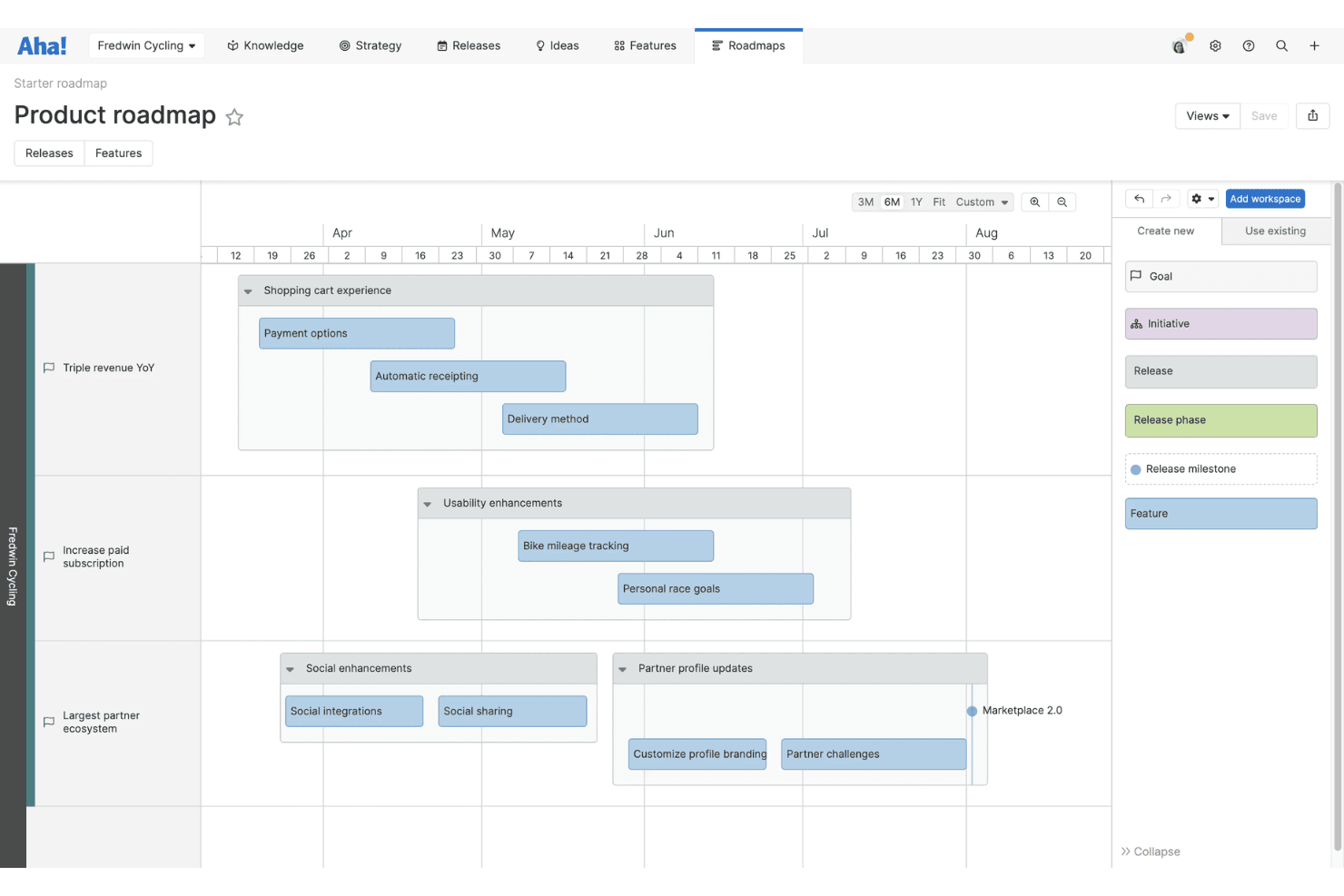
Aha! offers a detailed, feature-rich interface that prioritizes flexibility over simplicity, which can be daunting for new users or smaller teams. While its navigation and customization options are extensive, users often mention the initial setup and learning curve as challenging.
However, once configured, the platform’s dashboards, visual roadmaps, and workflow tools provide clear structure and control, making it well-suited for teams that value process rigor and strategic alignment.
Integrations
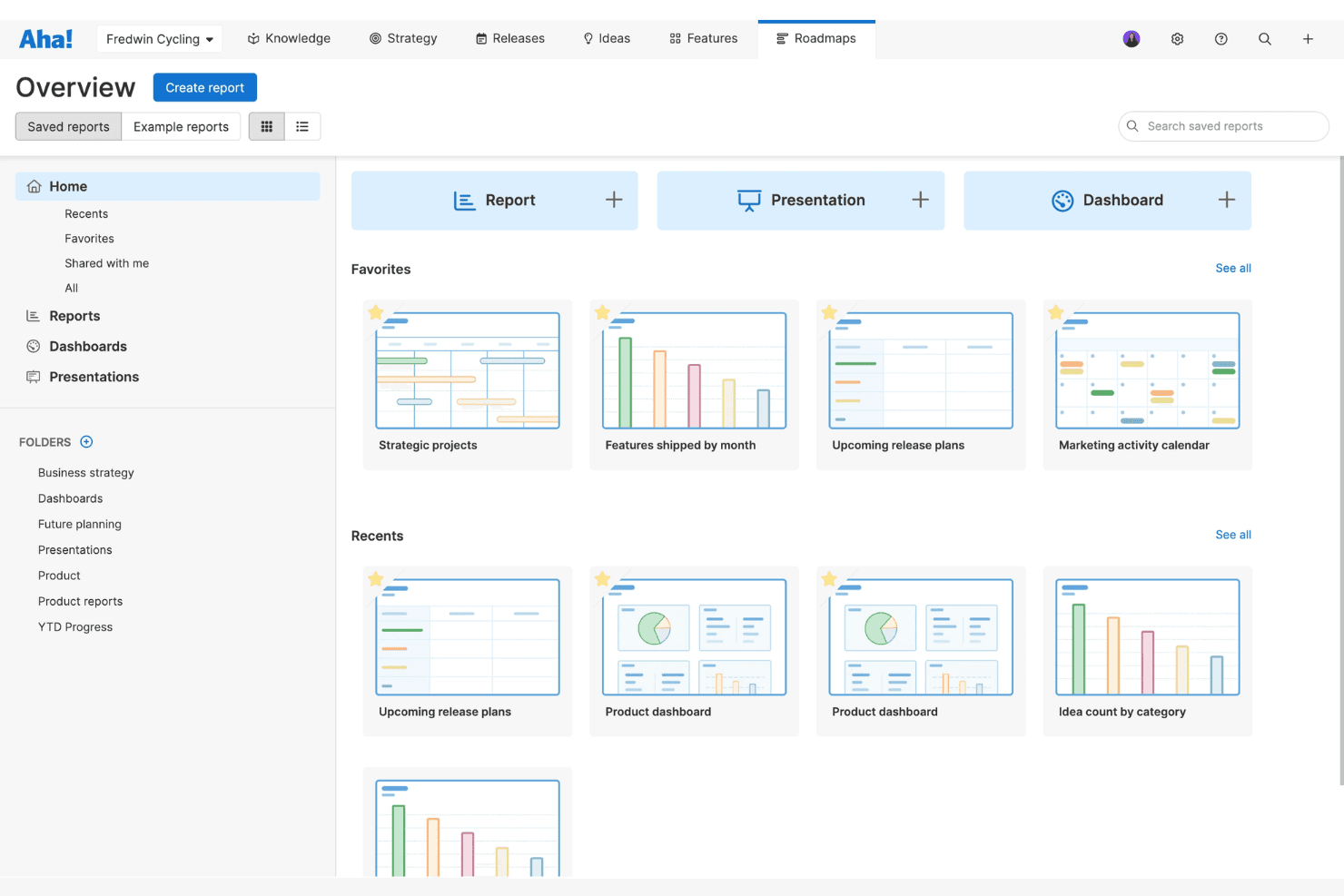
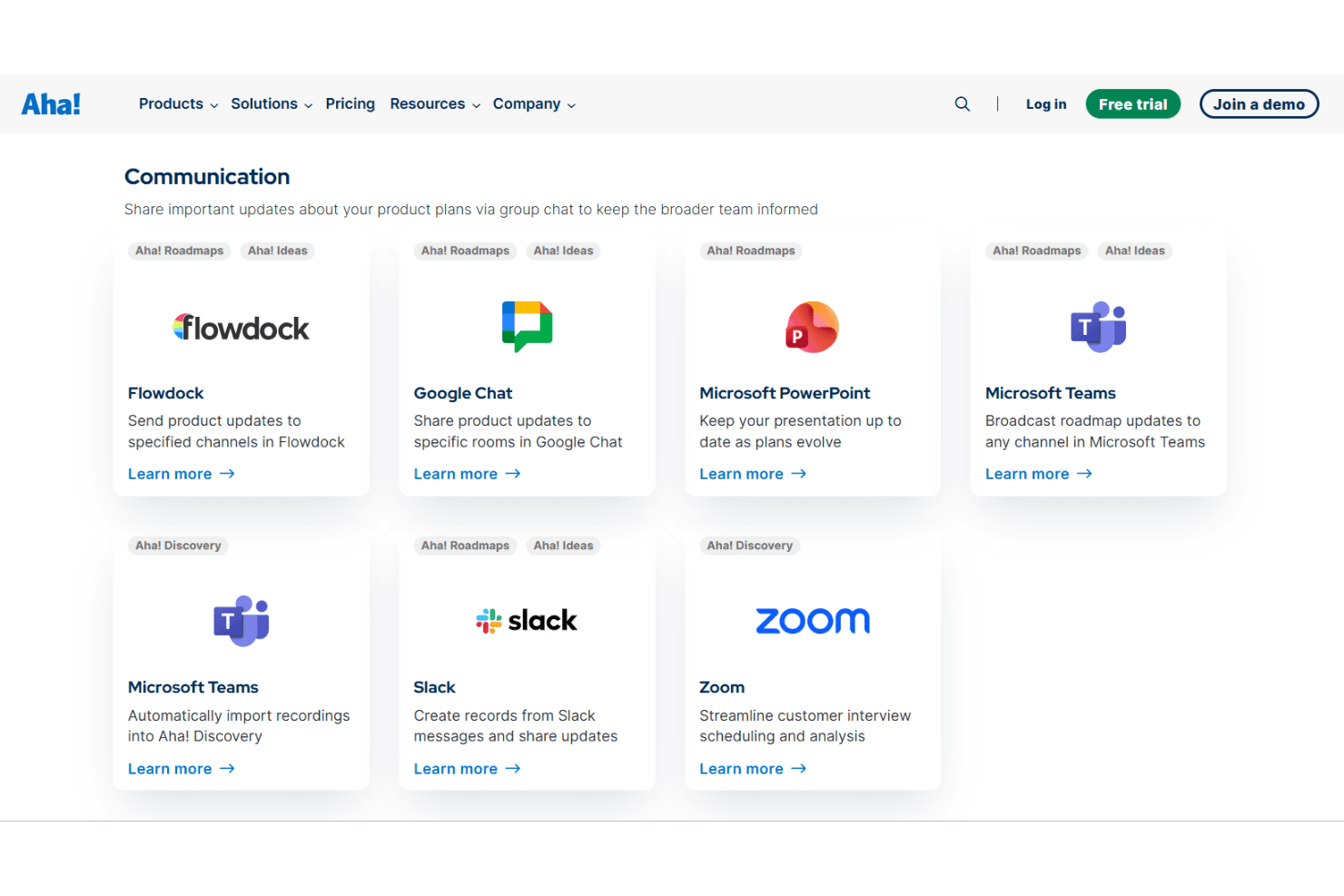
Aha! integrates with Jira, Azure DevOps, Slack, Salesforce, GitHub, Trello, Asana, Google Workspace, Microsoft Teams, and Zendesk, among others.
Aha! also offers a robust API and connects with third-party integration tools for custom workflows.
Aha! Specs
- A/B Testing: No
- API: Yes
- Collaboration Support: Yes
- Custom Data Forms: Yes
- Dashboard: Yes
- Dashboards: No
- Data Export: Yes
- Data Import: Yes
- Developer Tools: No
- External Integrations: Yes
- Feedback Management: No
- Gantt Charts: Yes
- Google Apps Integration: Yes
- Multi-User: Yes
- Notifications: Yes
- Prioritization: Yes
- Product Catalog: No
- Release Management: Yes
- Reports: No
- Resource Management: Yes
- Review Monitoring: No
- Roadmapping: Yes
- Scheduling: Yes
- Task Scheduling/Tracking: Yes


