

In qualità di responsabile di prodotto, ogni giorno devi affrontare sfide uniche. Bilanciare le richieste degli stakeholder, mantenere il tuo team allineato e assicurarti che i progetti procedano secondo i piani può sembrare opprimente. Potresti prendere in considerazione delle alternative a Productboard per trovare soluzioni migliori, adatte alle esigenze del tuo team.
Ho trascorso anni nel settore della gestione dei prodotti, testando e recensendo software in modo indipendente. So quanto sia importante disporre di strumenti che supportino davvero il tuo flusso di lavoro. In base alla mia esperienza, trovare il software giusto può fare davvero la differenza.
In questo articolo condividerò le mie migliori scelte tra le alternative a Productboard. Troverai una recensione imparziale e approfondita di ogni opzione, incentrata su come possano aiutarti a superare le tue specifiche sfide aziendali. Troviamo insieme la soluzione più adatta al tuo team.
Che cos'è Productboard?
Productboard è una piattaforma centrale per la gestione dei prodotti che aiuta i team a stabilire le priorità, pianificare e sviluppare i prodotti in modo efficace. Che tu sia una startup alla ricerca di un software per le roadmap o un'azienda consolidata che sta perfezionando la propria piattaforma di gestione dei prodotti, gli strumenti di Productboard, incluso il suo widget per raccogliere il feedback sui prodotti, possono aiutare i team a rimanere connessi alle esigenze dei clienti. Funzionalità come i modelli per la definizione delle priorità e la pianificazione delle roadmap ti aiutano a tenere traccia delle esigenze degli utenti, decidere cosa sviluppare successivamente e comunicare in modo efficiente le strategie agli stakeholder. Nel complesso, Productboard offre un approccio strutturato alla gestione del ciclo di vita del tuo prodotto, assicurando che il tuo team rimanga concentrato e allineato agli obiettivi aziendali.
Perché fidarsi dei nostri consigli sui software
6,700+
Reviews
20
Industry experts
16+
Evaluation factors
14
Years
Il nostro team testa e recensisce software dal 2012. In quanto product manager noi stessi, sappiamo quanto sia difficile — e importante — scegliere il software giusto.
Per questa guida, abbiamo valutato gli strumenti attraverso test pratici e ricerche indipendenti, assegnando un punteggio agli strumenti in base ai nostri criteri di selezione.
Le nostre recensioni riflettono il nostro giudizio editoriale umano, non un discorso di vendita.
Revisori esperti:
- Andrew LumbySenior TPM
- Cristiano ValimSenior UI/UX Lead


Tabella di confronto delle alternative a Productboard
Usa questa tabella di confronto per confrontare i dettagli sui prezzi delle mie migliori alternative a Productboard.
| Tool | Best For | Trial Info | Price | ||
|---|---|---|---|---|---|
| 1 | Ideale per l'analisi del feedback dei clienti basata sull'intelligenza artificiale | Demo gratuita disponibile | Prezzi disponibili su richiesta | Website | |
| 2 | Ideale per piani di prodotto pubblici basati su Jira | Piano gratuito + prova gratuita disponibili | A partire da $1.10/utente/mese | Website | |
| 3 | Ideale per dare priorità al feedback in base al valore dei ricavi | Prova gratuita di 30 giorni + demo gratuita disponibile | A partire da $16,000/anno | Website | |
| 4 | Ideale per allineare gli OKR dalla strategia alla roadmap | Prova gratuita di 30 giorni + demo gratuita disponibile | A partire da $9/utente/mese | Website | |
| 5 | Ideale per la gestione dell'arretrato di prodotto | Prova gratuita di 14 giorni + dimostrazione gratuita disponibile | A partire da $44/postazione/mese (con fatturazione annuale) | Website | |
| 6 | Ideale per la pianificazione delle roadmap del portafoglio basata sull'intelligenza artificiale | Demo gratuita disponibile | Prezzi su richiesta | Website | |
| 7 | Ideale per framework personalizzabili di prioritizzazione | Demo gratuita disponibile | Prezzi su richiesta | Website | |
| 8 | Ideale per piani di sviluppo del prodotto basati sulla ricerca | Prova gratuita di 14 giorni + dimostrazione gratuita disponibile | A partire da $19/utente/mese (con fatturazione annuale) | Website | |
| 9 | Ideale per la raccolta del feedback dei clienti tramite l'IA | Piano gratuito disponibile | A partire da $79/mese (con fatturazione annuale) | Website | |
| 10 | Ideale per chiudere il ciclo dei commenti con i clienti | Piano gratuito disponibile | A partire da $29/postazione/mese (con fatturazione annuale) | Website |


Testiamo e recensiamo software per la gestione dei prodotti dal 2020. In qualità di responsabili di prodotto, sappiamo quanto sia importante e difficile prendere la decisione giusta quando si sceglie un software. Investiamo in ricerche approfondite per aiutare il nostro pubblico a prendere decisioni migliori in materia di acquisto del software.
Abbiamo testato più di 2.000 strumenti per diversi casi d'uso della gestione dei prodotti e scritto oltre 1.000 recensioni software complete. Scopri come manteniamo la trasparenza & consulta la nostra metodologia di recensione del software.
Recensioni delle migliori alternative a Productboard
Di seguito trovi le mie sintesi dettagliate delle migliori alternative a Productboard incluse nella mia selezione. Le mie recensioni offrono una panoramica dettagliata delle funzionalità principali, dei pro e dei contro, delle integrazioni e dei casi d’uso ideali di ogni strumento, per aiutarti a trovare quello più adatto a te.
 Ideale per l'analisi del feedback dei clienti basata sull'intelligenza artificiale
- Demo gratuita disponibile
- Prezzi disponibili su richiesta
Visit WebsiteCustomer Rating:4.8/5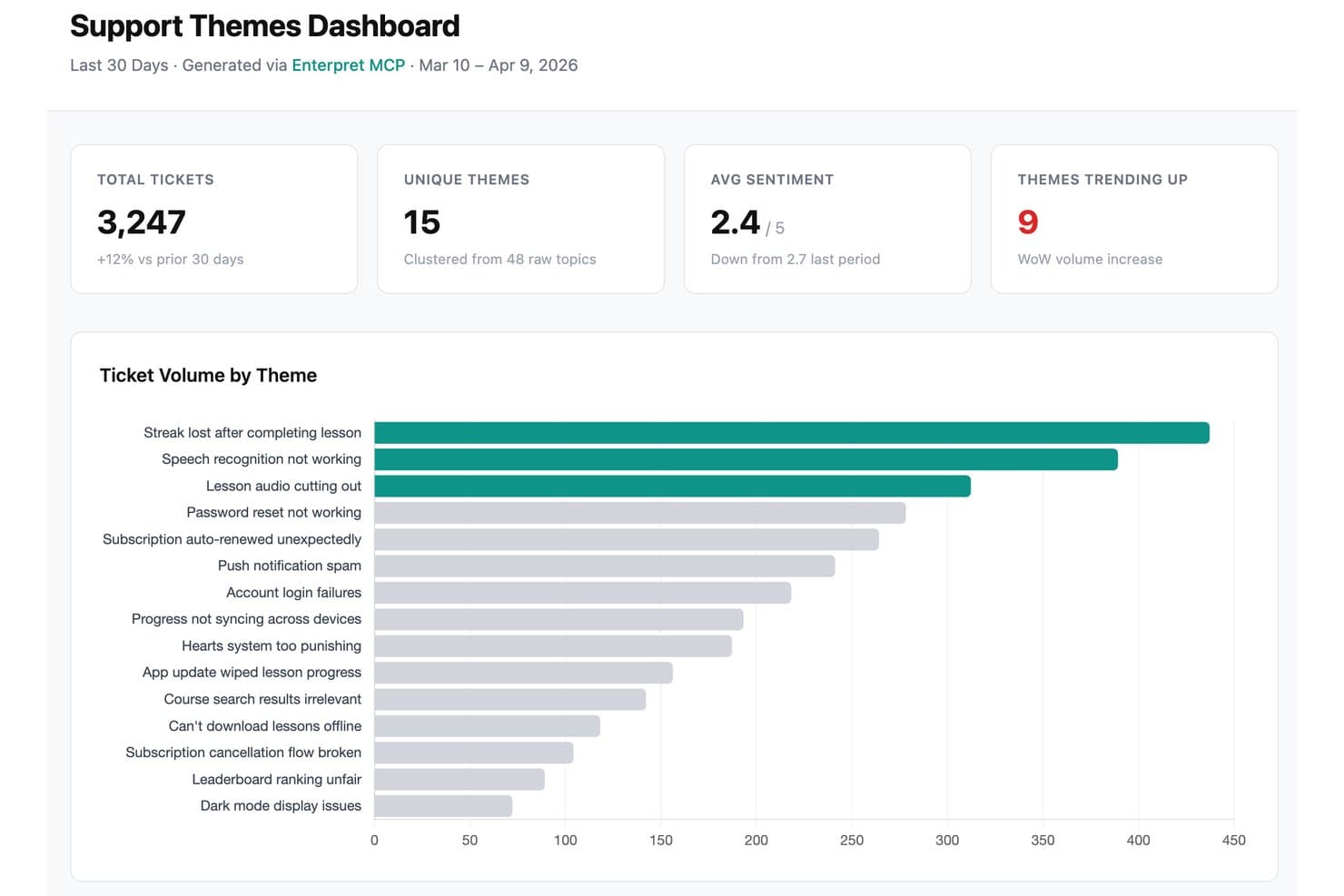
Enterpret offre un pannello di controllo dei temi dell'assistenza che raggruppa i ticket di assistenza non elaborati in temi, mostrando il volume dei ticket, le tendenze del sentiment e i problemi emergenti. Enterpret è una piattaforma per il feedback dei clienti destinata ai team di prodotto, che unifica gli insight provenienti da più canali e aiuta le aziende a identificare le esigenze dei clienti, convalidare le decisioni di prodotto e dare priorità ai miglioramenti della roadmap.
Per chi è più adatto Enterpret?
Enterpret è adatto ai team di prodotto che devono combinare i feedback provenienti da più canali e trasformare gli insight dei clienti in priorità per la roadmap.
Perché Enterpret è una buona alternativa a Productboard
Ho scelto Enterpret perché la sua analisi del feedback dei clienti basata sull'intelligenza artificiale riunisce i feedback provenienti da più canali in un'unica vista. Lo uso per identificare le esigenze ricorrenti dei clienti, convalidare le decisioni di prodotto e collegare le evidenze alle priorità della roadmap. Questo aiuta il mio team a sostituire i feedback frammentati con una direzione di prodotto chiara.
Funzionalità principali di Enterpret
- Integrazioni per il feedback: Collega le fonti di feedback dei clienti in un unico spazio di lavoro.
- Tassonomia personalizzata: Organizza i feedback con categorie adattate al tuo prodotto.
- Analisi del sentiment: Classifica i feedback in base al sentiment positivo, negativo o neutro.
- Ricerca e filtri: Trova i feedback utilizzando parole chiave, tag, fonti o segmenti.
Integrazioni di Enterpret
Enterpret offre oltre 50 connettori nativi, tra cui Zendesk, Salesforce, Slack, Jira, Linear, Snowflake, Census e Notion. Supporta Zapier e le API webhook per fonti di feedback personalizzate.
Pros and Cons
Pros:
- Unifica i feedback provenienti dai canali dei clienti
- La tassonomia personalizzata collega gli insight alle roadmap
- L'analisi del sentiment mette in evidenza le esigenze ricorrenti dei clienti
Cons:
- La trasparenza sui prezzi è limitata
- Si concentra principalmente sull'analisi dei feedback
Learn more about Enterpret: Ideale per piani di prodotto pubblici basati su Jira
- Piano gratuito + prova gratuita disponibili
- A partire da $1.10/utente/mese
Visit WebsiteCustomer Rating:5/5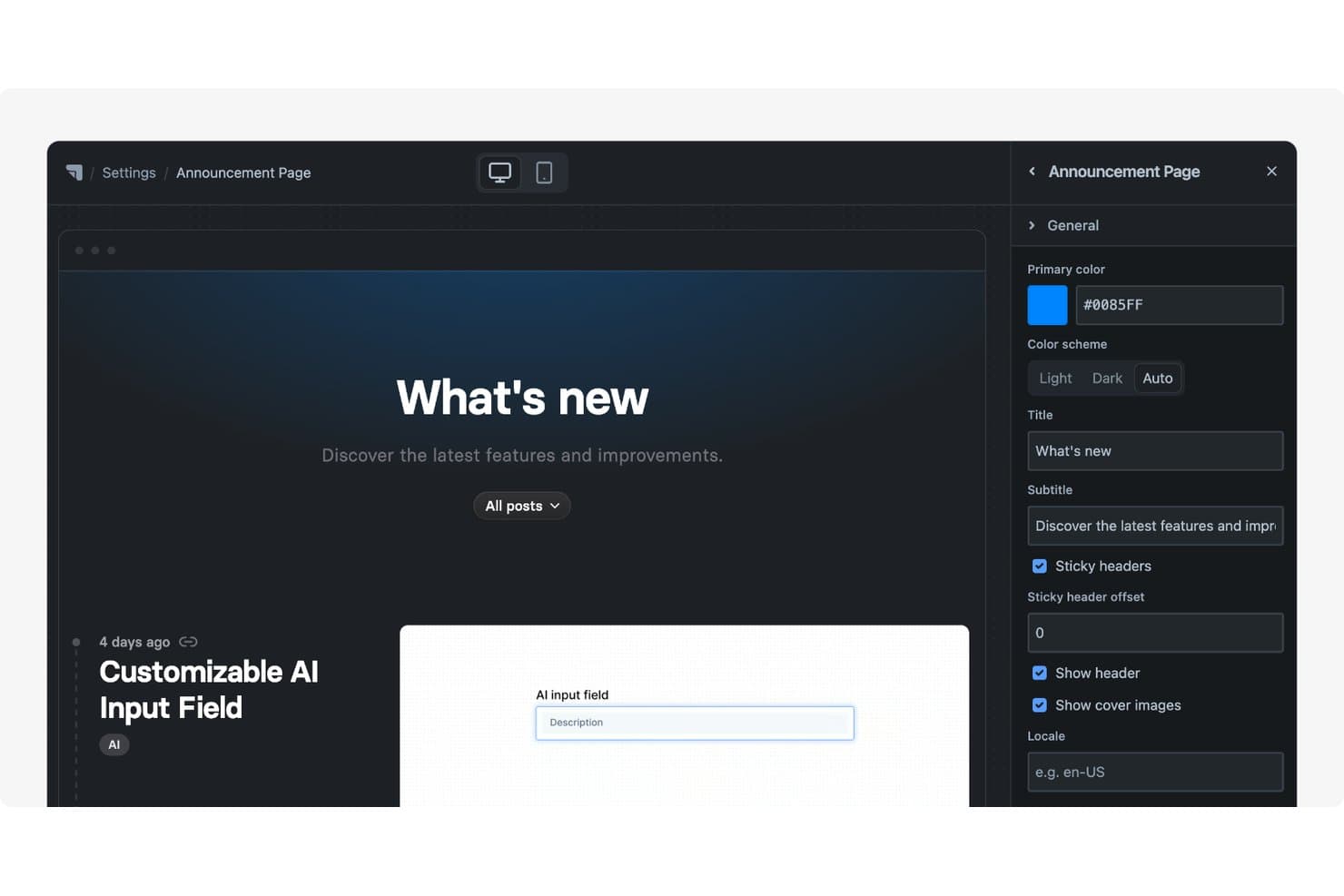
Released offre una pagina degli annunci personalizzabile con titolo, sottotitolo, combinazione di colori e impostazioni dell'intestazione modificabili tramite un pannello laterale. Released è una piattaforma di gestione dei prodotti per le squadre che utilizzano Jira, che aiuta i responsabili di prodotto a organizzare i riscontri dei clienti, stabilire la priorità delle richieste e allineare le parti interessate sui piani di prodotto.
Per chi è più adatto Released?
Responsabili di prodotto di squadre che utilizzano Jira e che hanno bisogno di condividere piani di prodotto pubblici e mantenere i riscontri dei clienti collegati ai piani di distribuzione.
Perché Released è una buona alternativa a Productboard
Ho scelto Released perché è la soluzione migliore per i piani di prodotto pubblici basati su Jira. La mia squadra la utilizza per organizzare i riscontri dei clienti, stabilire la priorità delle richieste e collegare gli aggiornamenti dei piani di prodotto ai piani di distribuzione in Jira. Questo offre alle parti interessate una visione chiara di ciò che è pianificato, senza separare la comunicazione del prodotto dall'esecuzione.
Funzionalità principali di Released
- Note di rilascio basate sull'IA: Crea bozze delle note di rilascio a partire dalle segnalazioni Jira completate.
- Registro delle modifiche personalizzato: Pubblica gli aggiornamenti su domini personalizzati.
- Iscrizioni via e-mail: Consenti ai clienti di iscriversi agli aggiornamenti del prodotto.
- Portali integrabili: Aggiungi piani di prodotto e registri delle modifiche a siti web o documenti.
Integrazioni di Released
Released offre un'integrazione nativa con Jira, collegando i piani di prodotto rivolti ai clienti, le note di rilascio e le conversazioni sui riscontri al lavoro in Jira. Le integrazioni native aggiuntive, il supporto a Zapier e l'accesso alle API non sono documentati in modo chiaro.
Pros and Cons
Pros:
- Pubblica rapidamente piani di prodotto pubblici curati
- Crea bozze delle note di rilascio basate sul lavoro completato tramite l'IA
- Collega le conversazioni con i clienti al contesto della distribuzione
Cons:
- Meno adatto alla scoperta del prodotto incentrata sulla ricerca
- Meno strutture avanzate per stabilire le priorità rispetto a Productboard
Learn more about Released: Ideale per dare priorità al feedback in base al valore dei ricavi
- Prova gratuita di 30 giorni + demo gratuita disponibile
- A partire da $16,000/anno
Visit WebsiteCustomer Rating:4.3/5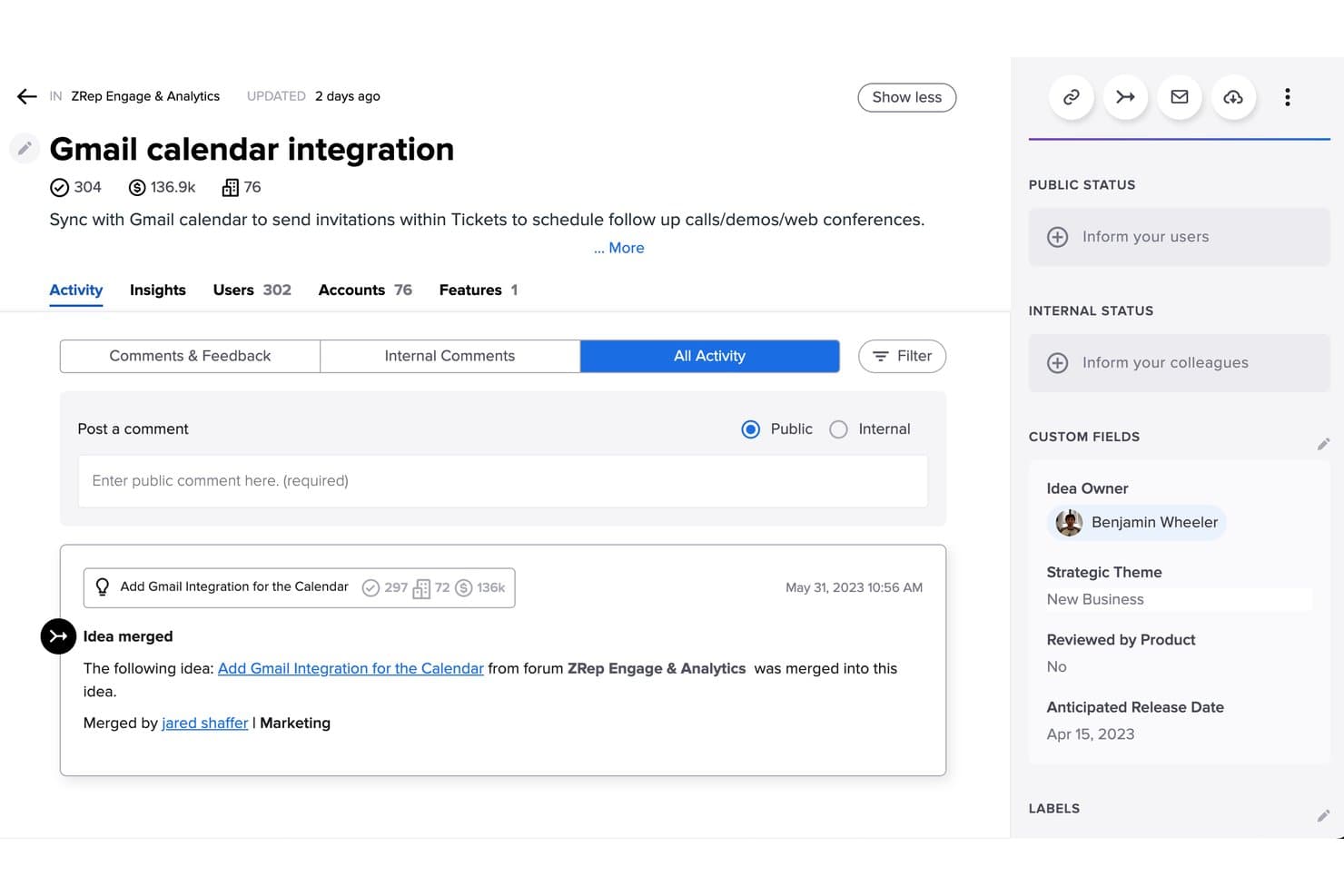
Uservoice unisce le idee duplicate per consolidare in modo efficiente il feedback degli utenti. Uservoice è una piattaforma per il feedback dei clienti e la gestione dei prodotti, pensata per i team di prodotto che devono raccogliere richieste, collegarle agli insight dei clienti e dare priorità alle decisioni relative alla roadmap nelle organizzazioni in crescita.
A chi è più adatto Uservoice?
Team di prodotto di organizzazioni in crescita che devono collegare il feedback dei clienti ai dati sui ricavi e alle priorità della roadmap.
Perché Uservoice è una buona alternativa a Productboard
Ho scelto Uservoice perché è progettato per dare priorità al feedback in base al valore dei ricavi. Utilizzo i suoi portali di feedback e la segmentazione dei clienti per raggruppare le richieste per account, segmento e area di prodotto, quindi collego la domanda all'impatto sui ricavi. Questo aiuta il mio team a dare priorità a una richiesta della roadmap proveniente da diversi clienti di alto valore rispetto a una con un volume maggiore ma un valore commerciale inferiore.
Funzionalità principali di Uservoice
- Widget per il feedback: Raccogli input sul prodotto direttamente all'interno della tua applicazione.
- Stati delle idee: Mostra ai clienti a che punto sono le richieste nel tuo flusso di lavoro.
- Integrazioni del prodotto: Collega il feedback agli strumenti che il tuo team utilizza già.
- Dashboard di analisi: Esamina le tendenze delle richieste e i dati sul coinvolgimento dei clienti.
Integrazioni di UserVoice
UserVoice offre integrazioni documentate con Salesforce, Gainsight, Jira, Zendesk, Azure DevOps, Microsoft Teams, Slack, FullStory, Skyvia e Dragonboat. Fornisce inoltre API per l'amministrazione e la raccolta delle idee, utili per le integrazioni personalizzate.
Pros and Cons
Pros:
- La definizione delle priorità in base al valore dei ricavi collega le richieste al valore dell'account
- I widget all'interno del prodotto raccolgono il feedback nei momenti più pertinenti
- Gli aggiornamenti sullo stato tengono i clienti informati sull'avanzamento delle richieste
Cons:
- L'interfaccia del portale appare datata rispetto alle alternative più recenti
- La reportistica avanzata richiede una configurazione e un'impostazione considerevoli
Learn more about Uservoice: 4Ideale per allineare gli OKR dalla strategia alla roadmap
Aha!
- Prova gratuita di 30 giorni + demo gratuita disponibile
- A partire da $9/utente/mese
Visit WebsiteCustomer Rating:4.4/5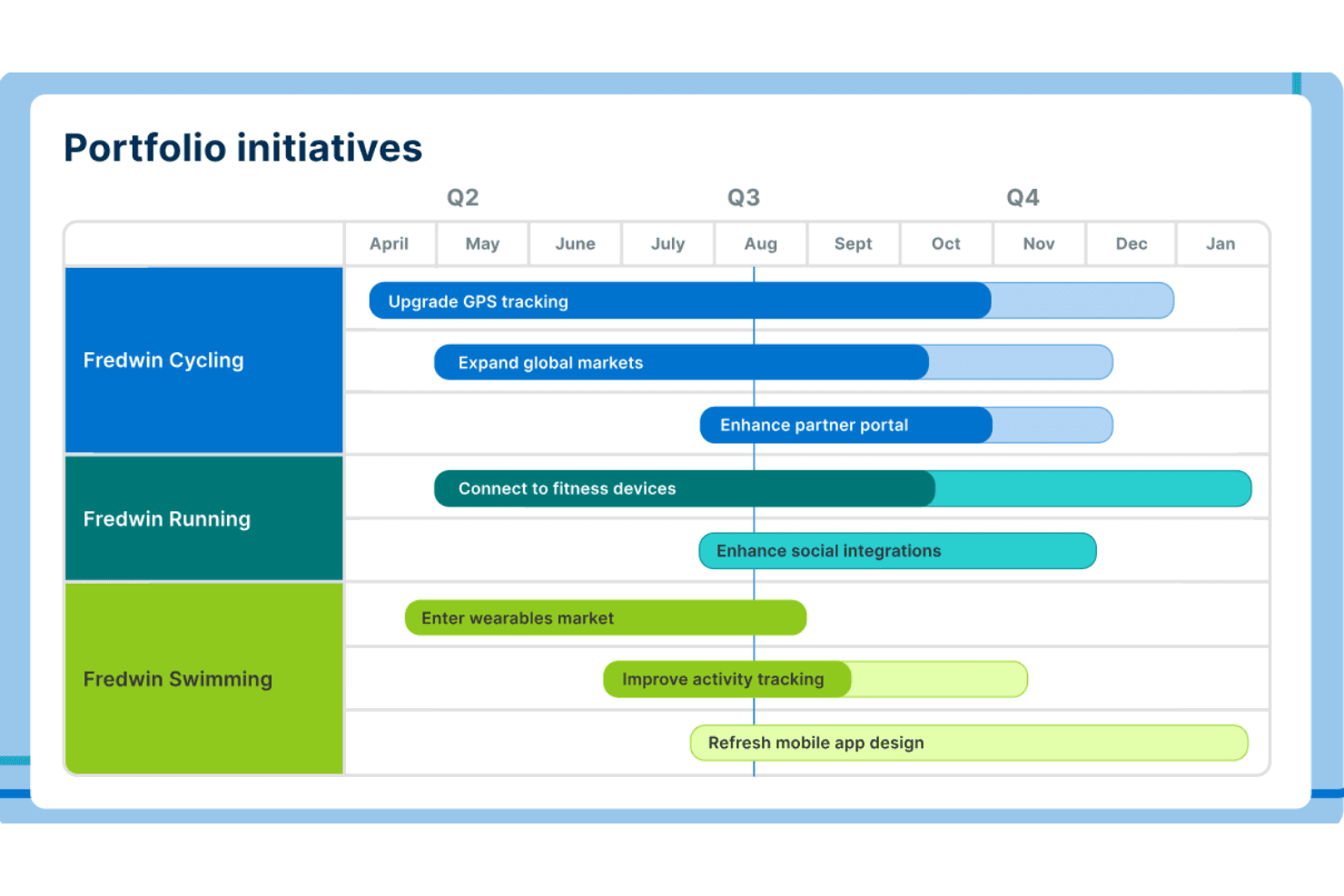
Aha! pone l'accento sulla pianificazione strategica delle roadmap con strumenti per obiettivi, idee e visualizzazione dei piani. Aha! è un software per la gestione dei prodotti destinato ai team che hanno bisogno di collegare insight dei clienti, strategia di prodotto, roadmap, requisiti e piani di distribuzione in un unico spazio di lavoro.
Per chi è più adatto Aha!?
Responsabili di prodotto e team di strategia che hanno bisogno di collegare visione del prodotto, roadmap e OKR all'interno di organizzazioni interfunzionali.
Perché Aha! è una buona alternativa a Productboard
Ho scelto Aha! perché collega gli insight dei clienti alla strategia di prodotto, alle roadmap e agli OKR in un unico spazio di lavoro. Utilizzo i suoi strumenti di pianificazione strategica per definire gli obiettivi, quindi collego iniziative e funzionalità a risultati misurabili. Le sue visualizzazioni di roadmap e requisiti aiutano il mio team a spiegare perché ogni priorità supporta la nostra strategia di prodotto.
Funzionalità principali di Aha!
- Pianificazione della capacità: Confronta la disponibilità del team con il lavoro pianificato.
- Mappatura delle dipendenze: Collega gli elementi di lavoro correlati e identifica i blocchi.
- Automazione dei flussi di lavoro: Configura regole che aggiornano automaticamente i record.
- Campi personalizzati: Aggiungi campi dati strutturati per acquisire dettagli specifici del team.
Integrazioni di Aha!
Aha! offre oltre 30 integrazioni native, tra cui Jira, Azure DevOps, GitHub, Slack, Microsoft Teams, Salesforce e Zendesk. Supporta inoltre Zapier e mette a disposizione un'API per integrazioni personalizzate.
Pros and Cons
Pros:
- Collega gli obiettivi strategici al lavoro della roadmap
- Acquisisce il feedback dei clienti insieme ai piani di prodotto
- Le visualizzazioni personalizzabili supportano report dettagliati per gli stakeholder
Cons:
- La configurazione iniziale richiede una pianificazione considerevole
- L'interfaccia densa rallenta gli utenti alle prime armi
Learn more about Aha!: Ideale per la gestione dell'arretrato di prodotto
- Prova gratuita di 14 giorni + dimostrazione gratuita disponibile
- A partire da $44/postazione/mese (con fatturazione annuale)
Visit WebsiteCustomer Rating:4.2/5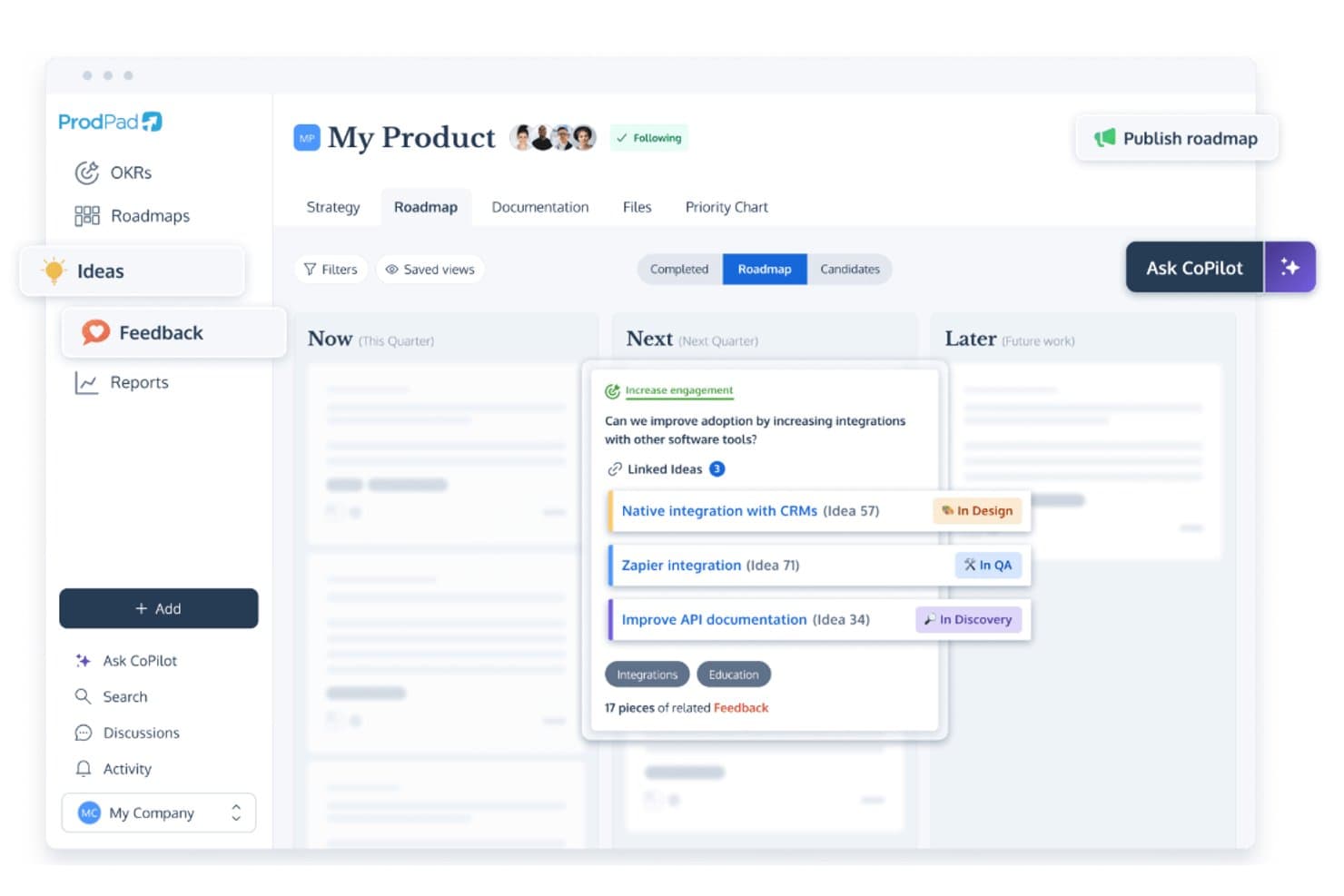
ProdPad collega le idee della tabella di marcia ai riscontri e monitora lo stato dello sviluppo. ProdPad è un software di gestione dei prodotti per team che collega gli insight dei clienti, la strategia di prodotto, le tabelle di marcia e la definizione delle priorità, aiutando i responsabili di prodotto a trasformare i riscontri in piani allineati e decisioni di rilascio sicure.
Per chi è più adatto ProdPad?
ProdPad è adatto ai responsabili di prodotto che devono collegare i riscontri dei clienti, la strategia di prodotto e le priorità dell'arretrato in un unico spazio di lavoro.
Perché ProdPad è una buona alternativa a Productboard
Ho scelto ProdPad perché la sua gestione dell'arretrato di prodotto collega i riscontri dei clienti alle idee di prodotto e agli obiettivi strategici. Utilizzo i suoi strumenti di definizione delle priorità per valutare le richieste, assegnare un punteggio alle opportunità e mantenere il lavoro di esplorazione collegato alla tabella di marcia. Questo offre al mio team una base più chiara per decidere quali elementi dell'arretrato meritano attenzione per primi.
Funzionalità principali di ProdPad
- Editor delle storie utente: Crea bozze di storie utente con criteri di accettazione e dettagli di supporto.
- Tavola del prodotto: Acquisisci utenti, problemi, ipotesi e visione del prodotto in un unico spazio di lavoro.
- Pianificazione dei rilasci: Raggruppa il lavoro pianificato in rilasci con date e traguardi.
- Integrazioni per lo sviluppo: Collega ProdPad a strumenti come Jira e Azure DevOps.
Integrazioni di ProdPad
ProdPad offre integrazioni con Jira e Azure DevOps, aiutando i team a collegare la pianificazione del prodotto ai flussi di lavoro dello sviluppo.
Pros and Cons
Pros:
- Collega i riscontri dei clienti alle idee di prodotto
- Collega le priorità dell'arretrato agli obiettivi strategici
- Separa il lavoro di esplorazione dalla pianificazione delle attività di rilascio
Cons:
- Le viste incentrate sulle storie utente diventano visivamente confuse
- Lo stile unico della tabella di marcia richiede un periodo di adattamento
Learn more about ProdPad: Ideale per la pianificazione delle roadmap del portafoglio basata sull'intelligenza artificiale
- Demo gratuita disponibile
- Prezzi su richiesta
Visit WebsiteCustomer Rating:4.8/5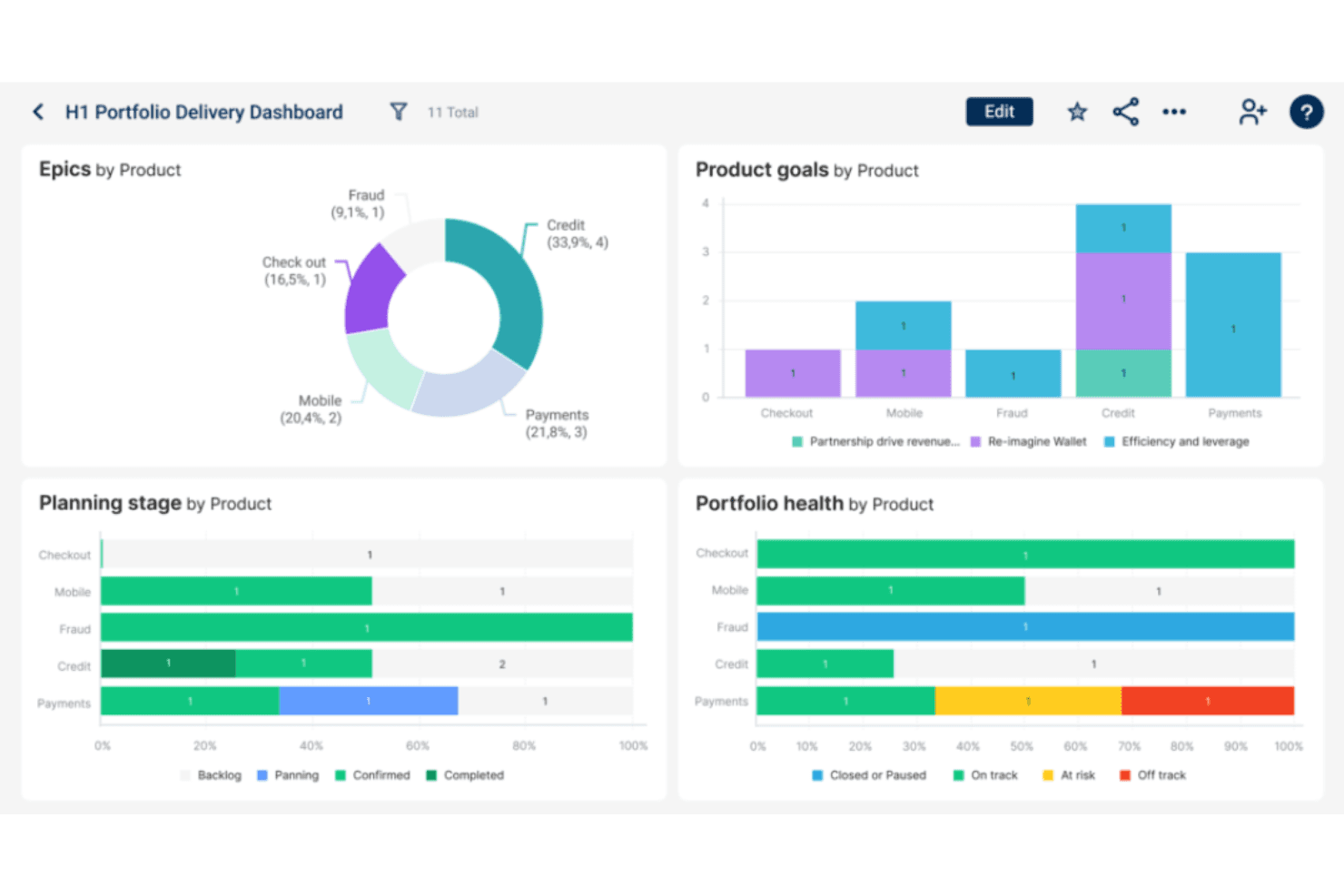
Dragonboat ottimizza la strategia di prodotto con informazioni dettagliate basate sull'intelligenza artificiale e la pianificazione delle roadmap del portafoglio. Dragonboat è una piattaforma di gestione del portafoglio prodotti per i responsabili di prodotto che devono collegare strategia, definizione delle priorità, pianificazione delle risorse e distribuzione all'interno di organizzazioni di prodotto complesse.
Per chi è più adatto Dragonboat?
Responsabili di prodotto di organizzazioni in crescita che necessitano di una pianificazione delle roadmap del portafoglio assistita dall'intelligenza artificiale per strategia, definizione delle priorità, risorse e distribuzione.
Perché Dragonboat è una buona alternativa a Productboard
Ho scelto Dragonboat perché la sua pianificazione delle roadmap del portafoglio basata sull'intelligenza artificiale collega la strategia di prodotto alla definizione delle priorità, alla pianificazione della capacità e alla distribuzione. Utilizzo le viste del portafoglio per confrontare le iniziative con gli obiettivi strategici, quindi modello gli scenari relativi alle risorse prima di impegnare la capacità ingegneristica. Questo aiuta il mio team a spiegare perché una roadmap cambia quando cambiano i finanziamenti, il personale o le priorità aziendali.
Funzionalità principali di Dragonboat
- Integrazioni con Jira e Azure DevOps: Sincronizza i dati di distribuzione dagli strumenti di sviluppo collegati.
- Mappatura delle dipendenze: Collega le iniziative correlate e identifica le dipendenze di distribuzione.
- Campi personalizzati: Aggiungi attributi strutturati alle iniziative e ai record dei prodotti.
- Viste della roadmap: Visualizza i piani in formato sequenza temporale, corsie o elenco.
Integrazioni di Dragonboat
Dragonboat si integra con Jira e Azure DevOps, sincronizzando i dati di distribuzione per collegare le roadmap del portafoglio al lavoro di sviluppo.
Pros and Cons
Pros:
- Collega la strategia alla pianificazione della capacità
- Supporta la mappatura delle dipendenze a livello di portafoglio
- Offre viste flessibili della roadmap
Cons:
- Meno focalizzato sulla scoperta dei riscontri dei clienti
- La configurazione può richiedere assistenza pratica
Learn more about Dragonboat: Ideale per framework personalizzabili di prioritizzazione
- Demo gratuita disponibile
- Prezzi su richiesta
Visit WebsiteCustomer Rating:4.4/5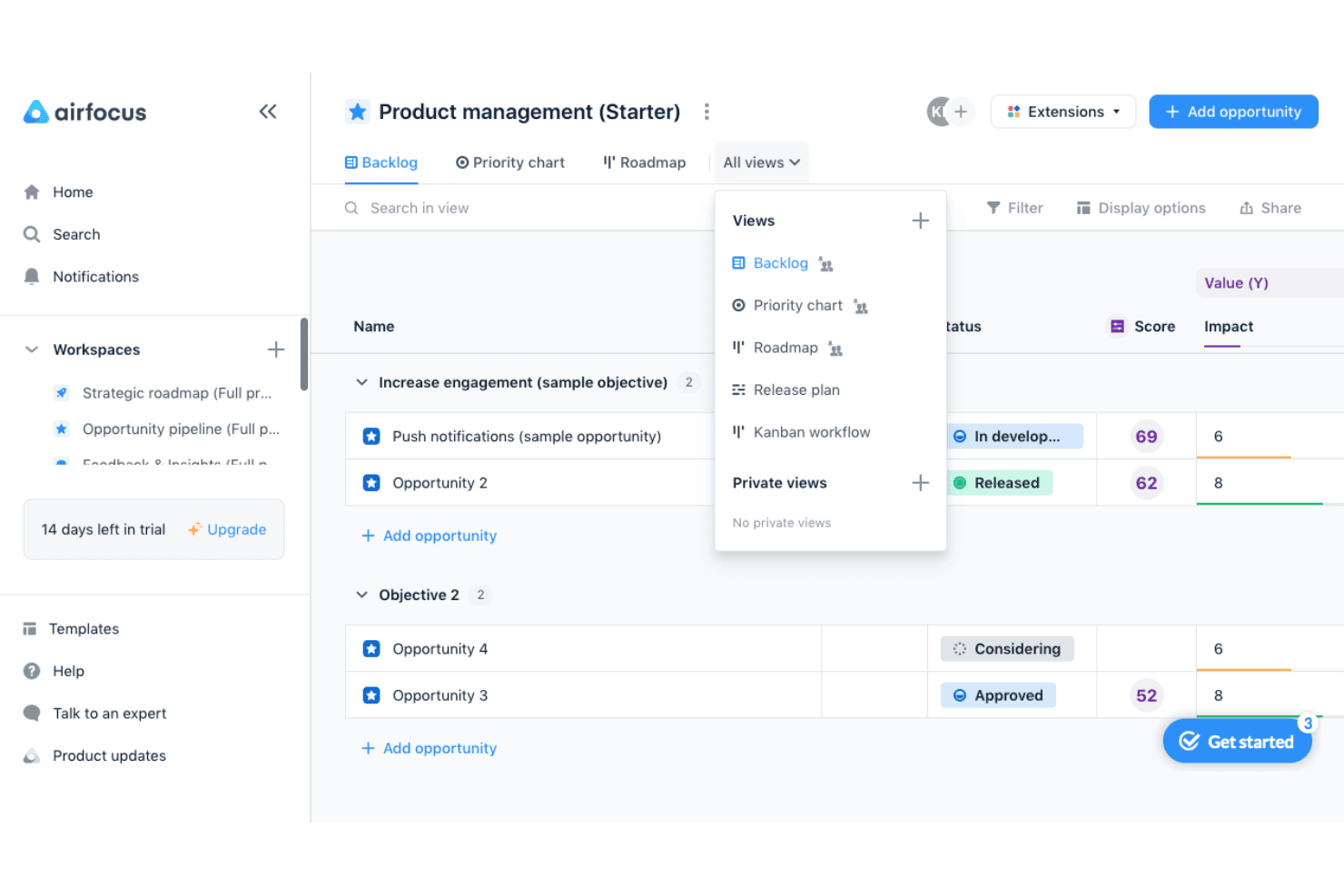
airfocus aiuta i team di prodotto a dare priorità alle opportunità e a passare dalle viste del backlog, del grafico delle priorità, della roadmap, del piano dei rilasci e Kanban. airfocus è una piattaforma modulare di gestione dei prodotti per i team che devono collegare il feedback dei clienti, la strategia di prodotto, le roadmap e le decisioni relative alla distribuzione in un unico spazio di lavoro.
Per chi è più adatto airfocus?
I team di prodotto che necessitano di modelli flessibili per la prioritizzazione possono utilizzare airfocus per collegare il feedback dei clienti, la strategia, le roadmap e le decisioni relative alla distribuzione.
Perché airfocus è una buona alternativa a Productboard
Ho scelto airfocus perché i suoi framework personalizzabili per la prioritizzazione aiutano il mio team a valutare il feedback dei clienti rispetto alla strategia di prodotto e ai vincoli di distribuzione. Utilizziamo il suo spazio di lavoro modulare per collegare feedback, roadmap e decisioni, quindi adattiamo i modelli di prioritizzazione a ciascuna area del prodotto. Questo lo rende una valida alternativa a Productboard quando team diversi necessitano di modalità distinte per classificare il lavoro.
Funzionalità principali di airfocus
- Integrazione con Jira: Sincronizza le attività tra airfocus e Jira.
- Integrazione con Azure DevOps: Collega il lavoro di distribuzione alla pianificazione del prodotto.
- Campi personalizzati: Aggiungi campi specifici del prodotto agli elementi dello spazio di lavoro.
- Pianificazione dei rilasci: Organizza il lavoro pianificato tra rilasci e tempistiche.
Integrazioni di airfocus
airfocus si integra con Jira e Azure DevOps, collegando la pianificazione del prodotto ai flussi di lavoro di distribuzione.
Pros and Cons
Pros:
- I modelli di punteggio personalizzati si adattano a strategie diverse
- Gli spazi di lavoro modulari si adattano ai diversi team di prodotto
- Il feedback si collega direttamente alle decisioni di prioritizzazione
Cons:
- La configurazione avanzata può richiedere il supporto di un amministratore
- Le viste della roadmap necessitano di maggiori funzionalità per la distribuzione
 Ideale per piani di sviluppo del prodotto basati sulla ricerca
- Prova gratuita di 14 giorni + dimostrazione gratuita disponibile
- A partire da $19/utente/mese (con fatturazione annuale)
Visit WebsiteCustomer Rating:4.4/5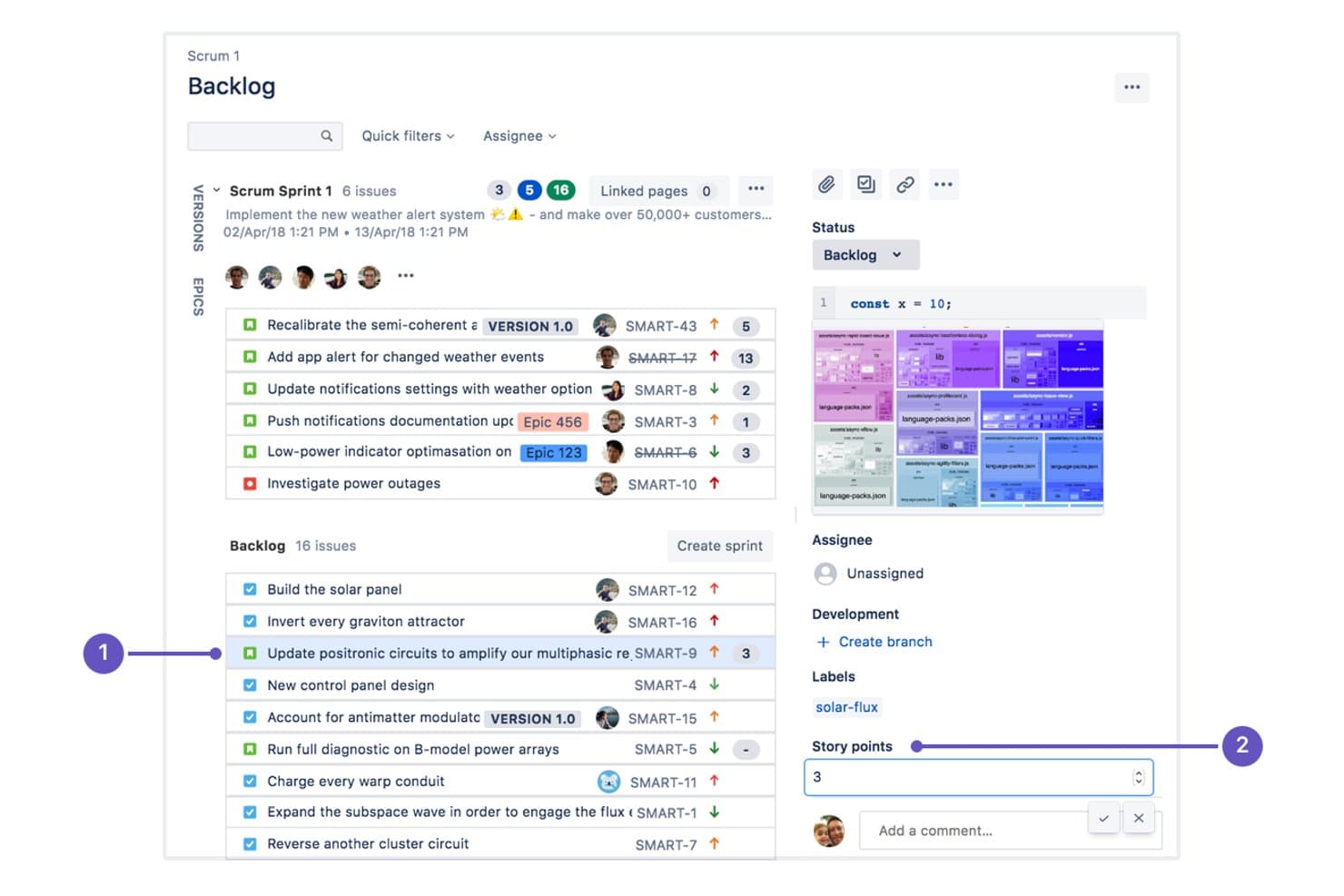
Craft.io si integra con Jira per gestire gli elenchi delle attività degli sprint e i punti delle storie. Craft.io è un software di gestione dei prodotti per i team che devono collegare le informazioni chiave dei clienti, la strategia di prodotto e la pianificazione della distribuzione, aiutando i responsabili di prodotto a trasformare i risultati della ricerca in piani di sviluppo organizzati per priorità.
Per chi è più adatto Craft.io?
Craft.io è adatto ai responsabili di prodotto e ai team interfunzionali che trasformano le informazioni chiave emerse dalla ricerca sui clienti in piani di sviluppo del prodotto organizzati per priorità.
Perché Craft.io è una buona alternativa a Productboard
Ho scelto Craft.io perché trasforma i commenti dei clienti e le informazioni chiave emerse dalla ricerca in decisioni di prodotto organizzate per priorità. Il suo archivio dei commenti e il sistema di valutazione dei prodotti aiutano il mio team a collegare i problemi ricorrenti degli utenti alle iniziative strategiche. In seguito, collego queste iniziative a piani di sviluppo del prodotto basati sulla ricerca, offrendo alle parti interessate una visione chiara dalle esigenze validate ai risultati pianificati.
Funzionalità principali di Craft.io
- Gestione delle attività pianificate: Organizza epiche, funzionalità e storie utente in un elenco strutturato di attività.
- Integrazione con Jira: Sincronizza i piani di prodotto con il lavoro di distribuzione in Jira.
- Campi personalizzati: Aggiungi metadati personalizzati a prodotti, funzionalità e iniziative.
- Autorizzazioni del team: Controlla l'accesso tra spazi di lavoro, ruoli e contenuti.
Integrazioni di Craft.io
Craft.io offre un'integrazione nativa con Jira, consentendo ai piani di prodotto di rimanere collegati al lavoro di distribuzione.
Pros and Cons
Pros:
- Le informazioni chiave dei clienti si collegano direttamente alle iniziative
- Il sistema di valutazione aiuta a stabilire la priorità dei problemi degli utenti validati
- I piani di sviluppo mostrano le dipendenze tra le attività di prodotto
Cons:
- I filtri dei piani di sviluppo sono meno flessibili di quelli di Productboard
- I flussi di lavoro avanzati richiedono tempo per essere configurati
Learn more about Craft.io: Ideale per la raccolta del feedback dei clienti tramite l'IA
- Piano gratuito disponibile
- A partire da $79/mese (con fatturazione annuale)
Visit WebsiteCustomer Rating:4.6/5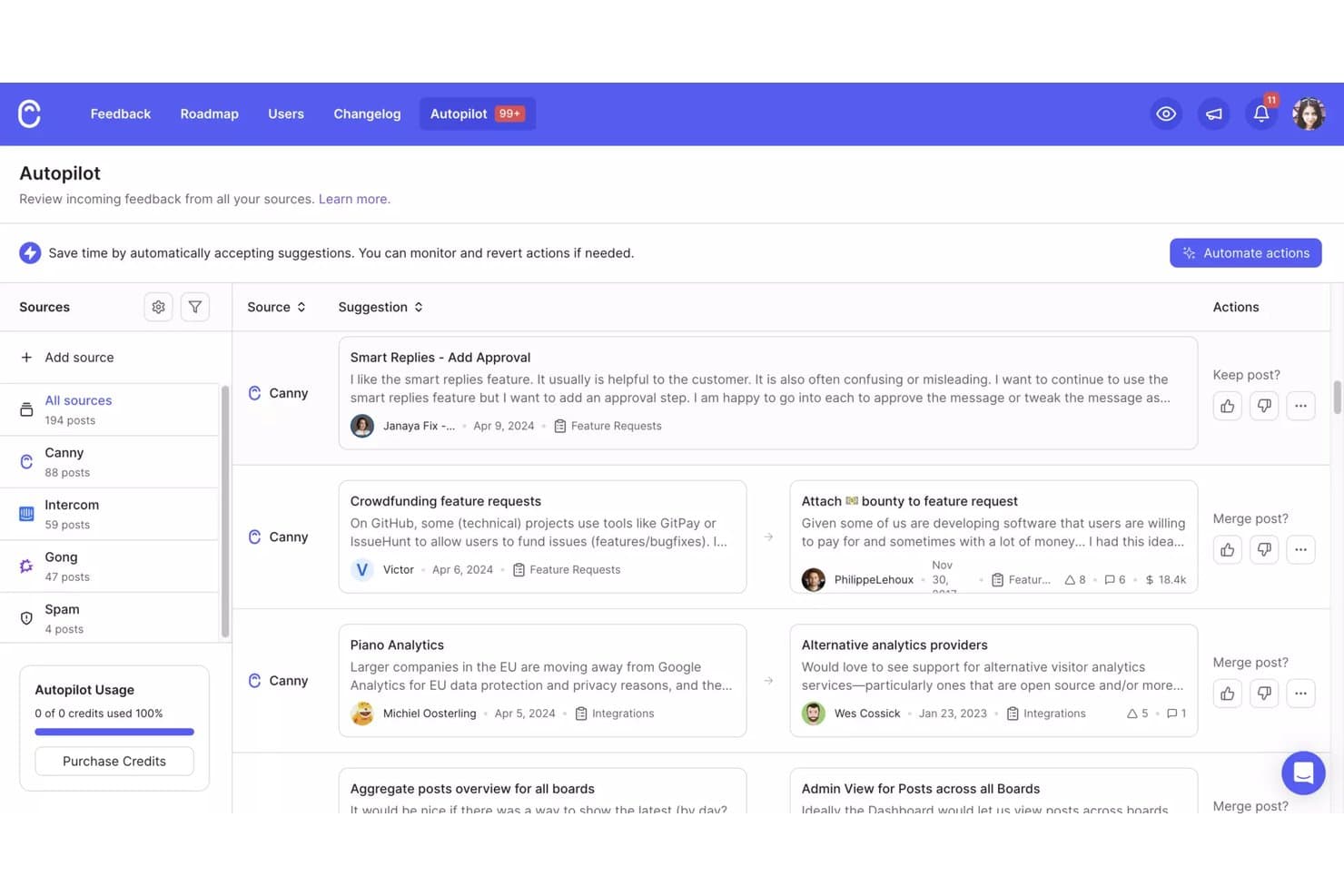
L'Autopilot di Canny riunisce in un'unica vista i feedback provenienti da più fonti. Canny è una piattaforma di feedback dei clienti e gestione dei prodotti per i team di prodotto che centralizza gli insight degli utenti, supporta la definizione delle priorità della roadmap e aiuta a collegare le decisioni sul prodotto alle esigenze dei clienti.
Per chi è più indicato Canny?
Canny è adatto ai team di prodotto di aziende in crescita che necessitano di acquisire, organizzare e definire le priorità del feedback dei clienti con l'assistenza dell'IA.
Perché Canny è una buona alternativa a Productboard
Ho scelto Canny perché la sua raccolta del feedback basata sull'IA aiuta il mio team ad acquisire le richieste dei clienti da più canali e a organizzarle in un unico posto. La categorizzazione basata sull'IA e il rilevamento dei duplicati riducono il triage ripetitivo, mentre le bacheche dei feedback collegano le richieste alle priorità della roadmap. Utilizzo questi insight per verificare se una funzionalità risolve un problema ricorrente dei clienti prima di impegnare tempo nello sviluppo.
Funzionalità principali di Canny
- Votazione degli utenti: Consenti ai clienti di votare le idee inviate.
- Bacheche pubbliche e private: Controlla chi può visualizzare e inviare feedback.
- Pubblicazione del registro delle modifiche: Condividi con i clienti gli aggiornamenti rilasciati.
- Stati personalizzati: Tieni traccia delle idee secondo il flusso di lavoro che preferisci.
Integrazioni di Canny
Canny offre integrazioni native con Intercom, Zendesk, Slack, Salesforce, HubSpot, Jira Cloud, Linear, GitHub, ClickUp e Asana. Si connette anche a Zapier e fornisce un'API per le integrazioni personalizzate.
Pros and Cons
Pros:
- Il rilevamento dei duplicati assistito dall'IA riduce il triage del feedback
- La votazione pubblica collega le richieste alle priorità della roadmap
- La pubblicazione del registro delle modifiche chiude il ciclo del feedback
Cons:
- I report offrono un'analisi limitata delle tendenze
- La votazione può favorire gli utenti più insistenti invece delle evidenze
Learn more about Canny: Ideale per chiudere il ciclo dei commenti con i clienti
- Piano gratuito disponibile
- A partire da $29/postazione/mese (con fatturazione annuale)
Visit WebsiteCustomer Rating:4.7/5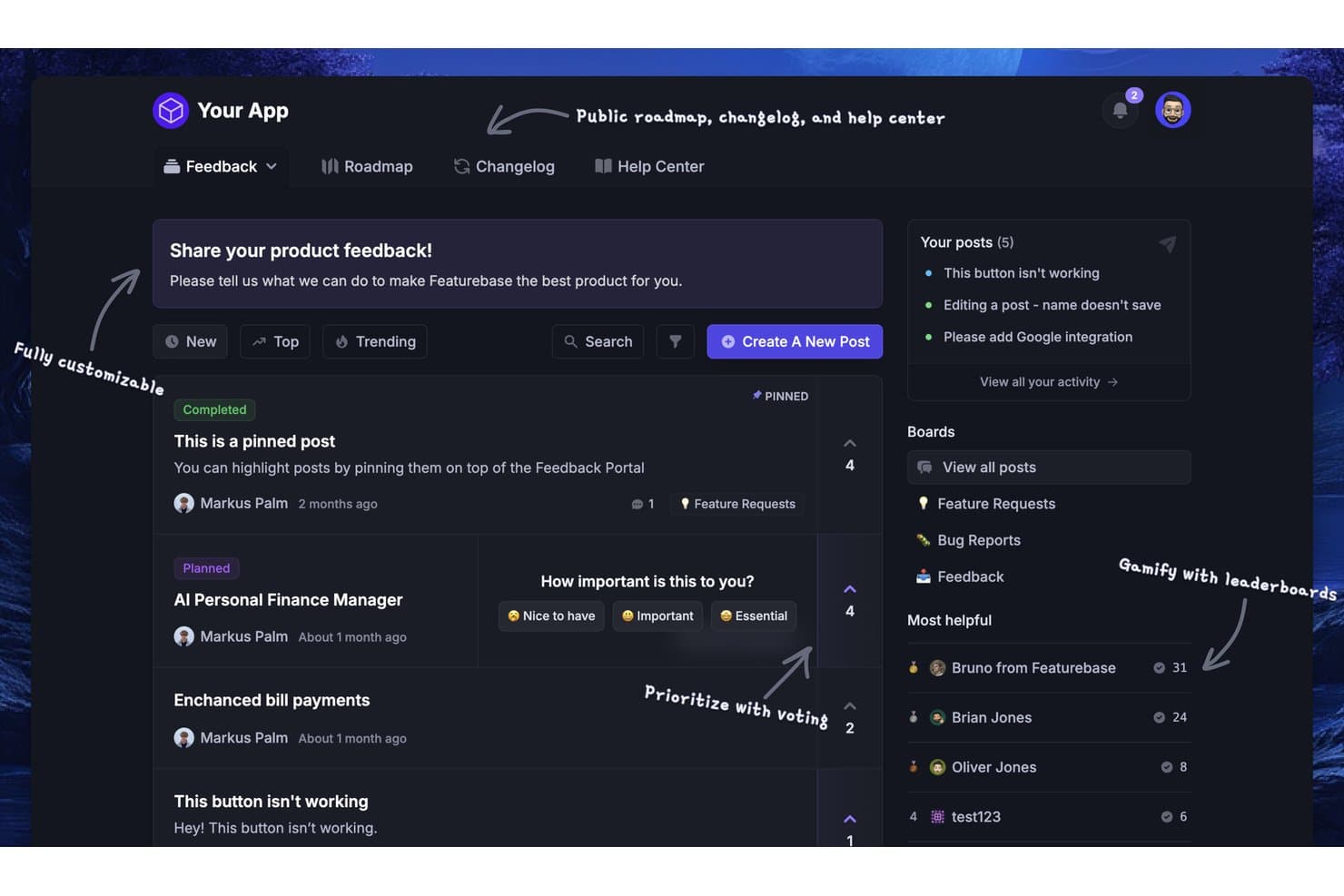
Featurebase consente agli utenti di raccogliere, votare e dare priorità ai commenti sul prodotto. Featurebase è una piattaforma di gestione dei prodotti incentrata sui clienti, pensata per i team che devono organizzare le richieste di prodotto, dare priorità alle decisioni sul piano di sviluppo e allineare lo sviluppo del prodotto alle esigenze dei clienti.
Per chi è più indicato Featurebase?
Featurebase è adatto ai responsabili di prodotto e ai team a contatto con i clienti che devono raccogliere, organizzare e comunicare i commenti dei clienti in uno spazio di lavoro condiviso.
Perché Featurebase è una valida alternativa a Productboard
Ho scelto Featurebase perché aiuta il mio team a chiudere il ciclo dei commenti con i clienti. Raccogliamo le richieste nelle bacheche dei commenti, le colleghiamo alle decisioni sul piano di sviluppo e condividiamo gli aggiornamenti del prodotto tramite i registri delle modifiche. I clienti possono vedere quali idee sono pianificate, rilasciate o in fase di valutazione, invece di inviare commenti nel vuoto.
Funzionalità principali di Featurebase
- Campi personalizzati: Aggiungi campi strutturati ai moduli dei commenti per indicare il tipo di problema, il segmento o la priorità.
- Widget integrati nell'app: Raccogli commenti direttamente all'interno del tuo prodotto.
- Sondaggi: Crea sondaggi mirati per raccogliere opinioni strutturate sul prodotto.
- Integrazione con Jira: Invia i commenti selezionati a Jira per monitorare l'implementazione.
Integrazioni di Featurebase
Featurebase offre integrazioni native con Linear, Jira, GitHub, ClickUp, Azure DevOps, Slack, HubSpot, Intercom e Zendesk. Si collega inoltre a Zapier e fornisce un'API per le integrazioni personalizzate.
Pros and Cons
Pros:
- Le bacheche pubbliche consentono ai clienti di votare le richieste
- I registri delle modifiche comunicano chiaramente i commenti dei clienti implementati
- I widget integrati nell'app raccolgono commenti durante l'utilizzo del prodotto
Cons:
- La pianificazione del piano di sviluppo è meno sviluppata rispetto a Productboard
- Le analisi avanzate per la definizione delle priorità restano relativamente limitate
Learn more about Featurebase:
Altre alternative a Productboard
Stai ancora cercando? Ecco alcune alternative aggiuntive a Productboard. Anche se non sono rientrate tra le prime 10, sono comunque valide e meritano ulteriori ricerche.
- 11Jira Product DiscoveryIdeale per il monitoraggio della distribuzione connesso a Jira
- 12MiroIdeale per il brainstorming visivo
- 13monday AI WorkspaceIdeale per roadmap interfunzionali su larga scala
- 14ProductPlanIdeale per presentazioni di roadmap rivolte a più destinatari
- 15Tempo Roadmapping SoftwareIdeale per roadmap temporali con sincronizzazione con Jira
- 16PendoIdeale per l'analisi in-app associata al feedback
- 17LaunchNotesIdeale per una visibilità in tempo reale sul prodotto
- 18SleekplanIdeale per la gestione dei feedback sull'IA a tariffa fissa
- 19IBM TargetprocessIdeale per la pianificazione dei piani di sviluppo dei portafogli SAFe
Come valuto un'alternativa a Productboard
Divido la mia valutazione in tre parti. Innanzitutto, verifico le funzionalità fondamentali, nello specifico se uno strumento è in grado di aggregare il feedback proveniente da più canali e creare roadmap visive che gli stakeholder possano effettivamente utilizzare; questi aspetti hanno il peso maggiore. Poi cerco funzionalità distintive, come l'estrazione di informazioni basata sull'IA e l'allineamento agli OKR. Infine, considero la trasparenza dei prezzi e il supporto durante l'onboarding.
Funzionalità fondamentali (requisiti essenziali per questa lista)
Quando seleziono gli strumenti da inserire nella mia lista, assegno a ciascuno un punteggio su una scala da 0 (non offre la funzionalità) a 5 (eccelle in quest'area) per ogni funzionalità fondamentale elencata di seguito. Poi converto il totale in una percentuale per contribuire a valutare l'idoneità complessiva di ogni strumento, assegnando un peso maggiore alle funzionalità che ho considerato essenziali.
- Feedback dei clienti (essenziale): Cerco feedback ricercabile proveniente dai canali di assistenza, vendite, interviste e applicazione, con tag che rivelino le esigenze ricorrenti dei clienti.
- Visualizzazione della roadmap (essenziale): Valuto viste con sequenza temporale, corsie di attività o bacheca kanban che comunichino priorità e orizzonti di consegna al pubblico interno ed esterno.
- Punteggio di prioritizzazione: Verifico la presenza di strutture adattabili, come RICE o il punteggio ponderato, che mettano a confronto il valore per il cliente, l'impegno, il rischio e l'allineamento strategico.
- Collegamento del feedback: Cerco la tracciabilità dalle singole richieste alle funzionalità, alle release e agli elementi della roadmap, compresi i segnali della domanda utili alla prioritizzazione.
- Collaborazione degli stakeholder: Valuto commenti, voti e contributi strutturati provenienti da prodotto, ingegneria, vendite, assistenza, clienti e leadership.
- Integrazioni: Verifico i collegamenti con sistemi di gestione delle segnalazioni, CRM, piattaforme di assistenza, strumenti di collaborazione e piattaforme di automazione per aggiornamenti bidirezionali dei flussi di lavoro.
Una volta ottenuta una lista di strumenti che soddisfano i criteri, considero ciò che distingue ogni piattaforma.
Fattori distintivi (ciò che differenzia i fornitori)
Ecco come confronto i diversi fornitori:
Funzionalità distintive
Cerco l'estrazione di informazioni basata sull'IA, che faccia emergere temi e sentiment dal feedback grezzo senza etichettatura manuale: questo fa risparmiare ore quando si elaborano centinaia di ticket di assistenza dopo una release importante. L'allineamento agli OKR è altrettanto importante; verifico se uno strumento collega direttamente gli elementi della roadmap agli obiettivi strategici, affinché la leadership possa vedere l'impatto aziendale, non solo le date di rilascio. Valuto anche i portali rivolti ai clienti, poiché un portale personalizzato con il marchio dell'azienda, in cui i clienti possono inviare e monitorare le richieste, chiude il ciclo del feedback senza ulteriore scambio di email.
Oltre le funzionalità
Valuto se un fornitore offre postazioni gratuite o a basso costo per i visualizzatori, poiché i product manager lavorano raramente da soli: vendite, assistenza e dirigenti hanno bisogno di visibilità sulla roadmap senza far lievitare i costi per postazione. Il supporto alla migrazione è altrettanto importante; verifico la disponibilità di assistenza dedicata per l'onboarding e di strumenti per l'importazione dei dati che preservino la cronologia del feedback, perché ricostruire da zero mesi di informazioni analizzate e contrassegnate fa perdere slancio. Valuto anche la certificazione SOC 2 Type II o ISO 27001, soprattutto quando il feedback dei clienti contiene dati sensibili relativi agli account.
Perché cercare un'alternativa a Productboard?
Sebbene Productboard sia una buona scelta per il software di gestione dei prodotti, ci sono diversi motivi per cui alcuni utenti cercano soluzioni alternative. Ad esempio, potresti cercare un'alternativa a Productboard per uno dei seguenti motivi:
- Non rientra nel tuo budget
- Il tuo team ha bisogno di maggiore personalizzazione
- Stai cercando una migliore integrazione con altri strumenti
- Hai bisogno di accessibilità offline
- Stai cercando un'interfaccia utente più semplice
- Il tuo team sta crescendo oltre la scalabilità di Productboard
Se ti riconosci in una di queste situazioni, sei nel posto giusto. Il mio elenco include diverse opzioni fondamentali per la gestione dei prodotti, più adatte ai team che affrontano queste difficoltà con Productboard e cercano soluzioni alternative.
Caratteristiche principali da cercare in un'alternativa a Productboard
Quando scegli un'alternativa a Productboard, o un qualsiasi software per la gestione dei prodotti, presta attenzione alle seguenti caratteristiche principali:
- Portale per il feedback degli utenti: Centralizza il feedback sui prodotti proveniente da più fonti, inclusi i contributi diretti degli utenti. Uno strumento per la gestione del feedback può aiutarti a creare una bacheca completa per ottenere informazioni utili.
- Matrice di definizione delle priorità delle funzionalità: Valuta le richieste di funzionalità e assegna le risorse alle iniziative più incisive, assicurandoti che il tuo team si concentri su ciò che conta per offrire esperienze utente migliori.
- Pianificazione della roadmap: Sfrutta un software interattivo per la roadmap per visualizzare la strategia della tua piattaforma di gestione dei prodotti. Crea tempistiche chiare per le nuove funzionalità, in linea con gli obiettivi del tuo team.
- Strumenti per la collaborazione del team: Promuovi una collaborazione più fluida con strumenti progettati per condividere idee, scambiare feedback e gestire le attività, mantenendo il team allineato sugli aggiornamenti nell'app e sulle tappe fondamentali.
- Analisi e report: Prendi decisioni sui prodotti basate sui dati grazie a metriche e informazioni dettagliate. Comprendi cosa funziona, individua le lacune e monitora il successo delle nuove funzionalità.
- Gestione delle attività e dei flussi di lavoro: Organizza e gestisci i flussi di lavoro dello sviluppo dei prodotti. Monitora i progressi e ottimizza i processi per garantire la pubblicazione puntuale dei registri delle modifiche e degli aggiornamenti.
- Gestione delle idee: Raccogli, categorizza e riesamina le idee in un archivio strutturato. Questa funzionalità consente al tuo team di innovare rispondendo al contempo alle esigenze dei clienti.
P.S. Se ti trovi ancora nelle prime fasi della scoperta del prodotto, gli strumenti per creare moodboard possono aiutarti a definire tono e direzione visiva prima di stabilire le priorità delle funzionalità. - Segmentazione degli utenti: Adatta il tuo prodotto a diversi tipi di pubblico segmentando gli utenti in base alle loro preferenze. Offri prodotti migliori, in grado di rispondere alle esigenze specifiche del mercato.
- Notifiche e avvisi: Anticipa le esigenze con notifiche in tempo reale. Mantieni il tuo team informato sulle modifiche critiche, sul feedback e sulle tappe fondamentali senza perderti nulla.
- Integrazione con strumenti di terze parti: Estendi le funzionalità di Productboard con integrazioni come Intercom, UserVoice e altre. Riduci al minimo le interruzioni e sincronizza i flussi di lavoro con gli altri strumenti del tuo stack SaaS.