

Si estás explorando opciones más allá de Aha!, probablemente te enfrentas a dificultades para gestionar eficazmente las hojas de ruta de tus productos. Necesitas una herramienta que se adapte a las necesidades específicas de tu equipo, ya sea para mejorar la colaboración, contar con interfaces más intuitivas o disponer de funciones alineadas con tu sector.
Según mi experiencia, encontrar el software adecuado puede resultar abrumador debido a la gran cantidad de opciones disponibles. Mi objetivo es ayudarte a separar el ruido de la información útil mediante análisis bien documentados sobre las mejores alternativas a Aha!.
En este artículo, te guiaré por las principales opciones que podrían adaptarse mejor a tu negocio. Encontrarás reseñas imparciales centradas en abordar los desafíos específicos de tu equipo y ayudarte a tomar una decisión informada.
¿Qué es Aha!?
Aha! es un software de hojas de ruta de productos diseñado para ayudar a los equipos a planificar y ejecutar sus estrategias de producto de forma eficaz. Lo utilizan habitualmente responsables de producto, desarrolladores y especialistas en marketing que necesitan una visión clara y alineación en torno a los objetivos del producto. Funciones como la definición de objetivos, la planificación de plazos y la generación de informes respaldan los esfuerzos de tu equipo para organizar y priorizar tareas. En general, Aha! ofrece un enfoque estructurado para gestionar las hojas de ruta de productos y garantiza que todos estén alineados.
Por qué confiar en nuestras recomendaciones de software
6,700+
Reviews
20
Industry experts
16+
Evaluation factors
14
Years
Nuestro equipo lleva probando y evaluando software desde 2012. Como gestores de producto, sabemos lo difícil —y lo importante— que es elegir el software adecuado.
Para esta guía, evaluamos las herramientas mediante pruebas prácticas e investigación independiente, puntuando las herramientas según nuestros criterios de selección.
Nuestras reseñas reflejan nuestro criterio editorial humano, no un discurso de ventas.
Revisores expertos:
 Hannah ClarkSenior TPM
- Cristiano ValimSenior UI/UX Lead

Tabla comparativa de alternativas a Aha!
Esta tabla comparativa destaca los detalles de precios de mis principales alternativas a Aha!.
| Tool | Best For | Trial Info | Price | ||
|---|---|---|---|---|---|
| 1 | Ideal para publicar hojas de ruta y actualizaciones de Jira | Prueba gratuita de 30 días + plan gratuito disponible | Desde $1.10/usuario/mes | Website | |
| 2 | Ideal para crear aplicaciones sin código | Plan gratuito + demostración gratuita + prueba de 14 días disponible | Desde $20/usuario/mes | Website | |
| 3 | Ideal para hojas de ruta basadas en comentarios | Plan gratuito disponible | Desde $7/por creador/mes | Website | |
| 4 | Ideal para la integración de comentarios de clientes | Demostración gratuita disponible | Precio bajo solicitud | Website | |
| 5 | Bedst til ekspertstyret migrationssupport | Ikke tilgængelig | Pris oplyses efter anmodning | Website | |
| 6 | Ideal para la gestión ágil de carteras | Prueba gratuita disponible | Precios bajo solicitud | Website | |
| 7 | Ideal para la gestión de ideas | Prueba gratuita de 14 días + demostración gratuita disponible | Precios bajo solicitud | Website | |
| 8 | Ideal para hojas de ruta de fabricación | Demostración gratuita disponible | Desde $99/usuario/mes | Website | |
| 9 | Ideal para la alineación de la estrategia de producto | Demostración gratuita disponible | Precios bajo solicitud | Website | |
| 10 | Ideal para herramientas de priorización | Demo gratuita disponible | Precios bajo petición | Website |


Reseñas de las mejores alternativas a Aha!
A continuación encontrarás mis resúmenes detallados de las mejores alternativas a Aha! que se incluyeron en mi lista de preseleccionadas. Mis reseñas ofrecen un análisis detallado de las funciones principales, las ventajas y desventajas, las integraciones y los casos de uso ideales de cada herramienta para ayudarte a encontrar la mejor opción para ti.
 Ideal para publicar hojas de ruta y actualizaciones de Jira
- Prueba gratuita de 30 días + plan gratuito disponible
- Desde $1.10/usuario/mes
Visit WebsiteCustomer Rating:5/5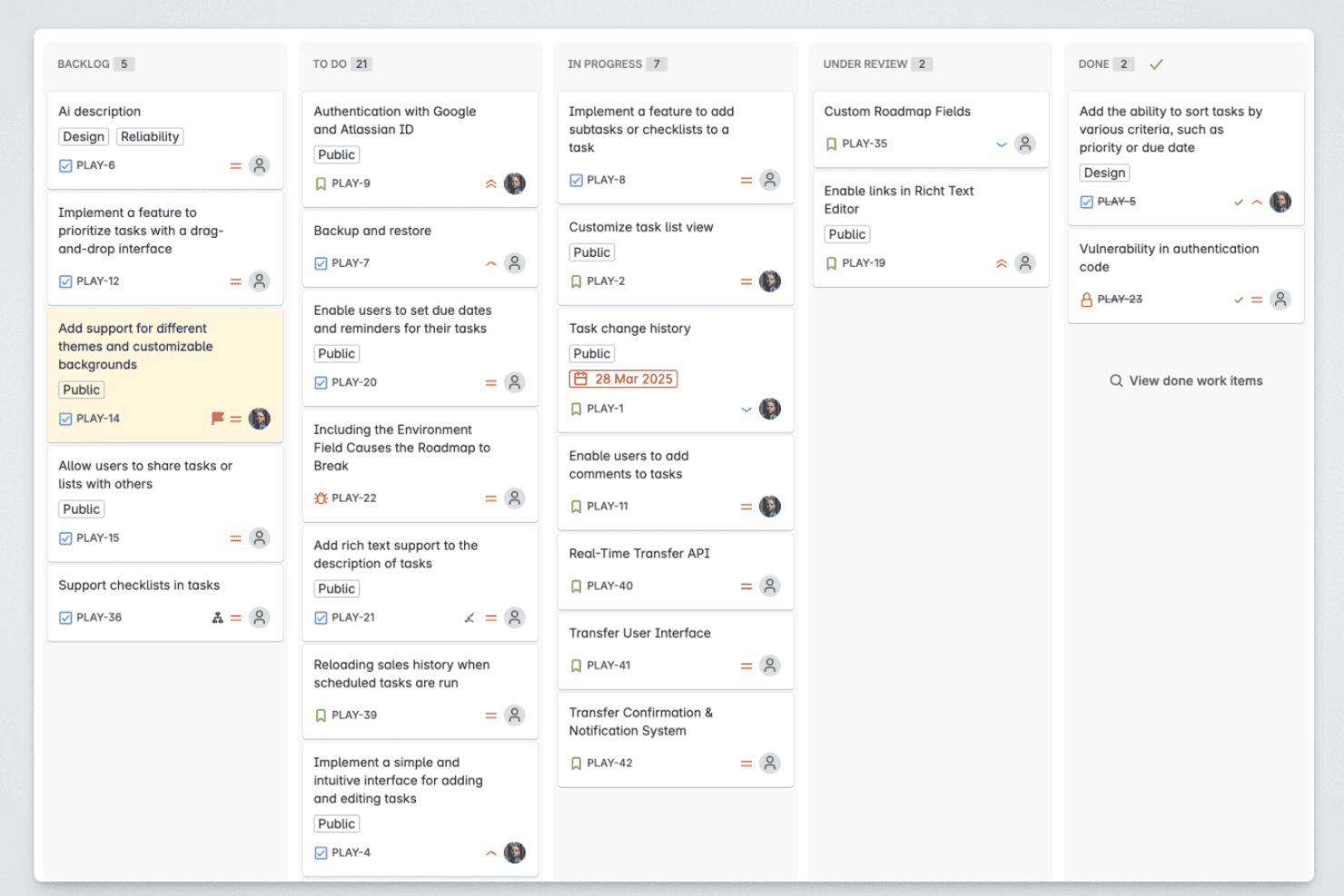
Released permite a los gerentes de producto organizar los elementos de la hoja de ruta en las etapas de pendiente, en curso, revisión y completado. Released es una plataforma de gestión de productos para equipos centrados en Jira que necesitan planificación de hojas de ruta sencilla, comentarios de clientes y comunicación con las partes interesadas sin la complejidad de una alternativa completa a Aha!.
¿Para quién es mejor Released?
Released es adecuada para gerentes de producto y equipos de operaciones de producto que recopilan comentarios de clientes y comparten el contexto de la hoja de ruta con las partes interesadas de Jira.
Por qué Released es una buena alternativa a Aha!
Elegí Released porque puedo publicar hojas de ruta y actualizaciones de Jira sin trasladar a los equipos a un sistema de planificación independiente. Utilizo sus vistas de hojas de ruta para ofrecer a las partes interesadas un contexto claro sobre las entregas y luego comparto actualizaciones de progreso junto con los comentarios de los clientes. Así, el trabajo de Jira permanece conectado con la historia del producto que las partes interesadas necesitan seguir.
Características principales de Released
- Notas de versión con IA: Genera notas de versión a partir de tickets de Jira.
- Páginas públicas: Publica contenido del producto en tu sitio web.
- Acceso sin inicio de sesión: Permite que los usuarios externos accedan al contenido compartido sin tener cuentas de Jira.
- Atlassian Forge: Ejecuta la aplicación en la plataforma en la nube de Atlassian.
Integraciones de Released
Released está creada como una aplicación de Jira, con integración nativa para incidencias y proyectos de Jira. No hay integraciones nativas adicionales ni una API para integraciones personalizadas claramente documentadas.
Pros and Cons
Pros:
- Las hojas de ruta permanecen vinculadas al trabajo de entrega
- La IA reduce la redacción manual de notas de versión
- Las páginas sin inicio de sesión simplifican el acceso de las partes interesadas
Cons:
- Profundidad limitada para la planificación estratégica de carteras
- Algunas funciones de flujo de trabajo solicitadas aún no están disponibles
Learn more about Released: Ideal para crear aplicaciones sin código
- Plan gratuito + demostración gratuita + prueba de 14 días disponible
- Desde $20/usuario/mes
Visit WebsiteCustomer Rating:4.6/5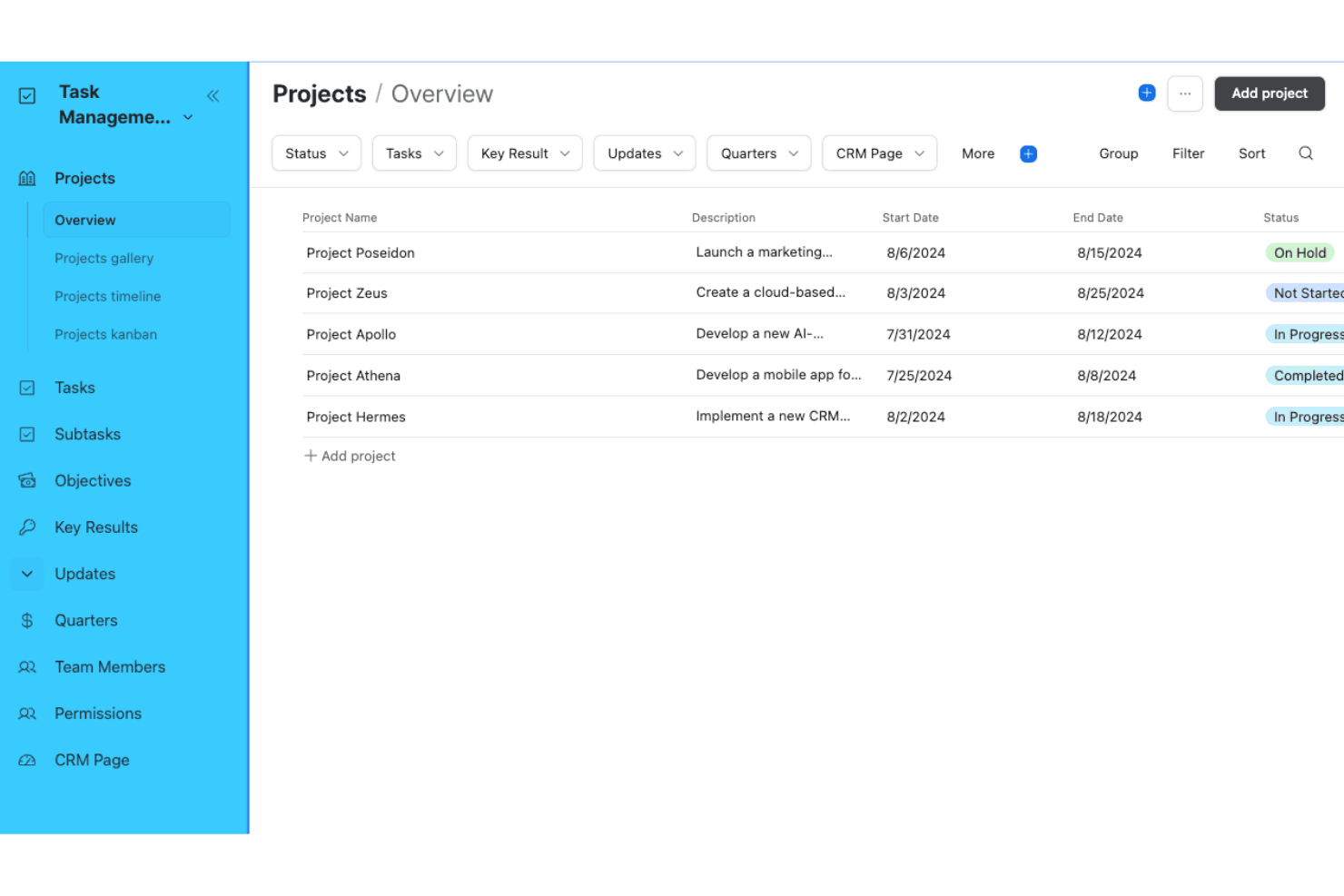
Airtable es una herramienta flexible, similar a una hoja de cálculo, que permite a los equipos crear flujos de trabajo y gestionar proyectos sin escribir código. Airtable es una plataforma flexible de gestión del trabajo para equipos de producto que necesitan organizar datos de producto, coordinar flujos de trabajo y crear herramientas adaptadas sin depender de recursos de ingeniería.
¿Para quién es más adecuado Airtable?
Los responsables de producto y los equipos de operaciones pueden usar Airtable para crear aplicaciones internas adaptadas sin depender del equipo de ingeniería para cada cambio en los flujos de trabajo.
Por qué Airtable es una buena alternativa a Aha!
Elegí Airtable porque su creación de aplicaciones sin código ayuda a los equipos de producto a convertir los datos de producto en herramientas internas adaptadas. Utilizo registros vinculados, interfaces personalizadas y automatizaciones para crear rastreadores de lanzamientos, portales de recepción y flujos de trabajo de priorización sin esperar el apoyo del equipo de ingeniería.
Características principales de Airtable
- Vistas personalizadas: Muestra los registros en formatos de cuadrícula, calendario, galería, kanban o cronología.
- Constructor de formularios: Crea formularios con marca que capturan envíos estructurados directamente en una base.
- Permisos a nivel de registro: Controla quién puede ver, editar o comentar registros específicos.
- Historial de revisiones: Revisa valores anteriores de los registros y restaura versiones anteriores cuando sea necesario.
Integraciones de Airtable
Airtable ofrece integraciones nativas con Box y Google Drive, además de extensiones de socios para Formstack, Loom, Miro, Pexels y Typeform. También es compatible con Make y Workato, se conecta con Zapier y proporciona una API web para integraciones personalizadas.
Pros and Cons
Pros:
- Estructura relacional flexible para los datos de producto
- Las interfaces personalizadas permiten adaptar los flujos de trabajo de producto
- Los formularios simplifican la recopilación de comentarios estructurados de los clientes
Cons:
- Carece de funciones específicas para la planificación de hojas de ruta de producto
- Las bases complejas requieren un diseño cuidadoso del esquema
Learn more about Airtable: Ideal para hojas de ruta basadas en comentarios
- Plan gratuito disponible
- Desde $7/por creador/mes
Visit WebsiteCustomer Rating:4.9/5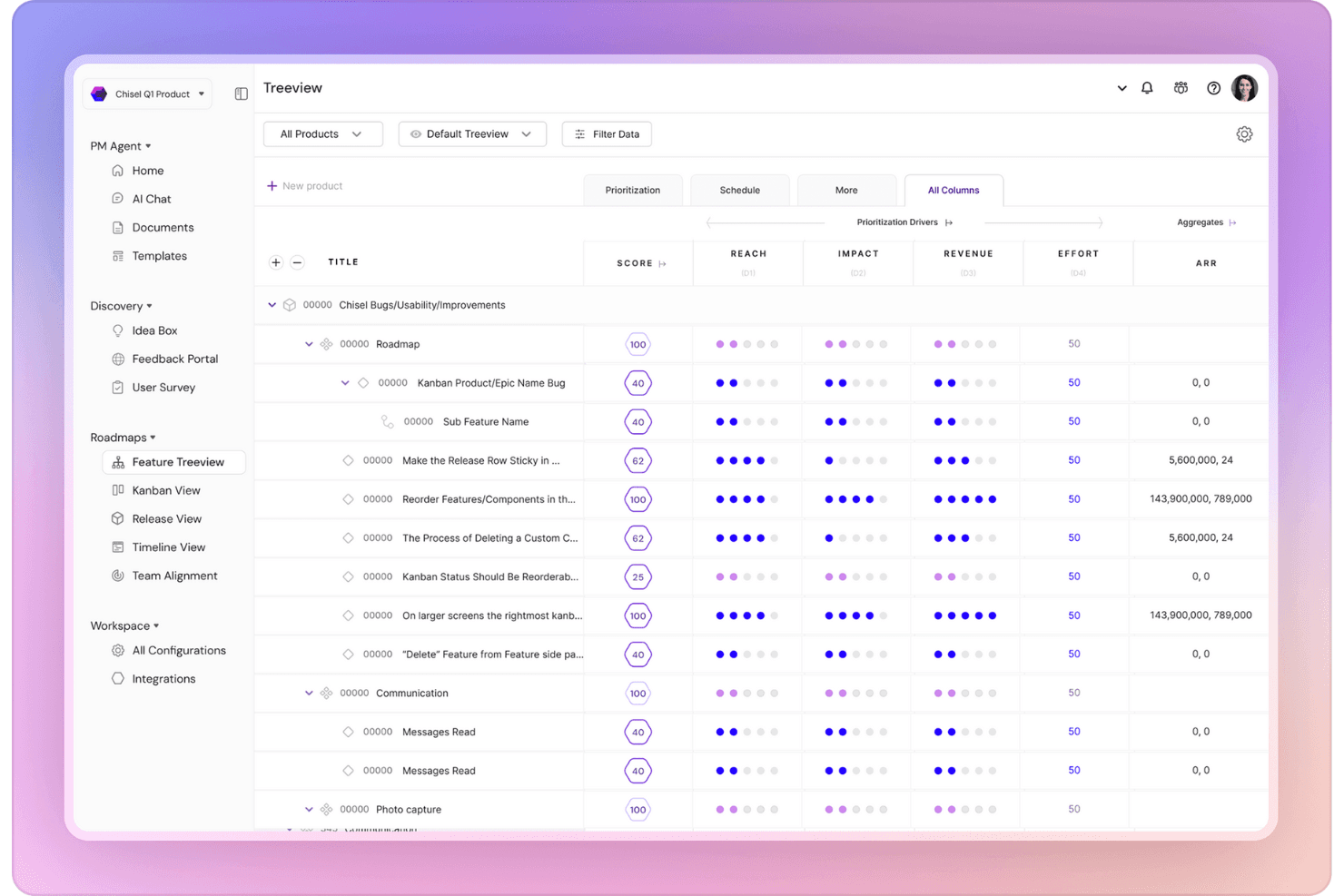
Chisel ofrece una función de vista de árbol para organizar los componentes del producto. Para los equipos de producto que buscan una alternativa a Aha!, Chisel combina herramientas de planificación de productos, información sobre clientes, priorización y entrega ágil para conectar la estrategia con la ejecución.
¿Para quién es más adecuado Chisel?
Equipos de producto que necesitan recopilar comentarios de clientes, conectarlos con ideas de productos y priorizar las decisiones de la hoja de ruta en un solo espacio de trabajo.
Por qué Chisel es una buena alternativa a Aha!
Elegí Chisel porque sus hojas de ruta basadas en comentarios conectan las solicitudes de los clientes con las ideas de productos y las decisiones de priorización. Me gusta cómo mi equipo puede recopilar comentarios, puntuar oportunidades y convertir ideas validadas en elementos de la hoja de ruta. Así, la evidencia de los clientes permanece visible cuando decidimos qué pasa a la entrega ágil.
Funciones principales de Chisel
- Vista de cronograma: Organiza las iniciativas y los lanzamientos según las fechas.
- Vista Kanban: Mueve los elementos de trabajo entre columnas de flujo de trabajo personalizables.
- Planificación de sprints: Asigna trabajo a los sprints y realiza un seguimiento del estado de la entrega.
- Integración con Jira: Vincula los elementos de trabajo de Chisel con las incidencias de Jira.
Integraciones de Chisel
Chisel se integra con Jira, lo que permite a los equipos vincular los elementos de trabajo de Chisel con las incidencias de Jira. Las integraciones nativas más allá de Jira y la compatibilidad con API no están documentadas claramente.
Pros and Cons
Pros:
- Conecta los comentarios de los clientes con las decisiones de la hoja de ruta
- Admite una priorización estructurada con marcos de puntuación
- Ofrece vistas de cronograma, Kanban y planificación de sprints
Cons:
- Los flujos de trabajo de comentarios requieren una configuración inicial cuidadosa
- La presentación de la hoja de ruta parece menos pulida que la de Aha!
Learn more about Chisel: Ideal para la integración de comentarios de clientes
- Demostración gratuita disponible
- Precio bajo solicitud
Visit WebsiteCustomer Rating:4.5/5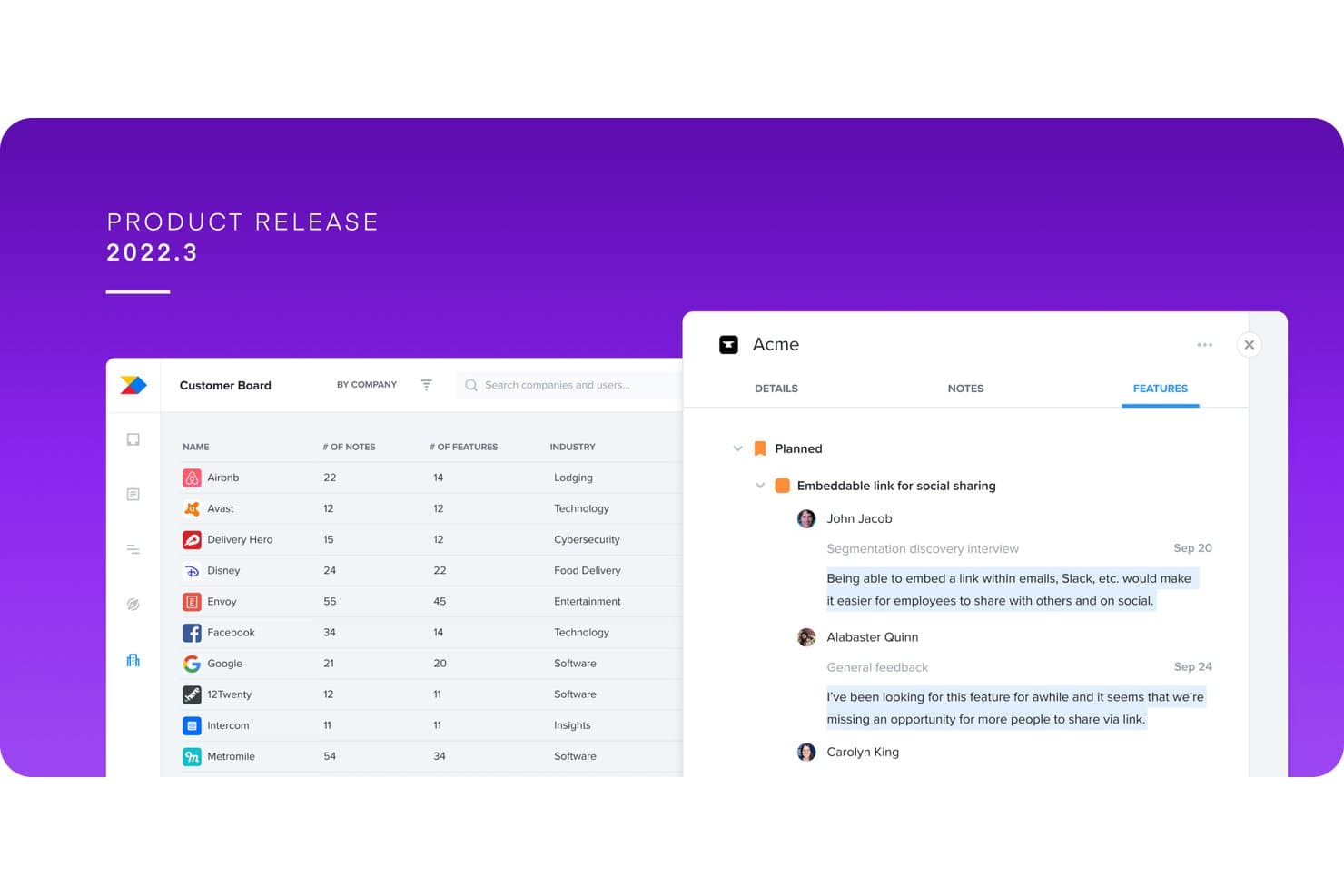
Productboard centraliza los comentarios de los clientes vinculados a las funcionalidades del producto. Productboard es una plataforma de gestión de productos para equipos que necesitan conectar las necesidades de los clientes, la estrategia de producto y las prioridades de entrega en un solo espacio de trabajo.
¿Para quién es más adecuado Productboard?
Productboard es adecuado para responsables de producto y equipos de producto que necesitan conectar los comentarios de los clientes con la estrategia y las prioridades del producto.
Por qué Productboard es una buena alternativa a Aha!
Elegí Productboard porque su integración de comentarios de clientes conecta los comentarios de múltiples fuentes con los datos de producto y las ideas de funcionalidades. Utilizo esos datos para identificar solicitudes recurrentes, evaluar el impacto en los clientes y vincular directamente la evidencia con las prioridades de la hoja de ruta. Esto ayuda a reemplazar los comentarios dispersos por decisiones de producto trazables.
Características principales de Productboard
- Jerarquía de productos: Organiza productos, componentes, funcionalidades y subfuncionalidades.
- Marcos de priorización: Asigna puntuaciones a las iniciativas mediante criterios y fórmulas personalizados.
- Vistas de la hoja de ruta: Crea vistas de la hoja de ruta en formato de línea temporal, columnas y carriles.
- Objetivos del producto: Conecta las iniciativas con objetivos y resultados medibles.
Integraciones de Productboard
Productboard ofrece más de 25 integraciones nativas, incluidas Zendesk, Slack, Intercom, Jira, Azure DevOps, Trello, GitHub, Salesforce, Amplitude y Mixpanel. También se conecta con Zapier y proporciona una API para integraciones personalizadas.
Pros and Cons
Pros:
- Consolida los comentarios en datos de producto prácticos
- Conecta el impacto en los clientes con las prioridades de la hoja de ruta
- Admite la puntuación estructurada de las iniciativas de producto
Cons:
- La clasificación de comentarios puede crear datos duplicados
- Las vistas de la hoja de ruta ofrecen menos flexibilidad para las presentaciones
Learn more about Productboard: Bedst til ekspertstyret migrationssupport
- Ikke tilgængelig
- Pris oplyses efter anmodning
Visit WebsiteCustomer Rating:4.4/5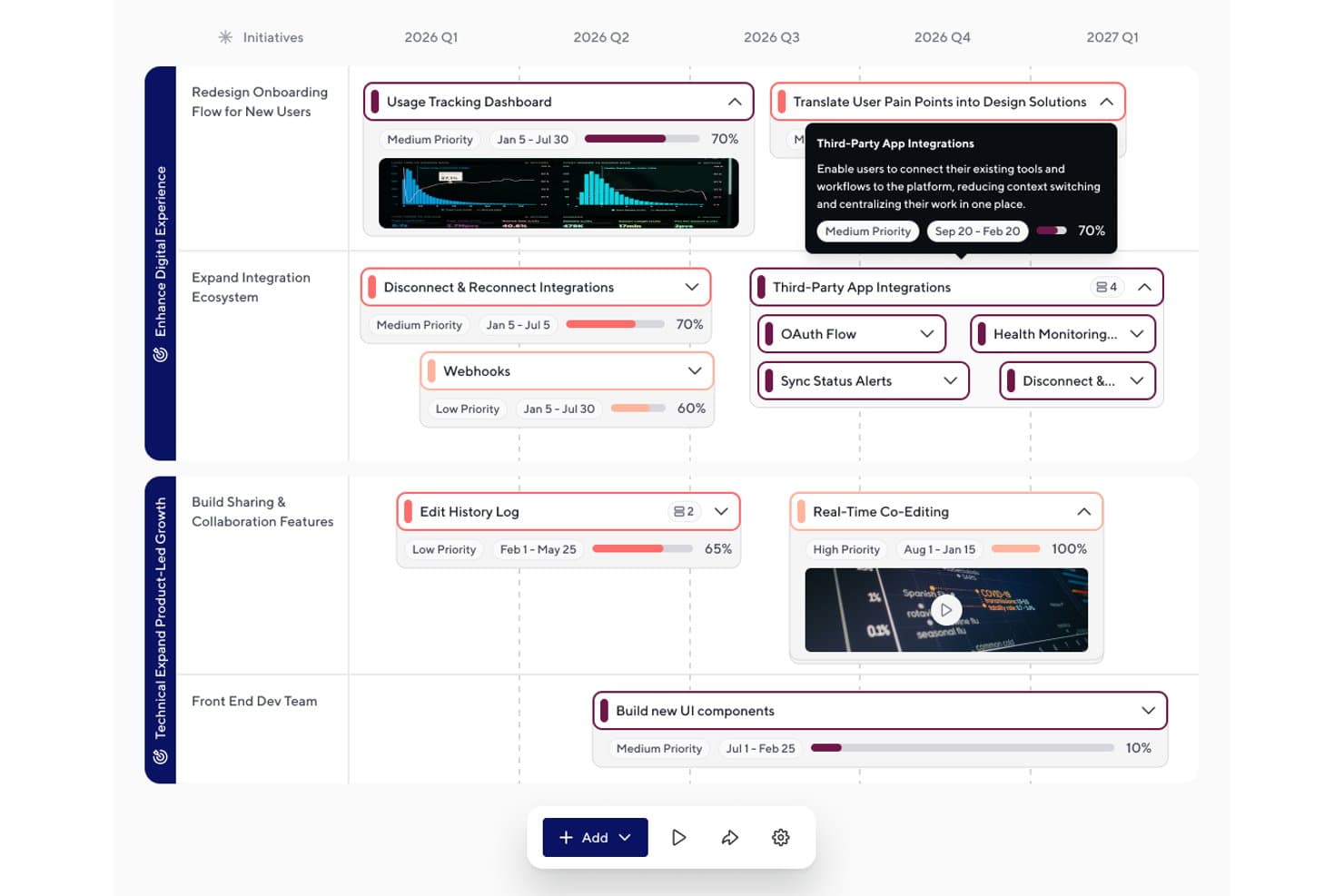
Hyves dashboard til administreret hosting fremhæver supportsagsstyring i realtid, overvågning og håndtering af sikkerhedskopier – og viser praktisk infrastruktursupport ud over traditionelle cloudplatforme. Hyve Managed Hosting leverer administreret cloud-infrastruktur, der er designet til organisationer, som har brug for mere kontrol, tilpasning og support end generiske offentlige cloudtjenester. Det er en stærk løsning for virksomheder, der kører komplekse eller følsomme applikationer og ønsker skræddersyede miljøer samt direkte adgang til cloudingeniører.
Hvem egner Hyve Managed Hosting sig bedst til?
IT-teams i mellemstore og store organisationer, der søger dedikeret migrationsekspertise og administreret infrastruktur.
Hvorfor Hyve Managed Hosting er et godt alternativ til Google Cloud
Jeg valgte specifikt Hyve til teams, der har brug for praktisk support gennem kompleksiteten ved en cloudmigration. Det, der adskiller løsningen, er det dedikerede migrationsteam – Hyve tildeler ingeniører, som vurderer jeres eksisterende infrastruktur, planlægger overgangen og styrer gennemførelsen direkte. Jeg har fundet dette særligt nyttigt ved migration af ældre applikationer, som ikke kan overføres problemfrit til et generisk offentligt cloudmiljø. Denne grad af involvering betyder, at man ikke navigerer alene gennem migrationsdokumentation; man har et ekspertteam, der er ansvarligt for resultatet.
Vigtige funktioner i Hyve Managed Hosting
- Patchhåndtering og sikkerhedsscanning: Hyves ingeniører udfører regelmæssig patchhåndtering, sikkerhedsscanning og penetrationstest på tværs af jeres hostede infrastruktur.
- Katastrofegendannelse som tjeneste (DRaaS): Hyve tilbyder en administreret katastrofegendannelsestjeneste, der beskytter jeres data og sikrer, at kritiske systemer kan gendannes i tilfælde af fejl.
- Sikkerhedskopiering som tjeneste (BaaS): Automatiseret håndtering af sikkerhedskopier kører i baggrunden, mens Hyve tager sig af konfiguration og overvågning på jeres vegne.
- Direkte support fra ingeniører: I får direkte kontakt til et navngivet team af ingeniører, som er tilgængelige 24/7/365, i stedet for en generisk supportkø.
Integrationer med Hyve Managed Hosting
Indbyggede integrationer er ikke tydeligt dokumenteret. Hyve Managed Hosting tilbyder API-adgang til brugerdefinerede integrationer og kan efter anmodning oprette forbindelse til eksterne tjenester som en del af hostingopsætningen.
Pros and Cons
Pros:
- Dedikerede tekniske kundeansvarlige hjælper med migrationer
- Brugerdefineret arkitektur udviklet til hver kunde
- Proaktiv overvågning hjælper med at undgå serviceafbrydelser
Cons:
- Færre automatiseringsværktøjer sammenlignet med hyperscalere
- Begrænset global tilstedeværelse af datacentre sammenlignet med Google
Learn more about ProductPlan: Ideal para la gestión ágil de carteras
- Prueba gratuita disponible
- Precios bajo solicitud
Visit WebsiteCustomer Rating:4.4/5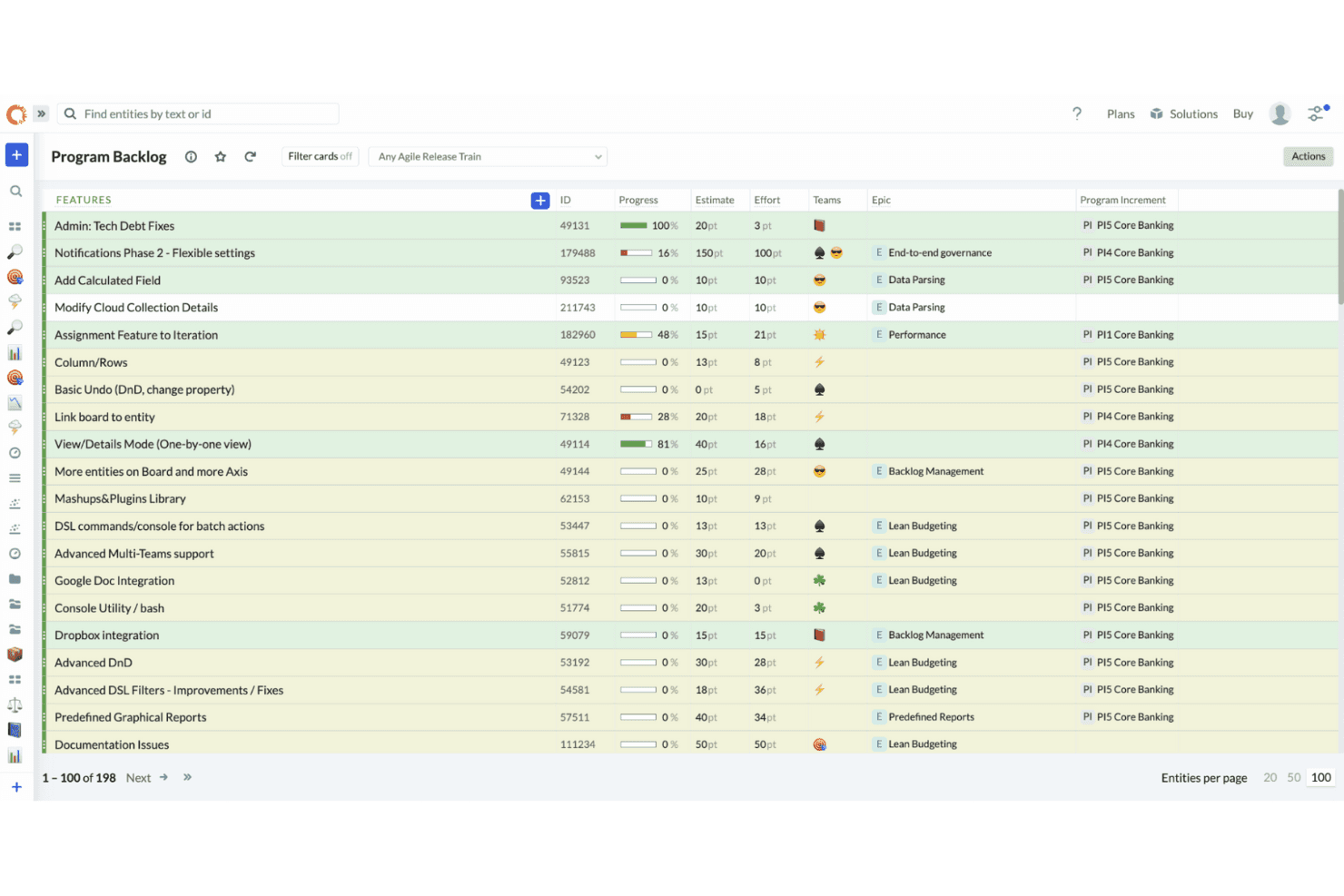
Targetprocess ayuda a los equipos ágiles a planificar, realizar el seguimiento y alinear visualmente el trabajo con los objetivos de la cartera. Targetprocess es una plataforma de elaboración de hojas de ruta de productos para equipos de productos ágiles que conecta la estrategia, las hojas de ruta y la entrega, ayudando a las organizaciones a coordinar prioridades y gestionar carteras complejas.
¿Para quién es más adecuado Targetprocess?
Targetprocess es adecuado para responsables de operaciones de producto y de carteras que coordinan equipos ágiles, dependencias y prioridades en carteras de productos complejas.
Por qué Targetprocess es una buena alternativa a Aha!
Elegí Targetprocess como una de las mejores opciones porque su gestión ágil de carteras conecta la estrategia del producto con la entrega. Utilizo jerarquías de cartera, vistas de dependencias y planificación de la capacidad para coordinar iniciativas entre equipos. Esto me ayuda a evaluar las ventajas y desventajas antes de comprometer trabajo de la hoja de ruta.
Características principales de Targetprocess
- Vistas personalizadas: Configura tableros, listas, cronogramas y otros diseños para distintos flujos de trabajo.
- Personalización del flujo de trabajo: Define estados, reglas, campos y transiciones para los procesos de producto.
- Paneles de informes: Crea paneles con gráficos, métricas e informes configurables.
- Integraciones con herramientas: Conecta Targetprocess con herramientas de desarrollo, colaboración y comunicación.
Integraciones de Targetprocess
Targetprocess ofrece una integración nativa con Jira e integraciones documentadas con GitHub, GitLab, Azure DevOps, Bitbucket, Slack, Miro y Zapier. También proporciona una API REST para integraciones personalizadas, además de importación y exportación de CSV.
Pros and Cons
Pros:
- Las jerarquías de cartera conectan la estrategia con la entrega
- Las vistas de dependencias exponen los riesgos de entrega entre equipos
- Los flujos de trabajo personalizados permiten admitir diversos procesos ágiles
Cons:
- La configuración compleja requiere una administración específica
- Las vistas densas pueden ralentizar la navegación diaria
Learn more about Targetprocess: Ideal para la gestión de ideas
- Prueba gratuita de 14 días + demostración gratuita disponible
- Precios bajo solicitud
Visit WebsiteCustomer Rating:4.2/5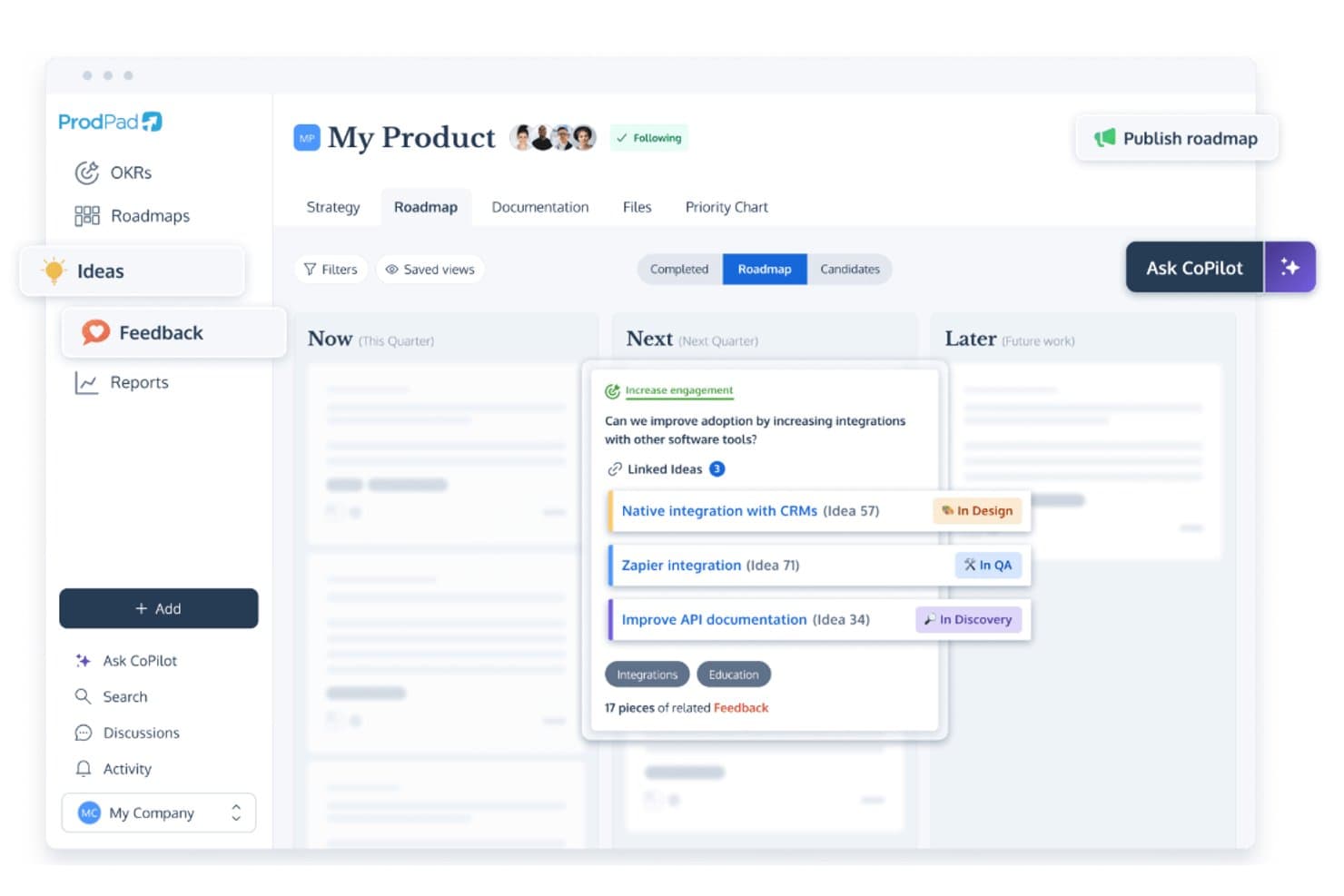
ProdPad vincula las ideas de la hoja de ruta con los comentarios y realiza un seguimiento del estado del desarrollo. ProdPad es un software de hojas de ruta de productos para gestores de productos que necesitan recopilar ideas de clientes, conectarlas con la estrategia y alinear a los equipos multifuncionales en torno a las prioridades.
¿Para quién es más adecuado ProdPad?
ProdPad es adecuado para gestores de productos y equipos que necesitan recopilar ideas de clientes, conectarlas con la estrategia y orientar las prioridades de descubrimiento.
Por qué ProdPad es una buena alternativa a Aha!
Elegí ProdPad como una de las mejores alternativas a Aha! porque está diseñado para la gestión de ideas. Utilizo sus funciones de recopilación de ideas y vinculación con la estrategia para conectar los comentarios de los clientes con los objetivos del producto y, después, orientar las prioridades de descubrimiento. Esto proporciona a mi equipo un camino más claro desde las solicitudes dispersas hasta una hoja de ruta centrada.
Características principales de ProdPad
- Vistas de la hoja de ruta: Muestra las iniciativas en cronogramas, equipos o áreas de producto.
- Puntuación de priorización: Clasifica las oportunidades utilizando criterios de puntuación personalizables.
- Especificaciones del producto: Documenta los requisitos, las suposiciones y los criterios de aceptación.
- Planificación de lanzamientos: Agrupa el trabajo planificado en lanzamientos con fechas objetivo.
Integraciones de ProdPad
ProdPad ofrece integraciones nativas con Jira, Azure DevOps, GitHub, Linear, Trello, Slack, Microsoft Teams, Salesforce, Intercom y Confluence. También se conecta con Zapier y proporciona una API y webhooks personalizados para integraciones adicionales.
Pros and Cons
Pros:
- Conecta los comentarios con la estrategia del producto
- Organiza las ideas durante todo el ciclo de vida del producto
- Admite hojas de ruta claras de Ahora-Próximo-Más adelante
Cons:
- Las vistas generales se saturan con muchas historias
- La personalización se queda corta para requisitos complejos
Learn more about ProdPad: Ideal para hojas de ruta de fabricación
- Demostración gratuita disponible
- Desde $99/usuario/mes
Visit WebsiteCustomer Rating:4.2/5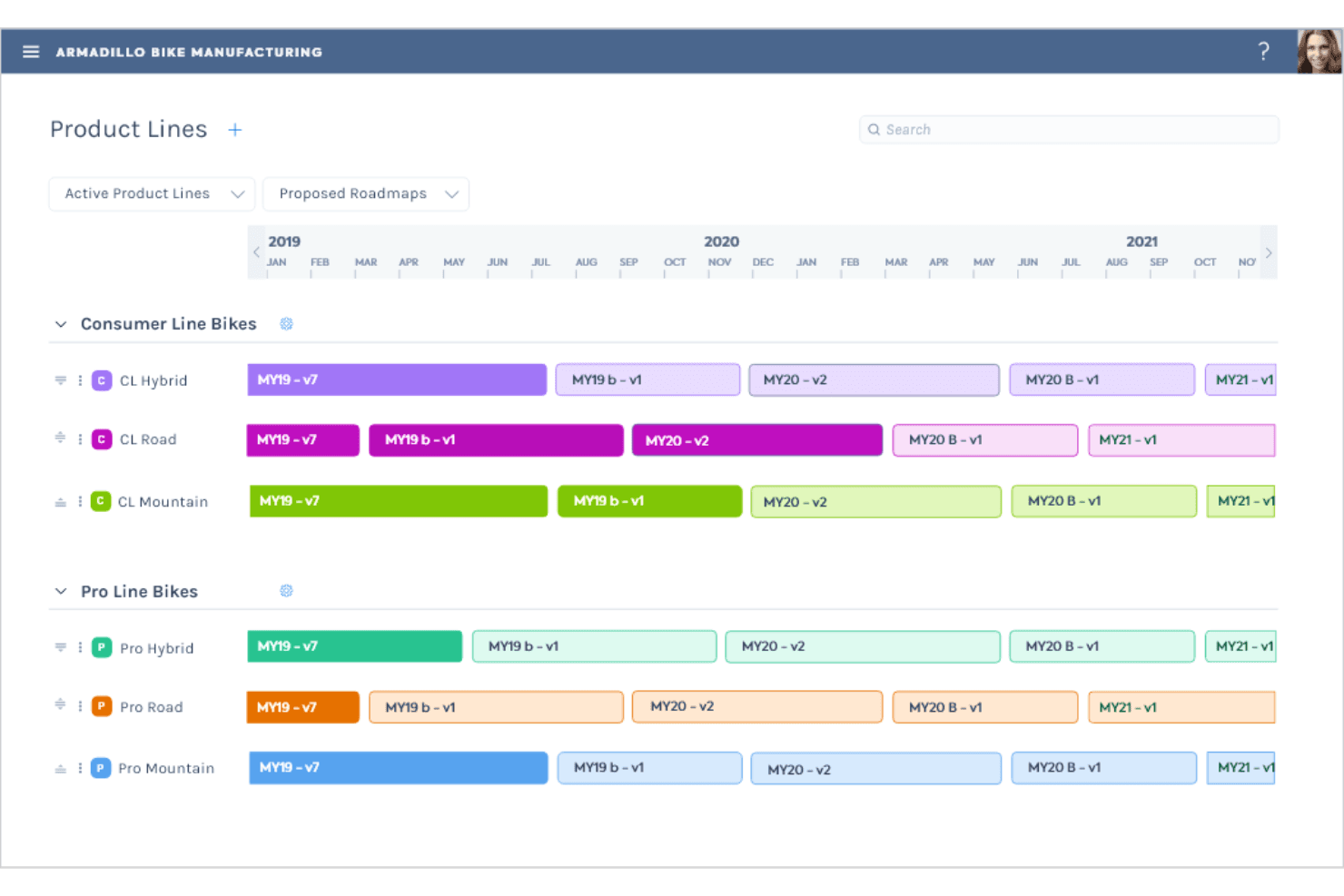
Gocious ayuda a los equipos de fabricación a planificar y alinear el desarrollo de productos con los objetivos empresariales. Gocious es una plataforma de gestión de productos y planificación de carteras para fabricantes que conecta la estrategia de productos, las necesidades del mercado y la capacidad de ingeniería para ayudar a los equipos a tomar decisiones de inversión más claras y coordinar carteras de productos complejas.
¿Para quién es más adecuado Gocious?
Gocious es adecuado para equipos de producto de fabricantes que necesitan alinear las hojas de ruta de productos con la demanda del mercado, la capacidad de ingeniería y la estrategia de la cartera.
Por qué Gocious es una buena alternativa a Aha!
Elegí Gocious porque conecta las hojas de ruta de fabricación con la demanda del mercado y la capacidad de ingeniería. Utilizo sus herramientas de planificación de carteras para comparar inversiones en productos, mapear dependencias y probar escenarios hipotéticos antes de comprometer recursos. Esto lo hace útil cuando una hoja de ruta debe reflejar las limitaciones de producción, las necesidades de los clientes y la estrategia general de la cartera.
Funciones clave de Gocious
- Gestión de la estructura de productos: Organiza productos y módulos en vistas jerárquicas.
- Seguimiento del ciclo de vida de las funciones: Supervisa el estado de las funciones desde su introducción hasta su retirada.
- Paneles en tiempo real: Muestra datos activos de hojas de ruta y carteras en vistas de panel.
- Gestión de tareas: Crea y gestiona tareas dentro de Planes y Capacidades.
Integraciones de Gocious
Gocious ofrece una integración lista para usar con Jira Cloud, además de conexiones mediante API, transferencias por lotes o archivos y conectores personalizados para otros sistemas. Su API abierta permite conexiones personalizadas con sistemas como Salesforce, Oracle y Tableau, y Gocious es compatible con Zapier.
Pros and Cons
Pros:
- Conecta productos, módulos y dependencias del ciclo de vida
- Sustituye las hojas de cálculo dispersas por datos compartidos de la cartera
- Compara escenarios de hojas de ruta antes de tomar decisiones de inversión
Cons:
- Seguimiento limitado del estado de entrega de proyectos
- Requiere una migración considerable de datos desde hojas de cálculo
Learn more about Gocious: Ideal para la alineación de la estrategia de producto
- Demostración gratuita disponible
- Precios bajo solicitud
Visit WebsiteCustomer Rating:4.8/5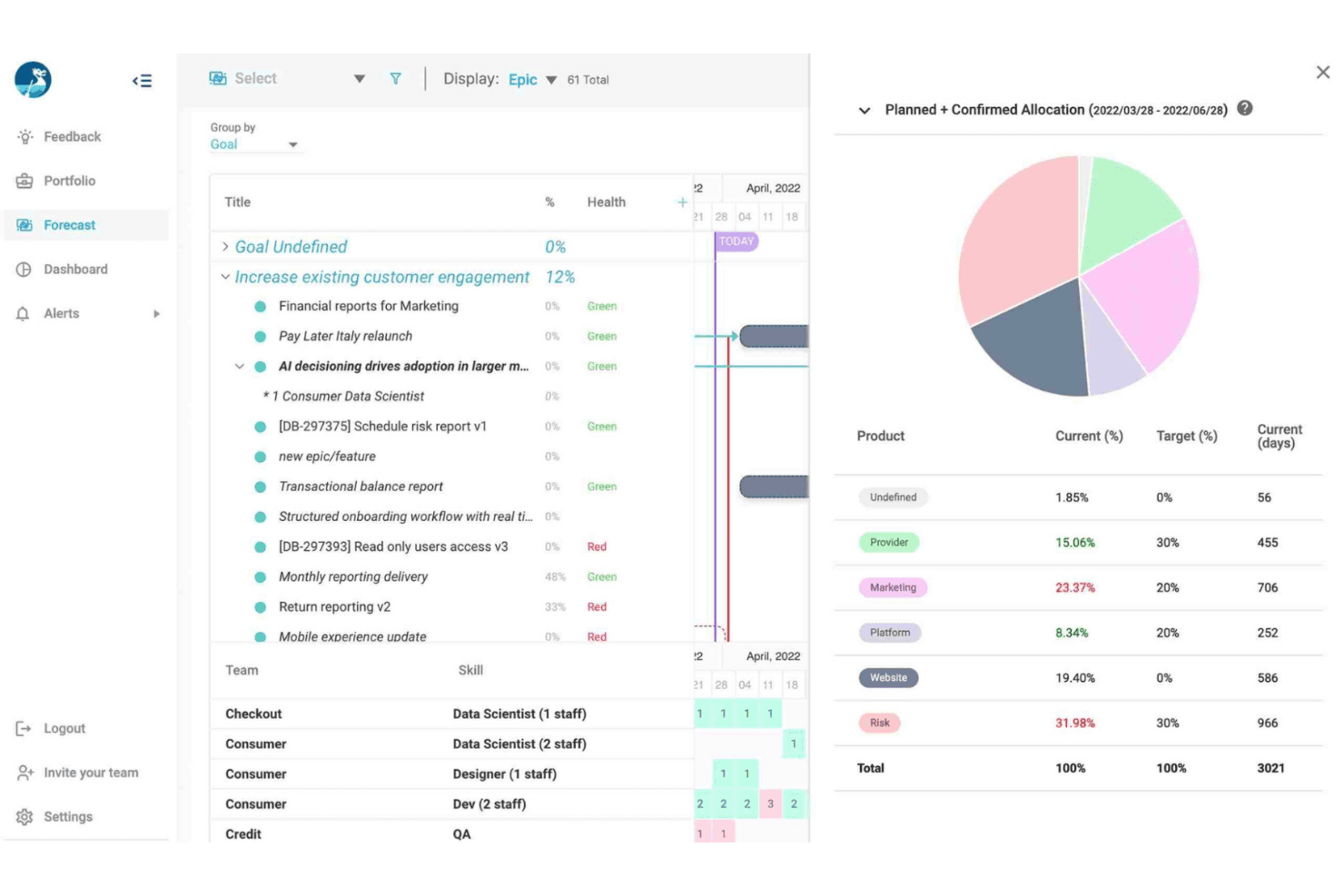
Dragonboat ayuda a los equipos de producto a alinear la estrategia con los objetivos mediante la planificación, priorización y seguimiento de iniciativas. Dragonboat es una plataforma de cartera de productos y planificación de hojas de ruta para gerentes de producto que necesitan conectar las necesidades de los clientes, los objetivos empresariales y los planes de entrega, al tiempo que priorizan el trabajo entre equipos.
¿Para quién es más adecuado Dragonboat?
Dragonboat es adecuado para líderes de producto que necesitan conectar la estrategia, las necesidades de los clientes y las prioridades de la cartera entre varios equipos.
Por qué Dragonboat es una buena alternativa a Aha!
Elegí Dragonboat como una de las mejores opciones porque es ideal para la alineación de la estrategia de producto. Utilizo hojas de ruta de cartera, marcos de priorización y planificación de capacidad para conectar los objetivos empresariales con las necesidades de los clientes y el trabajo de entrega. Esto ayuda a mi equipo a comparar iniciativas, evaluar compensaciones y explicar por qué cambian las prioridades.
Características principales de Dragonboat
- Integración con Jira: Sincroniza iniciativas y elementos de entrega con Jira.
- Integración con Azure DevOps: Conecta los elementos de la hoja de ruta con el trabajo de Azure DevOps.
- Mapeo de dependencias: Vincula elementos de trabajo relacionados e identifica dependencias.
- Vistas personalizadas de la hoja de ruta: Filtra y muestra los datos de la hoja de ruta según los campos elegidos.
Integraciones de Dragonboat
Dragonboat se integra con Jira y Azure DevOps, conectando las iniciativas de la hoja de ruta con el trabajo de entrega en cada plataforma.
Pros and Cons
Pros:
- Conecta la estrategia, los resultados y los planes de entrega
- Admite la priorización a nivel de cartera y la planificación de capacidad
- Las vistas flexibles de la hoja de ruta facilitan las conversaciones con las partes interesadas
Cons:
- La configuración inicial requiere una planificación considerable
- El seguimiento de la entrega parece menos detallado que el de las herramientas especializadas
Learn more about Dragonboat: 10Ideal para herramientas de priorización
airfocus
- Demo gratuita disponible
- Precios bajo petición
Visit WebsiteCustomer Rating:4.4/5
airfocus admite vistas de hojas de ruta, cronogramas y gráficos de prioridades con integraciones de aplicaciones. airfocus es una plataforma de gestión de productos para equipos que necesitan conectar los comentarios de los clientes, la estrategia de producto, las hojas de ruta y las prioridades de entrega en un solo espacio de trabajo.
¿Para quién es más adecuado airfocus?
Gestores de producto y equipos de operaciones de producto que necesitan un espacio de trabajo compartido para priorizar hojas de ruta, comentarios de clientes e iniciativas estratégicas.
Por qué airfocus es una buena alternativa a Aha!
Elegí airfocus porque sus herramientas de priorización ayudan a mi equipo a puntuar las iniciativas en función de los comentarios de los clientes, los objetivos estratégicos y el impacto empresarial. Utilizamos vistas de priorización para comparar solicitudes que compiten entre sí y, después, conectamos las decisiones con las hojas de ruta y los planes de entrega. Esto nos proporciona un registro claro de por qué una iniciativa avanza antes que otra.
Características principales de airfocus
- Objetivos y OKR: Crea y realiza un seguimiento de los objetivos de producto con OKR integrados.
- Seguimiento de dependencias: Asigna dependencias entre equipos, productos y elementos de trabajo.
- Redacción asistida por IA: Redacta en colaboración documentos de requisitos y especificaciones de producto.
- Portal de marca: Comparte un portal de marca para fomentar la participación de los usuarios.
Integraciones de airfocus
airfocus ofrece integraciones nativas con Jira, Trello, Asana, Azure DevOps, Shortcut, GitHub, Linear, Intercom y Slack, y se conecta con Zapier. También admite webhooks y API para integraciones personalizadas.
Pros and Cons
Pros:
- La puntuación personalizada alinea las prioridades con la estrategia
- Los comentarios de los clientes se conectan directamente con las hojas de ruta
- Los espacios de trabajo modulares permiten adaptar los flujos de trabajo de producto
Cons:
- El seguimiento de tareas de entrega sigue siendo relativamente limitado
- La configuración inicial del espacio de trabajo requiere una planificación cuidadosa
Otras alternativas a Aha!
Estas son algunas alternativas adicionales a Aha! que no se incluyeron en mi lista de preseleccionadas, pero que merece la pena considerar:
Cómo evalúo una alternativa a Aha!
Divido mi evaluación en tres partes. Primero, la funcionalidad principal —que tiene el mayor peso—, donde compruebo que una herramienta pueda crear hojas de ruta visuales y aplicar marcos estructurados de priorización. En segundo lugar, busco funciones destacadas, como portales de ideas orientados al cliente o puntuación basada en inteligencia artificial. Por último, considero la transparencia de los precios y la rapidez de incorporación.
Funcionalidad principal (requisitos básicos para esta lista)
Al seleccionar herramientas para mi lista, puntúo cada una en una escala de 0 (no ofrece la funcionalidad) a 5 (sobresale en esta área) para cada funcionalidad principal que se indica a continuación. Después convierto el total en un porcentaje para ayudar a evaluar la adecuación general de cada herramienta, otorgando un peso adicional a las funcionalidades que he considerado esenciales.
- Creación de hojas de ruta y visualización (esencial): Busco vistas personalizables de cronograma, carriles o tableros que agrupen iniciativas y permitan compartirlas con las partes interesadas.
- Marcos de priorización (esencial): Evalúo la puntuación ponderada, las vistas de valor frente a esfuerzo o las tablas de puntuación configurables para clasificar funciones e iniciativas.
- Gestión de ideas y comentarios: Compruebo si los equipos pueden capturar solicitudes, organizar comentarios, recopilar votos y vincular las perspectivas con las decisiones de la hoja de ruta.
- Herramientas de planificación estratégica: Busco objetivos u OKR vinculados a iniciativas, con vistas de progreso que conecten la estrategia del producto con el trabajo planificado.
- Planificación de lanzamientos y sprints: Evalúo la agrupación de lanzamientos, el seguimiento de sprints, las dependencias y los cronogramas de entrega vinculados directamente a los elementos de la hoja de ruta.
- Colaboración interfuncional: Considero los permisos de las partes interesadas, los comentarios, las notificaciones y los flujos de trabajo de contribución para los equipos de producto, ingeniería, ventas y dirección.
Una vez que tengo una lista de herramientas que cumplen los criterios, considero qué distingue a cada plataforma.
Factores diferenciadores (lo que distingue a los proveedores)
Así es como comparo y contrasto los distintos proveedores:
Funciones destacadas
Los portales de ideas orientados al cliente permiten recopilar solicitudes de funciones y votos directamente de los usuarios, lo que cierra la brecha entre los comentarios sin procesar y las decisiones de la hoja de ruta. Busco opciones de personalización de marca del portal y controles de votación que mantengan las propuestas organizadas. La priorización basada en inteligencia artificial es otro factor diferenciador: herramientas como ProductBoard y airfocus utilizan aprendizaje automático para identificar ideas de gran impacto y sugerir puntuaciones automáticamente, lo que ahorra horas de clasificación manual. También evalúo los niveles de precios basados en el uso, ya que las plazas destinadas únicamente a lectores pueden reducir considerablemente los costes cuando decenas de partes interesadas necesitan acceso de solo lectura.
Más allá de las funciones
Compruebo si una herramienta publica niveles de precios claros y distingue las plazas de lectores de las plazas de editores completos, ya que el coste total cambia rápidamente cuando se invita a los equipos de ventas, dirección y soporte a una hoja de ruta compartida. La rapidez de incorporación es igualmente importante: busco plantillas prediseñadas para hojas de ruta, OKR y tablas de puntuación que permitan a un equipo pequeño enviar su primera actualización a las partes interesadas en un día, no después de un proceso de consultoría de varias semanas. También evalúo la portabilidad de los datos mediante exportaciones CSV, API abiertas y opciones nativas de importación desde Aha! para mantener bajos los costes de cambio.
¿Por qué buscar una alternativa a Aha!?
Aha! es un nombre reconocido en el ámbito del software de gestión de productos, pero no satisface las necesidades de todos los equipos. Es posible que estés buscando alternativas si:
- El precio de Aha! no se ajusta a tu presupuesto.
- Tu equipo depende de integraciones específicas que Aha! no admite.
- Buscas una interfaz de usuario más sencilla para el uso diario.
- Quieres una personalización más profunda para tus flujos de trabajo o paneles.
- Trabajas en un sector especializado con requisitos únicos.
- Necesitas herramientas compatibles con varios idiomas o con equipos distribuidos.
Si alguno de estos desafíos te resulta familiar, no eres el único. Muchos equipos de producto buscan alternativas a Aha! que se ajusten mejor a su presupuesto, conjunto de tecnologías y procesos de recopilación de comentarios.
Funciones principales de Aha!
A continuación encontrarás una descripción general rápida de las capacidades principales de Aha!, para que puedas comparar lo que ofrecen otras herramientas:
- Creación de hojas de ruta: Crea hojas de ruta visuales de productos para alinear las iniciativas y realizar un seguimiento de los objetivos a largo plazo.
- Gestión de ideas y comentarios: Recopila y gestiona solicitudes de funcionalidades y aportaciones de clientes o partes interesadas.
- Establecimiento de objetivos: Define los objetivos del producto y supervisa el progreso en cada etapa.
- Planificación de lanzamientos: Organiza los próximos lanzamientos para respaldar tu proceso de desarrollo.
- Personalización del flujo de trabajo: Adapta los flujos de tareas y los estados para que coincidan con las operaciones de tu equipo.
- Análisis e informes: Realiza un seguimiento de las métricas clave para fundamentar la priorización y agilizar las decisiones de entrega.
- Herramientas de colaboración: Conecta a los miembros del equipo en un espacio de trabajo compartido con actualizaciones en tiempo real.
- Marcos de priorización: Evalúa las iniciativas y los elementos del trabajo pendiente mediante modelos de puntuación personalizados.
- Paneles personalizados: Crea vistas y widgets adaptados a las necesidades de tu producto, equipo de ingeniería o dirección.
- Integración de comentarios: Vincula directamente los comentarios sobre el producto y la recopilación de comentarios con tu hoja de ruta mediante un panel o portal de comentarios.
Tanto si te centras en crear mejores productos como si simplemente necesitas una herramienta que se adapte mejor a tu proceso, explorar alternativas rentables a Aha! puede ayudarte a encontrar una solución que funcione para tu equipo.