

Visor Review: Pros, Cons, Features and Pricing
Visor stands out with its bi-directional integrations and real-time data visualization, making it a versatile choice for collaborative product management.

We review tools independently, and commissions help fund our testing. See our transparency policy, our methodology, or suggest a tool.
Visor is a product management roadmap tool built for product teams that need to sync roadmap data directly from Jira without rebuilding everything from scratch. If you've tried Aha! and found the setup too heavy for your team size, I think Visor is a better fit. It gives you spreadsheet-style roadmap views that pull live Jira data, with a much lighter onboarding curve.
Visor Evaluation Summary
4.6/5
- From $18/user/month
- Free plan available
Why Trust Our Software Recommendations
6,700+
Reviews
20
Industry experts
16+
Evaluation factors
14
Years
Our team has been testing and reviewing software since 2012. As product managers ourselves, we know how difficult—and important—it is to choose the right software.
For this guide, we evaluated tools using hands-on testing and independent research, scoring tools using our selection criteria.
Our reviews reflect our human editorial judgment, not a sales pitch.
- Andrew LumbySenior TPM
- Cristiano ValimSenior UI/UX Lead
Visor Overview
In my opinion, Visor is a solid choice for product teams that need a centralized platform for data management and collaboration. Its standout features include bi-directional integrations and real-time data visualization, which set it apart from many competitors. While it excels in user-friendly design and project planning, some users might find the learning curve challenging.
Visor is best suited for tech-savvy teams in industries like technology and digital marketing that require agile project management. However, it may not be the best fit for large enterprises with complex data needs or industries needing specialized data management tools. If your team values integration and collaboration, Visor is worth considering.
Pros
- You can visualize data in real time, helping your team stay aligned.
- It offers a user-friendly interface, making navigation easy for everyone.
- It supports collaborative planning, enhancing teamwork and decision-making.
Cons
- Your team might find the initial learning curve a bit steep.
- It may lack advanced features needed by large enterprises.
- Customization options could be limited for specific needs.
Is Visor Right For Your Needs?
Who Would be a Good Fit for Visor?
Visor fits well for tech startups and mid-sized companies focusing on product development and agile methodologies. If your team values real-time data visualization and needs a collaborative workspace to align on projects, Visor’s functionalities serve you well. It’s especially useful for product managers and cross-functional teams who need to prioritize tasks and make data-driven decisions. The user-friendly interface helps teams quickly adapt and start planning efficiently.
- Tech StartupsVisor helps your startup team manage projects with real-time data and collaborative planning.
- SaaS CompaniesYour SaaS team benefits from Visor's ability to align cross-functional teams on priorities.
- Product ManagersYou can use Visor to visualize project timelines and make informed decisions.
- Agile TeamsYour agile team can utilize Visor’s features for quick adjustments and project alignment.
- Marketing DepartmentsVisor helps your marketing team track campaigns and collaborate effectively on project goals.
- Mid-Sized CompaniesVisor supports your company’s need for efficient project management and team collaboration.
Who Would be a Bad Fit for Visor?
Visor might not suit large enterprises with complex data needs or industries requiring highly specialized data management tools. If your team demands advanced customization and extensive feature sets beyond basic project management, Visor's capabilities may fall short. It's not ideal for industries like finance or healthcare that need stringent data compliance and specialized reporting. Teams needing deep customization or integration with niche platforms may find Visor limiting.
- Large EnterprisesVisor's features may not meet the complex needs of your large-scale operations.
- Finance IndustryYour finance team might find Visor lacks the specialized reporting you need.
- Healthcare SectorVisor doesn't offer the compliance features your healthcare projects require.
- Custom DevelopmentIf your team needs heavy customization, Visor might not support those requirements.
- Government AgenciesVisor may not align with the stringent regulations your agency must follow.
- Manufacturing CompaniesYour manufacturing processes might demand more specialized tools than Visor provides.
How We Test & Score Tools
We’ve spent years building, refining, and improving our software testing and scoring system. The rubric is designed to capture the nuances of software selection and what makes a tool effective, focusing on critical aspects of the decision-making process.
Below, you can see exactly how our testing and scoring works across seven criteria. It allows us to provide an unbiased evaluation of the software based on core functionality, standout features, ease of use, onboarding, customer support, integrations, customer reviews, and value for money.
Core Functionality (25% of final scoring)
The starting point of our evaluation is always the core functionality of the tool. Does it have the basic features and functions that a user would expect to see? Are any of those core features locked to higher-tiered pricing plans? At its core, we expect a tool to stand up against the baseline capabilities of its competitors.
Standout Features (25% of final scoring)
Next, we evaluate uncommon standout features that go above and beyond the core functionality typically found in tools of its kind. A high score reflects specialized or unique features that make the product faster, more efficient, or offer additional value to the user.
We also evaluate how easy it is to integrate with other tools typically found in the tech stack to expand the functionality and utility of the software. Tools offering plentiful native integrations, 3rd party connections, and API access to build custom integrations score best.
Ease of Use (10% of final scoring)
We consider how quick and easy it is to execute the tasks defined in the core functionality using the tool. High scoring software is well designed, intuitive to use, offers mobile apps, provides templates, and makes relatively complex tasks seem simple.
Onboarding (10% of final scoring)
We know how important rapid team adoption is for a new platform, so we evaluate how easy it is to learn and use a tool with minimal training. We evaluate how quickly a team member can get set up and start using the tool with no experience. High scoring solutions indicate little or no support is required.
Customer Support (10% of final scoring)
We review how quick and easy it is to get unstuck and find help by phone, live chat, or knowledge base. Tools and companies that provide real-time support score best, while chatbots score worst.
Customer Reviews (10% of final scoring)
Beyond our own testing and evaluation, we consider the net promoter score from current and past customers. We review their likelihood, given the option, to choose the tool again for the core functionality. A high scoring software reflects a high net promoter score from current or past customers.
Value for Money (10% of final scoring)
Lastly, in consideration of all the other criteria, we review the average price of entry level plans against the core features and consider the value of the other evaluation criteria. Software that delivers more, for less, will score higher.
Core Features
Project Timelines: Visor lets you create clear project timelines, so your team can visualize task dependencies and deadlines easily. This helps everyone stay on track and meet goals.
Task Prioritization: You can prioritize tasks based on importance and urgency, ensuring your team focuses on what matters most. This feature aids in effective resource allocation.
Real-Time Collaboration: Your team can work together on projects in real-time, making communication and updates seamless. This keeps everyone aligned and informed.
Data Visualization: Visor provides tools to visualize data with flexible formatting, making complex information easier to understand. This helps your team make informed decisions quickly.
Centralized Dashboard: You have access to a single dashboard with flexible custom views, where all project details are gathered. This makes it easy to monitor progress and updates without switching platforms.
User-Friendly Interface: Visor's interface is simple to navigate, reducing the learning curve for you and your team. This allows you to start managing projects efficiently right away.
Ease of Use
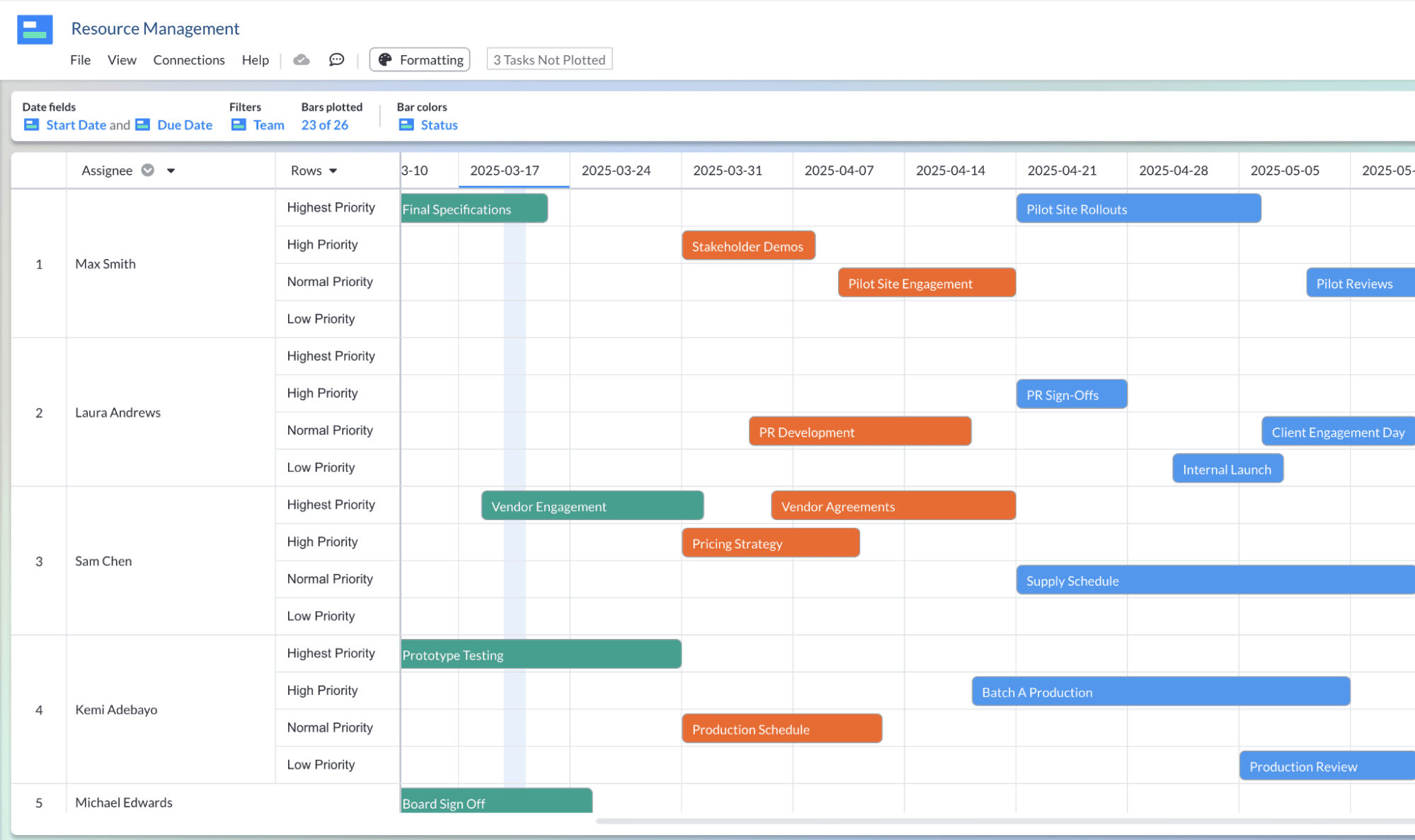
Visor is user-friendly, with an interface that's easy to navigate, letting you and your team get up and running quickly. Its centralized dashboard simplifies project monitoring, and real-time collaboration ensures everyone stays updated effortlessly. While there's a slight learning curve initially, most users adapt swiftly, appreciating the intuitive design. Compared to other tools, Visor's straightforward layout and efficient task management make it a practical choice for teams looking to enhance productivity without the hassle of complex software.
Integrations
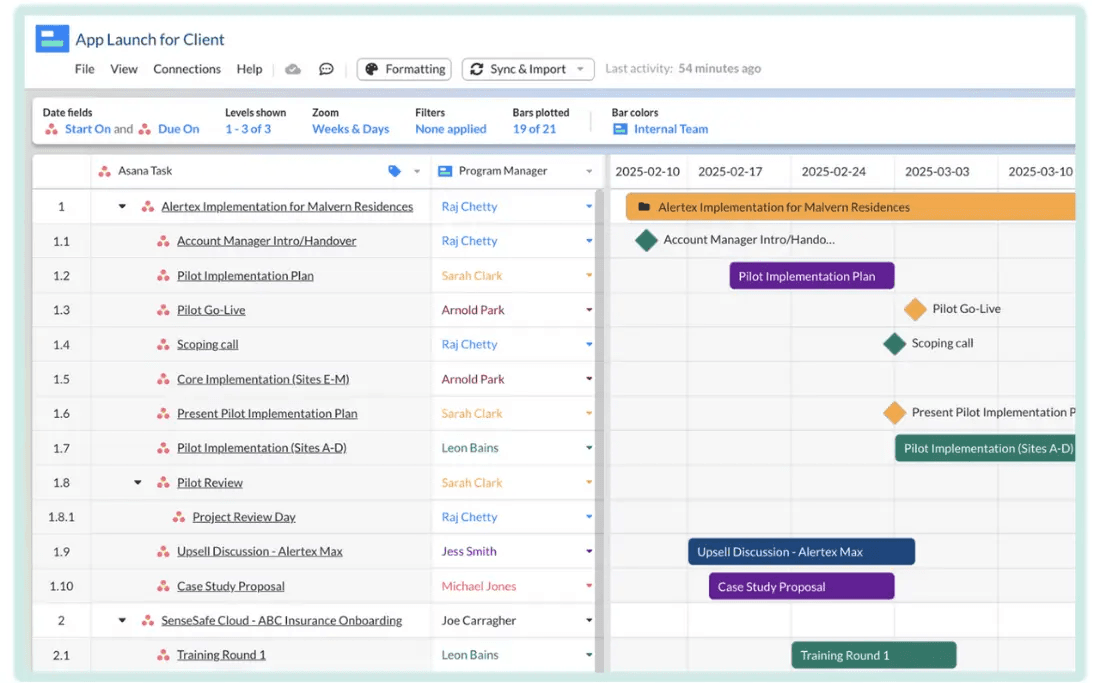
Visor integrates with Jira, Asana, and Salesforce through bi-directional syncing, allowing you to import and update project data in real time. These integrations preserve task hierarchies and support collaborative planning, while Visor focuses primarily on these core platforms rather than a wide range of third-party tools.
Visor Specs
- API: Yes
- Batch Permissions & Access: Yes
- Calendar Management: Yes
- Collaboration Support: Yes
- Contact Management: No
- Contact Sharing: No
- CRM Integration: Yes
- Customer Management: No
- Data Export: Yes
- Data Import: Yes
- Database: Yes
- Email Integration: No
- File Transfer: No
- Google Apps Integration: No
- Multi-Account: Yes
- Multi-App: Yes
- Multi-Site: No
- Multi-User: Yes
- Password & Access Management: Yes
- Project Management: Yes
- Report & Compliance: No
- Resource Management: Yes
- Social-Media Integration: No
- Software Integration: No
- Task Scheduling/Tracking: Yes
- Timesheets: No
- Workflow Management: Yes


