
Crazy Egg Review: Pros, Cons, Features, and Pricing Explained
Crazy Egg stands out for its user-friendly A/B testing and visual analytics, making it ideal for marketers seeking actionable insights, though advanced users may find its features limited.

We review tools independently, and commissions help fund our testing. See our transparency policy, our methodology, or suggest a tool.
Crazy Egg is an A/B testing software that pairs split testing with visual behavior tools like heatmaps, scroll maps, and session recordings. It's a good fit for product teams who want to test page variants and understand why visitors behave the way they do—without a complex setup. If you're weighing it against something like Optimizely, Crazy Egg is the more accessible option for teams that don't need enterprise-grade experimentation infrastructure but still want behavioral context alongside their test results.
Crazy Egg Evaluation Summary
4.3/5
- From $29/month
- 30-day free trial available
Why Trust Our Software Recommendations
6,700+
Reviews
20
Industry experts
16+
Evaluation factors
14
Years
Our team has been testing and reviewing software since 2012. As product managers ourselves, we know how difficult—and important—it is to choose the right software.
For this guide, we evaluated tools using hands-on testing and independent research, scoring tools using our selection criteria.
Our reviews reflect our human editorial judgment, not a sales pitch.
Expert reviewers:
- Andrew LumbySenior TPM
- Cristiano ValimSenior UI/UX Lead


Crazy Egg Overview
When judging Crazy Egg as an A/B testing software, its standout strengths are its visual reporting, approachable interface, and fast onboarding. Compared to others, it's easier for non-technical teams to select and launch tests, and its pricing is transparent for small to midsize businesses. However, advanced experimenters may find its integrations and analytics less extensive. If you're determining the right fit for marketing teams or SaaS startups that value simplicity and visual insights over deep customization, Crazy Egg is a strong contender. For example, its heatmaps and scroll maps make interpreting user behavior straightforward for quick decision-making.
Pros
- Visual heatmaps make interpreting test results straightforward.
- Unlimited domains and seats included in all plans.
- Fast setup for launching basic A/B tests.
Cons
- Lacks advanced targeting and segmentation options.
- Reporting features are less detailed than some competitors.
- Limited support for multivariate or complex experiments.
Is Crazy Egg Right For Your Needs?
Who Would be a Good Fit for Crazy Egg?
Crazy Egg is best suited for teams and organizations that need quick, visual insights into user behavior without the overhead of complex setup or deep technical expertise. Its heatmaps, scroll maps, and simple A/B testing tools make it a strong choice for marketing, ecommerce, and SaaS teams focused on conversion rate optimization. Small to midsize businesses, agencies, and content teams benefit from its unlimited domains and seats, making collaboration easy. If your goal is to validate design changes or landing page tweaks with clear, actionable data, Crazy Egg is a practical solution.
- Marketing TeamsVisual reporting and fast test setup help marketers optimize campaigns quickly.
- Ecommerce StoresHeatmaps and scroll maps reveal product page performance and user drop-off points.
- SaaS StartupsUnlimited domains and seats support rapid experimentation across multiple products.
- Content TeamsScroll maps show how far readers engage with articles or landing pages.
- Digital AgenciesEasy onboarding and multi-client management fit agency workflows.
- Small BusinessesTransparent pricing and simple tools suit limited budgets and resources.
Who Would be a Bad Fit for Crazy Egg?
Crazy Egg is less suitable for organizations that require advanced experimentation, granular targeting, or deep analytics. Enterprises with complex testing needs, such as multivariate experiments or detailed segmentation, may find its feature set limiting. Teams needing robust integrations with enterprise analytics stacks or those in regulated industries may also face challenges. If your workflow depends on highly customized reporting or advanced targeting, you may need a more specialized solution from other providers.
- Large EnterprisesThe amount of user recordings may be insufficient for enterprise-level experimentation.
- Product Management TeamsLacks detailed segmentation and targeting for nuanced product experiments.
- CRO SpecialistsMissing advanced experiment types and granular reporting for optimization experts.
- Global CorporationsLimited localization and enterprise integrations hinder global deployment.
- Data Science TeamsInsufficient raw data export and analytics depth for data-driven workflows.
How We Test & Score Tools
We’ve spent years building, refining, and improving our software testing and scoring system. The rubric is designed to capture the nuances of software selection and what makes a tool effective, focusing on critical aspects of the decision-making process.
Below, you can see exactly how our testing and scoring works across seven criteria. It allows us to provide an unbiased evaluation of the software based on core functionality, standout features, ease of use, onboarding, customer support, integrations, customer reviews, and value for money.
Core Functionality (25% of final scoring)
The starting point of our evaluation is always the core functionality of the tool. Does it have the basic features and functions that a user would expect to see? Are any of those core features locked to higher-tiered pricing plans? At its core, we expect a tool to stand up against the baseline capabilities of its competitors.
Standout Features (25% of final scoring)
Next, we evaluate uncommon standout features that go above and beyond the core functionality typically found in tools of its kind. A high score reflects specialized or unique features that make the product faster, more efficient, or offer additional value to the user.
We also evaluate how easy it is to integrate with other tools typically found in the tech stack to expand the functionality and utility of the software. Tools offering plentiful native integrations, 3rd party connections, and API access to build custom integrations score best.
Ease of Use (10% of final scoring)
We consider how quick and easy it is to execute the tasks defined in the core functionality using the tool. High scoring software is well designed, intuitive to use, offers mobile apps, provides templates, and makes relatively complex tasks seem simple.
Onboarding (10% of final scoring)
We know how important rapid team adoption is for a new platform, so we evaluate how easy it is to learn and use a tool with minimal training. We evaluate how quickly a team member can get set up and start using the tool with no experience. High scoring solutions indicate little or no support is required.
Customer Support (10% of final scoring)
We review how quick and easy it is to get unstuck and find help by phone, live chat, or knowledge base. Tools and companies that provide real-time support score best, while chatbots score worst.
Customer Reviews (10% of final scoring)
Beyond our own testing and evaluation, we consider the net promoter score from current and past customers. We review their likelihood, given the option, to choose the tool again for the core functionality. A high scoring software reflects a high net promoter score from current or past customers.
Value for Money (10% of final scoring)
Lastly, in consideration of all the other criteria, we review the average price of entry level plans against the core features and consider the value of the other evaluation criteria. Software that delivers more, for less, will score higher.
Core Features
A/B Testing
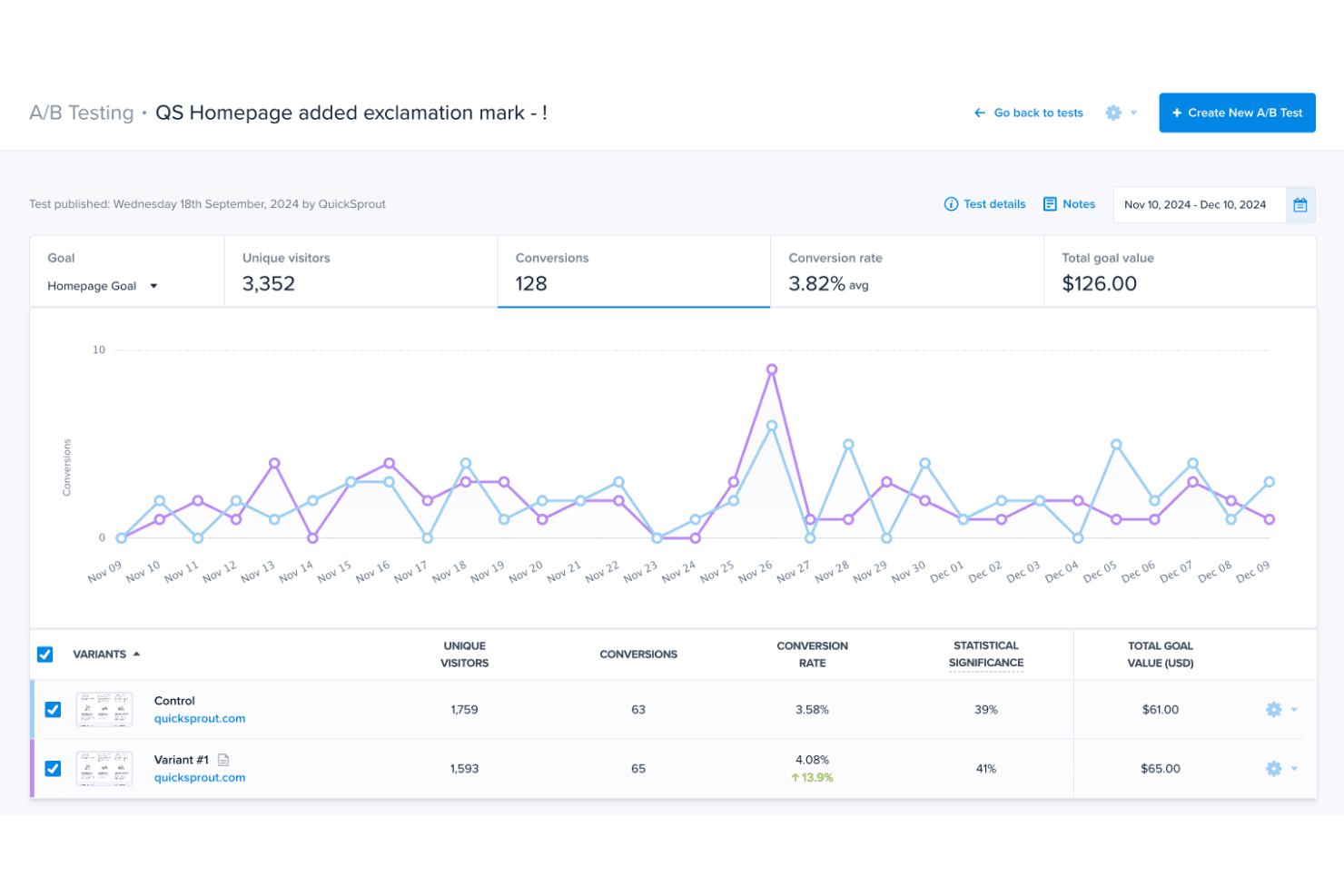
Run experiments to compare versions of your web pages and identify which drives more conversions. Launch tests without coding.
Heatmap Reports
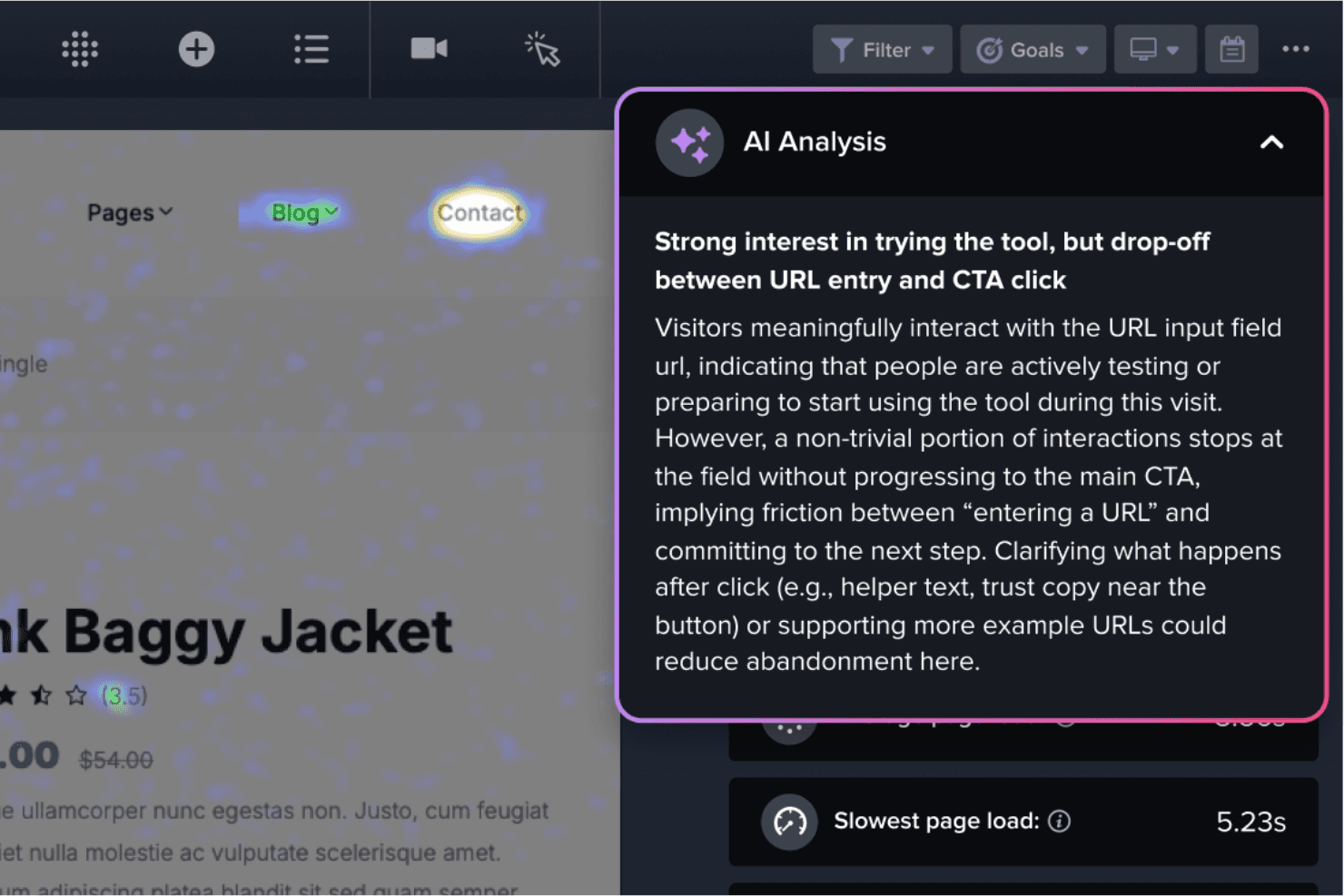
Visualize where users click, scroll, and interact on your site. See which content attracts attention and which areas are ignored.
Session Recordings
Watch real visitor sessions to understand user journeys and spot friction points. Replay actions to diagnose issues and optimize elements.
Scrollmaps
See how far visitors scroll down each page to gauge content engagement. Identify where users lose interest and adjust layouts accordingly.
Surveys
Deploy onsite surveys to collect direct feedback from visitors. Use customizable templates to gather insights about user needs and preferences.
Popup CTAs
Create and test popups, sticky bars, and buttons to drive conversions. Track click and conversion rates for each call-to-action in real-time.
Ease of Use
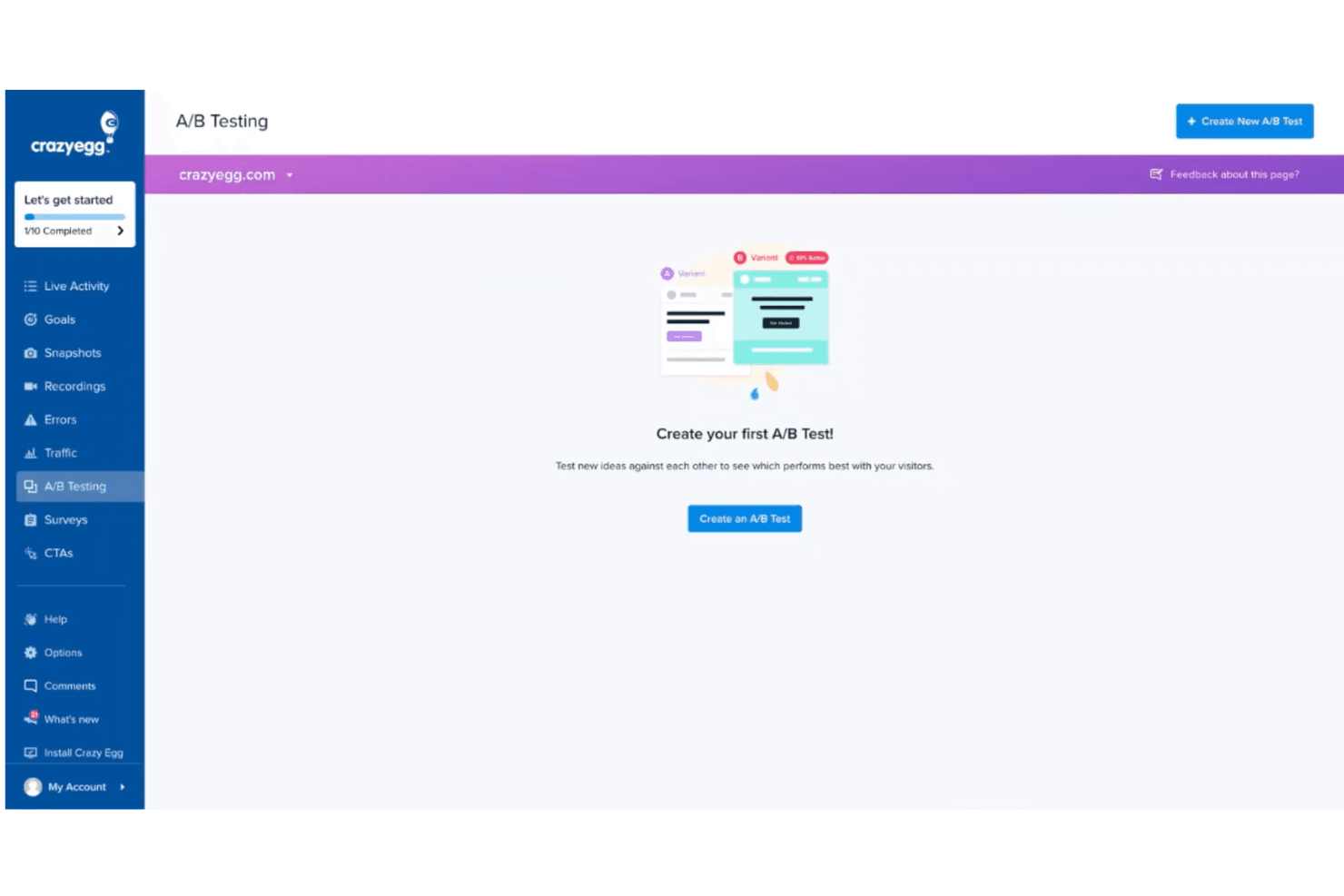
Crazy Egg is widely recognized for its intuitive interface and straightforward setup, making it accessible even for users with limited technical skills. Users consistently mention how quickly they can launch tests and interpret results thanks to clear visualizations like heatmaps and scrollmaps. The onboarding process is simple, with guided steps and helpful tooltips. While it may lack some advanced controls, its focus on clarity and speed makes it a favorite for teams prioritizing quick, actionable insights. UX designers appreciate the usability of the platform and how it surfaces user interactions through click maps and confetti views.
Integrations
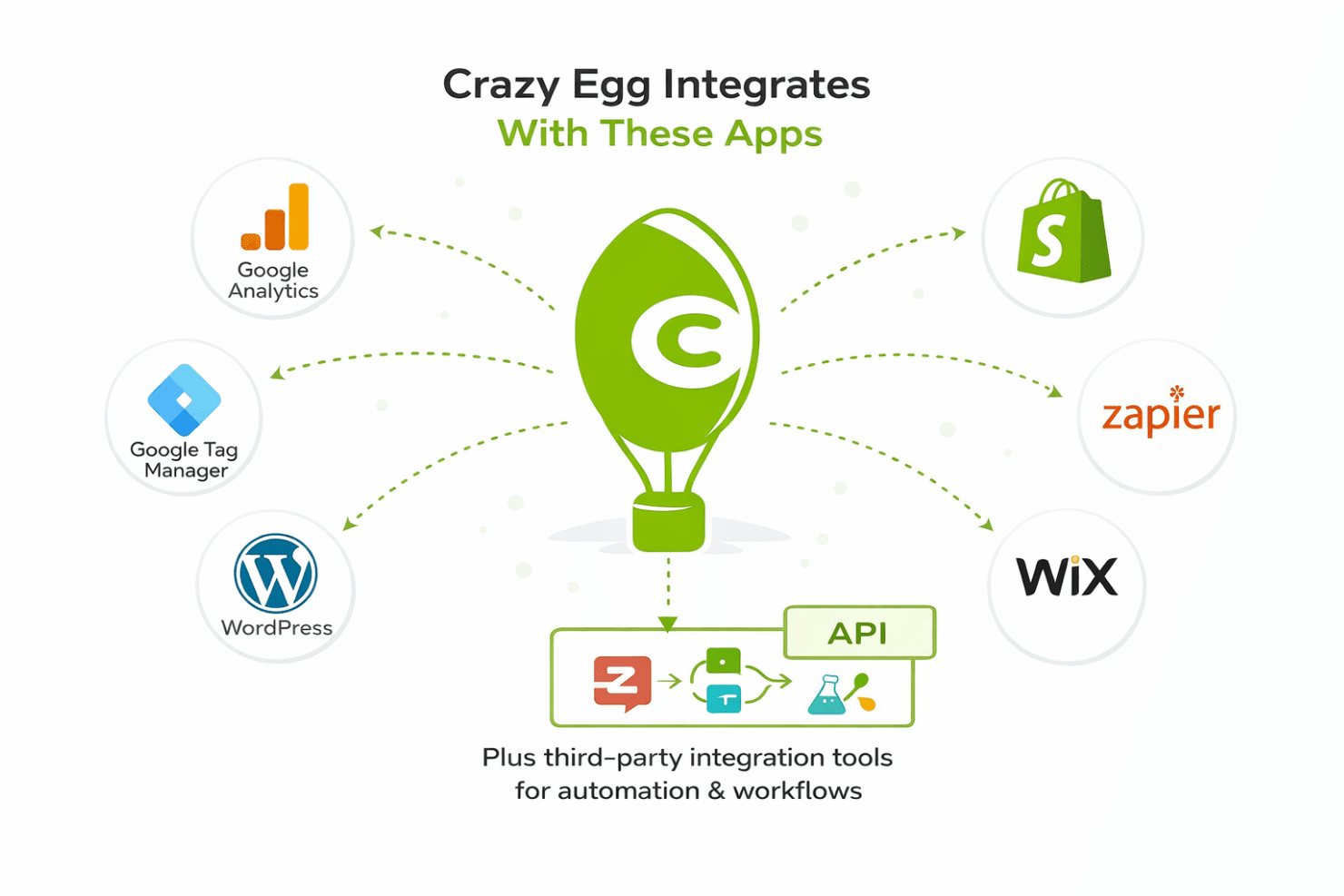
Crazy Egg integrates with Google Analytics, Shopify, Google Tag Manager, Wordpress, and Wix, among others.
Crazy Egg also offers an API and connects with third-party integration tools like Zapier for broader automation and data workflows.
Crazy Egg Specs
- A/B Testing: Yes
- AI Integration: No
- Analytics: Yes
- API: Yes
- Big Data: No
- Campaign Management: No
- Conversion Tracking: No
- Custom Reports: Yes
- Dashboard: Yes
- Data Export: Yes
- Data Import: Yes
- Data Visualization: Yes
- External Integrations: Yes
- Feedback Management: No
- Keyword Tracking: Yes
- Landing Pages: Yes
- Link Tracking: Yes
- Multi-User: Yes
- Notifications: Yes
- Process Reporting: Yes
- Referral Tracking: No
- Sentiment Analysis: No
- SEO: Yes
- Workflow Management: No


