
As a product manager, you’re constantly balancing creativity with execution — and the right tools can help you do both.
Yet fewer than 10% of companies reach advanced innovation maturity, according to Jesse Nieminen, Co-founder of HYPE Boards. The rest? They’re often stuck trying to scale ideas without structure.
That’s where innovation management software comes in — giving your team the systems to turn good ideas into real outcomes.
Now, just so you know — this isn’t an exhaustive manual of every feature on every tool (no one has time for that). I’ve tested the top tools out there today and pulled from hands-on experience to give you a solid head start.
You’ll get a quick read on what each one does best, where it falls short, and what type of team it suits — so you can focus your energy where it counts. Let’s dive in.
Why Trust Our Software Recommendations
6,700+
Reviews
20
Industry experts
16+
Evaluation factors
14
Years
Our team has been testing and reviewing software since 2012. As product managers ourselves, we know how difficult—and important—it is to choose the right software.
For this guide, we evaluated tools using hands-on testing and independent research, scoring tools using our selection criteria.
Our reviews reflect our human editorial judgment, not a sales pitch.
Expert reviewers:
- Andrew LumbySenior TPM
- Cristiano ValimSenior UI/UX Lead


Innovation Management Software Comparison Table
This comparison table summarizes pricing details for my top innovation management software selections:
| Tool | Best For | Trial Info | Price | ||
|---|---|---|---|---|---|
| 1 | Best for launching idea programs from day one | Free demo + free plan available | From $6/month/user (billed annually) | Website | |
| 2 | Best for employee-driven idea campaigns | Free demo available | From $250/month | Website | |
| 3 | Best for dual enterprise and team-led campaigns | Free demo available | Pricing upon request | Website | |
| 4 | Best for idea-to-portfolio tracking in Microsoft 365 | Free demo available | Pricing upon request | Website | |
| 5 | Best for gamified innovation challenges | Free demo available | Pricing upon request | Website | |
| 6 | Best for idea crowdsourcing at scale | Free demo available | Pricing upon request | Website | |
| 7 | Best for enterprise-scale ROI tracking | Free demo available | Pricing upon request | Website | |
| 8 | Best for engagement-driven idea campaigns | Free demo available | From $10/user/month (billed annually, min 500 users) | Website | |
| 9 | Best for enterprise innovation at scale | Free demo available | Pricing upon request | Website | |
| 10 | Best for trend and technology scouting | Free demo available | Pricing upon request | Website |


Best Innovation Management Software Review
Below are my detailed summaries of the best innovation management software that made it onto my shortlist. My reviews offer a detailed look at the key features, pros & cons, integrations, and ideal use cases of each tool to help you find the best one for you.
 Best for launching idea programs from day one
- Free demo + free plan available
- From $6/month/user (billed annually)
Visit WebsiteCustomer Rating:4.8/5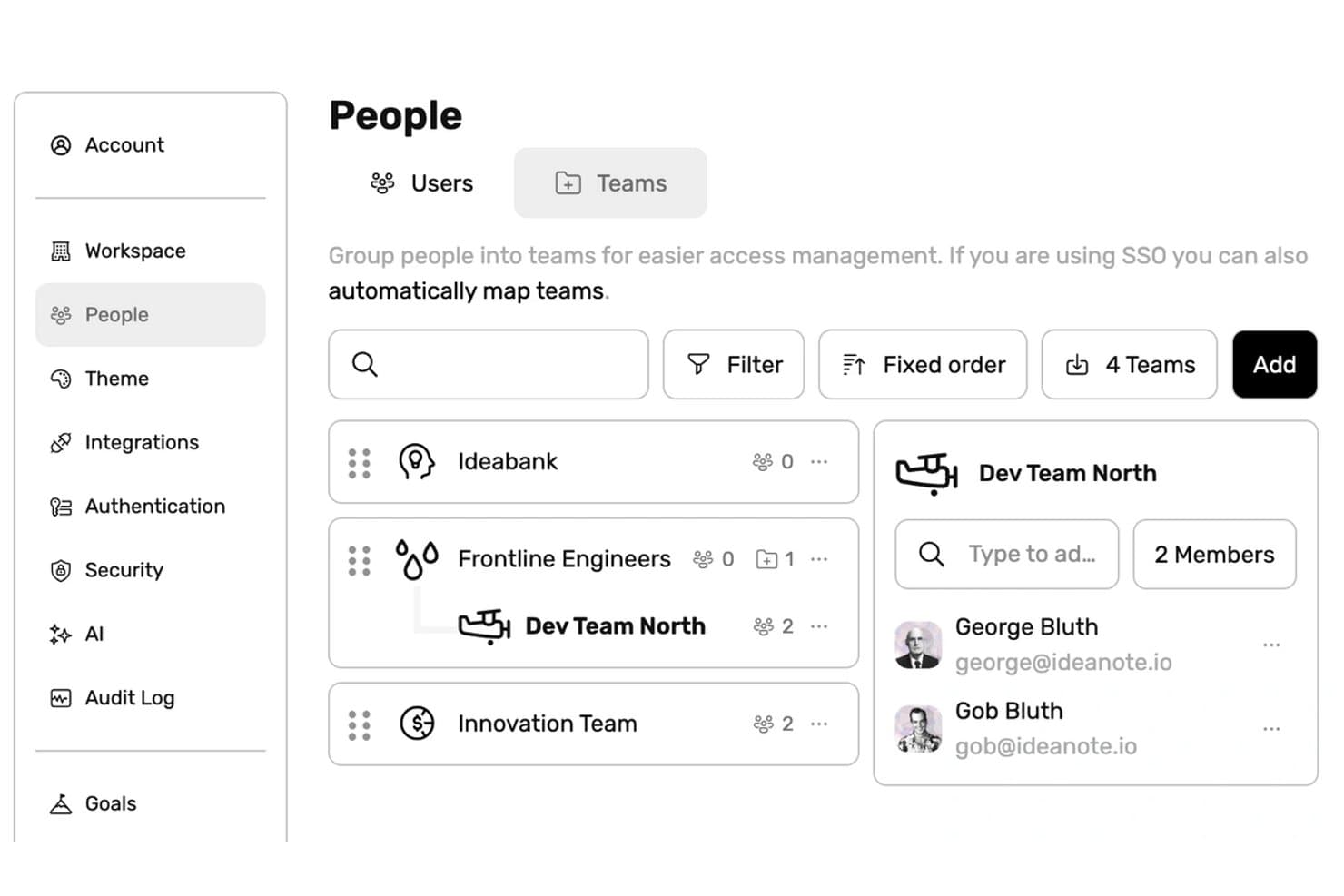
Ideanote lets users organize people into teams for streamlined access management. Ideanote is an innovation management platform that combines idea collection campaigns, AI-assisted scoring and tagging, stage-gate workflow tracking, collaboration tools, and a reporting module for measuring impact.
Who Is Ideanote Best For?
Ideanote is a strong fit for innovation managers and corporate strategy teams that need to launch structured idea programs quickly, without a lengthy setup process.
Why I Picked Ideanote
I picked Ideanote as one of the best because it removes the usual barriers to launching a structured idea program. A team can set up an Idea Collection, configure a custom submission form, and have employees submitting through Microsoft Teams within the same day. I also like that AI scoring and duplicate detection work in the background, so ideas don't pile up unreviewed. The built-in stage-gate workflow then moves promising ideas forward without any manual handholding.
Ideanote Key Features
- Multi-channel idea submission: Collect ideas through custom forms, an email inbox, embeddable widgets, anonymous submissions, and a Microsoft Teams app.
- No-code workflow builder: Automate idea routing with drag-and-drop rules, bulk actions, and automation filters without writing any code.
- Measure module: Track ROI, engagement trends, and innovation impact through real-time reports, custom charts, and Power BI connectivity.
- Gamification tools: Motivate contributors with user ranks and leaderboards tied to idea submissions and engagement activity.
Ideanote Integrations
Ideanote documents integrations with Microsoft Teams, Microsoft Power Automate, Microsoft Power BI, and Splunk, plus webhooks and REST APIs for custom connections. It also supports Zapier.
Pros and Cons
Pros:
- ROI reporting connects ideas to outcomes
- AI detects duplicates before review queues grow
- Rapid campaign setup for idea programs
Cons:
- Translation gaps can confuse contributors
- Scoring criteria remain less configurable
Learn more about Ideanote: Best for employee-driven idea campaigns
- Free demo available
- From $250/month
Visit WebsiteCustomer Rating:4.7/5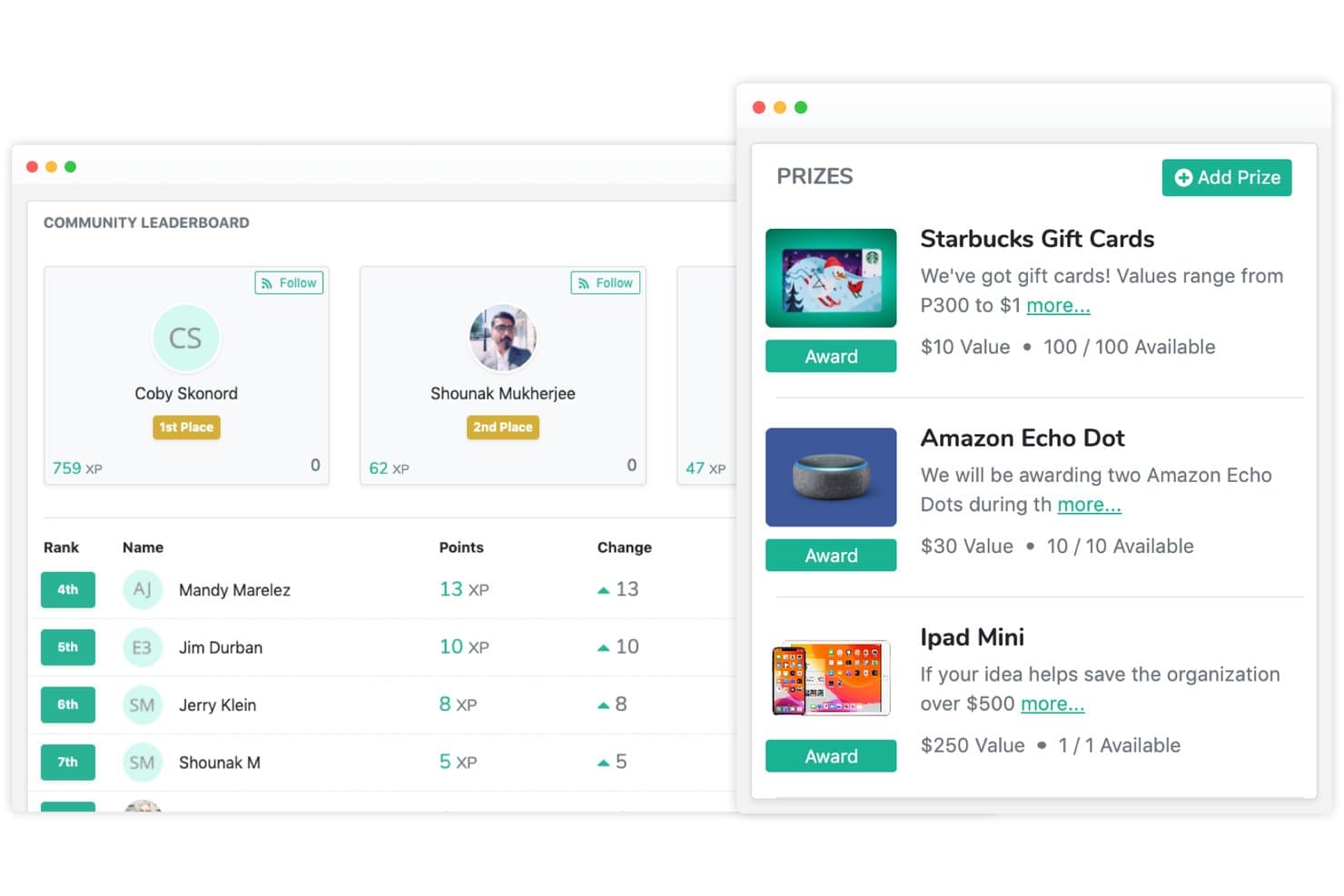
Ideawake motivates participation with prizes, points, and leaderboards. Ideawake is an innovation management platform built around structured idea campaigns, offering AI-assisted idea capture, multi-criteria evaluation and scoring, stage-gate workflow tracking, and challenge management tools like hackathons and suggestion programs.
Who Is Ideawake Best For?
Ideawake is a strong fit for innovation managers and corporate strategy teams running structured idea campaigns, challenges, or hackathons across large employee populations.
Why I Picked Ideawake
Ideawake earns its spot on my shortlist because it's purpose-built for running structured, high-participation idea campaigns across large employee populations. I'm particularly impressed by its campaign variety: hackathons, Shark Tank-style challenges, and suggestion programs are all natively supported, with gamification (points and leaderboards) that actually drives engagement. The Aurora AI also stands out to me, flagging duplicate submissions in real time and auto-generating executive briefs so review meetings don't stall on admin work.
Ideawake Key Features
- Multi-criteria idea scoring: AI evaluates submitted ideas against strategic fit, impact, feasibility, cost, and ROI to support reviewer decisions.
- Stage-gate workflow automation: Customizable approval stages automatically route ideas, assign reviewers, and trigger notifications from submission through implementation.
- ROI and pipeline dashboards: Customizable dashboards display pipeline volume, idea status, participation rates, and estimated ROI across your innovation portfolio.
- Group-based participation segmentation: Groups let you control which employees or stakeholders can access and contribute to specific campaigns or challenges.
Ideawake Integrations
Ideawake offers four documented integrations: Microsoft Teams, Slack, Jira, and Asana. These connect idea discussions and submissions with collaboration and execution workflows.
Pros and Cons
Pros:
- Reviewers praise supportive customer service
- Aurora detects duplicate ideas during submission
- Campaigns support hackathons and suggestion programs
Cons:
- Participant feedback channels remain limited
- Post-evaluation analytics lack deeper analysis
Learn more about Ideawake: Best for dual enterprise and team-led campaigns
- Free demo available
- Pricing upon request
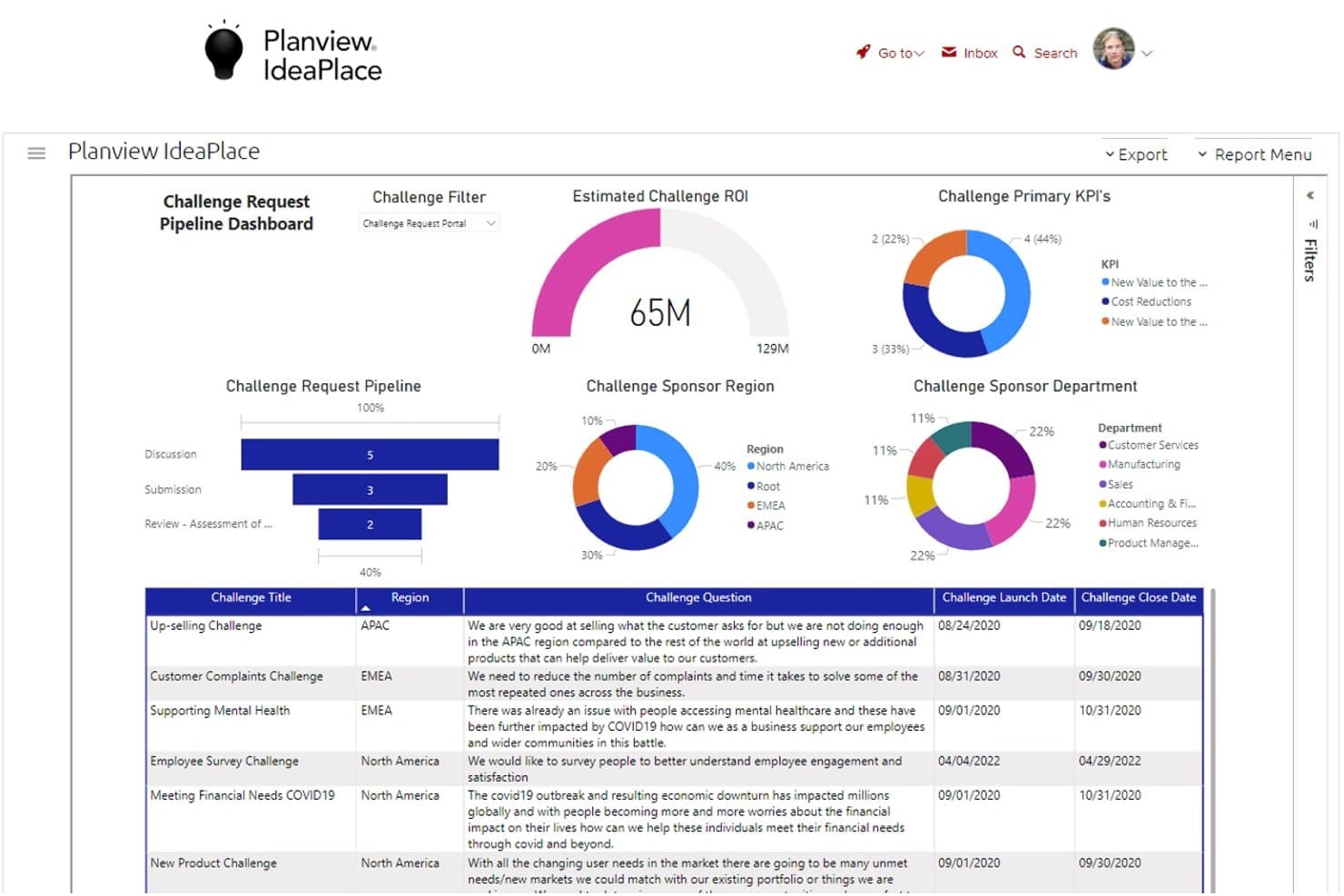
Planview IdeaPlace tracks challenge pipelines and ROI across regions and departments. Planview IdeaPlace is an enterprise innovation management platform that supports idea capture, evaluation, scoring, and campaign management across both large-scale enterprise challenges and smaller, team-led ideation efforts.
Who Is Planview IdeaPlace Best For?
Planview IdeaPlace is a strong fit for large enterprises that need to run formal, top-down innovation programs and informal, team-led ideation efforts within a single platform.
Why I Picked Planview IdeaPlace
I picked Planview IdeaPlace as one of the best because it's the only platform I've seen that runs full-scale enterprise challenges and lean, team-led campaigns on a single shared dataset. That dual-track model matters when your innovation program spans both a top-down company-wide challenge and a small team experimenting with a new product concept simultaneously. I especially like the pairwise ranking and crowd predictions features, which let participants compare ideas head-to-head and estimate real business outcomes like revenue and delivery time, going well beyond basic voting.
Planview IdeaPlace Key Features
- Configurable idea submission forms: Organizers can tailor intake forms and challenge templates to match the scope and focus of each campaign.
- AI-powered idea clustering: Natural language processing automatically groups similar ideas and surfaces sentiment trends from large volumes of submissions.
- Gamification mechanics: Participants earn badges, points, and reputation scores to encourage sustained engagement across challenges.
- External crowdsourcing portals: Outside contributors can join ideation campaigns by logging in with social media accounts, extending reach beyond the organization.
Planview IdeaPlace Integrations
Planview IdeaPlace offers native integrations with Planview Portfolios, AdaptiveWork, and ProjectPlace. OData connections support Tableau, Excel, and other business intelligence tools, while Planview's broader portfolio ecosystem supports idea-to-execution tracking.
Pros and Cons
Pros:
- Crowd predictions add business outcome context
- TeamTap supports grassroots innovation campaigns
- Pairwise ranking reduces voting bias
Cons:
- Advanced workflows require specialized training
- Administrative interface feels dated
Learn more about Planview IdeaPlace: Best for idea-to-portfolio tracking in Microsoft 365
- Free demo available
- Pricing upon request
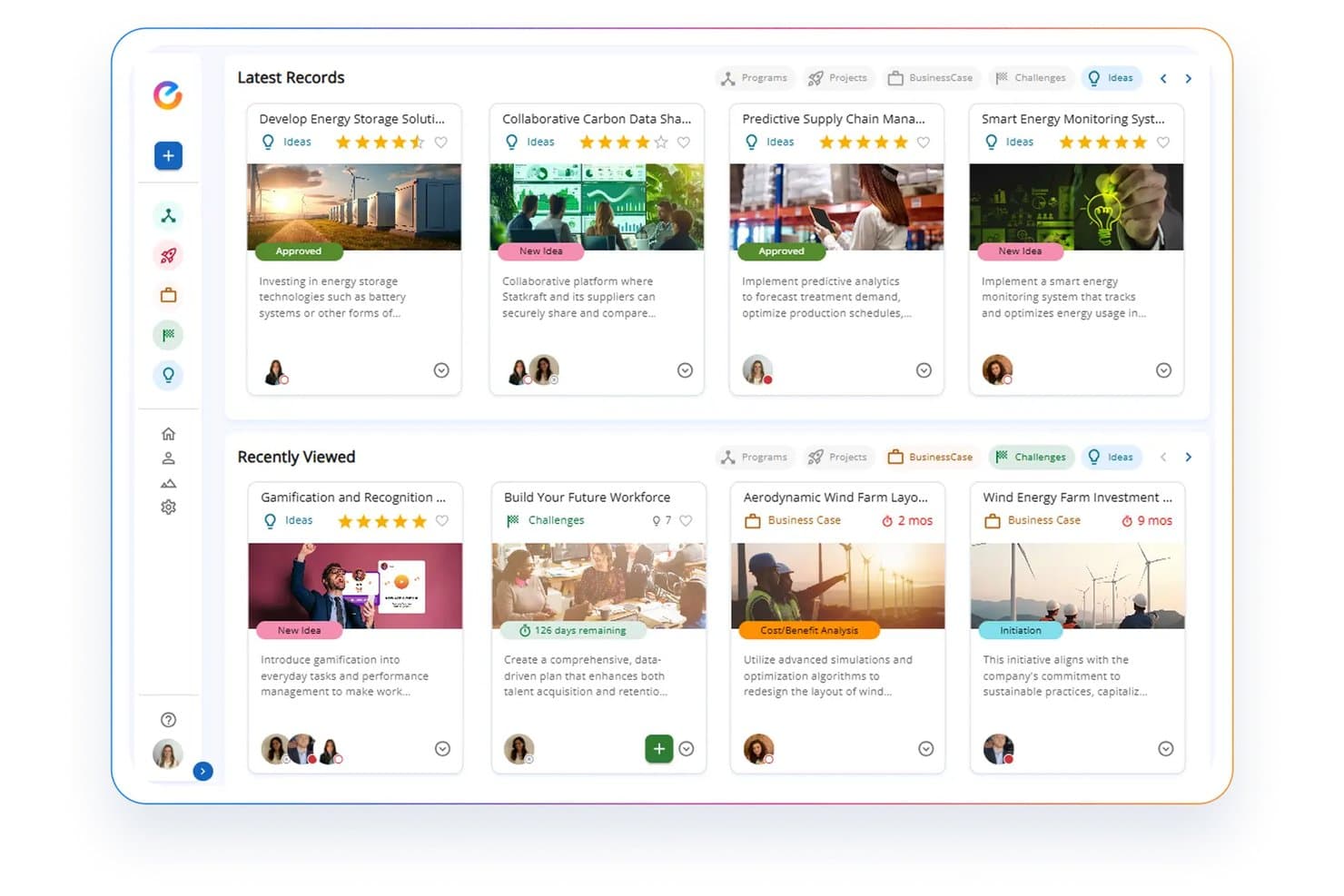
edison365 surfaces latest and recently viewed innovation records in one dashboard. edison365 is an innovation management platform that covers idea capture, evaluation and scoring, challenge management, stage-gate workflows, and portfolio tracking—all built to run natively within Microsoft 365.
Who Is edison365 Best For?
edison365 is a strong fit for innovation managers and corporate strategy teams at mid-to-large enterprises that are already running their operations in Microsoft 365.
Why I Picked edison365
edison365 earns its spot on my list because it covers the full innovation pipeline—from idea submission and triage scoring to business case development and portfolio tracking—without ever leaving Microsoft 365. I particularly like the Triage module, where reviewers score ideas using configurable, weighted criteria, and each challenge can carry its own scoring set. The stage-gate workflow designer lets admins define any number of stages, so a concept can move cleanly from a 700-idea intake campaign all the way through to benefit realization tracking.
edison365 Key Features
- Gamification tools: Leaderboards, points, and medals encourage employee participation in idea submission and challenge campaigns.
- Business case builder: Teams can document cost, risk, resource, and ROI assessments for each idea before it moves into the project pipeline.
- Power BI integration: Portfolio and analytics data connects directly to Power BI for deeper custom reporting beyond the built-in dashboards.
- Customer Microsoft tenant deployment: The platform runs inside your own Microsoft 365 environment, keeping all idea and project data within your existing security boundary.
edison365 Integrations
edison365 has native integrations across the Microsoft ecosystem, including Microsoft 365, Microsoft Entra ID, and Power BI. It also offers an API for custom integrations, while Azure DevOps Boards can connect through Power Automate.
Pros and Cons
Pros:
- Gamification encourages employee participation
- Configurable scoring supports strategic prioritization
- Tracks ideas through portfolio delivery
Cons:
- Product roadmap connections remain limited
- Reporting structures can confuse reviewers
Learn more about edison365: Best for gamified innovation challenges
- Free demo available
- Pricing upon request
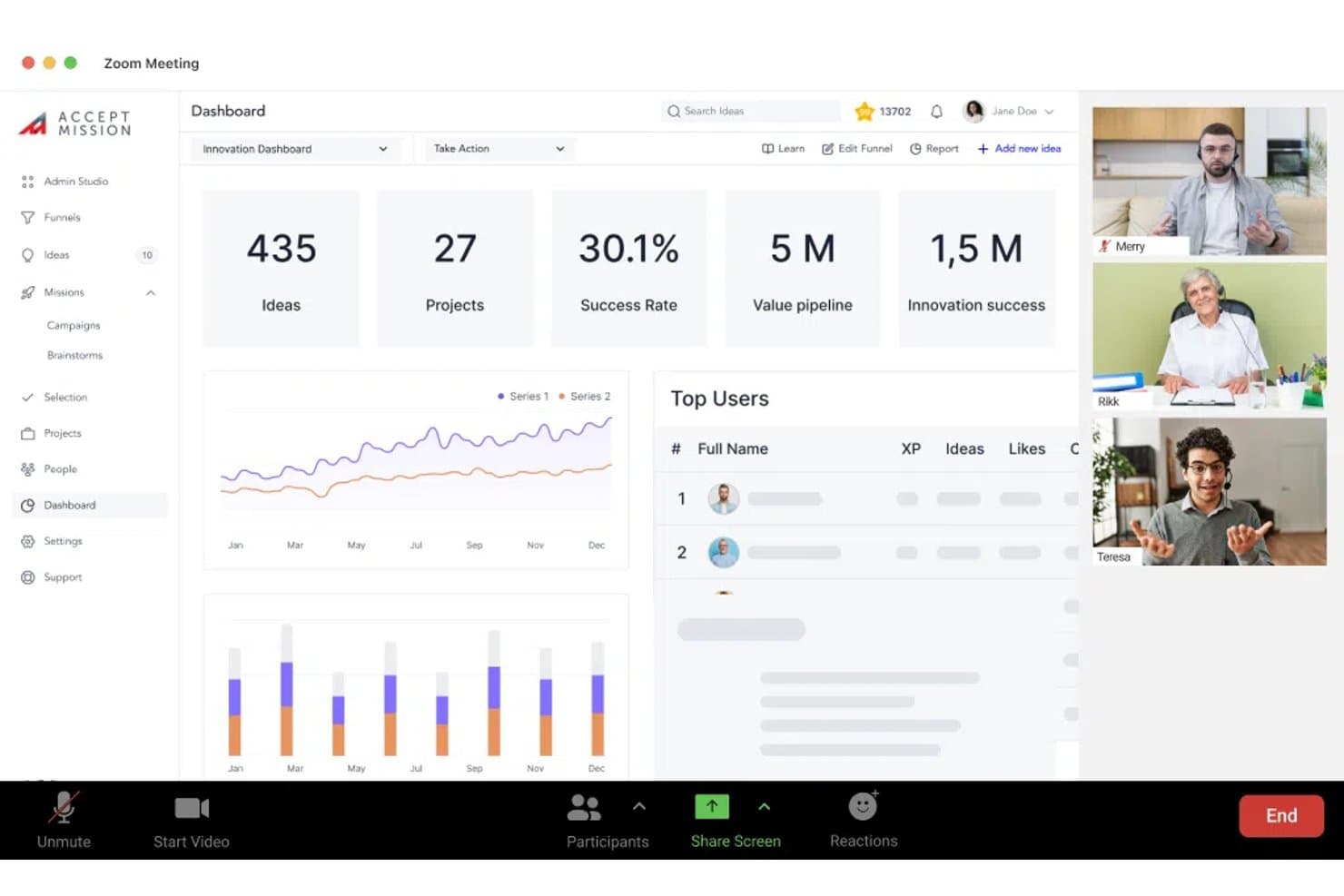
Accept Mission displays innovation KPIs and top user rankings on its dashboard. Accept Mission is an AI-powered innovation management platform that combines idea capture, evaluation, campaign management, and portfolio tracking in one system.
Who Is Accept Mission Best For?
Accept Mission suits innovation managers at mid-size to enterprise organizations who need to run structured challenges and keep employee participation high through built-in gamification.
Why I Picked Accept Mission
Accept Mission earns its spot on my shortlist because it's the only innovation management platform I've seen that bakes gamification directly into the idea collection process, with points, levels, and leaderboards that keep contributor participation high over the long run. When I run a multi-week innovation challenge, the campaign tools let me manage multiple concurrent funnels by department or theme, with stage-gate automations moving ideas forward without manual nudging. The AI co-pilots also stand out, handling idea enrichment and clustering so reviewers spend less time organizing submissions and more time making decisions.
Accept Mission Key Features
- Idea Collecting module: A dedicated module for running Innovation Portals, IdeaBox submissions, and external Gateways that invite outside participants into your funnels.
- Portfolio Management module: Tracks approved initiatives with business cases, budget, benefits, and ROI data in a dedicated portfolio view.
- Microsoft 365 integration: Connects with Teams, Copilot, Power Automate, and Power BI to fit into existing Microsoft environments.
- Role-based access control: Assigns contributor, reviewer, and admin roles with permission settings that control what external partners and internal teams can see.
Accept Mission Integrations
Accept Mission integrates with the Microsoft ecosystem, including Microsoft 365, Microsoft Teams, Microsoft Copilot, Power Automate, and Power BI. It also supports webhooks and secure API access for custom integrations.
Pros and Cons
Pros:
- AI clustering reduces review organization work
- Portfolio views connect ideas to execution
- Gamified challenges sustain contributor participation
Cons:
- Occasional bugs disrupt campaign workflows
- Multiple options can overwhelm new administrators
Learn more about Accept Mission: Best for idea crowdsourcing at scale
- Free demo available
- Pricing upon request
Visit WebsiteCustomer Rating:4.6/5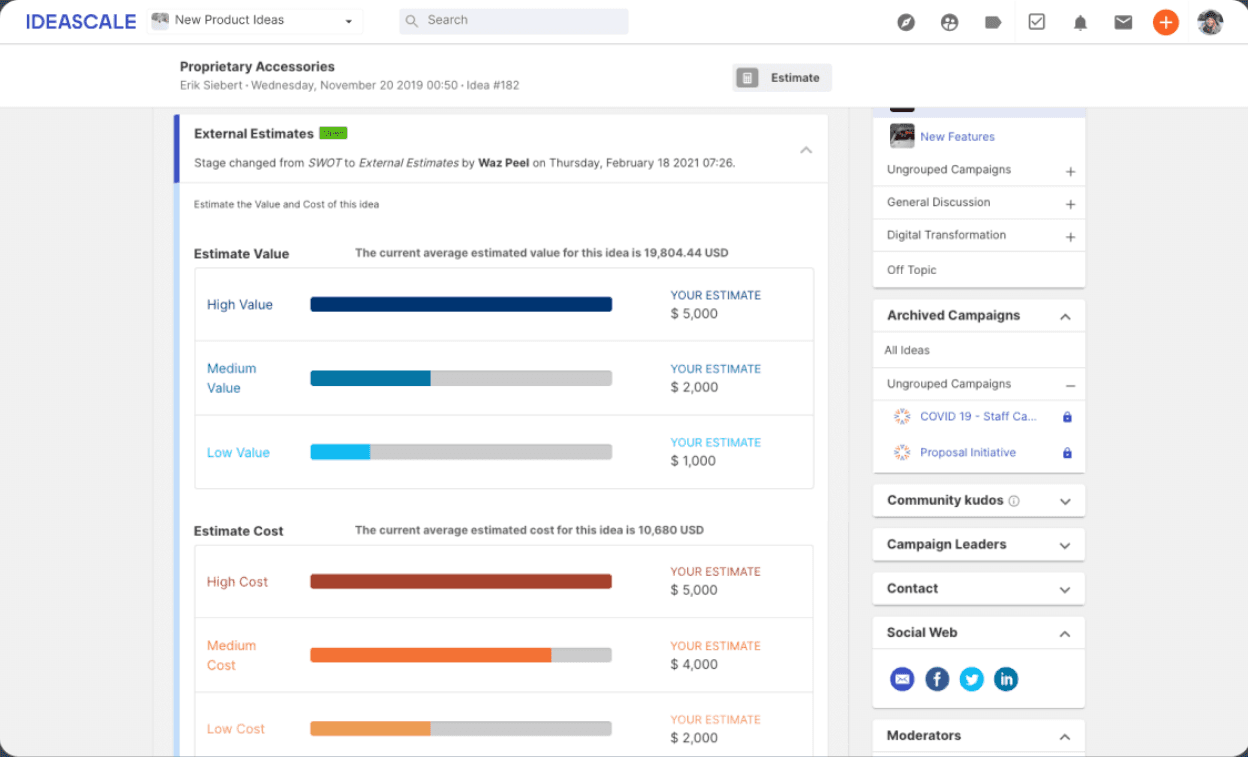
IdeaScale helps organizations generate, collaborate, and prioritize ideas. IdeaScale is an innovation management platform that supports the full idea lifecycle—from crowdsourced idea capture and community voting to concept evaluation, stage-gate workflows, and ROI tracking.
Who Is IdeaScale Best For?
IdeaScale is a strong fit for innovation managers and strategy leaders at large enterprises or government organizations running structured, high-volume idea programs across broad communities.
Why I Picked IdeaScale
IdeaScale earns its spot on my shortlist because it's built from the ground up for high-volume idea crowdsourcing, handling campaigns at a scale most platforms simply can't match. I'm particularly impressed by its multilingual, mobile-friendly idea capture with real-time crowd-validated translation, which makes it viable for global employee and public communities. The AI-driven Feasibility vs. Impact matrix also stands out to me: it plots ideas on an interactive scatter plot so innovation teams can cut through thousands of submissions and prioritize without guesswork.
IdeaScale Key Features
- Configurable stage-gate workflow: Route ideas through custom lifecycle stages—design thinking, LEAN, or your own process—with a portfolio view showing where each idea sits or stalls.
- Multilingual idea capture: Communities support multiple languages with real-time crowd-validated translation, letting global employees and public participants submit ideas in their own language.
- Innovation Health Metrics: A spider chart that scores your idea portfolio across six dimensions—originality, variety, depth, inclusivity, impact, and feasibility—to surface gaps in your innovation pipeline.
- FedRAMP-authorized security: IdeaScale holds eight FedRAMP Authorizations to Operate, making it one of the few innovation platforms cleared for government and regulated-industry deployments.
IdeaScale Integrations
IdeaScale integrates with Jira, Azure Boards, Trello, YouTrack, Slack, Microsoft Teams, Yammer, Power BI, Tableau, and Google Analytics. It also supports LinkedIn, SSO, and a documented API for custom integrations.
Pros and Cons
Pros:
- Delivers advanced innovation portfolio analytics
- Tracks ideas through configurable lifecycle stages
- Crowdsources ideas across global communities
Cons:
- AI analysis requires a separate subscription
- Advanced configuration can feel unintuitive
Learn more about IdeaScale: Best for enterprise-scale ROI tracking
- Free demo available
- Pricing upon request
Visit WebsiteCustomer Rating:4.3/5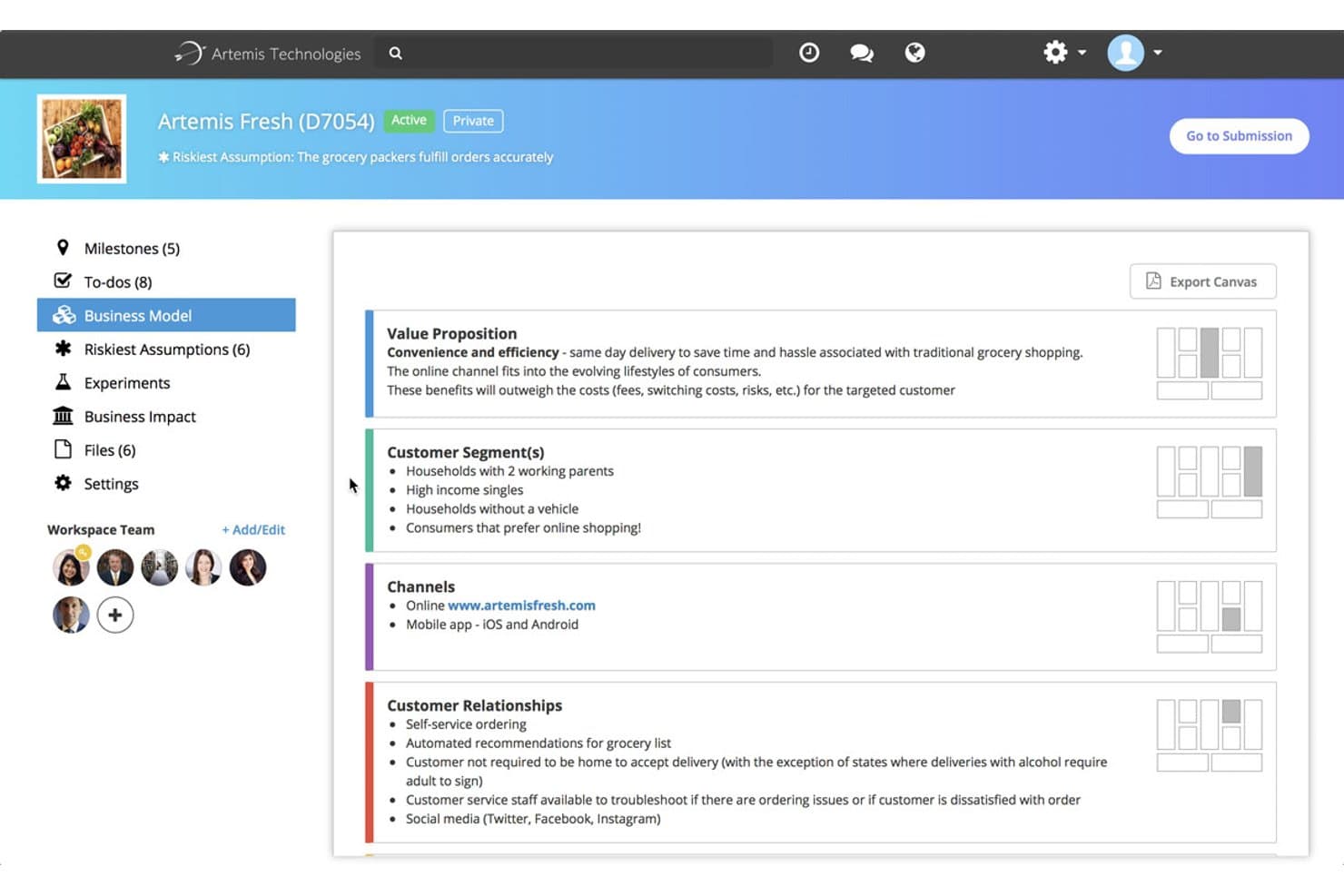
Brightidea organizes business model components in a structured canvas view. Brightidea is an enterprise innovation management platform that covers the full idea lifecycle—from multi-channel idea capture and structured campaign management to stage-gate tracking, ROI reporting, and external ecosystem scouting.
Who Is Brightidea Best For?
Brightidea fits large enterprises that need to track innovation ROI at scale, particularly corporate strategy executives and R&D leaders managing complex, multi-stage pipelines across departments.
Why I Picked Brightidea
Brightidea earns its spot as one of the best on my shortlist because of how seriously it treats ROI accountability at the enterprise level. I love the "auditable ledger" concept: every idea is traceable from first submission through funding and measured business impact, which is exactly what CFOs and strategy executives need to justify innovation spend. The expanded value tracking in Fall 2026 lets teams define custom benefit types and cost categories per initiative, so reporting reflects real business context rather than generic metrics.
Brightidea Key Features
- Multi-channel idea submission: Contributors can submit ideas via web portal, mobile app, email, paper forms, Amazon Echo, Microsoft Teams, and Slack.
- Campaign app suite: Ready-made apps for specific challenge types—including Hack, Pitch, Solve, Slash, and Recognize—let teams run structured innovation programs without building workflows from scratch.
- Scout AI: Uses live web search to surface startup profiles, competitor signals, and funding data from a single prompt, feeding external intelligence directly into your pipeline.
- Stage-gate workflow tracking: Projects move through defined stages with decision gates, automated action item assignment, and collapsible stage views for complex multi-gate pipelines.
Brightidea Integrations
Brightidea offers integrations with Jira, Asana, ServiceNow, Monday.com, Airtable, Power BI, Slack, Microsoft Teams, SharePoint, and Zendesk. It also supports REST API integrations, webhooks, and Zapier.
Pros and Cons
Pros:
- Offers varied campaign formats for challenges
- Supports complex stage-gate innovation pipelines
- Tracks ROI from ideas through implementation
Cons:
- Mobile app performance draws reviewer criticism
- Setup demands substantial configuration work
Learn more about Brightidea: Best for engagement-driven idea campaigns
- Free demo available
- From $10/user/month (billed annually, min 500 users)
Visit WebsiteCustomer Rating:4.7/5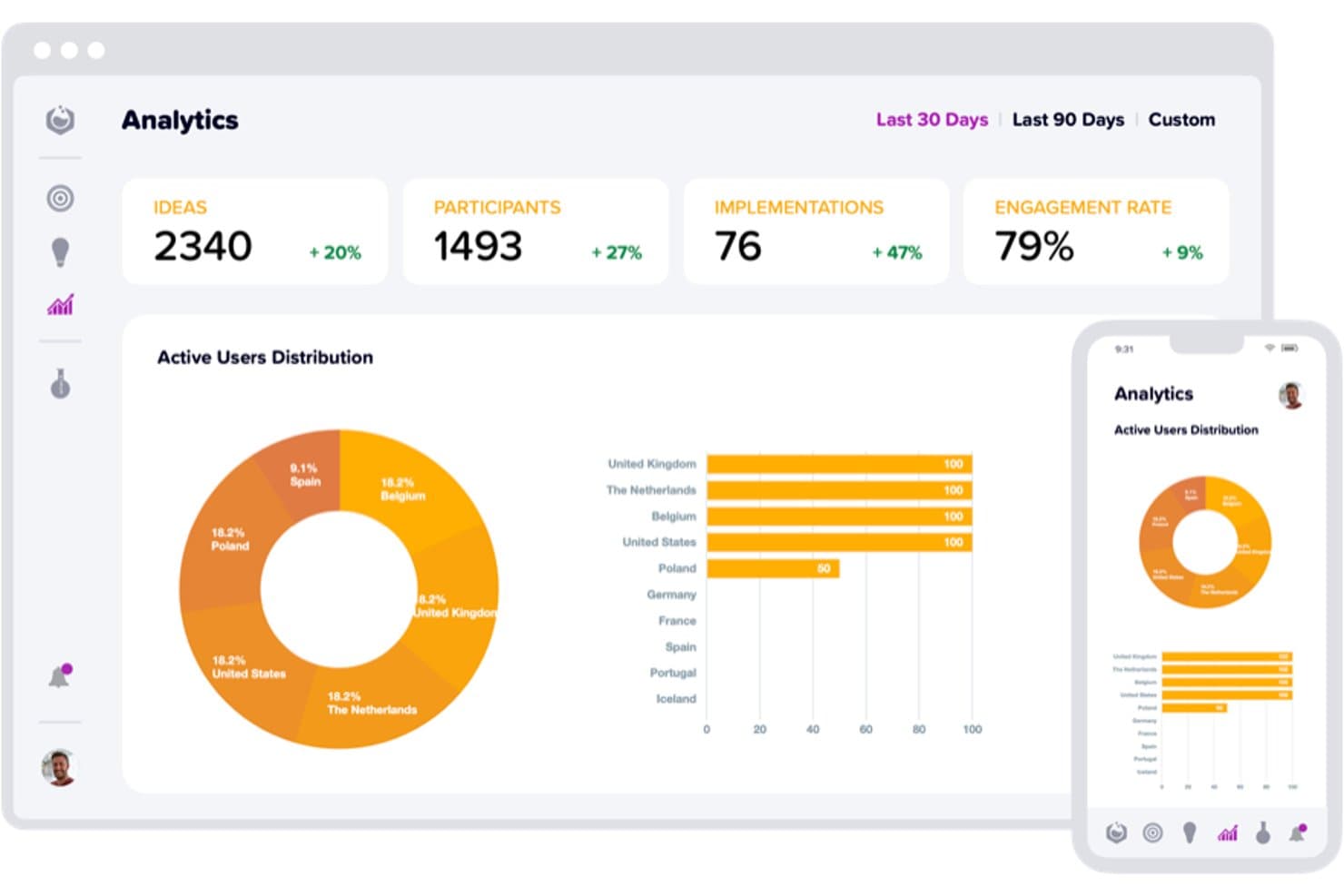
Yambla tracks engagement, ideas, and implementations via analytics dashboards. Yambla is an idea management platform that combines ideation campaigns, structured evaluation, gamification, and open innovation portals to collect, assess, and advance ideas across your organization and beyond.
Who Is Yambla Best For?
Yambla is a strong fit for enterprise teams running structured innovation programs where participation and momentum matter as much as the ideas themselves.
Why I Picked Yambla
Yambla earns its spot on my shortlist because of how deliberately it's built around participation, not just idea collection. I love that it pairs gamification features like leaderboards and social recognition with dedicated program formats such as hackathons and open innovation challenges, so campaigns actually build momentum instead of stalling out. Its AI pitch assistant helps contributors sharpen ideas before submission, which means the ideas reaching your evaluation stage are already higher quality.
Yambla Key Features
- Custom scorecards: Build evaluation criteria specific to your program, then score submitted ideas against those criteria using distributed reviewing across your team.
- Stage-gate workflow automation: Configure multi-stage funnels with decision gates, separate workflows per program, and automatic detection of dormant or momentum-gaining ideas.
- Open innovation portal: Launch external-facing ideation campaigns with custom branding, a custom domain, and embedded submission widgets for customers and partners.
- Complete Deliverables templates: Use a built-in library of customizable templates—including project plans, roadmaps, and experimentation frameworks—to develop raw ideas into full proposals.
Yambla Integrations
Yambla lists integrations with Microsoft Teams, Microsoft Office, Google Workspace, and Miro, plus web widgets and idea imports from other tools or data files. No public API is documented.
Pros and Cons
Pros:
- Dedicated customer success supports program launches
- AI pitch assistance improves submitted idea quality
- Engagement-focused gamification sustains campaign participation
Cons:
- Funnel design requires thorough upfront planning
- Cluttered interface can hinder navigation
Learn more about Yambla: Best for enterprise innovation at scale
- Free demo available
- Pricing upon request
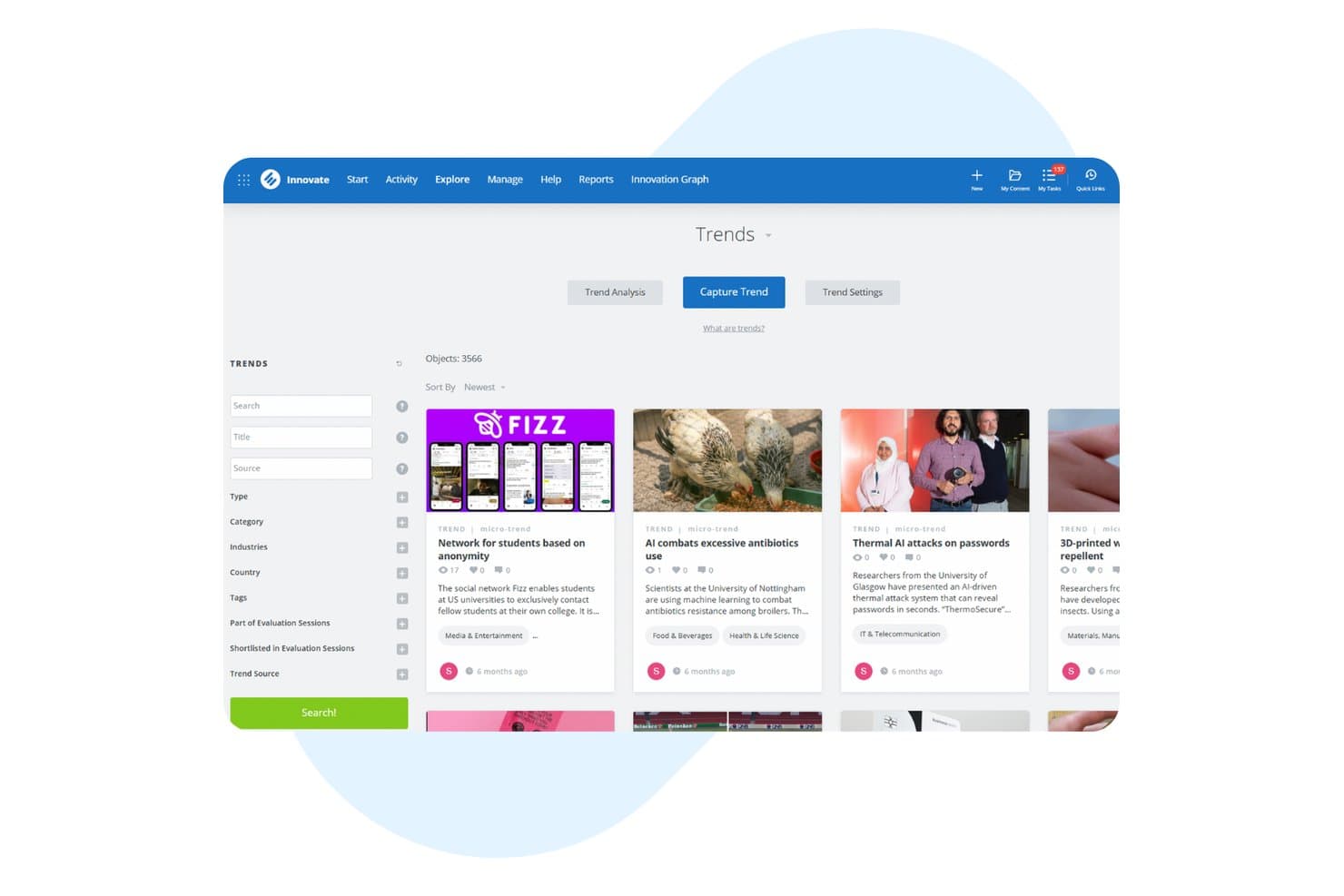
HYPE Innovation helps users discover and track emerging trends by category. HYPE Innovation is an enterprise innovation management platform that connects idea capture, structured evaluation, stage-gate workflow tracking, and portfolio analytics in one system.
Who Is HYPE Innovation Best For?
HYPE Innovation is built for large enterprises running structured, multi-department innovation programs that need to scale from idea capture all the way through to tracked business impact.
Why I Picked HYPE Innovation
HYPE Innovation earns its spot on my shortlist because it's purpose-built to handle innovation at enterprise scale, covering the full path from structured idea capture through stage-gate execution to tracked ROI. I'm particularly impressed by its configurable, multi-criteria evaluation workflows, where ideas are scored on feasibility, financial impact, and strategic fit, then automatically routed to the right reviewers or expert groups. Its AI layer adds real muscle here, detecting duplicates, summarizing submissions, and estimating savings.
HYPE Innovation Key Features
- Open Innovation portal: An external-facing portal that collects ideas from suppliers, customers, and partners outside your organization.
- Microsoft 365 integration: Native connections to Teams, SharePoint, Outlook, and Viva Engage let employees submit and track ideas without leaving their existing tools.
- BI API exports: Data pipelines push innovation metrics to Power BI, Tableau, Excel, and data lakes for reporting in your existing analytics stack.
- Works council compliance support: Configurable approval paths accommodate formal employee suggestion schemes and union requirements, including BVW compliance for DACH-region organizations.
HYPE Innovation Integrations
HYPE Innovation offers native integrations across the Microsoft ecosystem, including Teams, SharePoint, Outlook, Viva Engage, Power BI, and Entra ID, plus Jira, SAP, and Tableau integrations. REST and BI APIs support custom connections and data exports.
Pros and Cons
Pros:
- Threaded discussions support distributed expert input
- Stage-gates connect ideas with execution
- Configurable scoring supports strategic prioritization
Cons:
- Dashboard data issues hinder reporting clarity
- Advanced setup requires technical expertise
Learn more about HYPE Innovation:
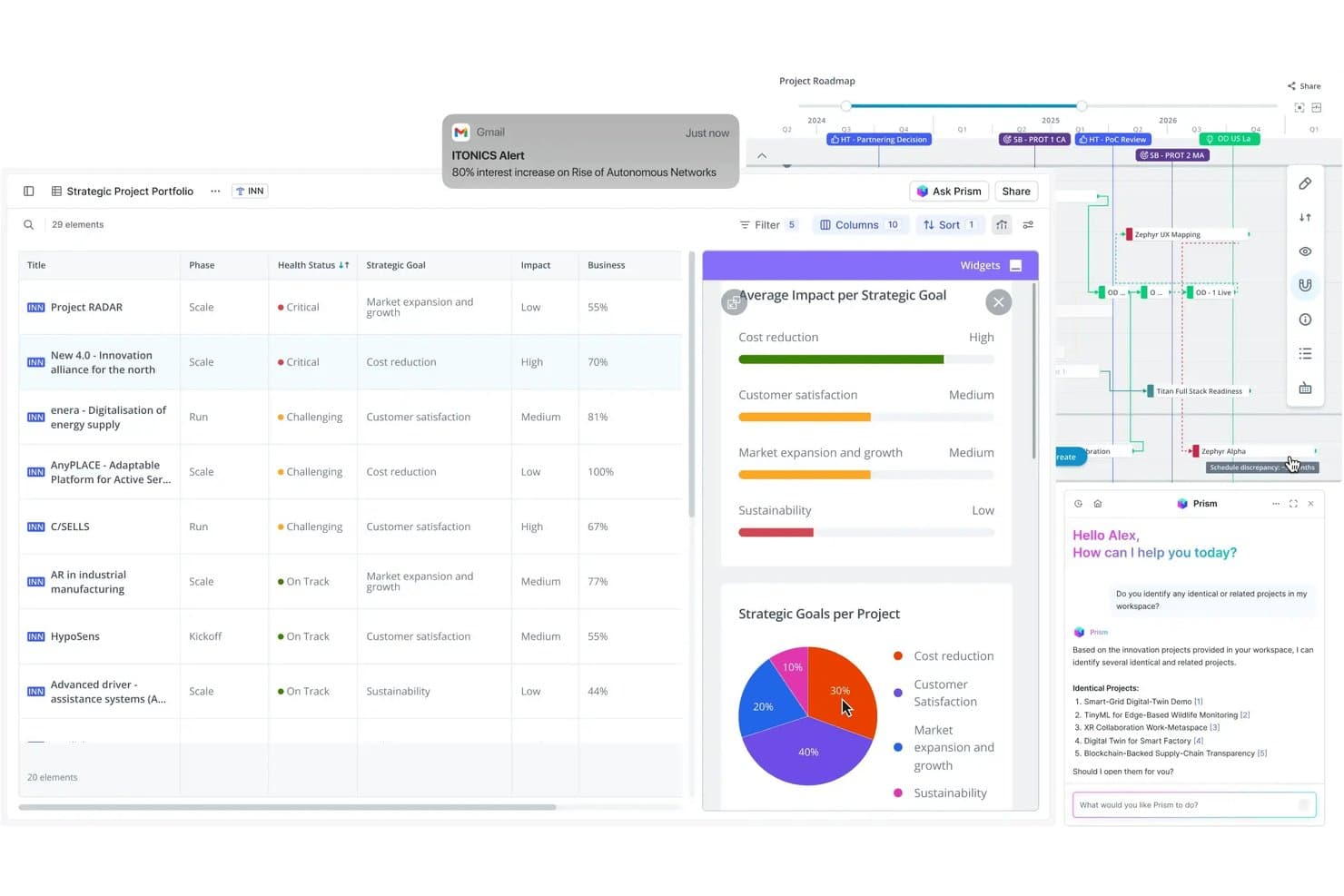
ITONICS centralizes project portfolios with health, impact, and roadmap views. ITONICS is an enterprise innovation management platform that brings together trend and technology scouting, idea management, project portfolio management, and roadmapping in a single modular workspace.
Who Is ITONICS Best For?
ITONICS is a strong fit for R&D leaders and corporate innovation teams at large enterprises who need to connect market signals and technology trends directly to their innovation pipeline.
Why I Picked ITONICS
ITONICS earns its spot on my shortlist because of how well it connects external market signals to internal innovation work. I love that Prism, its AI agent, draws on over 500 million curated data signals to build technology radars, scout and rank startups, and flag when your portfolio drifts from strategy. The configurable trend radars and network graphs make it easy to trace a market signal all the way through to a funded project, which is exactly what R&D teams need.
ITONICS Key Features
- Workflow builder: Configure custom stages, gates, automated handovers, and audit trails to move ideas through a structured review process.
- Campaign management: Run idea campaigns with custom submission processes, unlimited contributors, leaderboards, badges, and activity dashboards.
- Roadmap add-on: Plan and visualize milestones, dependencies, critical paths, and scenarios directly within the platform—no external tool required.
- External idea portals: Collect submissions from customers, suppliers, and partners through no-code portals without requiring contributor logins.
ITONICS Integrations
ITONICS offers built-in connectors for Tracxn, Crunchbase, Miro, and Salesforce. Its API supports XLS imports, Jira, Azure DevOps, SAP, Power BI, and Tableau connections.
Pros and Cons
Pros:
- External portals broaden idea collection
- Configurable radars clarify emerging technology priorities
- Connects trend signals to innovation portfolios
Cons:
- Setup requires substantial training and configuration
- Add-ons gate several advanced innovation workflows
Learn more about ITONICS:
Other Innovation Management Software
Here are some additional innovation management software options that didn’t make it onto my shortlist, but are still worth checking out:
- 11AgorizeBest for challenge-driven open innovation programs
- 12QmarketsBest for AI-powered innovation management
- 13innosabi Software SuiteBest for end-to-end innovation with market intel
- 14NoscoBest for Microsoft-stack innovation teams
- 15Traction TechnologyBest for scouting-to-pilot innovation tracking
- 16ExagoBest for prediction-market idea scoring
- 17AEVO InnovateBest for connecting ideas to OKRs and ROI tracking
How I Evaluate Innovation Management Software
I split my evaluation into three parts. Core functionality carries the most weight—I look for tools that let teams submit and describe ideas in a structured way, then score and rank them against defined criteria. From there, I check for standout features like AI-assisted ideation and consider what's on offer beyond features, like onboarding support and integration with PM tools.
Core Functionality (Table Stakes For This List)
When I'm selecting tools for my list, I score each one on a scale from 0 (does not offer the functionality) to 5 (excels in this area) for each core functionality listed below. I then convert the total into a percentage to help assess each tool's overall fit, with extra weight on any functionalities I've deemed essential.
- Idea Capture & Submission (Essential): I look for structured intake forms with customizable fields, categorization, and support for attachments or rich media beyond a basic text box.
- Idea Evaluation & Scoring (Essential): Scoring models matter here—I check whether you can define weighted criteria, assign reviewers, and compare ideas side by side across a large pipeline.
- Collaboration & Feedback: Teams need threaded comments, @-mentions, and notifications so contributors across departments can refine ideas without switching to email or chat tools.
- Workflow & Stage-Gate Tracking: I evaluate how flexibly you can define stages, automate transitions, and enforce approval gates that mirror your organization's actual innovation process.
- Campaign & Challenge Management: Running a time-boxed ideation challenge for a specific business unit is a common use case, so I look for audience targeting, deadlines, and gamification options.
- Reporting & Analytics: Dashboards should go beyond submission counts—I check for pipeline health views, participation trends, and the ability to filter by campaign, department, or stage.
Once I have a list of tools that meet the criteria, I consider what sets each platform apart.
Differentiating Factors (What Sets Vendors Apart)
Here's how I compare and contrast different vendors:
Standout Features
AI-assisted ideation is the first thing I check. I look for tools that go beyond simple keyword matching to actually cluster related submissions and surface duplicates before a review committee wastes time on them. External idea portals also matter a lot—I evaluate whether you can launch a branded, customer-facing portal that feeds submissions directly into the same scoring pipeline your internal teams use. Platforms like Brightidea and HYPE Innovation handle this differently, so I compare portal customization and access controls closely. Finally, I look at integrated roadmapping sync, because an idea that's validated but stuck in a spreadsheet never ships.
Beyond Features
I check whether a platform can scale across multiple concurrent campaigns without process collisions—something that matters fast when separate business units launch their own innovation programs. Integration with your existing PM tech stack is equally important; I look for native connectors to tools like Jira or Aha! so validated ideas move into execution without manual re-entry. I also evaluate each vendor's change management support, including onboarding resources and champion programs, because even the best tool fails if participation drops off after launch.
How to Choose Innovation Management Software
It’s easy to get bogged down in long feature lists and complex pricing structures. To help you stay focused as you work through your unique software selection process, here’s a checklist of factors to keep in mind:
| Factor | What to Consider |
| Scalability | Ensure the tool can grow with your team. Look for solutions that can handle increasing amounts of data and users without compromising performance. |
| Integrations | Check if the tool integrates with software your team already uses, like Slack, Jira, or Microsoft Teams, to ensure smooth workflows. |
| Customizability | Look for platforms that let you tailor workflows and features to fit your team's specific processes and needs. |
| Ease of Use | Choose a tool with an intuitive interface and minimal learning curve so your team can start using it effectively right away. |
| Budget | Consider the total cost, including any hidden fees. Ensure the pricing aligns with your financial plan and offers good value for the features provided. |
| Security Safeguards | Verify that the software offers robust security measures like data encryption and compliance with regulations to protect your team's sensitive information. |
| Support | Look for responsive customer support with multiple contact methods to assist you whenever issues arise. |
| User Feedback | Research user reviews to understand common praises and complaints. This can give you insight into the tool’s real-world performance and reliability. |
Trends In Innovation Management Software
In my research, I sourced countless product updates, press releases, and release logs from different innovation management software vendors and the product marketing ecosystem. Here are some of the emerging trends I’m keeping an eye on for innovation management solutions:
- AI-Driven Insights: More idea management tools are using AI to analyze data and provide actionable insights. This helps teams identify trends and make informed decisions quickly. Vendors like ITONICS are incorporating AI to enhance trend analysis features.
- Crowdsourcing and Collaboration: Increasingly, platforms are focusing on harnessing the collective intelligence of both internal and external stakeholders. This trend is evident in tools like IdeaScale, which emphasize community engagement.
- Sustainability Focus: There's a growing interest in innovation that prioritizes sustainability. Tools like Wazoku are integrating features that encourage eco-friendly solutions and sustainable development goals.
- Gamification Elements: Adding elements of gamification is becoming popular to boost engagement. Platforms are using points, badges, and leaderboards to motivate users to participate more actively in the innovation process.
- Real-Time Feedback: Providing instant feedback on ideas is becoming crucial. This trend helps teams iterate faster and keep their innovation processes Agile. Medallia, for example, focuses on capturing customer feedback in real-time to drive innovation.
What Is Innovation Management Software?
Innovation management software, or idea management software, is a category of tools designed to help organizations capture, evaluate, and implement new ideas. These tools are typically used by product managers, innovation leaders, and team members involved in strategic planning and development. Idea capturing, collaboration, and feedback features support the process of turning concepts into actionable projects, fostering a culture of continuous improvement. Overall, these tools help organizations stay competitive by efficiently managing the innovation process.
Innovation is not a flash of genius. It is hard work, which should be organized as a regular activity of every unit of the company, and at every level of management.

Key Features of Innovation Management Software
The right innovation management platform helps your entire organization capture, develop, and implement innovative ideas while ensuring alignment with business goals. Here are the essential features to look for in innovation software:
- Idea Management & Portfolio Tracking – Centralizes idea capturing and project management, allowing teams to collect, evaluate, and prioritize submissions while managing an innovation portfolio for better visibility into ongoing projects.
- Collaboration Tools – Facilitates communication between innovation teams and key stakeholders, making it easier to refine concepts and drive impactful projects.
- Feedback & KPI Analysis – Tracks the effectiveness of initiatives using feedback analysis and key performance indicators (KPIs) to inform data-driven decision-making.
- Customizable Workflows – Adapts to different corporate innovation processes, including automation features, and ensures that teams can structure projects to fit their specific needs.
- Trend & Emerging Technology Analysis – Identifies new technologies and emerging trends that could impact your industry, helping businesses stay ahead of competitors.
- Challenge-Based Innovation – Organizes innovation activities around specific business challenges, encouraging problem-solving and goal-oriented ideation.
- Gamification & Engagement Tools – Boosts participation with interactive elements, ensuring that employees and stakeholders stay actively involved in innovation projects.
- Real-Time Feedback & Dashboards – Provides instant evaluations on submitted ideas while dashboards offer clear, actionable insights into project progress.
- Advanced Reporting & Analytics – Offers in-depth analysis of innovation activities, measuring success and pinpointing areas for improvement.
- Security & Compliance – Protects sensitive information with security safeguards, ensuring data integrity and regulatory compliance.
Why Investing in Innovation Management Software Pays Off
Innovation is not just about launching groundbreaking new products—it’s about continuous improvement, adapting to market changes, and maintaining long-term business viability.
While investing in risky new ventures can be intimidating, the biggest risk of all is to actually not take any risk. If you do that, you will inevitably go out of business—it’s just a matter of time when that happens.

Implementing innovation management software provides several benefits for your team and your business. Here are a few you can look forward to:
- Increase Agility & Stay Competitive – Companies that regularly innovate can respond faster to industry changes and seize new opportunities before competitors. Trend analysis tools help businesses predict shifts, while structured workflows ensure ideas move from concept to execution efficiently.
- Strengthen Collaboration Across Teams – Without a centralized system, ideas often remain siloed in different departments. Innovation management tools enable knowledge-sharing, cross-functional brainstorming, and transparent project tracking, leading to better decision-making and more impactful innovations.
- Accelerate Decision-Making – Instead of relying on gut instincts, structured innovation platforms provide data-backed insights, prioritization frameworks, and performance tracking to help teams validate ideas and focus on those with the highest potential impact.
- Optimize Processes & Improve Efficiency – Innovation isn’t just about new products—it’s also about improving internal operations. By streamlining workflows and automating idea evaluation, companies can reduce inefficiencies, cut costs, and implement improvements faster.
- Boost Employee Engagement & Retention – Employees are more engaged when they feel their ideas are valued. By using gamification, real-time feedback, and open ideation platforms, companies create a culture where innovation is encouraged at all levels, making it easier to attract and retain top talent.
Costs and Pricing of Innovation Management Software
Selecting innovation management software requires an understanding of the various pricing models and plans available. Costs vary based on features, team size, add-ons, and more. The table below summarizes common plans, their average prices, and typical features included in innovation management software solutions:
Plan Comparison Table for Innovation Management Software
| Plan Type | Average Price | Common Features |
| Free Plan | $0 | Basic idea capturing, limited collaboration tools, and essential reporting. |
| Personal Plan | $10-$30/user/month | Idea capturing, collaboration tools, basic analytics, and limited customization. |
| Business Plan | $30-$60/user/month | Advanced collaboration, detailed analytics, customizable workflows, and priority support. |
| Enterprise Plan | $60-$120 /user/month | Full customization, comprehensive analytics, dedicated account management, and enhanced security. |
Innovation Management Software FAQs
Here are some answers to common questions about innovation management software:
What are the challenges in managing innovation?
Managing innovation requires balancing creative exploration with strategic execution. Many teams struggle to integrate new ideas into existing workflows, especially when processes are rigid or siloed. Resistance to change can slow progress, and without structured innovation management, valuable ideas may be lost. Additionally, fostering cross-team collaboration and maintaining long-term engagement are ongoing challenges, requiring both the right tools and a culture that supports continuous improvement.
What are the four pillars of innovation management software?
The four pillars of innovation management software are competency, structure, culture, and strategy. These pillars help your team stay organized and focused on innovation goals. Competency ensures skilled execution, the structure provides a framework, culture fosters a creative environment, and strategy aligns innovation with business objectives.
What is the dilemma of innovation management software?
The dilemma of innovation management software often involves choosing between investing in disruptive innovations and maintaining existing operations. Disruptive innovations may initially serve small markets, posing a risk to established companies. Balancing short-term gains with long-term innovation potential is key to overcoming this dilemma.
How do we get our executives to support the innovation program?
Gaining executive support requires demonstrating the value of innovation initiatives. You can present successful case studies, highlight potential ROI, and align innovation goals with business objectives. Regular updates and transparent communication can also help build trust and commitment from leadership.
How can we make sure we get disruptive ideas?
Encourage a culture that values experimentation and accepts failure as part of the process. Provide platforms for idea sharing and collaboration, and incentivize creative thinking. Engaging diverse teams and seeking external input can also lead to more disruptive ideas.
Who in the organization should manage innovation?
Innovation management software is often best led by a dedicated team or leader who can coordinate efforts across departments. However, it should involve input from all levels of the organization to ensure diverse perspectives. Empowering cross-functional teams can enhance the innovation process.