
Instagantt-recension: Fördelar, nackdelar, funktioner och priser
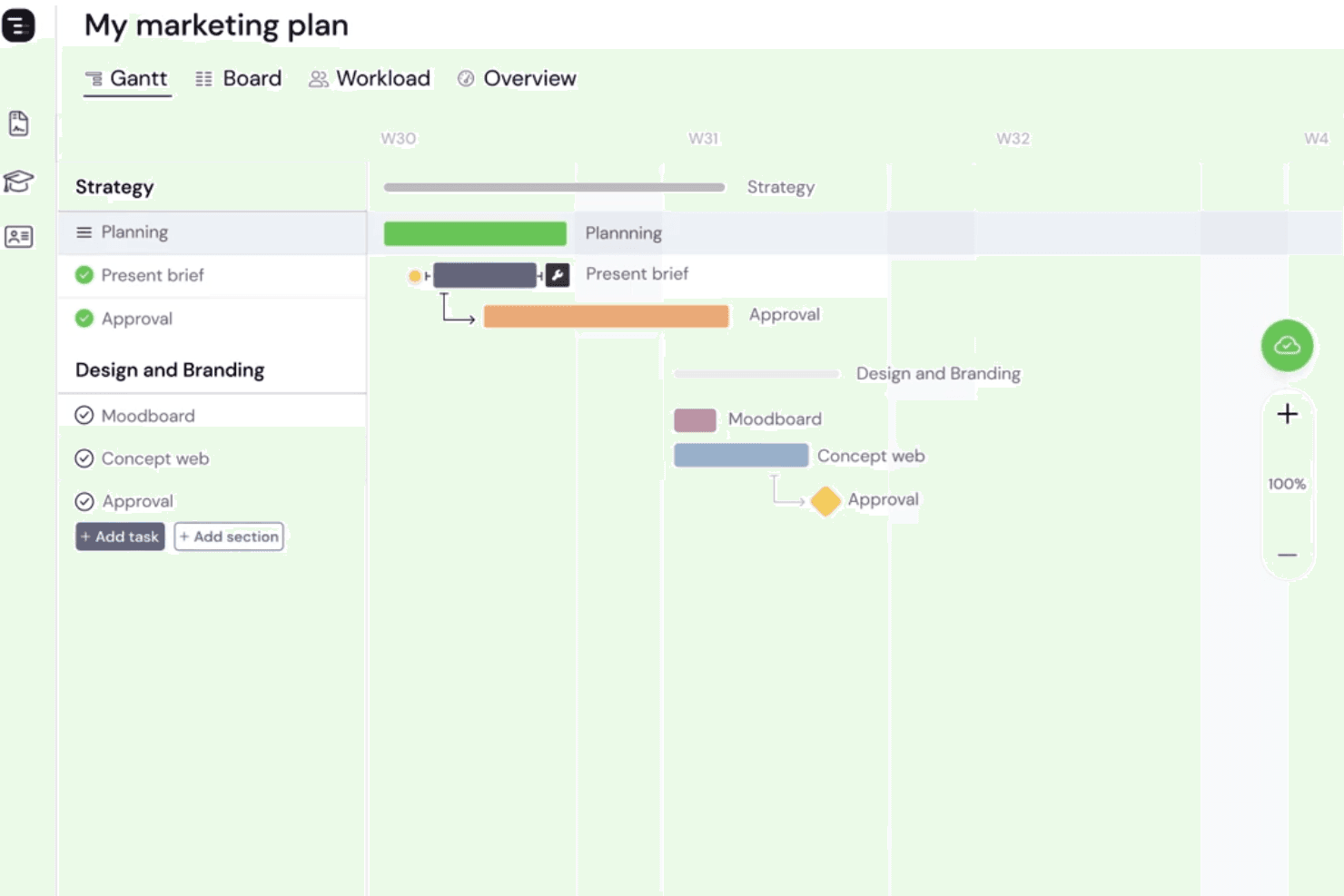
Instagantt utmärker sig med sin intuitiva Gantt-diagramfunktion, vilket gör det till ett förstahandsval för team som söker tydliga projekttidslinjer och uppgiftsberoenden.

We review tools independently, and commissions help fund our testing. See our transparency policy, our methodology, or suggest a tool.
Instagantt is a product prioritization software built around Gantt chart timelines. It's a good fit for product teams that need to visualize dependencies, milestones, and workload across multiple projects in one place. I'd consider it over TeamGantt if your team is already working in Asana—Instagantt syncs directly with Asana, so your existing tasks and projects map into a timeline view without any manual re-entry.
Instagantt Evaluation Summary
4.3/5
- From $120/year
- 7-day free trial available
Varför du kan lita på våra programvarurekommendationer
6,700+
Reviews
20
Industry experts
16+
Evaluation factors
14
Years
Vårt team har testat och recenserat programvara sedan 2012. Som produktchefer själva vet vi hur svårt — och viktigt — det är att välja rätt programvara.
För den här guiden utvärderade vi verktyg genom praktisk testning och oberoende research, och betygsatte verktygen enligt våra urvalskriterier.
Våra recensioner speglar vårt mänskliga redaktionella omdöme, inte ett säljbudskap.
- Andrew LumbySenior TPM
- Cristiano ValimSenior UI/UX Lead
Instagantt Overview
In my opinion, Instagantt is a strong contender in the product prioritization software space. It excels in visual project management with its intuitive Gantt charts, making it particularly effective for teams needing clear timelines and task dependencies. While it may not offer the extensive integrations of some competitors like ClickUp or monday.com, its ease of use and value for money make it a solid choice for small to medium-sized teams. It's best suited for project managers in industries like construction and marketing, where visual clarity is key. If you prioritize ease of use and visual planning, Instagantt could be the right tool for your team.
Pros
- Instagantt's Gantt charts make it easy to visualize project timelines.
- It's user-friendly, so your team can start planning right away.
- Task dependencies let your team see how tasks are connected.
Cons
- It lacks some advanced features found in other tools.
- Customization options for charts are limited.
- It may not handle complex projects as well as some competitors.
Is Instagantt Right For Your Needs?
Who Would be a Good Fit for Instagantt?
Instagantt is ideal for project managers and teams in industries like construction, marketing, and software development. Its intuitive Gantt charts make it easy to visualize timelines and manage task dependencies. If your team needs clear visual planning and straightforward project tracking, you'll find Instagantt beneficial. It's especially suited for small to medium-sized teams that prioritize ease of use and need to see how tasks interconnect.
- Construction ProjectsGantt charts help your team visualize timelines and dependencies, making it easier to manage complex construction schedules.
- Marketing CampaignsVisual planning lets your team track campaign timelines and ensure all tasks align with your launch goals.
- Software DevelopmentTask dependencies allow your developers to see how tasks connect, improving project flow and delivery times.
- Event PlanningInstagantt's visual timelines help your team plan every detail of your event, ensuring nothing is overlooked.
- Small BusinessesEasy-to-use features let your team start planning without a steep learning curve, saving time and resources.
- Remote TeamsInstagantt provides a clear picture of project progress, helping your remote team stay aligned and on track.
Who Would be a Bad Fit for Instagantt?
Instagantt might not suit large enterprises or teams needing advanced features and extensive integrations. If your work involves complex projects with intricate requirements, you'll find Instagantt's capabilities limited. It doesn't offer the depth some industries require for detailed project management. Teams needing highly customizable solutions might also feel restricted, as Instagantt's customization options are basic. Large-scale operations that rely on intricate workflow automation and detailed analytics would likely find other tools more fitting.
- Large EnterprisesInstagantt lacks advanced features and integrations needed for managing large-scale operations effectively.
- Finance DepartmentsComplex financial projects needing detailed tracking and analytics might find Instagantt's capabilities insufficient.
- Manufacturing PlantsIntricate production schedules require more robust tools than Instagantt offers for task tracking and automation.
- Healthcare OrganizationsHealthcare projects often need specialized software for compliance and detailed data management, which Instagantt doesn’t provide.
- Research TeamsResearch projects needing advanced data analysis and reporting features won’t find Instagantt suitable.
- Legal FirmsLegal work demands detailed document management and task tracking beyond Instagantt's basic feature set.
How We Test & Score Tools
We’ve spent years building, refining, and improving our software testing and scoring system. The rubric is designed to capture the nuances of software selection and what makes a tool effective, focusing on critical aspects of the decision-making process.
Below, you can see exactly how our testing and scoring works across seven criteria. It allows us to provide an unbiased evaluation of the software based on core functionality, standout features, ease of use, onboarding, customer support, integrations, customer reviews, and value for money.
Core Functionality (25% of final scoring)
The starting point of our evaluation is always the core functionality of the tool. Does it have the basic features and functions that a user would expect to see? Are any of those core features locked to higher-tiered pricing plans? At its core, we expect a tool to stand up against the baseline capabilities of its competitors.
Standout Features (25% of final scoring)
Next, we evaluate uncommon standout features that go above and beyond the core functionality typically found in tools of its kind. A high score reflects specialized or unique features that make the product faster, more efficient, or offer additional value to the user.
We also evaluate how easy it is to integrate with other tools typically found in the tech stack to expand the functionality and utility of the software. Tools offering plentiful native integrations, 3rd party connections, and API access to build custom integrations score best.
Ease of Use (10% of final scoring)
We consider how quick and easy it is to execute the tasks defined in the core functionality using the tool. High scoring software is well designed, intuitive to use, offers mobile apps, provides templates, and makes relatively complex tasks seem simple.
Onboarding (10% of final scoring)
We know how important rapid team adoption is for a new platform, so we evaluate how easy it is to learn and use a tool with minimal training. We evaluate how quickly a team member can get set up and start using the tool with no experience. High scoring solutions indicate little or no support is required.
Customer Support (10% of final scoring)
We review how quick and easy it is to get unstuck and find help by phone, live chat, or knowledge base. Tools and companies that provide real-time support score best, while chatbots score worst.
Customer Reviews (10% of final scoring)
Beyond our own testing and evaluation, we consider the net promoter score from current and past customers. We review their likelihood, given the option, to choose the tool again for the core functionality. A high scoring software reflects a high net promoter score from current or past customers.
Value for Money (10% of final scoring)
Lastly, in consideration of all the other criteria, we review the average price of entry level plans against the core features and consider the value of the other evaluation criteria. Software that delivers more, for less, will score higher.
Core Features
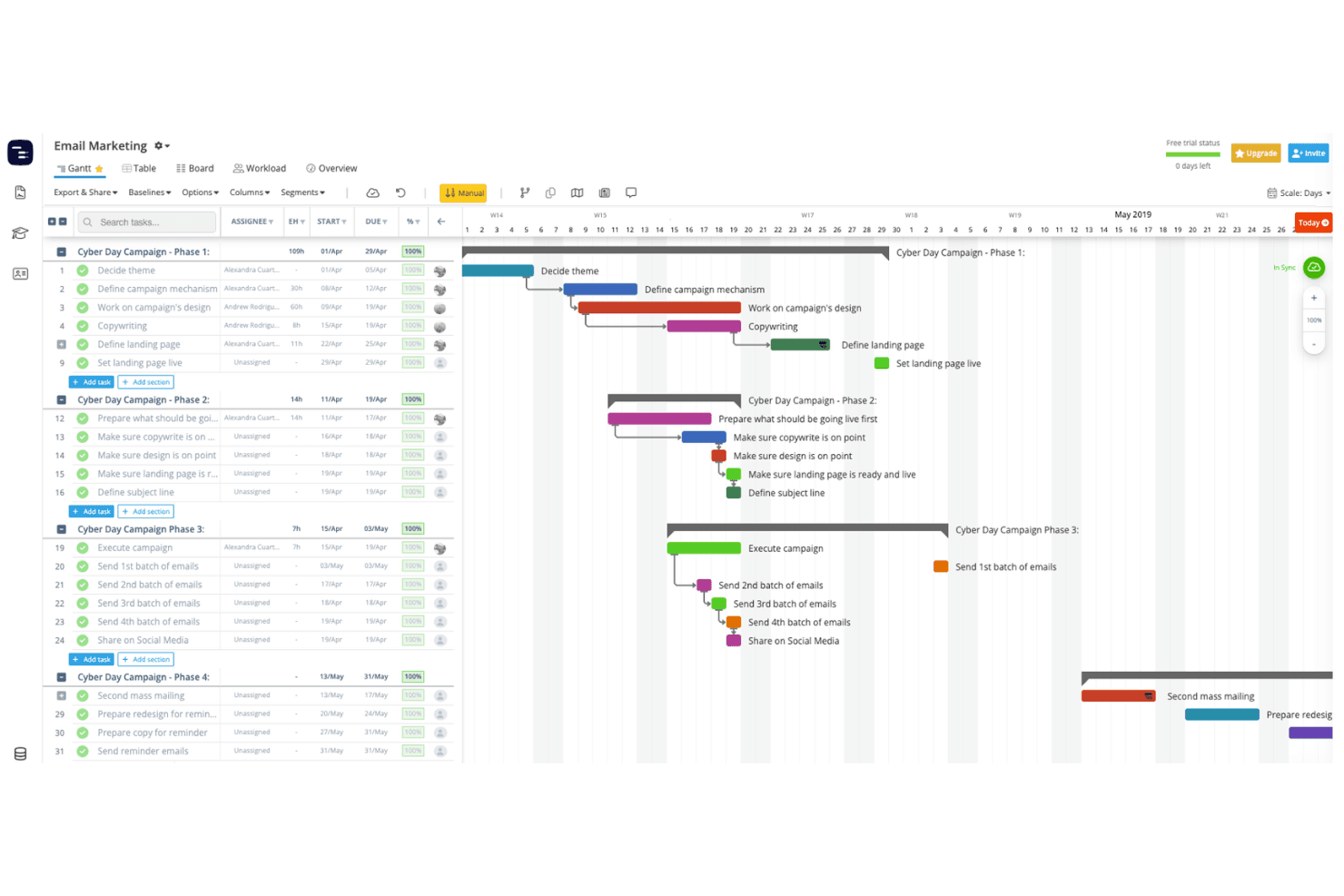
Gantt Charts: Instagantt's Gantt charts provide a clear visual representation of your project timeline. They help your team see task durations and dependencies at a glance.
Task Dependencies: You can link tasks to show their relationships, ensuring your team understands how tasks connect. This feature helps prevent bottlenecks and keeps your project on track.
Milestone Tracking: Set milestones to mark key points in your project timeline. This feature lets your team track progress toward significant goals and deadlines.
Task Assignment: Assign tasks and subtasks to team members directly within the software. This ensures everyone knows their responsibilities and keeps your task management efforts centralized.
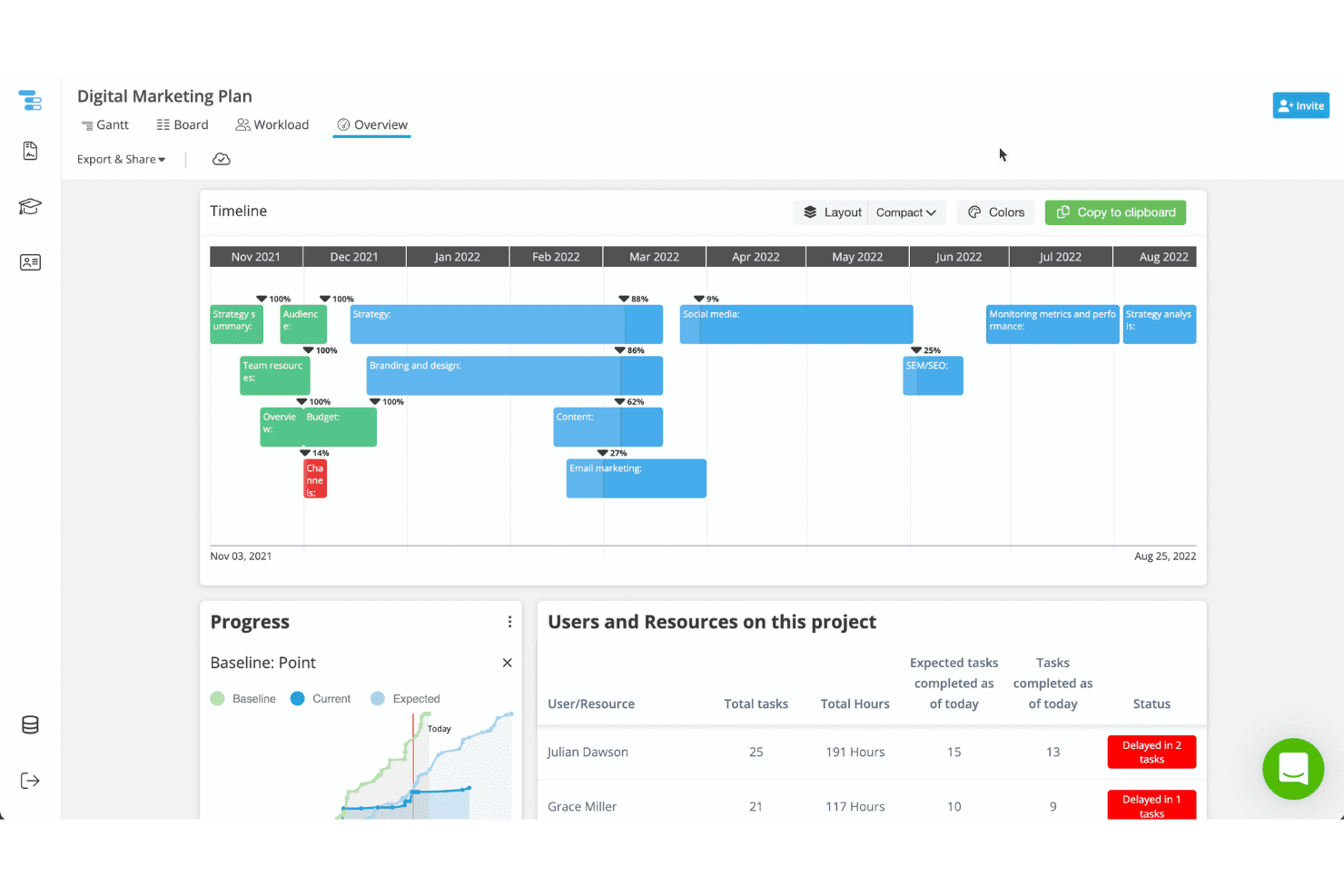
Progress Tracking: Monitor task progress with visual indicators and notifications. This helps your team stay informed on the status of their tasks and manage workload effectively.
Timeline Adjustments: Easily adjust timelines as project needs change. This flexibility allows your team to respond quickly to unexpected changes.
Ease of Use
Instagantt shines with its user-friendly interface, making it easy for your team to get started without a steep learning curve. Its intuitive Gantt charts and straightforward navigation let your team focus on planning rather than figuring out the software. Users appreciate the drag-and-drop functionality, which allows quick adjustments to timelines and tasks. Compared to other tools, Instagantt stands out for its simplicity and accessibility, making it a top choice for teams seeking efficiency without complexity.
Integrations
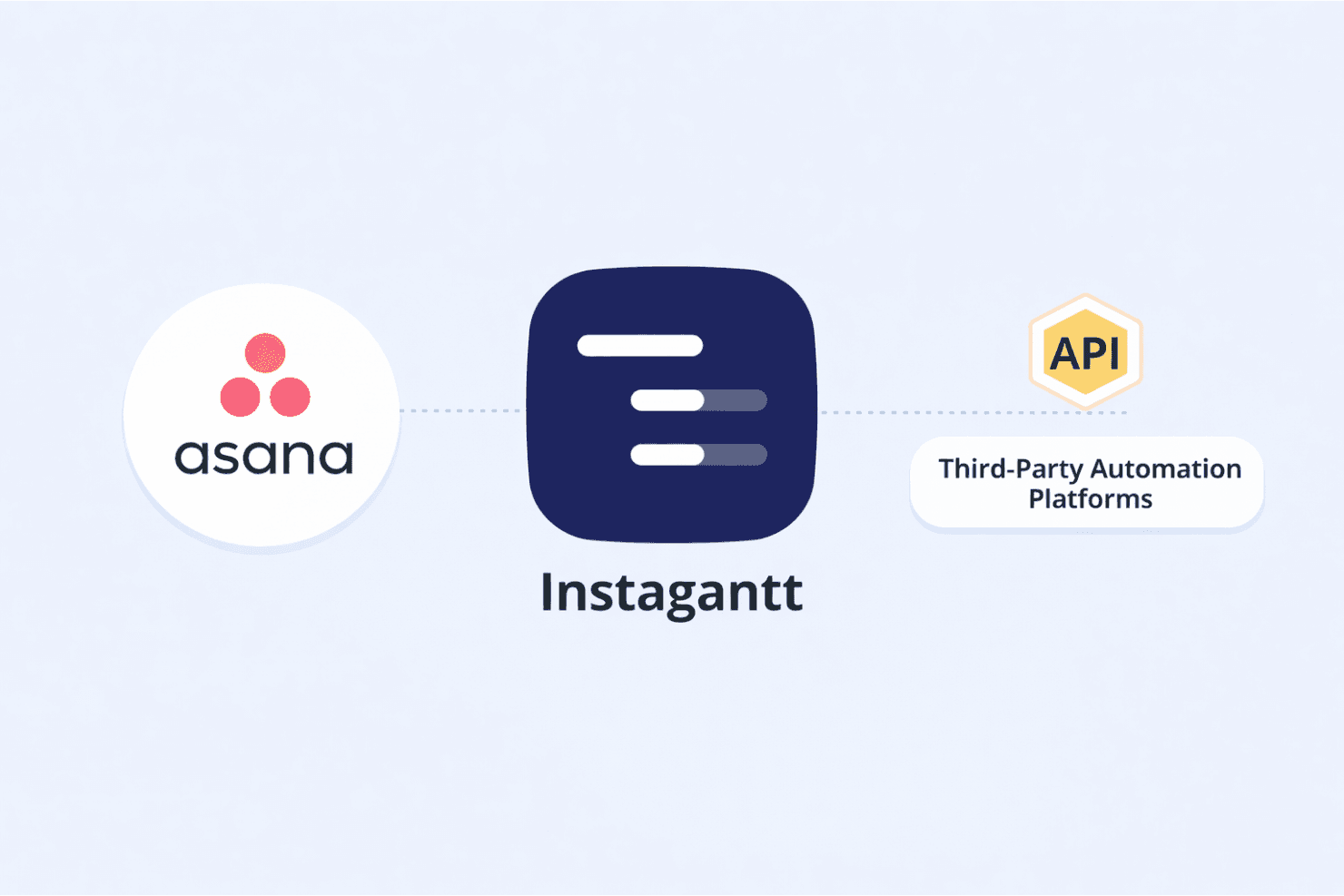
Instagantt integrates natively with Asana.
Instagantt does not currently offer its own public API or built-in connectors to tools like Zapier, so aside from its native Asana integration it generally must rely on third-party automation platforms for broader connectivity.
Instagantt Specs
- API: Yes
- Batch Permissions & Access: Yes
- Budgeting: Yes
- Calendar Management: Yes
- Collaboration Support: Yes
- Contact Management: Yes
- Contact Sharing: Yes
- Customer Management: Yes
- Dashboard: Yes
- Dashboards: Yes
- Data Export: Yes
- Data Import: Yes
- Data Visualization: Yes
- Dependency Tracking: Yes
- Document Sharing: Yes
- Expense Tracking: Yes
- External Integrations: Yes
- File Sharing: Yes
- Gantt Charts: Yes
- Kanban Boards: Yes
- Multi-User: Yes
- Notifications: Yes
- Project Management: Yes
- Resource Management: Yes
- Scheduling: Yes
- Task Scheduling/Tracking: Yes
- Third-Party Plugins/Add-Ons: Yes
- Time Management: Yes
- Travel Management: Yes
- Workflow Management: Yes


