

Recension av airfocus: Fördelar, nackdelar, funktioner och priser
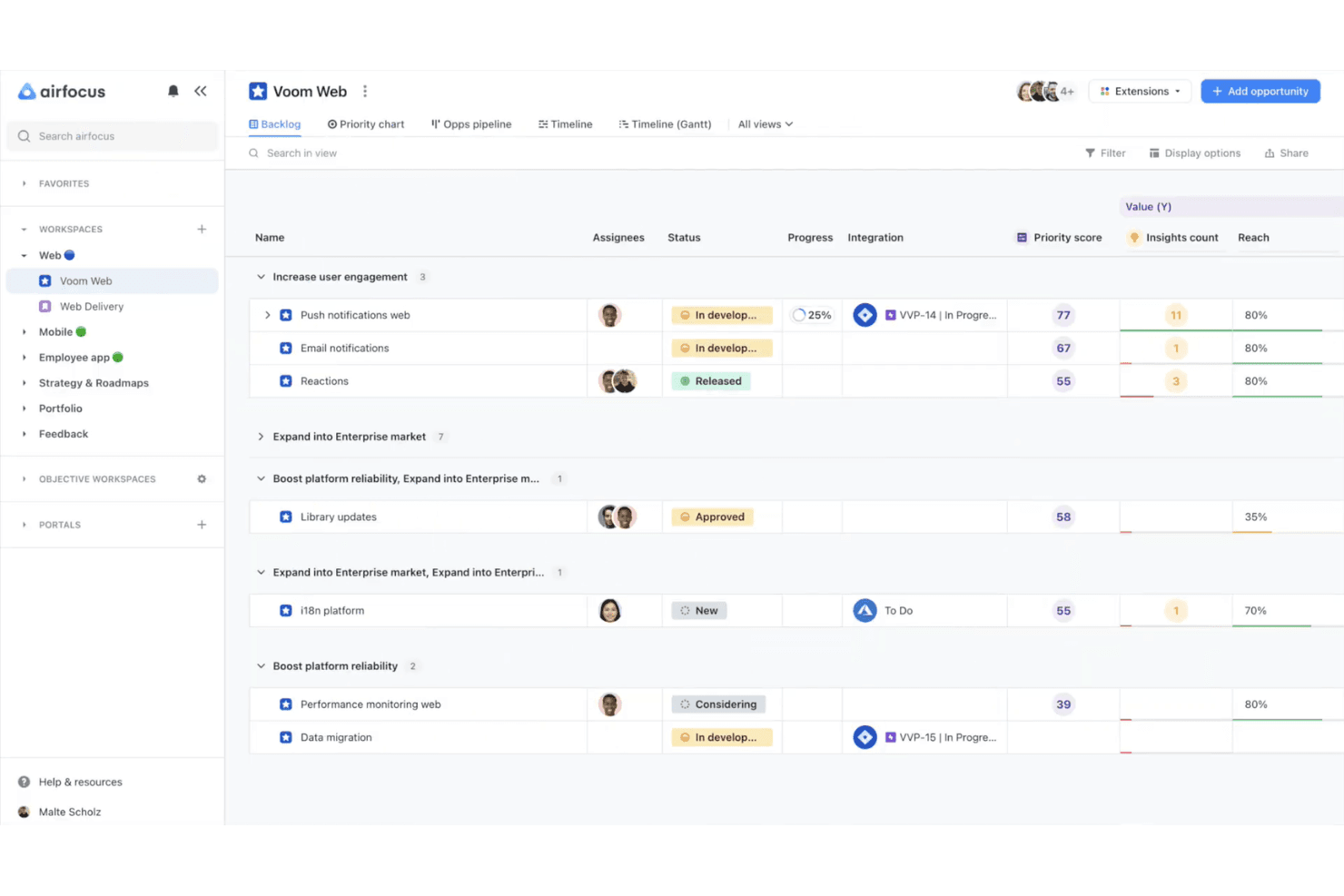
airfocus utmärker sig genom sina flexibla verktyg för prioritering och modulära design, vilket gör det idealiskt för team som söker anpassningsbar produkthantering bortom standardlösningar för produktöversikter.

We review tools independently, and commissions help fund our testing. See our transparency policy, our methodology, or suggest a tool.
airfocus is a product management tool built around prioritization and roadmapping for teams that need to align stakeholders on what to build—and why. It's a good fit when your biggest challenge isn't tracking delivery but making defensible prioritization decisions across competing initiatives. I'd consider it a sharper alternative to Productboard if you want more flexible, customizable prioritization frameworks without the rigidity of a more opinionated platform.
airfocus Evaluation Summary
4.4/5
- Pricing upon request
- Free demo available
Varför du kan lita på våra programvarurekommendationer
6,700+
Reviews
20
Industry experts
16+
Evaluation factors
14
Years
Vårt team har testat och recenserat programvara sedan 2012. Som produktchefer själva vet vi hur svårt — och viktigt — det är att välja rätt programvara.
För den här guiden utvärderade vi verktyg genom praktisk testning och oberoende research, och betygsatte verktygen enligt våra urvalskriterier.
Våra recensioner speglar vårt mänskliga redaktionella omdöme, inte ett säljbudskap.
- Andrew LumbySenior TPM
- Cristiano ValimSenior UI/UX Lead
airfocus Overview
When judging airfocus against other product management software, its modular prioritization tools and customizable roadmaps set it apart for teams seeking flexibility. The interface is clean, and onboarding is straightforward, making it easy for new users to get started. Pricing is competitive for mid-sized teams, and integrations cover the most common SaaS tools.
While advanced reporting and portfolio management are less developed than some alternatives, airfocus excels for organizations that need to adapt processes quickly or manage multiple products. It’s a strong choice if you’re selecting a tool for cross-functional teams or fast-scaling environments.
Pros
- Centralized feedback and insights connect directly to product decisions
- Roadmap and portfolio views support multi-product organizations
- Modular prioritization frameworks adapt to different team needs
Cons
- Portfolio management is less granular than some alternatives
- Capacity planning tools lack depth for large enterprises
- Advanced reporting features are limited compared to some competitors
Is airfocus Right For Your Needs?
Who Would be a Good Fit for airfocus?
airfocus is a strong choice for organizations that need flexible prioritization, modular roadmapping, and centralized feedback management. Its interface and onboarding process make it accessible for cross-functional teams, while its feedback and insights tools help align stakeholders.
Teams that manage multiple products or require adaptable frameworks will find its customizable features especially useful. These strengths make airfocus well-suited for a range of industries and roles that value adaptability and collaboration.
- Mid-Sized TechCompanies Scalable features support growth without overwhelming smaller teams.
- Marketing DepartmentsVisual roadmaps clarify campaign timelines and cross-team dependencies.
- Healthcare TechnologyCentralized feedback tools help align compliance and user needs.
- AgenciesMulti-client portfolio views help manage several projects at once.
- Product Management TeamsCustomizable prioritization and roadmap tools fit evolving product strategies.
- SaaS Startupsairfocus supports rapid iteration and shifting priorities with modular frameworks.
Who Would be a Bad Fit for airfocus?
airfocus may not be the best option for organizations that require deep analytics, highly specialized workflows, or advanced capacity planning. Large enterprises with complex reporting needs or industries with strict regulatory requirements might find its feature set limiting. Teams that need granular portfolio management or highly tailored integrations may also want to consider alternatives.
- Data Science TeamsLimited analytics and visualization tools for complex data-driven projects.
- Government AgenciesPortfolio management lacks the granularity needed for public sector projects.
- Customer Support TeamsFeature set is not tailored for ticketing or case management.
- Manufacturing OperationsDoes not support detailed supply chain or production workflows.
- Financial ServicesLacks specialized compliance and audit trail features for regulations.
- Large EnterprisesAdvanced reporting and capacity planning tools are less developed.
How We Test & Score Tools
We’ve spent years building, refining, and improving our software testing and scoring system. The rubric is designed to capture the nuances of software selection and what makes a tool effective, focusing on critical aspects of the decision-making process.
Below, you can see exactly how our testing and scoring works across seven criteria. It allows us to provide an unbiased evaluation of the software based on core functionality, standout features, ease of use, onboarding, customer support, integrations, customer reviews, and value for money.
Core Functionality (25% of final scoring)
The starting point of our evaluation is always the core functionality of the tool. Does it have the basic features and functions that a user would expect to see? Are any of those core features locked to higher-tiered pricing plans? At its core, we expect a tool to stand up against the baseline capabilities of its competitors.
Standout Features (25% of final scoring)
Next, we evaluate uncommon standout features that go above and beyond the core functionality typically found in tools of its kind. A high score reflects specialized or unique features that make the product faster, more efficient, or offer additional value to the user.
We also evaluate how easy it is to integrate with other tools typically found in the tech stack to expand the functionality and utility of the software. Tools offering plentiful native integrations, 3rd party connections, and API access to build custom integrations score best.
Ease of Use (10% of final scoring)
We consider how quick and easy it is to execute the tasks defined in the core functionality using the tool. High scoring software is well designed, intuitive to use, offers mobile apps, provides templates, and makes relatively complex tasks seem simple.
Onboarding (10% of final scoring)
We know how important rapid team adoption is for a new platform, so we evaluate how easy it is to learn and use a tool with minimal training. We evaluate how quickly a team member can get set up and start using the tool with no experience. High scoring solutions indicate little or no support is required.
Customer Support (10% of final scoring)
We review how quick and easy it is to get unstuck and find help by phone, live chat, or knowledge base. Tools and companies that provide real-time support score best, while chatbots score worst.
Customer Reviews (10% of final scoring)
Beyond our own testing and evaluation, we consider the net promoter score from current and past customers. We review their likelihood, given the option, to choose the tool again for the core functionality. A high scoring software reflects a high net promoter score from current or past customers.
Value for Money (10% of final scoring)
Lastly, in consideration of all the other criteria, we review the average price of entry level plans against the core features and consider the value of the other evaluation criteria. Software that delivers more, for less, will score higher.
Core Features
Modular Prioritization Frameworks
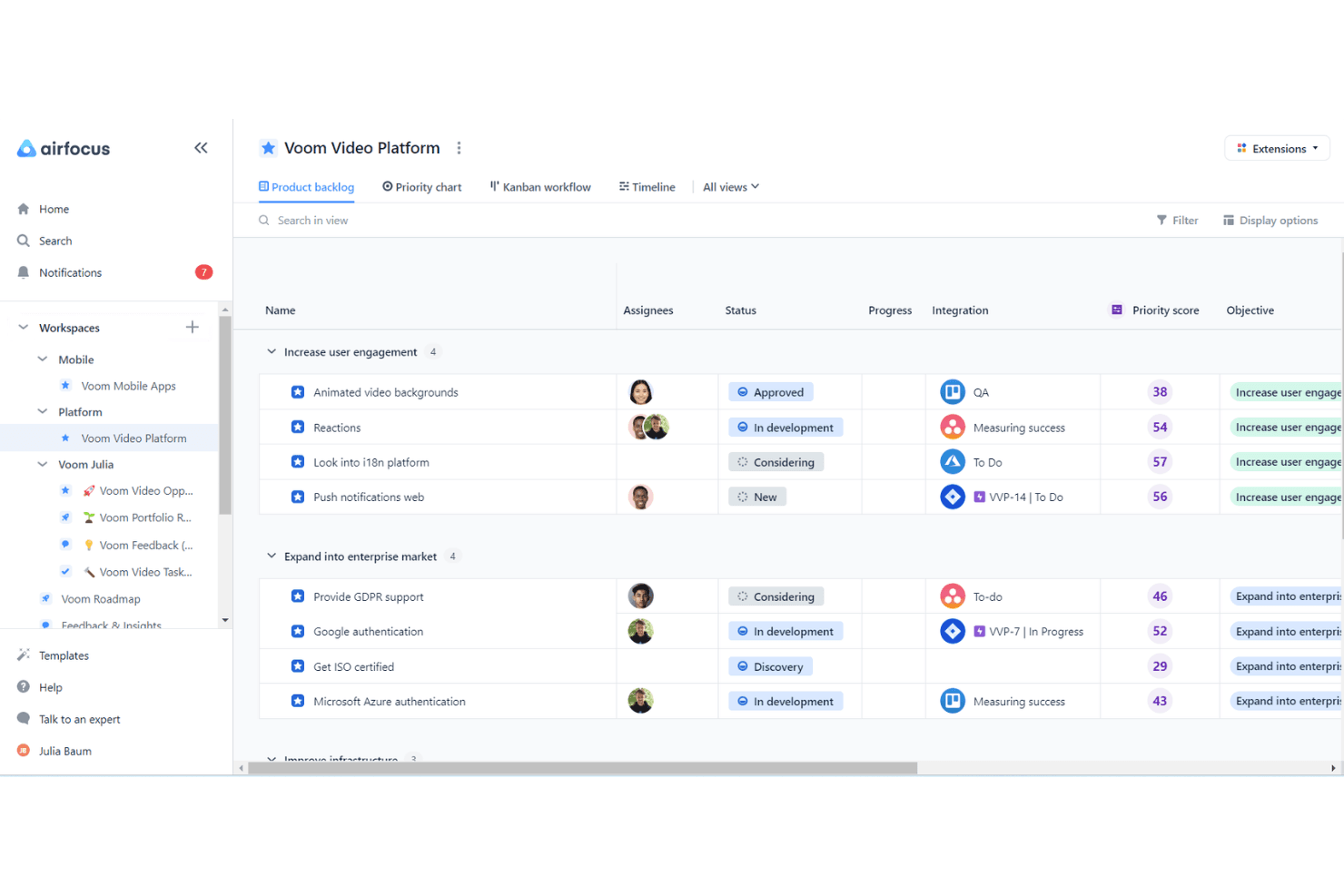
Choose from built-in scoring models or create custom frameworks to rank initiatives. This helps teams align on what to build next based on real criteria.
Roadmapping Tools
Build visual, interactive roadmaps that update in real time as priorities shift. Teams can share these roadmaps with stakeholders for clear alignment.
Centralized Feedback Management
Collect, organize, and link feedback from multiple sources directly to product items. This ensures user insights are always connected to decision-making.
Portfolio Management
View and manage multiple products or projects in one place. This feature supports organizations juggling several product lines or client accounts.
Customizable Workspaces
Set up unique workspaces for different teams, products, or workflows. Each workspace can have its own views, fields, and permissions.
Insights and Reporting
Generate reports and insights from feedback, prioritization, and progress data. While basic, these tools help track trends and inform product strategy.
Ease of Use
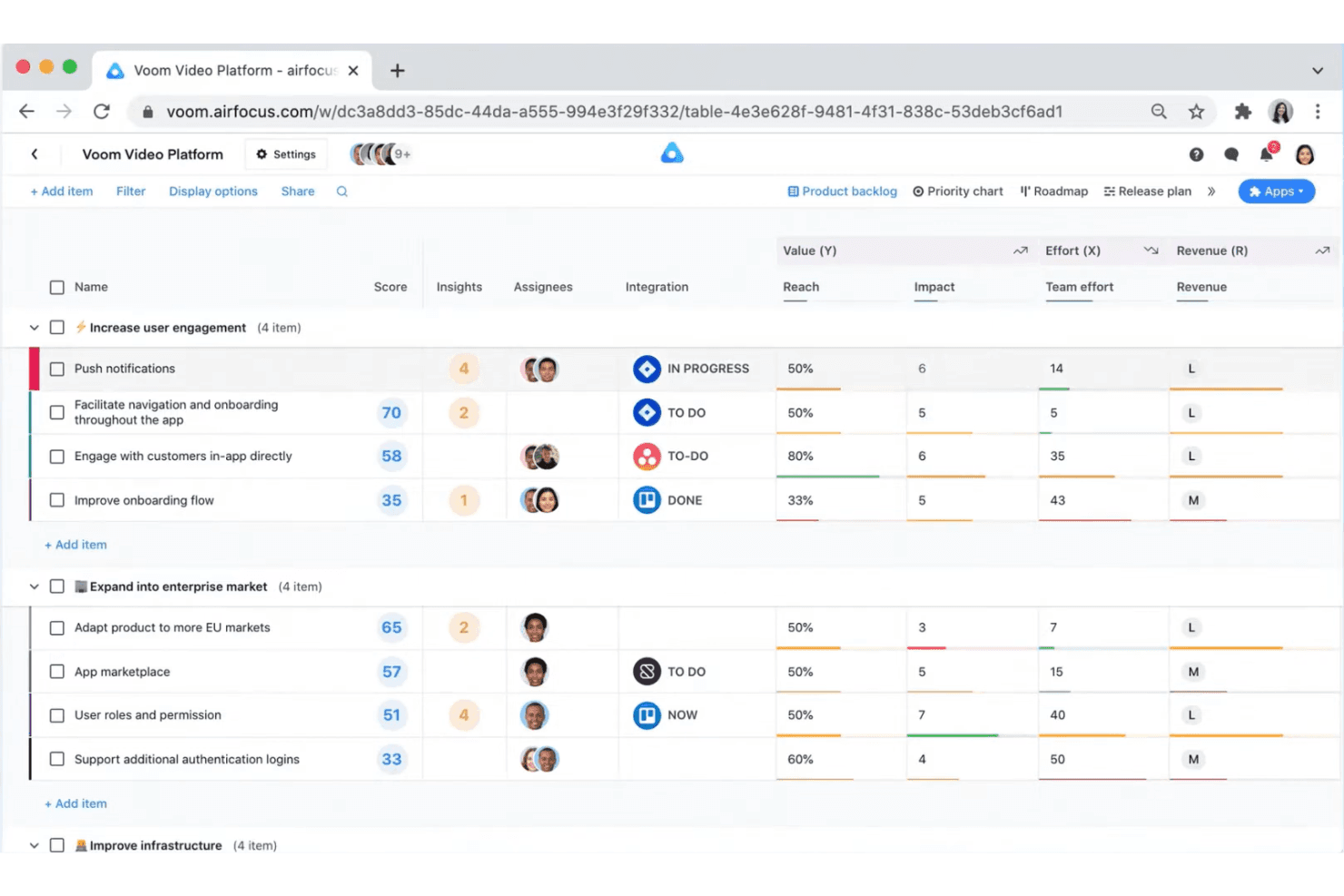
airfocus offers a clean, intuitive interface that helps new users get started quickly, even if they haven’t used product management software before. The drag-and-drop roadmap builder and modular workspace setup simplify complex workflows. Users often mention that onboarding is straightforward, with helpful guides and templates available. While some advanced features require a bit of exploration, most teams find the platform easy to navigate and adapt to their specific processes.
Integrations
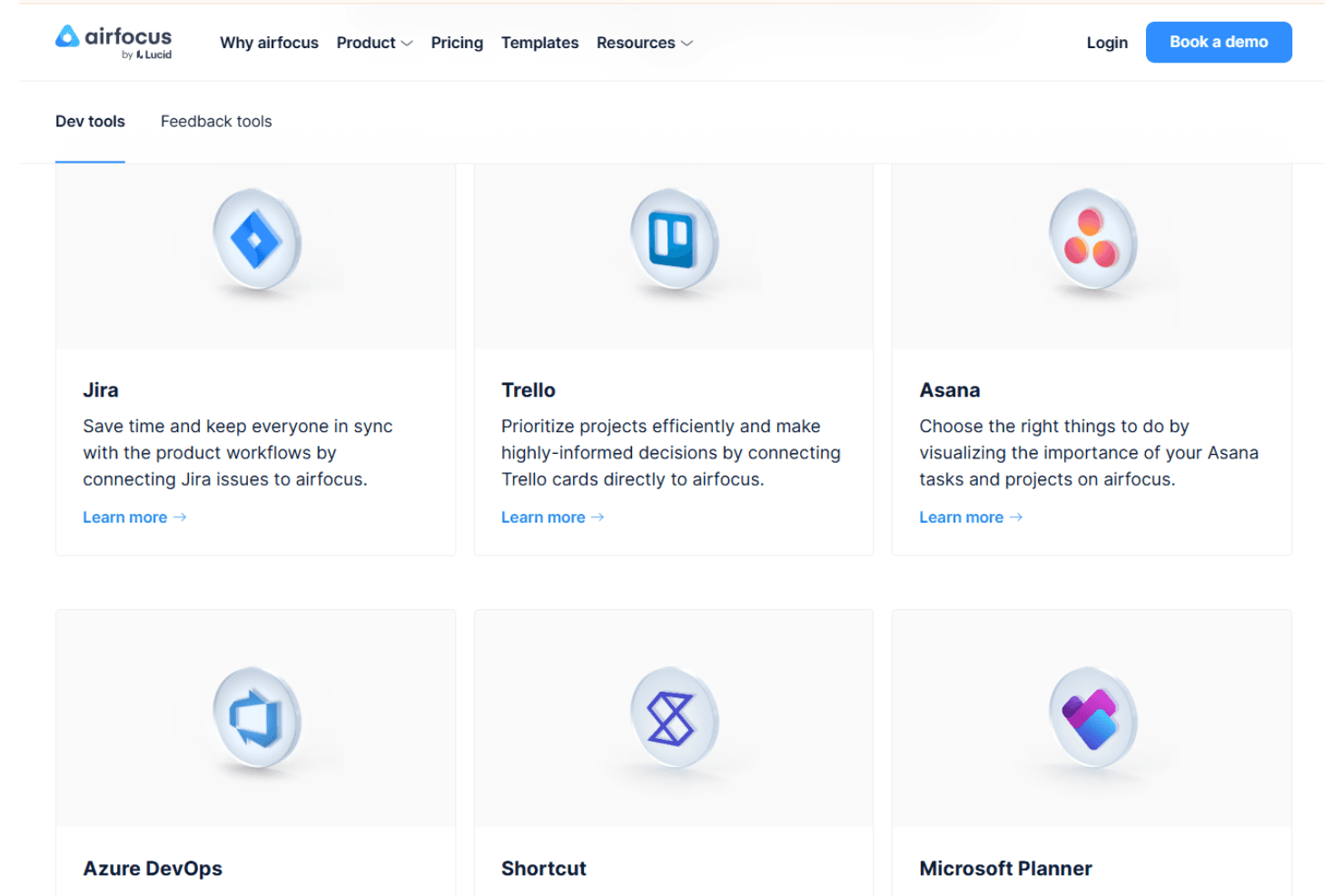
airfocus integrates with Jira, Trello, Asana, Azure DevOps, GitHub, Zapier, Intercom, Slack, Microsoft Teams, and Google Sheets, among others.
airfocus also offers an open API and connects with third-party integration tools for expanded workflow automation.
airfocus Specs
- A/B Testing: No
- API: Yes
- Collaboration Support: No
- Custom Data Forms: No
- Dashboard: Yes
- Dashboards: No
- Data Export: Yes
- Data Import: Yes
- Developer Tools: No
- External Integrations: Yes
- Feedback Management: No
- Gantt Charts: Yes
- Google Apps Integration: No
- Multi-User: Yes
- Notifications: Yes
- Prioritization: Yes
- Product Catalog: No
- Release Management: No
- Reports: No
- Resource Management: No
- Review Monitoring: No
- Roadmapping: Yes
- Scheduling: Yes
- Task Scheduling/Tracking: Yes


