
Adobe Captivate-recension: Fördelar, nackdelar, funktioner och priser
Adobe Captivate utmärker sig när det gäller att skapa interaktivt e-lärandeinnehåll och erbjuder oöverträffad flexibilitet vid integrering av multimedia.

We review tools independently, and commissions help fund our testing. See our transparency policy, our methodology, or suggest a tool.
Adobe Captivate is a learning design software for teams that need to build interactive eLearning courses, software simulations, and responsive content without relying on developer support. I'd consider it over Articulate Storyline if your team needs stronger software simulation features and a tighter fit with the Adobe ecosystem—especially if you're already working inside Creative Cloud and want your authoring tool to slot in naturally alongside those workflows.
Adobe Captivate Evaluation Summary
3.9/5
- From $33.99/month
- Free trial available
Varför du kan lita på våra programvarurekommendationer
6,700+
Reviews
20
Industry experts
16+
Evaluation factors
14
Years
Vårt team har testat och recenserat programvara sedan 2012. Som produktchefer själva vet vi hur svårt — och viktigt — det är att välja rätt programvara.
För den här guiden utvärderade vi verktyg genom praktisk testning och oberoende research, och betygsatte verktygen enligt våra urvalskriterier.
Våra recensioner speglar vårt mänskliga redaktionella omdöme, inte ett säljbudskap.
- Andrew LumbySenior TPM
- Cristiano ValimSenior UI/UX Lead
Adobe Captivate Overview
In my opinion, Adobe Captivate is a solid choice for creating interactive eLearning content, especially if your team values multimedia integration. It excels in offering robust features for experienced users but may present a learning curve for beginners. Compared to other tools, it stands out with its unique multimedia capabilities but might lag in ease of use. It's best suited for training departments and educators who need rich, interactive content. If you're deciding, consider your team's technical comfort and the need for advanced features.
Pros
- It offers advanced multimedia integration for interactive content.
- You can create responsive eLearning projects easily.
- It provides a wide range of templates to speed up design.
Cons
- The interface can feel complex for new users.
- It has a steeper learning curve compared to simpler tools.
- Your team might find limited options for collaboration.
Is Adobe Captivate Right For Your Needs?
Who Would be a Good Fit for Adobe Captivate?
Adobe Captivate is ideal for training departments in large corporations and educators in academia who need interactive eLearning tools. It suits teams that require advanced multimedia integration for engaging content with an emphasis on interactivity. If your work involves creating responsive projects with a variety of templates, Adobe Captivate's feature set can enhance your training or educational programs effectively. Its capability to handle complex eLearning projects makes it a valuable asset for experienced instructional designers.
- Corporate TrainingIt offers interactive content creation, perfect for large companies needing comprehensive employee training programs.
- Higher EducationEducators can create engaging, multimedia-rich courses that appeal to tech-savvy students.
- Freelance DesignersDesigners can leverage its advanced features for diverse client projects requiring custom eLearning solutions.
- Healthcare TrainingYou can develop interactive modules for detailed medical training, essential for healthcare professionals.
- Government AgenciesIt supports detailed compliance training programs with its responsive and multimedia capabilities.
- NonprofitsOrganizations can use it to create engaging training materials for volunteers and staff, enhancing learning experiences.
Who Would be a Bad Fit for Adobe Captivate?
Adobe Captivate might not suit small businesses or startups with limited budgets and minimal technical expertise. Its complex interface can be overwhelming for teams new to eLearning design. If your team needs quick, simple solutions without a steep learning curve, you'll find Adobe Captivate's advanced features excessive and time-consuming. It's not ideal for projects requiring frequent collaboration, as its collaboration features are limited compared to other tools.
- Small StartupsThey may find it too complex and costly for their basic training needs.
- Retail TrainingRetail teams often need quick, straightforward training tools, making Adobe Captivate a cumbersome choice.
- Non-Technical TeamsTeams with limited technical skills might struggle with its advanced features and steeper learning curve.
- Simple ProjectsIf your work involves basic eLearning content, its advanced capabilities might be unnecessary and overwhelming.
- Frequent CollaboratorsTeams requiring constant collaboration will find its limited collaboration tools a hindrance.
- Budget-Conscious UsersThose with tight budgets might not justify the expense for features they won't fully utilize.
How We Test & Score Tools
We’ve spent years building, refining, and improving our software testing and scoring system. The rubric is designed to capture the nuances of software selection and what makes a tool effective, focusing on critical aspects of the decision-making process.
Below, you can see exactly how our testing and scoring works across seven criteria. It allows us to provide an unbiased evaluation of the software based on core functionality, standout features, ease of use, onboarding, customer support, integrations, customer reviews, and value for money.
Core Functionality (25% of final scoring)
The starting point of our evaluation is always the core functionality of the tool. Does it have the basic features and functions that a user would expect to see? Are any of those core features locked to higher-tiered pricing plans? At its core, we expect a tool to stand up against the baseline capabilities of its competitors.
Standout Features (25% of final scoring)
Next, we evaluate uncommon standout features that go above and beyond the core functionality typically found in tools of its kind. A high score reflects specialized or unique features that make the product faster, more efficient, or offer additional value to the user.
We also evaluate how easy it is to integrate with other tools typically found in the tech stack to expand the functionality and utility of the software. Tools offering plentiful native integrations, 3rd party connections, and API access to build custom integrations score best.
Ease of Use (10% of final scoring)
We consider how quick and easy it is to execute the tasks defined in the core functionality using the tool. High scoring software is well designed, intuitive to use, offers mobile apps, provides templates, and makes relatively complex tasks seem simple.
Onboarding (10% of final scoring)
We know how important rapid team adoption is for a new platform, so we evaluate how easy it is to learn and use a tool with minimal training. We evaluate how quickly a team member can get set up and start using the tool with no experience. High scoring solutions indicate little or no support is required.
Customer Support (10% of final scoring)
We review how quick and easy it is to get unstuck and find help by phone, live chat, or knowledge base. Tools and companies that provide real-time support score best, while chatbots score worst.
Customer Reviews (10% of final scoring)
Beyond our own testing and evaluation, we consider the net promoter score from current and past customers. We review their likelihood, given the option, to choose the tool again for the core functionality. A high scoring software reflects a high net promoter score from current or past customers.
Value for Money (10% of final scoring)
Lastly, in consideration of all the other criteria, we review the average price of entry level plans against the core features and consider the value of the other evaluation criteria. Software that delivers more, for less, will score higher.
Core Features
Responsive Design
Using Adobe Captivate, you can create content that automatically adjusts to different devices. This ensures your learners have a consistent experience regardless of screen size.
Multimedia Integration
You can easily incorporate interactive videos, audio, and animations into your projects. This enhances engagement and makes your content more dynamic.
Quiz and Assessment Tools
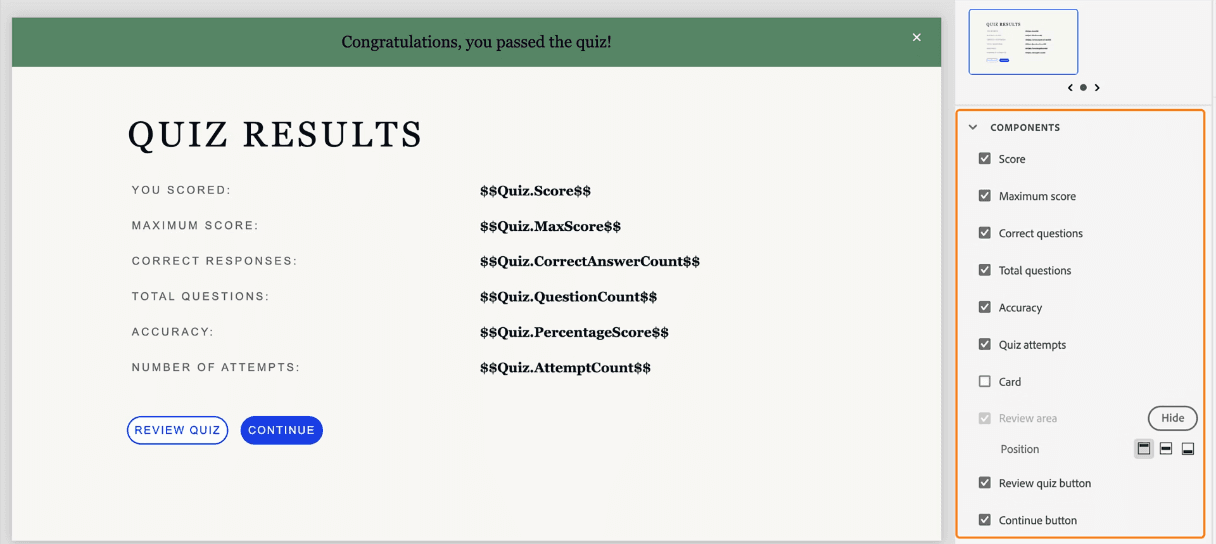
It offers a variety of question types and scoring options. You can track learner progress effectively with built-in analytics.
Drag-and-Drop Interactions
This feature lets you create engaging activities and interactive hotspots that improve learner interaction. It's straightforward and adds a hands-on element to your courses.
Templates and Themes
You get access to a wide range of pre-designed templates. This speeds up your design process and ensures professional-looking content.
SCORM Compliance
It ensures your content is compatible with most Learning Management Systems (LMS). This makes it easier to track and report on learner progress.
Ease of Use
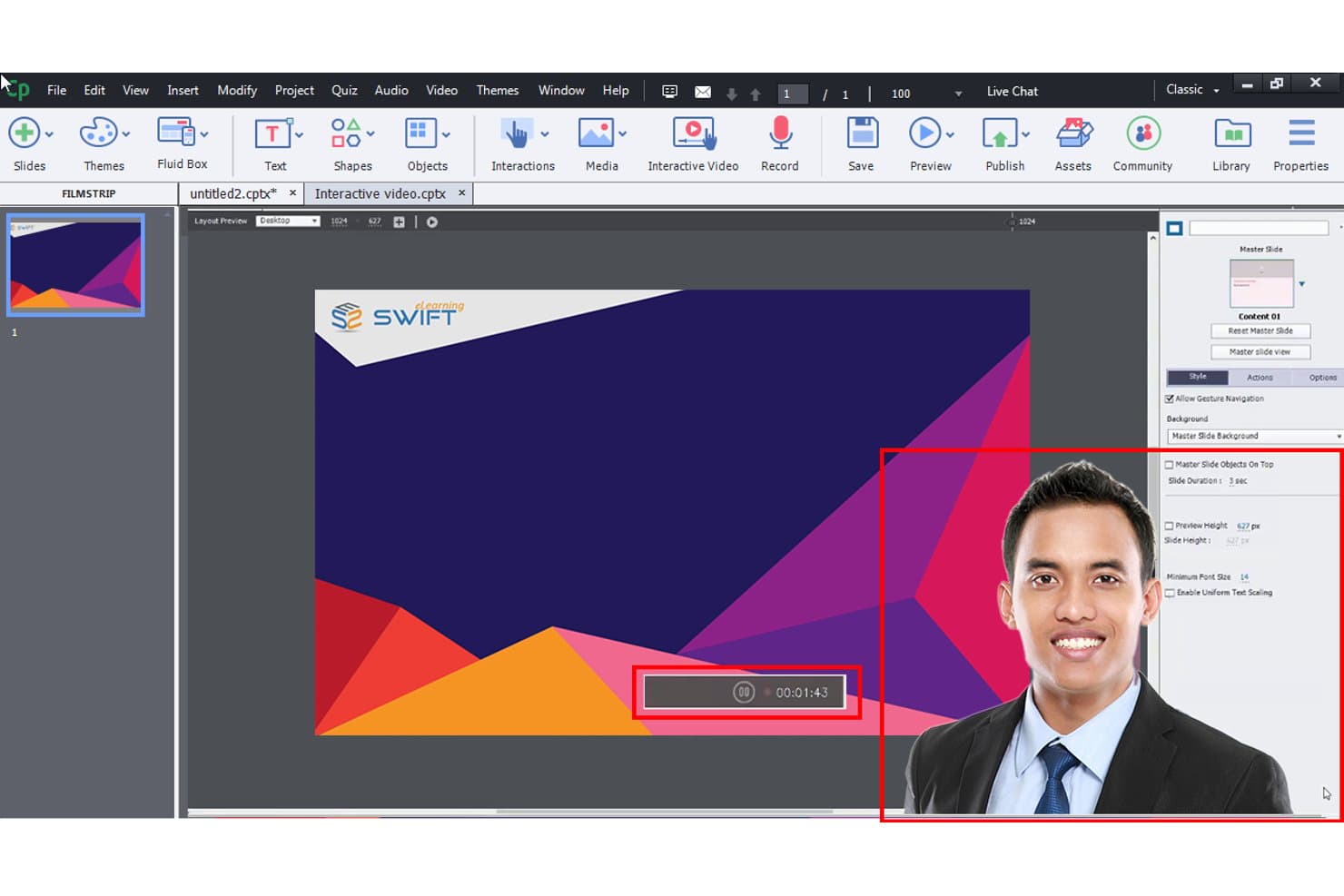
Adobe Captivate can feel complex, especially for new users who aren't familiar with eLearning design tools. While its advanced features offer great flexibility, they come with a steeper learning curve. You might find the interface a bit overwhelming at first, but with time, you'll appreciate the depth of customization it provides. For teams that need powerful multimedia capabilities, the initial investment in learning the software pays off in creating engaging, interactive content.
Integrations
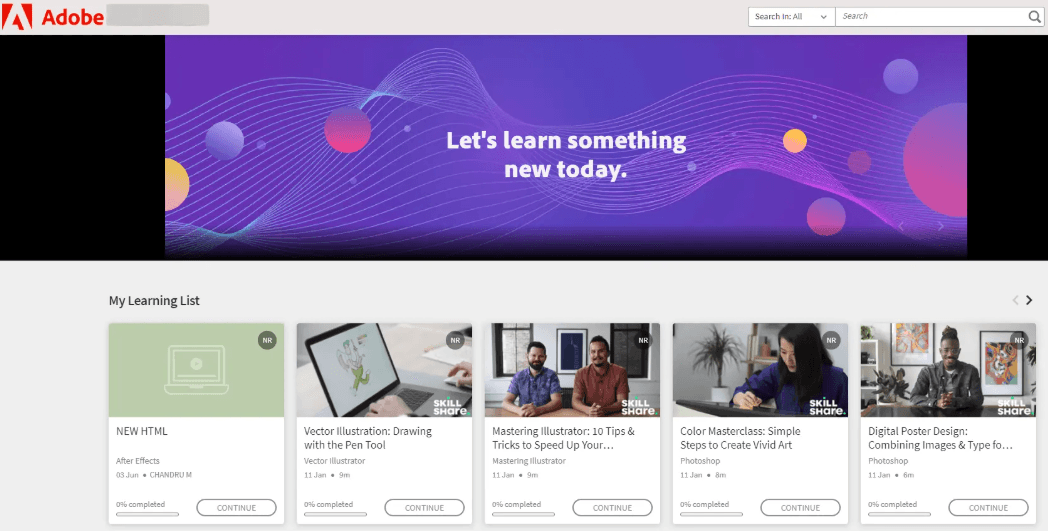
Adobe Captivate integrates with Adobe Connect, Adobe Learning Manager, Adobe Photoshop, Microsoft PowerPoint, Adobe Creative Cloud, Zoom, Google Workspace, Moodle, and Blackboard.
Adobe Captivate also has an API and connects with third-party integration tools.
Adobe Captivate Specs
- API: Yes
- Class Management: No
- Comparative Reporting: No
- Corporate/Business: Yes
- Dashboards: Yes
- Data Export: Yes
- Data Import: Yes
- Data Visualization: No
- Document Comparison: No
- Employee Training: Yes
- External Integrations: Yes
- Feedback Management: Yes
- Gamification: No
- Gradebook: Yes
- Mobile App: No
- Multi-User: Yes
- Notifications: Yes
- Personal Learning: Yes
- Report & Compliance: No
- Report Cards: No
- Scheduling: Yes
- SCORM: Yes
- Student Registration: No
- Video Courses: Yes


