

Uma alternativa sólida ao Adobe Target oferece capacidades fiáveis de testes A/B e personalização que ajudam as equipas a otimizar as experiências digitais sem complexidade desnecessária. Se está à procura das melhores alternativas ao Adobe Target, é provável que procure uma ferramenta de testes A/B que se integre bem no seu ecossistema atual, proporcionando-lhe simultaneamente a flexibilidade para experimentar, personalizar conteúdos e medir resultados de forma eficaz. Neste guia, encontrará soluções bem avaliadas, concebidas para ajudar as equipas a realizar experiências, melhorar as experiências dos clientes e tomar decisões confiantes baseadas em dados.
O que é o Adobe Target?
O Adobe Target é uma plataforma de nível empresarial para testes A/B, personalização e testes multivariados em vários canais digitais. Ajuda as organizações a otimizar os pontos de contacto com os clientes, fornecendo experiências direcionadas com base no comportamento do público e em informações obtidas a partir de dados. Enquanto plataforma de marketing abrangente, o Adobe Target integra-se com uma vasta gama de ferramentas de marketing do ecossistema Adobe, permitindo às equipas personalizar conteúdos e medir o desempenho em experiências na Web e em dispositivos móveis. Funcionalidades como análises, segmentação de públicos e mapas de calor ajudam as empresas a compreender o comportamento dos utilizadores e a tomar decisões de otimização informadas.
Embora seja poderoso, algumas organizações avaliam alternativas com base em fatores como a facilidade de utilização, fluxos de trabalho intuitivos e considerações relacionadas com o modelo geral de preços.
Tabela de comparação das alternativas ao Adobe Target
Esta tabela de comparação destaca os detalhes de preços das minhas principais alternativas ao Adobe Target.
| Tool | Best For | Trial Info | Price | ||
|---|---|---|---|---|---|
| 1 | Best for Bayesian and frequentist stats in one tool | 30-day free trial + free demo available | From $495/month | Website | |
| 2 | Best for privacy-first A/B testing compliance | 15-day free trial + free demo available | From $420/month (billed annually) | Website | |
| 3 | Best for AI-driven testing and feature rollout | 30-day free trial + demo available | Pricing upon request | Website | |
| 4 | Best for ecommerce-focused CRO and testing | 30-day free trial + free demo available | From $350/100k users/month | Website | |
| 5 | Best for server-side feature flag experimentation | Free demo available | Pricing upon request | Website | |
| 6 | Best for real-time AI-driven personalization | Not available | Pricing upon request | Website | |
| 7 | Best for Mastercard-powered audience personalization | Free demo available | Pricing upon request | Website | |
| 8 | Best for AI-driven cross-channel personalization | Free demo available | Pricing upon request | Website | |
| 9 | Best for CRO with managed experimentation support | Free demo available | Pricing upon request | Website | |
| 10 | Best for B2C multi-channel testing and personalization | Free demo available | Pricing upon request | Website |




Why Trust Our Software Recommendations
6,700+
Reviews
20
Industry experts
16+
Evaluation factors
14
Years
Our team has been testing and reviewing software since 2012. As product managers ourselves, we know how difficult—and important—it is to choose the right software.
For this guide, we evaluated tools using hands-on testing and independent research, scoring tools using our selection criteria.
Our reviews reflect our human editorial judgment, not a sales pitch.
Expert reviewers:
- Andrew LumbySenior TPM
- Cristiano ValimSenior UI/UX Lead


Avaliações das melhores alternativas ao Adobe Target
Abaixo encontram-se os meus resumos detalhados das melhores alternativas ao Adobe Target que entraram na minha lista restrita. As minhas avaliações apresentam uma análise detalhada das funcionalidades, capacidades e melhores casos de utilização de cada plataforma, para o ajudar a encontrar a mais adequada para si.
 Best for Bayesian and frequentist stats in one tool
- 30-day free trial + free demo available
- From $495/month
Visit WebsiteCustomer Rating:4.7/5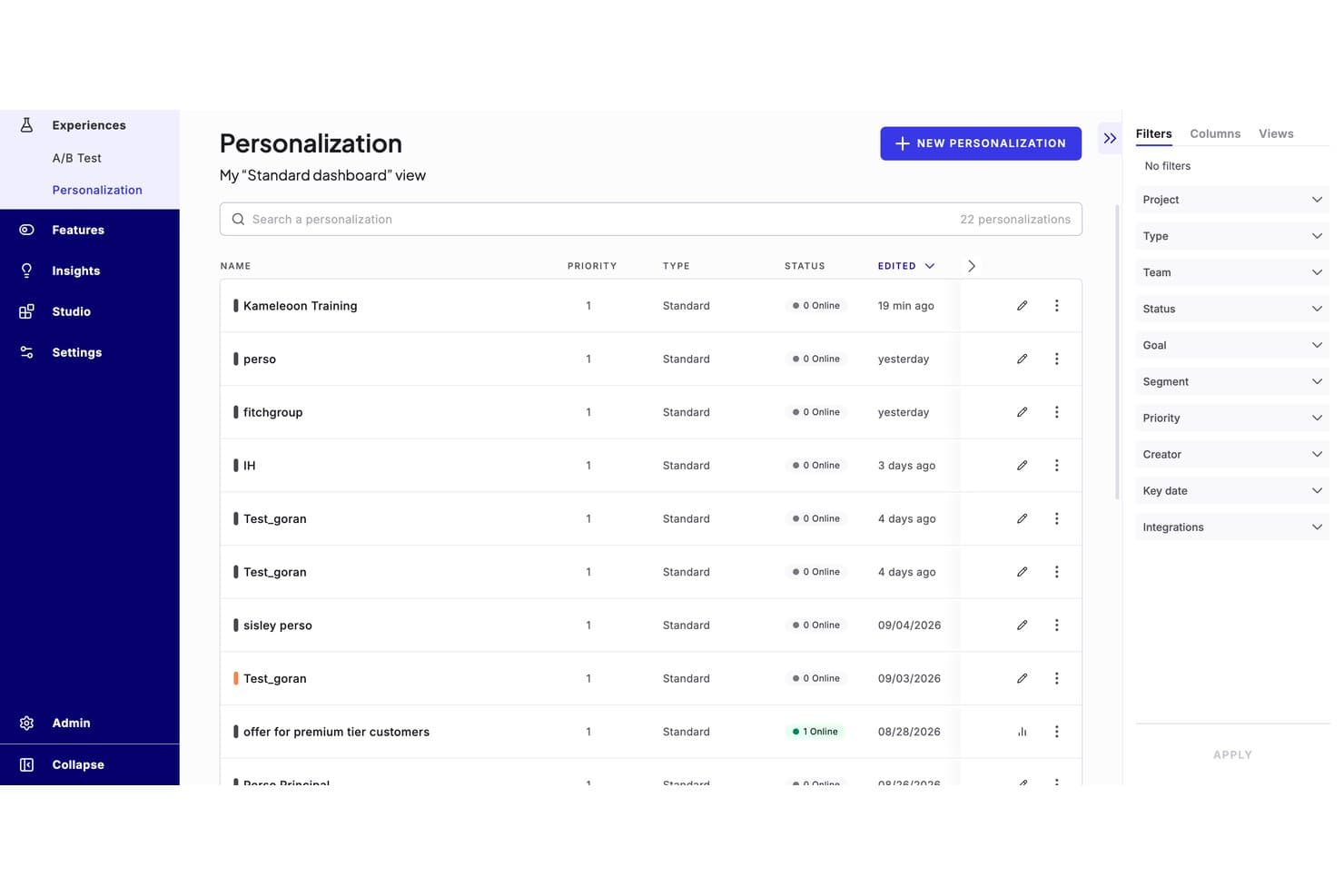
Kameleoon's personalization dashboard centralizes and manages all campaigns. Kameleoon is an experimentation platform for product, marketing, and growth teams that helps businesses test digital experiences, validate product decisions, and improve conversions without relying on Adobe Target.
Who Is Kameleoon Best For?
Kameleoon suits product, growth, and marketing teams that need both Bayesian and frequentist analysis for digital experimentation.
Why Kameleoon Is a Good Best Adobe Target Alternatives
I picked Kameleoon because it’s Best for Bayesian and frequentist stats in one tool. I use its dual statistical approach to evaluate conversion experiments with Bayesian probability or frequentist significance testing. That flexibility helps my team match analysis to the decision, whether we’re iterating quickly or validating a major product change.
Kameleoon Key Features
- Visual editor: Create web experiments without writing code.
- Feature flags: Release product changes to selected users.
- Audience targeting: Build segments using behavioral and contextual criteria.
- Multivariate testing: Test multiple page elements in one experiment.
Kameleoon Integrations
Kameleoon offers native integrations with Adobe Analytics, Google Analytics, Google Tag Manager, Amplitude, Mixpanel, Segment, Contentsquare, Jira, Git, and Shopify Plus. It also connects with Zapier and provides APIs for custom integrations, data synchronization, experiment automation, and product recommendations.
Pros and Cons
Pros:
- Responsive support helps teams launch tests
- Feature flags connect experimentation with product releases
- Bayesian and frequentist analysis in one platform
Cons:
- Setup documentation can be thin
- Test setup can require CSS and JavaScript
Learn more about Kameleoon: Best for privacy-first A/B testing compliance
- 15-day free trial + free demo available
- From $420/month (billed annually)
Visit WebsiteCustomer Rating:4.6/5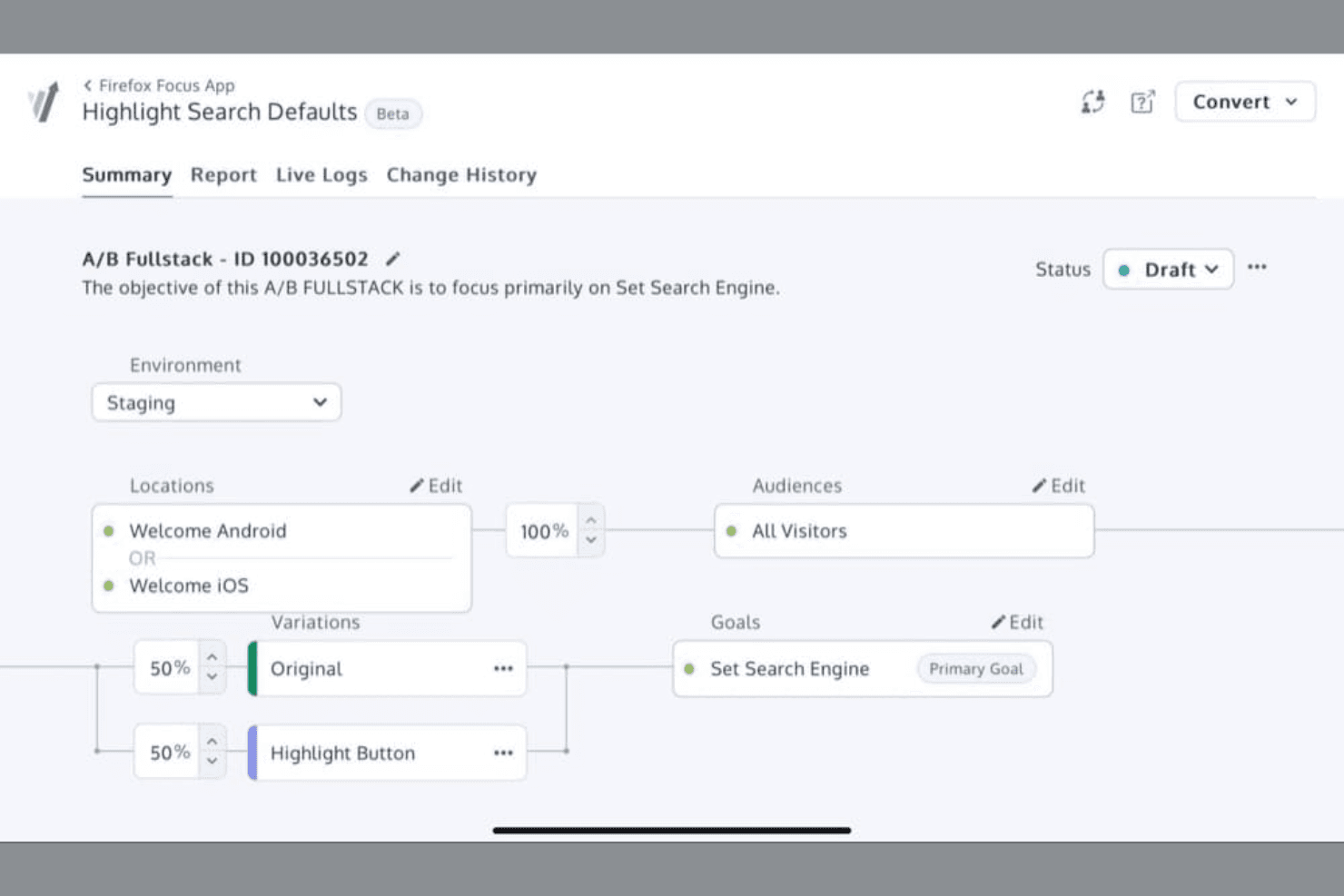
Convert Experiences enables fast A/B tests with minimal setup and overhead. Convert Experiences is an A/B testing platform for product and marketing teams seeking an Adobe Target alternative to test web experiences, personalize journeys, and make data-informed decisions without unnecessary enterprise complexity.
Who Is Convert Experiences Best For?
Privacy-conscious product and marketing teams that need compliant experimentation across websites and digital experiences.
Why Convert Experiences Is a Good Best Adobe Target Alternatives
I picked Convert Experiences because its privacy-first A/B testing compliance fits teams that can’t trade customer trust for experimentation. I use its consent-aware testing, first-party data controls, and privacy-focused tracking to test landing pages without relying on invasive third-party cookies. That makes compliant experimentation easier across markets with strict data protection requirements.
Convert Experiences Key Features
- Visual editor: Create variations without coding.
- Multivariate testing: Test multiple page elements together.
- Multipage experiments: Evaluate changes across complete user journeys.
- Real-time reports: Monitor experiment results as data accumulates.
Convert Experiences Integrations
Convert Experiences supports 90+ integrations, including Adobe Analytics, Google Analytics 4, Amplitude, Segment, Mixpanel, Hotjar, Salesforce, HubSpot, Shopify, and Google Tag Manager, plus Zapier. It also provides an API for custom integrations.
Pros and Cons
Pros:
- Multipage and multivariate tests support complex journeys
- First-party data controls reduce cookie dependence
- Consent-aware testing supports privacy-sensitive experimentation
Cons:
- Reporting can feel less intuitive for beginners
- Enterprise personalization depth trails Adobe Target
Learn more about Convert Experiences: Best for AI-driven testing and feature rollout
- 30-day free trial + demo available
- Pricing upon request
Visit WebsiteCustomer Rating:4.5/5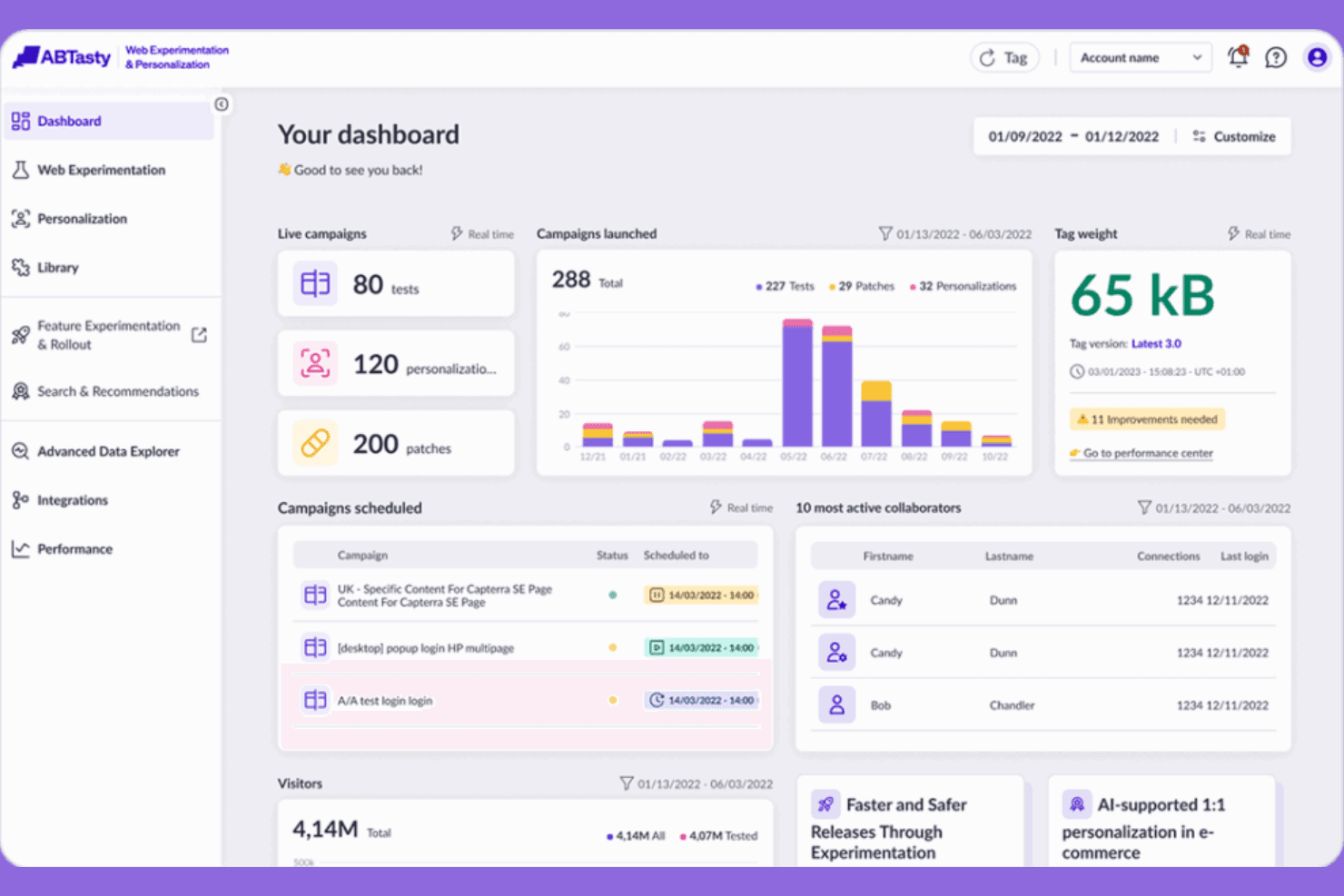
AB Tasty helps teams test and personalize digital experiences using AI insights. AB Tasty is an experimentation and feature management platform for product, marketing, and ecommerce teams seeking an Adobe Target alternative to test digital experiences, validate product ideas, and improve conversion without slowing development.
Who Is AB Tasty Best For?
AB Tasty suits product, marketing, and ecommerce teams that need AI-assisted experimentation and feature rollout across digital experiences.
Why AB Tasty Is a Good Best Adobe Target Alternatives
I picked AB Tasty because its AI-driven testing and feature rollout support connects experimentation with product delivery. I use its experimentation tools to compare experience changes, then apply feature flags for controlled releases and gradual rollouts. This helps my team validate an onboarding update before exposing it to every customer.
AB Tasty Key Features
- Visual editor: Build web experience variants without coding.
- Audience targeting: Define test audiences with behavioral and contextual rules.
- Analytics dashboard: Review test results, conversion metrics, and statistical data.
- Integrations: Connect experimentation data with analytics and marketing platforms.
AB Tasty Integrations
AB Tasty’s Integration Hub includes Google Analytics 4, Adobe Analytics, Segment, Mixpanel, Heap, Amplitude, Tealium AudienceStream, Google Tag Manager, and Microsoft Dynamics 365 Commerce. It also connects with Zapier and provides a public API for custom integrations.
Pros and Cons
Pros:
- Visual editor speeds marketing experiments
- Feature flags support gradual rollouts
- AI-assisted test recommendations
Cons:
- Some reports need clearer statistical detail
- Complex tests require developer intervention
Learn more about AB Tasty: Best for ecommerce-focused CRO and testing
- 30-day free trial + free demo available
- From $350/100k users/month
Visit WebsiteCustomer Rating:4.4/5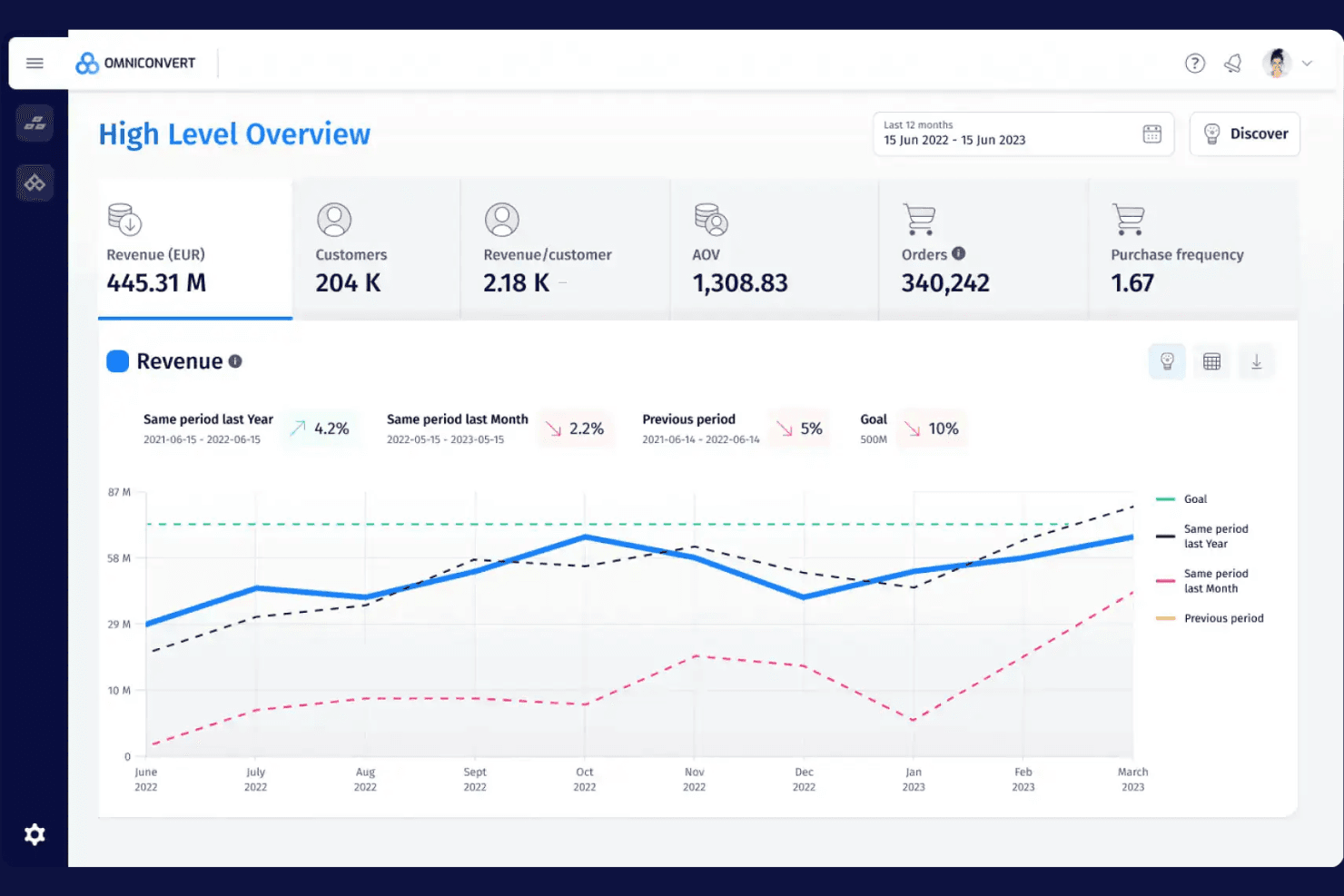
Omniconvert focuses on behavioral data to guide conversion optimization. Omniconvert is an ecommerce experimentation platform that helps marketing and product teams test website changes, understand customer behavior, and improve conversion rates without Adobe Target’s enterprise complexity.
Who Is Omniconvert Best For?
Omniconvert suits ecommerce marketing and product teams that need website experimentation, personalization, and conversion insights without enterprise-level complexity.
Why Omniconvert Is a Good Best Adobe Target Alternatives
I picked Omniconvert because its ecommerce-focused CRO and testing approach connects website experiments with customer behavior insights. I use it to test changes across ecommerce journeys, personalize experiences, and identify which adjustments improve conversion rates.
Omniconvert Key Features
- Visual editor: Build website variations without coding.
- Custom JavaScript: Add scripts to tailor experiment behavior.
- Traffic allocation: Set visitor percentages for each variation.
- On-site surveys: Create customer surveys with customizable questions.
Omniconvert Integrations
Omniconvert offers integrations with Shopify, Google Analytics 4, Klaviyo, SendGrid, Facebook Ads, HubSpot, and Lucky Orange. It also connects with Zapier and provides API access for custom integrations.
Pros and Cons
Pros:
- Responsive support resolves setup questions
- Clear reports support custom experiment goals
- Visual editor launches tests without coding
Cons:
- Some integrations require technical expertise
- Personalization behaves like renamed A/B testing
Learn more about Omniconvert: Best for server-side feature flag experimentation
- Free demo available
- Pricing upon request
Visit WebsiteCustomer Rating:4.2/5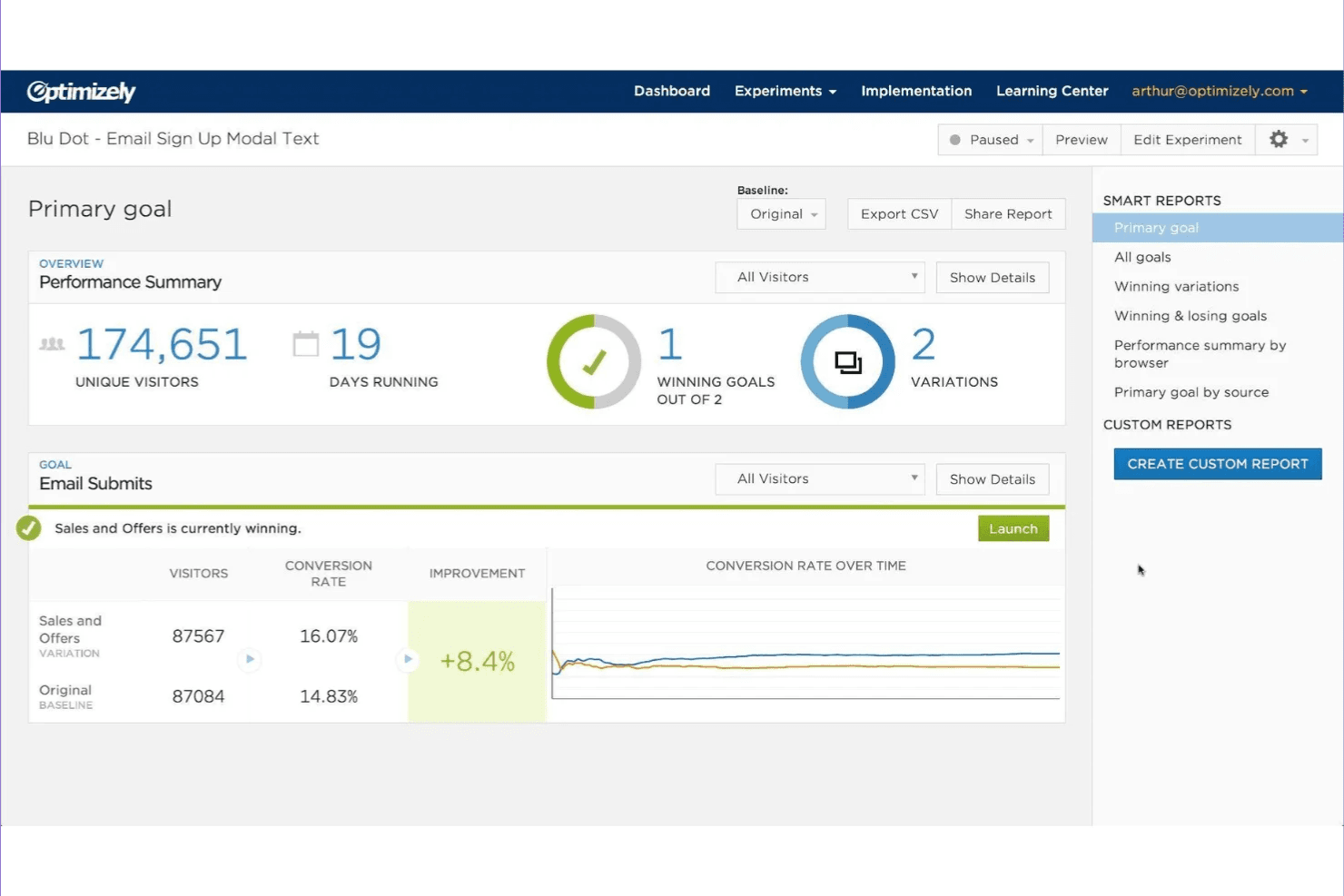
Optimizely combines experimentation with AI-assisted content management. Optimizely is an experimentation platform for product and engineering teams that need to test digital experiences, validate product decisions, and replace Adobe Target with flexible experimentation workflows.
Who Is Optimizely Best For?
Optimizely suits product and engineering teams that need server-side feature flags, controlled rollouts, and experiment-based release decisions.
Why Optimizely Is a Good Best Adobe Target Alternatives
I picked Optimizely because it supports Best for server-side feature flag experimentation across APIs, backend services, and product logic. My team uses feature flags for percentage rollouts, holdout groups, and controlled releases, then measures experiments before exposing changes broadly. This gives us a practical way to test product decisions beyond the browser.
Optimizely Key Features
- Visual editor: Create web experiments without changing source code.
- Audience targeting: Define experiment audiences using behavioral and contextual rules.
- Experiment dashboards: Review performance metrics and statistical results in one workspace.
- Analytics integrations: Connect experiment data with external analytics platforms.
Optimizely Integrations
Optimizely documents integrations with Segment, Tealium, Optimizely CMS (SaaS), Mixpanel, and Google Analytics 4 through Google Tag Manager. It also provides SDKs and APIs for custom integrations.
Pros and Cons
Pros:
- Mature statistical analysis for product decisions
- Flags and experiments share one workflow
- Supports experiments beyond browser experiences
Cons:
- Workspace navigation can feel unintuitive
- Implementation requires ongoing engineering ownership
Learn more about Optimizely:
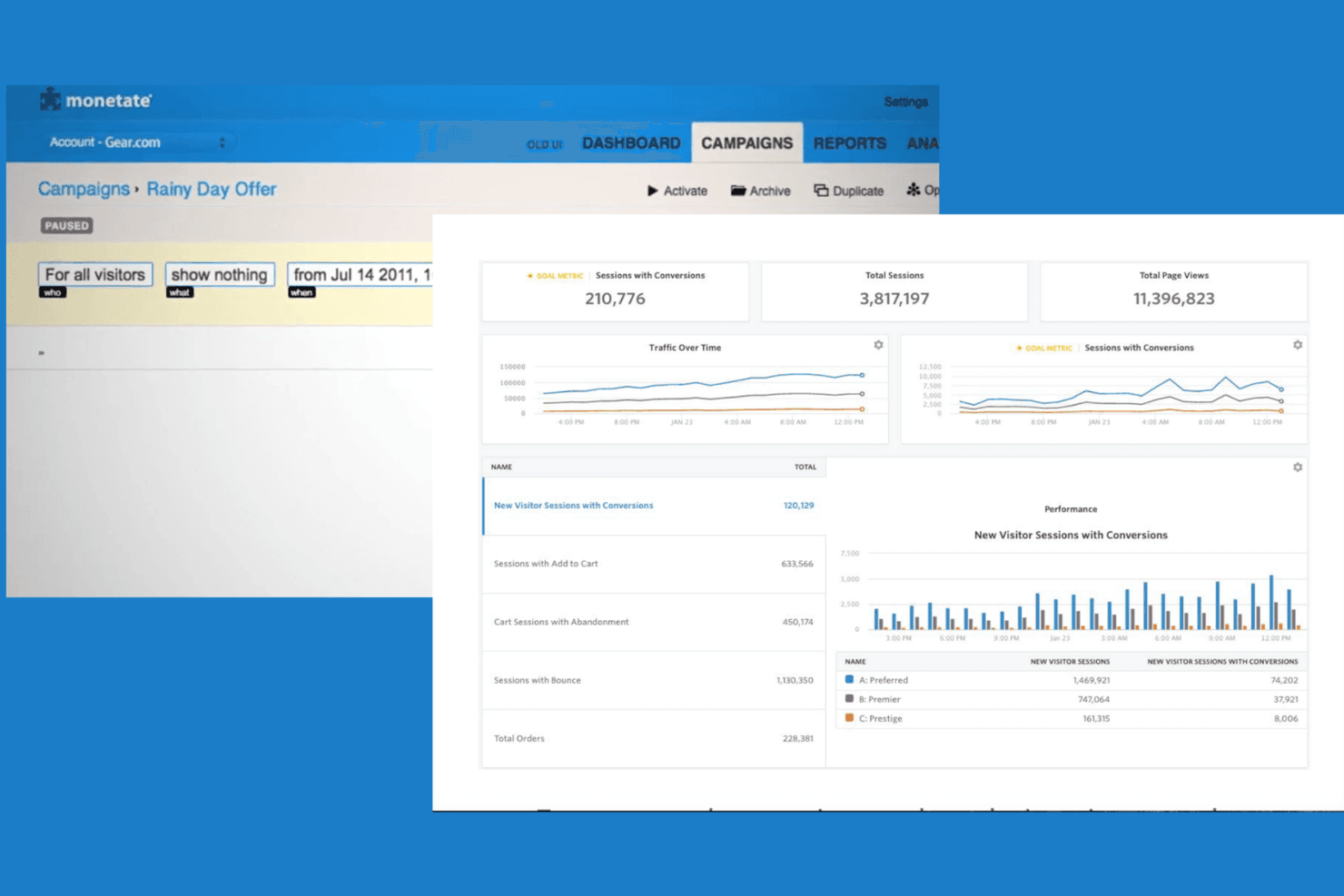
Monetate delivers personalization tests without page flicker issues. Monetate is an A/B testing and personalization platform for product, marketing, and ecommerce teams seeking an Adobe Target alternative to improve digital experiences, test customer journeys, and tailor content across channels.
Who Is Monetate Best For?
Monetate suits ecommerce and marketing teams that need to personalize digital experiences in real time across customer journeys.
Why Monetate Is a Good Best Adobe Target Alternatives
I picked Monetate because it is best for real-time AI-driven personalization. I use its AI decisioning and real-time audience segmentation to tailor product recommendations, content, and offers as shoppers move through an ecommerce journey. Its experimentation tools also help my team compare personalized experiences against control groups.
Monetate Key Features
- Visual editor: Create and modify website experiences without coding.
- Multivariate testing: Test multiple page elements and variations together.
- Audience targeting: Build segments using behavioral and contextual conditions.
- Performance reporting: Review experiment results through configurable analytics reports.
Monetate Integrations
Monetate offers native integration with Google Analytics, including GA4, and supports IBM Digital Analytics, Adobe Analytics, and Contentsquare through its JavaScript API. It also supports custom analytics connections and lists Intershop, Contentstack, and RudderStack as integration partners.
Pros and Cons
Pros:
- Cross-channel experiments cover entire customer journeys
- 150-plus audience targets support granular testing
- Real-time traffic allocation accelerates winning variants
Cons:
- Recommendation strategies can respond inconsistently
- Dashboard navigation confuses first-time users
Learn more about Monetate: Best for Mastercard-powered audience personalization
- Free demo available
- Pricing upon request
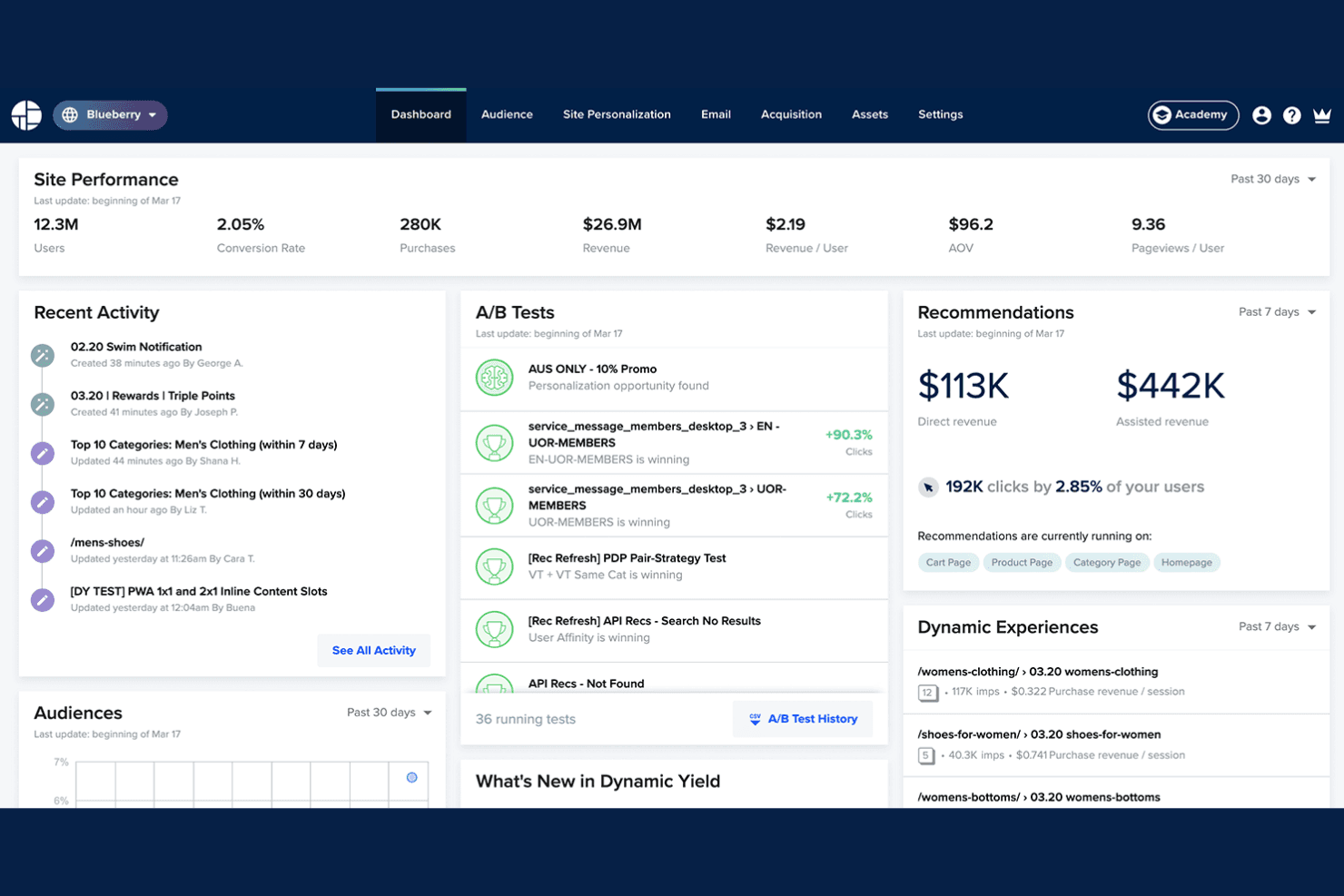
Dynamic Yield uses AI to personalize content and optimize customer journeys. Dynamic Yield is an experimentation and personalization platform for ecommerce, media, and digital product teams that need to test experiences, tailor content, and improve customer journeys across channels.
Who Is Dynamic Yield Best For?
Dynamic Yield fits ecommerce and digital product teams that need Mastercard-powered audience insights to personalize customer experiences across channels.
Why Dynamic Yield Is a Good Best Adobe Target Alternatives
I picked Dynamic Yield because it combines A/B testing with Mastercard-powered audience personalization. I use its audience insights to identify behavioral segments, then tailor recommendations, content, and offers for each group. Predictive audiences also help my team test experiences against likely purchase behavior instead of relying only on broad demographic targeting.
Dynamic Yield Key Features
- Visual editor: Build and modify personalized experiences without coding.
- Recommendation widgets: Configure product, content, and offer recommendation placements.
- Multichannel orchestration: Deliver campaigns across websites, apps, email, and other channels.
- Campaign analytics: Review experiment results, conversion metrics, and audience performance.
Dynamic Yield Integrations
Dynamic Yield offers native integrations with Shopify Plus, Contentful, Tealium AudienceStream, and Segment for personalization, content delivery, and audience synchronization. It also provides Experience APIs and product feed APIs for custom integrations.
Pros and Cons
Pros:
- Recommendation algorithms personalize experiences
- Predictive audiences guide targeted experiments
- Mastercard-powered audience insights
Cons:
- Advanced A/B tests may need custom code
- Initial setup requires dedicated team effort
Learn more about Dynamic Yield: Best for AI-driven cross-channel personalization
- Free demo available
- Pricing upon request
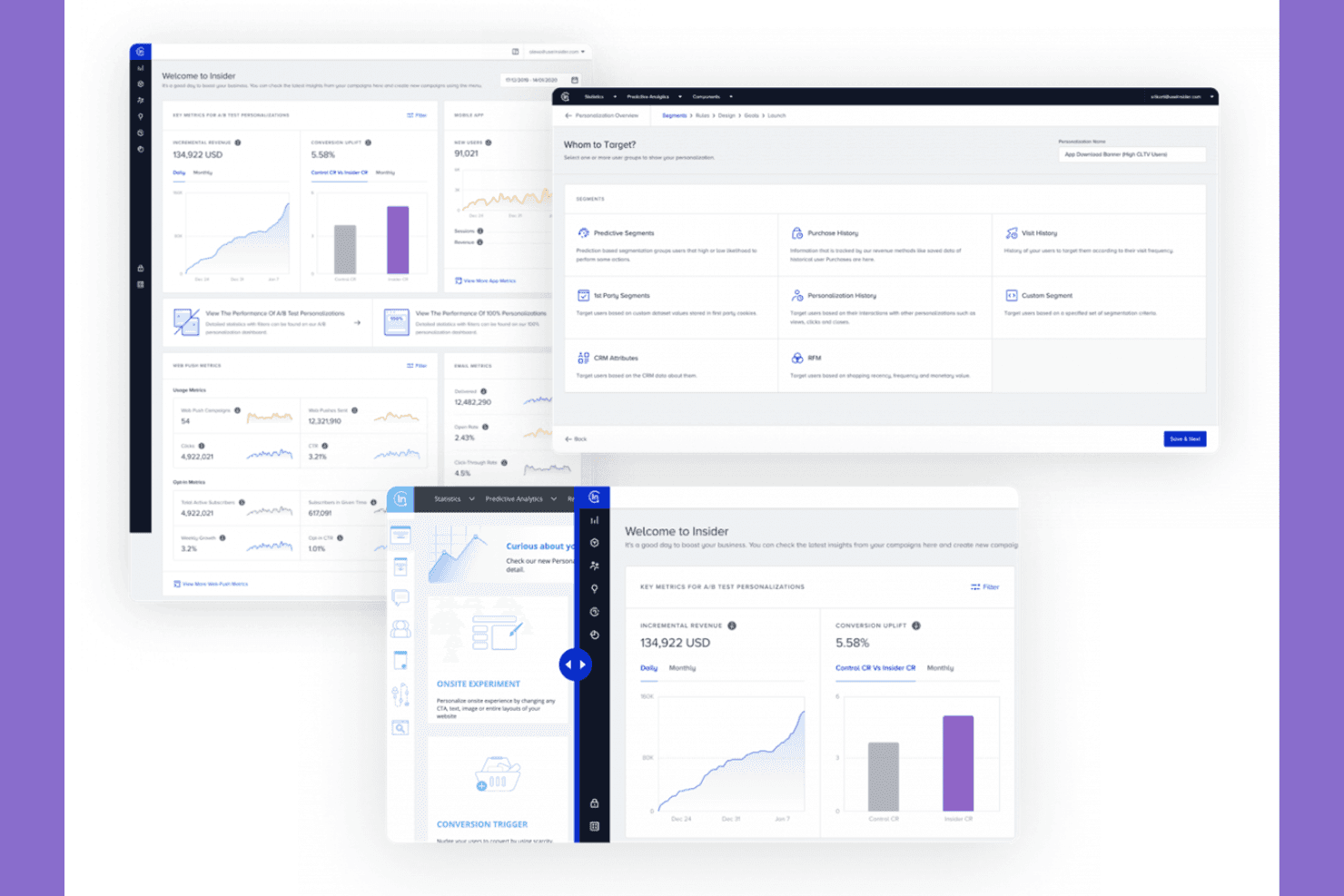
Insider One unifies customer data to power cross-channel personalization. Insider One is an AI-powered personalization platform for ecommerce and enterprise marketing teams that need to test experiences, coordinate customer journeys, and improve engagement across digital channels.
Who Is Insider One Best For?
Insider One suits enterprise ecommerce and marketing teams that need coordinated personalization across web, mobile, email, and other customer touchpoints.
Why Insider One Is a Good Best Adobe Target Alternatives
I picked Insider One because its AI-driven cross-channel personalization supports both experimentation and coordinated customer journeys. I use its web, mobile, and email capabilities to test tailored experiences, then apply insights across touchpoints. That helps my team move beyond isolated A/B tests, such as personalizing an ecommerce journey from product discovery through email follow-up.
Insider One Key Features
- Predictive segmentation: Builds audiences from predicted purchase and churn behaviors.
- Product recommendations: Displays personalized product suggestions across digital experiences.
- Onsite search: Personalizes search results based on shopper intent and behavior.
- Web push notifications: Sends browser notifications triggered by visitor actions.
Insider One Integrations
Insider One offers 100+ native integrations, including Salesforce CRM, Google Analytics, Segment, Shopify, Google Ads, Snowflake, Google BigQuery, Adobe Launch, Microsoft Dynamics CRM, and Zendesk. It also provides APIs for custom integrations.
Pros and Cons
Pros:
- Journey builder reduces dependence on technical teams
- Predictive audiences support behavior-based targeting
- Coordinates personalization across multiple customer channels
Cons:
- Reporting can feel limited for complex analysis
- Advanced features require substantial platform expertise
Learn more about Insider One: Best for CRO with managed experimentation support
- Free demo available
- Pricing upon request
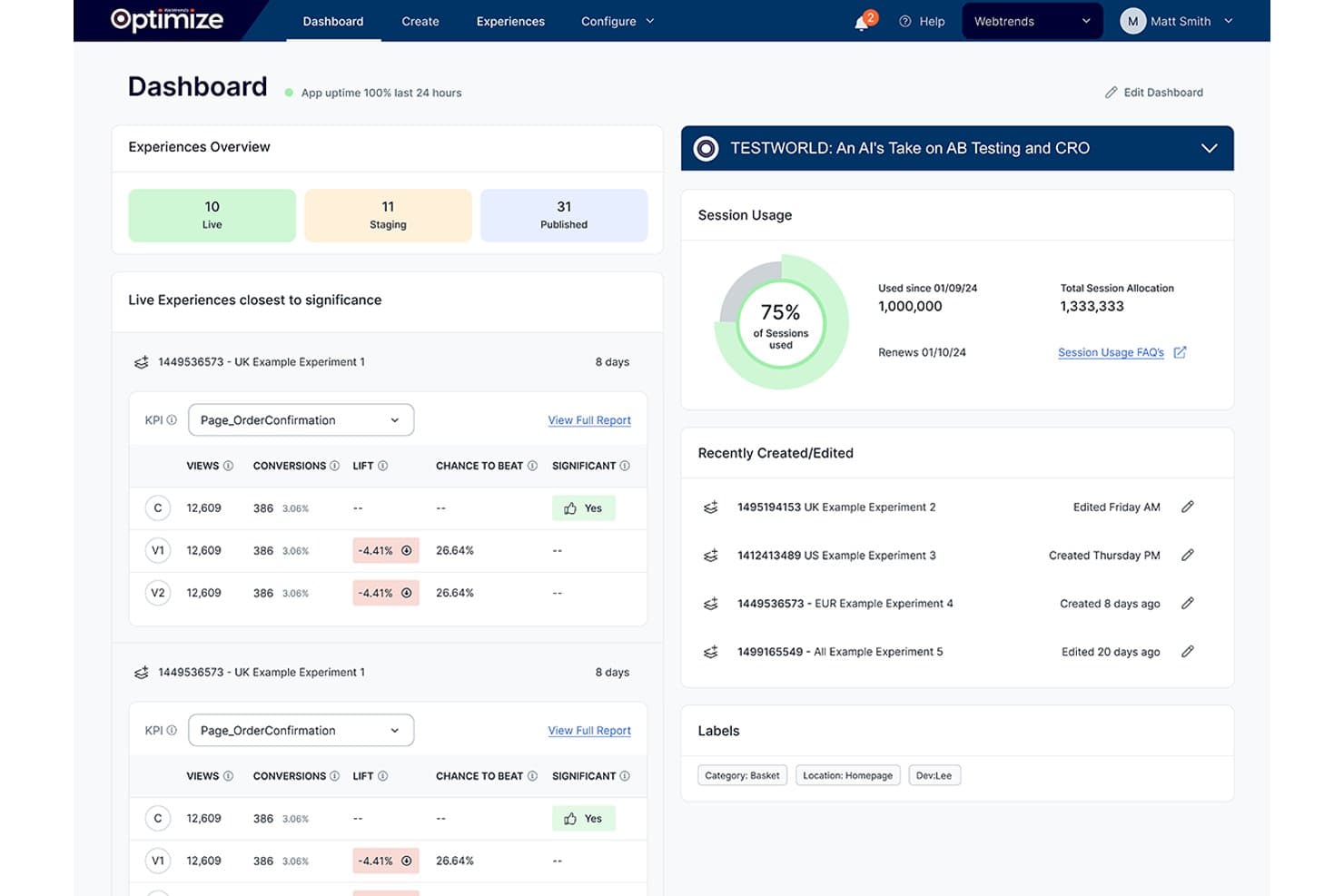
Webtrends centralizes A/B test results and session usage in one dashboard. Webtrends is an A/B testing and experimentation platform for product, marketing, and growth teams seeking an Adobe Target alternative to improve digital experiences, validate changes, and make better conversion decisions.
Who Is Webtrends Best For?
Webtrends suits CRO teams that want managed experimentation support alongside A/B testing and conversion optimization tools.
Why Webtrends Is a Good Best Adobe Target Alternatives
I picked Webtrends because its managed experimentation support complements A/B testing and conversion optimization work. My team can validate product and marketing changes, assess digital experience performance, and use the results to guide conversion decisions. It fits Adobe Target searches when you want CRO support alongside experimentation.
Webtrends Key Features
- Visual editor: Create page variations without writing code.
- Developer editor: Build advanced test variations with custom code.
- Multivariate testing: Test combinations of multiple page elements.
- Server-side testing: Run experiments beyond browser-based experiences.
Webtrends Integrations
Webtrends Optimize documents integrations with Adobe Analytics, Contentsquare, FullStory, GA4, Heap, Hotjar, Microsoft Clarity, Mouseflow, Segment, and Tealium, plus data connections with Salesforce, Snowflake, Shopify, and Databricks. It also supports custom integrations through its documented push and pull integration framework.
Pros and Cons
Pros:
- Developer editor enables advanced test variations
- Server-side testing supports product experimentation
- Managed experimentation support reduces setup burden
Cons:
- Less mature personalization than Adobe Target
- Smaller community than enterprise incumbents
Learn more about Webtrends: 10Best for B2C multi-channel testing and personalization
Insider
- Free demo available
- Pricing upon request
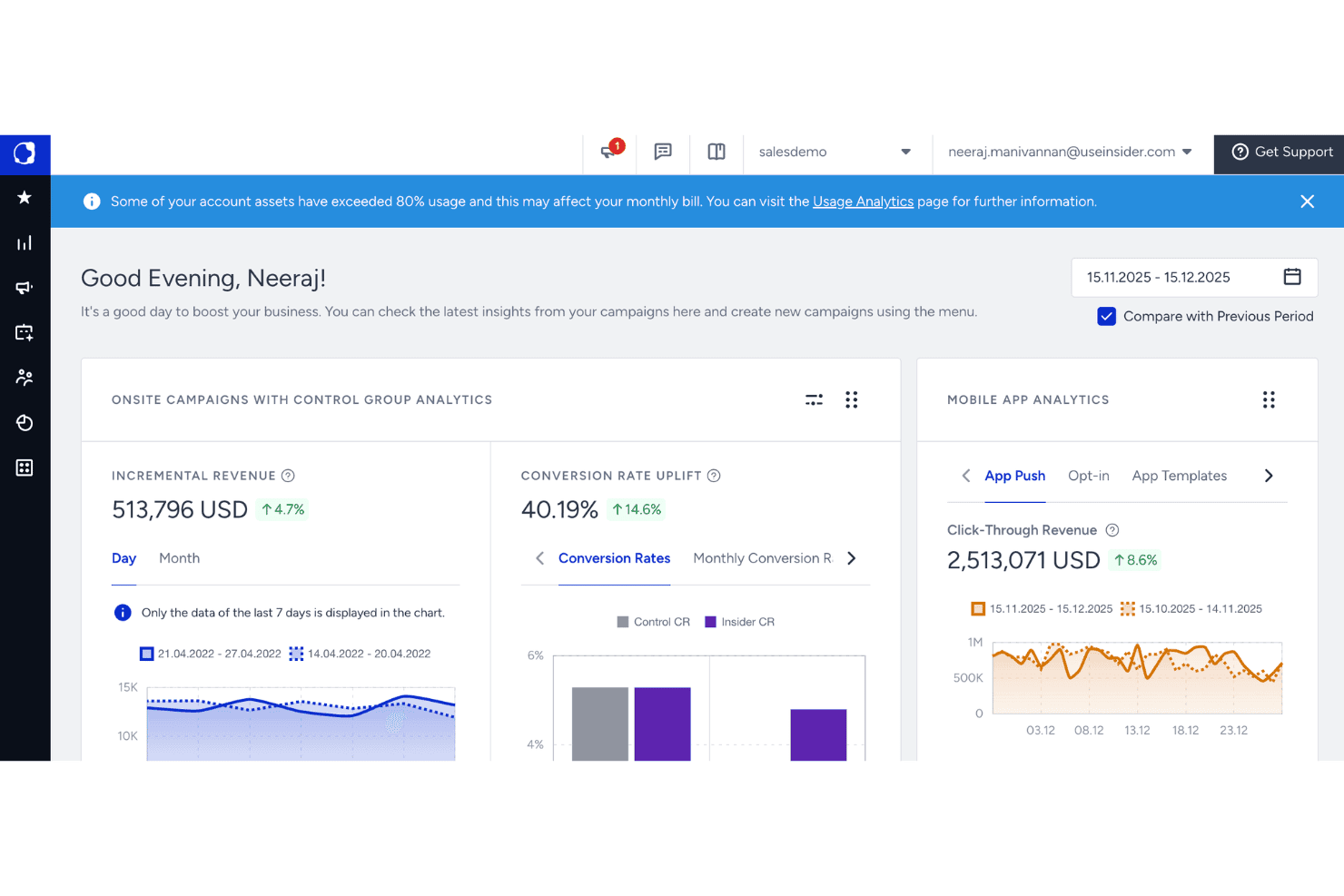
Quantum Metric Felix AI monitors background agents and site health. Insider is an AI-powered experience optimization platform for ecommerce, retail, and marketing teams seeking an Adobe Target alternative for testing customer journeys and improving conversion across digital channels.
Who Is Insider Best For?
Insider suits ecommerce and retail marketing teams that coordinate experimentation and personalized customer journeys across web, mobile, email, and other channels.
Why Insider Is a Good Best Adobe Target Alternatives
I picked Insider because its B2C multi-channel testing and personalization supports coordinated customer journeys across web, mobile, and email. I use its AI-powered experience optimization to test journey variations and tailor product recommendations or messages by customer behavior. That helps my team connect experiments across channels instead of evaluating each touchpoint in isolation.
Insider Key Features
- Visual editor: Create and edit web campaign variants without code.
- Audience targeting: Build segments with behavioral and demographic attributes.
- Experiment analytics: Compare variants using conversion and revenue metrics.
- Integration library: Connect Insider with commerce, CRM, and analytics systems.
Insider Integrations
Insider offers 100+ integrations, including Google Ads, Google Analytics, Segment, Salesforce, Shopify, SendGrid, Mailchimp, Twilio SMS, Zendesk, Snowflake, and Databricks. It also supports APIs, webhooks, and integration platforms such as n8n, Workato, Cyclr, and Albato for custom connections.
Pros and Cons
Pros:
- Supports quick no-code campaign edits
- Smart recommenders tailor onsite product experiences
- Coordinates personalized journeys across multiple channels
Cons:
- Reporting panel requires time to master
- Initial campaign setup can take time
Learn more about Insider:
Outras alternativas ao Adobe Target
Eis algumas opções adicionais de alternativas ao Adobe Target que não entraram na minha lista restrita, mas que vale a pena conhecer:
- 11Wingify (formerly VWO and AB Tasty)Best for CRO teams testing web and server-side
- 12BloomreachBest for CDP-driven cross-channel testing
- 13Webtrends OptimizeBest for all-inclusive CRO without feature tiers
- 14GrowthBookBest for warehouse-native open-source experiments
- 15StatsigBest for product experimentation and analytics
- 16Salesforce Marketing CloudBest for CRM-connected campaign personalization
- 17EppoBest for warehouse-native product experimentation
- 18Fibr AIBest for multi-page AI journey personalization
- 19MidaBest for marketer-led web experimentation
- 20Amplitude Feature ExperimentationBest for unified feature flags and experiment analysis
How I Evaluate Adobe Target Alternatives
I split my evaluation into three parts. First—and most important—I check whether a tool can run controlled A/B and multivariate tests and deliver targeted experiences to specific audience segments; those are the core capabilities any alternative must match. Then I look for standout features like stats engine flexibility and unified flag management. Finally, I consider pricing transparency and onboarding support.
Core Functionality (Table Stakes For This List)
When I'm selecting tools for my list, I score each one on a scale from 0 (does not offer the functionality) to 5 (excels in this area) for each core functionality listed below. I then convert the total into a percentage to help assess each tool's overall fit, with extra weight on any functionalities I’ve deemed essential.
- A/B & Multivariate Testing (Essential): I look for clear experiment setup and statistical results, including tests of different page layouts, content, or checkout flows.
- Audience Targeting & Personalization (Essential): I assess whether teams can target experiences by behavior, context, or audience segment, such as showing tailored offers to returning visitors.
- Visual Editor: I check whether teams can build common page variations, such as changing a headline or layout, without developer help for every edit.
- Analytics & Reporting: I look for conversion metrics, statistical confidence, and segment-level results that help teams decide whether to ship, revise, or stop a test.
- Data & Marketing Integrations: I assess how the tool connects with analytics, customer data platforms, or content systems to use audience and behavioral data.
- Multi-Channel Delivery: I check whether teams can test or personalize experiences across relevant surfaces, such as web and mobile apps.
Once I have a list of tools that meet the criteria, I consider what sets each platform apart.
Differentiating Factors (What Sets Vendors Apart)
Here's how I compare and contrast different vendors:
Standout Features
I check whether a tool combines feature flags with A/B testing in one workflow. When your team can progressively roll out a new checkout flow and measure its impact without switching platforms, you avoid the coordination tax of stitching separate systems together. I also evaluate stats engine flexibility—platforms like Eppo and Statsig offer both Bayesian and Frequentist models, which matters when you need sequential testing for fast-moving experiments or CUPED variance reduction to reach significance with smaller samples. Warehouse-native architecture is another factor I look for, since owning your experiment data alongside product metrics means you're not locked into a vendor's reporting layer.
Beyond Features
I evaluate how each platform's pricing scales with experimentation volume—some charge per tracked user, which can spike costs when you expand tests across multiple product surfaces. I also check whether experiment data can live in your own warehouse, since joining test results with product metrics matters for long-term portability and compliance. Finally, I look at onboarding support: teams early in their experimentation practice need guardrails and templates to avoid misreading statistical results, while mature teams need the flexibility to define custom metrics without vendor lock-in.
Critérios de seleção das alternativas ao Adobe Target
Ao selecionar as melhores alternativas ao Adobe Target para incluir nesta lista, tive em consideração as necessidades e os pontos problemáticos comuns dos compradores relacionados com produtos alternativos ao Adobe Target, como a otimização das taxas de conversão dos sítios Web e a possibilidade de implementar experiências rapidamente. Utilizei também o seguinte modelo para manter a minha avaliação estruturada e justa:
Funcionalidade principal (25% da pontuação total)
Para ser considerada para inclusão nesta lista, cada solução tinha de cumprir estes casos de utilização comuns:
- Lançar testes A/B e multivariados
- Personalizar o conteúdo do sítio Web para segmentos de público
- Gerir sinalizadores de funcionalidades e lançamentos
- Medir os resultados das experiências com análises
- Direcionar conteúdos para utilizadores com base em dados comportamentais
Funcionalidades adicionais de destaque (25% da pontuação total)
Para restringir ainda mais a concorrência, procurei também funcionalidades únicas, como:
- Ajuste automático da redução da variância CUPED
- Sinalização e experimentação ao nível da infraestrutura
- Registo de decisões e trilhos de auditoria
- Processamento analítico nativo do armazém de dados
- Reprodução de sessões em tempo real com sobreposição da experiência
Usabilidade (10% da pontuação total)
Para ter uma noção da usabilidade de cada sistema, considerei os seguintes aspetos:
- Processo de configuração de experiências claro e intuitivo
- Design consistente e navegação fácil
- Esforço mínimo de engenharia para os profissionais de marketing
- Permissões granulares e gestão de fluxos de trabalho
- Interface responsiva em diferentes dispositivos
Integração inicial (10% da pontuação total)
Para avaliar a experiência de integração inicial de cada plataforma, considerei os seguintes aspetos:
- Tours guiados do produto ou listas de verificação de integração inicial
- Disponibilidade de vídeos de formação atualizados
- Acesso a modelos de migração e código de exemplo
- Webinários úteis de integração inicial ou sessões em direto
- Base de conhecimento de autosserviço e apoio por chat
Apoio ao cliente (10% da pontuação total)
Para avaliar os serviços de apoio ao cliente de cada fornecedor de software, considerei os seguintes aspetos:
- Vários canais de apoio, incluindo chat ou e-mail
- Tempos rápidos de resposta — e de resolução
- Acesso a apoio técnico de engenharia
- Acompanhamento proativo do sucesso do cliente
- Processo de escalamento claro para problemas críticos
Relação qualidade-preço (10% da pontuação total)
Para avaliar a relação qualidade-preço de cada plataforma, considerei os seguintes aspetos:
- Estrutura de preços transparente e previsível
- Planos flexíveis para empresas de diferentes dimensões
- Sem complementos obrigatórios para a experimentação principal
- Descontos para compromissos anuais ou crescimento
- Limites de utilização justos para testes e sinalizadores de funcionalidades
Avaliações dos clientes (10% da pontuação total)
Para ter uma noção da satisfação geral dos clientes, considerei os seguintes aspetos ao ler as avaliações dos clientes:
- Satisfação com as funcionalidades principais de teste
- Capacidade de resposta ao feedback e às atualizações do produto
- Estabilidade e fiabilidade das experiências
- Elogios ou reclamações sobre a experiência de apoio
- Perceção da curva de aprendizagem e facilidade de integração inicial
Por que motivo procurar uma alternativa ao Adobe Target?
Embora o Adobe Target seja uma boa opção entre as alternativas ao Adobe Target, existem vários motivos pelos quais alguns utilizadores procuram soluções alternativas. Poderá estar à procura de uma alternativa ao Adobe Target porque…
- Os custos são demasiado elevados para a sua escala atual
- A sua equipa precisa de uma integração de engenharia mais simples
- As opções de personalização dos fluxos de trabalho de experimentação são limitadas
- Os relatórios e a análise parecem demasiado restritivos para as suas necessidades
- Os prazos de implementação são demasiado longos para uma iteração rápida
- O apoio da plataforma fora da América do Norte é insuficiente
Se alguma destas situações lhe é familiar, veio ao sítio certo. A minha lista inclui várias opções alternativas ao Adobe Target mais adequadas para equipas que enfrentam estes desafios com o Adobe Target e procuram soluções alternativas.
Principais funcionalidades do Adobe Target
Eis algumas das principais funcionalidades do Adobe Target, para o ajudar a contrastar e comparar o que as soluções alternativas oferecem:
- Testes A/B: Realize experiências controladas mostrando diferentes versões do site a utilizadores segmentados, recolhendo dados para determinar qual a variação que gera melhores resultados.
- Testes multivariados: Teste combinações de vários elementos numa página em simultâneo, analisando de que forma diferentes conjuntos influenciam o comportamento dos utilizadores e ajudando a otimizar layouts complexos.
- Motor de personalização: Disponibilize conteúdos e experiências adaptados a segmentos de público específicos, utilizando dados em tempo real para aumentar as taxas de interação e conversão.
- Tomada de decisões automatizada: Utilize algoritmos de aprendizagem automática para selecionar automaticamente os conteúdos ou experiências mais eficazes para cada visitante, otimizando continuamente os resultados.
- Direcionamento de experiências: Utilize regras avançadas de direcionamento baseadas em perfis de utilizadores, comportamentos e fatores contextuais para determinar quais as experiências ou mensagens a apresentar.
- Editor visual: Faça alterações às páginas Web e configure experiências sem programação, utilizando uma interface intuitiva de arrastar e largar acessível a utilizadores sem conhecimentos técnicos.
- Biblioteca de públicos: Crie, gira e reutilize segmentos de público em diferentes experiências e campanhas, melhorando a eficiência e a consistência das estratégias de direcionamento.
- Análise e relatórios avançados: Aceda a informações detalhadas sobre o desempenho através de painéis de controlo em tempo real e relatórios pormenorizados, facilitando a medição e a apresentação dos resultados das experiências.
- Testes de aplicações móveis: Estenda as funcionalidades de teste e personalização às aplicações móveis, permitindo às equipas otimizar as plataformas Web e móveis a partir de uma única solução.
- Integração com o Adobe Experience Cloud: Ligue-se diretamente a outras ferramentas de marketing e análise da Adobe para obter dados unificados, informações mais aprofundadas e uma orquestração fluida dos fluxos de trabalho.