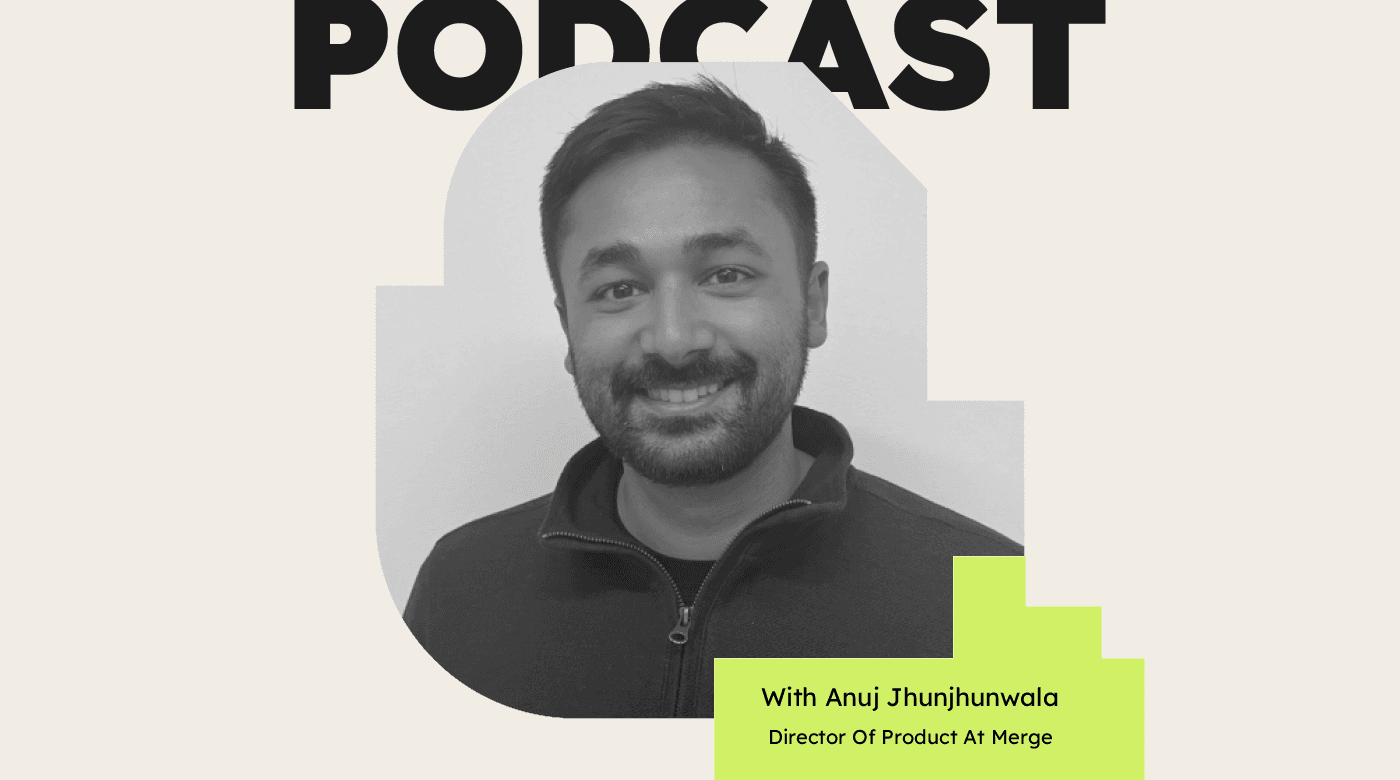

Michael Luchen is joined by John Carter, Founder, and Principal of TCGen Inc. He has been a widely respected adviser to technology firms over his career. He has advised some of the most revered technology firms in the world: Abbott, Amazon, Apple, BOSE, Cisco, Fitbit, HP, IBM, and Roche. Listen to learn how to cultivate innovation in product.
Interview Highlights:
- John Carter leads a story career, new product development. He's advised many incredible organizations including Apple, where he helped create the Apple new product process which is used by Apple today. Amazon, HP, IBM, Fitbit, and Bose, where he was the chief engineer and inventor of the widely popular Bose noise-canceling headphones. Today, he is the founder and principal of TCGen, a Silicon Valley management consulting firm focused on product development. [1:00]
- John also serves on the board of directors at Cirrus Logic, a leading supplier of mixed signals semiconductors. He is also the author of Innovate Products Faster: Graphical Tools for Accelerating Product Development. [1:32]
- John is also on the Forbes business council, where he recently published the Forbes article, Looking For Innovation In All The Wrong Places? Inventing Outside The Core. [1:45]
- What John learned from working with clients as well as his corporate experience is that there's often a focus on something totally new, something that hasn't been imagined, or the resources are consumed on, just feeding the feature, training, and managing the releases. What he really noticed was that there's an opportunity for greater wallet share. [2:16]
- The extended product is not only the core product, but it includes things like the brand, support reliability, and comfort. [3:29]
- The augmented product is a much more all encompassing term because it is both the core product, the extended product, and then additional services or features that you can add on top of the product set in order to extract more value. [3:50]
- FedEx, basically, in the game to dominate overnight shipment. They're competing against United Parcel Service and US Postal Service. [4:50]
- There's this model that this Japanese professor and leader taught called the Kano Model and basically what he says is, the lighters of today will be the must be of tomorrow. [6:51]
Identifying those things that delight consumers is often a key role in how to be successful.
John Carter
- Organizations in general think of the total product as the product, the core deliverable, maybe some service and support and maybe customer success. In other words, they draw the boundaries too tightly around what they view is the product. [7:16]
- A trap that many marketing folks get into, which John called checkbox marketing or the notion of feature parody, or seeing a competitive entrance into the field and simply comparing their feature set with yours, they're solving the wrong problem. [8:29]
The biggest strategic thing that firms should do, is in fact, allocate budget for innovation.
John Carter
- The rules of thumb that John uses is 10% of a product development or 1% of sales, whichever you can afford or whichever one is more reasonable for you. Make sure you have a budget to support product innovation. Ideally, although innovation is no individual's job function. Everybody should be innovating. [9:40]
- The first thing you want to do in terms of directing innovation is think about strategic alignment. This is a common mistake, many customers, many firms rather simply respond to the last customer or the biggest customer. [10:54]
- If you look at fundamentally how you would direct innovation besides the budget allocation, John thinks that first and foremost is strategic alignment. In other words, you have a vision and you have a strategy. So you want to make sure that your innovation is congruent with the strategy. [11:38]
- Leverage your core infrastructure. John often calls it platform leverage, and this includes distribution channels that could include your technology capabilities, but basically it leverages the brand capability that your organization has. [11:56]
Try out a strategic alignment platform leverage and move the needle as being three ways to direct innovation in the most fruitful way.
John Carter
- If you don't have strategic alignment, you're pretty much dead in the water. And if you don't have platform leverage, in other words, you can advantage the brands basically right to compete or be privileged in the marketplace. You're wasting a huge opportunity. [12:51]
If you have a value proposition, some aspects of that value proposition are driven by unique selling points.
John Carter
- There's a rule of thumb for mature companies, which is 70% core, 20% adjacent products and 10% breakthrough products. And startups it's probably 30% core and 70% in the transformational category. [14:59]
- In the tech world, you always look at things like churn rate and ARR growth Annual Recurring Revenue Growth. But if you generalize that, one of the most important metrics is very simple, to actually keep track of and that is how much net new sales have you gotten from this differentiable idea. [15:41]
- Clayton Christensen talks about this among others, and that is, that customers saw a shop for a job to be done or a service to be delivered. [18:33]
- The product strategy is one in which emphasizes innovation, but also commands very high margin and high prices. But not all companies are innovators. Other companies are low cost producers. Try and do an adequate job, but go for the lowest cost. That's their product strategy. [20:53]
Even if you're a low cost producer, there are great ways in which you can augment what you do and what you offer to consumers.
John Carter
- If you combine the systematic deliberate investment and innovation, say 1% of share revenue mentioned, the ways in which you can best realize the greatest value is customer visits in the environment of use, sometimes called customer inquiry. [25:11]
- When John was working on the house headphones and he worked with Dr. Bose to come up with this early concept of active noise reduction, they didn't call it that. They called it a servo system around headphones and they thought the primary benefit of the headphones would be that they'd sound better. [25:56]
- Customer inquiry - it's a way to focus where these innovations may take place in terms of augmented features or other services that would help consumers in their job. [28:23]
Setting the bar with your organization to encourage your leaders to take risks, but strive to move the needle, is another way in which to motivate and channel your organization towards the complete solution.
John Carter
- Jake Knapp at Google Ventures came up with something called Design Sprint, which you may use it at Crema. [29:51]
- John's favorite way that organizations can innovate outside the core is focus. [31:57]
Focus on these areas that are more fragile, where you may not have a real customer set, but really focus on innovation.
John Carter
- At TCGen.com, they have some great in-depth guides on product development strategy and the augmented product that might get you going here. [33:28]
A smaller set of people should be focused on this fundamental differentiation in terms of what we would call innovation, not improvement.
John Carter
- John's personal habits that have contributed the most to his success is selective neglect. It has served him well, both in terms of living his life as well as on the workfront, because you can't do everything and it's a terrible disservice to try and do half a job on everything. And so you have to choose what you work on and try to bend the arc of the universe. And you can do that through selective neglect. [34:36]
- John's favorite tool that he uses regularly is Google docs. [35:06]
- John's advice to someone at the start of their product management journey is just because you're different, it doesn't mean you're better. But on the other hand, to be better implies you're different from the rest of the pack. [35:44]
Just because you're different, it doesn't mean you're better. But on the other hand, to be better implies you're different from the rest of the pack.
John Carter
Guest Bio:
John Carter has been a widely respected adviser to technology firms over his career. John is the author of Innovate Products Faster: Graphical Tools for Accelerating Product Development. As Founder and Principal of TCGen Inc., he has advised some of the most revered technology firms in the world:
- Abbott, Amazon, Apple
- BOSE, Cisco, Fitbit
- HP, IBM, Roche
He specializes in the value creating aspects of product development – from the strategy and innovation processes, through product definition, execution and launch. He has helped companies cut time to market, rapidly scale their product program, and improve innovation with customer-led insights, leading to greater profitability, reduced costs, and improved customer satisfaction.
John currently serves on the Board of Directors of Cirrus Logic (CRUS) a leading supplier of mixed signal semiconductors where he is involved with company strategy and sits on the Compensation and Audit Committees.
He was the founder of Cambridge-based Product Development Consulting, Inc. (PDC), a consultancy advising Fortune 500 companies in the areas of research, development, and marketing. During his time there, he worked with Apple to create the Apple New Product Process (ANPP) which is used in all product divisions. He has been an invited speaker at MIT and Stanford University, and a member of the faculty at Case Western’s Executive program.
Before starting PDC, John was Chief Engineer of BOSE Corporation. John is the inventor of the Bose Noise Cancelling Headphones and shares the original patent with Dr. Amar Bose. He was one of the initial contributors in BOSE’s entry into the automobile OEM business and led the product and business development of BOSE’s patented noise reduction technology for the military market.
He earned his MS in electrical engineering from the Massachusetts Institute of Technology and a BS in engineering from Harvey Mudd College in Claremont, CA.

Getting a cross-functional team together with the customer, not selling, not designing a product, but trying to understand the challenges in the environment of use and get the customer empathy, is really key.
John Carter
Resources from this episode:
- Subscribe to The CPO Club newsletter
- Check out Cirrus Logic
- Check out TCGen
- Connect with John on LinkedIn
- Follow John on Twitter
- Send John an email at jcarter@tcgen.com
Related articles and podcasts:
- Article: 3 Useful Types of Product Roadmaps and How to Build Them
- Article: The 7 New Product Development Stages [Guide]
- Article: How To Create A Customer Empathy Map [With Template]
- Article: 5 Parts Of A Product Development Strategy [With Examples]
Read the Transcript:
We’re trying out transcribing our podcasts using a software program. Please forgive any typos as the bot isn’t correct 100% of the time.
Michael Luchen
It’s so easy to rigorously focus on the single problem that your product is trying to solve. It makes sense. So to speak, for your product team to only focus on the customer journey within the solution you’re building specific to the product. However, what if you knew that solution was the, for that solving for that problem only represented a small fraction of what you should focus on.
What if you’re not considering aspects outside your core product that could fundamentally impact if you’re able to deliver business results or not. We’re very fortunate to have an incredibly special guest with us today who will unpack what these things are that we should focus on outside the core product. Stay tuned.
This is the Product Manager Podcast. The voices of a community that’s writing the playbook for product management, development and strategy. We’re sponsored by Crema, a digital product agency that helps individuals and companies thrive through creativity, technology, and culture. Learn more at crema.us.
Keep listening for practical, authentic insights to help you succeed in the world of product management.
So today we’re very fortunate to have
John Carter joining us. For those who don’t know, John leads a story career, new product development. He’s advised many incredible organizations including Apple, where he helped create the Apple new product process, which is used by Apple today. Amazon, HP, IBM, Fitbit and Bose, where he was the chief engineer and inventor of the widely popular Bose noise canceling headphones. Today, he is the founder and principal of TCGen, a Silicon Valley management consulting firm focused on product development.
John also serves on the board of directors at Cirrus Logic, a leading supplier of mixed signals semi-conductors. John is also the author of Innovate Products Faster: Graphical Tools for Accelerating Product Development.
And John is also on the Forbes business council, where he recently published the Forbes article, looking for innovation in all the wrong places and venting outside the core. I’m so excited to join everyone listening in today to learn from John about inventing outside the core.
John, welcome to the show.
John Carter
Hey, Michael.
Michael Luchen
So innovation on the total product. Would it be okay if we talk about this for a bit?
John Carter
Sure.
Michael Luchen
So in your article, you start talking off about the need to innovate existing products. What did you learn from that?
John Carter
Well, what I learned in this is from working with clients is as well as my corporate experience is that there’s so often a focus on something totally new, something that hasn’t been imagined, or the resources are consumed on, just feeding the feature, train, and managing the releases.
And what I really noticed was that there’s an opportunity for greater wallet share. And that is by looking more adjacency. In other words, what’s next to your product that you could capitalize on. How do you make maximize the value and margin of the products you’re currently producing?
Michael Luchen
So your term, the total product, it’s an all encompassing definition for more than just the widget being made, so to speak.
What are some of those things , that includes.
John Carter
Yeah, I, you know, this is borrowed heavily from theater, love it and the marketing imagination. And he really talked about in very simple terms, the notion that there’s the core product, that’s when people think about product managers and engineers think about the core product to be delivered.
It’s a set of key features and the unique value proposition, etcetera, but people come and companies don’t buy that. They typically buy what’s called the extended product. And the extended product is not only the core product, but it includes things like the brand, support reliability, and comfort, and knowing, let’s say that you’ve had some experience with that.
So it’s basically a brand promise that you buy when you buy the extended product. The augmented product is a much more all-encompassing term because what it is both the core product, the extended product and then additional services or features that you can add on top of the product set in order to extract more value.
And so this total product is an opportunity for innovation because often Michael, the innovation and the core product is hard. It takes a lot of engineering cycles and a lot of support from IT and design and so forth UX UI. But if you look at innovating outside the core, you have an opportunity to maybe not be so R and D research and engineering developer intensive, but rather leveraging other parts of the organization. Let’s say IT or marketing or customer success.
Michael Luchen
Did most organizations in your experience think about the total product beyond just the core?
John Carter
No, I don’t think so and it’s real opportunity. Of course, there are some great examples. W my favorites is FedEx because FedEx basically in the game to dominate overnight shipment. They’re competing against United Parcel Service and US Postal Service. Those three, they were head and head overnight delivery, which FedEx did and why is the undisputed leader there? Is it simply looked at well? What is the augmented product look like here? Now they could have thrown more planes at it.
More trucks better logistical support to improve their performance versus UPS or UPS. United States postal service. They didn’t do that but what they did do is they invest in IT. What FedEx came out with was tracking.
Tracking has nothing to do with logistics airplanes or trucks. In fact, you wouldn’t say it’s even a core competency of FedEx at the time, but what they did is they looked at their core product, which is delivering overnight packages. And then they solve the problem for customers, frankly, which wouldn’t be needed if they were reliable. You don’t need to track it if you get it on time. But the fact was a customer sought, this was, saw this as being so comforting and knowing exactly where the package was at any point in time, FedEx innovated outside the core.
Michael Luchen
Yeah. And now today it’s just expected that you have tracking. If you want to compete with FedEx.
John Carter
Everybody has it’s been commoditized. It’s mostly. Yeah. And they send many firms, send you a snapshot of the item and your front door. I mean, they really close the loop on this.
Michael Luchen
Yeah. So, you know, with a lot of organizations, kind of not going fully invested into the total product, what do you think is getting in the way of more organizations going down that path?
John Carter
I’m going to answer that, but I’m in to backup a little bit, because what you said was really important about this becoming expected. There’s this model that this Japanese professor and leader taught called the Kano Model and basically what he says is, the lighters of today will be the must be of tomorrow.
And I think this kind of relates to this innovation concept because really identifying those things that delight consumers is often a key role in, in how to be successful. But getting to your you know, your your question. I think organizations in general think of the total product as the product, the core deliverable, maybe some service and support and maybe customer success.
In other words, they draw the boundaries too tightly around what they view is the product. And don’t look at the ways in which you could augment it. Obviously you can think about things such as data, AI, ML, and many of the other enhancements from the IT space, data space that could be obvious candidates for creating augmented product.
Don’t stop at customer success though.
Michael Luchen
Yeah. Yeah. They’re not really thinking about what is like more beyond just the job to be done, but like just, they’re not really engaging in that full experience for the customer.
John Carter
Exactly. And I think part of it, Michael has to do with the mindset of many product people that they tend to think about their comfort zone. They may have had a project management background or engineering background. And so they tend to be my optically focused on the core offering and the core value proposition, not really thinking about, well, here’s an opportunity.
What is the job to be done here? And there’s a, you know, I think a trap that many marketing folks get into, which is what I call checkbox marketing or the notion of feature parody, or seeing a competitive entrance into the field and simply comparing their feature set with yours, they’re solving the wrong problem.
And what you need to do is you need to look at ways in which you can expand out of that narrow box of ticking off the checkbooks, checkboxes.
Michael Luchen
Yeah. So let’s kind of shift gears a bit to finding ways to escape out of that narrow box and into directing innovation. Your background, your expertise, and your company TCGen is really focused on helping organizations figure out how to develop innovative products. What are your thoughts around if an organization should, or shouldn’t direct that innovation?
John Carter
Well in the Forbes piece, I kind of played around with this notion and it’s kind of a yes and no, I think on one hand, the biggest strategic thing that firms should do is in fact, allocate budget for innovation.
In other words and rules of thumb that I use is 10% of a product development or 1% of sales, whichever you can afford or whichever one is more reasonable for you. Make sure you have budget to support innovation. Ideally, although innovation is no individual’s job function. Everybody should be innovating.
It does help to have an organization that’s focused on innovation. There’s a challenge there that sometimes they have resistance from the other parts of the organization because the ideas they throw over the wall aren’t quite done and in the other organization’s point of view. But frankly, any way that you can allocate and consistently invest on on the budget of innovations important. But more importantly than that, you know, there’s a really good question, which is, you know, why company X, why now, in other words, what is it about you that didn’t in fact, enables you to meet, compete and beat your competitors and grow your market. That is, let’s say you’ve got the budget allocation of, let’s say 1% of sales to make it easy.
The first thing you want to do in terms of directing innovation is think about strategic alignment. And Michael, this is a common mistake, many customers, many firms rather simply respond to the last customer or the biggest customer, but in fact, that’s a slippery slope because they may not be telling you needs about a whole expanded market. They may be a narrow segment. So the first and foremost thing, yes, customer inputs is very important and obviously you can’t go forward without that. And even though companies like Apple, so say that they don’t take customer input. That’s simply not true. They absolutely do and all over the place. But if you look at fundamentally how you would direct innovation besides the budget allocation, I think that first and foremost is strategic alignment.
In other words, you have a vision and you have a strategy. So you want to make sure that your innovation is congruent with the strategy. The second is you want to be able to leverage your core infrastructure. And this is I often call platform leverage, and this includes distribution channels could include your technology capabilities, but basically it leverages the brand capability that your organization has.
And the third criteria is that because innovation is risky, it should move the needle in terms of revenue and margin. So, way, these are very loose guidelines, but I typically look at this try out a strategic alignment platform leverage and moving the needle as being three ways to direct innovation in the most fruitful way.
Michael Luchen
Very interesting. So you talk a little bit about budget allocation. How does it organization prioritize just resources in general across the board around differentiation, especially when you’re talking about that triad.
John Carter
Yeah, well, that’s a really good question. And of course, it varies, you know, if you don’t have strategic alignment, I think you’re pretty much dead in the water.
And if you don’t have platform leverage, in other words, you can advantage the brands basically right to compete or privileged in the marketplace. You’re wasting a huge opportunity.
So assuming those two elements are in place, then how do you look at differentiation? How do you look at how much resource and effort should you put in this? How much budget around differentiation?
Well, I think it’s fundamentally a hundred percent in many respects. In other words, the fact of the matter is that if you have a value proposition, some aspects of that value proposition are driven by unique selling points and these are points of difference.
So in addressing the why company X, why now is a fundamental notion that I believe that all resources should be prioritized around differentiation where you may want to make some trade-offs is how much do you put on the core product versus the augmented product? How much do you want to invest in totally new kinds of products? But to my way of thinking, Michael, all efforts and products should be around differentiation.
Sometimes it’s small, sometimes it’s big, but if you don’t have any differentiation, you’re probably in a commodity market. Probably, you know, going to be run more by accountants than creative product types. And so therefore I think that really organizing and focusing our resources around differentiation is critical.
There’s also this you know, it’s a rule of thumb and I think it’s of limited value, but many people think about product portfolio and management and you know, how you prioritize investments and fundamentally, if you kind of consider how much how much money should we place on bigger bets?
There’s a rule of thumb for mature companies, which is 70% core, 20% adjacent products, and 10% really breakthrough products. Startups have different ratios. It turns out that ratio is actually those numbers, the percentages that are used by Google, but Lucas is a very mature company. And startups it’s probably, you know, 30% core and 70% in the transformational category. But I think the overlay Michael is that all of the efforts should be focused towards differentiation.
Michael Luchen
How does a company know if they’re successful in those differentiation efforts? What are they measuring?
John Carter
Well, that’s a great question.
You know, I think in the tech world, you always look at things like churn rate and ARR growth Annual Recurring Revenue Growth. But if you generalize that, I think one of the most important metrics is very simple to actually keep track of and that is how much net new sales have you gotten from this differentiable idea?
In other words, you’re running along, let’s just say it’s 10 million ARR or whatever the figure is, you’re running along and you introduce a new product or feature. Sometimes that will cannibalize the 10 million. So your forecast may be not quite as rosy, but what you should look at is the differential.
In other words, what were you earning before you did this differentiated product and what were your revenues afterwards and take the difference. And that that difference is more or less attributable to the different products that subsequent products with greater differentiation course, if the market is growing or you’re expanding, you have to take that into account.
But the first parameter I’d look at is net new sales from differentiation. And then the reason why I’m so keen on Innovating around the core is that you can get margin expansion. Many of the things in the augmented products, I mean, look at the FedEx example, which is I think salient in so many points.
It didn’t have to buy more trucks. It didn’t have to buy more airplanes. Yes, it needed a lot of new IT equipment and that’s expensive, but IT equipment is typically 2% of revenue. So you go from 2% to 3%, increase at 50%. Well, that’s a pretty small price to pay for the fact that you can now charge, you know, 30% more for tracking.
So the second thing you look for is expansion and margin. How’s your profit line, improving with this differentiated feature. And in fact, if you’re not getting margin expansion, I would say that you have insufficient differentiation. So that’s a really good lens on, on the merits of your ideation.
And then finally, I think the ultimate measure of this as share growth. In other words, are you taking a greater command of the market and in a particular segment? So I think it’s measurable and actually pretty rapidly.
Michael Luchen
That’s really good. That’s really good. So, you know, we’re talking about the total product, which you know, is also like the complete solution.
And I’m really curious about further unpacking that a bit. In your Forbes article, you shared that customers don’t want a piece of their problem solved, they want complete solutions. What’s the difference between having a surface problem solved and being given a complete solution from the customer lens?
John Carter
Yeah, I think this is a perfect question. And I think the most vivid example, in fact Clayton Christensen talks about this among others, and that is, that customers saw a shop for a job to be done or a service to be delivered. So in the simple analogy used, that on surface level problems, let’s expand that to cleaning your house and floor surfaces.
Basically, customers don’t shop for mops. They want clean floors because clean floors is a job to be done done. And you can see, you know, in this tiny little category, how much innovation there, there has been against mops with products like swifter and other products that are very good at cleaning hardwood floors or are non carpets.
And one of the reasons that’s so brilliant is that they actually sell a consumable. So, not only did they switch from making mops to actually to making these floor cleaning solutions, but also they, you know, you can’t really sell buckets of water to consumers, but you certainly can sell cleaning sheets.
And so if you think more broadly about the job to be done, this is where you can really think about and brainstorming and get some direction around the augmented product. Because they think about the whole thing, the whole job to be done, not just replacing a narrow function by an existing product.
Michael Luchen
So how can organizations start to unpack that complete solution when they’re focusing on the product strategy? Instead of only focusing on one dimension of the customer problem, I, not the job to be done. So Swiffer focusing on the mops and then also, Oh, Hey, we can also create this other product or we’re selling disposable throw-away sheets.
John Carter
Yeah, I think this is a it’s a great question. And maybe this example is extendable to this. So you might look at your product strategy in different with different lenses, for example there’s a market position, which is hype performance high costs. You might say Mercedes is that way in the car, business or Apple is in the computer business or phone business.
And this particular strategy, this product strategy is one in which emphasizes innovation, but also commands very high margin and high prices. But not all companies are innovators. Other companies are low-cost producers. Try and do an adequate job, but go for the lowest cost. So there’s, that’s their product strategy.
And then the third category you might look at as Agile or fast learners or iterators, and I’d actually put Amazon in this category, which is at Amazon is a relentless iterator. It did not invent e-commerce, it didn’t invent cloud computing, but the fact that it’s now the everything store and Amazon web services is the leading market share in terms of remote computing services.
And in fact, it’s really interesting to know that AWS, even though it’s much smaller than the rest of Amazon, generates 70% of its profit. So they weren’t even in, in the store business for cloud computing only they leveraged their own capability to make that available outside that. And it’s turned into the biggest profit driver for Amazon of all their businesses.
So I think you need to first figure out, well, what is your product strategy? And then as we talked about at the beginning with the notion of making sure that you got strategic alignment is then really looking at how we use the strategic framework, where they are, you know, innovative high margin, low cost producer, iterator, and then I’d recommend this use of techniques like design thinking or customer led innovation as a way to give you some insight into the jobs to be done.
Because even if you’re a low cost producer there are great reason, great ways in which you can augment what you do and what you offered to consumers. You just it’s important to be congruent with the overall product strategy or pursuing.
Michael Luchen
One of the examples you just gave really stuck out to me with AWS and just the huge amounts of revenue that is producing for Amazon.
I’ve certainly read a lot of studies just on that, and that can be very alluring for a lot of organizations to try to create their own, you know, AWS, so to speak. But for an organization who might just be coming to the mindset of focusing on the complete solution, is this going to be more costly for me?
Is this maybe an impediment, those costs may be an impediment, more organizations having this mindset that leads to incredible results like AWS and the other example.
John Carter
You know, that’s a big, it depends Michael, first thing, I think we need to differentiate between cap CapEx and OPEX. In other words, some investments to create the total product might be more in the capital expenditure area. I’m thinking about IT. And in particular, and another things are OPEX. In other words, they reduce margin, or increase the cost of goods sold, you know, looking at a SAS model. They’re talking about customer acquisition. Costs for example, but the notion is that these should all pencil out because maybe there’s a higher capital equipment costs.
Maybe there’s a higher operational expense that goes along with this innovation. But the fact is that they lead to higher revenues higher than probably your standard product margin is. And more likely market share, which you might either capture or, in fact, grow the market and therefore ultimately, it should be justified.
In other words, if no argument it’s more expensive, but if you look at an incremental basis, it should be if you will very well justified because you can charge more margin and demand more wallet share because you do, you complete the job to be done. So, yes, there is a penalty, but it’s the payback is there.
Michael Luchen
So how does a product organization aligned to focus on the complete solutions instead of just focusing on solving a few problems for their customers?
John Carter
I’m sure at Crema, you have some really great techniques for doing this, but I think if you combine the systematic deliberate investment and innovation say 1% of share revenue mentioned, the ways in which you can best realize the greatest value is customer visits in the environment of use sometimes called customer inquiry, but it’s the notion.
And it was highlighted by the early prime years in design thinking, even before the Stanford the school was really this whole notion of customer empathy. And so you combined dedicated funding for innovation, and you get a real customer insight. I think you can really make sure that you solve the problem.
No. And I’ll give you a great example for my Bose days. So when we were working on the house headphones and I work with Dr. Bose to come up with this early concept of active noise reduction we didn’t call it that we called it a servo system around headphones and we thought the primary benefit of the headphones would be that they’d sound better.
In other words, they’d have more bass, they’d have less variation from user to user. They’d be more consistent and have a much more realistic reproduction. But what we found after visiting with customers is that none, no, that’s people don’t care about that. They care about noise reduction. And this insight had, we had it earlier.
Might’ve been able to shave some time off development because we spend a lot of time on optimizing sound quality and we should have spent time optimizing noise reduction. So these customer visits in the environment of user are really important. And the reason I say environment of use is that unless you’re seeing what the customer sees, it’s hard for you to really innovate the total solution.
Michael Luchen
Yeah definitely appreciate that. So how are other organizations moving towards the model of focusing on the complete solution?
John Carter
Yeah, I think that the obvious one and, you know, as tech, startups, and not tech organizations in general increasingly focus on data and artificial intelligence or machine learning to take the lead there.
I think it’s a natural first step and I’ve even seen very large $30 billion insurance companies also get into this game because they have so much data. But the fact is you can really use your data as a way to augment services and keep ahead of that competition. You know, Amazon again has some great examples when it will actually indicate to you based on your history and thinks you’re running low on detergent.
And so would you like some to arrive next Tuesday? This is a very simple example, but it gets back Michael to the job to be done. Jobs to be done is having clean clothes. And if you have to make one less shopping trip or lug a big box, a box of detergent home, Amazon can deliver it to your door and at the time predicted by your prior use.
And that’s a great example of data and AI. The other area agendas is obviously customer inquiry. So it’s a way to focus maybe where these innovations may take place in terms of augmented features or other services that would help consumers in their job to be done. And I think what is really cool about Microsoft, which is definitely having a resurgence now is that they’re focused almost exclusively on innovation.
They, as you know, they shed their disastrous Nokia investment just trying to get into the mobile phone market. That was a mistake. And so now the leadership is really focused on everything that they do, setting the bar high. In other words, setting the bar, is it innovative? Are we going to make a difference here?
Google’s the same way. They try and solve really hard, big problems. And so setting the bar with your organization to really encourage your leaders to take risks, but really strive to move the needle, I think is another way in which to motivate and channel your organization towards the complete solution.
Michael Luchen
So speaking of moving the needle, let’s talk a little bit about actually innovating the actual act of innovating outside the core. What are some ways that organizations can move towards innovating outside the core?
John Carter
Yeah, well, I’ve mentioned design thinking and I think that’s an obvious and it, and you know, Jake Knapp at Google Ventures came up with something called Design Sprint, which is a much, you may use it at Crema.
It’s a much shorter five day exercise to really pack in innovation, but this crucible of getting a cross-functional team together with the customer, not selling, not designing a product, but really trying to understand the challenges in the environment of use and get the Customer empathy, I think is really key.
The other thing Michael, we started with which is also super important is this notion of deliberate investment and differentiation, and innovation. And this requires investment year after year. Very rarely is can you inch achieve, you know, a unique selling proposition or a new to the worth value proposition, unless you have some real effort in some area.
Innovation is not easy. And part of this, I think you can mentally carve out some freedom to operate by managing the budget that you spend feeding your basic platform, your basic release cycle. Yeah, you could give it 120% of all the product development budget, but it’s much better to.
You know, limited to 80%, do the best job you can with 80% and then allocate the rest of that towards towards innovation and new kinds of thinking. So this not getting swallowed by the platform release cycle and just this treadmill of product and feature upgrades over the roadmap, it takes discipline to do.
But nevertheless, it’s a, it’s an opportunity to really avoid being suckered into me too, thinking.
Michael Luchen
So I think I have an idea, but what is your favorite way that organizations can innovate outside the core? >
John Carter
Well, I would say it’s focus, and that is focused on these areas that are more fragile, where you may not have a real customer set, but really focus on the innovation.
And I don’t mean focus in a platitude way. What I mean is not doing some things. I don’t believe innovation is a peanut butter process. I don’t believe that you should try and innovate everything you do. I think frankly, that’s a waste of time. What you need to do is marshal and focus your innovations in a couple select areas. So your treat achieve true differentiation and true traction, too many companies take the approach that they try and democratize innovation. And that’s a fundamental mistake. I mean, it sounds nice, but the fact of that, and everybody cares about differentiation, right. But I kind of, I want to separate improvement from innovation.
Everybody should be constantly improving what they do and how they do it. But I think in general, a smaller set of people should really be focused on really this fundamental differentiation in terms of what we would call innovation, not improvement.
Michael Luchen
That’s awesome.
So how would you recommend that someone listening to this podcast get started in shifting their team or organization’s focus towards innovating outside the core?
John Carter
Well, you know, there are many places, to look for insights here, but one I’d recommend is our website at TCGen.com. We have some great in-depth guides on product development strategy and the augmented product that might get you going here.
Michael Luchen
Awesome. Yeah. I took a look at those and they are incredibly valuable resources.
So, definitely recommend checking that out. You know, before we wrap up John, would it be okay if I ask some personal lightning round questions?
John Carter
Sure go right ahead.
Michael Luchen
So these are things that, you know, as we talk to leaders in products, such as yourself, it’s kind of nice for our listeners to know, you know, what are some of these things that make you, you? So, for you, what is your what have your personal habits have contributed the most to your success?
John Carter
Well, it’s selective neglect and this sounds like a funny term, but it’s something I actually learned as an undergraduate. My roommates, suitemates across the hall had very high-grade point average. And I just wondered cause I was being buried under homework and then I asked one of them and he simply said selective neglect.
And that has served me so well, both in terms of living my life as well as on the Workfront, because you can’t do everything and it’s a terrible disservice to try and do half job on everything, or try and do everything as a CEO, you just can’t. And so you have to choose what you work on and try and bend the arc of the universe. And you can do that through selective neglect.
Michael Luchen
What’s your favorite tool that you use regularly?
John Carter
Yeah, I didn’t, you know, I don’t know really how to answer this, but I can say that I’m collaborating a lot more. And so a tool such as Google docs, which is now an incredibly effective and powerful, full-featured and responsive cloud-based app I don’t think I could live without.
I know it’s not a breathtaking insight, but nevertheless, it is the tool of choice for collaboration. And I think we’re going to see it expand and expand.
Michael Luchen
And lastly, for someone at the start of their product management journey today, what’s the one piece of advice that you would give to them?
John Carter
Well, this is something I stole from Dr. Bose, and that is that better implies different, not the other way around. In other words, just because you’re different, you add a new feature or new rapper or whatever. It doesn’t mean you’re better, but on the other hand to be better implies you’re different from the rest of the pack.
So make sure when you think about differentiation, you think about better, not just different.
Michael Luchen
That is so valuable today, especially in a space where it can be easy to fall into the trap of generalization, not specialization.
John Carter
Right. Right.
Michael Luchen
So, John thank you so much. I don’t know about you, but the last 35 minutes or so have gone incredibly fast for me learning so much from you. So thank you so much.
John Carter
Glad to be here.
Michael Luchen
Awesome. So you can find more out about John at a site, TCGen.com. There’s also loads of the incredibly helpful content available for free that he mentioned ranging from product development to Agile and project management.
Again, thank you so much, John, for coming on the show today.
Thank you everyone for listening. Definitely leave a review on this podcast with any questions or feedback and follow and join our community as well at theproductmanager.com. Thank you all. Thank you, John.
John Carter
Thank you!