
Affinity-arvostelu: hyvät ja huonot puolet, ominaisuudet ja hinnoittelu
Affinity erottuu saumattomilla tiimityökaluillaan ja ammattilaistason ominaisuuksillaan – jos kaipaat luovaa hallintaa ilman tavanomaisten suunnitteluohjelmistojen tyypillisiä ongelmia, tämä arvostelu on sinulle.

We review tools independently, and commissions help fund our testing. See our transparency policy, our methodology, or suggest a tool.
Affinity Designer is a collaborative design software for teams that need professional-grade vector and raster design tools in a single workspace. It's worth a close look if your team wants the depth of Adobe Illustrator—precise vector editing, multi-page layouts, and real-time collaboration—without locking into a recurring Creative Cloud subscription. Affinity Designer's one-time purchase model makes it a practical choice for product and design teams working within a defined budget.
Affinity Designer Evaluation Summary
4.6/5
- Free
Why Trust Our Software Recommendations
6,700+
Reviews
20
Industry experts
16+
Evaluation factors
14
Years
Our team has been testing and reviewing software since 2012. As product managers ourselves, we know how difficult—and important—it is to choose the right software.
For this guide, we evaluated tools using hands-on testing and independent research, scoring tools using our selection criteria.
Our reviews reflect our human editorial judgment, not a sales pitch.
Expert reviewers:
- Andrew LumbySenior TPM
- Cristiano ValimSenior UI/UX Lead


Affinity Designer Overview
In my opinion, Affinity is a solid choice for collaborative design, especially for freelancers and small teams. It stands out with its professional-grade features and absence of subscription fees, making it a cost-effective alternative to Adobe Illustrator. However, its onboarding could be smoother, and the customer support might not be as responsive as some competitors. It's best suited for users who value powerful vector tools and are comfortable with a bit of a learning curve. If you're deciding between design software, Affinity offers great functionality at a fraction of the cost, though it might not have as many integrations as Adobe products.
Pros
- You get powerful vector tools for precise graphic design.
- It operates on a freemium model.
- Your team can enjoy a seamless workflow with its intuitive interface.
Cons
- You might find the learning curve a bit steep for beginners.
- Customer support response times can be slower than expected.
- It lacks some advanced features found in other design software.
Is Affinity Designer Right For Your Needs?
Who Would be a Good Fit for Affinity Designer?
Affinity is a great fit for freelancers, small design agencies, and marketing teams. Because it offers powerful vector tools and a freemium model, it's perfect for those who want professional-grade design capabilities without ongoing costs. You’ll appreciate its intuitive interface, which simplifies your workflow. If your team values design precision and needs a tool that doesn’t break the bank, Affinity is a smart choice.
- Freelance DesignersYou'll love the affordability and powerful vector tools for creating detailed designs.
- Small AgenciesYour team can benefit from its professional features without the hefty price tag of competitors.
- Marketing TeamsIt’s ideal for producing high-quality vector graphics quickly and efficiently for campaigns.
- Graphic ArtistsYou'll find its precision tools perfect for creating intricate artwork and illustrations.
- Educational InstitutionsStudents can learn professional-grade design without high software costs.
- NonprofitsYour budget will appreciate the freemium model while still accessing quality design features.
Who Would be a Bad Fit for Affinity Designer?
Affinity might not be the best choice for large enterprises or teams heavily reliant on cloud-based collaboration. If your team needs advanced integrations with other software or relies on extensive customer support, you might find Affinity lacking. It’s also not ideal for businesses that require a robust onboarding process, as its learning curve can be steep for beginners. Consider other industry-standard options if you need seamless collaboration and extensive support.
- Large EnterprisesYour team might struggle with its limited integration capabilities compared to more robust enterprise solutions.
- Remote TeamsYou may find the lack of real-time cloud collaboration features a hindrance for seamless teamwork.
- Beginner DesignersYou’ll likely face challenges with its learning curve if you’re new to design software.
- Tech-Heavy IndustriesYour work may require software with advanced technical features that Affinity doesn’t offer.
- Customer Support-Dependent TeamsYou might find the support response times inadequate for urgent needs.
- Software DevelopersYour projects often need tools with extensive code integration, which Affinity doesn’t provide.
How We Test & Score Tools
We’ve spent years building, refining, and improving our software testing and scoring system. The rubric is designed to capture the nuances of software selection and what makes a tool effective, focusing on critical aspects of the decision-making process.
Below, you can see exactly how our testing and scoring works across seven criteria. It allows us to provide an unbiased evaluation of the software based on core functionality, standout features, ease of use, onboarding, customer support, integrations, customer reviews, and value for money.
Core Functionality (25% of final scoring)
The starting point of our evaluation is always the core functionality of the tool. Does it have the basic features and functions that a user would expect to see? Are any of those core features locked to higher-tiered pricing plans? At its core, we expect a tool to stand up against the baseline capabilities of its competitors.
Standout Features (25% of final scoring)
Next, we evaluate uncommon standout features that go above and beyond the core functionality typically found in tools of its kind. A high score reflects specialized or unique features that make the product faster, more efficient, or offer additional value to the user.
We also evaluate how easy it is to integrate with other tools typically found in the tech stack to expand the functionality and utility of the software. Tools offering plentiful native integrations, 3rd party connections, and API access to build custom integrations score best.
Ease of Use (10% of final scoring)
We consider how quick and easy it is to execute the tasks defined in the core functionality using the tool. High scoring software is well designed, intuitive to use, offers mobile apps, provides templates, and makes relatively complex tasks seem simple.
Onboarding (10% of final scoring)
We know how important rapid team adoption is for a new platform, so we evaluate how easy it is to learn and use a tool with minimal training. We evaluate how quickly a team member can get set up and start using the tool with no experience. High scoring solutions indicate little or no support is required.
Customer Support (10% of final scoring)
We review how quick and easy it is to get unstuck and find help by phone, live chat, or knowledge base. Tools and companies that provide real-time support score best, while chatbots score worst.
Customer Reviews (10% of final scoring)
Beyond our own testing and evaluation, we consider the net promoter score from current and past customers. We review their likelihood, given the option, to choose the tool again for the core functionality. A high scoring software reflects a high net promoter score from current or past customers.
Value for Money (10% of final scoring)
Lastly, in consideration of all the other criteria, we review the average price of entry level plans against the core features and consider the value of the other evaluation criteria. Software that delivers more, for less, will score higher.
Core Features
Vector Tools
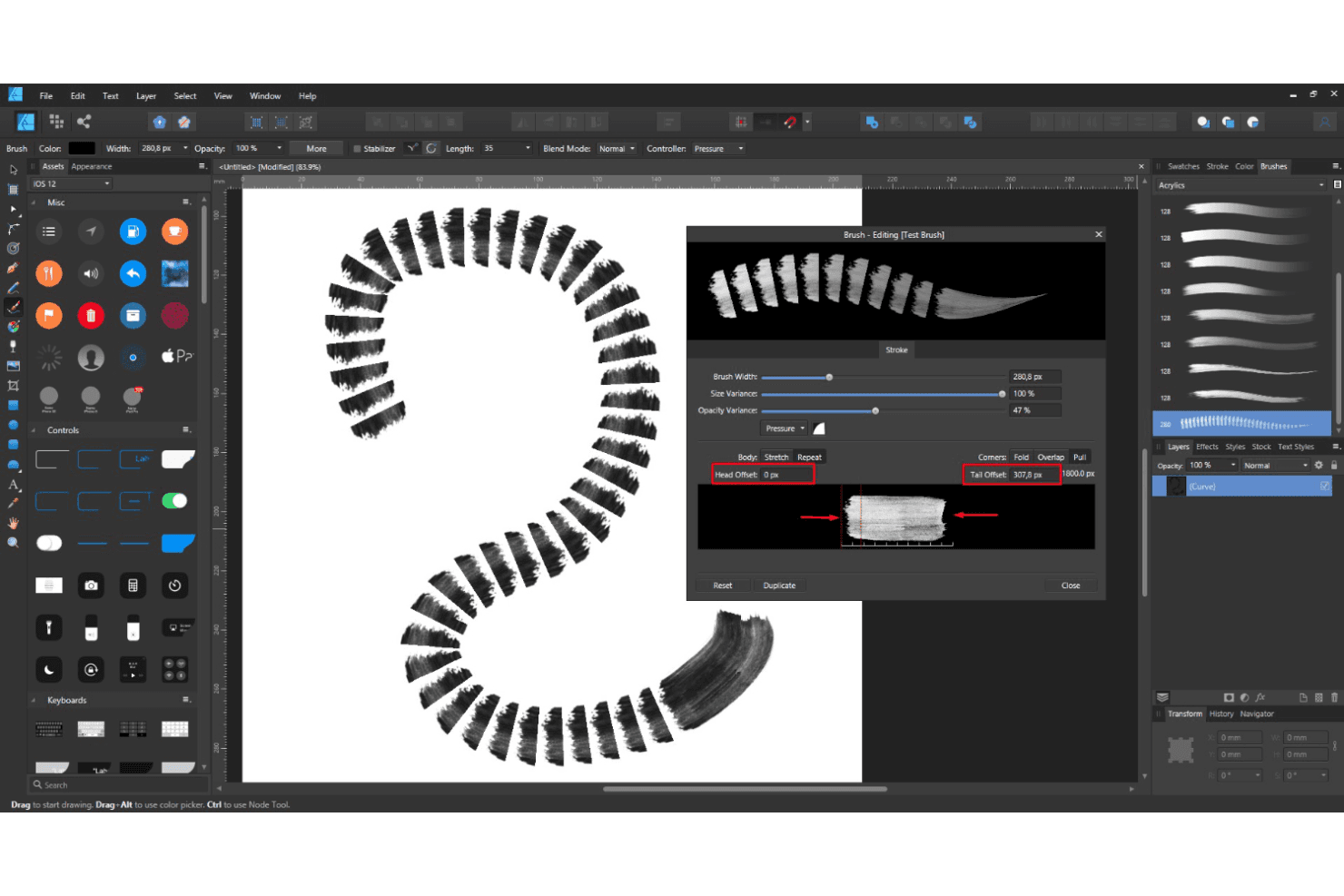
Affinity provides powerful vector brushes for precise graphic creation. Your team can create scalable, detailed designs with ease.
Artboards
You can work on multiple designs in one document with artboards. This feature helps streamline your workflow and organize projects efficiently.
Layer Controls
With intuitive layer management, you can easily edit and arrange components. It provides flexibility and control over your design elements.
Color Management
Your work benefits from professional color management, ensuring accurate and vibrant visuals. The software supports both RGB and CMYK color spaces.
Page Layout Management
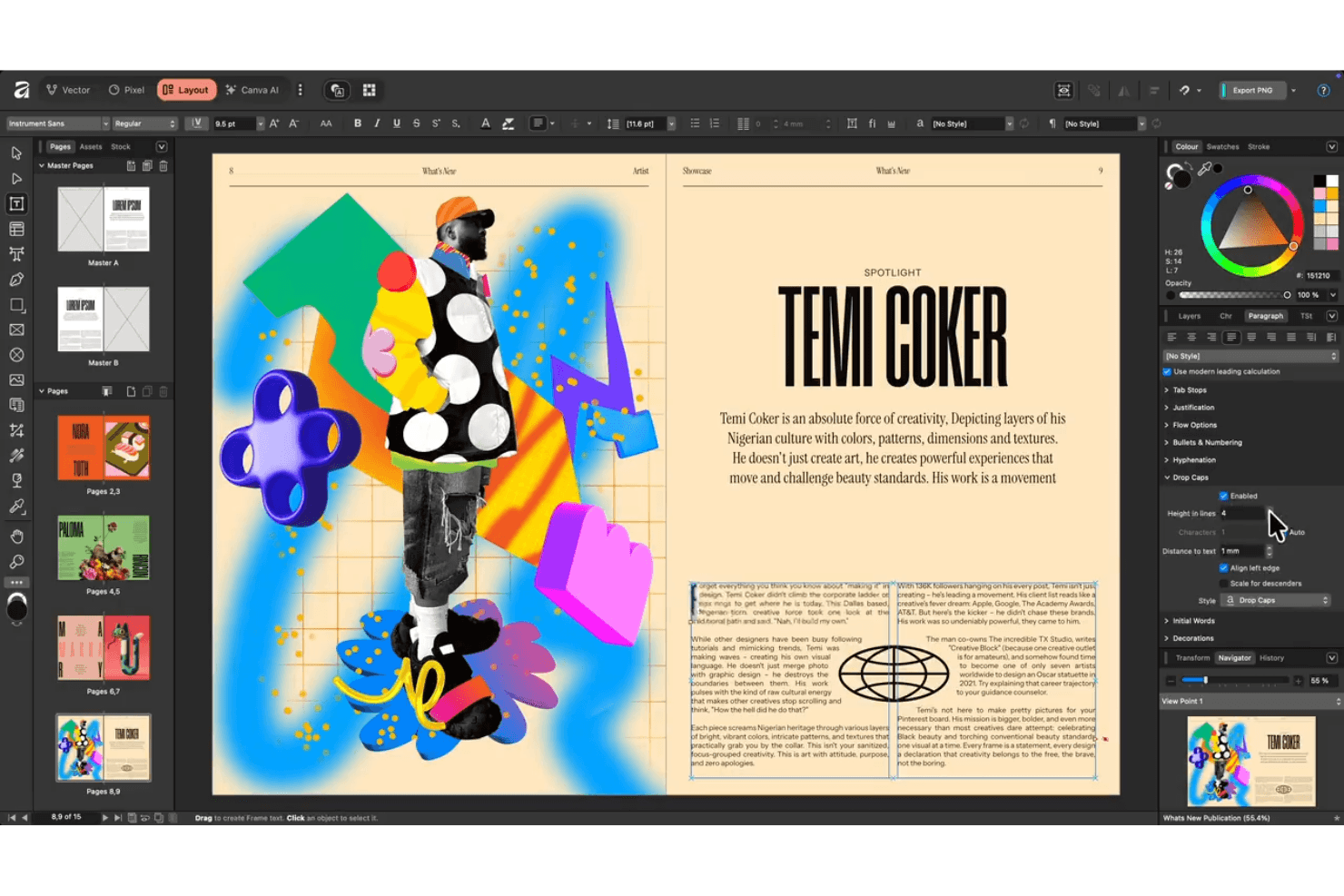
Smart master pages, autoflow, advanced typography, and access to a wide array of fonts help you build books, brochures, and reports with professional polish.
Ease of Use
Affinity is fairly user-friendly, though it may feel a bit challenging for beginners. Its intuitive interface helps streamline your workflow, but the learning curve can be steep if you're new to design software. You'll appreciate the logical layout of tools and features once you get accustomed to it. With practice, your team can efficiently harness its powerful capabilities, making it a solid choice for those willing to invest a little time in learning.
Integrations
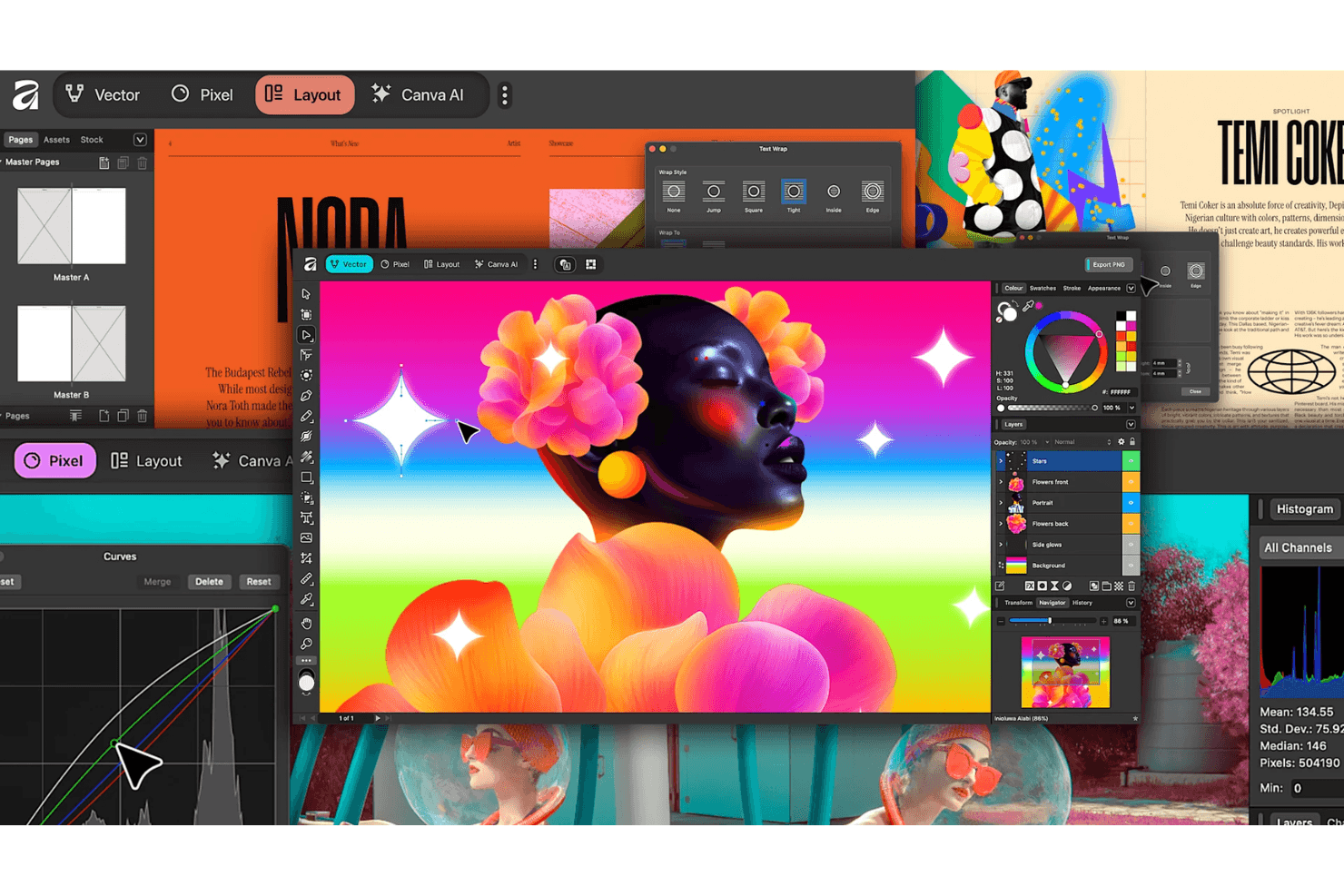
Affinity integrates natively with Canva. It also supports files from Adobe Photoshop, Adobe Illustrator, Adobe InDesign, Sketch, CorelDRAW, Figma, GIMP, Inkscape, Pixelmator, and Procreate — maintaining metadata and layer information.
Affinity does not offer an API and does not connect with third-party integration tools.
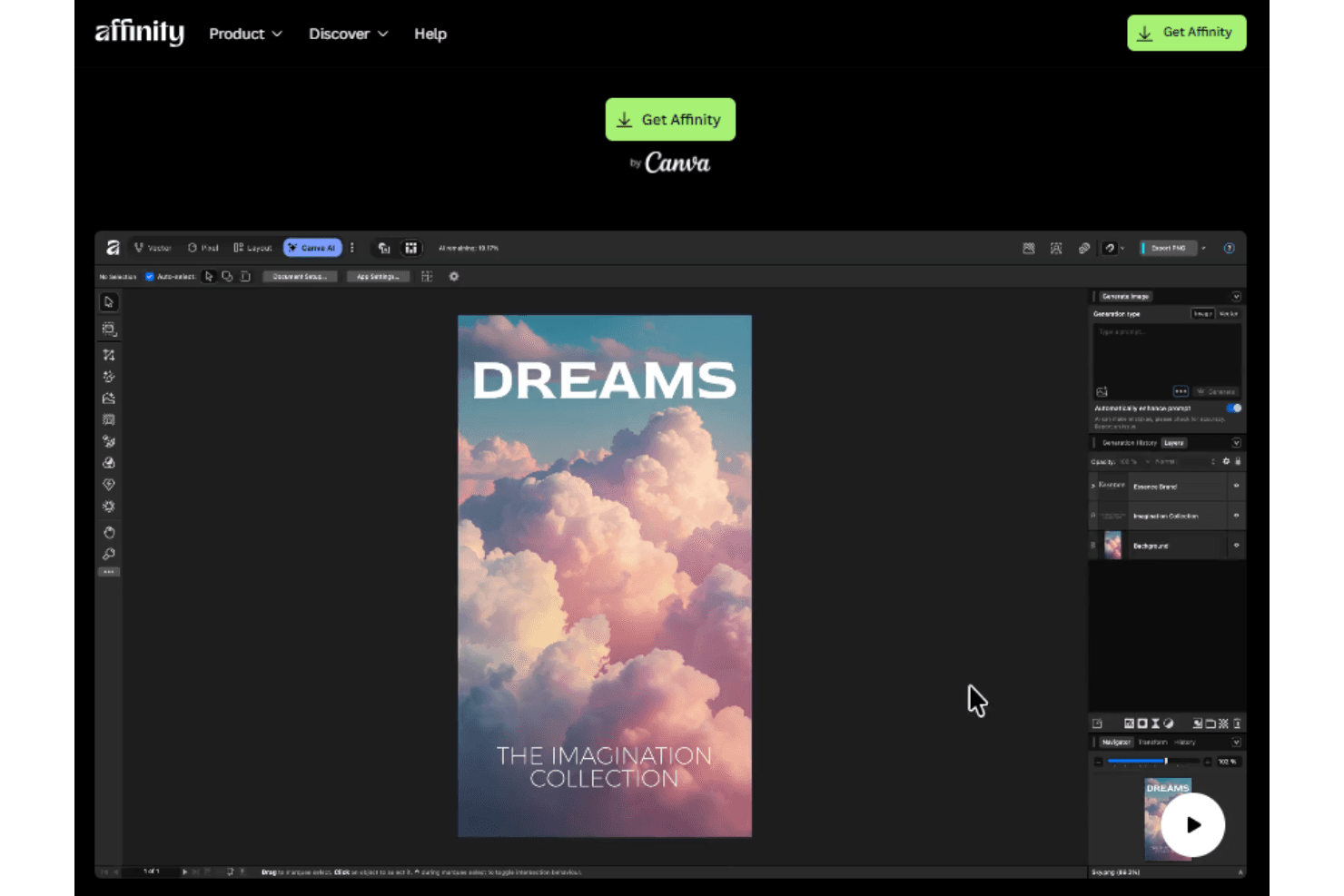
Affinity Designer Specs
- CAD Tools: Yes
- Data Export: Yes
- Data Import: Yes
- Multi-User: Yes
- Pixel Graphics: Yes
- Third-Party Plugins/Add-Ons: Yes
- Vector File Support: Yes
- Video: Yes


