
Finding great product design newsletters can keep you inspired, plugged into trends, and connected to industry experts. I’ve rounded up the best options to help you grow your skills, spark new ideas, and stay ahead in your craft—no matter what stage of your design journey you’re at.
The 16 Best Product Design Newsletters
Below are my summaries of the best product design newsletters. My reviews offer a look at each newsletter's audience, frequency, cost, and more.
1. NN/g Newsletter - Best for usability research updates

- Audience: UX designers, product designers, and design leaders
- Frequency: Weekly
- Cost: Free
The Nielsen Norman Group newsletter is a weekly digest of research-backed articles, videos, and UX findings from NN/g—one of the most cited research and consulting firms in the design world, co-founded by Jakob Nielsen and Don Norman. If you're a product designer or UX practitioner who wants to stay grounded in evidence rather than trends, this one belongs in your inbox.
Why subscribe? Every issue links directly to new NN/g articles and videos covering usability heuristics, research methods, interaction design, and emerging topics like AI's impact on UX—all written by practicing researchers and consultants. What sets it apart is the depth and credibility behind each piece; this isn't opinion content, it's research you can actually apply to design decisions and stakeholder conversations.
2. UX Collective - Best for designer-curated stories

- Audience: UX and product designers at all experience levels
- Size: 135,000+ subscribers
- Frequency: Weekly
- Cost: Free
UX Collective is a designer-run publication edited by Fabricio Teixeira and Caio Braga, delivering curated stories, articles, and resources for UX and product designers every week. It's one of the largest design publications on Medium, built entirely by and for the design community.
Why subscribe? Each issue surfaces thoughtful, practitioner-written pieces on topics ranging from design systems and research methods to ethics and career development—content that reflects what designers are actually thinking about. What I appreciate about it is the editorial curation; Teixeira and Braga consistently pick pieces that push critical thinking rather than just showcasing polished work.
3. Design Better - Best for podcast-driven product design insights

- Audience: Product designers, UX professionals, and creative leaders worldwide
- Size: 247,000+ members
- Frequency: Twice a week
- Cost: Free
Design Better is a Substack newsletter and podcast co-hosted by Eli Woolery and Aarron Walter—both former InVision leaders—featuring conversations with designers and creative leaders from companies like Apple, Airbnb, Google, and Disney.
Why subscribe? What sets Design Better apart is its focus on the creative process and design leadership, not just tools or tactics—each issue and episode goes deep into how great designers and teams actually think and work. You'll get access to long-form conversations and essays that explore design at a strategic level, which I think is especially valuable if you're moving into a lead or principal role.
Have an account? Log In
4. TLDR Design - Best for design news and inspiration
- Audience: Product designers, UX/UI designers, and creative professionals
- Size: 320,000+ members
- Frequency: Daily
- Cost: Free
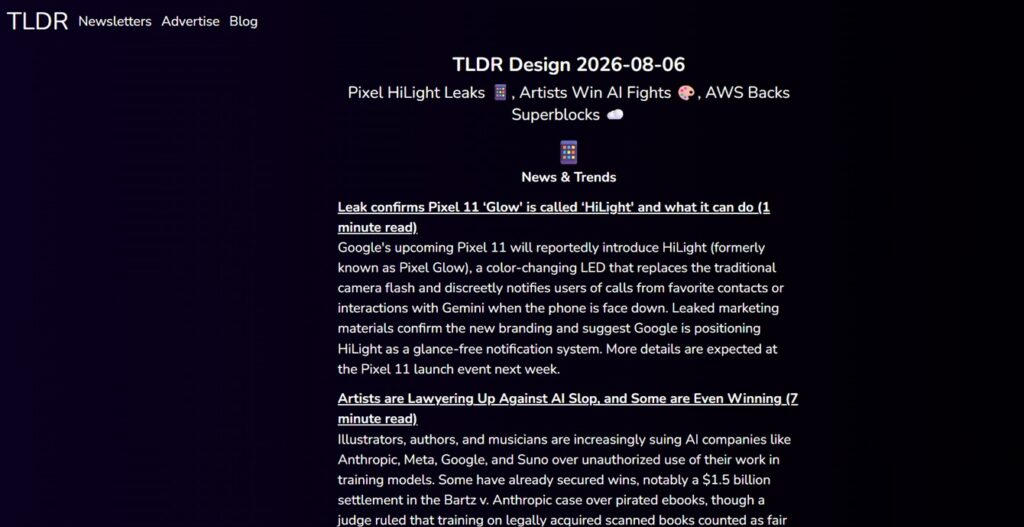
TLDR Design is a free daily newsletter from the TLDR media family, delivering curated design news, tool updates, and inspiration in a quick, scannable format for product and UX designers.
With 320,000+ subscribers, it's one of the largest dedicated design newsletters available.
Why subscribe? If you want to stay current on what's happening across the design industry—new Figma features, AI tool releases, major rebrands, product launches—this is a reliable daily briefing that takes about five minutes to read. It covers a wide range of design disciplines, so you'll get exposure to brand, product, and tool news in a single email. I'd recommend it as a lightweight daily habit rather than a deep-dive resource.
5. UX Design Weekly - Best for curated UX design links and inspiration
- Audience: UX and product designers seeking weekly curated resources
- Size: 41,300+ members
- Frequency: Weekly
- Cost: Free
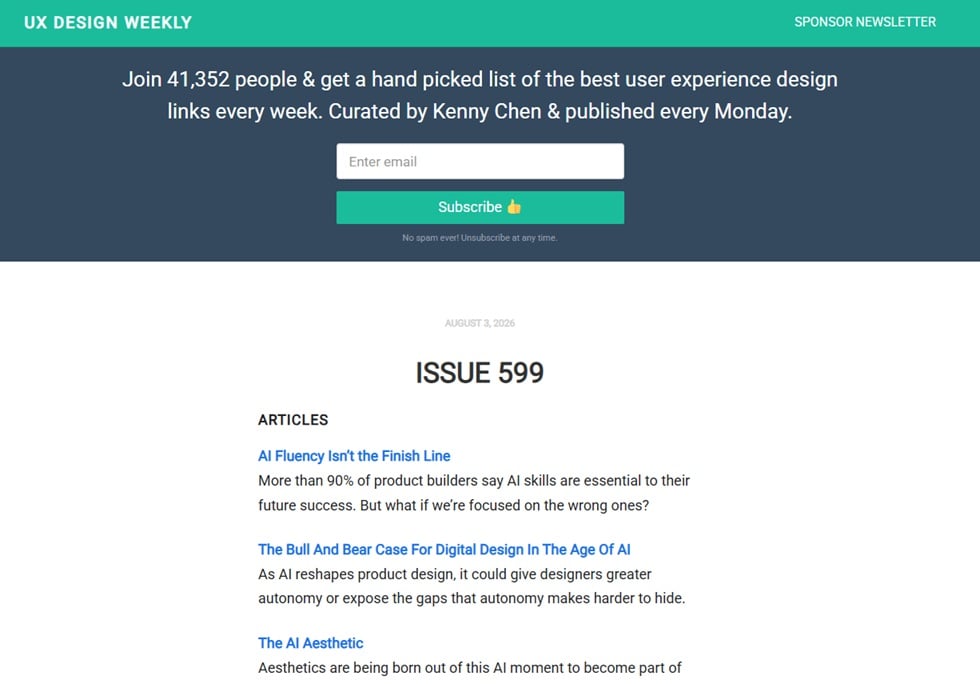
UX Design Weekly is a free, independently curated newsletter run by Kenny Chen, a UX lead at Google, and has been running for 12+ years with nearly 600 issues published. Each Monday, it delivers a hand-picked selection of UX articles, tools, portfolio examples, and design inspiration.
Why subscribe? What I like about UX Design Weekly is that it's a single, trusted person curating—not an algorithm or editorial team—which keeps the quality consistently high. Each issue mixes practical UX resources with broader design thinking, covering topics like AI's impact on design workflows, voice-first interfaces, and portfolio craft.
6. The Rosenfeld Report - Best for expert UX insights
- Audience: UX and product design professionals and design leaders
- Frequency: Bi-weekly
- Cost: Free
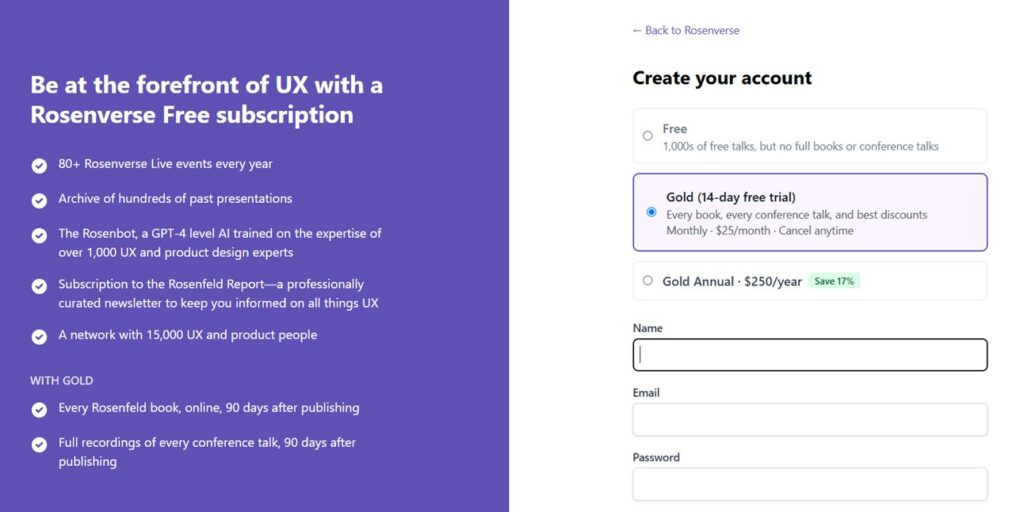
The Rosenfeld Report is a bi-weekly newsletter from Rosenfeld Media, the publisher behind some of the most respected UX books and conferences in the industry. It's organized by Lou Rosenfeld, co-author of the foundational text on information architecture, and serves a community of UX and product design professionals.
Why subscribe? The Rosenfeld Report sits at the intersection of publishing, research, and community—so each issue tends to surface book releases, upcoming conferences, and UX insights you won't find in a typical design blog roundup. It's a good fit if you want to stay connected to the broader UX discipline at a practitioner and leadership level, rather than just tracking tool updates.
7. Dense Discovery - Best for broader design inspiration

- Audience: Designers and creative professionals interested in design, tech, and culture
- Size: 36,000+ members
- Frequency: Weekly
- Cost: Free
Dense Discovery is a weekly newsletter run by Kai Brach, the founder of the beloved indie print magazine Offscreen, and has been publishing since 2018 with nearly 400 issues. It covers design, tech, art, and culture for a global audience of 36,000+ readers who want more than a feed of product updates.
Why subscribe? Each issue is human-curated with a deliberate, slower pace—surfacing tools, books, creative work, and ideas that algorithmic feeds tend to miss. It's less about what's trending in product design and more about broadening how you think about design's role in the world. I'd recommend it if you want a weekly read that sparks new perspectives rather than just keeping you up to date.
8. Growth.Design - Best for comic-style product psychology

- Audience: Product designers, UX professionals, and product managers
- Size: 130,000+ members
- Frequency: Weekly
- Cost: Free
Growth.Design is run by product designers Louis-Xavier Lavallée and Dan Benoni, and delivers case studies that break down the psychology behind real product experiences from companies like Duolingo, Airbnb, Spotify, and TikTok.
Why subscribe? What sets Growth.Design apart is the format: each case study is presented as an interactive comic, walking you through actual UX flows screen by screen with psychological principles explained along the way. You'll come away with a sharper understanding of onboarding, retention, and conversion patterns you can apply directly to your own work.
9. Design Systems Weekly - Best for design systems trends
- Audience: Design systems professionals, product teams, and front-end developers
- Frequency: Weekly
- Cost: Free
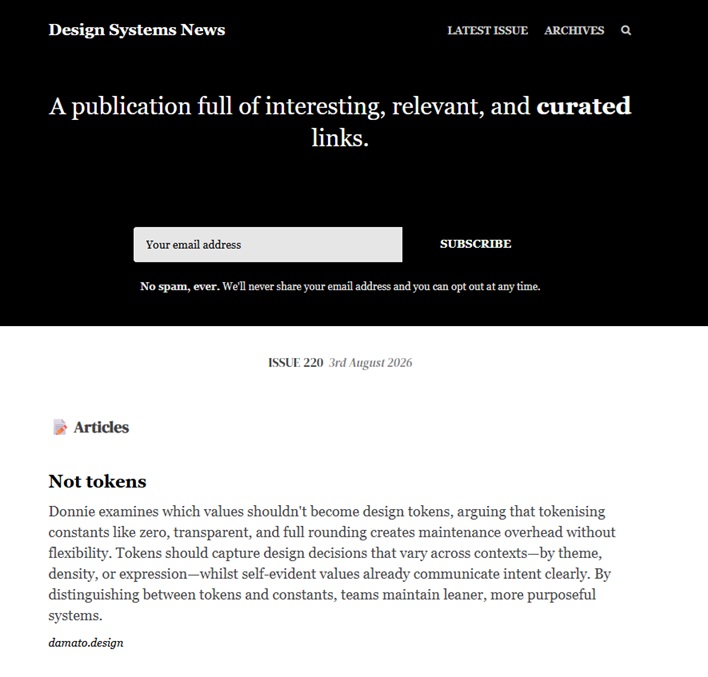
Design Systems Weekly is a free, curated newsletter run by Stuart Robson, a freelance design systems consultant, covering articles, guides, and resources on design systems, tokens, pattern libraries, and style guides. I
t's been running for over seven years and is aimed at designers, front-end developers, and product teams working on UI consistency at scale.
Why subscribe? Each issue brings together hand-picked reads on practical topics like design tokens, component architecture, and team workflows—so you're not hunting across the internet for what's relevant. It's especially useful if you're actively building or maintaining a design system, since the content reflects real challenges teams face rather than surface-level overviews.
It covers multimedia resources, including podcasts and conference materials, making it a well-rounded resource for staying current in the design systems space.
10. UX Tools - Best for design tools and workflow insights
- Audience: Product designers and UX professionals seeking tool updates
- Size: 90,000+ members
- Frequency: Weekly
- Cost: Free
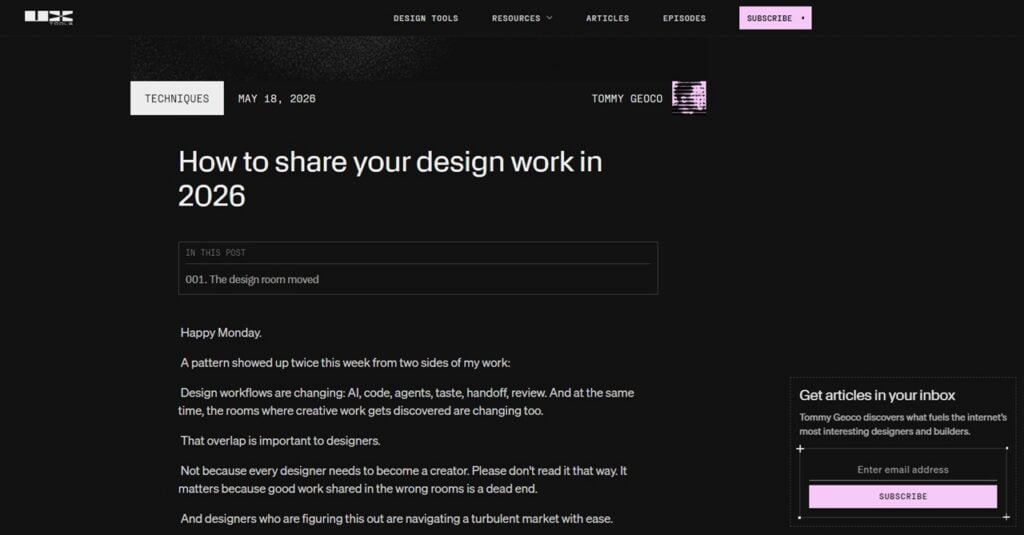
UX Tools is a free weekly newsletter run by designer Taylor Palmer, covering design tool news, workflow breakdowns, and in-depth interviews with designers from companies like Figma, Google, and Miro. It's been building its audience since around 2017 and now reaches over 90K subscribers.
Why subscribe? What sets UX Tools apart is its focus on the practical side of design work—tool comparisons, AI updates, insider leaks, and early looks at emerging tools that actually change how you work. I'd recommend it if you want a reliable pulse on where the design tools landscape is heading, rather than broad UX theory. It also produces the annual Design Tools Survey, which is one of the most widely referenced benchmarks in the industry for understanding how designers work.
11. Sidebar - Best for curated design inspiration and resources
- Audience: Product designers and UX/UI professionals seeking daily inspiration
- Frequency: Every weekday
- Cost: Free
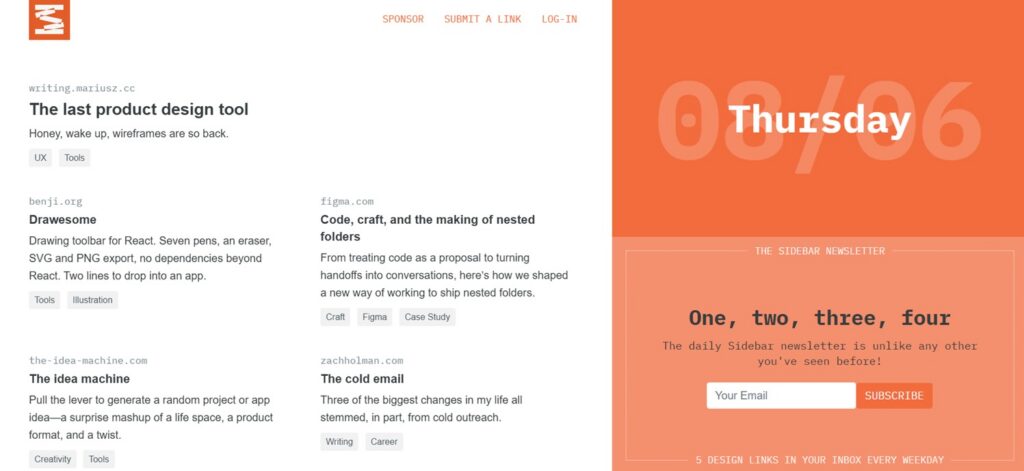
Sidebar is a free daily design newsletter created by Sacha Greif in 2012 and now maintained by Fabricio Teixeira of UX Collective, delivering five curated design links every weekday. It's built for product designers, UX/UI designers, and creative technologists who want a steady stream of quality reads without doing the legwork themselves.
Why subscribe? Every issue surfaces a focused mix of articles, case studies, tools, and tutorials—covering everything from AI in design to Figma workflows to UX writing. It's one of the better options if you want daily exposure to what the design community is reading and discussing, rather than a weekly digest you might skim once.
12. Femke.design - Best for growing design influence

- Audience: Mid-level and senior product designers seeking career growth
- Size: 40,000+ members
- Frequency: Biweekly
- Cost: Free
Femke's Newsletter is a biweekly publication from Femke van Schoonhoven, a Design Lead with experience at Uber, Wealthsimple, and Gusto, who also runs a design YouTube channel and co-hosts the Design Life podcast.
It's written for product designers who want to grow beyond craft execution and build real influence in their organizations.
Why subscribe? Each issue covers the strategic side of design work—getting your ideas approved, managing stakeholders, and making the case for promotions—with frameworks you can apply directly. It's one of the few design newsletters that treats career growth and organizational influence as skills worth developing, rather than afterthoughts.
13. UX Movement - Best for tips on interface usability and psychology
- Audience: UX and interface designers seeking actionable, research-backed advice
- Size: 54,000+ members
- Frequency: Weekly
- Cost: Free or $9 per month
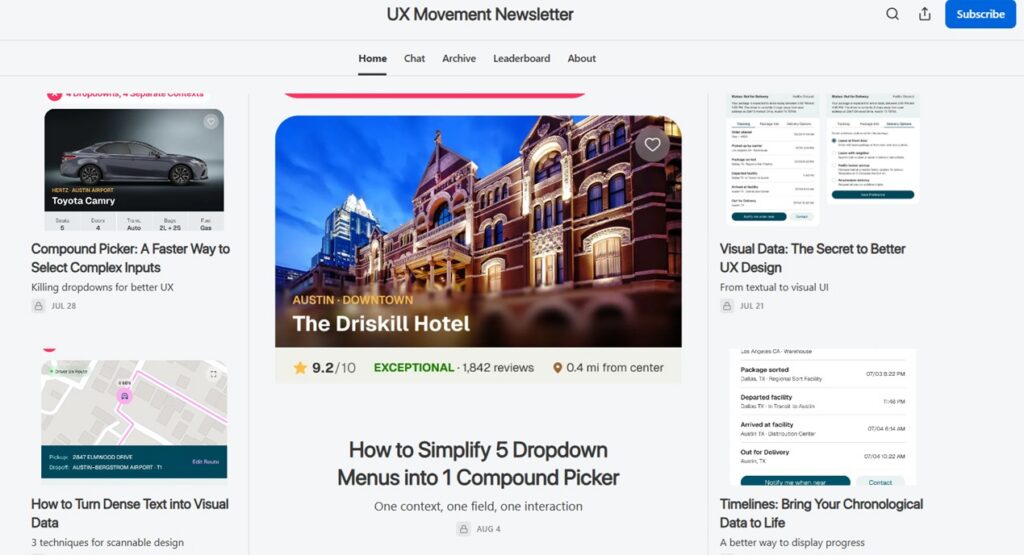
UX Movement is a long-running UX design publication founded in 2010 by Anthony Tseng, a designer and writer with a background in cognitive science and human-computer interaction. The newsletter distills that same research-backed approach into practical interface design guidance for UX and UI designers.
Why subscribe? Where most design newsletters cover industry news or career advice, UX Movement goes deep on the mechanics of interface design—form patterns, navigation, dashboards, tables—and explains the perceptual and cognitive reasons behind why certain design decisions work. Each issue gives you the kind of specific, applicable insight you can bring directly into your next design review or critique.
14. Design Discipline - Best for design research and leadership interviews
- Audience: Product designers and design leaders interested in interviews
- Size: 1,000+ members
- Frequency: Monthly
- Cost: Free
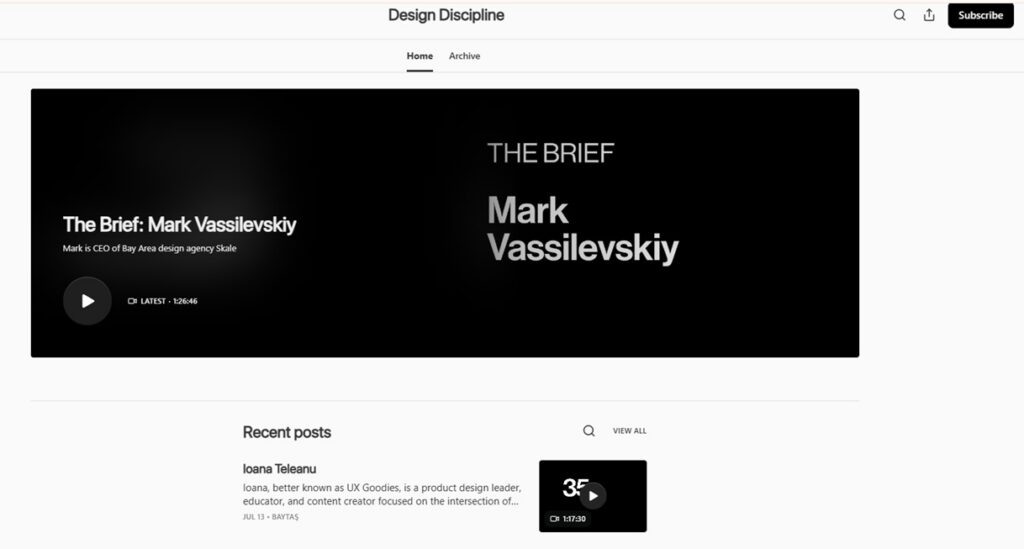
Design Discipline is a newsletter and podcast run by Dr. Mehmet Aydın Baytaş, a designer and engineer with a PhD in human-computer interaction, featuring long-form interviews with notable figures across product design, design engineering, and creative technology. Past guests include Carl Rivera (Chief Design Officer at Shopify), Ioana Teleanu, and Dan Hollick.
Why subscribe? Design Discipline goes deeper than most design publications—episodes run 1–1.5 hours and treat design as a research discipline worth serious intellectual exploration. If you want to understand how top designers and leaders actually think about their work, rather than just what they ship, this is worth your time. I'd especially recommend it if you're a senior designer or design leader looking for substance over surface-level takes.
More Articles
15. DESK - Best for essays on the creative life in design
- Audience: Creative professionals and product designers seeking personal essays
- Size: 30,000+ members
- Frequency: Weekly
- Cost: Free
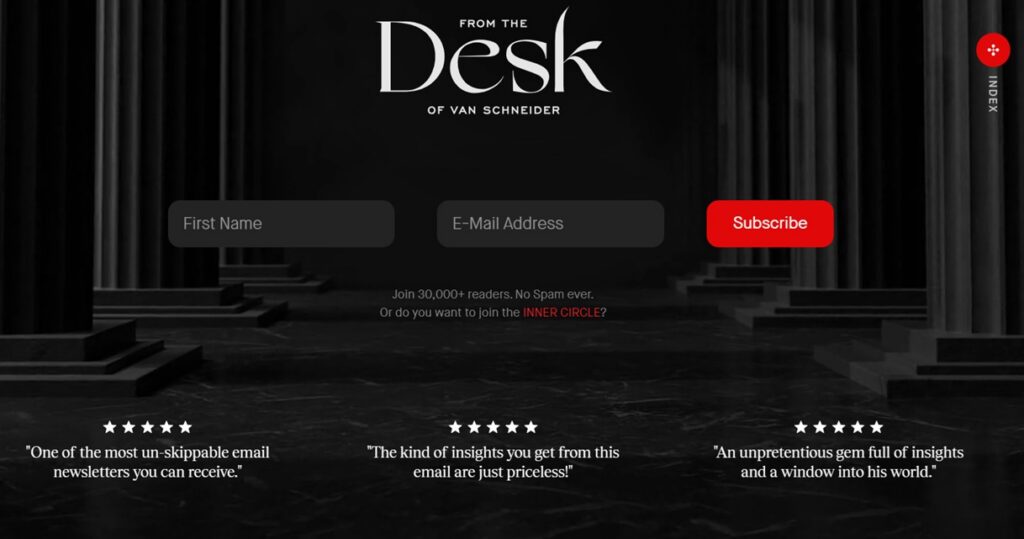
DESK is a weekly newsletter from Tobias van Schneider—former lead product designer and art director at Spotify, and co-founder of Semplice and mymind—that's been running since around 2015. It's a personal essay format, covering design, creativity, side projects, and the mindset behind making things.
Why subscribe? Unlike most design newsletters that focus on tools or tactics, DESK is about the creative life itself—how to think about your work, sustain your practice, and stay curious over a long career. Each issue reads more like a personal letter than a column, which makes it a genuinely enjoyable read rather than a professional obligation.
16. Pixels of the Week - Best for curated UX and product design resources
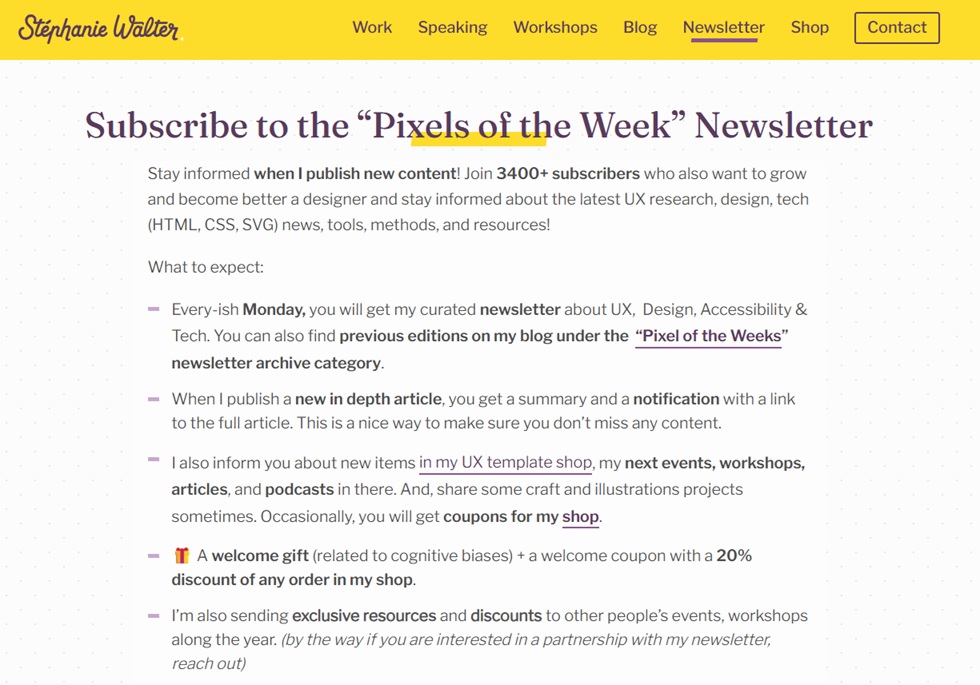
- Audience: Product designers, UX researchers, developers, and accessibility practitioners
- Size: 3,400+ subscribers
- Frequency: Weekly
- Cost: Free
Pixels of the Week is a long-running weekly newsletter curated by Stéphanie Walter, a UX researcher and product designer based in Europe who also teaches mobile usability at the University of Strasbourg. Each issue rounds up articles, tools, and resources she's found throughout the week across UX research, accessibility, design methods, and front-end development.
Why subscribe? What sets Pixels of the Week apart is its genuine breadth—Stéphanie covers everything from UX research techniques to CSS, accessibility standards, and AI's impact on design practice, all filtered through her own expertise and perspective. It's one of the few newsletters that takes accessibility and inclusive design seriously as a through-line rather than an afterthought.
What’s Next?
Don't forget to subscribe to our newsletter for more product management resources and guides, plus the latest podcasts, interviews, and other insights from industry leaders and experts.