
Product expert shares the vibe-coding workflow that is replacing engineering handoffs
Anton Ingachev
Founder of Mini Apps Builder
Anton Ingachev explains how vibe coding lets product managers build and ship features directly, reducing engineering handoffs while keeping technical review in the workflow.
Key Takeaways
Faster Shipping: AI lets product leaders build simple features directly, removing engineering handoffs and accelerating releases with small teams.
Context Matters: Better project context helps AI produce higher-quality content faster, while limited context creates weak, unreliable results.
Workflow Design: Product teams can use AI across development, translation, content, research, testing, and release documentation.
Human Oversight: AI-generated work still requires clear instructions, review, testing, and expert judgment before reaching customers.
Experiment First: Leaders should reassess existing processes, then test selectively because effective AI adoption depends on product-specific constraints.
Anton Ingachev is the founder of Mini Apps Builder, a no-code platform for building Telegram apps, where he owns product. Before this, he held several CPO and Product Director positions.
We spoke with Anton to learn about how he's cutting out engineering handoffs by vibe-coding small features himself. Here's what he told us.
Diving into AI out of necessity

I've been in product for over ten years — fintech, chess platforms, blockchain, healthtech. I served twice as a CPO and once as a Product Director.
My AI journey began as a practical need, not a strategy. About a year and a half ago, I co-founded Mini Apps Builder — a B2B2C no-code platform for building Telegram apps. As a non-engineer CPO, I needed to ship features fast without waiting for a full dev cycle. That's when I started using Claude Code and Cursor daily, not just for documentation or prototyping, but for production work.
To demonstrate its full potential, I built a production-ready product solo — architecture, backend, frontend, all of it — using AI tools, without an engineering team. That's when it stopped being "I use AI to help me work faster" and became "I can build and ship real products myself."
Now, I apply the same approach within Mini Apps Builder — I build some features directly, rather than just speccing them for engineers.
So my path wasn't "I read about AI transformation and decided to lead it." Instead, I needed to move fast without a big team; AI made that possible, and now I think about product strategy differently because of it — every roadmap decision now includes the question: "Can AI do this step, or only support it?"
More Articles
How AI replaces the old handoff model in product workflows
For years I believed a PM's job stopped at the spec. You write the requirements, but you don't touch the code — that's the engineer's job. Crossing that line felt like overstepping.
That's the biggest thing that AI has changed in the product world. Now, I handle simple features myself. I build them using Claude Code and ship directly, without waiting for engineering capacity.
That means we're able to cut out a full handoff step. Instead of going from spec → engineering review → build → QA, I often build and test directly.
Our release cycle is now two or three shipped features per week with a two-person team — across the website, the merchant dashboard, the Telegram Mini App itself, and our internal admin panel. That pace wouldn't be possible with the old handoff model.
And it changed how I think about team structure too. The constraint is no longer "How many engineers do we have?" Instead, it's "How well can I specify what I want?"
An AI-enabled feature development workflow
Here's what feature development looks like:
- I describe the task to a top-tier model like Claude Code. I share what I like, what I don't like, what problem we're solving, and what shouldn't be forgotten or broken. I give references — sometimes of direct competitors, but not always.
- The model produces a detailed plan. I read it. If needed, I make edits or challenge the plan.
- I ask Claude to implement the plan in code.
- I create a PR, which goes through automated checks before being assigned to the CTO.
- If everything's fine, the CTO merges it into dev, and I test it in the product.
- If something's off, the CTO leaves comments, I ask the model to fix them, and the process repeats.
- If something is way off, I discuss with the CTO how to improve the instructions given to the LLM, and repeat.
- After testing on dev, we push to prod.

Anton's Thoughts
I share what I like, what I don’t like, what problem we’re solving, and what shouldn’t be forgotten or broken.
Where AI can be applied in product workflows
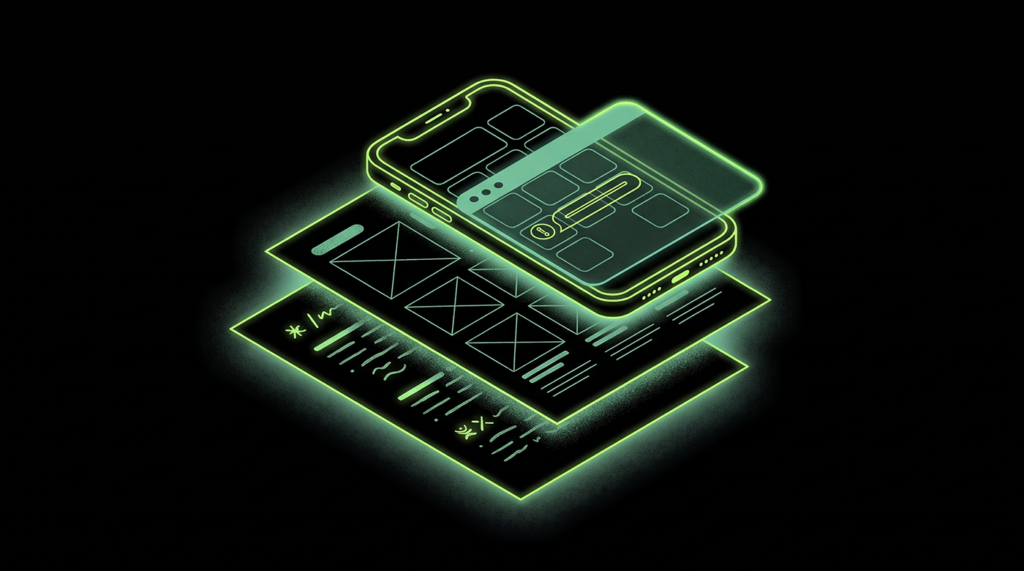
The main AI tools I use are Claude Code, Codex, Cursor, Gamma, Midjourney, and Figma Agent. Here are other ways I'm using AI in product workflows, along with some of the benefits:
- Our entire product — interfaces, blog, Help Center, product update articles — gets translated into 20 languages in near real-time with a single click.
- Blog articles written by an LLM roughly doubled our search traffic — and the articles take a fraction of the time.
- As a product manager, AI makes it easier for me to challenge my own ideas — I can ask it to find data that either supports or disproves them.
- Writing release notes is no longer a problem, since AI does it almost automatically.
Honestly, I can't name a place where AI doesn't help. Almost everywhere, using it brings a clear benefit. Yes, humans need to double-check it, tune it, and train it, but wherever there's a clear goal and an understanding of how to achieve it with AI, the process improves.
Why AI needs proper context before being integrated into workflows
When it comes to AI, context is everything.
I used to write blog articles based on an SEO specialist's brief. It took two to three hours. Then, I loaded the project context into an LLM and fed it the brief directly — now articles take 5-7 minutes. And as I said above, they are higher quality, leading to double the traffic.
When it comes to AI, context is everything…Whatever the workflow, invest in providing context to your AI tools!

But when I asked the SEO specialist to write them with AI, I was surprised by how poor the results were. The reason? His LLM had much less project context than mine did.
Whatever the workflow, invest in providing context to your AI tools!
Why product leaders must overhaul some product workflows, but not necessarily all
My advice? Integrate AI into most of your processes right now. This isn't 2022 anymore; the value is clear now. AI is a must-have.
Product leaders should re-examine every process and tool previously considered optimal. But that doesn't necessarily mean overhauling them all with AI. You must understand AI's limitations, your own strengths and weaknesses, the product you're working on, budgets, and so on.
The setup will look different for each specific project. Everything is flexible. And there are no established best practices. That complicates things.
The only way to figure it out for your product is with hands-on experimentation.
Anton's Thoughts
My advice? Integrate AI into most of your processes right now. This isn’t 2022 anymore; the value is clear now. AI is a must-have.
Follow along
You can follow along with Anton Ingachev's work on LinkedIn and GitHub. And check out Mini Apps Builder.
More expert interviews to come on The CPO Club!