Semrush-recension: Fördelar, nackdelar, funktioner och priser förklarade
Semrush utmärker sig som en robust lösning för användarspårning och är särskilt bra på konkurrentanalys och SEO-insikter, men kan kännas överväldigande för nybörjare eller personer som söker enkel analys.

We review tools independently, and commissions help fund our testing. See our transparency policy, our methodology, or suggest a tool.
Semrush is a user tracking software designed for marketers and product teams who need to monitor website traffic, user behavior, and engagement across digital campaigns. I think you should pick Semrush when you need to move beyond basic analytics dashboards and want a platform that connects real user activity with actionable insights for SEO, content, and advertising. Compared to Ahrefs, Semrush stands out if you want deeper integration between user behavior data and campaign management tools, making it easier to translate analytics into strategies that drive growth.
Semrush Evaluation Summary
4.5/5
- From $139/month
- 14-day free trial
Varför du kan lita på våra programvarurekommendationer
6,700+
Reviews
20
Industry experts
16+
Evaluation factors
14
Years
Vårt team har testat och recenserat programvara sedan 2012. Som produktchefer själva vet vi hur svårt — och viktigt — det är att välja rätt programvara.
För den här guiden utvärderade vi verktyg genom praktisk testning och oberoende research, och betygsatte verktygen enligt våra urvalskriterier.
Våra recensioner speglar vårt mänskliga redaktionella omdöme, inte ett säljbudskap.
- Andrew LumbySenior TPM
- Cristiano ValimSenior UI/UX Lead
Semrush Overview
When judging user tracking software, Semrush impresses with its deep analytics, competitive research, and keyword research capabilities, making it a top pick for marketing-focused teams. Its interface is data-rich but can feel complex during onboarding. Pricing is higher than some alternatives, but the breadth of semrush features—like semrush site audit and traffic analytics—justifies the investment for data-driven organizations. Support is responsive, and integrations cover most marketing stacks. If you're selecting a platform for advanced semrush seo, content, or competitor analysis, Semrush stands out, though smaller teams may find its learning curve and cost less appealing.
Pros
- Offers detailed keyword research and competitor tracking tools
- Provides accurate position tracking for multiple domains
- Visualizes user data with clear, actionable reports
Cons
- Only tracks Google keyword data, not other search engines
- Limits user seats per plan, even at higher tiers
- Add-ons and advanced features increase overall cost
Is Semrush Right For Your Needs?
Who Would be a Good Fit for Semrush?
Semrush is best suited for organizations and professionals who need advanced digital marketing analytics, competitive intelligence, and in-depth keyword research. Its feature set is especially valuable for teams focused on SEO strategy, PPC campaigns, and online marketing. Businesses that rely on search engine performance and digital campaigns will find Semrush's reporting and organic research tools highly actionable. The platform's strengths in tracking user behavior, benchmarking competitors, and visualizing data make it a strong choice for marketing-driven environments.
- Digital Marketing AgenciesSemrush provides multi-client management and detailed competitor analysis tools.
- Enterprise Marketing TeamsIts advanced reporting and keyword research support large-scale campaigns.
- E-commerce BusinessesProduct listing and traffic analytics help optimize online sales strategies.
- Content Strategy DepartmentsContent gap analysis and keyword database tools drive editorial planning.
- Technical SEO ConsultantsComprehensive semrush site audit capabilities and backlink analysis support client deliverables.
- SaaS Product ManagersUser journey mapping and traffic source insights inform product decisions.
Who Would be a Bad Fit for Semrush?
Semrush is less suitable for teams that don't prioritize search engine data, have limited digital marketing needs, or require user tracking across non-Google platforms. Its pricing and feature set may not align with organizations seeking basic analytics or those focused on app-based or offline user behavior. For companies outside the digital marketing sphere, Semrush's capabilities may exceed actual requirements and budget.
- Small Local BusinessesThe platform's advanced features are excessive for basic web presence needs.
- Nonprofit OrganizationsBudget constraints and limited digital campaigns reduce Semrush's value.
- Mobile App DevelopersSemrush lacks in-depth app analytics and in-app user tracking.
- Customer Support TeamsUser tracking is focused on web analytics, not support interactions.
- Manufacturing CompaniesLimited relevance for businesses not reliant on digital marketing.
- HR DepartmentsSemrush does not provide employee or internal user behavior analytics.
How We Test & Score Tools
We’ve spent years building, refining, and improving our software testing and scoring system. The rubric is designed to capture the nuances of software selection and what makes a tool effective, focusing on critical aspects of the decision-making process.
Below, you can see exactly how our testing and scoring works across seven criteria. It allows us to provide an unbiased evaluation of the software based on core functionality, standout features, ease of use, onboarding, customer support, integrations, customer reviews, and value for money.
Core Functionality (25% of final scoring)
The starting point of our evaluation is always the core functionality of the tool. Does it have the basic features and functions that a user would expect to see? Are any of those core features locked to higher-tiered pricing plans? At its core, we expect a tool to stand up against the baseline capabilities of its competitors.
Standout Features (25% of final scoring)
Next, we evaluate uncommon standout features that go above and beyond the core functionality typically found in tools of its kind. A high score reflects specialized or unique features that make the product faster, more efficient, or offer additional value to the user.
We also evaluate how easy it is to integrate with other tools typically found in the tech stack to expand the functionality and utility of the software. Tools offering plentiful native integrations, 3rd party connections, and API access to build custom integrations score best.
Ease of Use (10% of final scoring)
We consider how quick and easy it is to execute the tasks defined in the core functionality using the tool. High scoring software is well designed, intuitive to use, offers mobile apps, provides templates, and makes relatively complex tasks seem simple.
Onboarding (10% of final scoring)
We know how important rapid team adoption is for a new platform, so we evaluate how easy it is to learn and use a tool with minimal training. We evaluate how quickly a team member can get set up and start using the tool with no experience. High scoring solutions indicate little or no support is required.
Customer Support (10% of final scoring)
We review how quick and easy it is to get unstuck and find help by phone, live chat, or knowledge base. Tools and companies that provide real-time support score best, while chatbots score worst.
Customer Reviews (10% of final scoring)
Beyond our own testing and evaluation, we consider the net promoter score from current and past customers. We review their likelihood, given the option, to choose the tool again for the core functionality. A high scoring software reflects a high net promoter score from current or past customers.
Value for Money (10% of final scoring)
Lastly, in consideration of all the other criteria, we review the average price of entry level plans against the core features and consider the value of the other evaluation criteria. Software that delivers more, for less, will score higher.
Core Features
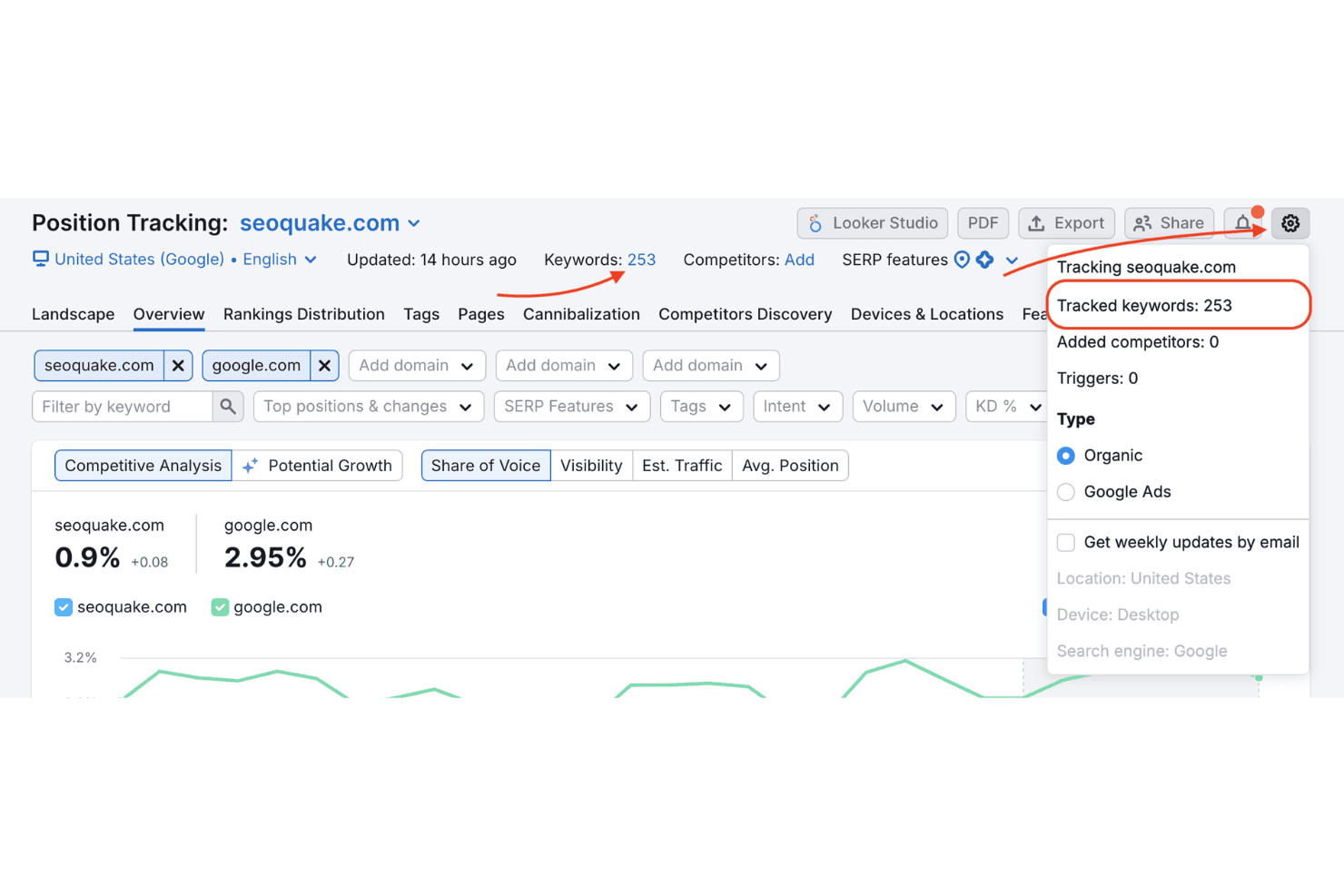
Position Tracking
Monitor daily search rankings across devices and locations, with granular visibility into top organic search results.
Traffic Analytics
Analyze website traffic sources, user engagement, and audience behavior to benchmark against competitors.
Site Audit
The site audit tool scans for technical issues affecting site health and SEO, with prioritized fix recommendations.
Competitor Benchmarking
Track competitor domains to compare keyword positions, search traffic trends, and visibility in real time.
SERP Feature Tracking
Identify and monitor your presence in Google SERP features like featured snippets and local packs.
Historical Data Reporting
Access historical keyword and traffic data to analyze trends and measure long-term performance changes.
Ease of Use
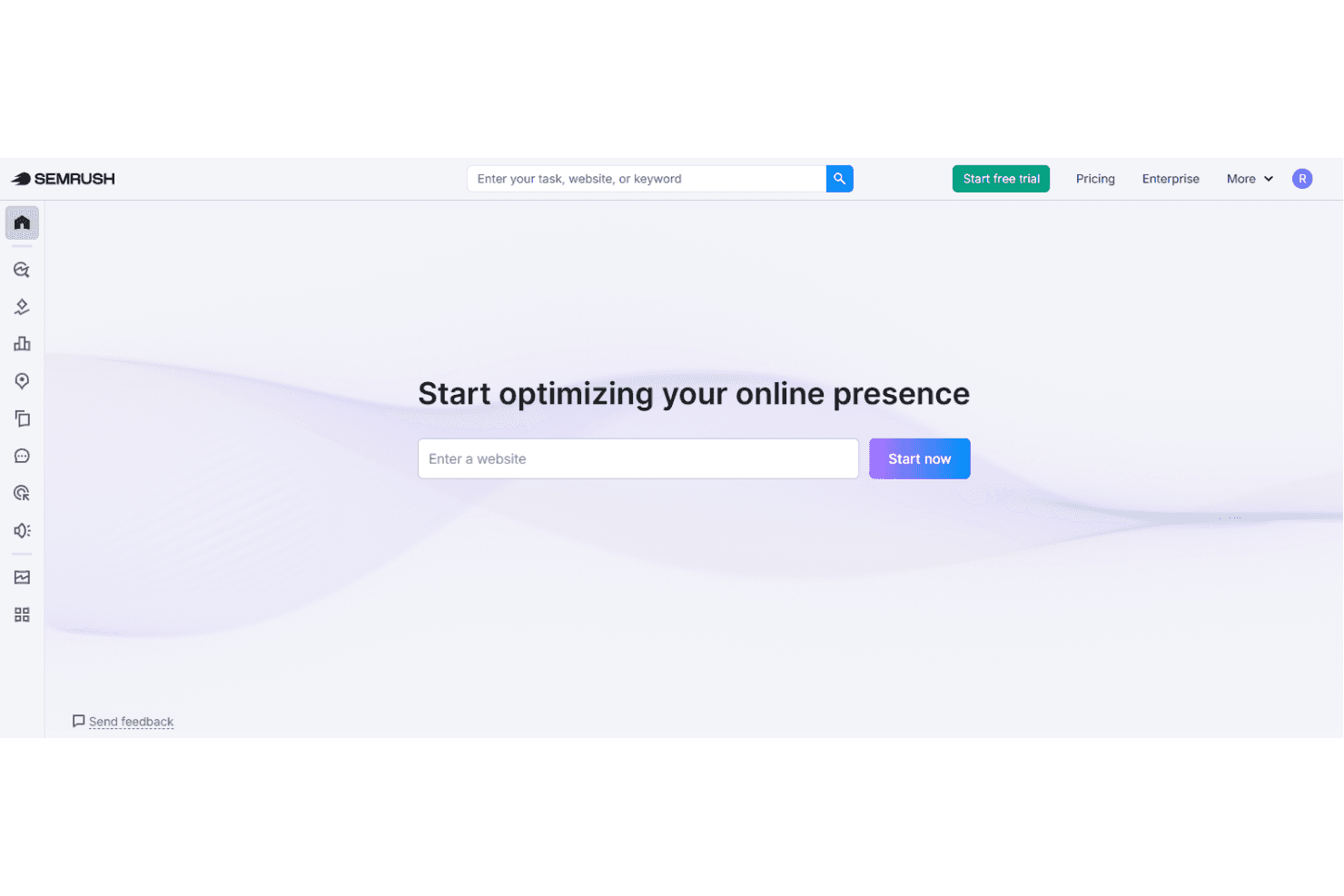
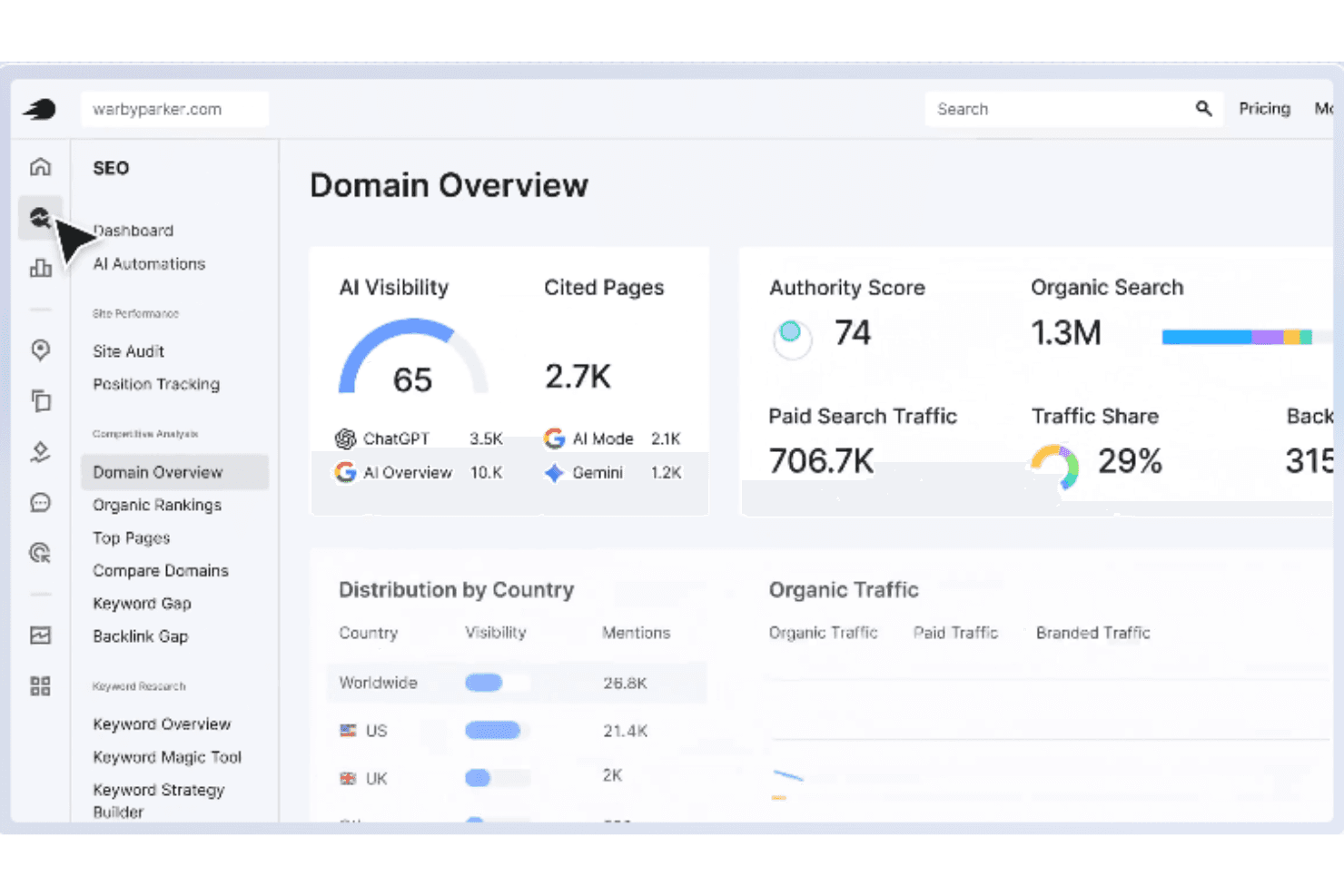
Semrush offers a feature-rich dashboard that can feel overwhelming at first, but its layout is logical and customizable once you get familiar with it. Users appreciate the clear visualizations and detailed tooltips, which help demystify complex analytics. However, some reviewers note that the abundance of options and data layers requires time to master. For teams willing to invest in onboarding, Semrush delivers powerful insights without sacrificing long-term usability.
Integrations
Semrush integrates with Google Analytics, Google Search Console, Google Ads, Trello, Facebook Ads, LinkedIn Ads, monday.com, and Zoho, among others.
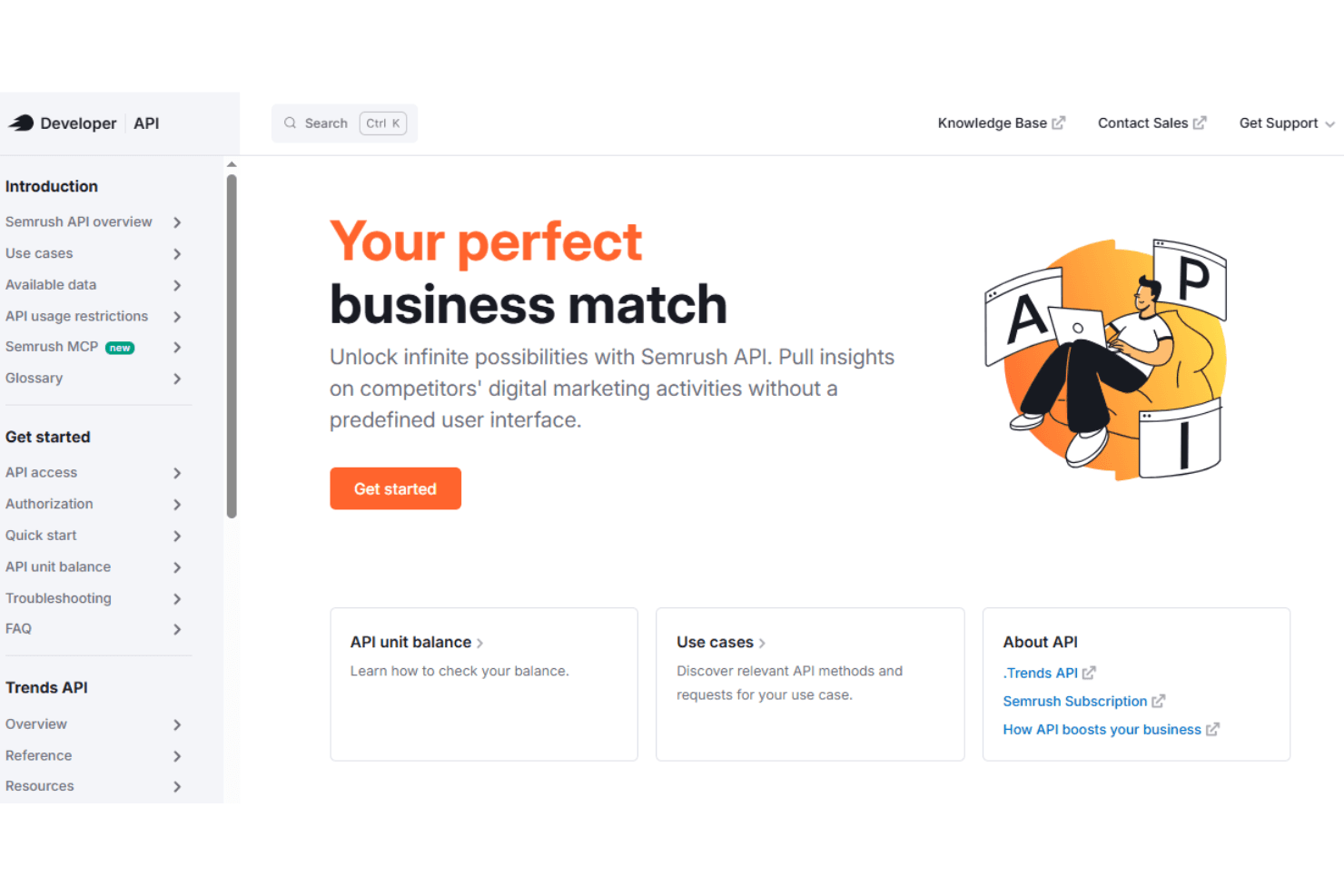
Semrush also offers an API and can connect with third-party integration tools for expanded functionality.
Semrush Specs
- API: Yes
- Audience Targeting: Yes
- Brand Management: Yes
- Conversion Tracking: Yes
- Dashboard: Yes
- Data Export: Yes
- Data Import: Yes
- Data Visualization: Yes
- External Integrations: Yes
- Keyword Tracking: Yes
- Link Tracking: Yes
- Marketing Automation: Yes
- Multi-Account: Yes
- Multi-User: Yes
- Notifications: Yes
- Social-Media Integration: Yes