
Finding the right UX community can help you connect with mentors, swap real-world advice, and stay ahead of industry trends. Here’s a look at the communities where designers support one another, learn together, and find inspiration at every stage of their careers.
The 11 Best UX Communities
Below are my summaries of the best UX communities. My reviews offer a look at each community's audience, size, cost, and more.
1. Interaction Design Foundation - Best for structured UX learning paths

- Audience: UX, UI, and product designers worldwide
- Size: 1,146,303+ members
- Membership Cost: $22/month
- Platform: Website, private forums, local in-person meetups
The Interaction Design Foundation (IxDF) is a global UX education platform and community that's been running for 24 years. It is built around courses and resources developed by 241+ industry leaders from companies like Google, Adobe, NASA, and Disney—including UX legend Don Norman.
This community is designed for designers at any stage who want structured, credentialed learning alongside a global peer network.
Why join? If you're looking to build or deepen your UX skills methodically, IxDF gives you unlimited access to 41 self-paced courses, 159 master classes, and 271 downloadable templates. What sets it apart is how the learning connects to real community: you get access to members-only forums for portfolio feedback and career advice, plus local meetup groups in 496 cities across 106 countries.
I'd especially recommend it if you're career-switching into UX or working toward credentials you can actually put on your résumé and LinkedIn profile.
2. Designer Hangout - Best with private Slack for vetted UX pros

- Audience: Mid-career and senior UX designers and researchers
- Size: 23,000+ members
- Membership Cost: Invite-only
- Platform: Slack, website, in-person meetups, virtual Q&A sessions
Designer Hangout is a private, invite-only Slack community for working UX designers and researchers, with 23,000+ members worldwide. To join, you submit your LinkedIn profile for review — the vetting process is what keeps the quality of conversations high.
Why join? Unlike open design communities, every member here is a practicing UX professional, which means the discussions on careers, tools, feedback, and industry trends are substantive and peer-level. You also get access to live Q&As with well-known UX leaders like Jared Spool and Jessica Ivins, a UX-specific job board, and opportunities to connect with local practitioners in person.
I'd say it's one of the best places to build genuine professional relationships with other UX practitioners — and it's free once you're in.
Have an account? Log In
3. ADPList - Best for free 1:1 UX mentorship
- Audience: UX and product designers seeking mentorship worldwide
- Size: 1,000,000+ members
- Membership Cost: Free
- Platform: Website, video calls, interview practice modules
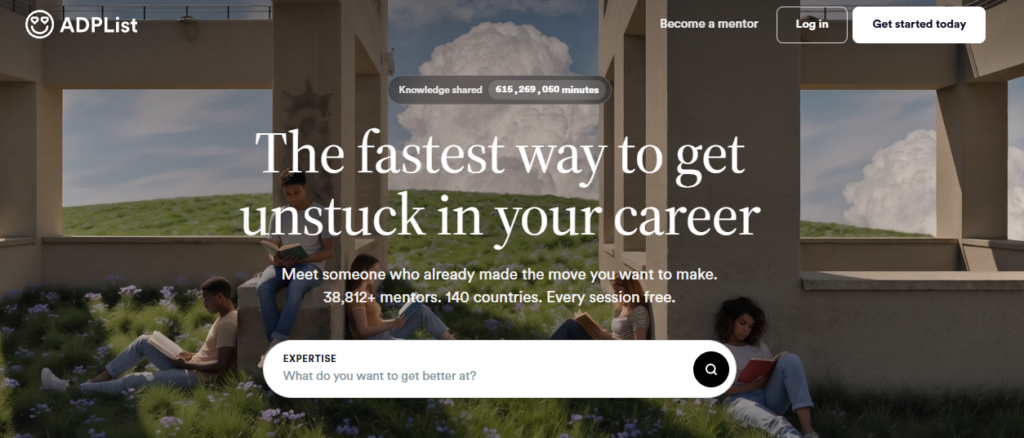
Launched in 2020, ADPList has grown into a global mentorship platform with 1M+ members and 38,000+ volunteer mentors. It includes a deep pool of senior UX and product designers from companies like Microsoft, Meta, and Airbnb.
Every session is free, which I think makes it genuinely hard to beat for accessible, expert-level guidance.
Why join? You can book 1:1 sessions for portfolio reviews, resume feedback, salary negotiation, or mock interviews tailored to specific roles at specific companies. Sessions are recorded and come with AI-generated summaries and action points, so you actually walk away with something concrete.
If you're navigating a career transition into UX or trying to level up toward a senior role, this is where I'd start.
4. Ladies that UX - Best for women seeking local UX chapters
- Audience: Women in UX design at any career stage
- Size: 10,000+ members
- Membership Cost: Free
- Platform: In-person meetups, website, Medium, podcast, conferences
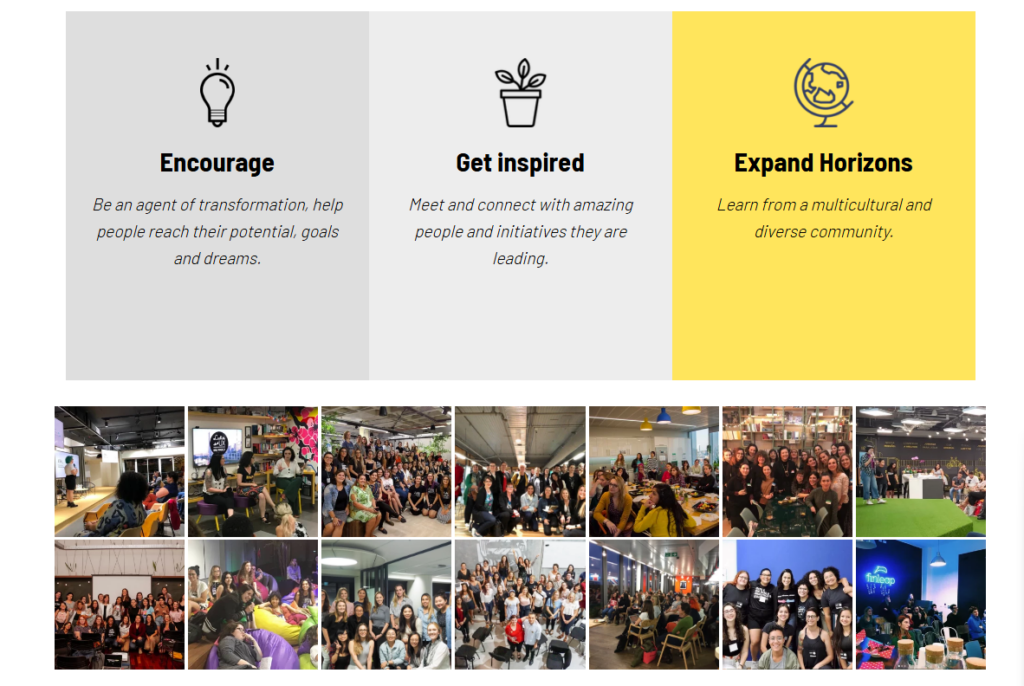
Founded in 2013 in Manchester by UX professionals Lizzie Dyson and Georgie Bottomley, Ladies that UX is a global community built specifically for women in UX, with 50+ local chapters across North America, EMEA, LATAM, and APAC. It's one of the few UX communities where in-person connection is the core offering, not an afterthought.
Why join? Each chapter runs its own local meetups — think relaxed, low-pressure gatherings focused on peer problem-solving and real conversation. Beyond the meetups, you get access to a multilingual Medium publication, a podcast, and its UX conference.
I'd especially recommend checking this one out if you're looking for face-to-face community with other women in UX — just search for your nearest chapter first, since activity levels vary by city.
5. Friends of Figma - Best for local Figma meetups
- Audience: UX and product designers using Figma worldwide
- Size: 100,000+ members
- Membership Cost: Free
- Platform: In-person meetups, website, virtual events, social media
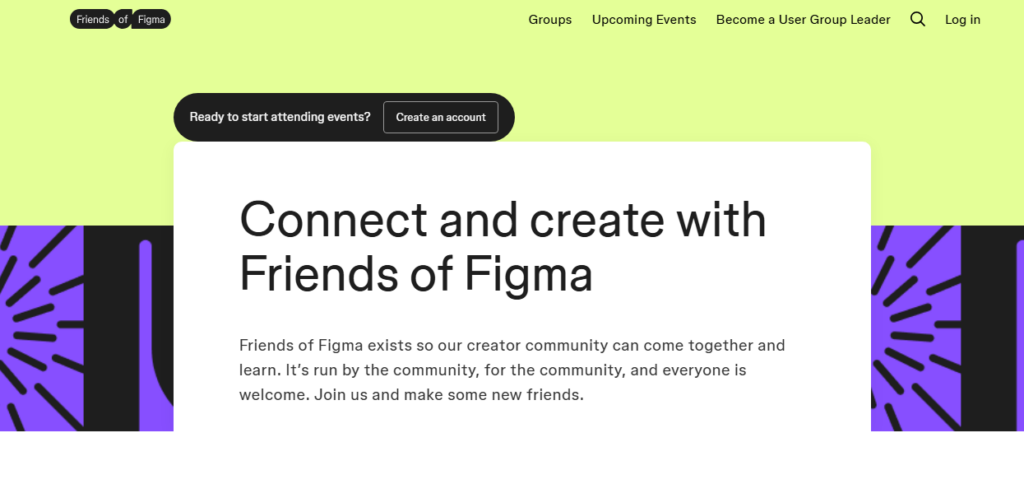
Friends of Figma is a global network of community-run local chapters for designers, developers, and PMs who use Figma. It is supported by Figma, the company, but organized by volunteer chapter leaders in 100+ cities worldwide.
This is one of the few UX communities where the focus is firmly on hands-on, tool-centric learning rather than broader design theory.
Why join? Local chapter events range from casual coffee meetups and portfolio reviews to make-a-thons — design sprints using Figma Make, Figma's AI feature — where you can earn free AI credits and prizes. Many events also feature Figma design advocates and product team members, so you're getting direct access to the people building the tool you use every day.
I'd say this community is best if you want to sharpen your Figma skills and build a local network — just check whether your city has an active chapter before signing up.
6. UX Collective - Best for publishing your UX writing
- Audience: UX and product designers interested in writing and reading
- Size: 622,000+ members
- Membership Cost: Free
- Platform: Website, Medium, Substack newsletter, social media
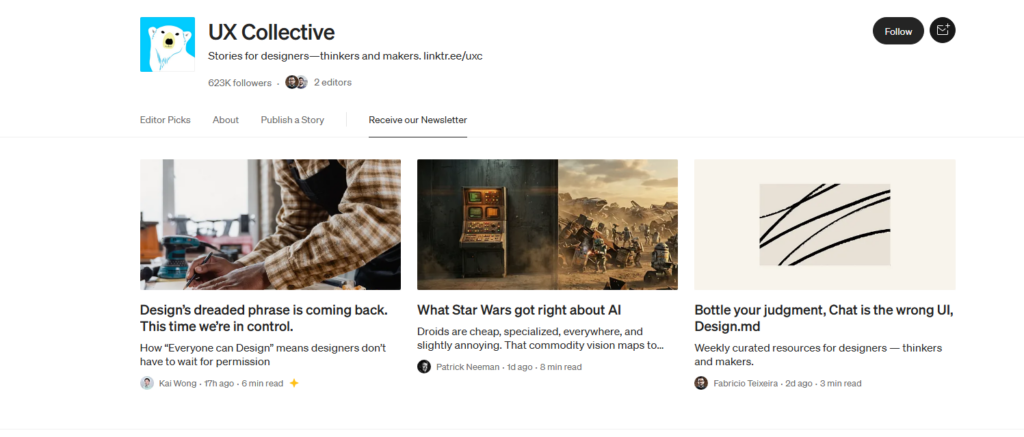
UX Collective is a design publication founded by Fabricio Teixeira and Caio Braga and has grown to 622K+ followers on Medium. It publishes daily essays on UX, product design, and AI from designers around the world.
Why join? What sets UX Collective apart is that you can pitch and publish your own articles alongside a global community of design thinkers. The writing skews strategic and essay-driven, covering topics like AI's impact on design, design systems, and the philosophy of the craft rather than step-by-step tutorials.
I'd recommend it if you want to build your voice as a design writer or stay on top of where the broader conversation in UX is heading.
7. Hexagon UX - Best for women and non-binary mentorship
- Audience: Women and non-binary UX professionals at all levels
- Size: 7,500+ members
- Membership Cost: Free
- Platform: Website, Slack (paused), local meetups, mentorship program
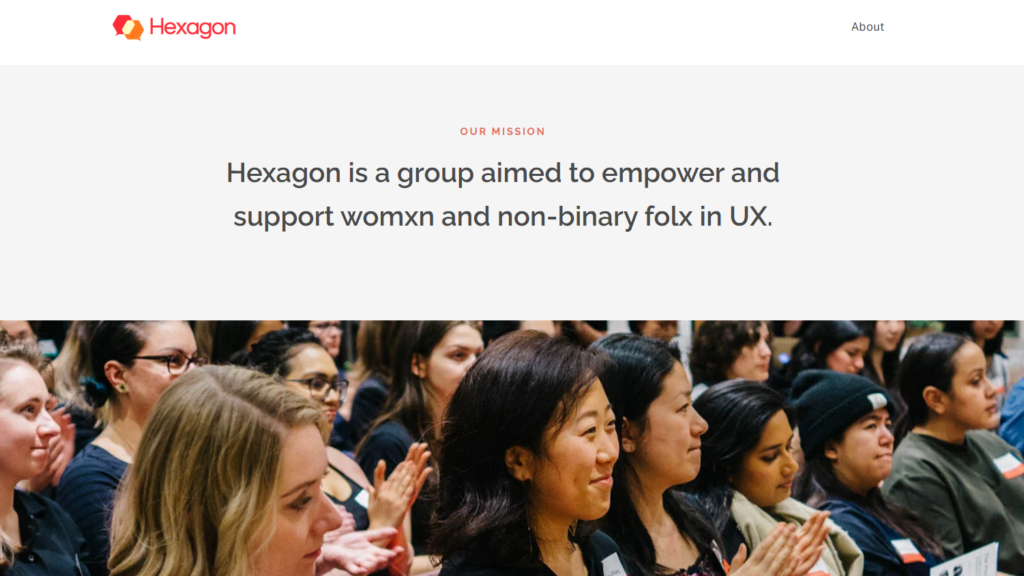
Hexagon UX is a free, non-profit community founded in 2013 for womxn and non-binary UX professionals. It's entirely volunteer-run and built around local events, a structured mentorship program, and a global Slack community.
Why join? The 12-week mentorship program is the real draw here — it pairs you with senior UX professionals from companies like Airbnb, Google, and Facebook for structured, one-on-one guidance you won't find in most communities. Events also go well beyond design craft, covering salary negotiation, ageism, and mental health.
One thing to know: the global Slack is currently paused for new members while the team rebuilds the platform, but local chapter events and mentorship applications are still active.
8. Mixed Methods - Best for UX research peer discussion
- Audience: UX researchers at all experience levels worldwide
- Size: 26,500+ members
- Membership Cost: Free
- Platform: Slack, website, podcast archive
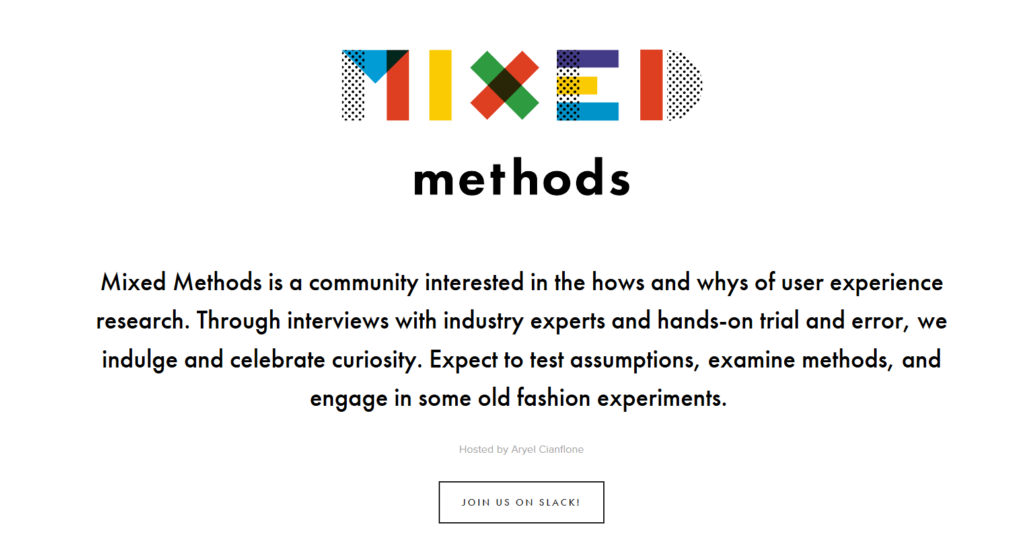
Mixed Methods started in 2017 as a podcast by UX researcher Aryel Cianflone, who wanted to connect with practitioners and speed up her own learning through conversations with experts. It's since grown into a Slack community of 26,500+ UX researchers worldwide.
Why join? The Slack is where the real value is today — it's one of the largest free peer spaces built specifically for UX researchers, so conversations stay focused on methodology, research operations, and craft rather than design broadly. The podcast archive is also worth exploring, with episodes featuring Jared Spool, Indi Young, Kate Towsey, and Michael Margolis going deep on research practice.
I'd set expectations going in: the podcast has been on hiatus since 2020, so this is a self-serve peer community rather than an actively programmed one — but if you want a large, free network of fellow researchers to think alongside, it delivers.
9. Design Buddies - Best for aspiring UX designers

- Audience: Early-career designers, students, and career-switchers in UX
- Size: 150,000+ members
- Membership Cost: Free
- Platform: Discord, website, Luma, Substack, Hop, Pallet, in-person meetups
Founded by Grace Ling, Design Buddies has grown into one of the largest design communities in the world, with 150,000+ members on Discord. It's built specifically for aspiring designers looking for connection, support, and opportunities.
Why join? If you're breaking into UX, Design Buddies gives you real infrastructure to do it. Its mentorship platform (Hop) pairs you with senior designers, a job board with direct hiring manager introductions, and 10-week design project cohorts to build practical experience.
The Discord is active and social, so you're finding peers, getting portfolio feedback, and attending events both online and in-person. I'd set expectations if you prefer quieter, more focused communities — at 150,000+ members, it's lively, but that scale also means there's almost always someone available to help.
More Articles
10. Women Talk Design - Best for aspiring design speakers
- Audience: Women and non-binary UX and design professionals
- Size: 700+ members
- Membership Cost: Free
- Platform: Website, Mighty Networks, workshops, online events
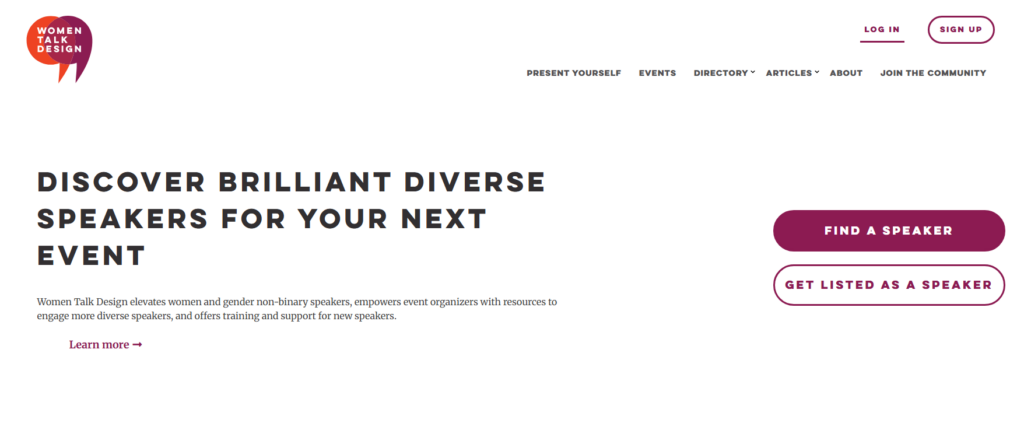
Women Talk Design was founded in 2013 by Christina Wodtke — Stanford HCI lecturer and author — to elevate women and gender non-binary voices in design and tech, and it's since grown into a directory of 700+ speakers and a private community on Mighty Networks. It's run by CEO Danielle Barnes alongside a small dedicated team.
Why join? If you're a woman or gender non-binary designer who wants to get on conference stages, Women Talk Design gives you a speaker directory to get discovered by event organizers. This is a private community to workshop talk ideas and share opportunities, and speaker training programs to help you actually craft and deliver your talk.
It's worth noting that this community is specifically focused on speaking, so if you're looking for general UX peer discussion, it's not the right fit. But if building a public presence as a design practitioner is on your radar, I think this is the most focused community for that goal.
11. Dribbble - Best for showcasing UI work
- Audience: UX, UI, and product designers worldwide
- Size: 1,000,000+ members
- Membership Cost: Free
- Platform: Website, job board, marketplace
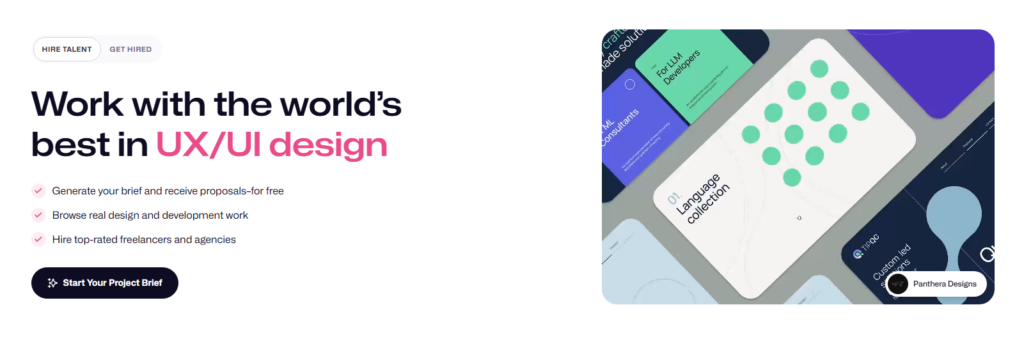
Dribbble launched in 2009 as an invite-only portfolio platform for designers, and it's grown into one of the most recognized places to share and discover design work online. It's run by a fully remote team and is used by millions of designers worldwide.
Why join? Dribbble is less of a discussion community and more of a professional presence. Your profile functions as a living portfolio that hiring managers and clients actively browse when looking for design talent. You also get access to a job board, a marketplace to sell digital assets like icons and templates, and freelance leads through their InstantMatch feature.
I'd say it's most valuable if visual craft is a core part of your work; if you're a UX researcher or heavily focused on strategy, you may find it less relevant to your day-to-day.
What’s Next?
Don't forget to subscribe to our newsletter for more product management resources and guides, plus the latest podcasts, interviews, and other insights from industry leaders and experts.