

API-gatewayprogramvare administrerer, sikrer og ruter API-trafikk mellom tjenestene og brukerne dine. Hvis du leter etter den beste API-gatewayprogramvaren, ønsker du sannsynligvis å forenkle API-administrasjonen, håndheve sikkerhetspolicyer og støtte mikrotjenester eller hybride skymiljøer. Ved å velge riktig løsning kan teamet ditt håndtere økende API-kompleksitet, opprettholde samsvar og sørge for at integrasjonene fungerer problemfritt.
I denne veiledningen finner du en nøye utvalgt liste over de beste API-gatewayverktøyene for 2026 — hvert av dem er valgt for å hjelpe deg med å sammenligne funksjoner og ta en informert beslutning for virksomheten din.
Why Trust Our Software Recommendations
6,700+
Reviews
20
Industry experts
16+
Evaluation factors
14
Years
Our team has been testing and reviewing software since 2012. As product managers ourselves, we know how difficult—and important—it is to choose the right software.
For this guide, we evaluated tools using hands-on testing and independent research, scoring tools using our selection criteria.
Our reviews reflect our human editorial judgment, not a sales pitch.
Expert reviewers:
- Andrew LumbySenior TPM
- Cristiano ValimSenior UI/UX Lead


Sammenligningstabell for API-gatewayprogramvare
Denne sammenligningstabellen oppsummerer prisopplysningene for mine utvalgte API-gatewayprogramvarer:
| Tool | Best For | Trial Info | Price | ||
|---|---|---|---|---|---|
| 1 | Best for full API lifecycle governance | 30-day free trial + free demo available | Pricing upon request | Website | |
| 2 | Best for API monetization and usage billing | 30-day free trial | From $25/month | Website | |
| 3 | Best for API monetization and product packaging | 60-day free trial available | From $20/1M API calls | Website | |
| 4 | Best for event-driven API support | Free demo available | From $2,500/month | Website | |
| 5 | Best for managing APIs in the Microsoft Azure ecosystem | Free trial available | From $48.04/month | Website | |
| 6 | Best for hybrid and multi-cloud API deployments | 30-day free trial available | Pricing upon request | Website | |
| 7 | Best for end-to-end API lifecycle governance | 30-day free trial + free demo available | Pricing upon request | Website | |
| 8 | Best for connecting diverse enterprise systems | Free trial + free demo available | Pricing upon request | Website | |
| 9 | Best for API monetization and billing integration | 30-day free trial + free demo available | Pricing upon request | Website | |
| 10 | Best for API monetization and usage-based billing | Free trial available | Usage-based pricing | Website |


Anmeldelser av API-gatewayprogramvare
Nedenfor finner du mine detaljerte sammendrag av API-gatewayprogramvarene som kom med på kortlisten min. Anmeldelsene mine gir en detaljert gjennomgang av funksjonene, de beste bruksområdene og integrasjonene til hver plattform, slik at du kan finne den beste for deg.
 Best for full API lifecycle governance
- 30-day free trial + free demo available
- Pricing upon request
Visit WebsiteCustomer Rating:4.5/5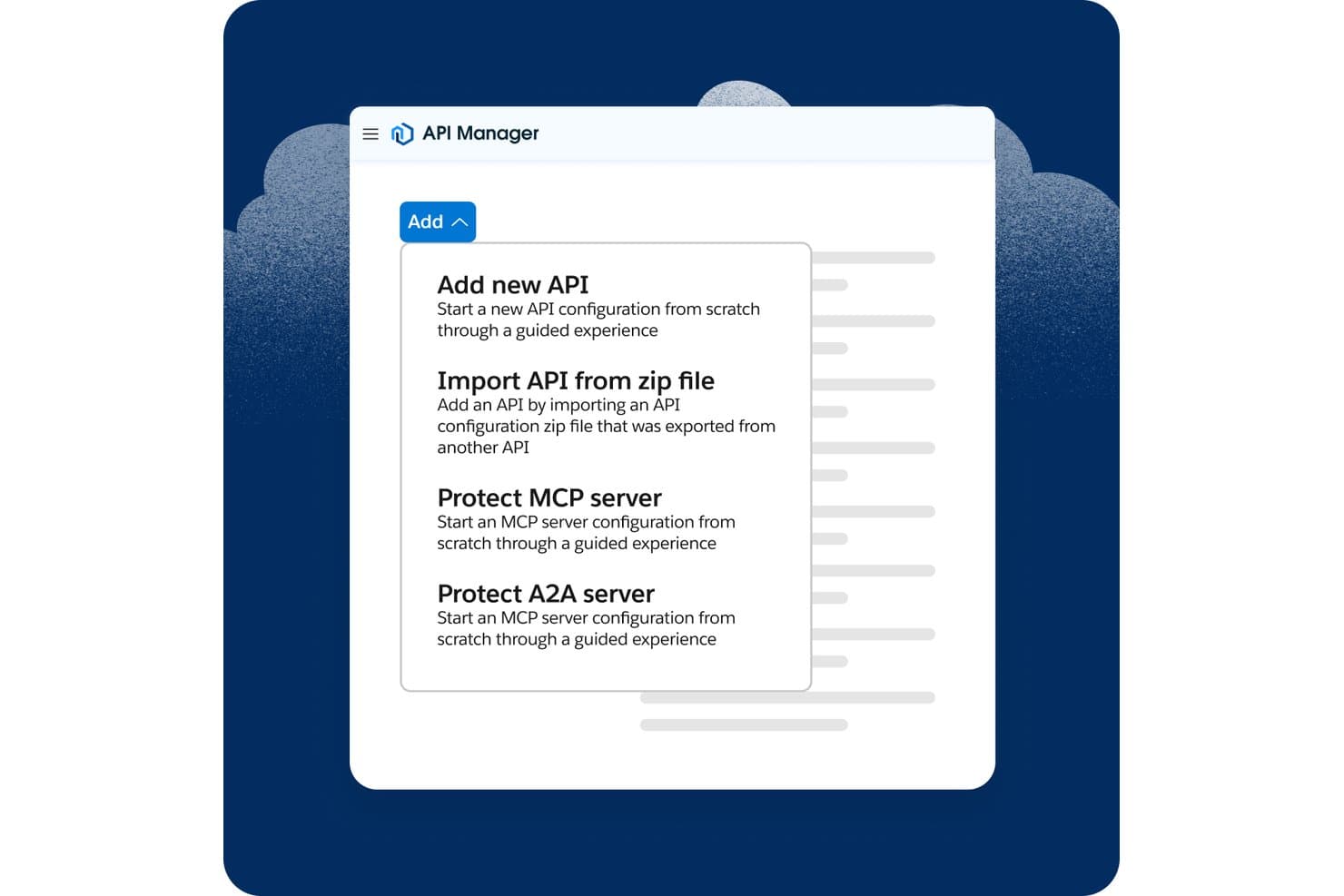
MuleSoft Anypoint API Manager menu for adding, importing and protecting APIs MuleSoft Anypoint Platform is an API gateway and integration platform that covers API design, traffic management, security policy enforcement, protocol translation, and developer portal publishing across hybrid, multi-cloud, and self-managed environments.
Who Is MuleSoft Anypoint Best For?
MuleSoft Anypoint Platform is a strong fit for enterprise architects and platform teams managing APIs across hybrid, multi-cloud, and federated gateway environments.
Why I Picked MuleSoft Anypoint
MuleSoft Anypoint earns its spot on my shortlist because it covers the full API lifecycle from a single control plane, which is rare at this scale. I particularly like Omni Gateway's federated governance: it enforces policies across Kong, Apigee, AWS, and Azure gateways without migrating any of them. API Manager adds SLA-tiered access controls and a built-in policy library spanning JWT, mTLS, OAuth 2.0, and Cedar-based GraphQL rules, all applied without downtime.
MuleSoft Anypoint Key Features
- Anypoint Monitoring: Real-time and historical dashboards track response time, error rate, throughput, and availability across your APIs and integrations.
- DataWeave transformation: A built-in transformation language that converts and maps data between formats across REST, SOAP, gRPC, and GraphQL without separate middleware.
- Anypoint Exchange: A searchable catalog of APIs, connectors, templates, and policies where teams can discover, test, and reuse assets across projects.
- LLM token rate limiting: Policy-level controls that enforce rate limits based on token counts for OpenAI-format, A2A, and Model Proxy APIs.
MuleSoft Anypoint Integrations
MuleSoft Anypoint integrates with Kong, Apigee, AWS API Gateway, Azure API Management, Okta, PingFederate, Datadog, Splunk, and New Relic. It also supports custom integrations through APIs and CI/CD workflows via Anypoint CLI, Helm charts, Docker, and Kubernetes.
Pros and Cons
Pros:
- Covers REST, SOAP, gRPC, and GraphQL
- Supports extensive authentication and authorization policies
- Governs APIs across multiple gateway vendors
Cons:
- Portal customization depends on Salesforce infrastructure
- Requires specialized DataWeave expertise
Learn more about MuleSoft Anypoint: Best for API monetization and usage billing
- 30-day free trial
- From $25/month
Visit WebsiteCustomer Rating:4.4/5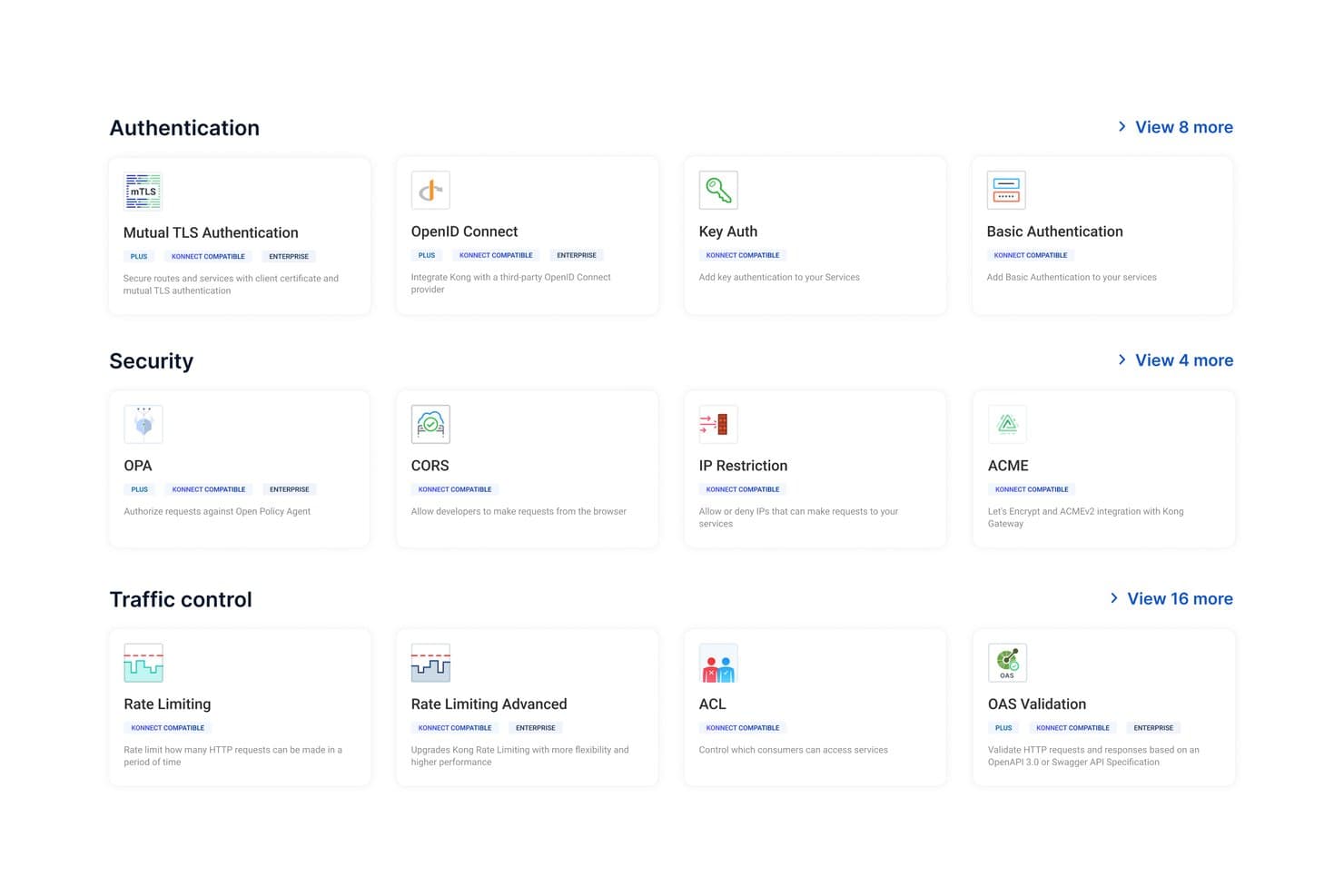
Kong Gateway plugin catalog covering authentication, security and traffic control Kong Gateway is an API gateway platform that handles request routing, traffic management, authentication, rate limiting, protocol translation, and developer portal management across hybrid, multi-cloud, and Kubernetes environments.
Who Is Kong Gateway Best For?
Kong Gateway is a strong fit for platform and API product teams that need to monetize API consumption with usage-based billing, metering, and invoicing built directly into the gateway.
Why I Picked Kong Gateway
I picked Kong Gateway as one of the best because it's the only API gateway on this list with a native monetization engine built directly into the control plane. Through Konnect Metering & Billing, built on OpenMeter, you can meter API consumption in real time, configure usage-based pricing tiers and prepaid credits, and push invoices through Stripe without a separate billing system. The Consumer Groups feature lets you enforce different rate-limit policies per pricing tier automatically.
Kong Gateway Key Features
- Expression-based routing engine: Configure request routing rules using a flexible expression syntax that matches on methods, hosts, paths, headers, and SNI simultaneously.
- Consumer Groups: Segment API consumers into tiers and apply distinct policies—such as rate limits or access controls—to each group from a single configuration.
- Active Tracing: Follow individual API transactions through every policy execution step and upstream interaction to pinpoint where latency or failures occur.
- decK declarative config CLI: Manage your entire gateway configuration as code, enabling version control and automated deployments through CI/CD pipelines.
Kong Gateway Integrations
Kong Gateway offers native integrations with OpenTelemetry, Prometheus, Datadog, HashiCorp Vault, AWS Secrets Manager, GCP Secrets Manager, Kafka, Confluent, Solace, and Stripe. Its Admin API, decK, and Terraform provider support custom integrations and CI/CD workflows.
Pros and Cons
Pros:
- Broad authentication supports secure API exposure
- Hybrid deployments support complex enterprise environments
- Native API monetization and usage billing
Cons:
- OSS and Enterprise capabilities diverge considerably
- Configuration can overwhelm smaller platform teams
Learn more about Kong Gateway: Best for API monetization and product packaging
- 60-day free trial available
- From $20/1M API calls
Visit WebsiteCustomer Rating:4.3/5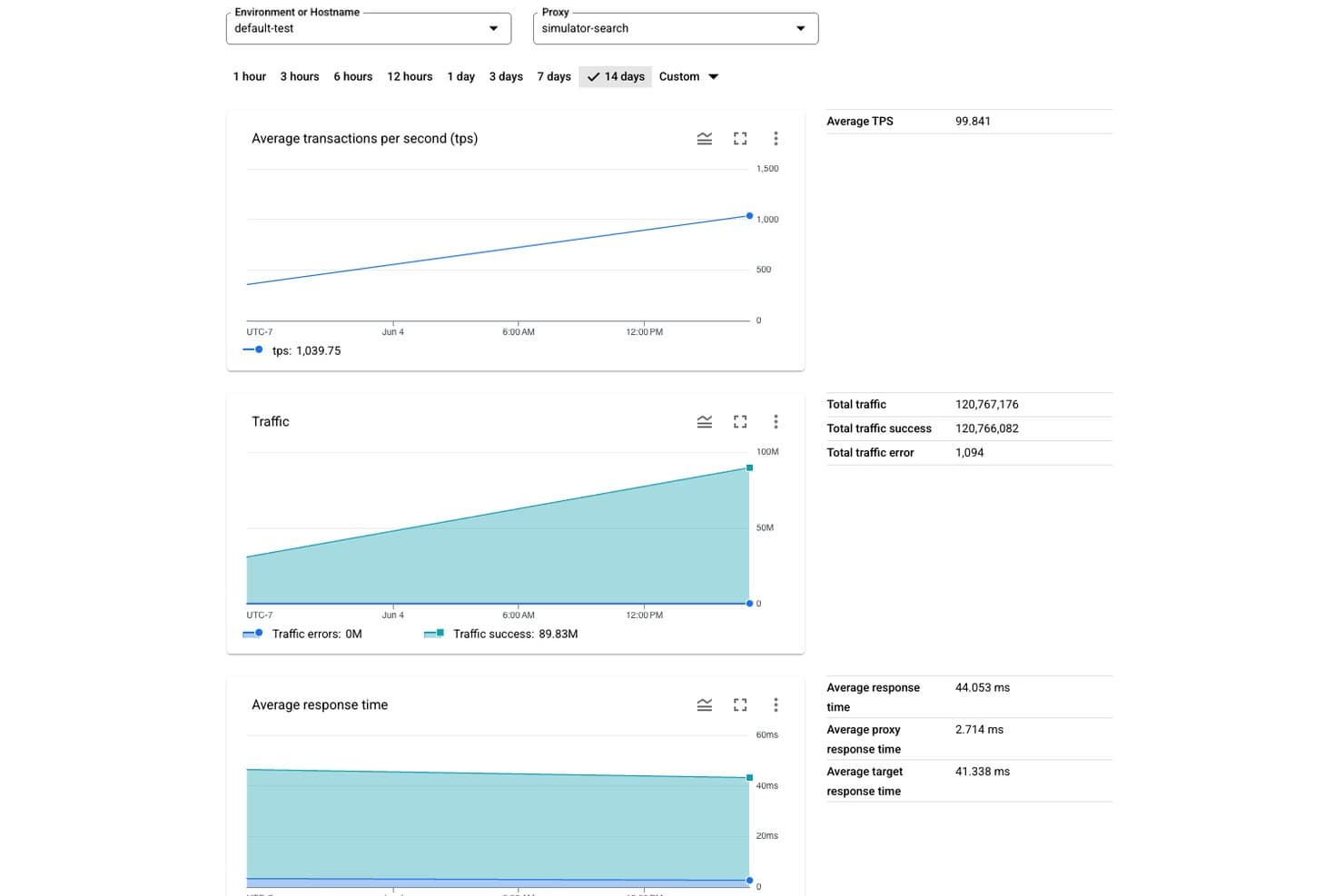
Apigee API Proxy Performance dashboard with traffic, throughput and response time Apigee is Google Cloud's API management platform that works as a proxy layer between clients and backend services, handling security enforcement, traffic management, rate limiting, protocol mediation, analytics, and built-in API monetization.
Who Is Apigee Best For?
Apigee is a strong fit for enterprise teams that need to expose, govern, and monetize APIs at scale—especially those already invested in Google Cloud infrastructure.
Why I Picked Apigee
I've included Apigee in my top picks because it's one of the few API gateways that treats monetization as a first-class feature, not an afterthought. You can define rate plans with setup fees, usage-based tiers, and revenue sharing, then enforce them automatically through the MonetizationLimitsCheck policy. I also like that API products let you bundle specific endpoints into discrete, subscribable packages, which makes it straightforward to offer differentiated tiers to different developer audiences.
Apigee Key Features
- Advanced API Security add-on: Uses machine learning to detect API abuse and bad bots, identify undocumented shadow APIs, and surface proxy configuration risks with fix recommendations.
- Apigee hybrid deployment: Runs the API runtime on your own Kubernetes cluster—on-premises or on any public cloud—while Google manages the control plane, keeping the runtime functional even when disconnected.
- 50+ built-in policies: Covers security, traffic management, mediation, and transformation, with support for custom logic in JavaScript, Python, Java, or XSLT.
- Model Context Protocol (MCP) endpoints: Exposes existing APIs as MCP tools with OAuth 2.1/OIDC authentication and per-tool analytics, enabling AI agents to consume your APIs directly.
Apigee Integrations
Apigee integrates with Google Cloud Load Balancing, Cloud Armor, Cloud IAM, Cloud Logging, Cloud Monitoring, Cloud Build, Pub/Sub, Dialogflow, Gemini, Envoy, and Istio. Its REST API, Maven plugin, and apigeecli support custom integrations and CI/CD workflows.
Pros and Cons
Pros:
- Hybrid runtime supports multi-cloud deployment
- Advanced security detects abuse and shadow APIs
- Built-in API monetization supports tiered product packaging
Cons:
- XML-based policies increase implementation complexity
- GraphQL lacks federation and gRPC remains limited
Learn more about Apigee: Best for event-driven API support
- Free demo available
- From $2,500/month
Visit WebsiteCustomer Rating:4.5/5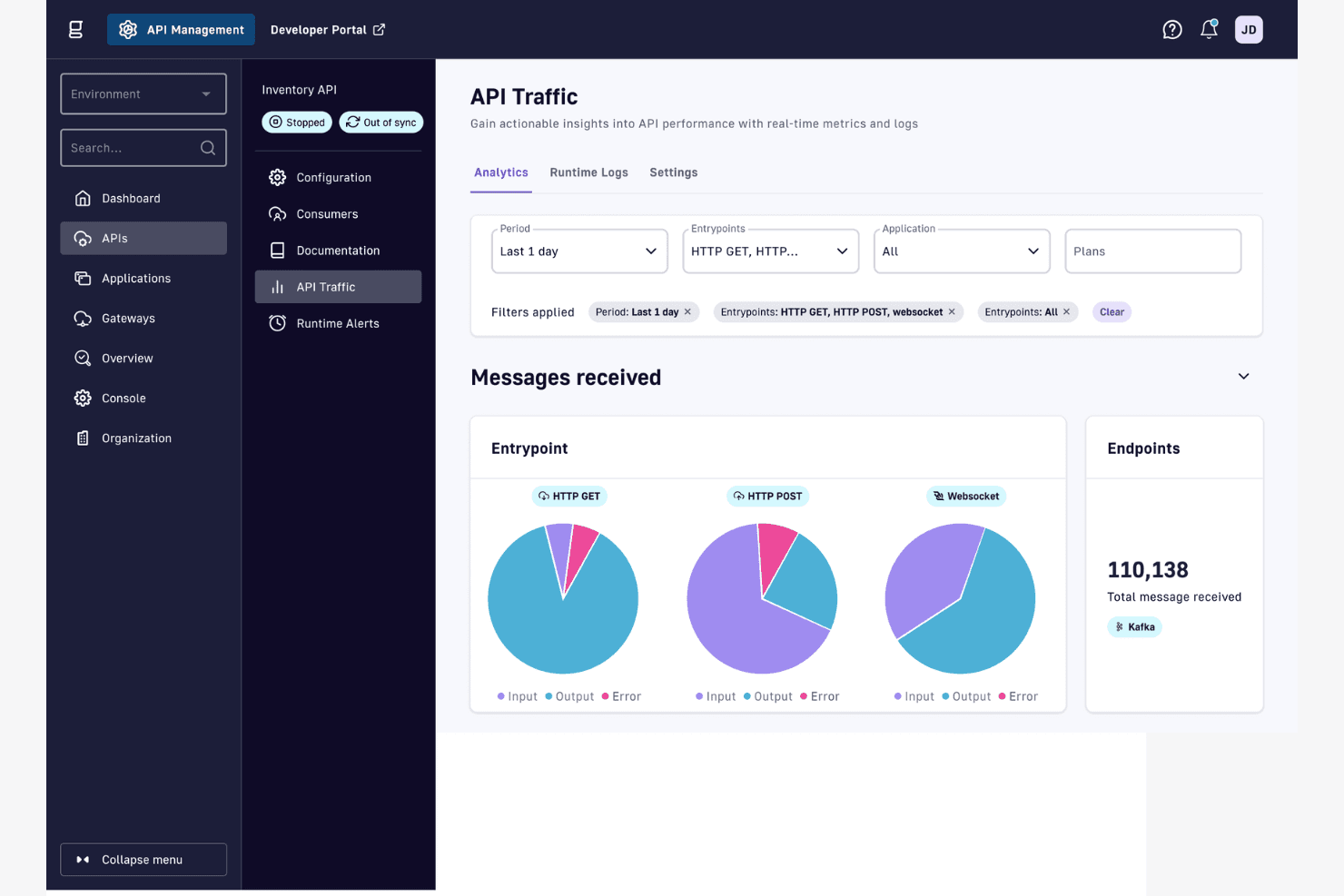
Gravitee provides real-time API traffic analytics and request distribution insights. Gravitee is an API gateway and management platform that handles REST, GraphQL, gRPC, WebSocket, and event-driven protocols like Kafka, MQTT, and RabbitMQ under a single policy and control layer.
Who Is Gravitee Best For?
Gravitee is a strong fit for backend engineers and platform teams that need to manage event-driven APIs alongside traditional REST traffic under a single control layer.
Why I Picked Gravitee
I picked Gravitee as one of the best because no other gateway on my list handles event-driven protocols with the same depth. Its native Kafka gateway lets you apply per-message policies like rate limiting, filtering, and key transformation directly on Kafka topics, then expose those streams as REST, WebSocket, or Webhook APIs without any sidecars. I also love the multi-cluster Kafka governance features, where Virtual Clusters and Kafka Mesh let teams manage several broker clusters behind a single endpoint.
Gravitee Key Features
- Policy Studio: A drag-and-drop interface for building and applying API policies without writing code, covering authentication, rate limiting, and transformation.
- Multi-gateway federation: Discovers and centralizes APIs from third-party gateways like AWS API Gateway, Azure APIM, Apigee, IBM, and Tyk into a single catalog and developer portal.
- Distributed rate limiting: Enforces per-consumer and per-plan rate limits across distributed environments using Redis or Hazelcast, with token-bucket burst support.
- OpenTelemetry export: Sends API metrics, traces, and logs to external observability tools like Datadog, Grafana, and Splunk with full-payload tracing and sensitive data redaction.
Gravitee Integrations
Gravitee offers native integrations with Kafka, MQTT, RabbitMQ, Azure Service Bus, Solace, Datadog, Grafana, Splunk, and Prometheus. It also federates AWS API Gateway, Azure APIM, Apigee, IBM, and Tyk, with an Automation API for custom workflows.
Pros and Cons
Pros:
- Drag-and-drop policy configuration
- Message-level Kafka policy control
- Deep event-driven API governance
Cons:
- Advanced policies require expression language
- UI navigation can feel difficult
Learn more about Gravitee: Best for managing APIs in the Microsoft Azure ecosystem
- Free trial available
- From $48.04/month
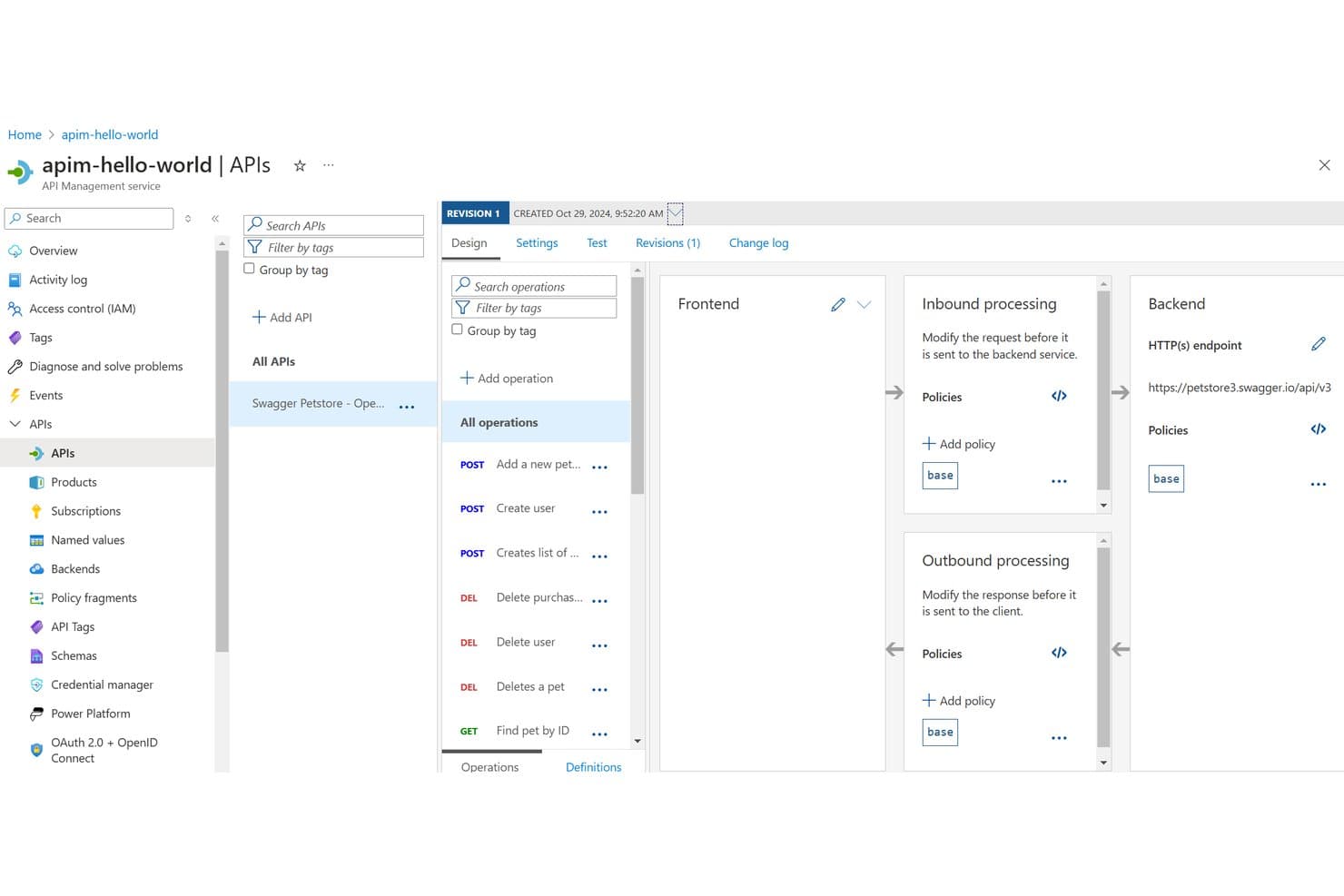
Azure API Management portal showing a published API with its operations and policies Azure API Management is a full-lifecycle API gateway platform from Microsoft that handles request routing, traffic management, authentication, rate limiting, protocol translation across REST, SOAP, GraphQL, gRPC, and OData, and developer portal publishing.
Who Is Azure API Management Best For?
Azure API Management is a strong fit for enterprise teams already running workloads on Azure who need centralized governance across traditional, AI, and agent-based APIs.
Why I Picked Azure API Management
Azure API Management earns its spot on my shortlist because it's the most natural fit when your infrastructure is already rooted in Azure. I love how it handles protocol translation across REST, SOAP, GraphQL, gRPC, and OData under one control plane, so you're not stitching together separate tools for different API types. Its workspace-based federated governance also lets separate teams publish and manage their own APIs while a central team enforces policy.
Azure API Management Key Features
- AI token limits and quotas: Set per-consumer token limits and usage quotas on AI model endpoints, including support for cost attribution across teams.
- Self-hosted gateway: Deploy a Linux Docker container on any Kubernetes, Docker, or Azure Arc environment to route API traffic from on-premises or non-Azure infrastructure.
- Workspace-based access control: Scope Azure RBAC permissions to individual workspaces so separate teams manage their own APIs independently.
- OWASP API Top 10 protection: Apply built-in security policies that guard against common API vulnerabilities, with optional Microsoft Defender for APIs for threat detection.
Azure API Management Integrations
Azure API Management offers native integrations across the Microsoft ecosystem, including Azure Monitor, Application Insights, Event Hubs, Microsoft Entra ID, Key Vault, API Center, Azure OpenAI, Microsoft Foundry, and Copilot Studio. Its REST API, CLI, SDKs, ARM, Bicep, and Terraform support custom integrations and CI/CD workflows.
Pros and Cons
Pros:
- Supports federated workspace-based API management
- Governs AI tokens and MCP traffic
- Handles REST, SOAP, GraphQL, and gRPC
Cons:
- Policy configuration requires substantial administrative expertise
- Tier differences restrict important gateway capabilities
Learn more about Azure API Management: Best for hybrid and multi-cloud API deployments
- 30-day free trial available
- Pricing upon request
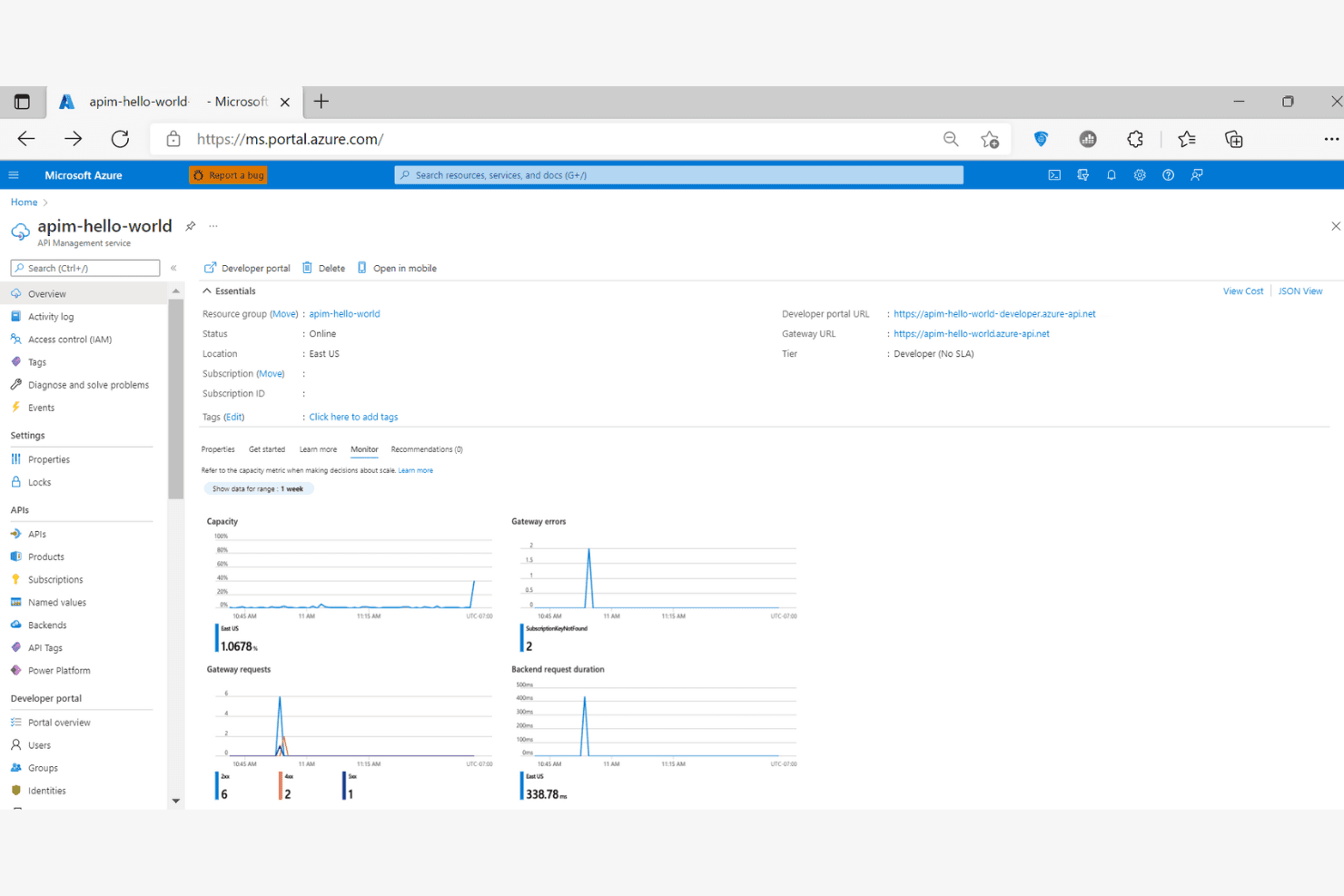
Azure API Management monitors API traffic, performance, errors, and gateway capacity. Microsoft Azure API Management is an Azure-native API gateway platform that handles REST, SOAP, GraphQL, WebSocket, and gRPC APIs, with a policy engine for traffic routing, authentication, rate limiting, and protocol transformation across managed and self-hosted gateway deployments.
Who Is Microsoft Azure API Management Best For?
Microsoft Azure API Management is a strong fit for enterprise teams already invested in the Azure ecosystem who need to manage APIs across on-premises infrastructure, Azure, and other clouds from a single control plane.
Why I Picked Microsoft Azure API Management
I've included Microsoft Azure API Management in my top picks because its self-hosted gateway is the most practical solution I've seen for teams managing APIs across on-premises infrastructure and multiple clouds from one control plane. You deploy a containerized gateway on Kubernetes or Docker, and it stays connected to Azure's central management plane over port 443, running on cached configuration even if the connection drops. The backend pool load balancing, with round-robin, weighted, and priority-based failover modes, extends that same traffic management logic across every environment you're running.
Microsoft Azure API Management Key Features
- Policy engine: A flexible XML-based policy layer lets you apply JWT validation, header checks, IP filtering, and body transformation at the gateway level across any API type.
- Developer portal: A customizable self-service portal with an interactive try-it console lets API consumers discover, test, and provision their own subscription keys without involving your team.
- Workspace-based federated management: Workspaces give individual teams isolated API administration with their own RBAC permissions, while a central team retains global policy and observability control.
- AI gateway support: Built-in token tracking, semantic caching, and load balancing across AI models let you manage LLM APIs alongside your standard REST and GraphQL endpoints.
Microsoft Azure API Management Integrations
Microsoft Azure API Management offers native integrations across the Microsoft ecosystem, including Azure Functions, Logic Apps, App Service, AKS, Azure OpenAI, Microsoft Entra ID, Key Vault, Azure Monitor, Application Insights, and Event Hubs. It also supports custom integrations through its REST API, ARM, Bicep, Terraform, and PowerShell.
Pros and Cons
Pros:
- Self-service portal supports API discovery
- Policy engine handles complex traffic rules
- Hybrid gateway spans on-premises and clouds
Cons:
- Key capabilities vary sharply by tier
- Self-hosted gateways have limited centralized logging
Learn more about Microsoft Azure API Management: Best for end-to-end API lifecycle governance
- 30-day free trial + free demo available
- Pricing upon request
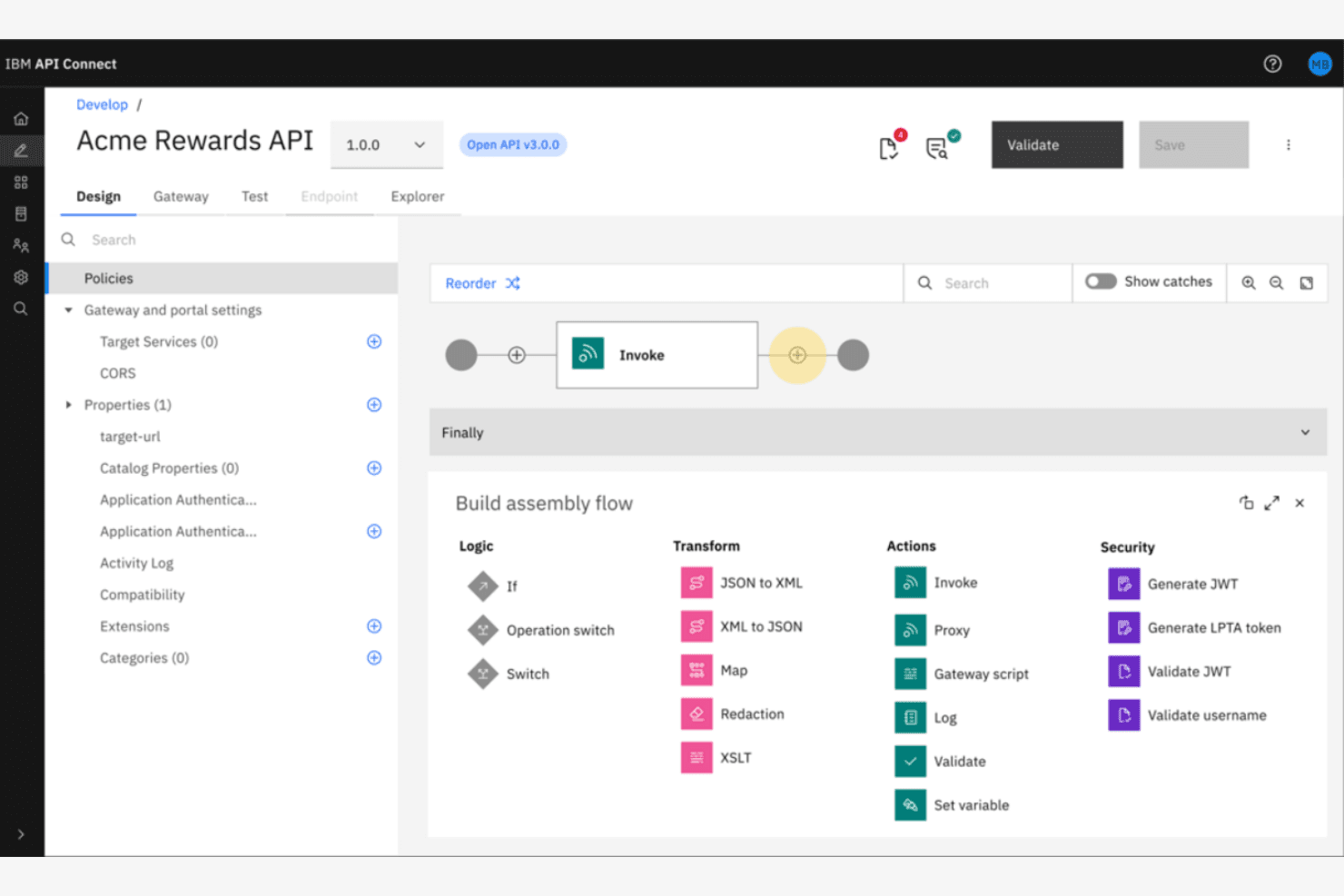
IBM API Connect provides a visual builder to design and configure API flows. IBM API Connect is an AI-powered API management platform that covers the full API lifecycle—from design and security to deployment and monetization—across hybrid, multicloud, and on-premises environments.
Who Is IBM API Connect Best For?
IBM API Connect is a strong fit for enterprise teams in regulated industries—like banking, insurance, and financial services—that need centralized governance across the full API lifecycle.
Why I Picked IBM API Connect
IBM API Connect earns its spot on my shortlist because no other tool I've reviewed covers the full API lifecycle with this level of governance depth. I'm particularly impressed by how it handles policy enforcement at every stage, from design through retirement, using DataPower's security layer for OAuth 2.0, JWT, and OIDC across hybrid and multicloud environments. The AI-powered API Studio, backed by watsonx.ai, even automates policy generation and validation before an API ships.
IBM API Connect Key Features
- Federated gateway management: Govern APIs running on third-party runtimes—including Kong and Apigee—from a single control plane.
- Plan-based rate limiting: Set hard and soft rate limits at the plan, API, or assembly level to give different consumer tiers different quotas.
- Stripe monetization integration: Sell API product plans directly to developers through a built-in Stripe Subscription Billing integration.
- DataPower Nano Gateway: Deploy a lightweight, zero-trust gateway alongside microservices with under 20 MB of RAM usage and sub-second startup.
IBM API Connect Integrations
Documented integrations include Kong Gateway, Apigee SaaS, Stripe Subscription Billing, Azure Key Vault, HashiCorp Vault, AWS Secrets Manager, OpenSearch, Elasticsearch, Apache Kafka, and syslog. API Studio also supports CI/CD workflows through CLI commands.
Pros and Cons
Pros:
- Flexible hybrid and multicloud deployment
- Strong OAuth and JWT enforcement
- End-to-end lifecycle governance
Cons:
- Self-managed upgrades can be labor-intensive
- Complex setup requires specialist expertise
Learn more about IBM API Connect: Best for connecting diverse enterprise systems
- Free trial + free demo available
- Pricing upon request
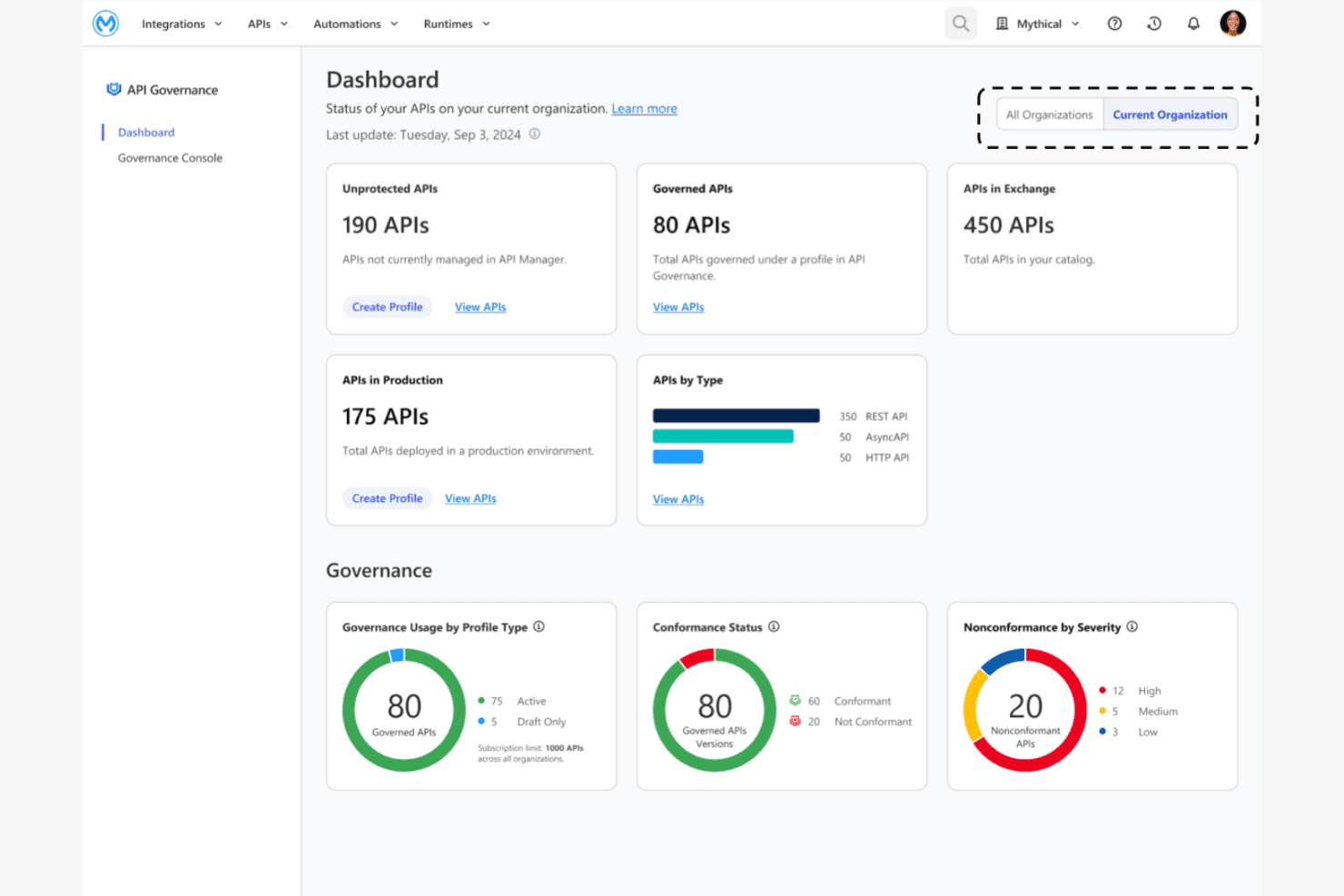
MuleSoft API Governance monitors API compliance, security, and governance metrics. MuleSoft Anypoint Platform is an API gateway and integration platform that combines API management, traffic control, protocol translation, developer portal publishing, and multi-gateway federation in a single environment.
Who Is MuleSoft Best For?
MuleSoft is a strong fit for enterprise IT and architecture teams managing complex integration landscapes with a mix of legacy systems, modern APIs, and SaaS platforms.
Why I Picked MuleSoft
I picked MuleSoft as one of the best because no other gateway on this list handles protocol mediation across as many system types. When your architecture spans SOAP-based ERPs, modern REST microservices, and gRPC backends, DataWeave handles the transformation layer so each system speaks the same language without custom code. I also like that Omni Gateway can govern existing AWS, Azure, Apigee, and Kong gateways through a single control plane, which means you're not forced to migrate legacy infrastructure to get centralized policy enforcement.
MuleSoft Key Features
- SLA-tiered rate limiting: Sets per-client request limits tied to SLA tiers and contracts in API Manager, using client ID and secret to identify consumers.
- Anypoint Monitoring: Provides real-time dashboards, distributed tracing, and OpenTelemetry export to tools like Datadog, Splunk, and New Relic.
- Automated policy enforcement: Applies a consistent baseline set of security and governance policies across every API instance in an environment automatically.
- Anypoint Exchange catalog: A central repository where teams publish, discover, and reuse APIs, connectors, templates, and MCP servers across the organization.
MuleSoft Integrations
MuleSoft offers native integrations with AWS API Gateway, Azure API Management, Apigee, Kong, Okta, PingFederate, Datadog, Splunk, and New Relic. It also supports Istio, Envoy, and API-based custom integrations.
Pros and Cons
Pros:
- Connects API policies to SLA contracts
- Governs multiple gateways without migration
- Mediates SOAP, REST, and gRPC traffic
Cons:
- Self-managed deployments shift operations onto customers
- DataWeave and Anypoint Studio demand specialized expertise
Learn more about MuleSoft: 9Best for API monetization and billing integration
Kong
- 30-day free trial + free demo available
- Pricing upon request
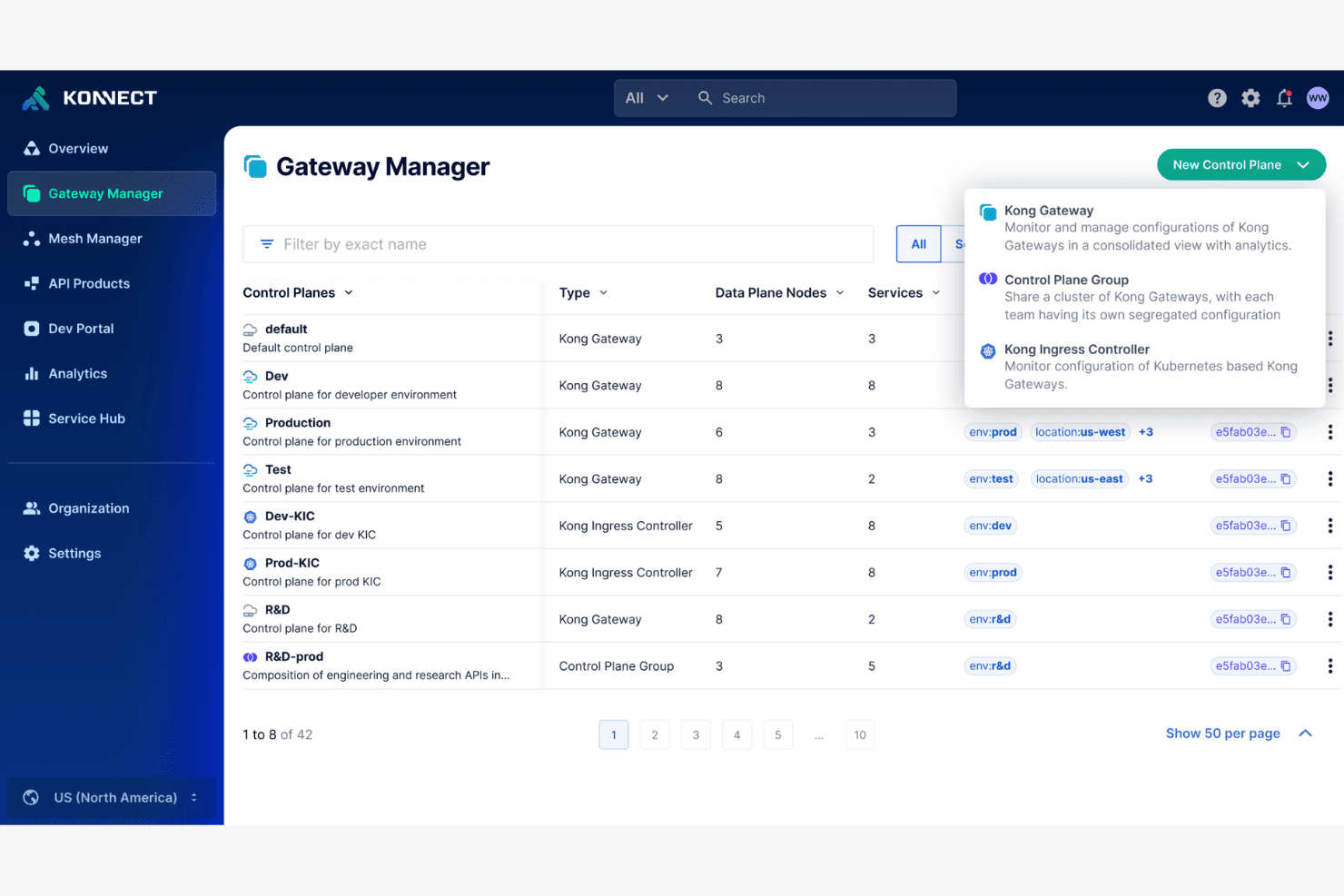
Kong Gateway Manager provides a dashboard to manage API gateways. Kong is an API gateway platform that handles request routing, traffic management, rate limiting, protocol translation, and developer portal publishing across cloud, hybrid, and Kubernetes environments.
Who Is Kong Best For?
Kong is a strong fit for platform and backend engineering teams at mid-size to enterprise companies that need to expose APIs externally and charge for usage.
Why I Picked Kong
I've included Kong in my top picks because its acquisition of OpenMeter gives it a native metering and billing layer that most API gateways simply don't have. I can set up usage-based or tiered pricing plans, track real-time consumption, and connect directly to Stripe or Salesforce without stitching together separate tools. The Entitlement Enforcement plugin then automatically blocks requests the moment a consumer's plan limit is reached, which makes monetization feel like a first-class gateway capability rather than an afterthought.
Kong Key Features
- Rate Limiting Advanced plugin: Sets multiple concurrent rate limits using sliding windows, with Redis-backed counters and per-consumer-group tiers for usage differentiation.
- Multi-protocol support: Routes and translates traffic across REST, gRPC, GraphQL, WebSockets, SOAP, and Kafka from a single gateway.
- Konnect Developer Portal: Publishes branded API catalogs with interactive OpenAPI and AsyncAPI docs, self-service sign-up, and built-in usage analytics.
- decK CLI and Terraform provider: Manages gateway configuration declaratively through GitOps and CI/CD pipelines for repeatable, version-controlled deployments.
Kong Integrations
Kong has native integrations with Stripe, Salesforce, HubSpot, PayPal, Adyen, OpenTelemetry, Prometheus, and Datadog. It supports custom connectivity through its Admin API, decK CLI, Terraform provider, Kubernetes operator, and plugin development kit.
Pros and Cons
Pros:
- Enforces usage entitlements at the gateway
- Supports REST, gRPC, GraphQL, and Kafka
- Handles high-volume traffic with low overhead
Cons:
- Routes, services, and plugins require careful setup
- Enterprise features split capabilities across tiers
Learn more about Kong: Best for API monetization and usage-based billing
- Free trial available
- Usage-based pricing
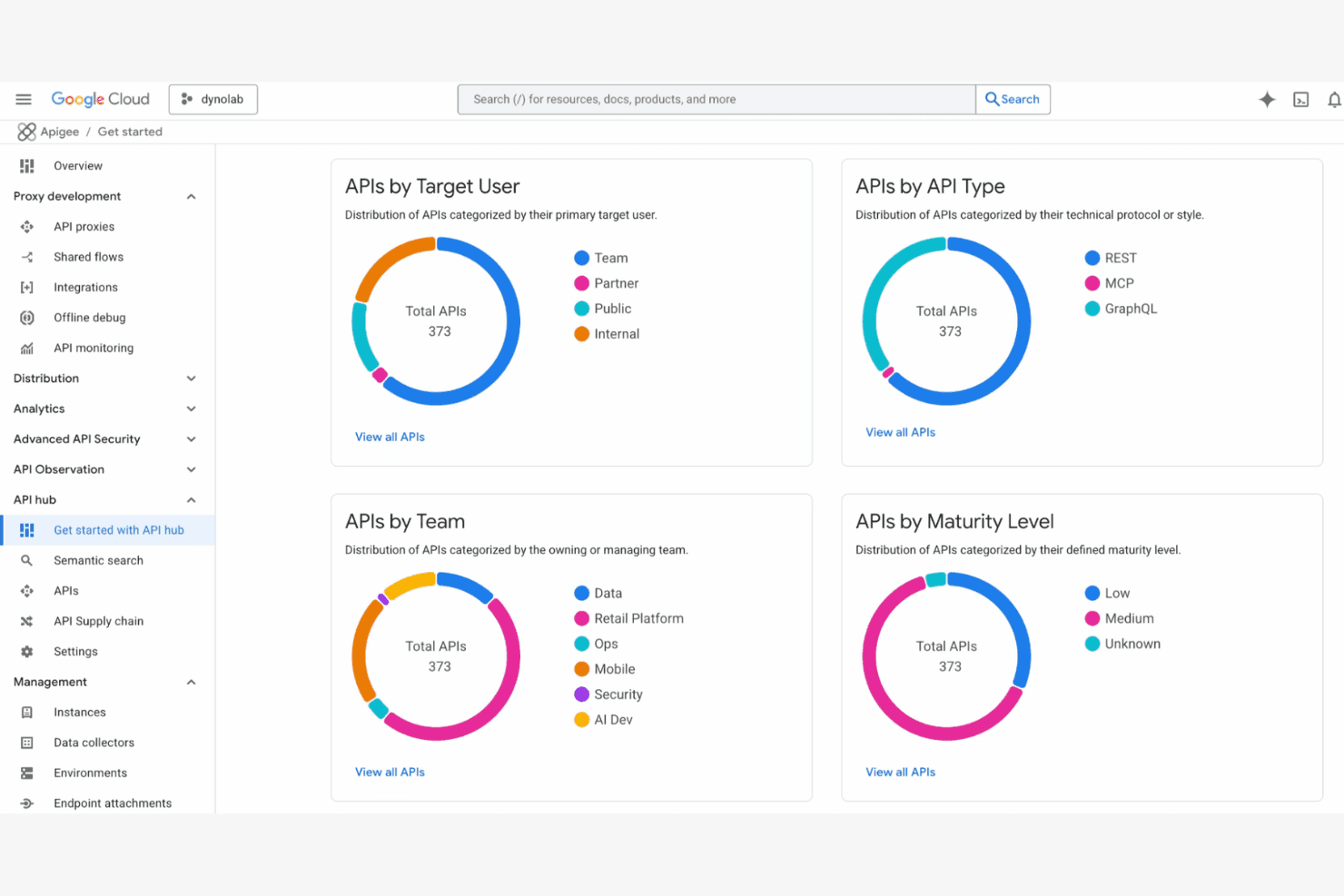
Apigee tracks and analyzes API usage, ownership, and maturity metrics. Google Apigee API Management is an enterprise API gateway that combines proxy-based traffic management, a 50+ policy security library, analytics, developer portals, and built-in API monetization tools.
Who Is Google Apigee API Management Best For?
Apigee is a strong fit for enterprise platform and API product teams that need to package APIs as revenue-generating products with tiered rate plans, usage-based billing, and developer portals.
Why I Picked Google Apigee API Management
I picked Google Apigee API Management as one of the best because it's the only gateway on this list with monetization built directly into the runtime. You can define tiered rate plans with setup fees, recurring charges, and usage-based billing, then enforce them at the proxy layer using the MonetizationLimitsCheck policy—no external billing workaround needed. I also like how API products let you package endpoints into free and paid tiers, each with its own quota, tied to a developer's API key.
Google Apigee API Management Key Features
- 50+ security policies: Apigee includes a library of pre-built policies covering OAuth 2.0, JWT, SAML, IP access control, and threat protection that you can apply directly to any proxy.
- SpikeArrest and quota controls: SpikeArrest smooths sudden traffic spikes, while Quota policies cap usage per consumer or API product at configurable thresholds.
- 14-month analytics retention: built-in dashboards track latency, error rates, and transaction data for up to 14 months, with export options to BigQuery and Cloud Storage.
- Hybrid and multi-cloud deployment: Apigee hybrid lets you run the runtime on your own Kubernetes cluster while Google manages the control plane, keeping API traffic on your network.
Google Apigee API Management Integrations
Google Apigee API Management offers native integrations with Cloud IAM, Cloud Logging, Cloud Monitoring, BigQuery, Cloud Storage, Pub/Sub, Dialogflow, Kubernetes, Envoy, and Istio. Its management and Analytics APIs support custom integrations and automation.
Pros and Cons
Pros:
- Hybrid deployment keeps runtime traffic on your network
- Analytics retains detailed usage data for 14 months
- Built-in API monetization supports tiered rate plans
Cons:
- GraphQL lacks federation across multiple schemas
- gRPC support is limited to pass-through
Learn more about Google Apigee API Management:
Annen API-gatewayprogramvare
Her er noen flere alternativer for API-gatewayprogramvare som ikke kom med på kortlisten min, men som likevel er verdt å se nærmere på:
- 11WSO2 API ManagerBest for open-source API management
- 12TykBest for deploying self-hosted gateways in minutes
- 13ZuploBest for monetizing APIs with built-in billing
- 14Axway Amplify API ManagementBest for governing APIs across multiple vendors
- 15Solo.io Gloo GatewayBest for Kubernetes-native service mesh environments
- 16Axway API GatewayBest for APIs in regulated industries
- 17WSO2 API PlatformBest for API monetization and multi-gateway control
- 18Traefik Hub API GatewayBest for GitOps-driven API access control
How I Evaluate API Gateway Software
I split my evaluation into three parts, giving the most weight to core functionality: routing traffic and authenticating consumers across services. Next, I look for API monetization and developer portals, including metered plans. Finally, I consider deployment flexibility, support, onboarding, and pricing value.
Core Functionality (Table Stakes For This List)
When I'm selecting tools for my list, I score each one on a scale from 0 (does not offer the functionality) to 5 (excels in this area) for each core functionality listed below. I then convert the total into a percentage to help assess each tool's overall fit, with extra weight on any functionalities I’ve deemed essential.
- Routing & Traffic Management (Essential): I look for rule-based routing, load balancing, failover, and traffic splitting across distributed backend services.
- Authentication & Access Control (Essential): I assess OAuth, JWT, API keys, role-based policies, and identity integrations for internal and external consumers.
- Rate Limiting & Throttling: I check whether teams can set consumer, endpoint, and plan limits to protect services during spikes or misuse.
- API Monitoring & Analytics: I evaluate logs, latency and error reporting, usage trends, alerts, and cross-API visibility for production decisions.
- Protocol & Format Translation: I look for practical mediation between REST, SOAP, GraphQL, gRPC, and varied payload formats.
- Developer Portal & Documentation: I assess searchable documentation, interactive testing, API key self-service, onboarding workflows, and usage visibility.
Once I have a list of tools that meet the criteria, I consider what sets each platform apart.
Differentiating Factors (What Sets Vendors Apart)
Here's how I compare and contrast different vendors:
Standout Features
I evaluate whether a platform includes a built-in API monetization engine—metering, billing, and payment integration that lets you package APIs as tiered products without stitching together external billing tools. GraphQL federation support also matters. I check if a gateway can aggregate multiple GraphQL schemas behind one endpoint, which is useful when separate teams own distinct subgraphs. Finally, I look at multi-cloud and edge deployment options, since globally distributed teams need consistent, low-latency access across providers and edge locations.
Beyond Features
I check deployment model flexibility first—teams running Kubernetes-native stacks need a gateway that fits containerized workflows, not one that forces a separate infrastructure path. Compliance matters just as much, especially for regulated industries where SOC 2 adherence, mTLS enforcement, and audit logging aren't optional. I also evaluate how well a platform supports API-as-a-product packaging, including versioned offerings, tiered consumer plans, and usage reporting tied to business KPIs.
Slik velger du API-gatewayprogramvare
Det er lett å gå seg vill i lange funksjonslister og komplekse prisstrukturer. For å hjelpe deg med å holde fokus mens du går gjennom den unike prosessen din for valg av programvare, får du her en sjekkliste over faktorer du bør ha i mente:
| Faktor | Hva du bør vurdere |
|---|---|
| FaktorSkalerbarhet | Hva du bør vurdereKan løsningen håndtere de nåværende og forventede API-trafikkmengdene dine uten større omkonfigurering eller kraftige kostnadsøkninger? Ta hensyn til fremtidig vekst og scenarier med høy belastning. |
| FaktorIntegrasjoner | Hva du bør vurdereKan verktøyet kobles direkte til de eksisterende systemene dine, for eksempel identitetsleverandører, overvåkingsverktøy eller backend-tjenester? Kontroller at det er kompatibelt med teknologistakken din. |
| FaktorTilpasningsmuligheter | Hva du bør vurdereHvor mye kontroll trenger du over policyer, arbeidsflyter og utvidelser? Vurder om du kan endre eller utvide plattformen slik at den oppfyller unike forretningskrav. |
| FaktorBrukervennlighet | Hva du bør vurdereVil teamet ditt kunne konfigurere, distribuere og administrere API-er uten omfattende opplæring? Se etter tydelige grensesnitt og logiske arbeidsflyter som samsvarer med teamets ferdigheter. |
| FaktorImplementering og oppstart | Hva du bør vurdereHvor lang tid vil det ta å komme i gang? Ta hensyn til støtte ved migrering, kvaliteten på dokumentasjonen og tilgjengeligheten av ressurser eller profesjonelle tjenester for oppstart. |
| FaktorKostnad | Hva du bør vurdereEr prisnivåene transparente og forutsigbare når bruken øker? Vær oppmerksom på skjulte gebyrer knyttet til trafikk, brukere eller avanserte funksjoner. Sammenlign de totale eierkostnadene. |
| FaktorSikkerhetstiltak | Hva du bør vurdereStøtter plattformen de nødvendige standardene for autentisering, autorisering og kryptering? Vurder hvordan den håndterer sensitive data og behov for samsvar. |
| FaktorTilgjengelig kundestøtte | Hva du bør vurdereHvilke kanaler for kundestøtte tilbys, og er de tilgjengelige i åpningstidene dine? Ta hensyn til leverandørens responstid og kvaliteten på hjelpressursene. |
Hva er API-gatewayprogramvare?
API-gatewayprogramvare er et verktøy som administrerer, ruter og sikrer API-trafikk mellom klienter og backend-tjenester. Det fungerer som ett enkelt inngangspunkt for API-forespørsler og håndterer autentisering, hastighetsbegrensning, overvåking og protokolloversettelse.
Team bruker API-gatewayprogramvare til å sentralisere API-administrasjon, håndheve sikkerhetspolicyer og forenkle integrasjon med ulike backend-systemer, noe som gjør den avgjørende for organisasjoner som er avhengige av API-er for å koble sammen applikasjoner og tjenester.
Funksjoner
Når du velger API-gatewayprogramvare, bør du se etter følgende viktige funksjoner:
- Ruting av forespørsler: Dirigerer innkommende API-forespørsler til riktig backend-tjeneste basert på definerte regler, slik at data leveres effektivt og korrekt.
- Autentisering og autorisering: Bekrefter brukeridentiteter og håndhever tilgangskontroller, slik at API-er beskyttes mot uautorisert bruk og datainnbrudd.
- Hastighetsbegrensning og struping: Kontrollerer hvor mange forespørsler en klient kan sende innenfor et bestemt tidsrom, forhindrer misbruk og opprettholder tjenestestabiliteten.
- Overvåking av API-trafikk: Sporer og logger API-bruk, ytelse og feilrater, slik at team får innsikt i systemets tilstand og brukeratferd.
- Protokolltransformasjon: Konverterer forespørsler og svar mellom ulike protokoller, for eksempel REST, SOAP eller gRPC, for å støtte ulike krav fra klienter og backend-systemer.
- Lastbalansering: Fordeler innkommende API-trafikk på flere backend-servere, forbedrer påliteligheten og reduserer risikoen for overbelastning av servere.
- Administrasjon av API-versjoner: Støtter flere versjoner av API-er samtidig, slik at team kan oppdatere eller avvikle endepunkter uten å forstyrre eksisterende brukere.
- Utviklerportal: Tilbyr et selvbetjeningsgrensesnitt der utviklere kan få tilgang til API-dokumentasjon, teste endepunkter og be om tilgang, noe som forenkler introduksjon og samarbeid.
- Håndheving av sikkerhetspolicyer: Bruker sikkerhetstiltak som IP-filtrering, datakryptering og trusseldeteksjon for å beskytte API-er mot vanlige sårbarheter.
- Analyse og rapportering: Tilbyr oversikter og rapporter om API-ytelse, brukstrender og sikkerhetshendelser, slik at team kan ta informerte beslutninger og optimalisere API-strategien sin.
Fordeler
Implementering av API-gatewayprogramvare gir flere fordeler for teamet og virksomheten din. Her er noen av fordelene du kan se frem til:
- Sentralisert API-administrasjon: Administrer autentisering, ruting og overvåking for alle API-ene dine fra ett enkelt kontrollpunkt, noe som reduserer administrasjonsarbeidet.
- Forbedret sikkerhet: Håndhev konsekvente sikkerhetspolicyer, for eksempel autentisering og hastighetsbegrensning, for å beskytte sensitive data og forhindre uautorisert tilgang.
- Forenklet integrasjon: Koble sammen ulike backend-systemer og protokoller gjennom enhetlige funksjoner for ruting av forespørsler og protokolltransformasjon.
- Forbedret skalerbarhet: Fordel API-trafikk og balanser belastningen på flere servere, slik at du støtter virksomhetsvekst og situasjoner med høy trafikk.
- Raskere introduksjon av utviklere: Gi utviklere selvbetjeningsportaler og tydelig dokumentasjon, slik at det blir enklere å få tilgang til og bruke API-ene dine.
- Konsekvent versjonskontroll: Administrer flere API-versjoner samtidig, slik at oppdateringer kan gjennomføres smidig og bakoverkompatibilitet opprettholdes.
- Handlingsrettet innsikt: Få oversikt over API-bruk og ytelse gjennom analyse- og overvåkingsverktøy, slik at du kan optimalisere API-strategien din.
Kostnader og priser
Valg av API-gatewayprogramvare krever en forståelse av de ulike prismodellene og abonnementene som er tilgjengelige. Kostnadene varierer basert på funksjoner, teamstørrelse, tillegg og mer. Tabellen nedenfor oppsummerer vanlige abonnementer, gjennomsnittsprisene deres og typiske funksjoner som er inkludert i API-gatewayløsninger:
Sammenligningstabell for abonnementer for API-gatewayprogramvare
| Abonnementstype | Gjennomsnittspris | Vanlige funksjoner |
|---|---|---|
| AbonnementstypeGratisabonnement | Gjennomsnittspris$0 | Vanlige funksjonerGrunnleggende ruting av forespørsler, begrenset antall API-kall, brukerstøtte fra fellesskapet og grunnleggende overvåking. |
| AbonnementstypePrivatabonnement | Gjennomsnittspris$10-$50/måned | Vanlige funksjonerTilgang for én bruker, autentisering og autorisering, grunnleggende analyse og begrensede integrasjoner. |
| AbonnementstypeBedriftsabonnement | Gjennomsnittspris$100-$500/måned | Vanlige funksjonerStøtte for flere brukere, avanserte sikkerhetspolicyer, hastighetsbegrensning, administrasjon av API-versjoner og brukerstøtte via e-post. |
| AbonnementstypeEnterprise-abonnement | Gjennomsnittspris$1,000-$5,000/måned | Vanlige funksjonerTilpassede SLA-er, dedikert kontoadministrasjon, avansert analyse, støtte for flere leietakere og prioritert brukerstøtte. |
Vanlige spørsmål om API-gatewayprogramvare
Her er noen svar på vanlige spørsmål om API-gatewayprogramvare:
Hvordan skiller API-gatewayprogramvare seg fra en API-administrasjonsplattform?
API-gatewayprogramvare fokuserer på tekniske grunnleggende funksjoner som ruting, sikring og overvåking av trafikk. API-administrasjonsplattformer tilbyr derimot bredere funksjoner som utviklerportaler, kommersialisering og full livssyklusadministrasjon. Mange organisasjoner – fra raskt voksende oppstartsbedrifter til store konsern – bruker begge deler sammen for å få full kontroll.
Kan API-gatewayprogramvare håndtere både interne og eksterne API-er?
Ja, de fleste løsninger for API-gatewayprogramvare kan administrere både interne og eksterne API-er. For intern trafikk brukes ofte et tjenestenett sammen med gatewayen for å håndtere kommunikasjon mellom tjenester, mens gatewayen administrerer inngangskontrolleren for eksterne forespørsler som kommer inn i klyngen.
Hva er de største sikkerhetsrisikoene hvis jeg ikke bruker en API-gateway?
Uten en gateway blir API-ene eksponert direkte, noe som øker risikoen for uautorisert tilgang og DDoS-angrep. Gatewayprogramvare sentraliserer autentisering og autorisering ved å håndheve protokoller som JWT (JSON Web Tokens) og hastighetsbegrensning, slik at bare verifiserte brukere eller AI-agenter får tilgang til dataene dine.
Hvordan vet jeg om teamet mitt trenger API-gatewayprogramvare?
Hvis teamet ditt administrerer flere API-er, trenger å håndheve konsekvente sikkerhetspolicyer eller ønsker å forenkle integrasjonen mellom tjenester, kan API-gatewayprogramvare være til hjelp. Den gir detaljert innsikt i trafikkmønstrene dine og forbedrer ytelsen gjennom hurtigbufring, noe som reduserer belastningen på backend-tjenestene dine.
Er det vanskelig å migrere eksisterende API-er til en API-gateway?
Nei, de fleste løsninger for API-gatewayprogramvare tilbyr migreringsverktøy, dokumentasjon og støtte for å hjelpe team med å ta i bruk eksisterende API-er. Planlegging og testing er viktig for å sikre en smidig overgang, særlig for tjenester med høy trafikk eller som er kritiske for virksomheten.