
Dynatrace-arvostelu: hyvät ja huonot puolet, ominaisuudet ja hinnoittelu
Dynatrace tarjoaa kattavia näkemyksiä ja automaatiota, mikä tekee siitä erinomaisen vaihtoehdon edistyneitä käyttäjien seurantatoimintoja etsiville tiimeille.

We review tools independently, and commissions help fund our testing. See our transparency policy, our methodology, or suggest a tool.
Dynatrace is a user tracking software that combines real user monitoring, session replay, and full-stack observability in a single platform. It's worth considering if your team needs to connect user behavior data directly to backend performance metrics—not just capture sessions in isolation. I'd choose it over FullStory if you want to trace a frustrating user experience back to a specific API call or infrastructure issue, rather than stopping at the front-end behavioral layer.
Dynatrace Evaluation Summary
4.5/5
- From $4.50/1000 sessions
- Free demo available
Why Trust Our Software Recommendations
6,700+
Reviews
20
Industry experts
16+
Evaluation factors
14
Years
Our team has been testing and reviewing software since 2012. As product managers ourselves, we know how difficult—and important—it is to choose the right software.
For this guide, we evaluated tools using hands-on testing and independent research, scoring tools using our selection criteria.
Our reviews reflect our human editorial judgment, not a sales pitch.
Expert reviewers:
- Andrew LumbySenior TPM
- Cristiano ValimSenior UI/UX Lead


Dynatrace Overview
In my opinion, Dynatrace is a top-tier user tracking software with excellent automation and insightful analytics. While it excels in detailed monitoring and integration capabilities, its pricing might deter smaller teams. The user interface is intuitive, but the onboarding process could be smoother. It's best suited for large enterprises needing robust monitoring and insights. If your team values detailed analytics and automation, Dynatrace is worth considering. However, if cost is a concern, exploring other options might be wise.
Pros
- You get real-time insights that help improve your team's application performance.
- The software's automation features save your team time and effort in monitoring.
- It offers detailed analytics that help you make informed decisions.
Cons
- You might find the learning curve steep for new users.
- The user interface can be overwhelming with its many options.
- Your team may need more time to fully utilize all features.
Is Dynatrace Right For Your Needs?
Who Would be a Good Fit for Dynatrace?
If you're in IT or DevOps, Dynatrace is a solid choice for monitoring and optimizing application performance. Large enterprises in sectors like finance and healthcare benefit from its real-time insights and automation. The software's detailed analytics help your team identify performance bottlenecks quickly. It's particularly useful if you need to manage complex systems, optimize remote workflows, and require robust monitoring tools.
- Large EnterprisesDynatrace offers comprehensive monitoring and analytics, making it ideal for your large-scale operations.
- IT DepartmentsYour team can leverage its real-time insights to improve system performance and user experience.
- Finance IndustryDynatrace helps you maintain secure and efficient applications, crucial in handling sensitive financial data.
- Healthcare SectorThe software supports your need for reliable and fast applications, essential in healthcare service delivery.
- DevOps TeamsDynatrace's automation features save you time and streamline your monitoring tasks.
- E-commerce CompaniesIt provides you with detailed user behavior analytics, helping improve your customer experience and sales.
Who Would be a Bad Fit for Dynatrace?
If you're a small business or startup with limited resources, Dynatrace might not be the best fit for you. Its complexity and cost can be overwhelming for teams without dedicated IT support. If your operations don't require detailed analytics or advanced monitoring features, you might find Dynatrace's capabilities excessive for your needs.
- Small StartupsYou may find Dynatrace too complex and costly for your limited operations.
- Non-Technical TeamsWithout IT expertise, your team might struggle with its advanced features.
- Budget-Conscious BusinessesIf you're watching your budget, Dynatrace's pricing might be prohibitive.
- Simple ApplicationsFor basic monitoring needs, you might not need Dynatrace’s advanced capabilities.
- FreelancersThe software's robust features are likely beyond what you need for solo projects.
- Local RetailersYour straightforward operations might not benefit from the detailed insights Dynatrace provides.
How We Test & Score Tools
We’ve spent years building, refining, and improving our software testing and scoring system. The rubric is designed to capture the nuances of software selection and what makes a tool effective, focusing on critical aspects of the decision-making process.
Below, you can see exactly how our testing and scoring works across seven criteria. It allows us to provide an unbiased evaluation of the software based on core functionality, standout features, ease of use, onboarding, customer support, integrations, customer reviews, and value for money.
Core Functionality (25% of final scoring)
The starting point of our evaluation is always the core functionality of the tool. Does it have the basic features and functions that a user would expect to see? Are any of those core features locked to higher-tiered pricing plans? At its core, we expect a tool to stand up against the baseline capabilities of its competitors.
Standout Features (25% of final scoring)
Next, we evaluate uncommon standout features that go above and beyond the core functionality typically found in tools of its kind. A high score reflects specialized or unique features that make the product faster, more efficient, or offer additional value to the user.
We also evaluate how easy it is to integrate with other tools typically found in the tech stack to expand the functionality and utility of the software. Tools offering plentiful native integrations, 3rd party connections, and API access to build custom integrations score best.
Ease of Use (10% of final scoring)
We consider how quick and easy it is to execute the tasks defined in the core functionality using the tool. High scoring software is well designed, intuitive to use, offers mobile apps, provides templates, and makes relatively complex tasks seem simple.
Onboarding (10% of final scoring)
We know how important rapid team adoption is for a new platform, so we evaluate how easy it is to learn and use a tool with minimal training. We evaluate how quickly a team member can get set up and start using the tool with no experience. High scoring solutions indicate little or no support is required.
Customer Support (10% of final scoring)
We review how quick and easy it is to get unstuck and find help by phone, live chat, or knowledge base. Tools and companies that provide real-time support score best, while chatbots score worst.
Customer Reviews (10% of final scoring)
Beyond our own testing and evaluation, we consider the net promoter score from current and past customers. We review their likelihood, given the option, to choose the tool again for the core functionality. A high scoring software reflects a high net promoter score from current or past customers.
Value for Money (10% of final scoring)
Lastly, in consideration of all the other criteria, we review the average price of entry level plans against the core features and consider the value of the other evaluation criteria. Software that delivers more, for less, will score higher.
Core Features
Real-Time Monitoring
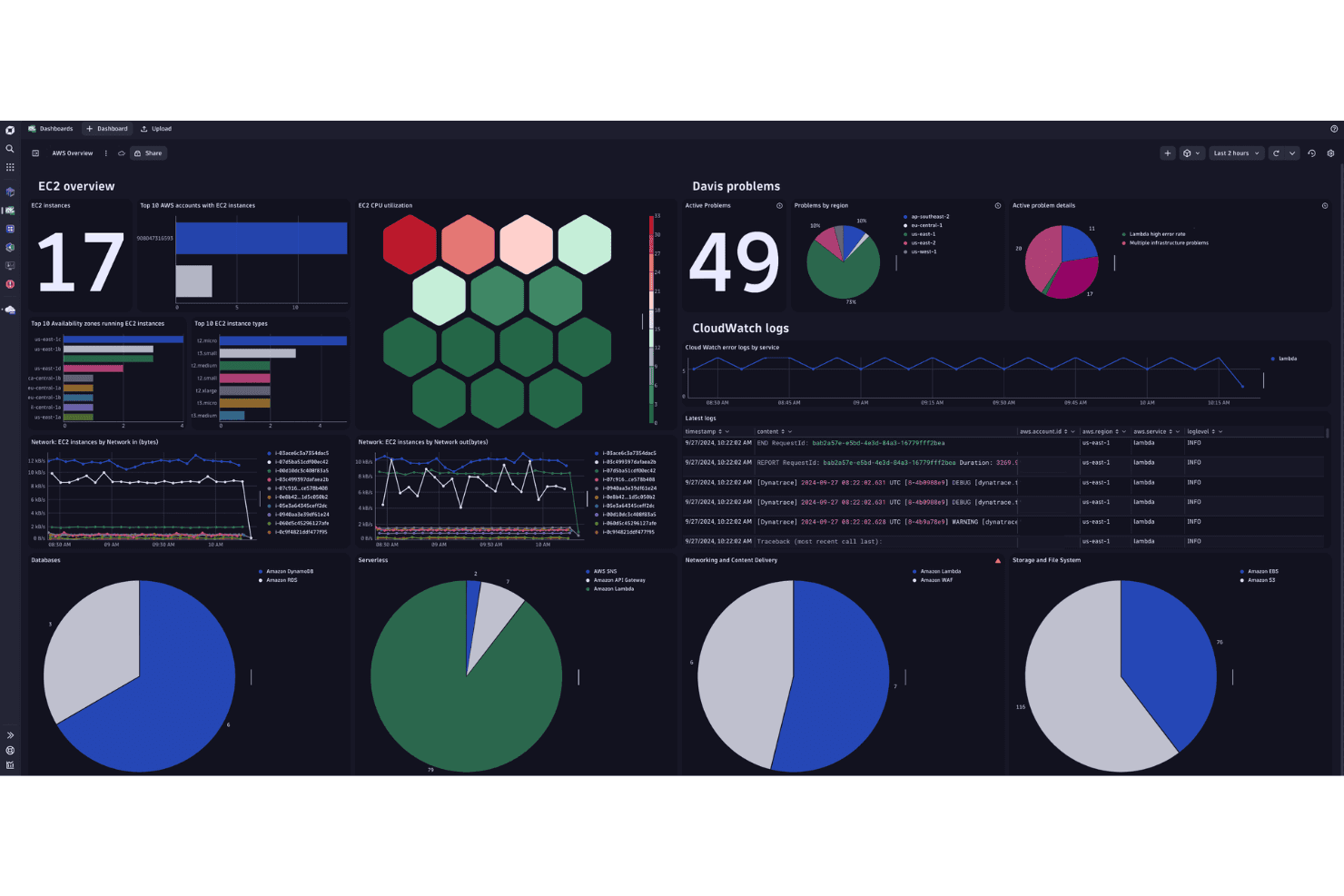
You receive instant insights into application performance, allowing you to make timely adjustments. It helps you maintain optimal functionality and user satisfaction.
AI-Driven Alerts
Get notified immediately about anomalies with AI-powered alerts that enhance your response time. This feature ensures you stay ahead of potential issues.
End-User Experience Monitoring
Track how users interact with your applications to identify any bottlenecks. You can improve user satisfaction by addressing these issues promptly.
Automatic Root Cause Analysis
Dynatrace uses AI to pinpoint the root cause of performance issues, saving you time and effort. This means quicker resolutions and less downtime.
Full-Stack Monitoring
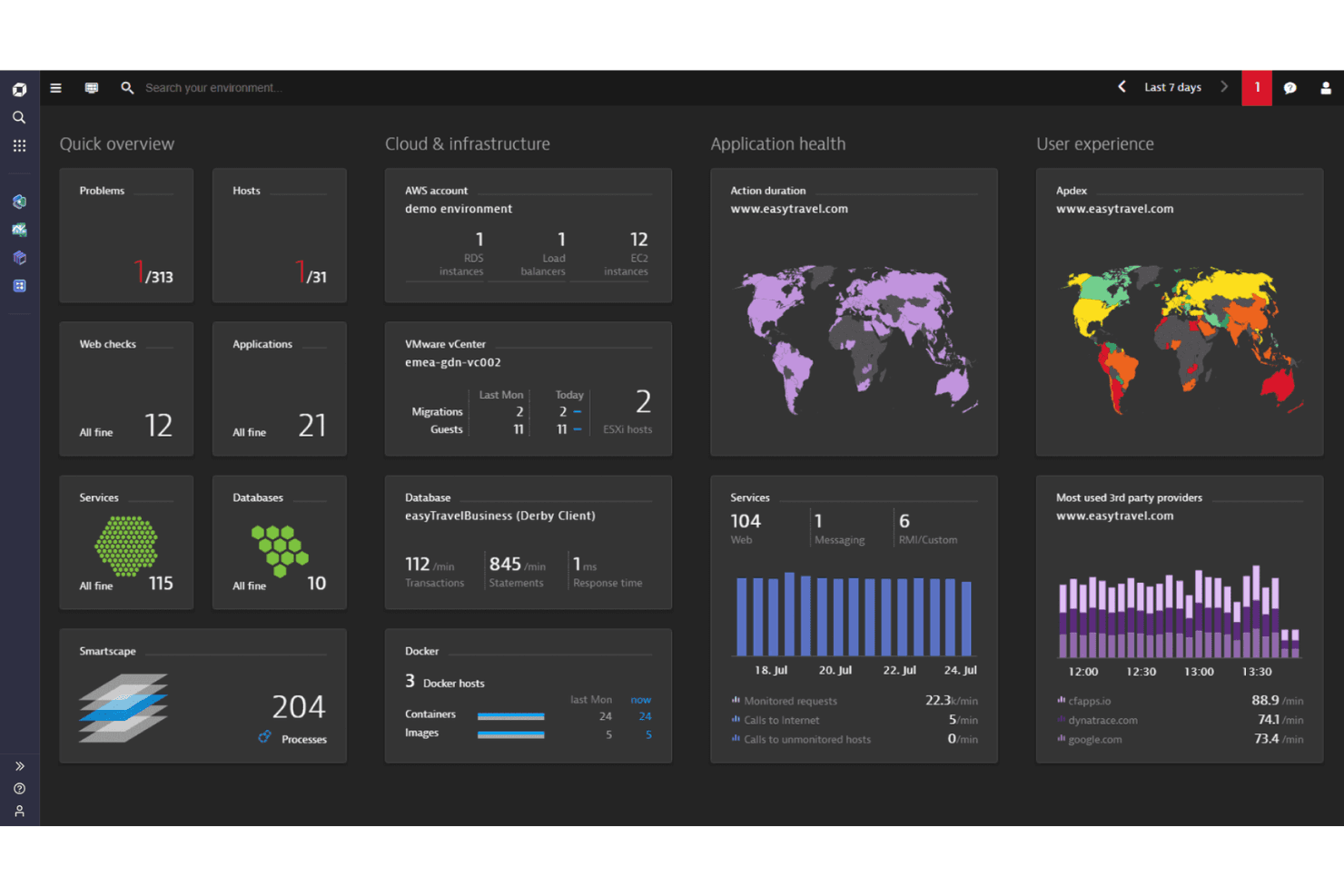
Monitor everything from infrastructure to applications with a single solution. You gain a comprehensive view, helping you manage complex IT environments efficiently.
Cloud Monitoring
Keep track of your cloud resources to ensure they’re running smoothly. It supports multi-cloud environments, giving you flexibility and control.
Ease of Use
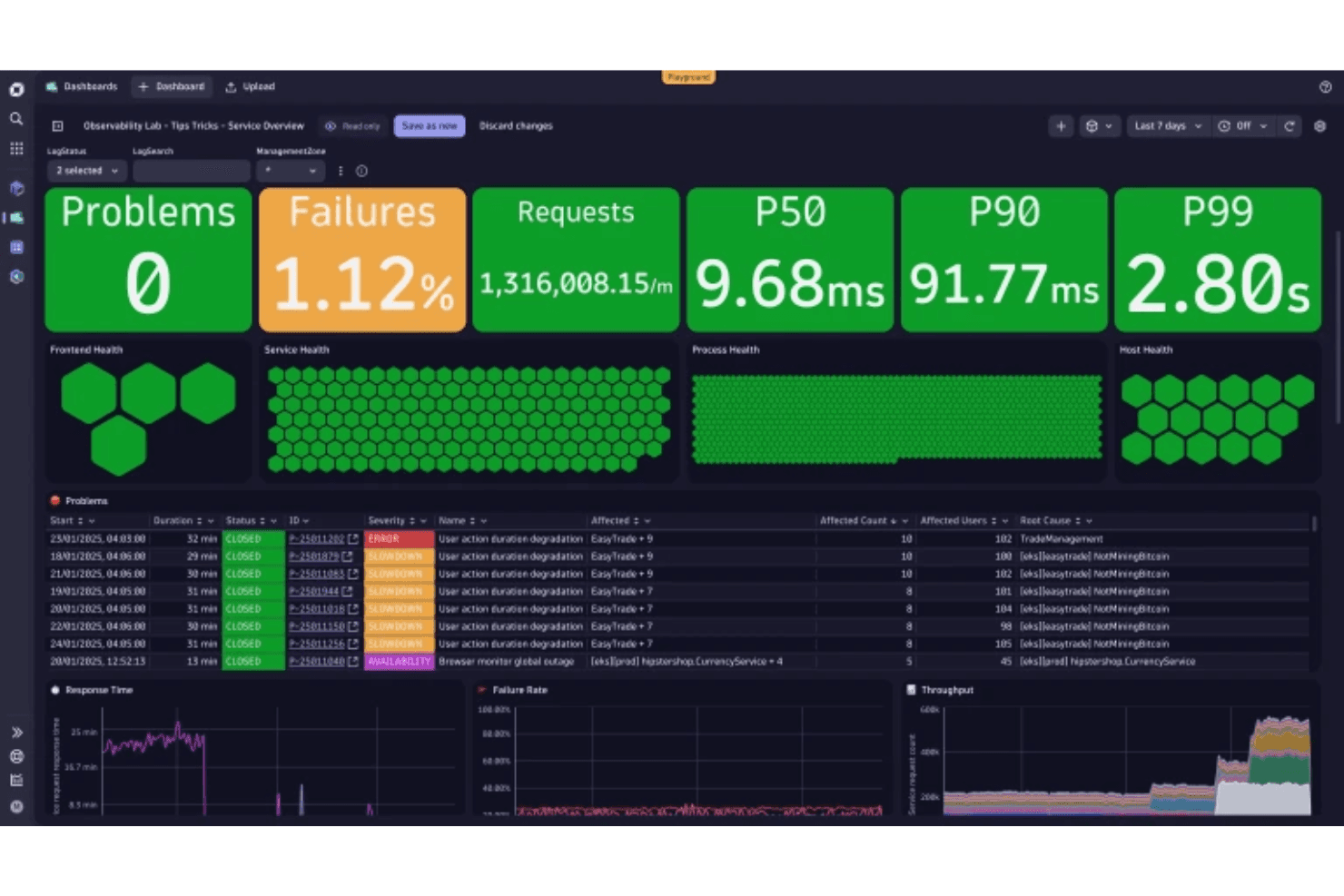
Dynatrace offers a powerful set of tools, but its complexity can be daunting at first. The user interface is detailed, which might require some time to get used to, especially if you’re new to such comprehensive systems. However, once you get the hang of it, the AI-driven insights and automated features make managing application performance much easier. Your team will appreciate the depth of data and the streamlined processes, even if the initial learning curve is steep.
Integrations
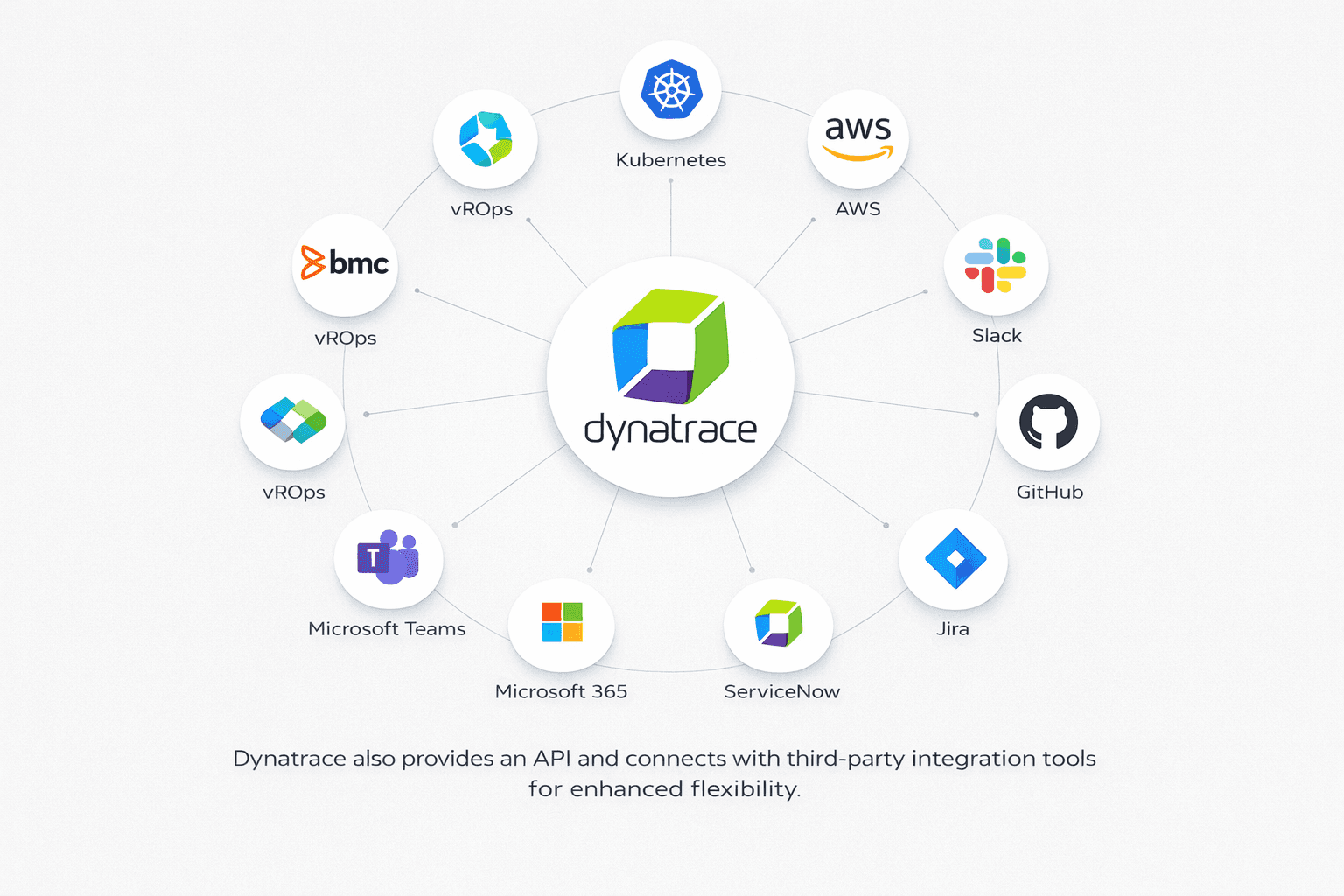
Dynatrace integrates with Kubernetes, AWS, Slack, GitHub, Jira, Microsoft 365, Microsoft Teams, ServiceNow, BMC (Remedy, Remedyforce, Helix), and vROps.
Dynatrace also provides an API and connects with third-party integration tools for enhanced flexibility.
Dynatrace Specs
- AI Integration: Yes
- API: Yes
- Automated Testing: No
- Browser Compatibility Testing: No
- Bug Tracking: No
- Code Review: No
- Custom Reports: Yes
- Data Export: Yes
- Data Import: Yes
- Developer Tools: Yes
- External Integrations: Yes
- Malware Protection: No
- Multi-User: Yes
- Notifications: Yes
- Performance Testing: Yes
- Process Reporting: Yes
- Static Analysis: No
- Status Notifications: Yes
- Workflow Management: No


