
PM educator and ex-CPO says sprints and roadmaps were built for a slower era of product work
Ed Biden
Founder of Hustle Badger and Product Management Educator.
Ed Biden explains why AI is forcing product leaders to rethink sprints, roadmaps, team capacity, and roles as the gap between deciding and building shrinks.
Key Takeaways
Faster Building: AI coding tools let small, nontechnical teams develop and iterate software without relying on external agencies.
Human Judgment: AI product management works best when automation handles execution while people retain decisions, relationships, teaching, and editorial direction.
Hidden Content: Website chatbots can turn overlooked content libraries into personalized discovery tools that guide visitors toward relevant answers.
Planning Reset: AI coding tools can multiply delivery capacity, making traditional sprints, tickets, estimates, and roadmaps increasingly restrictive.
Lead Directly: Product leaders should practice AI daily, make reversible bets quickly, and redesign teams around identifying valuable problems.
Ed Biden held CPO and SVP roles at tech companies before founding Hustle Badger and becoming a product management educator.
We sat down with Ed to get a sense of how AI is changing the industry. Here's what he told us.
The role has never changed so fast
I've worked in product for over twelve years, and I've never seen the role change this fast.
I started building mobile and social games in Paris and Berlin in the early 2010s. Then, I joined Rocket Internet, where I learned to launch new companies in weeks rather than quarters. After moving to the UK, I ran product at Depop before the Etsy acquisition, took CPO roles at YunoJuno and FutureLearn, and ran product at scale as SVP at Jobandtalent as it pushed past a billion euros in revenue.
I’ve worked in product for over twelve years, and I’ve never seen the role change this fast.
I started Hustle Badger to teach pragmatic, modern product management. Most PM education at the time was either MBA-style theory or framework worship; neither matched the messy reality of leading product teams. I wanted to build what I'd have wanted as an operator: practical courses, a community, and weekly events grounded in what works.
Since 2024, AI has become a major focus of what we teach. I run cohort courses on building with AI, deploying AI agents, and what changes for product leaders when the tools shift this fast. The audience is mostly senior PMs and CPOs trying to lead transformation in their own teams.
More Articles
How AI coding tools are changing product management

A year ago, we had an agency on retainer for everything technical at Hustle Badger. We're a small team, and none of us has an engineering background, so we assumed anything beyond off-the-shelf SaaS needed an outside firm.
That's gone. We now do all of our technical work in-house using AI coding tools: custom internal tooling, third-party integrations, platform migrations, and new customer-facing functionality. The same scope of work that a typical company would hire a small engineering team for.
I use Claude Desktop's code tab exclusively for this. I give Claude a brief, get it to research the topic and present options, then give it feedback, and work until we reach my preferred output.
Most product leaders underestimate what changed as a result of these AI coding tools. The obvious wins were speed and cost. We ship in days what used to take weeks, and we're not paying agency fees. The less obvious wins were how the feedback loop changed. When a non-technical person can prototype, ship, and iterate on something themselves, we don't defer decisions. There's no "let me check with the dev team" or "we'll prioritize that next sprint." The gap between deciding and doing collapses to hours.
And there's a broader implication. The bar for who needs to learn AI tools has moved. It's not just engineers, not just designers; it's anyone whose work involves building or shaping something. If a non-technical team can run a real software product, any product leader should ask what their own team could do if everyone adopted these tools at the same intensity.
Why product tasks should be split into three buckets
I split tasks into three buckets.
The first is everything AI now does end-to-end. For us, that's writing code, onboarding new students, and some promotion on our social channels.
The second is activities where AI is in the loop, but a human owns the call. That includes all our technical architecture discussions, content development, and some social media activity. AI augments almost everything we do, and we lean into it for our highest-leverage activities.
The third is what stays explicitly human. That includes live customer conversations, sales relationships, and teaching, which I still do in the room. It also includes editorial choices like voice, the positions we take, and the things we refuse to say. And it includes anything that requires reading a room, building trust, or holding conviction when someone pushes back.
The reason isn't that AI couldn't simulate any of these; it's that the value comes from a person being there, or from a human owning the decision.

Ed States
I split tasks into three buckets. The reason isn’t that AI couldn’t simulate any of these; it’s that the value comes from a person being there, or from a human owning the decision.
How AI chatbots can change site navigation
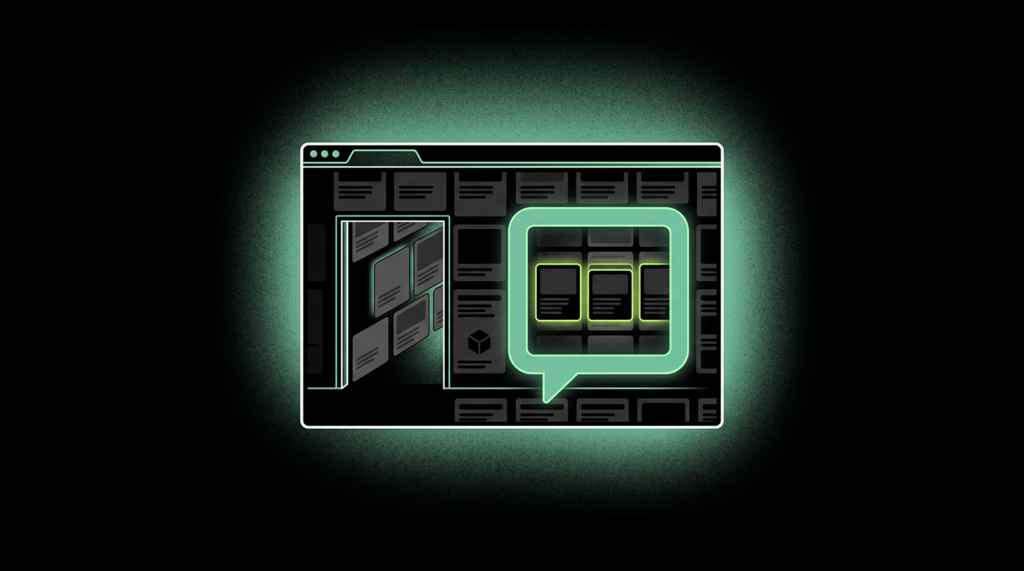
One of our most significant AI integrations is a chatbot on our website that uses our content library — articles, course material, posts, and frameworks. It's now one of the primary ways people interact with the site, alongside the navigation.
That alone changed how people discover our content. We built a deep library over several years, and most of it was effectively invisible. People would land on a single article from search and leave. The chatbot lets visitors describe a problem in their own words, and points them to the three or four pieces that answer it.
Why AI necessitates a redesign of sprint and capacity planning
The system most product leaders should be actively redesigning is sprint and capacity planning.
I hosted Johnny Quach, CPO at MotorK, at a Hustle Badger event. MotorK is a fifteen-year-old vertical SaaS, not an AI-native company. They've now killed sprints, killed Jira — tickets are written directly in Cursor because the model reads the codebase and produces richer tickets than a human — and shrunk teams by thirty to thirty-five percent.
They're refactoring entire applications in days that engineering had originally estimated would take months. As Johnny put it, the methodologies most companies use for organizing teams assume X capacity. When you change the capacity by an order of magnitude, the whole system is suddenly designed for the wrong problem.
That's the redesign most product leaders are too cautious about. Every framework most teams run on — Scrum, SAFe, two-week sprints, quarterly planning — was built for an environment where capacity moved ten or twenty percent annually. The planning rhythms made sense at that pace. But teams using AI well are now seeing capacity shift by more like five to ten times in months.
Every artifact downstream of that assumption — like sprint length, story points, dependency planning, and sales roadmap commitments — becomes a friction layer, not a coordination tool.
Unfashionable advice
Here are three pieces of advice, all unfashionable.
First, do the work yourself. You cannot delegate learning these tools, and you cannot lead a team through a transformation you don't understand from the inside. I see CPOs commissioning AI strategies, running executive off-sites, and approving tool budgets for everyone except themselves. The leaders who get this right are the ones who spend an hour a day, every day, using the tools their teams use. There is no shortcut.
This isn’t a tooling shift, a process shift, or a hiring shift. It’s all three at once, happening fast, and it touches every part of how a product organization works.
Second, stop waiting for clarity. The temptation right now is to defer big decisions until the dust settles, because the model frontier moves every six weeks and committing to a stack feels premature. The dust isn't going to settle. The leaders who are winning are the ones who make small, reversible bets quickly, learn from them, and update fast.
Third, redefine what your team is for. A team that shipped well in 2024 is not necessarily a team that ships well in 2026. The bottleneck has moved from "Can we build it?" to "Do we know what's worth building?" That changes who you hire, what you measure, how you organize, and what good performance looks like.
The deeper point: This isn't a tooling shift, a process shift, or a hiring shift. It's all three at once, happening fast, and it touches every part of how a product organization works.
Follow along
You can follow along with Ed Biden's work on LinkedIn. And check out Hustle Badger.
More expert interviews to come on The CPO Club!