IBM Cloud’s VP of Product & Design shares how she’s using AI to build around real user behavior
Briana Frank
Vice President of Product & Design for IBM Cloud

Briana Frank explains how AI helps product teams understand user behavior, prototype faster, and design better experiences while keeping human creativity and judgment central.
Key Takeaways
Behavioral Shift: AI adoption depends less on advanced models than on teams willing to experiment, communicate, and adapt.
Creative Leverage: AI gives product teams faster prototyping and analysis, expanding who can test ideas and pursue ambitious solutions.
Human Judgment: Successful product leaders use AI to augment creativity and speed while retaining human judgment, empathy, and accountability.
User Signals: Prompt-driven development reveals user intent, while evaluation frameworks turn interactions into evidence for improving AI experiences.
Leadership Readiness: AI-ready organizations protect innovators, strengthen prioritization, and create room for disciplined experimentation instead of defending familiar processes.
Briana Frank is Vice President of Product & Design for IBM Cloud.
We sat down with her to learn how AI is changing not only how she builds products, but how she learns from her users as well. Here's what she told us.
A behavioral revolution
I’ve spent my career leading product and design organizations through major technology shifts, and the study of human behavior has consistently shaped my approach. Every breakthrough in technology eventually becomes about people: how they make decisions, what motivates them to change, where they experience friction, and what they value enough to adopt. Understanding those patterns builds great products and high-performing organizations.
That perspective has made this moment in AI particularly fascinating. People often describe AI as a technological revolution, but in practice, it is just as much a behavioral one. The organizations seeing the greatest impact don't necessarily have the most advanced models. Instead, their people are curious enough to experiment, disciplined enough to communicate clearly, and humble enough to rethink how work gets done.
That's the real opportunity of this moment. AI isn't just changing the products we build; it's changing how we think, communicate, and lead. Technology is powerful, but lasting transformation begins with understanding human behavior and creating environments where people are willing to learn, adapt, and build differently.
AI isn’t just changing the products we build; it’s changing how we think, communicate, and lead.

More Articles
Building products for individuals and enterprises alike
I lead product management for IBM Cloud's Platform-as-a-Service portfolio, and I oversee design across IBM Cloud. Our organization builds the platform capabilities that help developers and enterprises create, deploy, secure, and manage modern applications across a wide range of environments.
The products we build serve everyone from individual developers experimenting with new technologies to large global enterprises running mission-critical workloads. That diversity of users creates a unique challenge: delivering enterprise-grade capabilities while making complex technology intuitive and accessible.
Our teams embrace continuous delivery, working closely across product, design, engineering, research, and customer-facing teams to rapidly learn from customer feedback and evolve the platform. As AI integrates more deeply into the developer experience, we're also rethinking how we build and manage software, creating more natural, intelligent interactions that help customers move from idea to production with greater speed and confidence.
How AI can unlock creativity in product teams

Throughout my career, there has always been a gap between having an idea and proving it. Product managers relied on other teams to build prototypes, analyze data, create dashboards, or test concepts. AI has dramatically shortened that distance. Today, product managers can explore ideas, build working prototypes, analyze their business, generate visualizations, and experiment with new concepts in hours instead of weeks.
That shift changes more than the speed of delivery. It changes who feels empowered to create. I've seen teams ask bigger questions, test more ideas, and approach problems with a level of curiosity that would have been difficult to sustain when every experiment required significant time and coordination.
The challenge is that creativity doesn't flourish simply because AI exists. It flourishes when organizations create the space for experimentation, reward learning, and encourage thoughtful risk-taking. The companies that treat AI as a productivity tool will certainly become more efficient. The companies that use it to unlock the creativity of their people will build entirely new categories of products and experiences.
How defensiveness can indicate a lack of AI readiness in product teams
One early behavior that signals a product team isn’t AI-ready is defending existing methods instead of exploring new possibilities.
Healthy skepticism is valuable. Great product teams should question assumptions, challenge ideas, and demand evidence. The difference lies in asking, "How do we know this will work?" versus simply saying, "This will never work." The first approach creates learning; the second prevents it.
The teams that struggle most with AI adoption often explain why a new approach cannot work before experimenting with it. They rely on past experiences to predict the future rather than using curiosity and testing to discover possibilities.
AI requires a different mindset. Technology evolves too quickly for any of us to have all the answers. The strongest teams are willing to try, learn, adjust, and sometimes be surprised. They do not need every experiment to succeed, but they need a culture that fosters rapid learning.
The signal I look for is simple: Are people protecting the existing process, or are they exploring how to improve it?

Briana's Thoughts
Healthy skepticism is valuable. Great product teams should question assumptions, challenge ideas, and demand evidence.
Why product leaders must seek to augment — not replace — people with AI
Early conversations around AI often focused on automation: the idea that we could simply hand a task to an AI system and receive a perfect answer. The reality is more nuanced.
AI is incredibly powerful at accelerating exploration, generating options, and helping people move faster. But the quality of the outcome still depends heavily on the quality of the context, the clarity of the objective, and the expertise of the person guiding the interaction. AI can help you get to an answer faster, but understanding whether that answer is the right one still requires human judgment.
This reinforces my strong belief: The future isn't about humans versus AI. It's about how effectively humans and AI work together. The most successful teams aren't looking for ways to remove people from the process. They're finding ways to amplify human creativity, curiosity, and decision-making.
The lesson for product leaders is that AI adoption is not just a technology challenge. It is a behavioral and organizational challenge. Succeeding companies will teach people how to think differently, ask better questions, and combine AI capabilities with the uniquely human skills of judgment, empathy, and creativity.
How prompt-driven development can build better AI experiences

We're taking a more user-centered approach to building AI experiences. Rather than asking people to learn how our software works, we're designing software that better understands how people naturally think, communicate, and solve problems. To me, that's one of the most exciting shifts AI has introduced to product development.
This all starts with embracing prompt-driven development. As always, we use research, journey mapping, and human-centered design to understand what people are trying to accomplish before thinking about implementation. But AI adds a powerful new dimension to that process. We now ask a simple question: "What would the user naturally ask?"
That question is surprisingly revealing. It forces us to think beyond features and workflows and focus on intent. What outcome is the user trying to achieve? What context would they naturally provide? What assumptions are they making? And what would success look like in a single request?
So, essentially, prompts become design artifacts that uncover ambiguity early. If a user must carefully engineer a prompt to accomplish a task, we learn the product still needs work.
How every AI prompt can serve as a signal of human intent
Once a product or feature has been created, AI offers an incredible opportunity to rigorously measure something traditionally harder to quantify: whether we are truly helping someone accomplish their goals.
As products become more conversational, every prompt becomes a signal of human intent. Evaluation frameworks allow us to measure how well we understand that intent, where the experience breaks down, and how changes affect thousands of real-world interactions. We can identify regressions almost immediately, compare different approaches objectively, and understand the impact of a change long before it reaches broad adoption.
This isn't about replacing human judgment with algorithms; it's about bringing more evidence to deeply human decisions. The data helps us understand where people struggle, what questions remain unanswered, and which improvements will have the greatest impact. This allows us to prioritize with greater confidence while staying grounded in the needs of our product users.
Briana's Thoughts
The responsibilities that remain firmly human are the same as always: understanding customer needs, defining problems worth solving, making strategic tradeoffs, and deciding where to invest.
The responsibilities that remain firmly human are the same as always: understanding customer needs, defining problems worth solving, making strategic tradeoffs, and deciding where to invest. AI helps us evaluate those decisions with greater speed, scale, and precision. Leadership is still about judgment. AI simply gives us better evidence to exercise it well.
How AI supports analysis of customer feedback
We also use AI to bring together signals from user research, support interactions, customer feedback, and feature requests to understand where people experience friction and what outcomes they seek.
AI helps us analyze those signals at greater scale and speed, identify patterns, and translate customer needs into improvement opportunities. For AI-powered experiences specifically, those insights help shape the prompts, interactions, and workflows we design.
Next, we evaluate. Instead of relying solely on intuition, we use evaluation frameworks to measure an experience's performance, identify necessary improvements, and prioritize changes that will create the greatest customer impact. This creates a much faster learning loop, allowing teams to test, refine, and improve experiences with greater confidence.
The result is a more precise and human-centered approach to product development.
In many ways, AI has increased the importance of the skills that have always defined great product leaders: curiosity, prioritization, critical thinking, and focusing on what matters most.
Why AI requires stronger judgment from product leaders
It's hard to keep up with AI. The pace of change is unlike anything I have experienced in my career. Research, experimentation, and available information expand daily, and product leaders constantly learn, test, and rethink what is possible.
The challenge is not a lack of information. It is determining which information matters. We are all consuming more, reading more, and exploring more, but separating meaningful signals from noise has become increasingly important.
This creates a new responsibility for product leaders: developing stronger judgment. The goal is not to chase every new AI capability or follow every emerging trend. It is to understand which advancements have the potential to meaningfully change customer experiences, business outcomes, or how people work.
In many ways, AI has increased the importance of the skills that have always defined great product leaders: curiosity, prioritization, critical thinking, and focusing on what matters most.
Why product leaders must protect their innovators
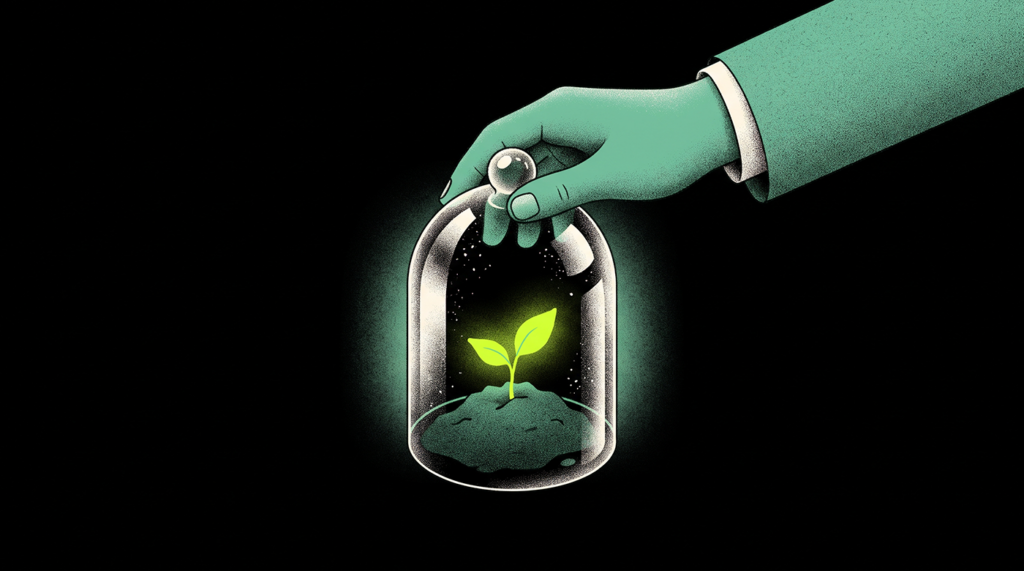
My advice to product leaders during this moment of change is simple: protect your innovators.
In periods of significant transformation, the people pushing the boundaries are often the ones who sound the most unrealistic at first. They may bring forward ideas that challenge existing assumptions, question established processes, or describe possibilities that others cannot yet see. Those individuals will sometimes face skepticism because innovation often requires imagining a future that does not exist today.
Great leaders need to recognize that discomfort is often part of progress. The people who are closest to emerging technologies, customer needs, and new possibilities are sometimes seeing around corners before the rest of the organization is ready to follow.
That doesn't mean every idea is the right idea. Innovation still requires discipline, experimentation, and thoughtful evaluation. But leaders have a responsibility to create an environment where bold ideas can be explored rather than dismissed too early. Pay attention to the people, processes, or structures that unintentionally slow those pioneers down. Sometimes the biggest barrier to innovation isn't a lack of ideas. It's the friction that prevents those ideas from becoming reality.
Follow along
You can follow along with Briana Frank's work on LinkedIn.
More expert interviews to come on The CPO Club!