Can understanding users' real-life experiences transform your product development strategy?
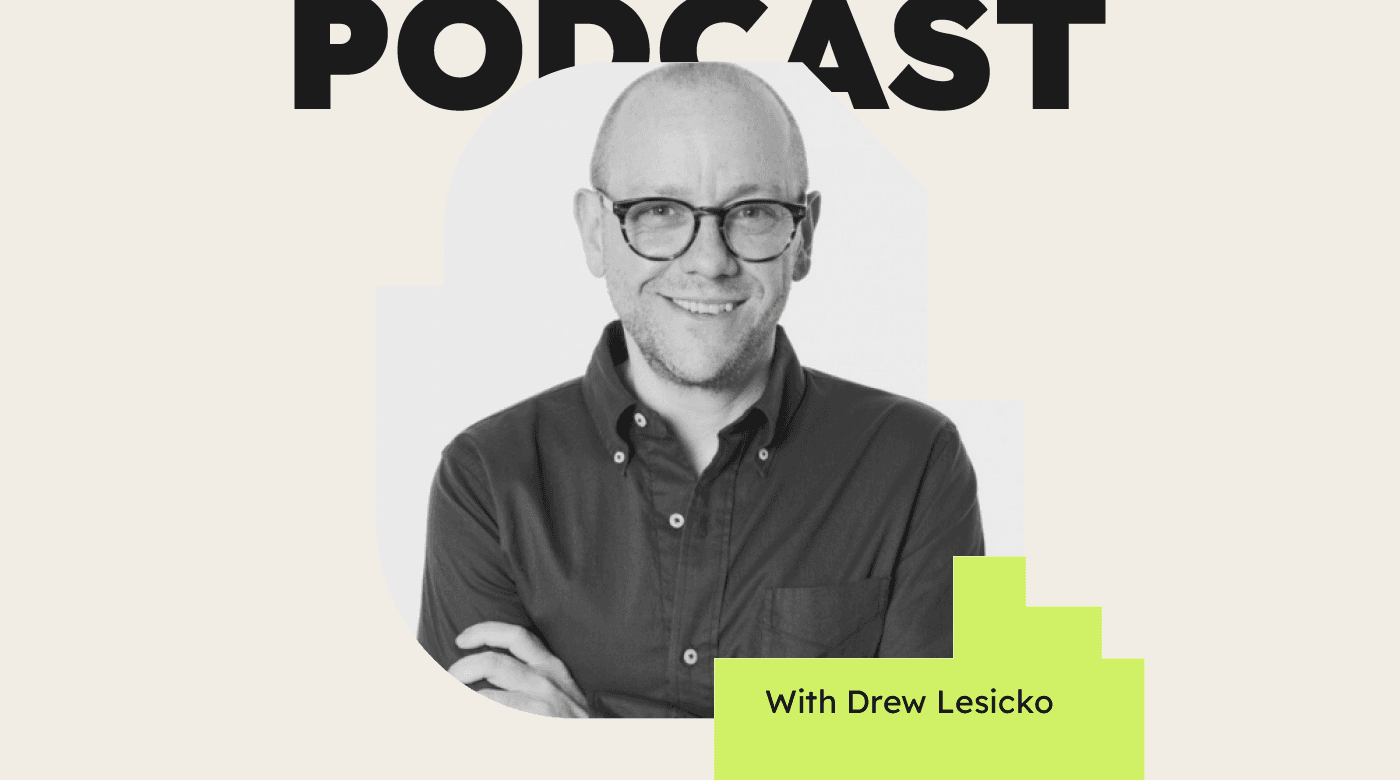
In this episode, Hannah Clark is joined by Kevin Gentry—Principal Product Manager at Hilton Grand Vacations, & Co-founder and Host of the Product Coffee Podcast—to unveil his well-honed playbook for sourcing user insights, rooted in the principles of "The Mom Test."
Interview Highlights
- Meet Kevin Gentry [01:22]
- Kevin has over 10 years of experience in product management.
- He has worked in startups, scale-ups, and enterprises.
- In the last five years, he has held positions from product manager to SVP and head of products.
- He recently joined HTV as a Principal Product Manager.
- He also started his own podcast, Product Coffee.
- He lives in Denver with his two daughters.
- (Fun fact) He used to be in a metal band.
- The Mom Test: Distilling User Insights [02:16]
- Kevin credits the book "The Mom Test" with influencing his approach to user insights.
- The book emphasizes asking questions that don't rely on positive social responses (e.g., "That's great!").
- The key is to uncover users' past behaviors and avoid responses meant to protect the interviewer's feelings.
- Kevin highlights the book's clear explanation of this concept.
- User Research Methodologies [03:33]
- User interviews are a good way to collect user feedback for product development.
- When interviewing users, ask about their past experiences instead of their preferences for the present or future.
- Understand the user's experience through note taking and transcriptions.
- Identify opportunities to solve user problems based on the user interviews.
- Share and discuss the opportunities identified from the interviews to brainstorm solutions.
Always ask about your users' lives and their experiences—that's a big thing. Focus on what happened rather than the present or future. This approach will yield the most meaningful insights, especially regarding your product or technology, or if you're trying to tackle a general customer problem.
Kevin Gentry
- Challenges in Enterprise User Research [05:14]
- Conducting user research in an enterprise environment has challenges due to protection over customers by other departments.
- Stakeholders might be anxious about user researchers ruining the sales or tarnishing customer experience.
- Building trust with stakeholders is crucial for user research in enterprise.
- Be transparent about the purpose and benefit of user research.
- User research can be conducted with people who fit the persona description, not necessarily the company's customers.
- Leverage personal network or online platforms to find relevant users.
- Showcase the results of user research to stakeholders to build trust and secure continued support.
- Continuously conduct user research and build relationships with users for future studies.
- Ask users for permission to involve them in future testing and for follow-up questions.
- Ask users to recommend other relevant people for user research.
- Conducting user research in an enterprise environment has challenges due to protection over customers by other departments.
No, you can't go talk to my customers directly. You need to go through me first to do that. Emphasizing the importance of having unencumbered access to customers is crucial for product innovation.
Kevin Gentry
- From Insights to Functional Products [09:46]
- Converting user interview findings into products depends on the interview approach (general vs specific).
- Specific interviews with focused questions yield patterns and insights from user experience.
- Gather user interview findings in a central repository (confluence database or transcripts).
- Summarize and distill findings from the repository to inform product strategy.
- User research findings should be incorporated as constraints during product design.
- Prototyping and Iterating with Users [12:35]
- Treat user testing as a co-building experience, prioritize nurturing the relationship with users.
- Communicate constantly with users throughout the iteration process.
- Use high-fidelity prototypes for user testing and conduct screen sharing sessions to gather feedback.
- Identify and recruit "innovator" users who are eager for solutions and willing to co-create.
- When iterating based on user pull, consider developing value propositions and use cases.
- Build a landing page to attract potential testers once a general idea of the product is formed.
- Consider marketing channels to reach the next level of users based on the product development stage.
- Release a minimum viable product (MVP) to a limited group of users for initial feedback.
- Monitor user activity and feedback to determine if the MVP is ready for wider release.
Meet Our Guest
Kevin Gentry brings over a decade of experience in product management, where he’s led teams in Product Management, Design, Growth, and Solutions across various start-ups and scale-ups. His expertise spans multiple industries, including Consumer Tech, E-commerce, AdTech, MarTech, SaaS, and Social Impact. Kevin excels in Marketplace business models, especially B2B Marketplace models, and has a solid background in B2B SaaS and B2C models.
Kevin is passionate about crafting product strategies that delight customers and foster innovation. His deep understanding of Agile and Lean methodologies, strategic analysis, and customer-centric design makes him a standout in his field. He focuses on transforming Product Organizations into efficient and effective Product Operating Models.
Kevin’s track record includes impressive achievements such as dramatically reducing operational inefficiencies (e.g., cutting MTTR from 1 month to just 1 hour) and pioneering cutting-edge technology solutions like AI Video Ad Enhancements and Sustainable AdTech. His ability to blend strategic vision with practical execution has made him a trusted expert in user research and product management.

It's the constant communication with your customers, nurturing the relationship, and co-creating together so they feel involved in the process. This is beneficial for them too.
Kevin Gentry
Resources From This Episode:
- Subscribe to The CPO Club newsletter
- Connect with Kevin on LinkedIn
- Check out Hilton Grand Vacations and the Product Coffee Podcast
Related Articles And Podcasts:
- About The CPO Club Podcast
- The Complete Guide To Collecting Meaningful User Feedback
- The Complete Guide To Five Second Testing (It’s Easier Than You Think)
- Insightful Survey Questions For Gaining Useful Product Feedback
- How To Analyze User Interview Data: Stop Searching for Needles in Haystacks!
- How To Create An Effective Customer Feedback Loop For Product Teams
Read The Transcript:
We’re trying out transcribing our podcasts using a software program. Please forgive any typos as the bot isn’t correct 100% of the time.
Hannah Clark: We hear it all the time, “you just gotta talk to your users!” Sounds so easy—but if it was easy, there wouldn’t be so many orgs struggling to do it effectively. Because talking to your users isn’t the same as talking to your friends or family—it’s an art, a science, and a challenge. Which users should you talk to? How many? What should you ask, and how? How often? And how are you even going to start that conversation in the first place?
My guest today is Kevin Gentry, who you might know as the host of the Product Coffee podcast, or if you’re a travel agent or enthusiast, you might’ve chatted with him in his role as the Principal Product Manager at Hilton Grand Vacations. Having worked with organizations of all sizes, Kevin has accumulated a lot of experience gathering and applying user insights. He’s also well-versed in the nuances of conducting user research for enterprise. So you’ll notice right away that Kevin is super tactical in his approach to this discussion. You’ll hear his complete playbook for sourcing user insights and building ongoing relationships with users and using those findings to make products that truly hit the mark. Let’s jump in.
Welcome back listeners, I’m Hannah Clark with The CPO Club. And if you’re just joining us for the first time, we’re a community of tenacious product leaders here to share the weight of scaling your product. Our members are all SaaS-focused PMs who genuinely love their work and are driven to help others succeed. So if you want to hear more about that, head on over to theproductmanager.com/membership, and let’s get on with the show.
Kevin, thank you so much for making the time to talk to us today.
Kevin Gentry: Yeah, nice to be here. Thanks Hannah.
Hannah Clark: Yeah. So we’ll start off the way we always start off.
Can you just tell us a little bit about your background and how you got to where you are today?
Kevin Gentry: Sure. Been in product for over 10 years now in a variety of different startups and scale ups and enterprises, starting as a product manager, moving to senior to a VP and SVP and head of products of series B’s, C’s, A’s in the last five years. Just joined HTV recently as a Principal Product Manager and helping them kind of transform some of their technology and also started my own podcast, Product Coffee, that we had you on. It was awesome.
I live in Denver. I’ve got two daughters, four and six years old. And I used to be in a metal band, some fun fact there back in the day, so.
Hannah Clark: Okay. Well, I wish I’d known that before I went. We can have a whole other conversation about that.
But today we’re going to be talking a little bit about distilling user insights into action, not quite heavy metal. So you mentioned to me previously that it was the book, “The Mom Test” that got you really thinking about this topic. And I’m hoping you can give us a little bit of an overview of the book and how it got you interested in this area of your work.
Kevin Gentry: Sure. Yeah. So, The Mom Test, that was just a really nice distillation of it.
I think, man, what was his name? Fitzpatrick might be the author. I can’t remember the first name, but it’s an easy concept too, to really understand of asking your mom or your significant other, someone that you know personally, Hey, do you like this? And you know, what would you expect to happen?
I would imagine that you’re going to get some mixed response of, yeah, that’s great. You know, with a high inflection and then like this fallback of, oh but I never used it, you know. Or, you know, I don’t want to hurt your feelings. Right? But this is what happened. So I think we all kind of seen that growing up in product land and what have you, and I think this book does a good way of articulating how to understand that concept and change the narrative in your interviews so that you get different results and you get to the true meaning of what really matters when you’re doing these interviews and what information and validation you need to move it, things to the next step.
So yeah, that’s what attracted me to the book and the concept and it was just really easy to understand.
Hannah Clark: Let’s talk a little bit about kind of that extraction process. We’re talking a little bit more about user research and kind of how to get around that. So a lot of the insight extraction process comes down to methodology for collecting user feedback.
And that’s often through interviews. It could be through a lot of different formats, but interviews, that’s kind of the focus today. What would you say are your top tips for eliciting meaningful insights from user interviews?
Kevin Gentry: Always ask about their life and their experiences. That was a big thing. So never talk about, Hey, what would you like? Or do you like this thing? Which is either talking about the present or the future. You want to talk about what happened. And that is really going to get the most meaningful insights for you, especially when it comes to your product or your technology. Or if you’re trying to tackle a customer general problem, I think that’s a good way to look at it.
Some of the questions that we’ll ask at HGV while we’re kind of interviewing some folks is like, Hey, last time you booked a vacation, right? Or last time that you traveled and then you’re kind of understanding their experience. And through that understanding the note taking, the transcriptions, the insights that you generate as a team, then you can really pull out what opportunities do we have to go solve?
We might have things in the hopper that are easily tied to that value, but maybe not articulate, or they didn’t realize that was there. And so maybe it’s an awareness play. They don’t understand it’s there, so how do we go and fix those things? If it’s a new problem or an adjacent problem to what you’re dealing with with another customer, it could be a nice way to say, well, why don’t we repurpose that same solution for their needs to see if that can solve that as well.
So it’s a nice way to kind of write down those insights, the transcripts I understand, and then share and ideate on the opportunities that you have as a team to go and fix that.
Hannah Clark: I’m curious about some of the key challenges that you’re facing when conducting and applying user research and specifically coming from more of an enterprise environment or some of the challenges are a little bit different from some of the startups and scale ups that a lot of us are working at.
Kevin Gentry: Yeah. Oh, yeah. So, much different. I think at any enterprise, you’re going to deal with some level of protection over the customer, which is warranted in some way and also very challenging. As someone that is trying to pull, bring a UX practice to an enterprise organization, I wouldn’t be alone in saying that I’ve come up with a few stakeholders saying, Nope, you can’t go talk to my customers.
You have to come through me to go and do that. And talk a lot about the unencumbered access to the customers is so crucial for product innovation. And so some of the challenges that we’ve come across is just there’s a lack of trust between those departments where, hey, I don’t want you to ruin our sale.
I don’t want you to tarnish a customer experience. I don’t want you to tell them that we’re going to deliver something that we’re not, or what have you. So there’s all this anxiety and lack of trust in that handoff, in that exchange of how do we build that direct connection with the customer. But then when I find when it does happen, it’s awesome.
It’s amazing for both folks and they enjoy it and they love it. Now, how do you get to that point? I think is really hyper specific to the scenario and context and the people. How do you build trust? That’s one piece, right? And to build trust, be very transparent and clear about why you’re wanting to go and do this, why does it make sense for you and your organization, and how you’re going to put it into practice.
And furthermore, you don’t have to necessarily go through your enterprise or other departments to get to a customer. A customer doesn’t have to be a customer of your product or your company. It can be someone that fits that persona description, could be a friend, it could be someone on LinkedIn. You can look up and say, hey, I’m looking for HR specialists in Denver region and I can, I’m sure you would know somebody or you can find someone that is one to two steps removed from it.
They can make an intro. They don’t have to be using your solution, but you can ask him things that is relevant to helping you solve the problem in your area and start to build that repository of insights. So then you can take that ammo, talk to a stakeholder and say, Hey, Look what we’ve already gotten from this type of interview.
Here’s the output. Here’s how we put it into practice, and you can kind of show that. Because of that, those insights and those interviews, we’ve been able to make these strategic moves and have this outcome, right? Or at least be able to tie that story, that narrative together so that you start to build trust.
They understand that you don’t have any malintention, that you know what you’re doing, right? And sometimes we don’t. And that’s okay. But I think recognize that and if you’re in a situation where there’s no trust, how can you build that trust so then it becomes that delightful experience that they got your back?
They’re like, yeah, absolutely. I’ve got this, this person, this like, well, we don’t need all of them. Let’s slow down. Right? And so I think that’s the easiest way to kind of get some things moving. And one other thing on this is the continuation. We talk about continuous discovery habits. So thinking about continuing the chain of interviews as you go through and having a good system and practice in place to then pipe out that transcript, get the insight, be able to share that out with a team, do the next one.
So where do you put this information? Where do you document it? Where do you share it? But what I’m talking about continuation is, at the end of every interview, I usually ask them two questions. It’s around the customers. I’ll say, if we have a solution to your problem, would you be willing to give us feedback and test it?
Every time they’ve said yes to me. So I’ve you know, knock on wood. I maybe haven’t talked to enough, but no, I think if for the most part, if you hear them out for the whole hour or 30 minutes that you interview them and you say, Hey, if I have a solution to your problem, they’re going to say yes. And then the other thing is, can I reach out to you if I have any other feedback or follow ups?
So now you’re starting to build that close relationship with the customer that you can continue. The other one, especially when it comes to external customers and you’re trying to reach more is, is there anyone else that I can talk to about this challenge, about this problem? More than likely they’re going to have someone in their back pocket and it does the grunt work of having to go and source these candidates up front for you so you can keep that train going.
Think of those kind of ways, but yeah.
Hannah Clark: That’s awesome. I really like the prescriptive advice for how you can kind of run those and build those relationships and nurture them so that they become mutually beneficial in the long term. So now that we kind of talked about developing a process and kind of executing on a process for gaining user insights, what does the journey look like when converting those user interview findings into functioning products?
Kevin Gentry: Yeah, it’s so ambiguous and vague there. It can be specific depending on how you approach your interview process because you can go general discovery and you can just boil the ocean to understand customer, understand like market problems generally. You can be very specific to say, and I think you’ll get better results in that way to say, like, hey, when you did this, what did you do?
And then you have a specific area of focus. So it really just depends on the nature of that interview. But I would say if you get specific, let’s go down that scenario. If you get specific and you get that insight, you have the catalog, you usually start to see patterns around like, so far, what I’ve seen is maybe like four or five customer interviews.
You start to see patterns of like, Oh, it seems like they’re all complaining about this part of the experience, or they all have issues trying to you know, accomplish this task. You start to kind of find those patterns and start to correlate these things. I wouldn’t stop those interviews because that’s only going to further build that repository of knowledge.
There might be probably a limit because you’d want to switch over to solutioning. And so with that, I use your research repository and like a confluence database. Where now everyone has access to the same information, including the transcript. I mean, I love Gong. If you’ve used that before, that one’s pretty slick because you can just do a site wide search and kind of find that specific video and terminology there, which is really nice.
But if you don’t have the luxury of that and you have like a transcript or you’re kind of working at an enterprise organization that hasn’t adopted to modern tooling, then be scrappy with it. Try to get the transcript though, because it’s going to give you some really good insights. So you put that in the repository.
And then what I have found is that you need some distillation and summary of your findings. And so you need to be able to kind of like, all right, we’ve interviewed 12 people, here’s what we’ve learned. And so there’s like a point in time where you share and distill and reflect on that information and you can decide, does that aid in your strategic efforts or not in the product strategy?
Or does it aid in a specific effort strategy? And you can start to make that considerations. What I do with that is then after we share that with the PMs or whoever were in the context, the PMs will then use that as considerations when designing the solutions. Right? So, oh, well, we know that they came up to a challenging on this specific blocker.
So then we need to be able to help them with that, or at least not ignoring it. Right? So when we come back to them with a solution to test, it’s like, well, I told you I had this issue, like why this doesn’t solve that. And then there’s like this disconnect and like, Hey, you didn’t really listen to me. And so you have to incorporate that as like constraints in the design over how you’re designing your product and solution for your customer.
Hannah Clark: Well, so once you’ve built that functional prototype and you’ve kind of, you’re able to get some feedback on it. Do you have a playbook for how do you kind of maximize that next round of feedback? You know, make sure that you’re being as efficient as possible with those relationships, getting the best feedback that you can and actioning that as quickly as possible so that you’re able to ship it and start to, you know, see the returns on that?
Kevin Gentry: Don’t think of it as like a pipeline where we’re trying to be efficient and getting things done as quickly. Like I would say, look at this as like a co-building experience with your customer. This is someone that you’re actually solving a problem for. No one wants to be treated like a little thing on the pipeline, you know, fast, right?
And so I would say that’s mindset that I approach these things with to say, so you’re nurturing that customer relationship. You’re saying, Hey, you took the time out of your day. I listened to you. We understood each other. Like I spent time. I’m really trying to solve your problem. Yes, I have business goals and what have you, but the whole idea is building something that they’re going to use and value and buy and purchase, right?
It’s going to drive business value. So, you have to take all that into consideration. And I think a nurturing kind of relationship with them is really important of that mindset to have. What I usually do at that point is I do that pre-prototype. We go back to the team, we come up with some ideas and how we could solve it.
Then we even say, you know, Hey, here’s what we’re thinking. What if you had a way to go and do X, Y, and Z or something like this, and you might be able to get some value there. There’s some exchange that you’re still nurturing that relationship. You’re closing the loop. It’s not going to take them two to three weeks to come up with a prototype, then finally reach out back to them and say, here’s where we’re at.
It’s that constant communication, that nurturing relationship, the co-creating together so they feel like they’re involved in the process, which is kind of neat for them too. And so there’s some of that that you have to do, where with the prototype itself, usually, I mean, Figma is so slick these days. I love that as a prototyping tool, you can build one really easily, even at high fidelity or mid fidelity and send that off to them.
And or not send them off, but unless you have some sort of tracking way, but I usually like bring it up in a conversation with them. And so as I hate, let’s look at this or I’ll send them the link while we’re on the call and have them walk me through it as on the screen share to say. All right, well, here’s what we got.
Here’s the solution. I’ll say, just go around and poke around and see, can you go and accomplish this task and see what happens? They’ll probably poke around. They’ll say, ask questions. We’ll kind of, Hey, why did you do that? Let’s understand how are you feeling when you were slamming on the keyboard there?
Was that frustrating? What happened? So you’re better understanding those things, right? And you’re already getting feedback that kind of dives into another iteration of your prototype so that informs the next dialogue that you have with the customer. So what happens next, right? What happens when you have this dialogue with a customer and you’re starting to iterate and tinker and you have something that is valuable?
What you start to notice in these interviews is something called pull. It’s like this inertia. You’re like this momentum. You’re like, Oh, when can I have that? When is that available? Like, ah, come on, hurry up. They’re kind of like jokingly frustrated with you, right? Like, oh, this is so cool. Like, I can’t wait.
You know, I can’t wait. Let me know. Let me know. And they’re pinging you. So once you feel like you’re getting some of that and you can only do that with a handful of people, right? There’s only so much you can do with this nurturing type of relationship. So upfront, it is so important that you get the right people in that group of folks that you’re iterating with.
And those are kind of like, I think Geoffrey Moore talks about this in Crossing the Chasm, but the innovators, right? The people that are kind of hacking together Excel spreadsheets and no code tools to do the job, but like they’re really invested in having a solution here. Or people that are frustrated that have bought things over and over again because it hasn’t solved their problem.
Those are the people, right? Those are the people that you want at this stage because you’re going to co-create with them. And so now that you’re in that stage and you’re kind of tinkering, you start to feel that pull. And again, it’s a little bit of a feeling. I mean, it can’t be as quantifiable. I mean, maybe you could, but it’s to me, it’s a little bit more of a mix of art and science.
So this is the art feeling of it, right? That kind of emotional pull that you’re getting from these conversations that you have to get by like talking to customers, right? You have to get out of the computer and start talking to them. You can do it in the computer nowadays. But so let’s say that you start to feel that pull.
Now, what I do is that next evolution of product maturity or iteration is to start think about, well, great. I have this. Now what? Well, let’s start to piece together some value propositions, maybe some words around what this thing is, the use cases, the benefits. I’m sure that changes over time, right, it should. Then if you have a really concrete kind of idea, or at least a general idea of what this looks like, start to publicize it in a way that starts to attract other users, maybe potential testers, right?
And would do this by having in product surveys, right? You say, Hey, we’re testing this thing. If you’re interested, let us know, right? Or, you know, sign up for early access, right? You’re joined the wait list. You’ll see all those kind of landing page kind of things. I love landing page design. It’s great.
Like, I would say, focus on building one of those things out, even as you are kind of iterating. So you’re iterating on the product while you’re building that landing page for intake. Framer, great tool. Let’s say you have that, cool. So now you’re getting that pull of interested people. What if you’re not get reaching them and you start to think about your go to market approach.
So now you’re already thinking this holistic product management as you’re kind of evolving and iterating. So now, okay, what channels are they in? The innovators are here, but where’s the next level of the market? Are they on social? Are they on Instagram? Are they on LinkedIn? How do I reach them, right? And so you’re already thinking in your head with your maybe product marketing or yourself as an entrepreneur, how to go and reach those next people.
So you’re potentially testing out value prop statements. You’re testing out as you’re testing out marketing channels. So all this is iterative and testable, right? So now let’s say you got to a point where you have enough signups where you’re like, Hey, we got like 23 signups in the hopper. Let’s sleep, eat a little bit more in to this process, right?
Let’s get them involved. And so at that point, I would love to have a functioning prototype to give them, right? So all throughout that process, you’re experimenting, iterating, but you’re building an MVP. And that MVP is this thing that the first 10 can use, or first whoever can use, that then you can start to open the door for the next 20, 30, 40, right?
And so once you have that MVP, then there’s going to be a percentage of those signups that actually use it and are active and are giving you feedback on it. And you want to keep that momentum going so it’s almost now becomes a little bit more of an art and a science where you kind of see was the ratio of people that are users and active. Is that okay for the stage of where we’re at? And maybe it’s not and you need to continue to iterate on the feature set and the value prop until you’re comfortable letting more folks in.
Like it’s like aperture and stage gating process where you’re like, it’s almost like an art in a field, right? It’s very hard to kind of put your finger on it, but you got to kind of keep a pulse on all those considerations as you’re scaling your product for your customer base. It’s really going to get you something that customers love when you go to mass market.
Right? Don’t just jump ship and just flip this thing and say, Hey, we solved it for 10 people. Let’s go out wide. And, but do you get a newspaper ad out? No, no one does that anymore. Billboard. I don’t know. But so that’s kind of how I think about it as the next stage of how you would approach that evolution of it, if that makes sense.
Hannah Clark: Yeah, absolutely. I feel like this conversation has been almost like a free product coaching session. I’m sure I can just picture people at home just taking notes frantically while you’re speaking. This has been really great. And I really appreciate all of the really prescriptive, very specific examples and pieces of advice and you know, here’s what you got to do.
So thank you so much for sharing all that, Kevin. Where can people follow your work online? Where can they find you and hear your podcast?
Kevin Gentry: Product Coffee podcast. That’s the podcast. So you can go to productcoffeepodcast.com and you can listen. We usually put out a show a week on that. We’ll have leaders like Marty Kagan, Teresa Torres, and I was just acting product professionals and Hannah herself is on the show, and so folks like that.
And then you can find me on LinkedIn. I think it’s just linkedin.com/KevinGentry. I think, I’m not quite sure, but I’m sure you can find me somewhere like that. I’m doing consulting as well. So there’s abstractiondesigns.com where we kind of help folks with all the things I just talked about. So, if you’re interested about that, reach out to me, we can talk about it.
Hannah Clark: Awesome. Thanks for the freebie. And I really appreciate your time today, Kevin.
Kevin Gentry: Thanks, Hannah.
Hannah Clark: Thanks for listening in. For more great insights, how-to guides and tool reviews, subscribe to our newsletter at theproductmanager.com/subscribe. You can hear more conversations like this by subscribing to The CPO Club wherever you get your podcasts.