
10 mejores programas gratuitos de desarrollo de productos reseñados en 2026

10 La mejor selección de software gratuito para el desarrollo de productos


Con tantas soluciones diferentes para el desarrollo de productos disponibles, es difícil determinar cuál es la adecuada para ti. Sabes que quieres gestionar las necesidades de los clientes, ofrecer integración con herramientas de encuestas y permitir la recopilación de comentarios de los usuarios, pero necesitas averiguar qué herramienta es la mejor. ¡Yo te ayudo! En esta publicación, te ayudaré a tomar una decisión sencilla compartiendo mis experiencias personales al utilizar decenas de herramientas diferentes para el desarrollo de productos con equipos y proyectos grandes, junto con mis selecciones de las mejores herramientas gratuitas para el desarrollo de productos.
Por Qué Confiar en Nuestras Reseñas de Software
Llevamos revisando y probando software de gestión de productos desde 2020. Como product managers, sabemos lo crucial y complicado que es tomar la decisión correcta al seleccionar software. Invertimos en investigación profunda para ayudar a nuestra audiencia a tomar mejores decisiones de compra de software. Hemos probado más de 2,000 herramientas para distintos casos de uso y escrito más de 1,000 reseñas exhaustivas. Conozca cómo mantenemos la transparencia & nuestra metodología de reseñas de software.
Resumen del mejor software gratuito para el desarrollo de productos
Aunque todo el software de desarrollo de productos de mi lista ofrece opciones gratuitas, también cuenta con planes de pago por si deseas actualizarlo. Estos son los costes base de cada una de las herramientas que llegaron a mi selección:
| Tool | Best For | Trial Info | Price | ||
|---|---|---|---|---|---|
| 1 | La mejor para control de versiones y compartición de código | Plan gratuito disponible | Desde $4/usuario/mes | Website | |
| 2 | La mejor para diseño de interfaces colaborativo | Plan gratuito disponible | Desde $16/usuario/mes (facturado anualmente) | Website | |
| 3 | Mejor para el seguimiento de proyectos flexible y basado en bases de datos | Plan gratuito + demo gratuita disponible | Desde $20/usuario/mes (facturado anualmente) | Website | |
| 4 | Ideal para la gestión y colaboración de código Git | Plan gratuito disponible | Desde $3.65/usuario/mes (para 5 usuarios) | Website | |
| 5 | Mejor para visualizar el flujo de trabajo del proyecto | Plan gratuito disponible | Desde $5/usuario/mes (facturado anualmente) | Website | |
| 6 | Mejor para el seguimiento de tareas e hitos | Plan gratuito + demo gratis disponible | Desde $10.99/usuario/mes (facturado anualmente) | Website | |
| 7 | Mejor para la gestión del ciclo de vida DevOps | Plan gratuito disponible | Desde $29/usuario/mes | Website | |
| 8 | La mejor para el diseño y modelado de productos en 3D | Prueba gratuita de 30 días | Desde $119 /año | Website | |
| 9 | Mejor para la gestión de proyectos Ágiles | Plan gratuito disponible | Desde $7.91/usuario/mes | Website | |
| 10 | Ideal para pizarras digitales interactivas | Plan gratuito disponible | Desde $8/miembro/mes (facturado anualmente) | Website |

Opiniones sobre el mejor software gratuito para el desarrollo de productos
A continuación, encontrarás mis resúmenes detallados del mejor software gratuito para el desarrollo de productos que llegó a mi selección. Mis reseñas ofrecen un análisis detallado de las funciones principales, las ventajas y desventajas, las integraciones y los casos de uso ideales de cada herramienta para ayudarte a encontrar la mejor opción para ti. Aunque algunas de estas herramientas ofrecen una versión completamente gratuita, otras ofrecen un período de prueba gratuito. He añadido una nota sobre lo que es gratuito en cada una de mis reseñas.

GitHub
La mejor para control de versiones y compartición de código

GitHub es una plataforma en línea para el control de versiones usando git, donde los desarrolladores pueden almacenar su código, colaborar en proyectos de programación y contribuir a software de código abierto. Como herramienta diseñada específicamente para el alojamiento de código, GitHub destaca por ofrecer servicios de control de versiones y compartición de código, lo que la convierte en una herramienta imprescindible para desarrolladores en todo el mundo.
Por qué elegí GitHub: Escoger GitHub para esta lista fue sencillo debido a su amplia aceptación y su sólido conjunto de características para el alojamiento y colaboración de código. Su diferenciación se encuentra en la amplia comunidad de desarrolladores que alberga, lo que la convierte en un excelente recurso para aprender y contribuir a proyectos de código abierto. La seleccioné como 'La mejor para control de versiones y compartición de código' debido a su integración con git para control de versiones y su facilidad para compartir y colaborar en la industria del desarrollo de software.
¿Qué obtienes gratis?
GitHub ofrece un nivel gratuito que incluye repositorios públicos y privados ilimitados, colaboradores ilimitados y 500 MB de almacenamiento para GitHub Packages. Sin embargo, la versión gratuita carece de algunas funciones como ramas protegidas y GitHub Pages, que están disponibles en los planes de pago.
Funciones destacadas e integraciones
Las funciones sobresalientes de GitHub incluyen sus herramientas avanzadas de colaboración como 'pull requests', tableros de proyectos y seguimiento detallado de incidencias. Ofrece un extenso mercado de integraciones y aplicaciones de terceros, facilitando los flujos de trabajo con herramientas como Slack, Jira, Jenkins y muchas otras.
Pros and Cons
Pros:
- Plataforma ampliamente utilizada con una gran comunidad
- Funciones avanzadas de colaboración y compartición de código
- Amplio mercado para integraciones de terceros
Cons:
- Funciones limitadas en el plan gratuito
- Puede resultar abrumador para principiantes
- Las funciones avanzadas de gestión de equipos requieren un plan de pago

Figma
La mejor para diseño de interfaces colaborativo

Figma es un editor de gráficos vectoriales y una herramienta de creación de prototipos basada en la web que permite a los equipos de diseño colaborar en tiempo real. Dado su sistema de colaboración en tiempo real y sus sólidas herramientas de diseño, no es de extrañar que destaque en el diseño de interfaces colaborativas.
Por qué elegí Figma: Al decidirme por Figma, me atrajo especialmente su estructura basada en la nube, que permite a los equipos de diseño trabajar en proyectos simultáneamente, sin importar la ubicación. Este nivel de colaboración no es común entre otras herramientas de diseño de interfaces, lo que le da a Figma una ventaja. En mi opinión, es la capacidad de Figma para colaborar en tiempo real y su abanico completo de funciones de diseño lo que lo convierte en la mejor opción para el diseño de interfaces colaborativas.
¿Qué obtienes gratis?
Figma ofrece un plan gratuito que incluye hasta dos editores y tres proyectos con almacenamiento en la nube ilimitado. Además, puedes colaborar con otros en tiempo real. Hay algunas limitaciones en el plan gratuito, como un límite en el número de miembros del equipo y la falta de funciones avanzadas de colaboración.
Funciones destacadas e integraciones
Entre las funciones más útiles de Figma se encuentran las capacidades de colaboración en tiempo real, las herramientas de edición vectorial y la opción de crear prototipos de diseño. Figma también ofrece integraciones destacadas, como Slack para compartir actualizaciones de diseño fácilmente y Zeplin para la entrega y la implementación de diseños.
Pros and Cons
Pros:
- Capacidades de colaboración en tiempo real
- Herramientas de diseño y prototipado completas
- Integraciones útiles con otras herramientas de productividad
Cons:
- La curva de aprendizaje puede ser pronunciada para usuarios nuevos
- La interfaz puede parecer saturada de funciones
- Costo más alto en comparación con otras herramientas de diseño

Airtable
Mejor para el seguimiento de proyectos flexible y basado en bases de datos

Airtable es una plataforma innovadora que combina la sencillez de una interfaz de hoja de cálculo con la potencia de una base de datos. Destaca como la mejor herramienta para el seguimiento de proyectos flexible y basado en bases de datos gracias a su estructura adaptable, que puede ajustarse a distintos flujos de trabajo y procesos.
Por qué elegí Airtable: Elegí Airtable principalmente por su naturaleza versátil. Ofrece la capacidad de estructurar y organizar proyectos de la manera que mejor se adapte a las necesidades específicas de cualquier equipo, lo que la diferencia de otras herramientas de seguimiento de proyectos. Considero que Airtable es ideal para el seguimiento de proyectos basado en bases de datos, ya que permite trabajar con diferentes vistas personalizables como cuadrícula, calendario, kanban y galería, haciendo que el seguimiento de proyectos sea flexible y eficiente.
¿Qué obtienes gratis?
Airtable ofrece un plan gratuito que incluye bases ilimitadas, 1,200 registros por base, 2GB de espacio para archivos adjuntos por base y 2 semanas de historial de revisiones y capturas. Sin embargo, el plan gratuito limita el acceso a funciones avanzadas y mayores capacidades de almacenamiento.
Características destacadas & Integraciones
Entre sus características destacadas se incluyen tipos de campos enriquecidos (como texto, números, listas desplegables y más), vistas personalizables y la posibilidad de colaboración en tiempo real. Sus integraciones también son muy amplias, incluyendo herramientas como Slack para la comunicación, Zapier para automatización de flujos de trabajo y varios servicios populares como Google Drive, Dropbox y Evernote para la gestión de documentos.
Pros and Cons
Pros:
- Altamente flexible y personalizable
- Ofrece una variedad de vistas para el seguimiento de proyectos
- Opciones de integración sólidas con otras herramientas
Cons:
- Puede ser excesivo para necesidades simples de gestión de proyectos
- La curva de aprendizaje puede ser pronunciada debido a su versatilidad
- Las funciones avanzadas están tras un muro de pago
Ideal para la gestión y colaboración de código Git
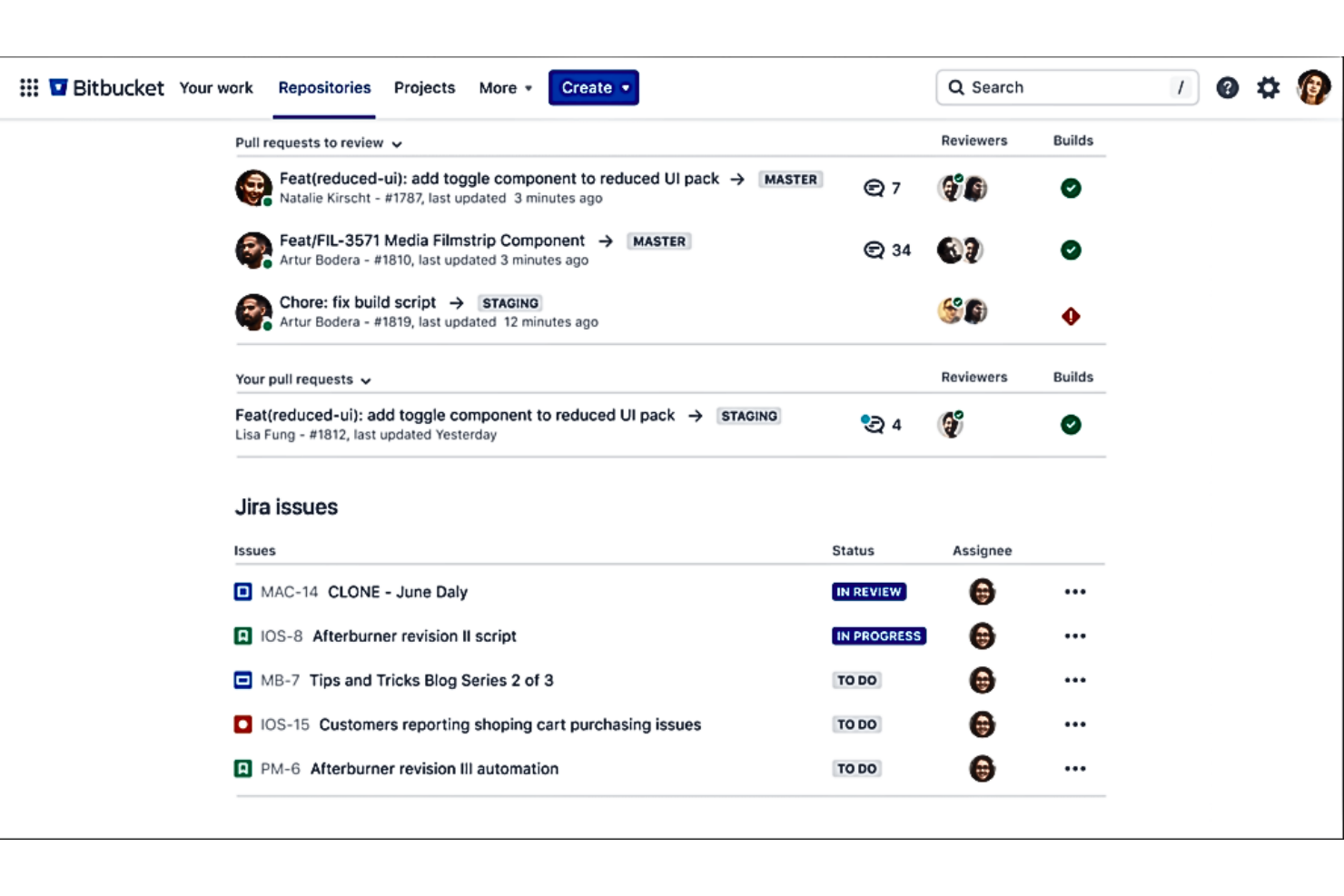
Bitbucket es un servicio de alojamiento de repositorios de control de versiones basado en la web que ayuda principalmente a los equipos a gestionar el código Git y colaborar. Permite planificar, colaborar, probar y desplegar código, lo que lo hace ideal para la gestión y colaboración de código Git.
Por qué elegí Bitbucket: Al seleccionar la mejor herramienta para la gestión y colaboración de código Git, tuve que considerar Bitbucket. Bitbucket se destaca por su profunda integración con otras herramientas de Atlassian, lo que fomenta colaboraciones de equipo más fluidas. En mi opinión, las sólidas funciones de gestión de código Git de Bitbucket, junto con su capacidad para mejorar el trabajo en equipo mediante sus integraciones, la hacen la mejor para la gestión y colaboración de código Git.
¿Qué obtienes gratis?
Bitbucket ofrece un nivel gratuito que permite hasta 5 usuarios colaborar en repositorios privados, con acceso a integraciones con Jira y Trello. Hay algunas limitaciones en el nivel gratuito, como menos minutos de compilación y almacenamiento para pipelines y Git LFS, y no hay lista blanca de IPs.
Funciones destacadas e integraciones
Las funciones notables de Bitbucket incluyen solicitudes de extracción (pull requests), ramas de código y comentarios en línea para facilitar mejores revisiones de código. También ofrece CI/CD integrado con Bitbucket Pipelines. La herramienta se integra bien con otros productos de Atlassian como Jira, Confluence y Trello, lo que la hace ideal para equipos que ya usan el paquete de Atlassian.
Pros and Cons
Pros:
- Integración profunda con herramientas de Atlassian
- Eficaces funciones de gestión de código Git
- CI/CD integrado con Bitbucket Pipelines
Cons:
- El plan gratuito es menos generoso en comparación con la competencia
- La interfaz de usuario puede no ser tan intuitiva como la de algunos competidores
- Ciertas funciones avanzadas solo están disponibles en planes superiores
Trello
Mejor para visualizar el flujo de trabajo del proyecto
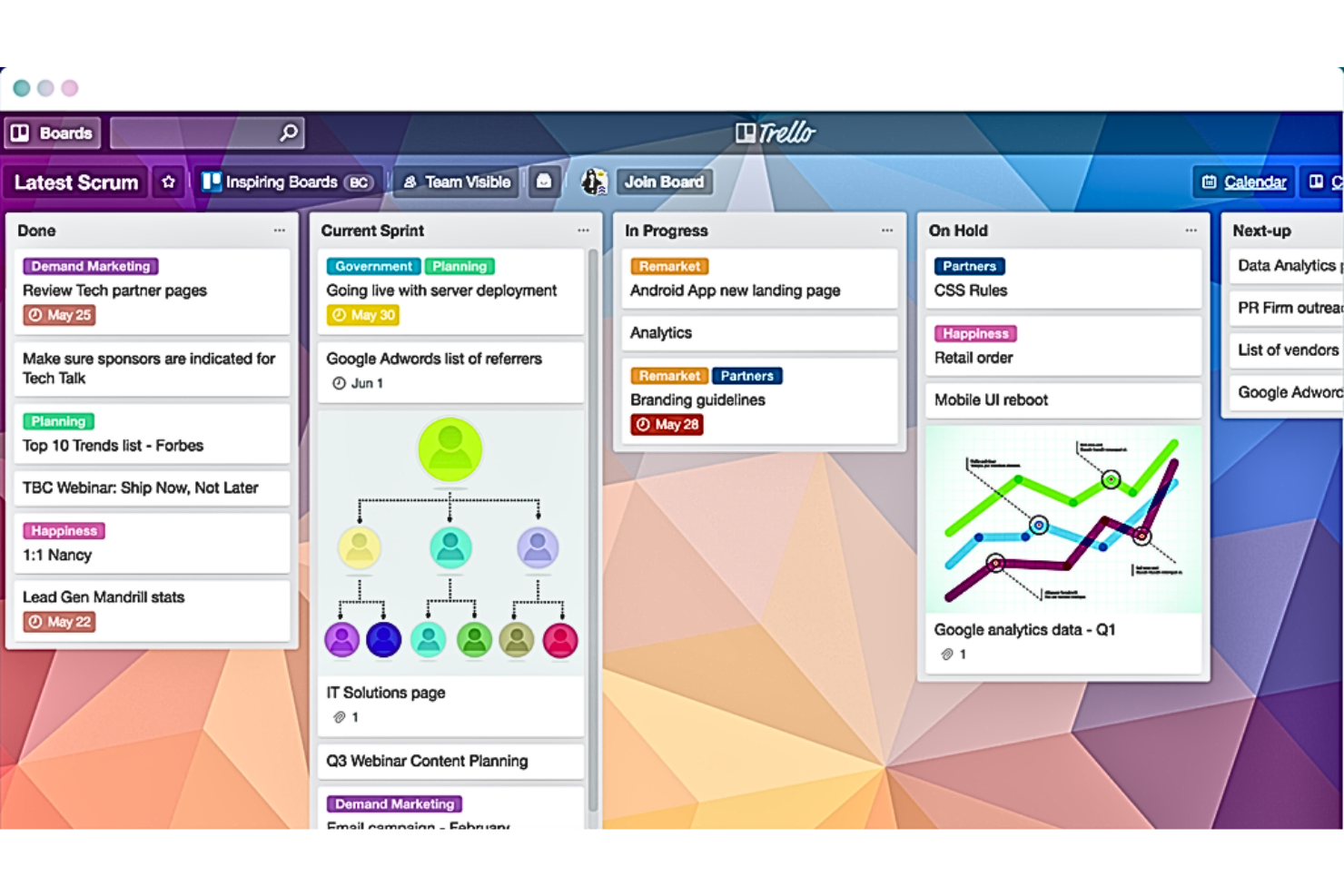
Trello es un software de hojas de ruta de productos y una herramienta de gestión de proyectos conocida por su simplicidad y la facilidad que ofrece para visualizar flujos de trabajo. La plataforma está estructurada en tableros, listas y tarjetas, lo que la hace ideal para gestionar y monitorear proyectos de una manera visualmente intuitiva.
Por qué elegí Trello: Trello destaca entre las herramientas de gestión de proyectos por su representación visual potente pero sencilla del trabajo. Al buscar una herramienta que ofreciera una visión clara del progreso del proyecto, Trello fue mi elección principal. Esta simplicidad y claridad visual hacen que Trello sea la mejor herramienta para visualizar el flujo de trabajo del proyecto. Permite a los equipos ver de un vistazo en qué estado se encuentra cada tarea o proyecto, reduciendo la confusión y aumentando la productividad.
¿Qué obtienes de forma gratuita?
Trello ofrece un plan gratuito que incluye tableros personales ilimitados, tarjetas y listas, y hasta 10 tableros de equipo. Este plan también proporciona un Power-Up por tablero y autenticación de dos factores. Sin embargo, funciones como listas de verificación avanzadas y campos personalizados solo están disponibles en los planes premium.
Funciones destacadas e integraciones
Las características clave de Trello incluyen sus tableros, listas y tarjetas fáciles de usar para la gestión de tareas y proyectos. La capacidad de asignar tareas, añadir comentarios y adjuntar archivos directamente a las tarjetas de Trello facilita la colaboración en equipo. Además, Trello se integra con varias aplicaciones populares como Slack, Google Drive y GitHub, permitiendo un flujo de trabajo más ágil entre diferentes plataformas.
Pros and Cons
Pros:
- Interfaz fácil de usar e intuitiva
- Representación visual de flujos de trabajo
- Integraciones útiles con otras herramientas populares
Cons:
- Características limitadas en el plan gratuito
- Las funciones avanzadas pueden ser costosas
- No es ideal para necesidades de gestión de proyectos complejos
Asana
Mejor para el seguimiento de tareas e hitos
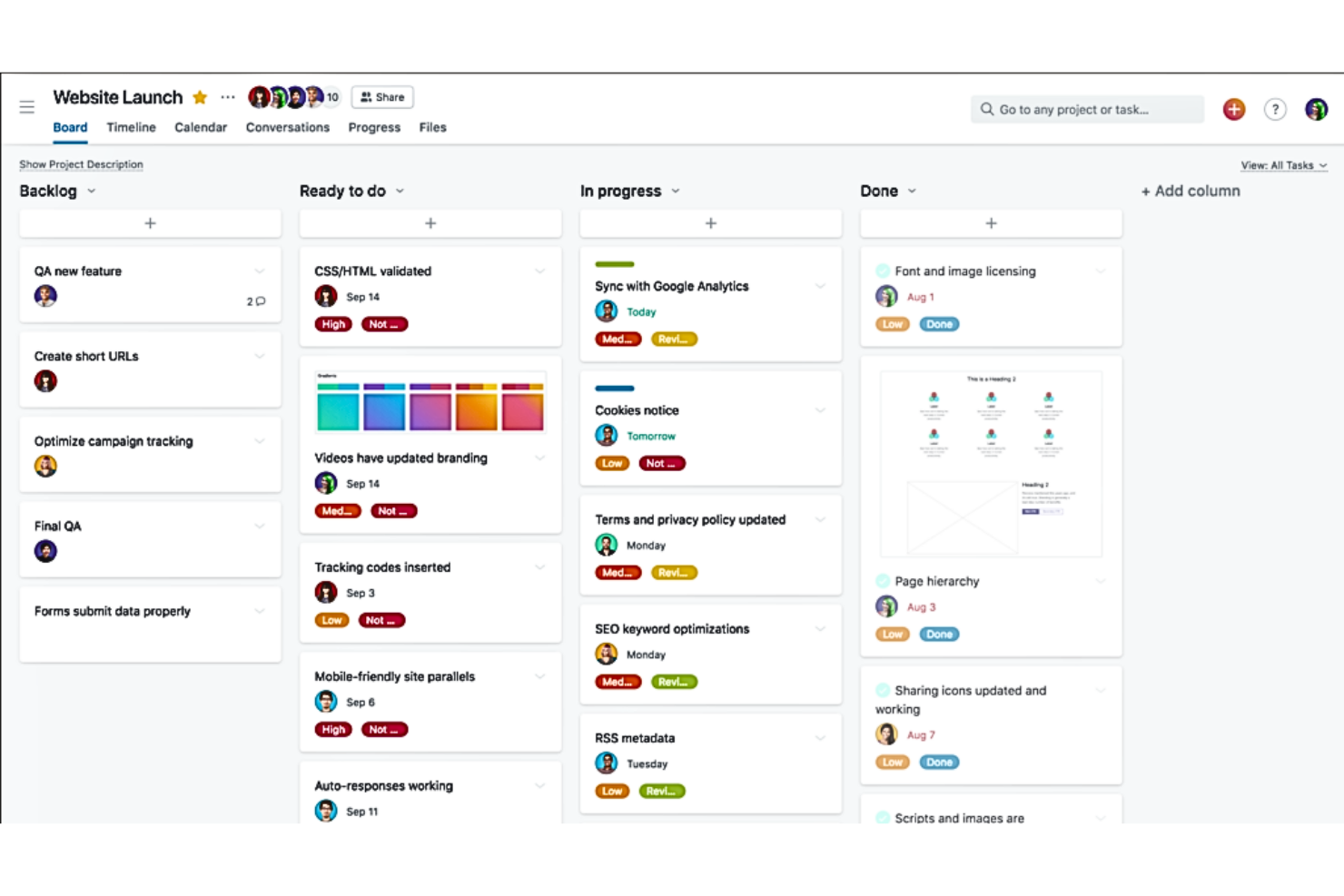
Asana es una solución integral de gestión de proyectos que enfatiza la organización y el seguimiento de tareas. Ofrece un conjunto de características robustas que ayudan a gestionar y supervisar los hitos y tareas del proyecto, lo que la hace óptima para proyectos complejos.
Por qué elegí Asana: Escoger Asana fue una decisión sencilla para esta lista, dado sus excelentes características para el seguimiento de tareas y hitos. Se diferencia por su sólido sistema de gestión de tareas y su vista detallada de los hitos del proyecto. Considero que Asana es la 'Mejor para el seguimiento de tareas e hitos' porque proporciona una visión clara y completa de todos los elementos del proyecto, incluyendo tareas, subtareas y hitos, que otras herramientas no ofrecen en la misma medida.
¿Qué obtienes gratis?
El plan gratuito de Asana incluye características como tareas, proyectos y mensajes ilimitados para equipos de hasta 15 personas. Aunque ofrece capacidades básicas de panel e investigación, las funciones avanzadas como vistas de cronograma, diagramas de Gantt, campos personalizados y las integraciones avanzadas solo están disponibles en los planes premium.
Características destacadas e integraciones
Las características destacadas de Asana son sus jerarquías de tareas, subtareas, dependencias y seguimiento de hitos. También ofrece múltiples opciones de vista de proyecto, como las vistas de lista, tablero y calendario. En cuanto a integraciones, Asana funciona bien con herramientas populares como Slack, Google Drive y Microsoft Teams, lo que facilita un flujo de trabajo optimizado.
Pros and Cons
Pros:
- Seguimiento detallado de tareas e hitos
- Varias vistas de proyecto
- Integraciones sólidas con otras herramientas
Cons:
- Las funciones avanzadas requieren un plan premium
- La interfaz puede resultar abrumadora para los nuevos usuarios
- La versión gratuita solo admite hasta 15 miembros del equipo

GitLab
Mejor para la gestión del ciclo de vida DevOps
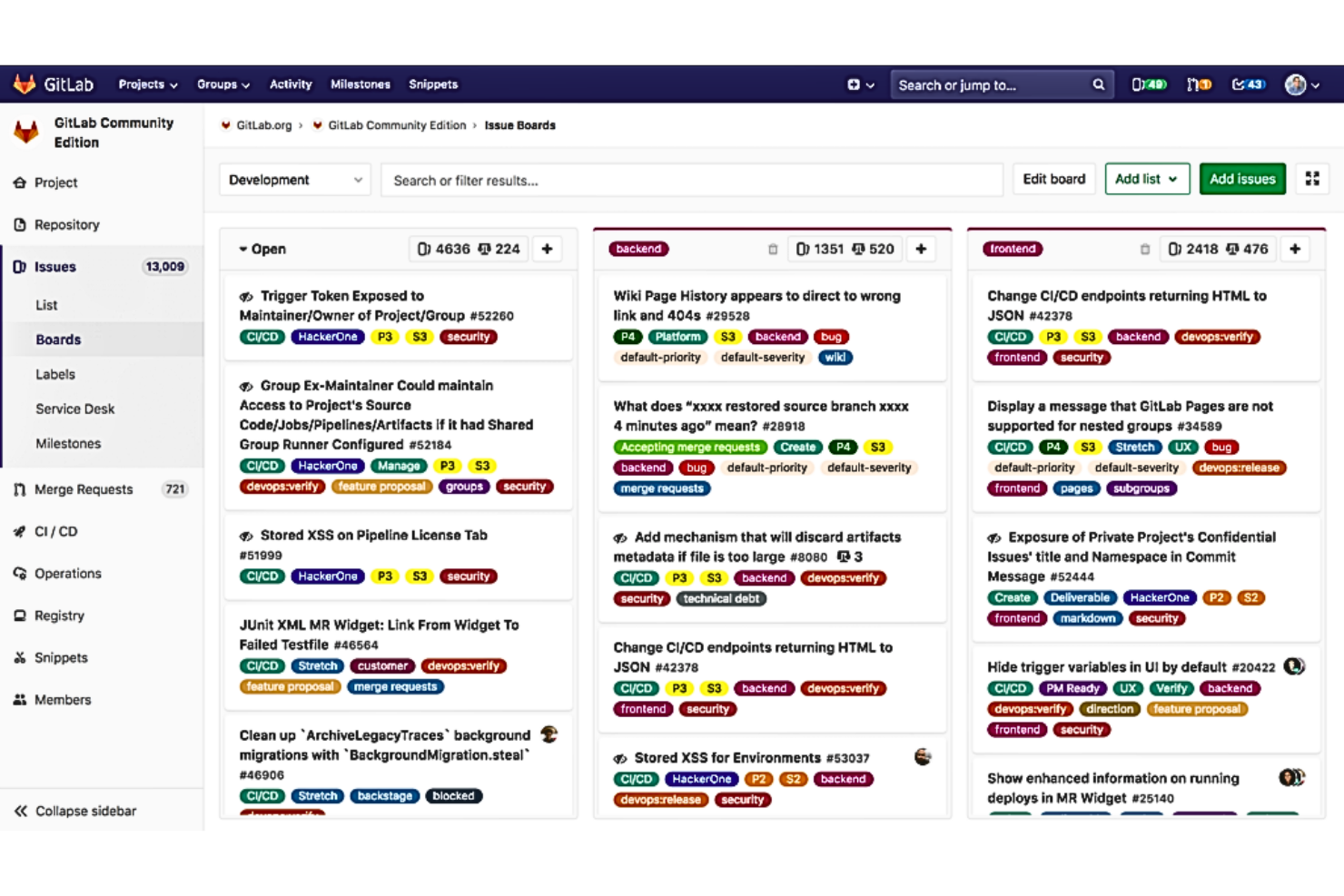
GitLab es una plataforma DevOps que facilita el ciclo completo de vida del desarrollo de software. Al consolidar el seguimiento de incidencias, el control de versiones, la revisión de código, CI/CD y la monitorización en una sola interfaz, GitLab ofrece una solución integral para la gestión del ciclo de vida DevOps.
Por qué elegí GitLab: Al determinar la mejor herramienta para la gestión del ciclo de vida DevOps, GitLab fue una elección clara. GitLab destaca por su enfoque 'todo en uno' para DevOps, cubriendo todo, desde la planificación de proyectos y la gestión del código fuente hasta CI/CD, monitorización y seguridad. Esto lo diferencia de muchas otras plataformas que requieren varias integraciones para un enfoque completo del ciclo de vida. En mi opinión, GitLab realmente brilla en la gestión del ciclo de vida DevOps, de ahí mi decisión de destacarlo como 'Mejor para la gestión del ciclo de vida DevOps'.
¿Qué obtienes gratis?
GitLab ofrece un nivel gratuito generoso, que incluye repositorios privados ilimitados, colaboradores ilimitados y capacidades de CI/CD. Sin embargo, este nivel gratuito tiene algunas limitaciones, como soporte de menor prioridad y la ausencia de reglas de aprobación múltiple en las solicitudes de fusión.
Características destacadas e integraciones
Las características clave de GitLab incluyen integración y entrega continua (CI/CD) integradas, funciones de seguridad como SAST, DAST y análisis de dependencias, y un sólido sistema de seguimiento de incidencias. GitLab se integra bien con muchas herramientas de terceros como Jira, Jenkins y Slack para mejorar aún más sus capacidades.
Pros and Cons
Pros:
- Solución integral para el ciclo de vida DevOps
- Sólidas funciones de CI/CD y seguridad
- Compatible con una gran cantidad de integraciones de terceros
Cons:
- La interfaz puede ser compleja para usuarios nuevos
- Algunas funciones requieren planes de nivel superior
- Soporte de menor prioridad en el plan gratuito

SketchUp es una plataforma de modelado 3D fácil de usar que suele emplearse en arquitectura y diseño de interiores, ingeniería mecánica y diseño de videojuegos. Como herramienta diseñada específicamente para la creación en 3D, facilita la visualización, planificación y comunicación de diseños complejos, especialmente en el ámbito del diseño y modelado de productos.
¿Por qué elegí SketchUp?: Al determinar mis elecciones, SketchUp entró en la lista principalmente por su sencillez y funcionalidad en el modelado 3D. Esta herramienta destaca por su equilibrio entre facilidad de uso y potencia, ofreciendo una interfaz intuitiva sin sacrificar la profundidad de sus funciones, lo que la convierte en una opción sobresaliente. Considero que es 'La mejor para el diseño y modelado de productos en 3D' porque se adapta a una amplia gama de profesionales del diseño, permitiéndoles plasmar conceptos complejos de manera fácil y eficiente.
¿Qué obtienes gratis?
SketchUp ofrece una versión gratuita, SketchUp Free, que brinda herramientas esenciales de modelado 3D en una plataforma basada en la web. Sin embargo, la versión gratuita tiene funciones limitadas y no permite instalar extensiones, acceder a 3D Warehouse ni utilizar las herramientas avanzadas de diseño que sí incluyen las versiones premium.
Características e integraciones destacadas
Las principales características de SketchUp incluyen su completo conjunto de herramientas de modelado 3D, una extensa biblioteca de modelos predefinidos y compatibilidad con varios formatos de archivo para exportar. En cuanto a integraciones, SketchUp puede conectarse con una amplia variedad de herramientas y complementos de terceros para ampliar su funcionalidad, entre los que se incluyen motores de renderizado como V-Ray y Twinmotion, y paquetes CAD como AutoCAD.
Pros and Cons
Pros:
- Interfaz fácil de usar para diseño 3D
- Amplia biblioteca de modelos predefinidos
- Compatibilidad versátil con formatos de archivo
Cons:
- Las funciones avanzadas requieren un plan de pago
- La versión gratuita tiene funciones limitadas
- Requiere un buen equipo para diseños complejos

Jira es una herramienta de gestión de proyectos SaaS muy versátil, reconocida a menudo por sus capacidades en la gestión de proyectos Ágiles. Su sistema estructurado ayuda a seguir y gestionar todos los elementos de un proyecto, lo que la convierte en una opción ideal para gestionar los flujos de trabajo de equipos Ágiles.
Por qué elegí Jira: Seleccioné Jira para esta lista debido a su estructura bien definida para gestionar la gestión de proyectos Ágiles. El software destaca por su capacidad para gestionar de forma eficaz los flujos de trabajo Scrum y Kanban, lo cual resulta invaluable para los equipos que siguen metodologías Ágiles. La etiqueta 'Mejor para la gestión de proyectos Ágiles' es apropiada ya que Jira proporciona vistas detalladas de los flujos de trabajo Ágiles y ofrece potentes funciones que facilitan el seguimiento de tareas y la visualización del progreso.
¿Qué obtienes gratis?
La versión gratuita de Jira está dirigida a equipos pequeños de hasta 10 usuarios e incluye tableros Scrum y Kanban, priorización de pendientes e informes Ágiles. Sin embargo, carece de funciones avanzadas como roles de proyecto, registros de auditoría, historias de usuario y permisos de usuario que están disponibles en sus planes premium.
Funciones destacadas e integraciones
Las funciones destacadas de Jira incluyen sus tableros Ágiles, flujos de trabajo personalizables, priorización de pendientes e informes en profundidad. Permite una amplia personalización que puede adaptarse a requisitos particulares de proyectos. En cuanto a integraciones, Jira se integra bien con otros productos de Atlassian como Confluence y Bitbucket, además de otras herramientas como Slack y GitHub.
Pros and Cons
Pros:
- Opciones de personalización avanzada
- Amplia gama de integraciones
- Excelentes capacidades de gestión Ágil
Cons:
- Mayor curva de aprendizaje para nuevos usuarios
- Las funciones avanzadas están restringidas a los planes premium
- La versión gratuita está limitada a equipos pequeños
Miro
Ideal para pizarras digitales interactivas
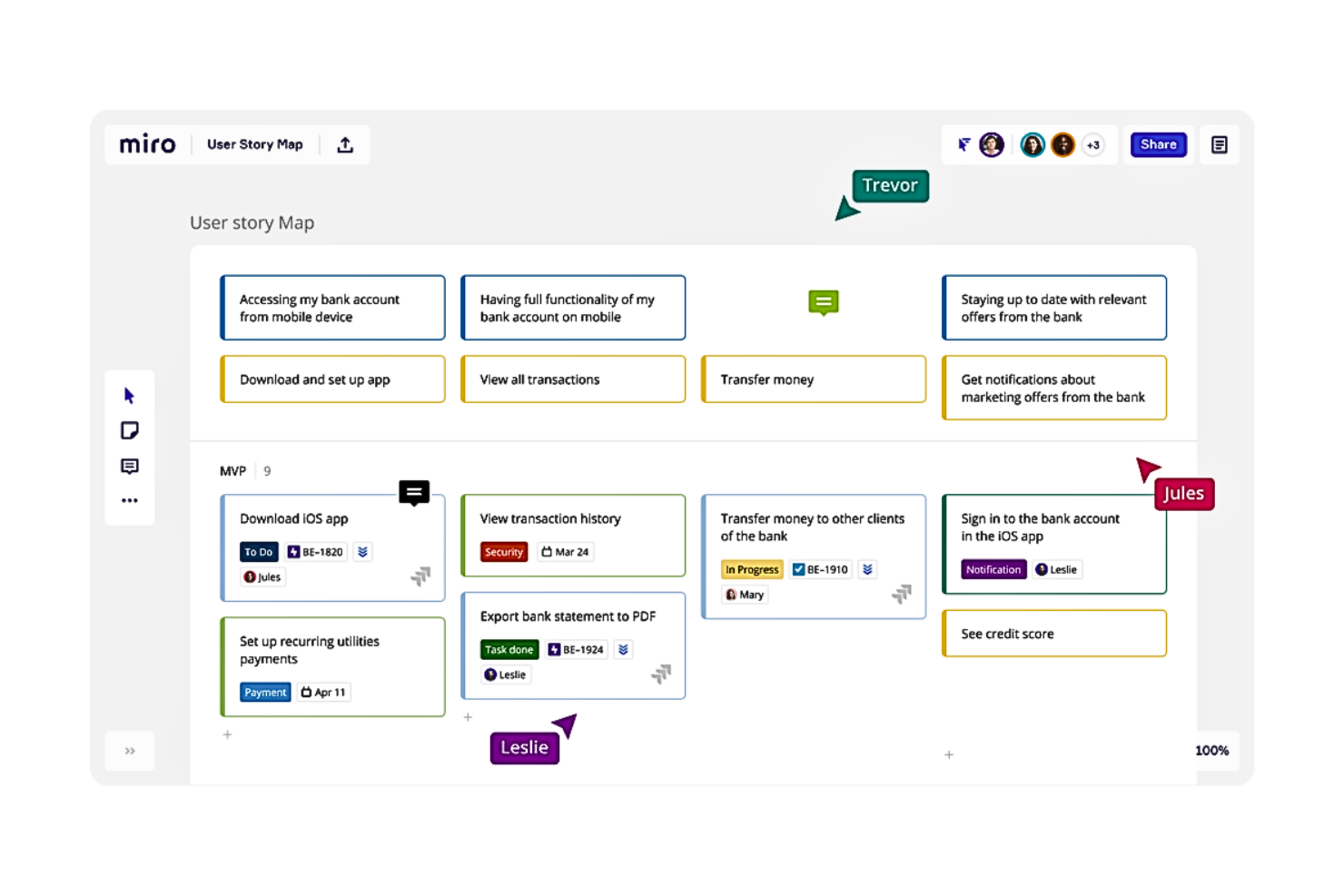
Miro es una plataforma de pizarras colaborativas en línea que permite a los equipos trabajar juntos visualmente y en tiempo real. Se destaca como una herramienta de pizarra digital interactiva, lo que la hace perfecta para sesiones de lluvia de ideas, planificación, visualización de estrategias de producto y mucho más.
¿Por qué elegí Miro: Elegí Miro por su excepcional flexibilidad y naturaleza visual intuitiva, que se adapta perfectamente a las diversas necesidades de colaboración en equipo. En comparación con otras herramientas de pizarra, la capacidad de Miro para involucrar a los miembros del equipo en un espacio de trabajo digital altamente interactivo se destaca. El potente conjunto de funciones de Miro lo alinea perfectamente con su papel como herramienta de pizarra digital interactiva.
¿Qué obtienes gratis?
El plan gratuito de Miro incluye miembros de equipo ilimitados, tres pizarras editables y funciones principales como plantillas prediseñadas, notas adhesivas, herramientas de dibujo e integraciones básicas. Sin embargo, las funciones avanzadas y pizarras ilimitadas están reservadas para los planes de pago.
Funciones e integraciones destacadas
Las funciones destacadas de Miro incluyen un lienzo ilimitado, diversas plantillas, potentes capacidades de colaboración que incluyen chat por video y la capacidad de convertir dibujos a mano alzada en formas precisas. En cuanto a integraciones, Miro ofrece compatibilidad con herramientas populares como Slack, Google Drive, Dropbox, Jira y más, lo que permite un flujo de trabajo más fluido.
Pros and Cons
Pros:
- Ofrece un espacio de trabajo atractivo e interactivo
- Incluye una variedad de plantillas y herramientas
- Permite una amplia gama de integraciones para una mayor productividad
Cons:
- El lienzo ilimitado puede resultar abrumador para algunos usuarios
- Características como votación y temporizador solo están disponibles en los planes de pago
- Algunos usuarios pueden experimentar una curva de aprendizaje debido a su interfaz llena de funciones
New Product Updates from Miro
Miro Adds Japan Data Residency for Enterprise Customers
Miro has introduced Japan data residency for enterprise customers, offering in-region storage for production data, backups, and metadata, plus in-region compute infrastructure. For more information, visit Miro's official site.
Otro software gratuito para el desarrollo de productos
Estas son algunas opciones adicionales de software para el desarrollo de productos que también ofrecen planes o pruebas gratuitas. Aunque estas herramientas no llegaron a mi selección, vale la pena echarles un vistazo:


Cómo evalúo el software gratuito de desarrollo de productos
Primero, defino qué cuenta como gratuito. Para el software de desarrollo de productos, eso significa un plan gratuito para siempre —no solo una prueba— que un fundador solitario o un equipo pequeño pueda usar realmente para gestionar hojas de ruta y administrar el backlog a largo plazo. A partir de ahí, considero dos niveles: la funcionalidad principal que una herramienta debe ofrecer para ganarse un lugar en esta lista, y los diferenciadores que separan las opciones más sólidas.
Funcionalidad principal (requisitos básicos para esta lista)
Además de mis requisitos para la oferta gratuita, también utilizo un sistema de puntuación para seleccionar las herramientas para mi lista. Así es como funciona:
Clasifico cada una en una escala del 0 (no ofrece la funcionalidad) al 5 (destaca en esta área) para cada funcionalidad principal que se detalla a continuación. Luego, calculo la puntuación total de la herramienta en porcentaje. Cada una necesita lograr una puntuación total mínima del 65% para ser considerada para su inclusión.
- Generosidad del plan gratuito: Evalúo los límites de usuarios, proyectos y acceso a funciones: algunas herramientas ofrecen espacio suficiente para que un equipo pequeño trabaje, mientras que otras te restringen a uso individual.
- Capacidades de gestión de hojas de ruta: Busco vistas de cronograma o de carriles donde un PM pueda planificar lanzamientos trimestrales y compartir un enlace de la hoja de ruta en vivo con líderes o inversores.
- Gestión del backlog e ideas: Un backlog estructurado es importante; evalúo si puedes etiquetar, puntuar y clasificar solicitudes de funcionalidades en lugar de simplemente volcar ideas en una lista plana.
- Seguimiento de sprints y tareas: Los tableros Kanban y la planificación de sprints deberían permitir a un responsable de producto asignar historias, dar seguimiento al progreso y revisar la velocidad de iteraciones.
- Colaboración y compartir: Evalúo los comentarios en tiempo real, las @menciones y los espacios compartidos: un fundador debe poder incluir a un desarrollador o diseñador sin fricción.
- Integraciones con herramientas de desarrollo: Compruebo si hay conexiones nativas con herramientas como GitHub, Slack y Figma para que las decisiones de producto se integren con los flujos de trabajo de ingeniería y diseño.
Una vez que tengo una lista de herramientas que cumplen estos criterios, considero qué distingue a cada plataforma.
Factores diferenciadores (qué distingue a los proveedores)
Así es como comparo y contrasto diferentes proveedores:
Funciones destacadas
Los portales de retroalimentación de clientes hacen destacar a algunas herramientas. Busco aquellas en las que los usuarios finales puedan enviar y votar solicitudes de funciones que se integran directamente en el backlog, para que un PM no tenga que copiar manualmente ideas de correos o hojas de cálculo. Los flujos de trabajo asistidos por IA son cada vez más relevantes también: herramientas que generan historias de usuario a partir de comentarios en bruto o redactan una PRD pueden ahorrar horas de escritura repetitiva. Los paneles de informes completan el panorama. Los mejores visualizan la velocidad de sprint y el progreso de la hoja de ruta en un formato que puedes presentar directamente en una revisión con interesados sin preparación extra.
Más allá de las funciones
La escalabilidad del nivel gratuito es muy importante aquí. Evalúo si los límites de usuarios y proyectos de una herramienta pueden soportar a un pequeño equipo de producto a medida que crece —o si llegarás a un muro de pago en cuanto añadas un tercer colaborador. El ajuste al caso de uso es otro factor que valoro. Algunas plataformas están diseñadas específicamente para la gestión de productos, mientras que otras son herramientas generales de proyectos adaptadas al trabajo de PM, y esa distinción afecta a la solidez de los flujos de trabajo del backlog a la hoja de ruta. Las políticas de exportación y portabilidad de datos también reciben especial atención, ya que un equipo que empieza necesita una vía clara para cambiar de herramienta en el futuro.
Cómo elegir un software gratuito para el desarrollo de productos
Las listas de funciones complejas y las estructuras de precios pueden dificultar saber qué obtienes realmente de un software gratuito para el desarrollo de productos. Para ayudarte a mantener la concentración mientras avanzas en el proceso de selección del software, estos son algunos factores que debes tener en cuenta:
| Factor | Qué considerar |
|---|---|
| Alcance de la oferta gratuita | Revisa lo que incluye el plan gratuito. Asegúrate de que cubra las necesidades básicas de tu equipo sin costos ocultos. |
| Escalabilidad | Considera si el software puede crecer con tu empresa. Comprueba si admite más usuarios o proyectos a medida que se amplían tus necesidades. |
| Integraciones | Asegúrate de que se integre con las herramientas que tu equipo ya utiliza, como Slack o Google Workspace, para evitar interrumpir los flujos de trabajo. |
| Facilidad de uso | Evalúa qué tan intuitiva es la interfaz. Tu equipo debería poder empezar a utilizarla con una capacitación mínima. |
| Seguridad | Comprueba si el software cumple con las normas de seguridad pertinentes para tu sector, especialmente si manejas datos confidenciales. |
| Atención al cliente | Busca las opciones de asistencia disponibles en la versión gratuita, como soporte por chat o correo electrónico, para ayudar a tu equipo cuando surjan problemas. |
| Personalización | Determina si puedes adaptar el software para ajustarlo a tus flujos de trabajo específicos, incluso en la versión gratuita, a fin de maximizar la productividad. |
| Opciones de comentarios | Considera cómo te permite el software recopilar y aplicar los comentarios de los usuarios para mejorar tu proceso de desarrollo de productos. |
¿Qué es el software gratuito de desarrollo de productos?
El software de desarrollo de productos está diseñado para ayudar a los equipos a planificar, gestionar y ejecutar ideas de productos. Estas herramientas suelen ofrecer planes gratuitos o períodos de prueba para que los usuarios exploren las funciones básicas sin compromiso financiero. Normalmente, los gerentes de producto, diseñadores y desarrolladores utilizan estas herramientas para mejorar la colaboración y la eficiencia.
Funciones como la planificación de hojas de ruta, la gestión de tareas y la recopilación de comentarios ayudan a los equipos a mantenerse organizados, priorizar tareas y obtener información esencial, lo que favorece un proceso de desarrollo más eficaz.
Funciones
Repasemos las funciones que suelen encontrarse en el software de desarrollo de productos y cuáles suelen incluirse en los planes gratuitos y de pago.
Funciones habituales del software gratuito de desarrollo de productos
- Gestión de tareas: Ayuda a organizar y asignar tareas a los miembros del equipo, para que todos sigan el rumbo.
- Planificación de hojas de ruta: Proporciona una línea de tiempo visual para los objetivos del producto, lo que facilita la planificación estratégica.
- Recopilación de comentarios: Permite a los equipos recopilar información de los usuarios, que puede orientar las mejoras del producto.
- Herramientas de colaboración: Facilitan la comunicación y el trabajo en equipo, asegurándose de que todos estén al tanto.
- Integraciones básicas: Se conectan con otras herramientas, como Slack o Google Workspace, para mejorar el flujo de trabajo.
- Paneles personalizables: Permiten a los usuarios adaptar su vista para acceder rápidamente a la información importante.
- Gestión de roles de usuario: Permite establecer permisos para controlar el acceso según los roles del equipo.
Funciones habituales del software de pago de desarrollo de productos
- Análisis avanzado: Ofrece un análisis exhaustivo de los datos para ayudar a los equipos a tomar decisiones fundamentadas.
- Notificaciones automatizadas: Mantienen informados a los equipos mediante alertas automáticas sobre los cambios en los proyectos.
- Colaboración en tiempo real: Permite que varios usuarios trabajen simultáneamente en los mismos documentos.
- Funciones de seguridad mejoradas: Proporciona medidas de seguridad adicionales para proteger los datos confidenciales.
- Atención al cliente prioritaria: Ofrece tiempos de respuesta más rápidos y asistencia especializada para problemas urgentes.
- Almacenamiento ilimitado: Admite grandes cantidades de datos, algo esencial para los equipos en crecimiento.
- Opciones avanzadas de personalización: Proporciona mayor flexibilidad para adaptar el software a flujos de trabajo específicos.
Beneficios
Implementar software gratuito de desarrollo de productos ofrece varios beneficios para tu equipo y tu empresa. Estos son algunos de los que puedes esperar:
- Ahorro de costes: Accede a herramientas esenciales sin un compromiso financiero, liberando presupuesto para otras necesidades.
- Mejor organización: Utiliza la gestión de tareas para mantener los proyectos y las responsabilidades claros y encaminados.
- Colaboración mejorada: Las herramientas de comunicación integradas garantizan que tu equipo se mantenga conectado y alineado.
- Información valiosa: Las funciones de recopilación de comentarios te ayudan a comprender las necesidades de los usuarios y a tomar decisiones fundamentadas.
- Flexibilidad: Los paneles personalizables te permiten adaptar tu espacio de trabajo a tu flujo de trabajo.
- Escalabilidad: Comienza con funciones básicas y amplía a medida que crezca tu equipo, adaptándote a las necesidades cambiantes.
- Configuración rápida: Las interfaces sencillas y las integraciones básicas facilitan el inicio sin necesidad de una formación exhaustiva.
Costes y precios
Entiendo que has llegado a este artículo buscando las mejores opciones de software de desarrollo de productos disponibles de forma gratuita. Sin embargo, dado que los planes gratuitos solo ofrecen funciones limitadas, es muy probable que necesites ampliar tu plan en el futuro.
La siguiente tabla resume los planes habituales, sus precios medios y las funciones que suelen incluir las soluciones de software de desarrollo de productos:
Tabla comparativa de planes de software de desarrollo de productos
| Tipo de plan | Precio medio | Funciones habituales |
|---|---|---|
| Plan gratuito | $0 | Gestión básica de tareas, planificación de hojas de ruta, recopilación de comentarios, herramientas de colaboración e integraciones básicas. |
| Plan personal | $5-$25/usuario/mes | Todas las funciones gratuitas, además de gestión de roles de usuario, paneles personalizables y almacenamiento adicional. |
| Plan empresarial | $30-$75/usuario/mes | Todas las funciones del plan personal, además de análisis avanzados, notificaciones automatizadas y funciones de seguridad mejoradas. |
| Plan corporativo | $80-$150/usuario/mes | Todas las funciones del plan empresarial, además de atención al cliente prioritaria, almacenamiento ilimitado y opciones avanzadas de personalización. |
Preguntas frecuentes sobre el software gratuito de desarrollo de productos
Estas son algunas respuestas a preguntas habituales sobre el software gratuito de desarrollo de productos:
¿Puedo confiar en un software gratuito de desarrollo de productos para utilizarlo a largo plazo?
Las versiones gratuitas pueden ser excelentes para empresas emergentes o equipos pequeños con necesidades básicas. Sin embargo, a medida que crezca tu equipo, es posible que necesites funciones avanzadas disponibles en los planes de pago. Es importante evaluar si la versión gratuita satisface tus objetivos a largo plazo.
¿Qué limitaciones debo esperar en un software gratuito de desarrollo de productos?
Los planes gratuitos suelen tener almacenamiento limitado, menos integraciones y soporte básico. También puedes encontrarte con restricciones en el número de usuarios o proyectos. Evalúa estas limitaciones en función de las necesidades de tu equipo para decidir si un plan gratuito es suficiente.
¿Qué nivel de seguridad ofrece el software gratuito de desarrollo de productos?
La seguridad puede variar según el proveedor. Busca un software que ofrezca funciones de seguridad básicas, como el cifrado de datos. Para gestionar información confidencial, considera el cumplimiento del proveedor con las normas y regulaciones del sector.
¿Puedo pasar fácilmente de un plan gratuito a uno de pago?
La mayoría de los proveedores ofrecen un proceso de actualización sencillo. Normalmente puedes conservar tus datos y configuraciones actuales al pasar a un plan de pago. Consulta con el proveedor cualquier posible interrupción del servicio o problema de migración de datos durante la actualización.
Qué hacer a continuación:
Si estás investigando software gratuito de desarrollo de productos, ponte en contacto con un asesor de SoftwareSelect para recibir recomendaciones gratuitas.
Rellenas un formulario y mantienes una breve conversación en la que se profundiza en los detalles de tus necesidades. Después recibirás una lista breve de programas que podrás revisar. También te apoyarán durante todo el proceso de compra, incluidas las negociaciones de precios.