

10 Mejores Software de Inteligencia de Producto Revisados en 2026

10 La mejor lista corta de software de inteligencia de productos


Con tantas soluciones diferentes de inteligencia de productos disponibles, puede ser complicado saber cuál es la adecuada para ti. Sabes que quieres rastrear el comportamiento del usuario, agilizar la recopilación manual de datos, obtener información de manera más eficiente y acceder a análisis detallados de tu competencia que refuercen tu toma de decisiones con analítica predictiva, pero necesitas averiguar qué herramienta es la mejor. ¡Te ayudo! En esta publicación te facilitaré la elección, compartiendo mis experiencias personales usando docenas de herramientas de inteligencia diferentes con equipos grandes y productos complejos, con mis selecciones del mejor software de inteligencia de productos.
Table of Contents
Por Qué Confiar en Nuestras Reseñas de Software
Llevamos revisando y probando software de gestión de productos desde 2020. Como product managers, sabemos lo crucial y complicado que es tomar la decisión correcta al seleccionar software. Invertimos en investigación profunda para ayudar a nuestra audiencia a tomar mejores decisiones de compra de software. Hemos probado más de 2,000 herramientas para distintos casos de uso y escrito más de 1,000 reseñas exhaustivas. Conozca cómo mantenemos la transparencia & nuestra metodología de reseñas de software.
Resumen del mejor software de inteligencia de productos
Esta tabla comparativa resume los detalles de precios de mis principales selecciones de software de inteligencia de productos para ayudarte a encontrar el mejor para tu presupuesto y necesidades de negocio.
| Tool | Best For | Trial Info | Price | ||
|---|---|---|---|---|---|
| 1 | Ideal para la integración de datos de clientes | Plan gratuito disponible | Desde $120/mes | Website | |
| 2 | La mejor para análisis de datos mediante arrastrar y soltar | Prueba gratuita + plan gratuito disponible | Desde $15/usuario/mes (facturado anualmente) | Website | |
| 3 | Mejor para comentarios de clientes por video en vivo | Demo gratuita disponible | Precio bajo solicitud | Website | |
| 4 | Mejor para empresas con enfoque móvil | Prueba gratuita de 30 días + demo gratuita disponible | Desde $75/mes | Website | |
| 5 | Mejor para la exploración y visualización de datos | Plan gratuito disponible | Desde $9/usuario/proyecto/mes | Website | |
| 6 | Ideal para el seguimiento de interacciones de usuario dentro de la app | Prueba gratuita de 30 días + plan gratuito + demo gratis disponible | Precios a consultar | Website | |
| 7 | Ideal para capturar y analizar información sobre la experiencia de producto a escala con IA | Prueba gratuita de 14 días + plan gratuito disponible | Desde $175/mes (facturado anualmente) | Website | |
| 8 | Ideal para capturar todas las interacciones de los usuarios automáticamente | Plan gratuito + prueba gratuita + demostración gratuita disponible | Precio disponible bajo solicitud | Website | |
| 9 | Ideal para el seguimiento del recorrido del cliente y embudos de conversión | Prueba gratuita de 7 días + demostración gratuita disponible | Desde $99/mes | Website | |
| 10 | La mejor opción para el seguimiento del rendimiento de marketing | Demo gratuita disponible | Precio a consultar | Website |

Reseñas del mejor software de inteligencia de productos
A continuación encontrarás mis resúmenes detallados del mejor software de inteligencia de productos que entró en mi lista corta. Mis análisis ofrecen una visión detallada de las funciones clave, pros y contras, integraciones y casos de uso ideales de cada herramienta para ayudarte a encontrar la mejor para ti.


Segment funciona como una potente plataforma de datos de clientes, destinada a proporcionar datos de clientes limpios y fiables a las herramientas que las empresas utilizan para análisis y crecimiento. Su capacidad para recopilar eventos de usuarios de aplicaciones web y móviles y ofrecer un completo conjunto de herramientas de datos lo convierte en una opción ideal para las empresas que buscan mejorar la integridad de sus datos y la comprensión del cliente.
Por qué escogí Segment:
Elegí Segment por su alto nivel de competencia en la consolidación de datos de clientes. Su capacidad para canalizar los datos de los clientes en una única vista unificada para múltiples usos, incluidos análisis, marketing y desarrollo de productos, lo diferencia de otras herramientas. Su integración eficiente de datos lo convierte en la mejor opción para la integración de datos de clientes.
Características destacadas e integraciones:
Las características principales de Segment incluyen gestión de datos, creación de prototipos, resolución de identidad y privacidad de datos, todo lo cual contribuye a mantener un entorno de datos limpio y controlado. En cuanto a integraciones, Segment funciona bien con una amplia variedad de herramientas, como Google Analytics, Mixpanel y Mailchimp, lo que amplía su aplicación para diferentes necesidades empresariales.
Pros and Cons
Pros:
- Ofrece opciones sólidas de integración de datos
- Proporciona una vista única de los datos de los clientes
- Amplia lista de integraciones con otras plataformas
Cons:
- El precio puede resultar elevado para pequeñas empresas
- Puede requerir habilidades técnicas para aprovechar al máximo sus funciones
- Algunos usuarios pueden encontrar la interfaz de usuario compleja de navegar


Tableau es una herramienta de visualización de datos e inteligencia empresarial que ayuda a los usuarios a transformar datos en bruto en paneles interactivos y comprensibles. Cuenta con una interfaz fácil de usar con funciones de arrastrar y soltar, lo que la convierte en una opción óptima para individuos u organizaciones que prefieren un análisis de datos intuitivo y práctico.
Por qué elegí Tableau:
En mi búsqueda de una herramienta eficaz para el análisis de datos, evalué varios candidatos. Tableau se destacó como mi elección gracias a su interfaz sencilla que permite incluso a las personas menos técnicas manipular datos con facilidad. Su excepcional función de arrastrar y soltar permite a los usuarios crear visualizaciones rápidamente, lo que la convierte en una opción óptima para quienes necesitan un análisis de datos rápido y sencillo.
Funciones destacadas e integraciones:
Tableau ofrece funciones robustas, incluyendo análisis de datos en tiempo real, combinación de datos y capacidades colaborativas. Quizá la función más notable sea su interfaz de arrastrar y soltar, que facilita la creación rápida de paneles e informes. En cuanto a las integraciones, Tableau se conecta con una amplia variedad de fuentes de datos, desde bases de datos como MySQL, Microsoft Teams y Oracle, hasta servicios en la nube como Google Analytics y Salesforce.
Pros and Cons
Pros:
- Función de arrastrar y soltar fácil de usar
- Amplia gama de integraciones de fuentes de datos
- Análisis de datos en tiempo real
Cons:
- El precio puede ser elevado para pequeñas empresas
- Las fórmulas complejas pueden ser difíciles de implementar
- El soporte al cliente podría mejorar


UserTesting es una plataforma que permite a las empresas obtener información en tiempo real sobre las experiencias de sus clientes. Al ofrecer retroalimentación en vivo por video de un conjunto diverso de usuarios, brinda una ventana incomparable para entender las interacciones y preferencias de los clientes. Esto la convierte en la mejor opción para captar comentarios de clientes mediante video en vivo, asegurando una conexión más profunda entre las empresas y sus usuarios.
Por qué elegí UserTesting:
Cuando evaluaba diferentes herramientas de retroalimentación, UserTesting destacó por su enfoque único en la retroalimentación por video en vivo. La posibilidad de ver y escuchar a los usuarios interactuar con tu producto en tiempo real aporta una gran cantidad de datos cualitativos que las herramientas convencionales suelen pasar por alto. Elegí UserTesting como la mejor para comentarios de clientes por video en vivo porque permite a las empresas empatizar con sus clientes a un nivel muy detallado y adaptar sus estrategias basándose en estos conocimientos.
Características destacadas e integraciones:
Entre las características clave de UserTesting se incluyen la capacidad de segmentar audiencias específicas, sesiones de feedback por video en vivo y la opción de hacer preguntas de seguimiento. Esto permite una comprensión exhaustiva de las experiencias de los usuarios. En cuanto a integraciones, UserTesting puede combinarse con muchas plataformas populares como Slack, Jira y Trello, lo que agiliza el flujo de trabajo.
Pros and Cons
Pros:
- Ofrece feedback por video en vivo para obtener ideas detalladas
- Permite segmentar por demografía para la retroalimentación
- Amplia gama de integraciones con plataformas populares
Cons:
- El costo por video podría ser elevado para empresas pequeñas
- La plataforma requiere una curva de aprendizaje para usarla eficazmente
- Serían útiles más opciones de datos cuantitativos


CleverTap es una herramienta integral de compromiso y retención de clientes que ofrece una variedad de soluciones de marketing móvil. Gracias a su capacidad para analizar, segmentar e interactuar con los usuarios en plataformas móviles y web, resulta ser un recurso invaluable para empresas con enfoque móvil.
Por qué elegí CleverTap:
CleverTap llamó mi atención por sus sólidas capacidades especialmente diseñadas para empresas centradas en lo móvil. Lo que la diferencia es su profundo énfasis en el compromiso de usuarios móviles y la capacidad de aprovechar los datos de comportamiento del usuario para marketing personalizado. En mi opinión, CleverTap es la mejor opción para empresas que priorizan lo móvil debido a su enfoque en ofrecer experiencias móviles significativas y fomentar la retención de clientes en plataformas móviles.
Características destacadas e integraciones:
Entre las funciones clave de CleverTap se incluyen la segmentación basada en el comportamiento, análisis en tiempo real, marketing omnicanal y modelado predictivo basado en inteligencia artificial. Cada uno de estos componentes es fundamental para crear e implementar estrategias efectivas de marketing móvil. En cuanto a integraciones, CleverTap se asocia con varias de las principales plataformas de redes sociales, como Facebook, Google Ads, LinkedIn, Zapier y Shopify.
Pros and Cons
Pros:
- Herramienta especializada para empresas con enfoque móvil
- Ofrece un conjunto completo de características
- Se integra bien con otras plataformas importantes
Cons:
- El precio podría no ser asequible para pequeñas empresas
- Curva de aprendizaje pronunciada debido a la multitud de funciones
- El soporte al cliente puede mejorar


Looker es una plataforma de datos que permite a las empresas profundizar en sus datos, proporcionando herramientas completas para la exploración y visualización. Su énfasis en la creación de paneles interactivos y amplias opciones de personalización la hacen ideal para organizaciones que necesitan una comprensión más profunda de sus datos.
Por qué elegí Looker:
Al decidir sobre una herramienta para la exploración y visualización de datos, tuve que comparar una gran variedad de opciones. Seleccioné Looker por sus potentes funcionalidades y su reputación para facilitar la toma de decisiones basada en datos. Lo que hizo destacar a Looker son sus capacidades avanzadas de exploración junto con una interfaz intuitiva. Esto lo convierte en la mejor opción para cualquier organización que busque un enfoque práctico en la visualización y exploración de datos.
Funciones e integraciones destacadas:
Las principales funciones de Looker incluyen su modelado de datos flexible, que permite personalización y control sobre cómo se exploran y entregan los datos. Además, las potentes herramientas gráficas y de visualización de Looker permiten crear paneles interactivos que comunican eficazmente las ideas. En cuanto a integraciones, Looker ofrece conectividad con bases de datos SQL y los principales proveedores de almacenes de datos, incluyendo Google BigQuery, Amazon Redshift y Snowflake, entre otros.
Pros and Cons
Pros:
- Capacidades robustas de exploración y visualización de datos
- Amplias integraciones con principales almacenes de datos
- Modelado de datos altamente personalizable
Cons:
- Falta de precios transparentes
- Puede resultar complejo para usuarios no técnicos
- Puede ser caro para pequeñas empresas

Pendo
Ideal para el seguimiento de interacciones de usuario dentro de la app

Pendo es una plataforma de experiencia del producto que permite a las empresas entender las interacciones de sus usuarios dentro de la aplicación. Proporciona información crítica sobre el comportamiento de los usuarios en la app y aprovecha estos datos para ofrecer una mejor experiencia de usuario.
Por qué elegí Pendo:
Pendo surgió como un fuerte candidato en mi investigación, principalmente por sus capacidades exhaustivas de seguimiento de interacciones dentro de la aplicación. Noté que Pendo sobresale al ofrecer analíticas detalladas sobre cómo los usuarios navegan dentro de una aplicación. Se destaca del resto por su enfoque único en maximizar la experiencia del usuario, lo cual se alinea directamente con su destreza para rastrear interacciones en la app.
Características destacadas e integraciones:
Pendo está repleto de funciones como la segmentación de usuarios, que ayuda a dirigirse a grupos de usuarios específicos. Ofrece funciones avanzadas de retroalimentación y análisis, proporcionando una visión integral de la experiencia del usuario. Las capacidades de integración de Pendo son amplias, admitiendo la integración con las principales herramientas de CRM y marketing como Salesforce, Marketo y Slack.
Pros and Cons
Pros:
- Seguimiento extenso dentro de la aplicación
- Capacidades avanzadas de retroalimentación y análisis
- Amplias opciones de integración
Cons:
- El precio puede ser elevado para empresas más pequeñas
- Curva de aprendizaje más pronunciada en comparación con plataformas similares
- El precio personalizado puede carecer de transparencia

Sprig
Ideal para capturar y analizar información sobre la experiencia de producto a escala con IA

Sprig es una plataforma de experiencia de producto que ofrece herramientas como reproducción de sesiones, mapas de calor, encuestas, recopilación de comentarios y análisis por IA para ayudar a las empresas a comprender y optimizar la experiencia de sus usuarios. Su fortaleza radica en los conocimientos potenciados por la IA, que pueden convertir los comentarios y datos de comportamiento de los usuarios en aprendizajes de producto accionables a gran escala.
Ian Gardner, Director de Ventas y Desarrollo de Negocios en Sigma Tax Pro, lo vio de primera mano:
“Suponíamos que los clientes tenían más dificultades con los pasos de presentación, pero los comentarios recogidos con Sprig mostraron que el verdadero problema estaba al principio: la gente no sabía qué documentos o datos necesitaban tener listos. Esa información hizo que cambiáramos nuestra hoja de ruta hacia mejores herramientas de incorporación y preparación, ahorrando tiempo a los clientes y reduciendo su frustración.”
Por qué elegí Sprig:
Elegí Sprig por su avanzado conjunto de herramientas diseñadas para capturar y analizar el comportamiento de los usuarios, convirtiéndolo en un candidato sólido como software de inteligencia de producto. Al compararlo con otras herramientas, Sprig destaca por sus capacidades impulsadas por IA, que automatizan el análisis de comentarios y comportamientos de los usuarios, proporcionando información accionable en tiempo real. Esto lo hace especialmente eficaz para equipos que buscan identificar y abordar rápidamente problemas y oportunidades de producto.
Funciones destacadas e integraciones:
Las funciones de Sprig permiten a los usuarios captar y analizar el comportamiento de sus usuarios, recopilar comentarios continuos y convertir las ideas en mejoras de producto concretas. La plataforma está diseñada para ayudar a distintos equipos a optimizar sus productos, mejorar las tasas de conversión, resolver puntos de dolor de los usuarios y ahorrar tiempo y recursos.
En cuanto a integraciones, Sprig se puede conectar con Segment, Google Tag Manager, Mixpanel, Amplitude, Optimizely, LaunchDarkly, Figma, Sketch, Adobe XD, Slack, Zapier, Google Sheets, Salesforce, HubSpot, Intercom y Gmail.
Pros and Cons
Pros:
- Generación automatizada de ideas
- Integración fluida con herramientas de diseño
- Análisis de sentimiento intuitivo
Cons:
- Configuración compleja para funciones avanzadas
- Opciones de personalización limitadas
- Alta dependencia de la participación de los usuarios

Heap
Ideal para capturar todas las interacciones de los usuarios automáticamente
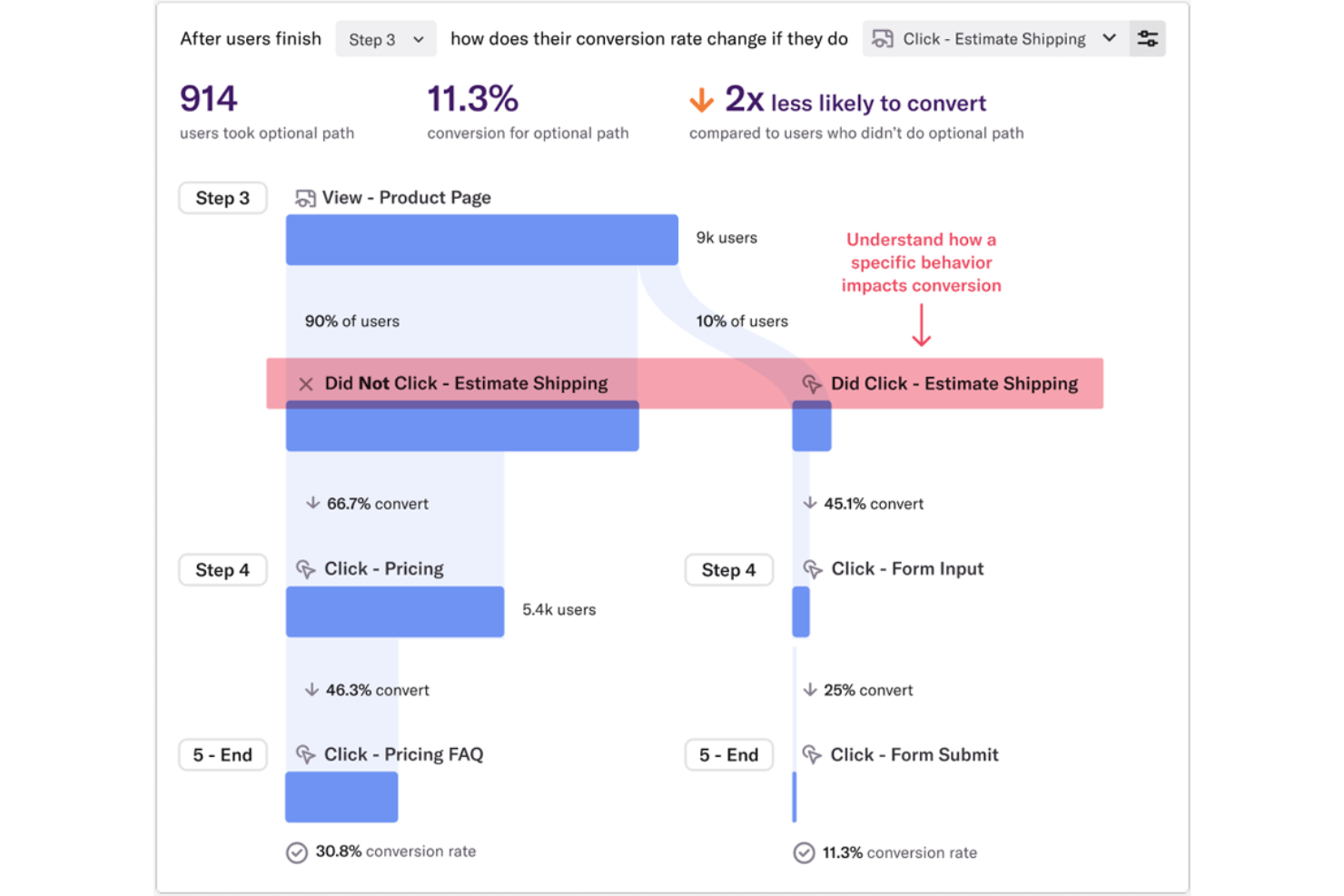
Heap es una plataforma de analítica de productos que hace que los datos de interacciones y actividad de los usuarios sean instantáneamente accesibles y utilizables para las empresas. Su principal fortaleza es la función de captura automática de datos, que elimina la necesidad de configurar seguimientos manuales, reduciendo así las posibilidades de pérdida de datos o información relevante.
Por qué elegí Heap:
Seleccioné Heap para mi lista debido a su capacidad para capturar automáticamente las interacciones de los usuarios, lo que lo diferencia de muchas otras herramientas en el mercado. Mientras que la mayoría de las herramientas requieren configuración manual para seguir diferentes eventos, Heap capta todas las acciones de los usuarios desde el principio, lo que lo hace realmente “ideal para capturar todas las interacciones de los usuarios automáticamente”.
Características destacadas e integraciones:
Las características clave de Heap incluyen la captura automática de eventos, análisis retroactivo y la gobernanza de datos, ofreciendo un entorno rico, flexible y seguro para el análisis de datos. Heap se integra perfectamente con plataformas como Salesforce, Optimizely y Google Ads.
Pros and Cons
Pros:
- Captura automática de todas las interacciones de usuario
- Permite realizar análisis retroactivos
- Se integra bien con muchas plataformas comúnmente utilizadas
Cons:
- La personalización de precios puede carecer de transparencia para los posibles clientes
- Puede ser caro para pequeñas empresas o startups
- Algunos usuarios pueden encontrar la interfaz menos intuitiva que la de plataformas competidoras

Ideal para el seguimiento del recorrido del cliente y embudos de conversión
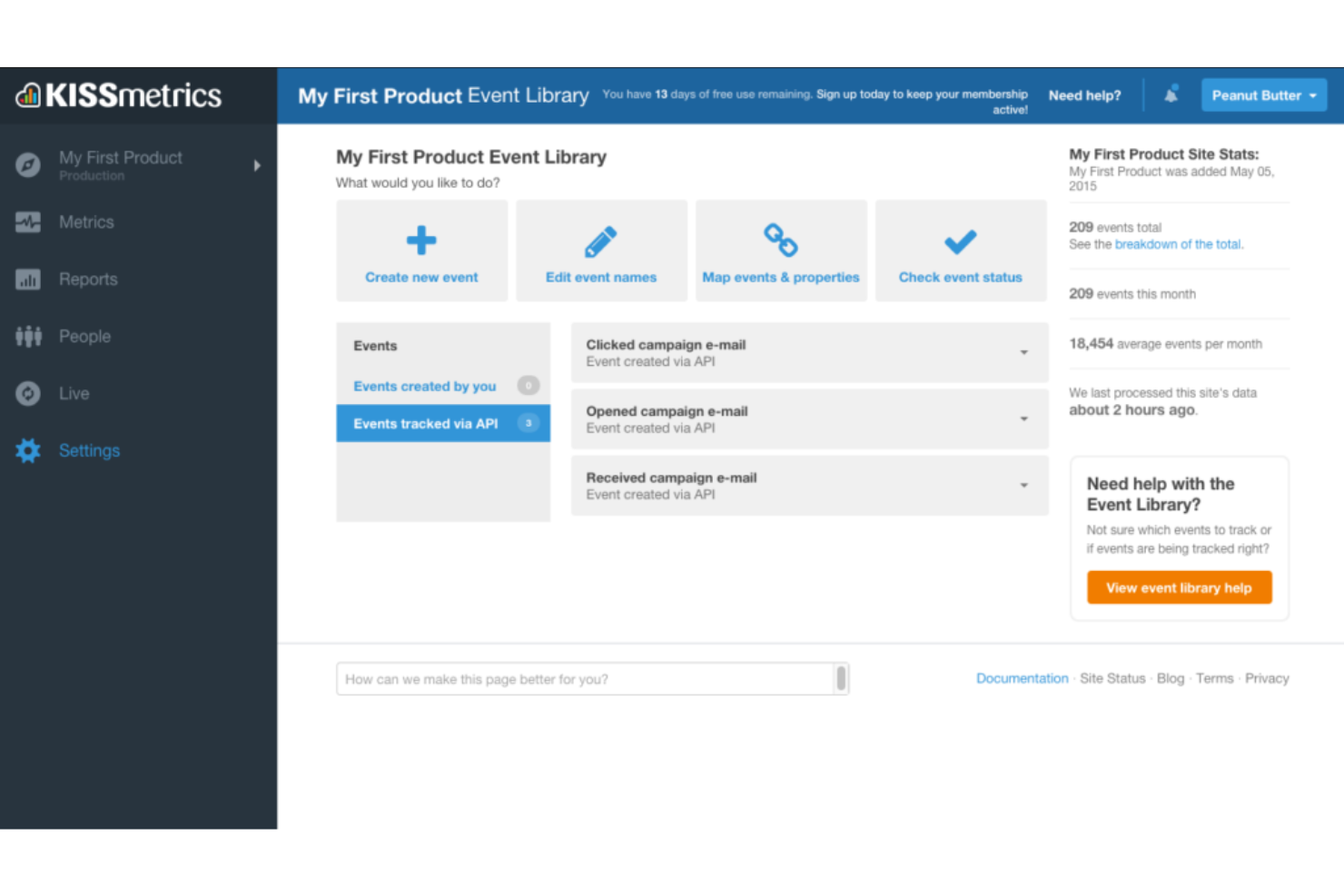
Kissmetrics es una plataforma avanzada de análisis que proporciona a las empresas una comprensión profunda del comportamiento de sus clientes. Su especialidad radica en el seguimiento del recorrido del cliente y en el análisis de embudos de conversión, lo que la convierte en una herramienta excepcional para las empresas que buscan mejorar la experiencia del cliente y las tasas de conversión.
Por qué elegí Kissmetrics:
Elegí Kissmetrics para esta lista debido a su enfoque único en el recorrido del cliente y el seguimiento de embudos. Se diferencia por su capacidad para rastrear a clientes individuales a través de distintos puntos de contacto, brindando valiosos conocimientos sobre su comportamiento y preferencias. Considero que Kissmetrics destaca como la mejor opción para las empresas que desean entender y optimizar el viaje del cliente y los embudos de conversión.
Características destacadas e integraciones:
Kissmetrics cuenta con funciones destacadas como el seguimiento del comportamiento, la segmentación y el análisis de embudos. Permite a las empresas rastrear el comportamiento del cliente en múltiples dispositivos y sesiones, ofreciendo conocimientos valiosos que pueden impulsar la optimización de conversiones. En cuanto a las integraciones, se asocia con una amplia variedad de plataformas como Shopify, WooCommerce y HubSpot, lo que permite un flujo de datos entre diferentes herramientas.
Pros and Cons
Pros:
- Excepcional para rastrear el recorrido del cliente y embudos de conversión
- Ofrece valiosos conocimientos sobre el comportamiento
- Amplia variedad de integraciones
Cons:
- Precio inicial alto
- Curva de aprendizaje más pronunciada en comparación con otras plataformas
- Puede ser excesivo para pequeñas empresas


Adobe Analytics es una plataforma de analítica integral que ofrece una comprensión profunda de las interacciones de los clientes con tu negocio. Es especialmente adecuada para monitorear y optimizar el rendimiento del marketing, ya que se integra con otras herramientas de marketing y proporciona una gran cantidad de datos para análisis en profundidad.
Por qué elegí Adobe Analytics:
Después de una cuidadosa comparación y evaluación de varias herramientas de analítica, elegí Adobe Analytics porque ofrece amplias capacidades de seguimiento del rendimiento de marketing. Su habilidad para obtener datos de múltiples fuentes, combinada con una segmentación detallada y análisis en tiempo real, la distingue de otras soluciones. Por ello, en mi opinión, Adobe Analytics es la mejor opción para quienes desean supervisar y optimizar sus iniciativas de marketing.
Características destacadas e integraciones:
Algunas de las características clave de Adobe Analytics incluyen análisis en tiempo real, descubrimiento de segmentos, detección de anomalías y análisis de contribuciones. Sobresale por integrar diversas fuentes de datos, ofreciendo una visión unificada del recorrido del cliente. En cuanto a integraciones, Adobe Analytics se combina perfectamente con otros productos de Adobe Experience Cloud, como Adobe Target y Adobe Audience Manager.
Pros and Cons
Pros:
- Amplia capacidad de seguimiento del rendimiento de marketing
- Integración profunda con productos de Adobe
- Analítica integral del recorrido del cliente
Cons:
- La información sobre precios no es transparente
- Puede ser complejo para principiantes
- Integraciones limitadas fuera del ecosistema de Adobe
Otros programas de inteligencia de productos
Aquí tienes algunas otras opciones de software de inteligencia de productos que no llegaron a mi lista corta, pero que igualmente valen la pena revisar:


Cómo evalúo el software de inteligencia de producto
Divido mi evaluación en dos capas: las capacidades principales—como el análisis de embudos y la segmentación de cohortes—que una herramienta debe tener, y los diferenciadores que distinguen a las mejores opciones.
Funcionalidad básica (requisitos indispensables para esta lista)
Cuando selecciono herramientas para mi lista, califico cada una en una escala del 0 (no ofrece la funcionalidad) al 5 (sobresale en esta área) para cada funcionalidad principal que se detalla a continuación. Luego, calculo la puntuación total de la herramienta como un porcentaje. Cada herramienta necesita alcanzar una puntuación total mínima del 65% para ser considerada en la inclusión.
- Seguimiento de eventos de comportamiento: Compruebo si la herramienta puede capturar acciones de usuario como clics en botones, envíos de formularios y vistas de página tanto en web como en móvil con un esfuerzo mínimo de ingeniería.
- Análisis de embudos y caminos: Evalúo aquí embudos de varios pasos que muestran dónde los usuarios abandonan—por ejemplo, entre añadir un artículo al carrito y finalizar la compra.
- Segmentación de cohortes y usuarios: Busco la capacidad de agrupar usuarios por comportamiento y atributos, como comparar usuarios en prueba que completaron la incorporación frente a los que no lo hicieron.
- Analítica de retención y compromiso: Las herramientas deben mostrar curvas de retención y métricas de fidelización para que puedas responder preguntas como "¿están volviendo los usuarios después de su primera semana?"
- Repetición de sesiones o información a nivel de usuario: Evalúo si la herramienta brinda contexto cualitativo, como ver a un usuario tener dificultades con una página de configuración, junto con datos cuantitativos.
- Integraciones y canalización de datos: Aquí importa la compatibilidad con almacenes de datos como Snowflake o BigQuery y CDPs como Segment, además de la conectividad con CRM y herramientas de marketing.
Una vez que tengo una lista de herramientas que cumplen los criterios, considero qué distingue a cada plataforma.
Factores diferenciadores (qué distingue a los proveedores)
Así es como comparo y contrasto diferentes proveedores:
Funciones destacadas
Las ideas impulsadas por IA son un gran diferenciador—busco herramientas que detectan automáticamente caídas inesperadas en la activación o retención sin requerir una exploración manual del tablero. Las pruebas A/B nativas son otro factor que valoro, ya que permiten a los equipos de producto medir el impacto de un nuevo flujo de incorporación o de una página de precios directamente dentro del entorno de análisis. También evalúo la integración de "feature flags", que vincula los eventos de lanzamiento con los datos de uso para que puedas ver exactamente cómo una nueva función afecta el compromiso.
Más allá de las funciones
El modelo de precios es muy importante aquí. Un precio basado en eventos puede escalar rápidamente a medida que tu producto crece, así que evalúo si el modelo de un proveedor se mantiene predecible a medida que aumenta tu base de usuarios. El ajuste con el almacén de datos y la arquitectura tecnológica es igualmente relevante—verifico si una herramienta funciona de forma nativa con tu almacén de datos existente o requiere un canal de datos separado. También considero la gobernanza de datos, especialmente los controles de acceso basados en roles y las certificaciones de cumplimiento, ya que los datos de producto a menudo contienen información sensible sobre el comportamiento de usuario a la que accederán equipos de toda la organización.
Cómo elegir un software de inteligencia de productos
Es fácil perderse en largas listas de funcionalidades y estructuras de precios complicadas. Para ayudarte a mantener el enfoque durante tu proceso único de selección de software, aquí tienes una lista de factores que debes tener en cuenta:
| Factor | Qué tener en cuenta |
|---|---|
| Escalabilidad | ¿Puede el software crecer con tu equipo? Ten en cuenta el crecimiento futuro y si la herramienta puede gestionar el aumento de datos y usuarios sin problemas de rendimiento. |
| Integraciones | ¿Se conecta con tus herramientas actuales? Comprueba que sea compatible con tu CRM, analíticas y plataformas de comunicación para evitar interrupciones en el flujo de trabajo. |
| Personalización | ¿Puedes adaptar el software a tus necesidades? Busca opciones para ajustar paneles, informes y flujos de trabajo según las preferencias de tu equipo. |
| Facilidad de uso | ¿Es la herramienta fácil de usar? Evalúa la curva de aprendizaje y si tu equipo podrá adaptarse rápidamente sin una formación extensa. |
| Implementación e integración inicial | ¿Qué tan sencilla es la puesta en marcha? Considera el tiempo y los recursos necesarios para el despliegue, incluyendo formación y soporte durante la transición. |
| Costo | ¿Se ajusta a tu presupuesto? Compara planes de precios, revisa cargos ocultos y valora el beneficio de las funcionalidades incluidas en cada nivel. |
| Medidas de seguridad | ¿Tus datos y tu privacidad están protegidos? Busca cifrado, controles de acceso de usuario y cumplimiento con las normativas de protección de datos aplicables. |
¿Qué es el software de inteligencia de productos?
El software de inteligencia de productos (PI) es una herramienta que ayuda a las empresas a recopilar y analizar datos sobre cómo los usuarios interactúan con sus productos. Normalmente, los gerentes de producto, los profesionales de marketing y los analistas de datos utilizan estas herramientas para tomar decisiones informadas y mejorar las ofertas de productos. Funcionalidades como el seguimiento del comportamiento del usuario, el análisis de datos y la elaboración de informes ayudan a comprender las necesidades de los clientes y a potenciar el desarrollo del producto. En general, estas herramientas ofrecen valiosas perspectivas para impulsar el éxito del producto y la satisfacción del cliente.
Características
Al seleccionar un software de inteligencia de productos, presta atención a las siguientes funciones clave:
- Seguimiento del comportamiento del usuario: Recopila datos sobre cómo los usuarios interactúan con tu producto para ayudar a identificar las funciones más populares y las áreas que requieren mejora.
- Análisis de datos: Proporciona herramientas para analizar datos de usuario y generar conocimientos que orienten las decisiones y estrategias de producto.
- Informes: Ofrece informes personalizables para visualizar tendencias de datos y seguir el rendimiento del producto a lo largo del tiempo.
- Segmentación de audiencia: Permite categorizar a los usuarios en función de su comportamiento y características para un análisis y marketing dirigido.
- Análisis predictivo: Utiliza datos históricos para anticipar tendencias futuras y comportamientos de los usuarios, facilitando la toma de decisiones proactiva.
- Capacidades de integración: Se conecta con otras herramientas y plataformas para garantizar un flujo de datos fluido y un análisis integral.
- Paneles personalizables: Permite adaptar la interfaz para mostrar las métricas e indicadores más relevantes para tu equipo.
- Procesamiento de datos en tiempo real: Proporciona información instantánea sobre las interacciones de los usuarios, lo que permite responder rápidamente a tendencias y problemas.
- Salvaguardas de seguridad: Garantiza la protección de los datos mediante cifrado y controles de acceso, manteniendo segura la información del usuario.
- Tours interactivos por el producto: Guía a los nuevos usuarios por las funciones, mejorando el proceso de incorporación y la experiencia del usuario.
Beneficios
Implementar un software de inteligencia de productos aporta varios beneficios para tu equipo y tu empresa. A continuación, algunos de los que puedes esperar:
- Toma de decisiones mejor fundamentada: El acceso a análisis de datos detallados ayuda a tu equipo a tomar decisiones informadas de producto basadas en el comportamiento real de los usuarios.
- Mejor comprensión del cliente: El seguimiento del comportamiento del usuario ofrece información sobre las necesidades y preferencias de los clientes, permitiendo mejoras más acertadas en el producto.
- Mayor eficiencia: Los informes automatizados ahorran tiempo al proporcionar acceso rápido a métricas clave e indicadores de rendimiento.
- Desarrollo proactivo: El análisis predictivo permite a tu equipo anticipar tendencias y planificar mejoras antes de que surjan problemas.
- Esfuerzos de marketing más precisos: La segmentación de audiencia permite estrategias de marketing más específicas al identificar grupos de usuarios concretos.
- Mejor experiencia de usuario: Los tours interactivos y las funciones de incorporación mejoran la satisfacción del usuario al facilitar el aprendizaje y el uso del producto.
- Garantía de seguridad de los datos: Las salvaguardas de seguridad protegen los datos del usuario, asegurando el cumplimiento de regulaciones de privacidad y generando confianza en los clientes.
Costes y precios
Seleccionar un software de inteligencia de productos requiere comprender los diferentes modelos y planes de precios disponibles. Los costes varían según las características, el tamaño del equipo, los complementos y más. La siguiente tabla resume los planes más habituales, sus precios promedio y las funcionalidades típicas incluidas en soluciones de software de inteligencia de productos:
Tabla comparativa de planes para software de inteligencia de productos
| Tipo de plan | Precio promedio | Funciones comunes |
|---|---|---|
| Plan gratuito | $0 | Análisis básicos, seguimiento de usuarios limitado e informes básicos. |
| Plan personal | $5-$25/user/month | Análisis avanzados, paneles personalizados y soporte por correo electrónico. |
| Plan empresarial | $30-$60/user/month | Segmentación de usuarios, capacidades de integración y soporte prioritario. |
| Plan corporativo | $75-$150/user/month | Análisis predictivos, gestor de cuenta dedicado y funciones avanzadas de seguridad. |
Preguntas frecuentes sobre software de inteligencia de producto
Aquí tienes respuestas a preguntas comunes sobre el software de inteligencia de producto:
¿Cómo recopila datos el software de inteligencia de producto?
El software de inteligencia de producto recopila datos mediante diversos métodos, incluyendo el seguimiento de las interacciones de los usuarios en tu sitio web o app, la integración con otras herramientas como los CRM y la importación de conjuntos de datos existentes. Utiliza cookies, seguimiento de eventos y conexiones API para obtener la información. Debes asegurarte de que tu software cumpla con las regulaciones de privacidad de datos como el RGPD al recolectar datos de los usuarios.
¿El software de inteligencia de producto puede trabajar entre varios equipos?
Sí, la mayoría de las herramientas pueden dar soporte a los equipos de producto, marketing y soporte al mismo tiempo. Cada equipo puede usar diferentes paneles para centrarse en lo que les interesa. Los gerentes de producto suelen revisar el uso de las funciones, mientras que los responsables de marketing se enfocan en las conversiones. Puedes configurar niveles de acceso personalizados para evitar información irrelevante.
¿Cómo usan los equipos de producto los embudos en el software de inteligencia de producto?
Los embudos te ayudan a medir cómo avanzan los usuarios a través de flujos clave como el onboarding o el proceso de compra. Así puedes identificar dónde abandonan los usuarios y probar cambios para mejorar ese paso. Los equipos de producto suelen crear embudos tanto para usuarios nuevos como recurrentes. También puedes desglosarlos por segmento o plataforma.
¿Es necesario capacitarse para utilizar el software de inteligencia de producto?
Sí, normalmente se requiere algo de capacitación para utilizar eficazmente el software de inteligencia de producto. Aunque muchas herramientas son fáciles de usar, entender todas las funcionalidades puede requerir tutoriales o sesiones de formación. Busca un software que ofrezca recursos completos de incorporación como videos, seminarios web y documentación para que tu equipo se ponga al día rápidamente.
¿Qué sigue?
Si estás investigando software de inteligencia de producto, contacta gratis con un asesor de SoftwareSelect para recibir recomendaciones personalizadas.
Sólo tienes que rellenar un formulario y tener una rápida conversación donde hablarán en detalle sobre tus necesidades. Después recibirás una lista corta de software que puedes revisar. Incluso te acompañarán durante todo el proceso de compra, incluidas las negociaciones de precio.